Search the blog
Tabla de contenidos
The Inca Trail route is much more than a hike to Machu Picchu. Over roughly 42 kilometers, the Classic route crosses ancient stone paths, mountain passes, Andean valleys, cloud forest and several archaeological sites built during the Inca period.
The Classic Inca Trail is normally completed in four days and begins at Km 82, near the Urubamba River. From there, the trail gradually climbs into higher mountain terrain before descending toward the cloud forest and finishing at Inti Punku, the historic Sun Gate of Machu Picchu.
Understanding the Inca Trail stages, distance and main archaeological sites gives travelers a much more realistic idea of what the trek actually involves.
If you are still deciding how many days to spend on the trail, you can also read how many days do you need for the Inca Trail.
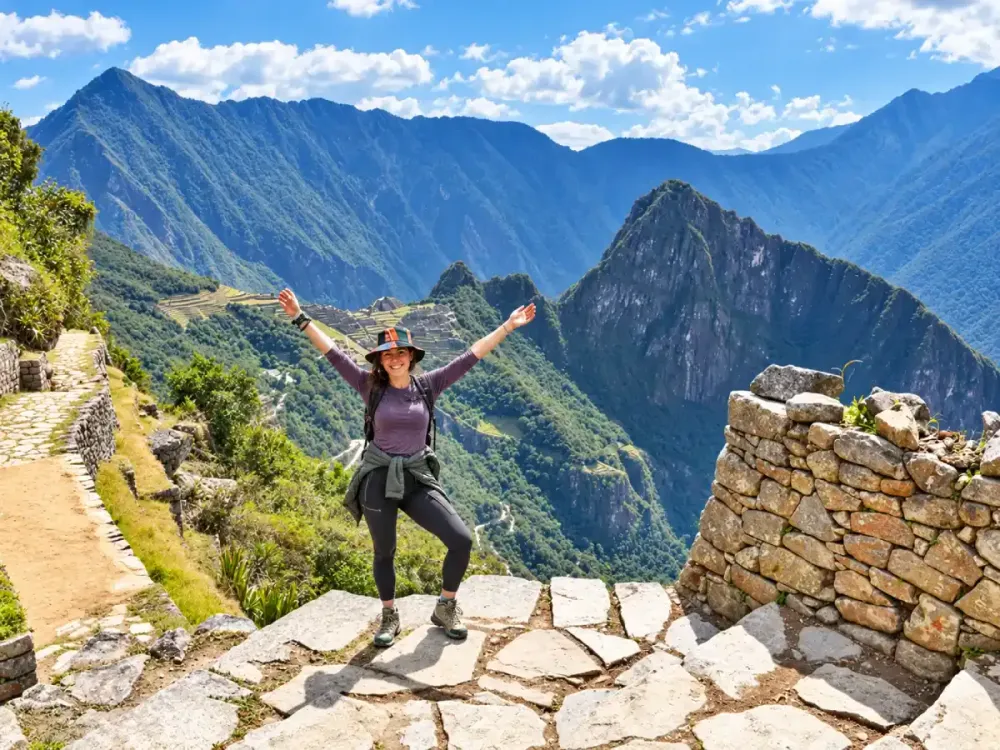
How long is the Classic Inca Trail?
The Classic Inca Trail distance is approximately 42 kilometers from the Km 82 area to Machu Picchu.
However, the difficulty of the route cannot be understood by distance alone.
Some days may not seem especially long in kilometers, but steep climbs, altitude and original Inca stairways make the effort considerably greater than walking the same distance on flat ground.
That is why an Inca Trail map should always be considered together with the elevation profile.
During our Classic Inca Trail 4 Days, the route is divided into several stages so travelers can progress gradually while visiting the main archaeological sites along the way.
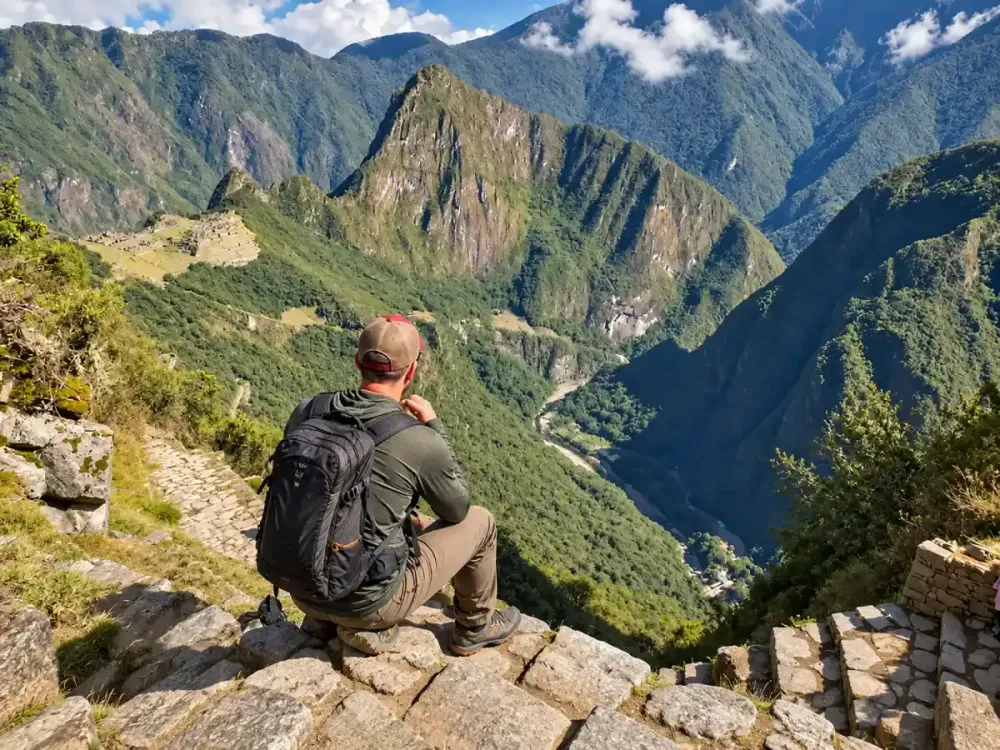
Where does the Classic Inca Trail begin?
The Classic Inca Trail begins at Km 82 in the Sacred Valley of the Incas.
From this area, hikers cross the Urubamba River and begin walking along one of the historic routes that formed part of the wider Inca road network.
The first hours allow the body to adjust gradually to the terrain before reaching the higher sections of the trek.
It is important not to confuse Km 82 with Km 104.
Km 104 is the starting point for the Short Inca Trail 2 Days, which covers the final section of the historic route and reaches Machu Picchu through Inti Punku without completing the full four-day trek.
If you are comparing both options, read 2 Day vs 4 Day Inca Trail.
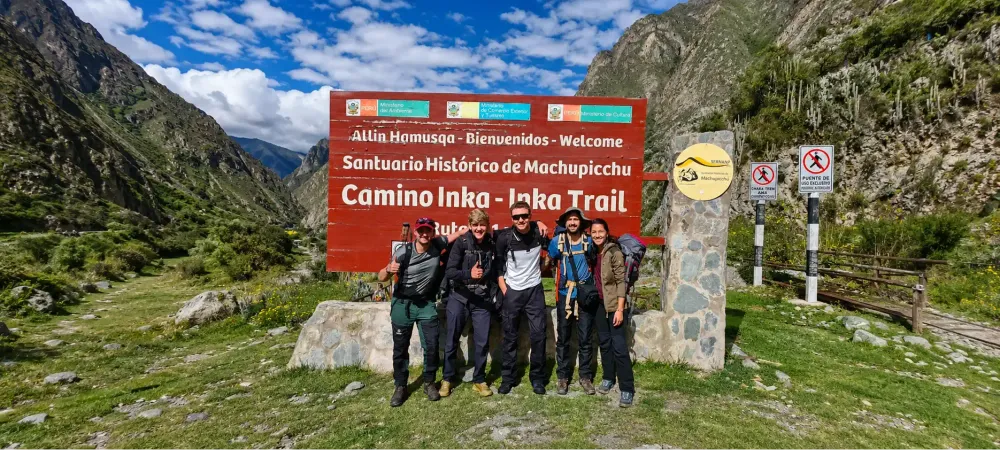
Day 1: Km 82, Patallacta and the beginning of the Inca Trail
The first stage begins at Km 82 and gradually introduces hikers to the landscape of the Inca Trail.
During the day, you begin to see valleys, historic paths and archaeological sites such as Patallacta, sometimes also referred to as Llactapata in trail references.
As the route continues, the trail gradually gains elevation toward the Wayllabamba area.
During our Classic Inca Trail 4 Days, the first day is a good opportunity to establish a comfortable hiking pace and adjust to several hours of walking.
It is usually not the hardest day, but starting too fast can make the following stages more difficult. The next day contains the most demanding climb of the route.
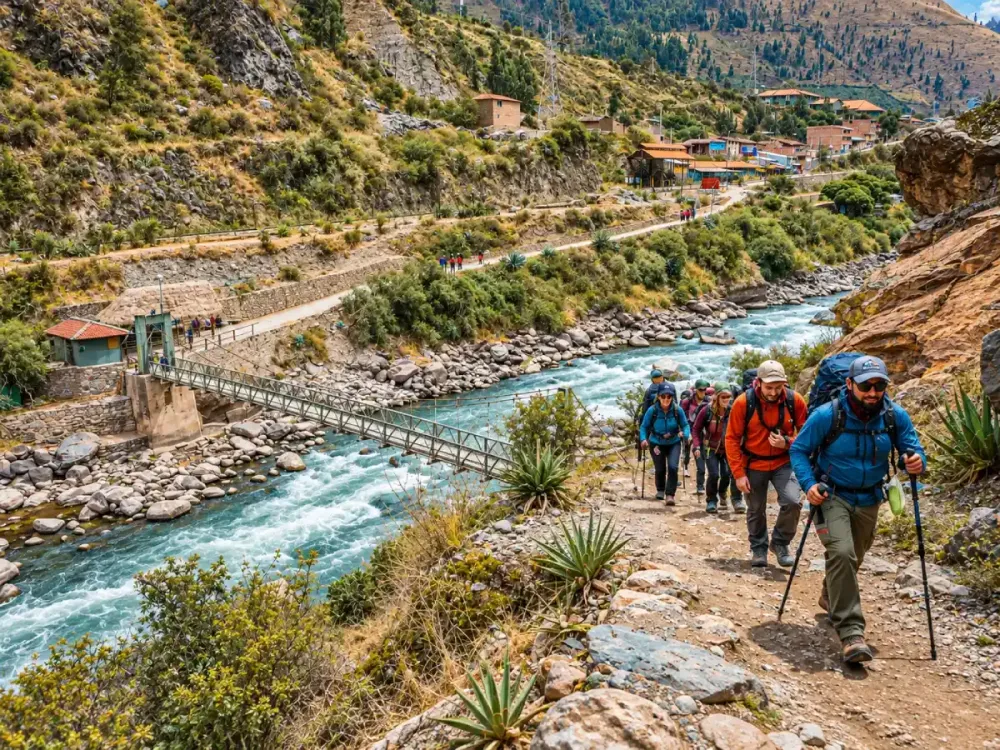
Day 2: Dead Woman’s Pass, the highest point of the Inca Trail
The second day is considered by many travelers to be the hardest day on the Inca Trail.
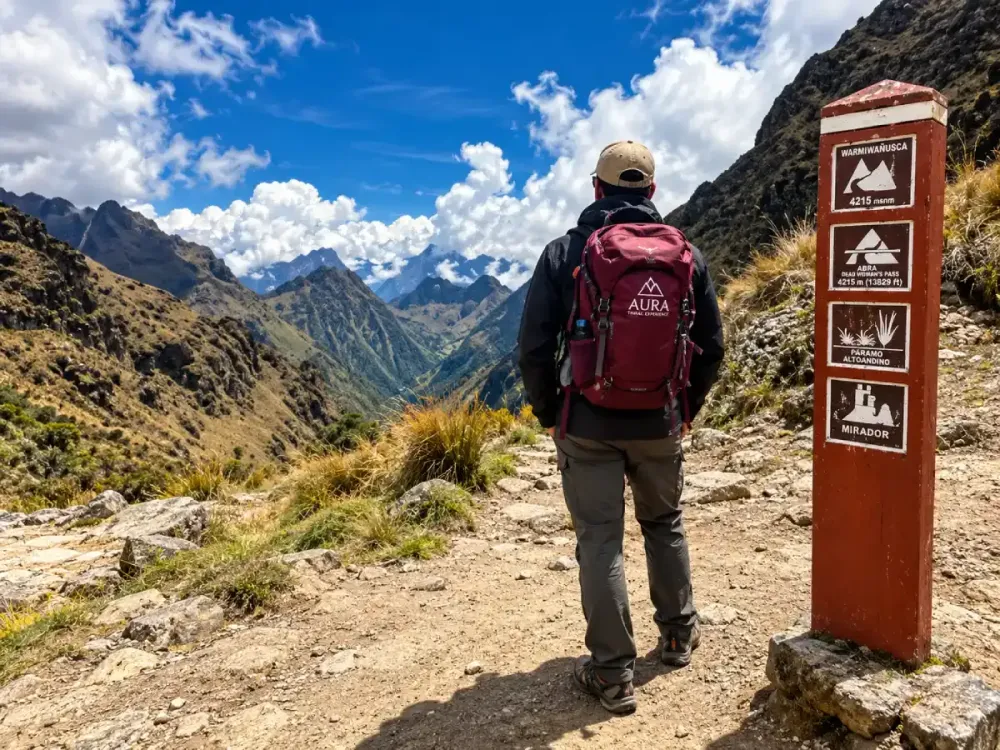
The main reason is the long climb toward Warmiwañusca, better known in English as Dead Woman’s Pass.
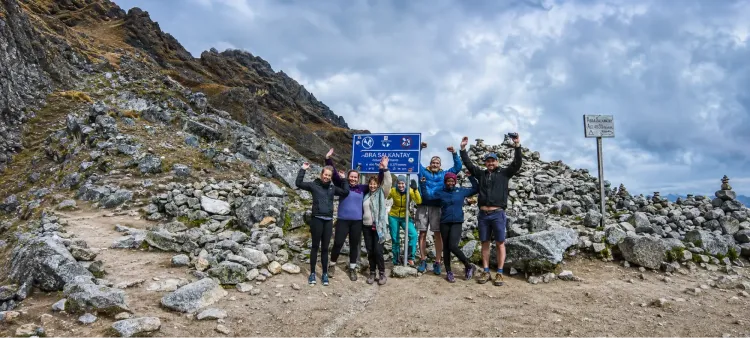
This mountain pass reaches approximately 4,200 meters above sea level and is the highest point of the Classic Inca Trail.
The ascent is steady and the hiking pace normally slows as elevation increases.
After reaching the pass, the trail descends toward the Pacaymayo area.
The number of kilometers may not seem extreme, but the elevation gain makes this one of the most physically demanding stages of the trek.
You can learn more about this section in Inca Trail altitude and Inca Trail difficulty.
Day 3: Runkurakay, Sayacmarca and Phuyupatamarca
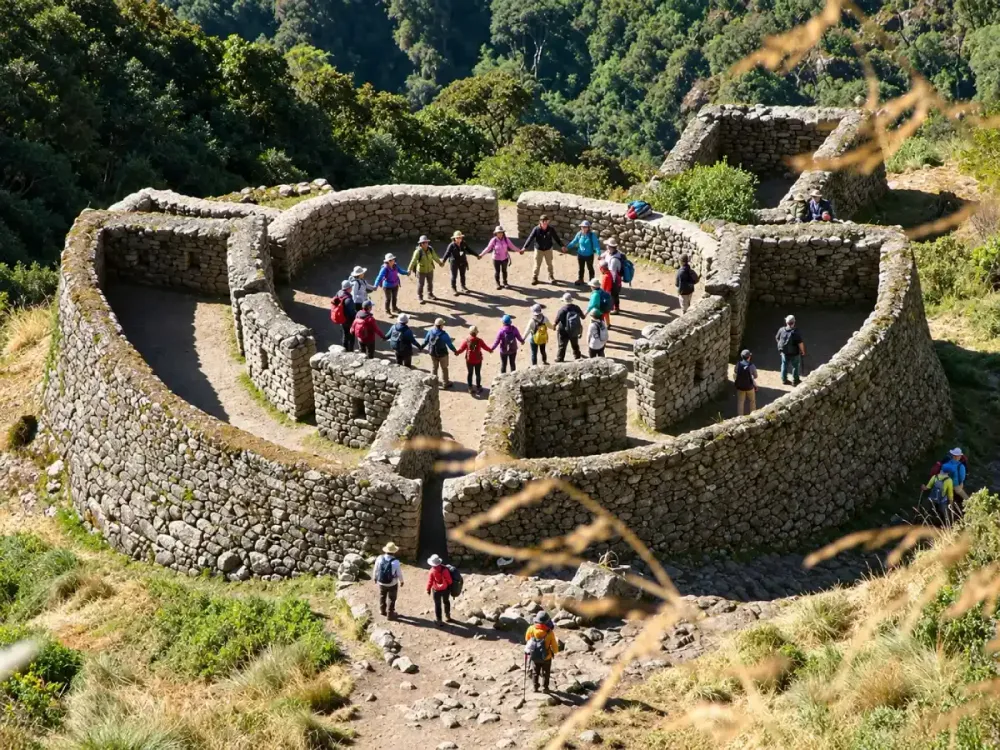
The third stage is one of the richest sections of the trail from an archaeological point of view.
The route climbs again toward the Runkurakay area, where a small archaeological complex sits beside the historic trail.
From there, hikers continue toward another mountain pass before reaching Sayacmarca.
The trail then follows original stone paths and gradually enters wetter, greener environments.
Later, hikers reach Phuyupatamarca, whose name is often translated as “Town Above the Clouds.”
From this area, a long descent begins.
Although the highest point of the route is already behind you, the third day can still feel demanding because of repeated climbs, descents and long sections of stone stairs.
For this reason, in how to train for the Inca Trail, we also recommend preparing for downhill sections rather than focusing only on climbing.
Wiñay Wayna: one of the most important sites on the route
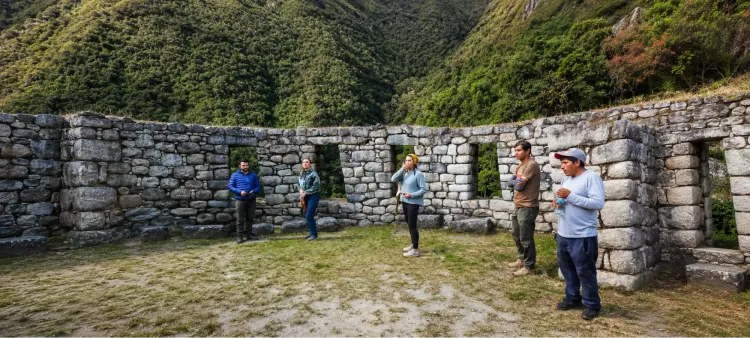
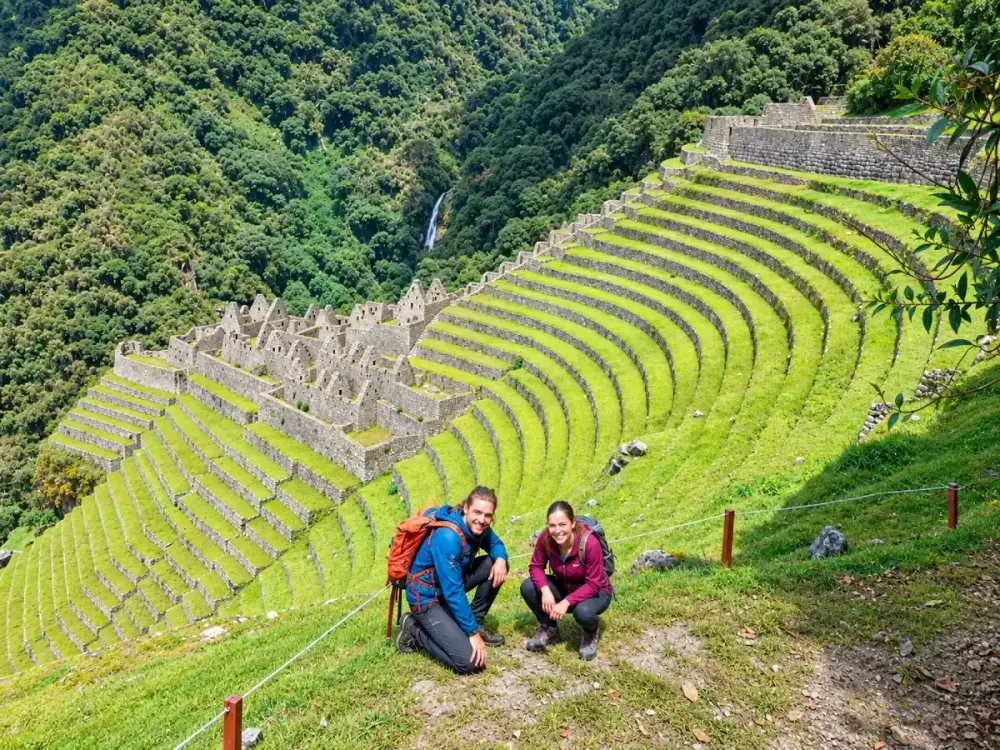
Before reaching Machu Picchu, hikers encounter one of the most impressive archaeological sites on the Inca Trail: Wiñay Wayna.
Its name in Quechua is commonly translated as “Forever Young.”
The site is known for its agricultural terraces and stone structures built directly into the mountainside.
For many travelers, Wiñay Wayna becomes one of the highlights of the entire route because it appears when Machu Picchu is already relatively close.
The landscape also changes noticeably here.
The open high-mountain scenery of the earlier stages gives way to greener vegetation typical of the cloud forest.
Day 4: Inti Punku and arrival at Machu Picchu
The final day begins early.
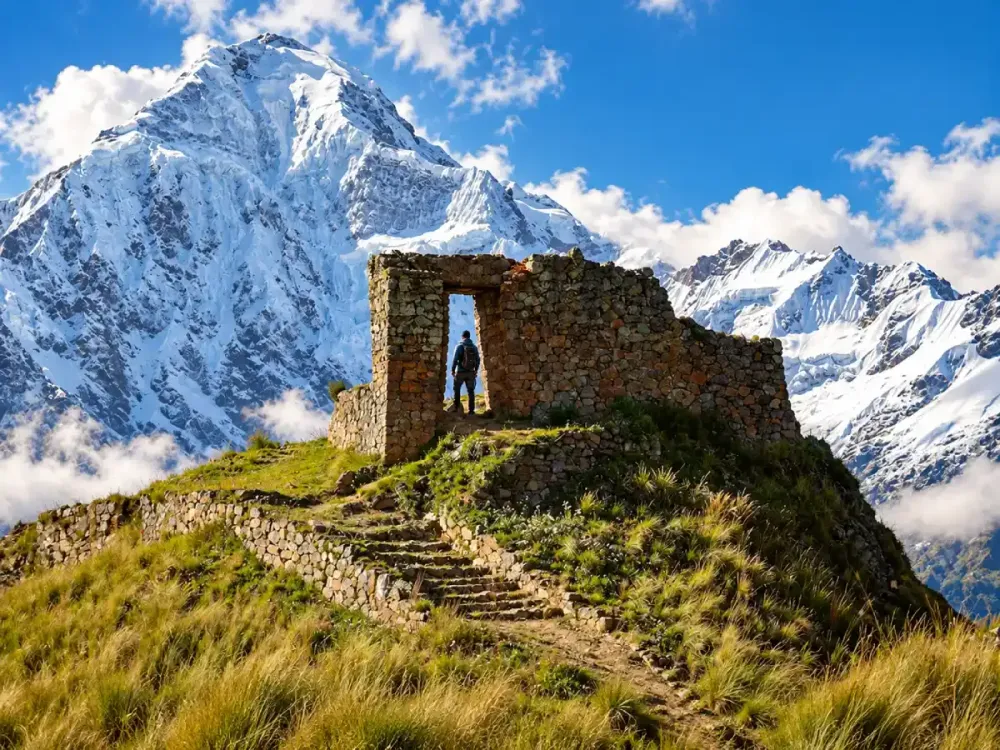
From the last section of the Inca Trail, hikers continue toward Inti Punku, the Sun Gate.
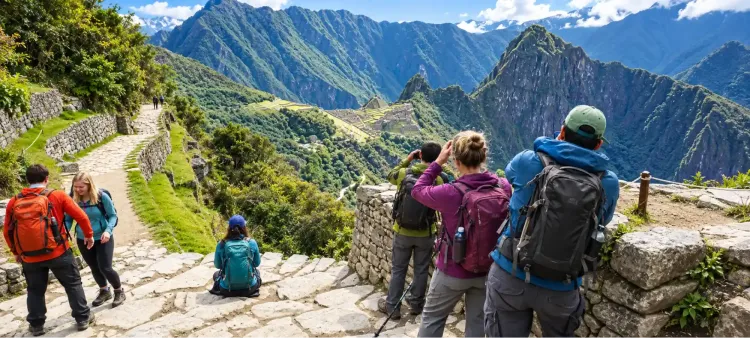
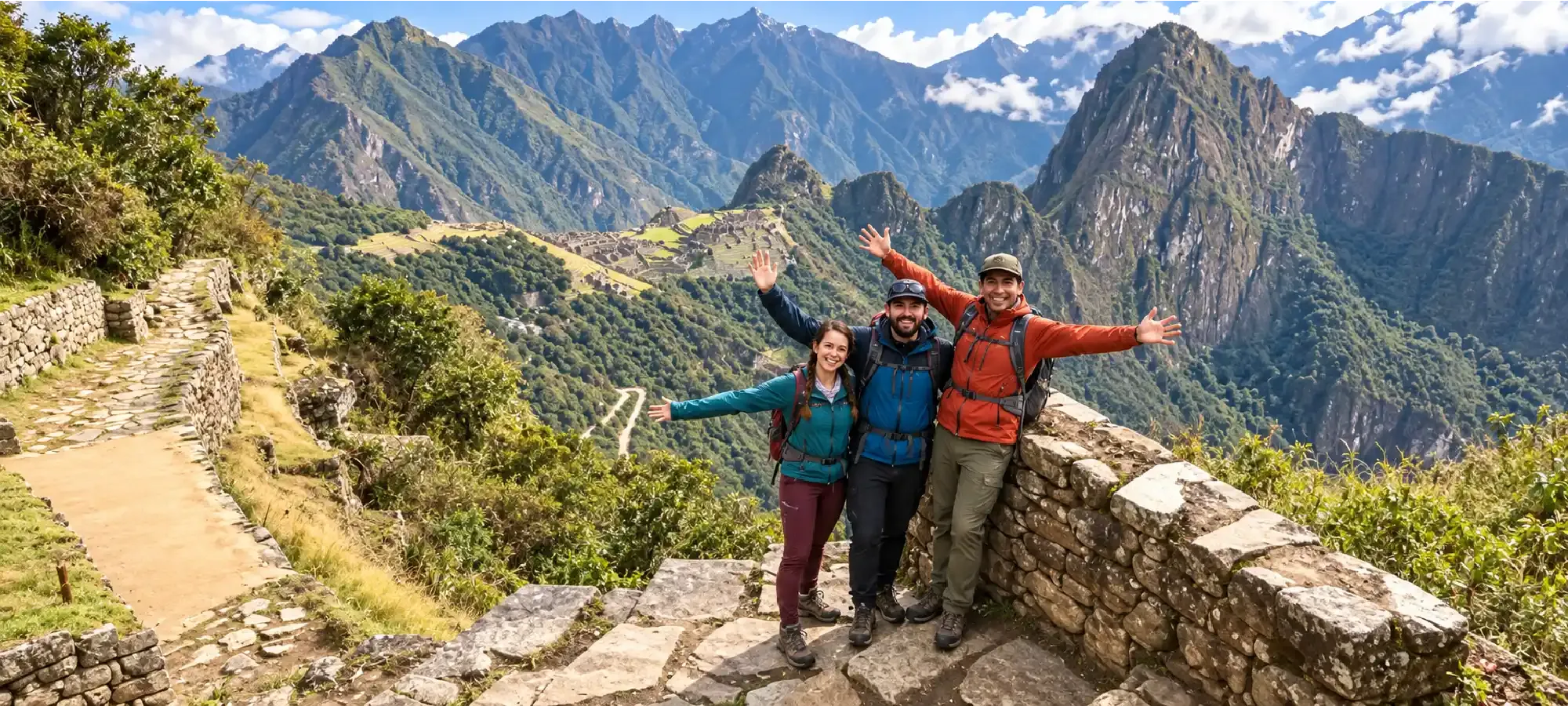
This historic entrance offers the first major view of Machu Picchu from the trail.
The arrival feels different from entering the site after a bus transfer.
You reach Machu Picchu on foot after several days of crossing mountains, archaeological sites and original sections of the Inca road.
From Inti Punku, the trail continues downhill toward Machu Picchu, completing the Classic Inca Trail route.
Main archaeological sites on the Inca Trail
One of the major differences between the Inca Trail and other treks around Cusco is the number of archaeological sites located directly along the route.
Some of the most important include:
- Patallacta or Llactapata
- Runkurakay
- Sayacmarca
- Phuyupatamarca
- Wiñay Wayna
- Inti Punku
- Machu Picchu
These places are not isolated attractions.
Many are connected by original stone paths, stairways, terraces and other sections of the Inca road system.
This is one of the reasons why walking the Inca Trail provides a broader historical context for Machu Picchu itself.
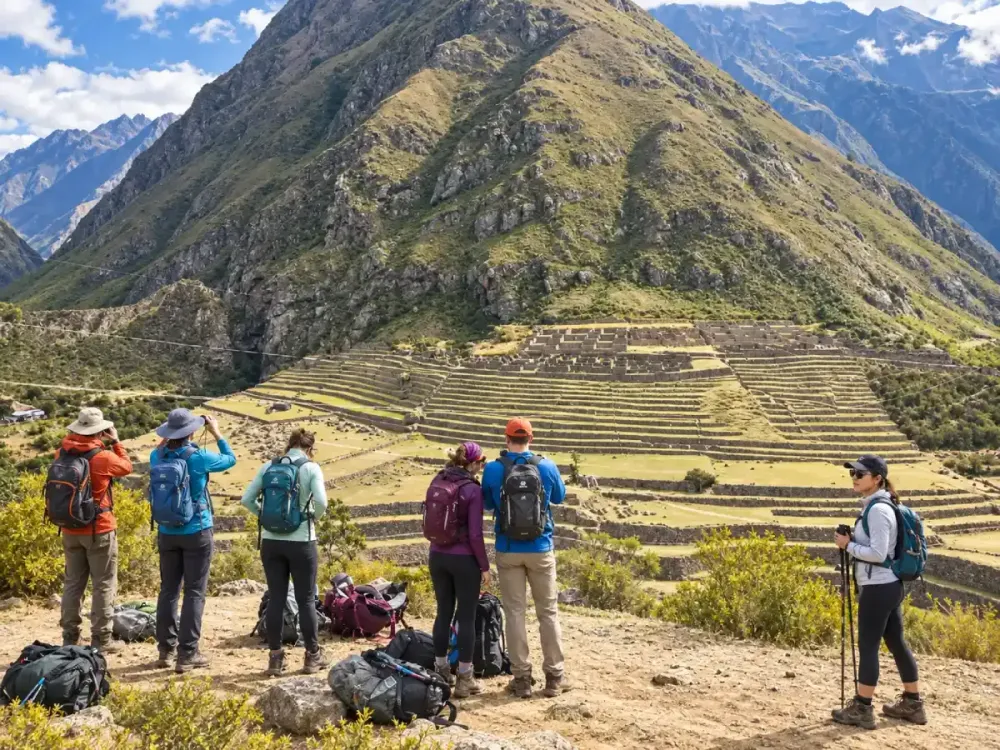
What does the Inca Trail map look like?
When looking at an Inca Trail map, the approximately 42-kilometer route may seem fairly straightforward.
The elevation profile tells a different story.
In general, the route follows this progression:
Km 82 → Patallacta → Wayllabamba → Dead Woman’s Pass → Pacaymayo → Runkurakay → Sayacmarca → Phuyupatamarca → Wiñay Wayna → Inti Punku → Machu Picchu.
The route does not simply climb continuously.
There are repeated ascents and descents.
The highest point is at Dead Woman’s Pass, and after crossing additional mountain terrain, the route gradually descends toward Wiñay Wayna and Machu Picchu.
This is why the total distance should never be considered without also looking at elevation.
What is the hardest stage of the Inca Trail?
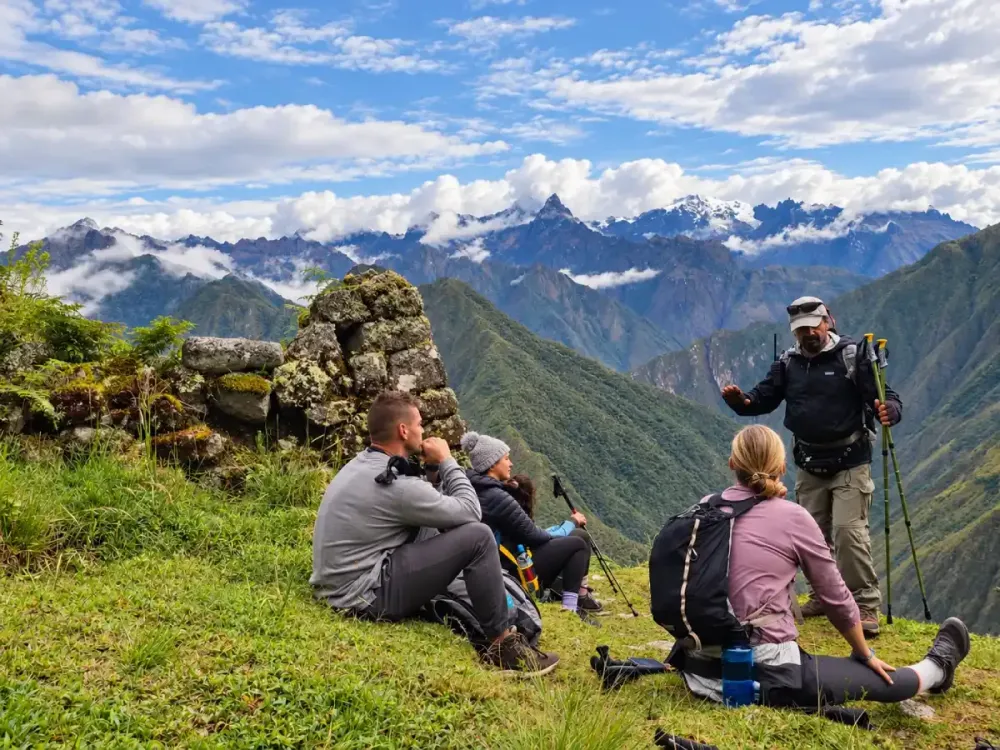
At Dreamy Tours, we consider the second day the most demanding stage of our Classic Inca Trail 4 Days.
The main challenge is the sustained ascent toward Dead Woman’s Pass.
However, this does not mean the other days are easy.
The third day includes repeated climbs, descents and long stone stairways, and accumulated fatigue can make some sections feel harder than expected.
Your experience will also depend on pace, fitness and how well you have acclimatized to altitude.
If this will be your first multi-day trek, we recommend reading Inca Trail for beginners before booking.
What do you need to hike the Classic Inca Trail?
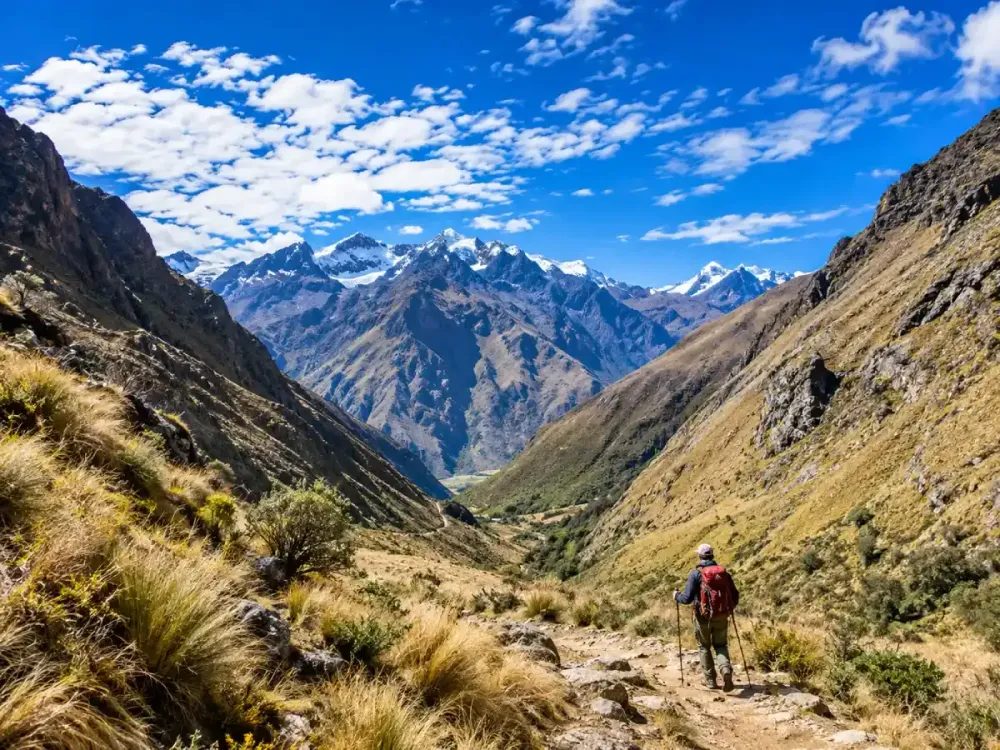
You do not need technical mountaineering skills.
However, you should be prepared to walk for several hours on four consecutive days.
You should also consider:
- Time to acclimatize before the trek.
- Suitable footwear for uneven terrain.
- Layered clothing.
- Sun and rain protection.
- A lightweight backpack.
- Training for both uphill and downhill sections.
You can read what to pack for the Inca Trail for equipment guidance and how to train for the Inca Trail if you are still preparing physically.
Classic Inca Trail or Short Inca Trail: which route should you choose?
Not every traveler needs to hike the full 42-kilometer Classic route.
The Short Inca Trail 2 Days begins at Km 104 and includes archaeological sites such as Chachabamba and Wiñay Wayna before reaching Inti Punku.
The Classic Inca Trail 4 Days, on the other hand, includes high mountain passes, campsites and a larger number of archaeological sites.
If you want the complete historic trekking experience and have enough time to prepare, the Classic route offers the most extensive journey.
If you have fewer days or prefer to avoid the highest elevations, the Short Inca Trail may be a better option.
Read 2 Day vs 4 Day Inca Trail for a more detailed comparison.
The Inca Trail route is part of the experience
The approximately 42 kilometers of the Classic Inca Trail are not simply a distance to complete before reaching Machu Picchu.
Dead Woman’s Pass, Runkurakay, Sayacmarca, Phuyupatamarca, Wiñay Wayna and Inti Punku turn the trek into a sequence of landscapes and archaeological sites that reveal how the Andes were connected during the Inca period.
For many travelers, the route itself becomes just as memorable as the final destination.
If you want the complete experience, explore our Classic Inca Trail 4 Days.
Before choosing your dates, we also recommend reading best time to hike the Inca Trail, Inca Trail altitude and what to pack for the Inca Trail.
Once you have chosen your route, check Inca Trail availability 2026 and 2027 and plan your trek to Machu Picchu in advance.
Personal travel advice
Plan your trip with Dreamy Tours
Start a tailored journey with our exclusive tours and custom trips across Peru and other Latin American countries.