Search the blog
Tabla de contenidos
If you want to reach Machu Picchu on foot along a historic route, you are probably comparing the 2-Day vs 4-Day Inca Trail. Both options allow you to walk along ancient Inca paths and arrive at Machu Picchu, but the experience changes significantly depending on the duration, altitude, accommodation style and the importance you want trekking to have within your Peru itinerary.
The Short Inca Trail 2 Days concentrates the main hike into one day and allows you to spend the night in a hotel in Machu Picchu Pueblo. The Classic Inca Trail 4 Days, on the other hand, is a much longer journey with several days of hiking, campsites, mountain passes and a greater number of archaeological sites.
At Dreamy Tours, we do not consider one version automatically better than the other. The right choice depends on your available time, physical condition, previous trekking experience and the kind of journey you want to build around Machu Picchu.
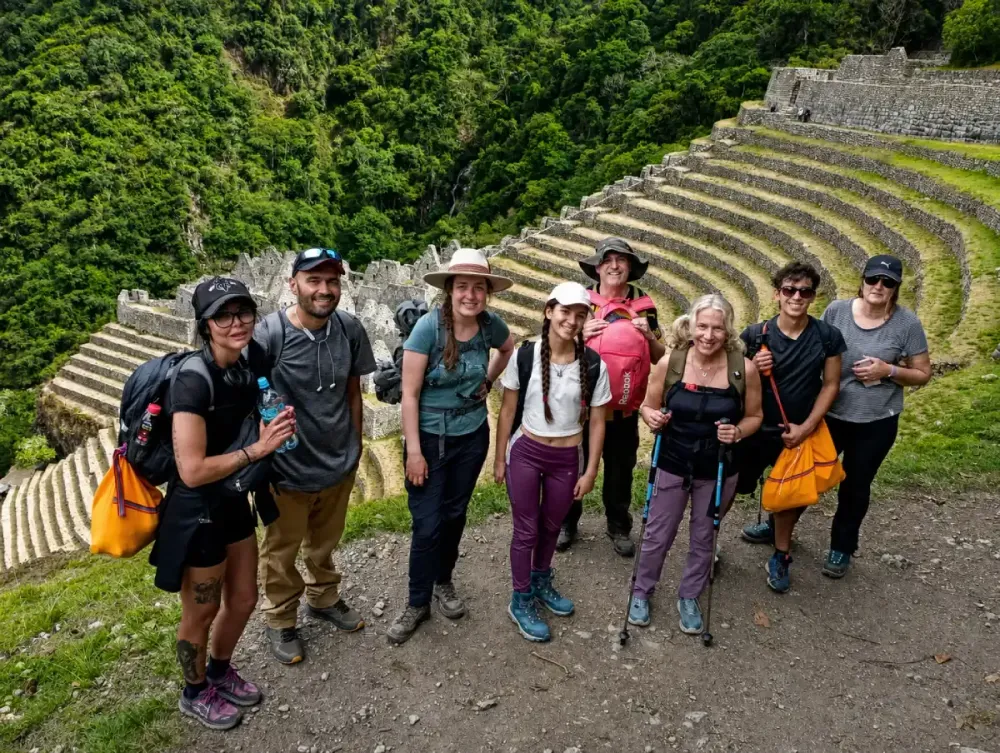
Short Inca Trail 2 Days: less time, but still a special arrival
The Short Inca Trail begins at Km 104, where the hike starts toward Chachabamba and then continues to Wiñay Wayna. From there, the route goes on to Inti Punku, the famous Sun Gate, before approaching Machu Picchu.
Its main advantage is that it allows you to experience an authentic section of the Inca Trail without dedicating four full days to trekking. Most of the physical effort is concentrated on the first day, while the night is spent in Machu Picchu Pueblo and the second day is used to return to the archaeological site for a more complete visit.
This option works especially well for travelers with limited time in Cusco, those who prefer sleeping in a hotel, travelers who do not want to camp, and people who still want to experience iconic places such as Wiñay Wayna and Inti Punku. However, being shorter does not mean it is an easy walk. It still involves several hours of trekking, uphill sections and stone stairways that require a reasonable level of fitness.
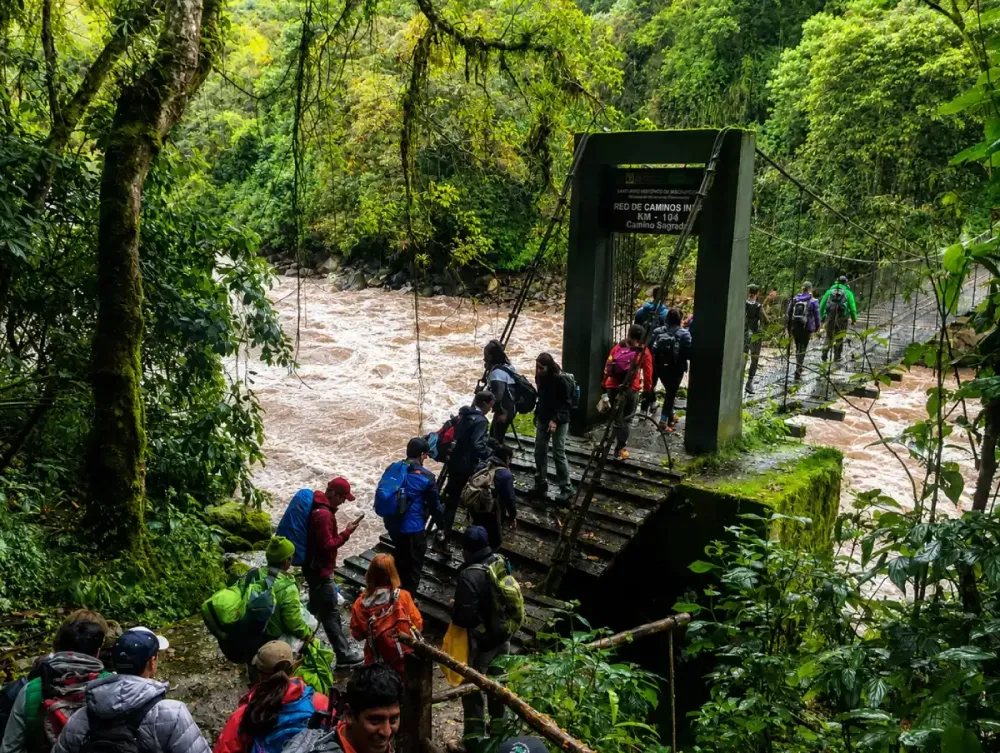
Classic Inca Trail 4 Days: a more complete experience
The Classic Inca Trail begins at Km 82 and is designed for travelers who want trekking to be a central part of their trip to Peru. Over four days, the route crosses Andean landscapes, ancient stone paths, mountain passes and several archaeological sites before reaching Wiñay Wayna, Inti Punku and finally Machu Picchu.
Unlike the Short route, this version includes camping and higher-altitude sections. Dead Woman’s Pass, for example, is one of the most demanding points of the Classic route because it combines a long ascent with significant altitude.
This option makes more sense for travelers who enjoy multi-day treks, want to experience a wider variety of scenery and archaeological sites, and are comfortable with the idea of sleeping in the mountains. Here, the Inca Trail is not simply a way to reach Machu Picchu. The trek itself becomes one of the main highlights of the journey.
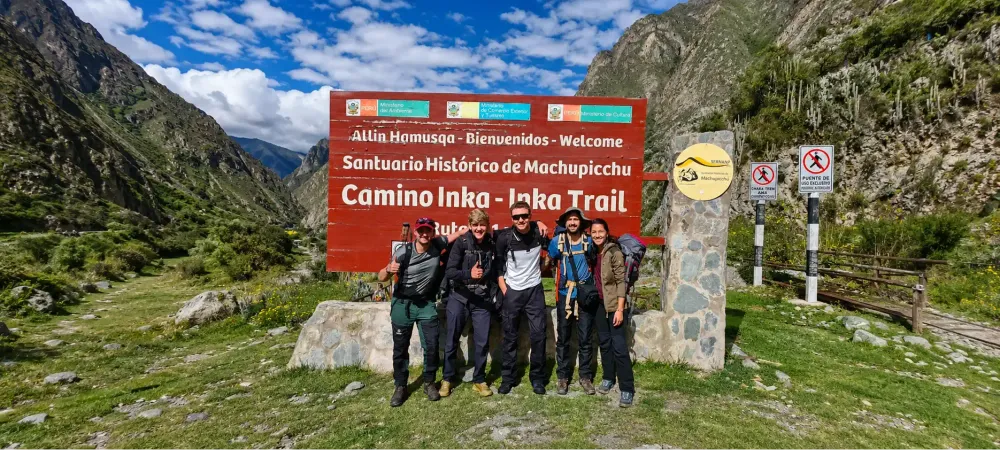
The difference is not only the number of days
Although the comparison begins with two versus four days, reducing the decision only to duration would be too simplistic. The structure of both routes is different from the starting point to the accommodation and the type of physical effort involved.
On the 2-Day Inca Trail, the experience is more compact, the maximum altitude is lower and you sleep in a hotel. This allows you to walk through an important historical section without taking on the full logistics of a multi-day mountain trek.
On the 4-Day Classic route, hiking plays a much bigger role. There is greater distance, more significant altitude changes, camping and a much deeper immersion in the landscapes and archaeological sites of the Inca Trail. Both routes share places such as Wiñay Wayna, Inti Punku and Machu Picchu, but the journey to reach them is very different.
| Difference | 2-Day Inca Trail | 4-Day Inca Trail |
|---|---|---|
| Starting point | Km 104 | Km 82 |
| Duration | 2 days | 4 days |
| Camping | No | Yes |
| Hotel | Yes, in Machu Picchu Pueblo | No during the trek |
| Maximum altitude | Lower | Higher |
| Consecutive trekking days | Fewer | More |
| Wiñay Wayna | Yes | Yes |
| Inti Punku | Yes | Yes |
| Experience | Compact | More immersive |
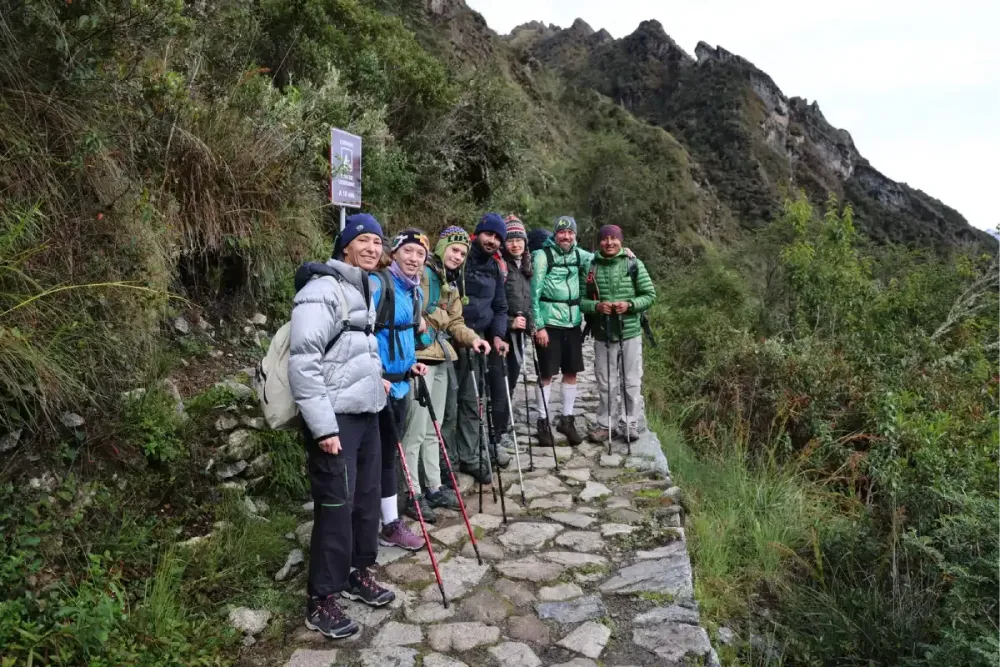
Which is harder: the 2-Day or 4-Day Inca Trail?
In general, the 4-Day Inca Trail requires better physical preparation because it combines several consecutive days of hiking, greater elevation changes, camping and high-altitude sections. Fatigue also accumulates, so difficulty does not depend only on one particular climb but on maintaining the effort over several days.
The Short Inca Trail also requires several hours of hiking and includes uphill sections and stone stairways, but it avoids the highest mountain passes of the Classic route. Most of the effort is concentrated into one main trekking day, which can be more manageable for travelers with average fitness but little experience with multi-day treks.
If this is an important factor in your decision, read Inca Trail difficulty and Inca Trail altitude, because duration and difficulty are not exactly the same thing.
Which route reaches a higher altitude?
The 4-Day Classic route reaches a considerably higher elevation because it crosses Dead Woman’s Pass, the highest point on the trail, at approximately 4,200 meters above sea level. This stage is one of the most physically demanding parts of the Classic Inca Trail.
The 2-Day route does not cross Dead Woman’s Pass. Because it begins at Km 104, it focuses on the final section of the trail and remains at lower elevations throughout the hike.
This difference can be important if you have limited experience at altitude or prefer to avoid major mountain passes. Even so, neither route should be planned without proper acclimatization in Cusco. To understand how elevation changes along the trek, read our guide to Inca Trail altitude.
Which offers better sleeping conditions: hotel or camping?
One of the clearest differences between the two routes appears at the end of the day. On the 2-Day Short Inca Trail, after completing the main hike, travelers spend the night in a hotel in Machu Picchu Pueblo. This allows you to shower, sleep in a bed and begin the next day’s visit with more comfort.
On the Classic Inca Trail, the nights are part of the trekking experience itself. You sleep at campsites along the route and continue hiking the following morning.
For some travelers, camping is one of the major attractions of the Classic route. For others, especially those who are not used to sleeping outdoors in the mountains, the comfort of a hotel can make the 2-Day option a better fit.
You can learn more about this part of the journey in our guide to Inca Trail campsites.
Which route includes more archaeological sites?
The 4-Day Inca Trail passes through more archaeological sites because the route is much longer. Different historical sites appear throughout the trek before reaching Wiñay Wayna and Inti Punku, so archaeology remains part of the experience for several days.
The Short Inca Trail concentrates on the final section of the route. Its main archaeological highlights include Chachabamba, Wiñay Wayna and Inti Punku, which means that even a shorter trek still offers a very meaningful historical experience.
The main difference is quantity and continuity. On the Classic route, archaeological sites appear progressively over several days. On the Short route, some of the most representative sites are concentrated into one hiking day.
If you want to understand how these sites are distributed, review the Classic Inca Trail route and our guide to Wiñay Wayna.
Which route has better scenery?
Both routes pass through beautiful landscapes, but the variety is different. The Short Inca Trail offers a relatively quick transition from Km 104 into greener environments, mountain scenery and cloud forest before reaching Wiñay Wayna and Inti Punku.
The Classic route offers much greater landscape diversity because it crosses different elevations and environments over four days. The scenery changes from valley areas to high mountain passes and then descends toward greener and more humid sectors near Machu Picchu.
If your priority is to experience how the Andean landscape changes over several days, the Classic route offers a broader experience. If you mainly want the scenery of the final section and the arrival through Inti Punku, the Short route preserves some of the most representative views.
Which is better for travelers with only a few days in Cusco?
The 2-Day Inca Trail is clearly easier to fit into a shorter itinerary. It uses less time and leaves more days available for Cusco, the Sacred Valley, other destinations in southern Peru or even combinations with the Amazon, Arequipa or Puno.
The Classic route requires four full trekking days, and it is also advisable to arrive in Cusco early enough to acclimatize before starting. For that reason, the real amount of time you should allow in your itinerary is greater than the four days shown in the tour name.
If your Peru trip is short, the 2-Day option can offer an efficient balance. If you have a week or more in the region and trekking is a priority, dedicating four days to the Classic route becomes much easier.
You can also read how many days you need for the Inca Trail to compare how the different options fit into a wider Peru itinerary.
Which is better if you have never done a multi-day trek?
For a beginner, the Short Inca Trail is often a more manageable introduction to trekking. It allows you to walk for several hours on a historic route, tackle real uphill sections and reach Inti Punku without committing to four consecutive days of hiking or sleeping at campsites.
That does not mean the Classic Inca Trail is only for experienced hikers. An active traveler who is well prepared and properly acclimatized can complete the four-day route even if it is their first major multi-day trek.
The difference comes down to your tolerance for accumulated effort and your willingness to spend several days hiking, camping and adapting to changes in altitude. If this is your first major trek, read Inca Trail for beginners and our guide to preparing physically for the route.
Which offers a more complete Inca Trail experience?
If by “complete experience” you mean spending several days on a historic route, sleeping in the mountains, crossing high passes and visiting multiple archaeological sites before reaching Machu Picchu, then the 4-Day Inca Trail clearly offers a deeper immersion.
The Short route still preserves essential elements of the Inca Trail, especially Wiñay Wayna, Inti Punku and the experience of arriving toward Machu Picchu on foot. However, it is not intended to reproduce the entire Classic route in less time.
This distinction matters because the 2-Day Inca Trail should not be viewed as an “incomplete” version in a negative sense. It is a different experience designed for travelers who want to enjoy the final historical section without dedicating four full days to the mountains.
How should you choose between the 2-Day and 4-Day Inca Trail based on your travel style?
The decision becomes easier when you stop asking which route is better and start thinking about how you prefer to travel. If you value comfort, have limited time and want to combine trekking with a hotel stay, the Short route usually makes more sense. If you enjoy longer hikes, want a more immersive experience and are comfortable with camping, the Classic route is the stronger choice.
You should also consider how important the Inca Trail itself is within your trip. For some travelers, Machu Picchu is the main goal and the trek is a special way to arrive. For others, the four-day journey is almost as important as Machu Picchu itself.
A practical way to decide is:
- Choose 2 days if you prioritize time, hotel comfort and a more compact experience.
- Choose 4 days if you prioritize trekking, mountains, camping and deeper immersion.
- Consider your fitness level before choosing based only on duration.
- Allow time to acclimatize before either route, especially if it is one of your first activities in Cusco.
Which is better depending on weather and season?
Both routes are exposed to changing Andean weather, although the Classic route involves more exposure because you remain in the mountains for several days and cross higher elevations.
On the 4-Day Inca Trail, you can experience major differences between the conditions at the highest points and the cloud forest areas closer to Machu Picchu. On the Short route, most of the weather exposure is concentrated into the trekking day from Km 104.
This does not mean that one route has “good weather” and the other has “bad weather.” Conditions depend on the time of year and can change throughout the day. For this topic, review Inca Trail weather and best time to hike the Inca Trail before choosing your travel dates.
So, should you choose the 2-Day or 4-Day Inca Trail?
Choose the Short Inca Trail 2 Days if you want to combine trekking, comfort and a memorable arrival at Machu Picchu without dedicating too many days of your trip. Its route through Chachabamba, Wiñay Wayna and Inti Punku allows you to experience one of the most representative sections of the Inca Trail while sleeping in a hotel after the hike.
Choose the Classic Inca Trail 4 Days if you want to experience the Classic route as a complete adventure, hike for several days, cross higher mountain sections, sleep at campsites and make the trek one of the main highlights of your Peru journey.
Neither option is simply better. The right choice is the one that matches your available time, fitness level, comfort with camping and travel style. Once you decide on the route, the next step is to check Inca Trail availability 2026 and 2027 to see whether spaces are available for your preferred dates.
Personal travel advice
Plan your trip with Dreamy Tours
Start a tailored journey with our exclusive tours and custom trips across Peru and other Latin American countries.