Search the blog
Tabla de contenidos
Choosing between Salkantay and the Inca Trail does not always mean giving one of them up. For travelers looking for a longer trekking experience around Cusco, there is an option that connects the high mountains of Salkantay with the historic section of the Inca Trail before reaching Machu Picchu.
The Salkantay + Inca Trail 6 Days is designed precisely to bring these two experiences together. The first days take place among mountains, valleys and landscapes dominated by Salkantay. The route then joins the traditional Inca Trail from Wayllabamba and continues through Dead Woman’s Pass, Runkurakay, Sayacmarca, Phuyupatamarka and Wiñay Wayna before reaching Inti Punku and Machu Picchu. The current itinerary reaches approximately 5,200 meters at Inca Chiriasqa Pass, so this should be considered a high-difficulty trek rather than simply a longer version of a standard Salkantay route.
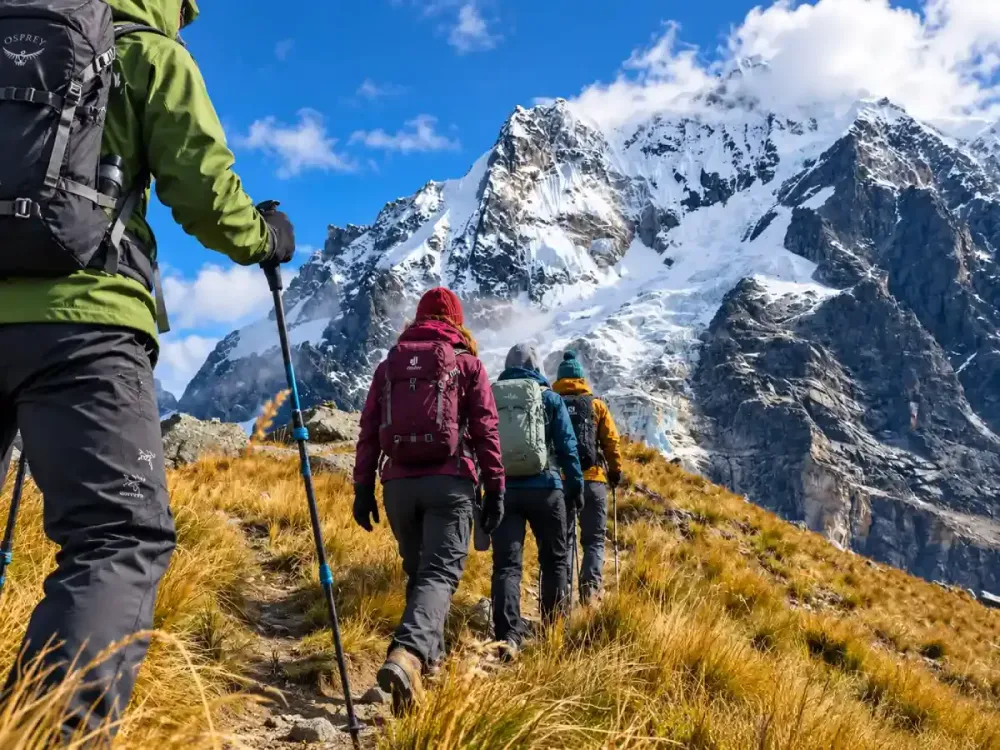
What does combining Salkantay and the Inca Trail actually mean?
Combining Salkantay and the Inca Trail means following a route that begins outside the Classic Inca Trail and later joins the regulated Inca road network for an important part of the historic approach to Machu Picchu. It is not simply a conventional Salkantay trek with a short Inca Trail excursion added at the end.
On the current Dreamy Tours itinerary, the journey begins through Mollepata and Soraypampa, continues toward Salkantay Pampa and climbs to Inca Chiriasqa Pass. From there, the route descends through the Pampacahuana Valley, passes Paucarcancha and reaches Wayllabamba, where it joins the Classic Inca Trail. The following days continue through Dead Woman’s Pass, Pacaymayo, Runkurakay, Sayacmarca, Phuyupatamarka and Wiñay Wayna.
This creates a gradual transition between two very different trekking styles. High-mountain scenery dominates the first part. Later, stone paths, stairways and archaeological sites become increasingly important as the journey joins the Classic Inca Trail route.
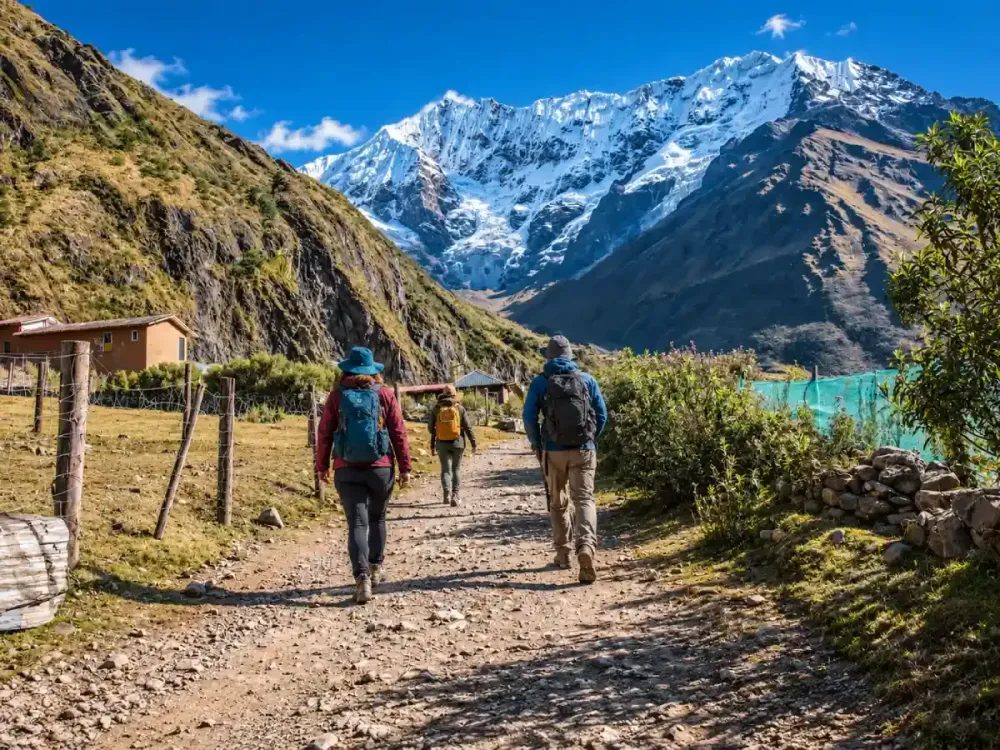
What does the Salkantay section add to the combined route?
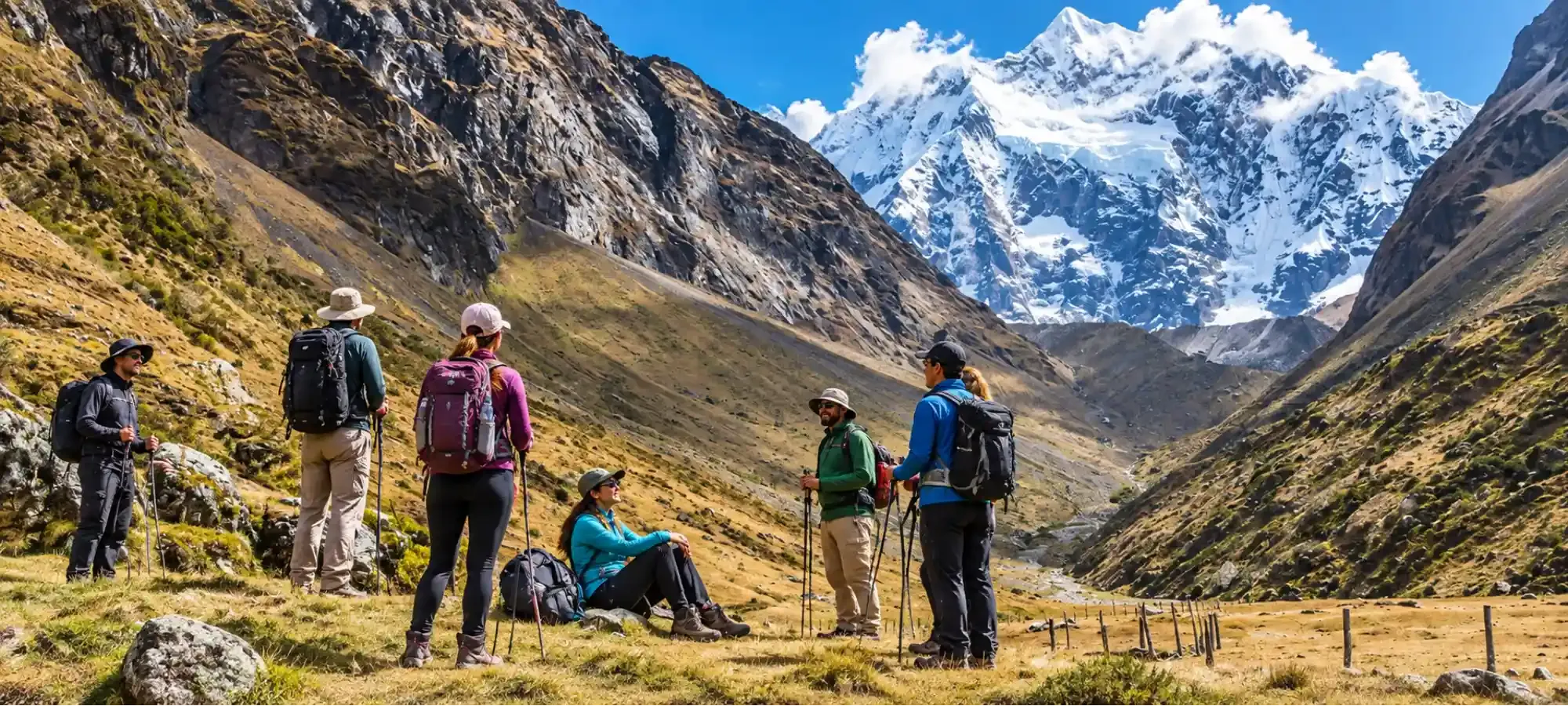
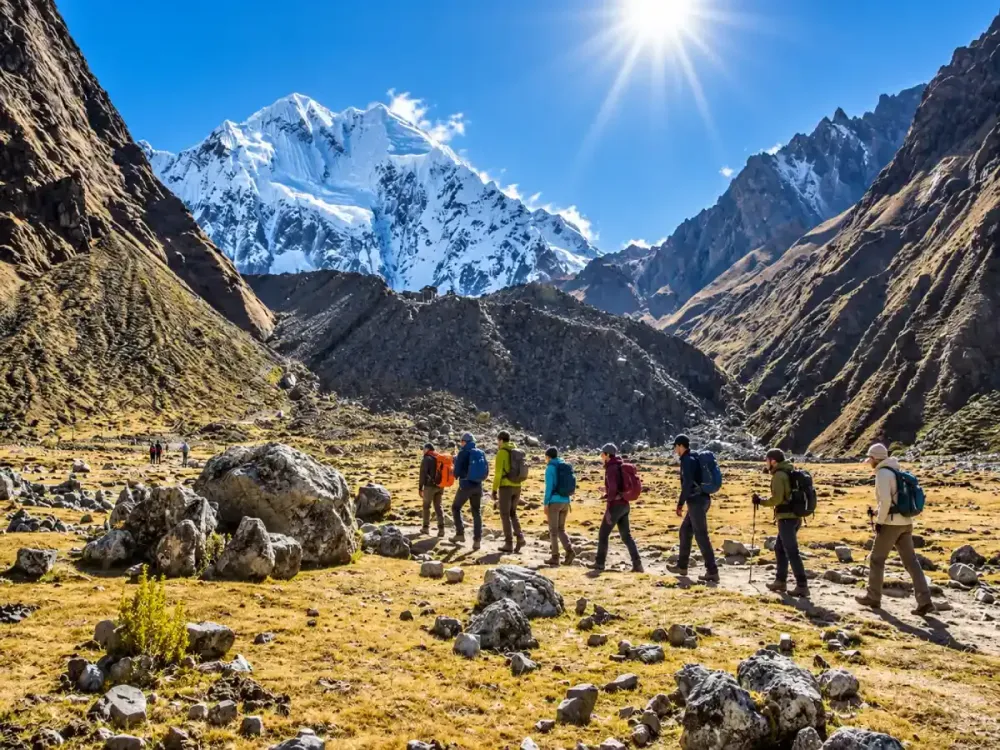
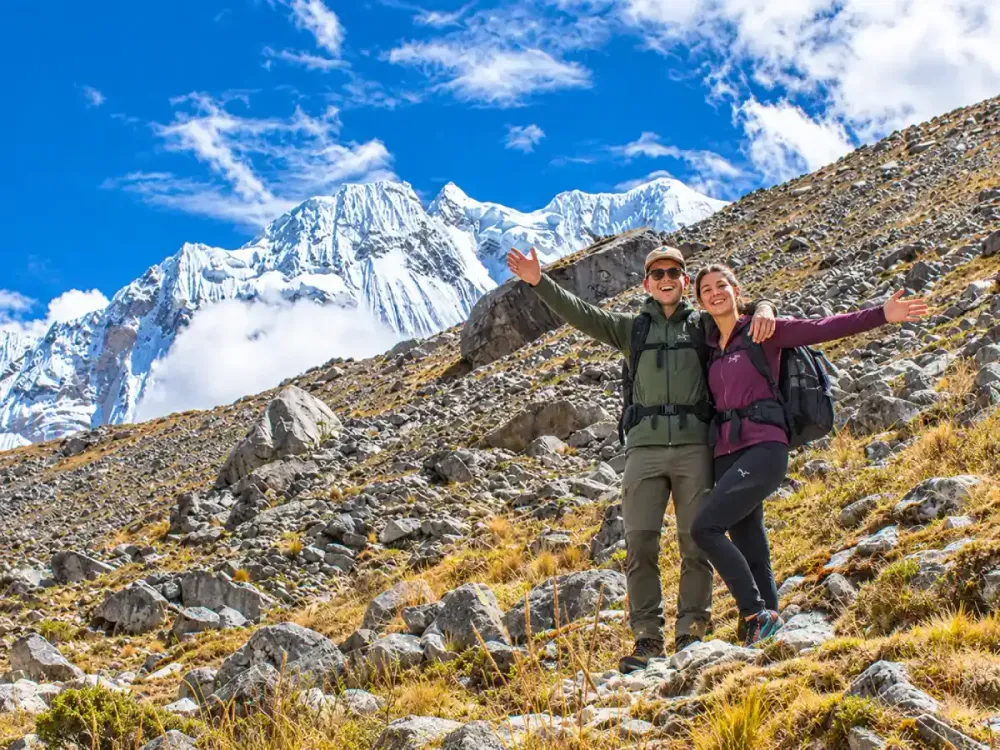
The first part contributes the strongest high-mountain element of the journey. Salkantay and the Humantay massif dominate much of the scenery as the route moves through open alpine areas, valleys and remote campsites far from the lower sections closer to Machu Picchu.
On the current program, the first day reaches Salkantay Pampa at approximately 3,900 meters, and there may be an option to visit Humantay Lake. The second day is one of the most demanding because it climbs to Inca Chiriasqa Pass at around 5,200 meters before descending toward Sisay Pampa.
This figure is especially important. The combined trek does not simply use the better-known Salkantay Pass at around 4,600 meters found on other versions of the trek. This itinerary uses a higher variation through Chiriasqa. For that reason, travelers should always review the exact itinerary rather than assume that every route carrying the name “Salkantay” reaches the same altitude.
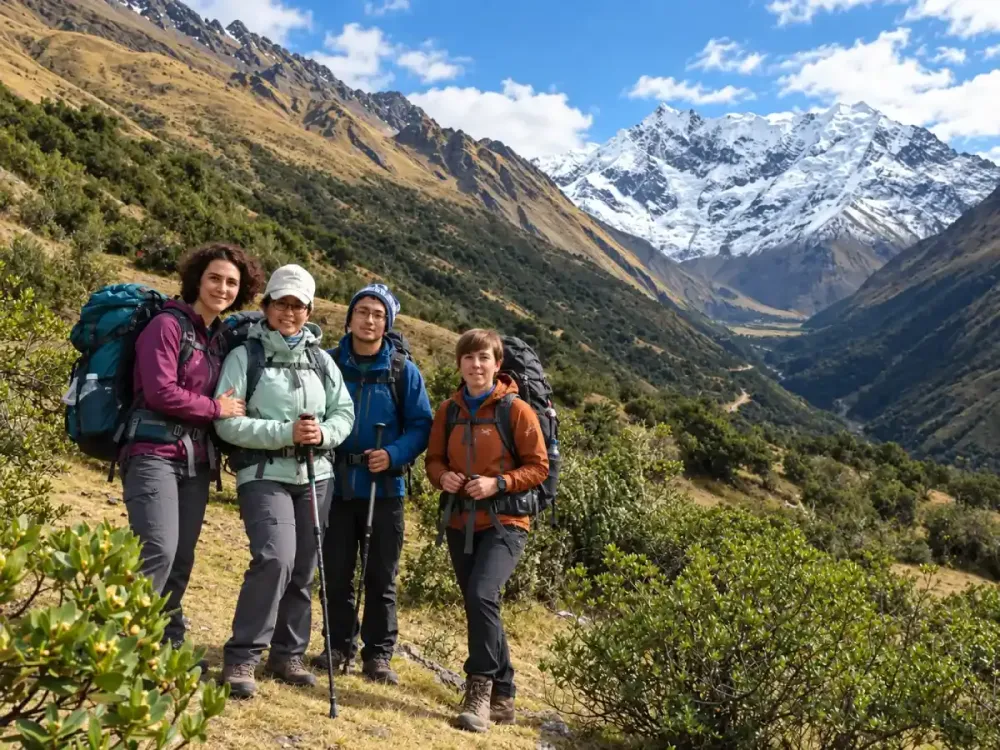
What does the Inca Trail add to the experience?
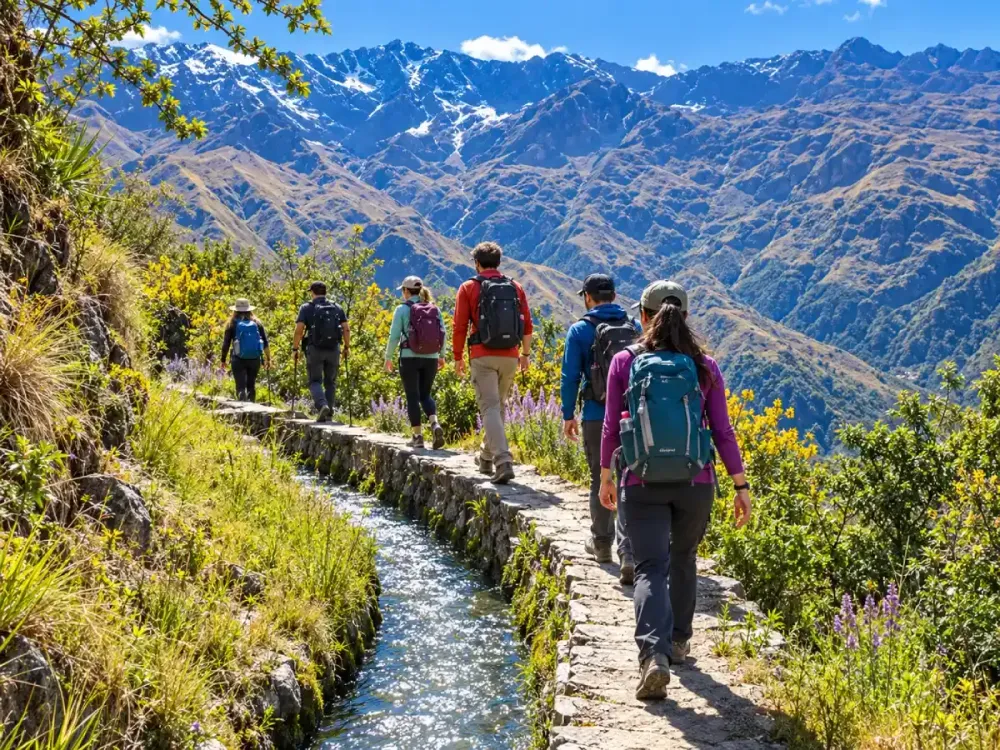
After several days dominated by high mountains, the character of the trek changes when the route joins the traditional Inca Trail. Large open landscapes and high passes gradually give way to historic paths, stone stairways and archaeological sites.
From Wayllabamba, the route climbs toward Dead Woman’s Pass at approximately 4,200 meters. Later, travelers reach some of the most representative sections of the Classic route, including Runkurakay, Sayacmarca, Phuyupatamarka and Wiñay Wayna. The final day continues to Inti Punku before reaching Machu Picchu.
This change in character is one of the main attractions of the combined route. You do not spend six days in the same kind of environment. The journey evolves from a high-mountain trek into a route with a much stronger archaeological component.
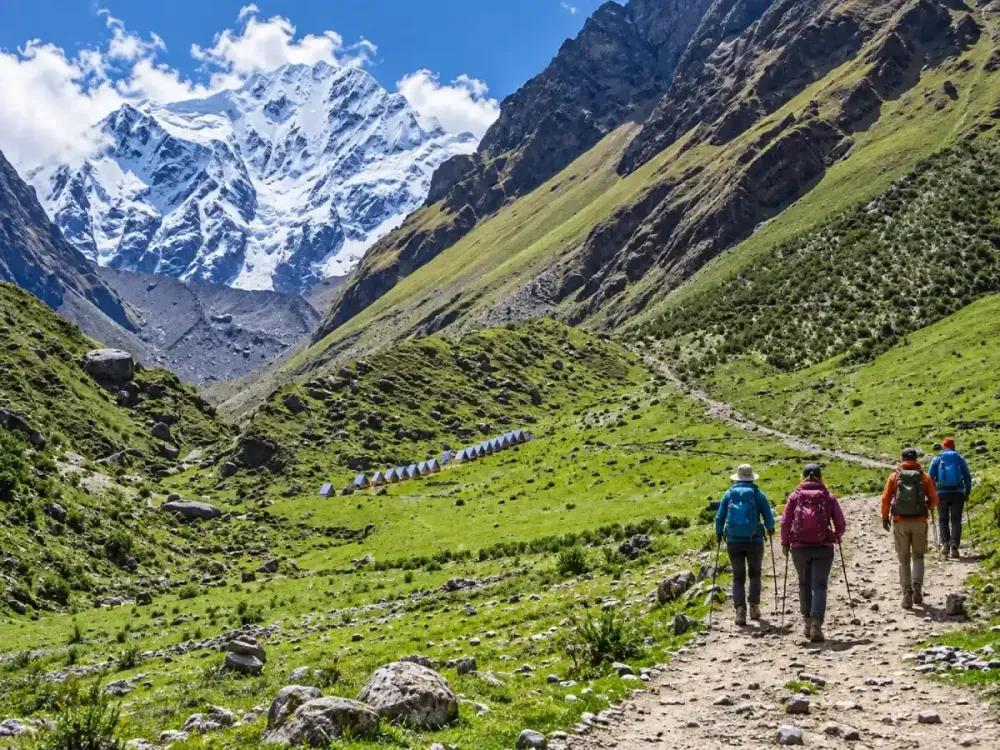
Why combine Salkantay and the Inca Trail?
The main reason is variety. Hiking only Salkantay allows you to focus on mountain landscapes and nature. Hiking only the Inca Trail allows you to immerse yourself more deeply in archaeology and the historic road network leading to Machu Picchu. The combined route is designed to bring both experiences together in one continuous journey.
This means you can move from snowcapped peaks and high valleys into stone paths, stairways and archaeological sites without ending one trek and starting another separately. The shift in landscape gives each stage its own identity and helps the journey avoid feeling repetitive.
In practical terms, the combined trek can include:
- High-mountain landscapes.
- Views of Salkantay.
- A pass above 5,000 meters.
- Different ecosystems.
- Historic Inca paths.
- Archaeological sites.
- Several nights of camping.
- Arrival at Machu Picchu through Inti Punku.
For travelers who want trekking to be one of the main highlights of their Peru trip, this combination can make much more sense than treating the hike only as a way to reach Machu Picchu.
Who is the Salkantay + Inca Trail best suited for?
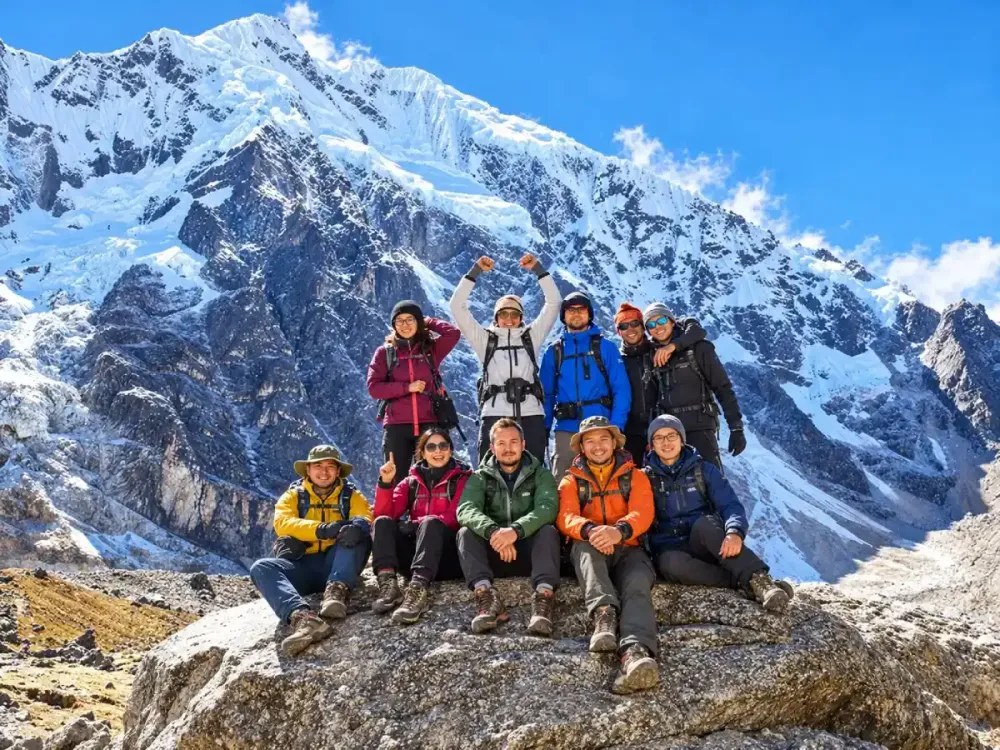
This route is designed for travelers who genuinely enjoy multi-day trekking and want to dedicate a significant part of their time in Cusco to hiking. It is not the most practical option for someone with very limited time or for travelers looking for an easier approach to Machu Picchu.
It can be especially suitable if you are interested in both nature and archaeology, want to experience several different Andean landscapes and have the fitness required to complete six consecutive days of activity. You should also be comfortable sleeping at campsites and dealing with major changes in temperature and altitude.
The current itinerary is classified by Dreamy Tours as high difficulty, reaches 5,200 meters and includes days of roughly 6 to 10 hours of activity. The decision should therefore be based on your real physical preparation, not only on the appeal of combining two famous routes.
If your main goal is to reach Machu Picchu as quickly as possible, there are better options. If you want the journey itself to be almost as important as the destination, the Salkantay + Inca Trail 6 Days becomes far more compelling.
Is combining Salkantay and the Inca Trail more difficult?
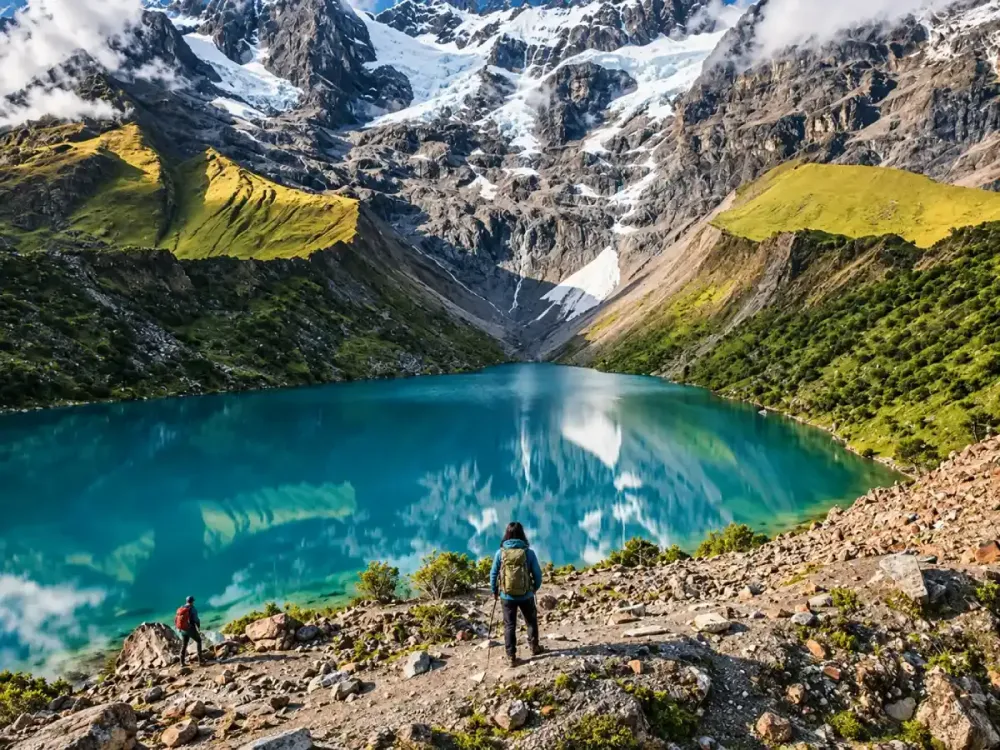
Yes. In general, it is more demanding than a short trek or a route with fewer days. The difficulty does not come from technical mountaineering, but from the accumulation of several physical factors over six consecutive days.
The trek includes long climbs, descents, uneven terrain, Inca stairways, nights at camp, weather changes and considerable altitude. The second day climbs to Inca Chiriasqa Pass at around 5,200 meters, and later, once on the Inca Trail, travelers must still cross Dead Woman’s Pass at approximately 4,200 meters.
This means the challenge is not concentrated in one difficult day. Even after completing the highest point, several major stages remain, including a long day between Pacaymayo, Runkurakay, Sayacmarca, Phuyupatamarka and Wiñay Wayna.
For this reason, previous training is highly recommended. To evaluate this more carefully, read how to prepare physically for the Inca Trail and Inca Trail difficulty.
How important is altitude on this route?
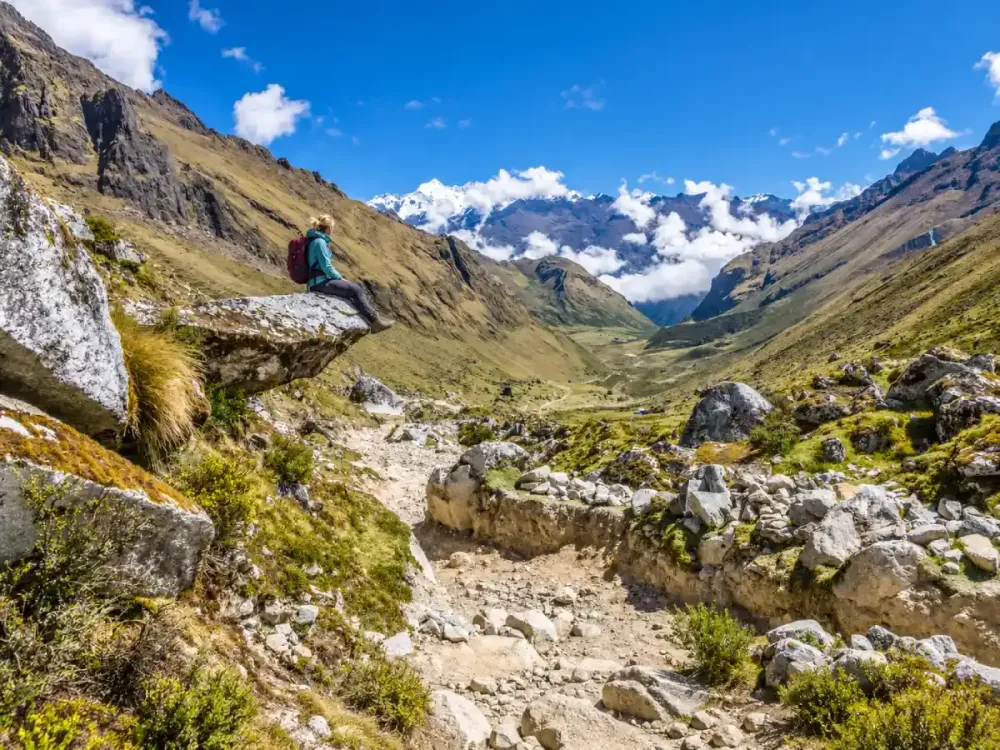
Altitude is one of the central factors of this combined trek. What makes this itinerary different from many other combinations is that it climbs to approximately 5,200 meters at Inca Chiriasqa Pass, significantly higher than Dead Woman’s Pass and also higher than the pass used on many conventional Salkantay routes.
Good physical fitness helps you cope with long hiking days, but it does not guarantee immediate adaptation to altitude. Fitness and acclimatization are different. You can have strong legs and excellent cardiovascular endurance and still need time for your body to adjust to lower oxygen levels.
At Dreamy Tours, we recommend spending time acclimatizing in Cusco or another high-altitude area before beginning a trek of this level. If a traveler experiences intense or persistent altitude-related symptoms, the guide should be informed and the appropriate safety instructions followed.
For more context, review Inca Trail altitude and altitude sickness on the Inca Trail.
Salkantay + Inca Trail vs hiking only Salkantay
A standard Salkantay trek keeps nature at the center of the experience. Travelers move through mountain landscapes, high passes, valleys and changing vegetation before eventually connecting with Machu Picchu according to the structure of the chosen itinerary.
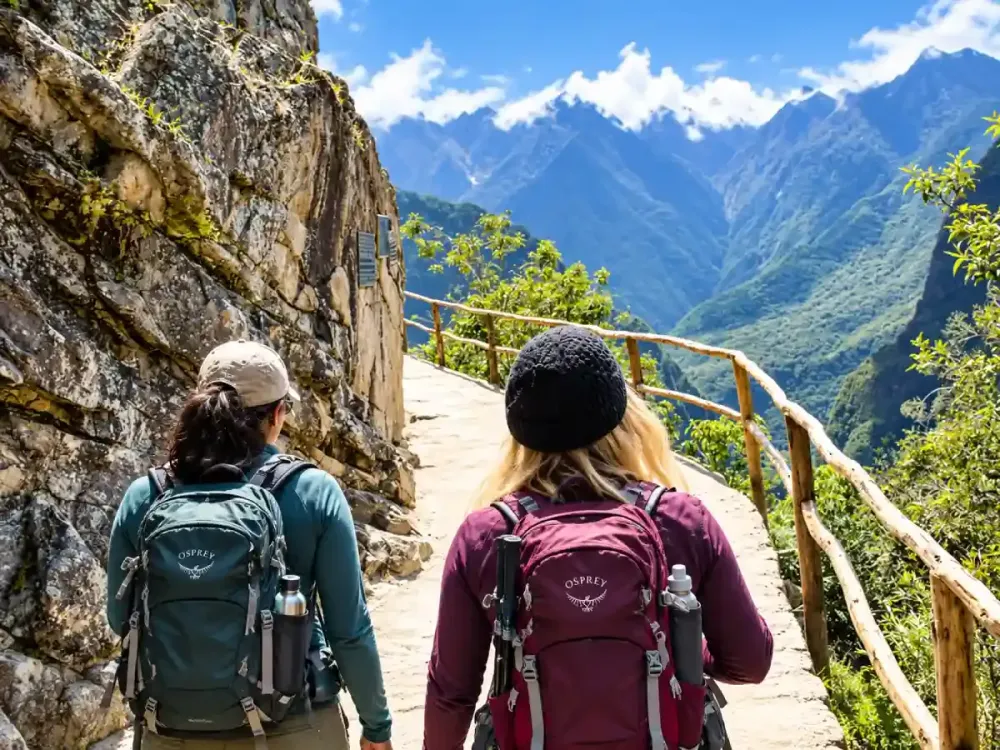
The combined route follows a different logic. After the first days in the high mountains, it joins the Inca Trail and adds several days of historic paths, stone stairways and archaeological sites. This completely changes the character of the final part of the journey.
| Feature | Salkantay only | Salkantay + Inca Trail |
|---|---|---|
| Main focus | Nature and mountains | Nature + history |
| High mountain terrain | Yes | Yes |
| Classic Inca Trail section | No | Yes, from Wayllabamba |
| Archaeological sites | Less prominent | Much more prominent in second half |
| Inti Punku | Not the usual arrival | Yes |
| Duration | Depends on itinerary | 6 days |
| Maximum altitude of combined route | Not applicable | Approx. 5,200 m |
If you already know you want the Salkantay experience but are also drawn to the idea of walking important sections of the Inca Trail and approaching Machu Picchu through Inti Punku, the combined route solves both interests within one expedition.
If you are still deciding between the two routes separately, start with Inca Trail vs Salkantay.
Salkantay + Inca Trail vs the Classic Inca Trail
The Classic Inca Trail 4 Days concentrates the entire experience on the historic route. From the beginning, the journey is shaped by ancient paths, archaeological sites, mountain passes and a constant progression toward Machu Picchu.
On the combined route, the first three days have a different identity. The trek begins in the Salkantay area, crosses Chiriasqa and descends through Pampacahuana before connecting with Wayllabamba. Only from that point onward does it join the main sectors of the Classic Inca Trail.
For that reason, choosing the combined route does not simply mean getting “more Inca Trail.” A significant portion of the six days is dedicated to a different high-mountain experience before entering the historic route.
| If your main priority is... | Better option |
|---|---|
| Maximum focus on Inca history | Classic Inca Trail |
| Greater variety of environments | Salkantay + Inca Trail |
| Shorter trekking duration | Classic Inca Trail 4 Days |
| More extreme high-altitude experience | Salkantay + Inca Trail |
| Arrival through Inti Punku | Both |
| Nature + archaeology | Salkantay + Inca Trail |
If archaeology is your absolute priority and four days fit your itinerary, the Classic route may be the more coherent choice. If you want a longer expedition with a much stronger high-mountain component before joining the Inca Trail, the combined route has a distinct identity of its own.
How many days do you need for Salkantay + Inca Trail?
The current Dreamy Tours program is designed as a 6-day, 5-night trek. This allows the first three days to focus on the Salkantay and Pampacahuana sectors before continuing through the Inca Trail toward Machu Picchu.
The itinerary is currently structured as follows:
| Day | Main route |
|---|---|
| Day 1 | Cusco, Mollepata, Soraypampa and Salkantay Pampa |
| Day 2 | Salkantay Pampa, Inca Chiriasqa Pass and Sisay Pampa |
| Day 3 | Sisay Pampa, Paucarcancha and Wayllabamba |
| Day 4 | Wayllabamba, Dead Woman’s Pass and Pacaymayo |
| Day 5 | Runkurakay, Sayacmarca, Phuyupatamarka and Wiñay Wayna |
| Day 6 | Wiñay Wayna, Inti Punku, Machu Picchu and return |
The six-day label should not be evaluated in isolation. Day 2 can involve around 7 to 8 hours of hiking up to 5,200 meters, while the Inca Trail section between Pacaymayo and Wiñay Wayna can also be a long and demanding day.
When comparing combined routes, it is therefore important to look not only at total duration, but also daily distance, maximum altitude, approximate walking hours and the exact Inca Trail sectors included.
Do you need permits for the Inca Trail section?
Yes. Once the itinerary enters the regulated sectors of the Inca Trail network, access is subject to the official reservation system and corresponding availability.
The Inca Trail network operates under regulated access, so a combined trek cannot be organized based only on the logistical availability of the Salkantay section. The Inca Trail component must also have confirmed access.
The route also closes during February for annual conservation and maintenance. Temporary closures outside February can also occur for safety reasons, including severe weather conditions.
For this reason, we recommend reviewing Inca Trail permits and Inca Trail availability 2026 and 2027 before confirming the rest of the trip.
What should you pack for a combined trek?
A six-day trek that climbs above 5,000 meters and later descends toward cloud forest requires more versatile equipment than a one-day hike. You need to be prepared for intense cold at higher elevations, strong sun, wind, possible rain and more humid conditions closer to Machu Picchu.
The most practical approach is to dress in layers. Rather than relying on one very heavy jacket, a combination of a base layer, insulating layer and waterproof outer shell gives you more flexibility during climbs, rest stops and nights at camp.
Key items include:
- Layered technical clothing.
- Waterproof and wind-resistant jacket.
- Warm insulating layer for high-altitude sections.
- Hiking boots already broken in.
- Trekking socks for several days.
- Hat or cap and sun protection.
- Gloves and warm hat for colder stages.
- Comfortable daypack.
- Reusable water bottle.
- Trekking poles if you are used to them.
- Waterproof protection for documents and electronics.
- Personal items and regular medication.
Personal travel advice
Plan your trip with Dreamy Tours
Start a tailored journey with our exclusive tours and custom trips across Peru and other Latin American countries.