Search the blog
Tabla de contenidos
Preparing for the Inca Trail does not mean training like a professional athlete. The goal is to gradually get your body used to walking for several hours, handling climbs and descents, using stone stairways, moving over uneven terrain and repeating that effort over several consecutive days.
This preparation becomes especially important if you are planning to hike the Classic Inca Trail 4 Days. The route combines long hiking days, significant altitude changes and numerous stone steps, while reaching approximately 4,200 meters at Dead Woman’s Pass. Arriving with a solid fitness base will not make every section easy, but it can help you manage your energy better and enjoy the journey more.
At Dreamy Tours, we believe preparation should be progressive and realistic. You do not need to recreate the entire Inca Trail before traveling to Peru. What matters is getting your body used to the type of effort you will face. If you are still unsure how demanding the route is, start with our guide to Inca Trail difficulty.
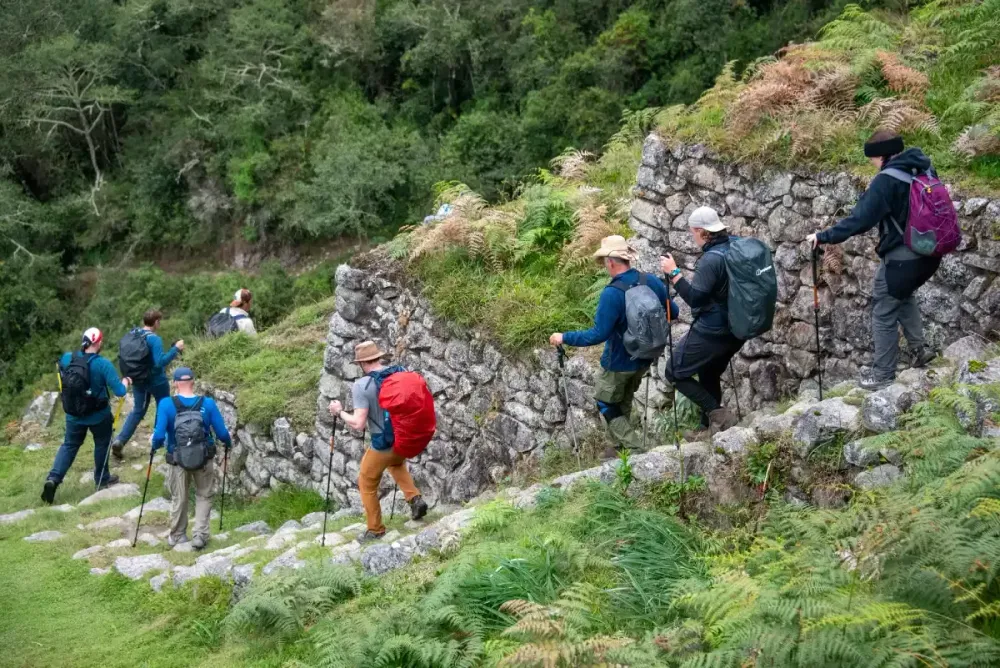
How far in advance should you start training for the Inca Trail?
For someone who already exercises regularly, starting around 6 to 8 weeks before the trek can be a practical guideline. That period gives you enough time to gradually increase walking duration, add elevation gain and strengthen your legs without trying to build all your fitness in just a few days.
If you currently do very little physical activity, it may be better to begin earlier. In that case, the first priority should be building a base: walk more often, slowly increase the length of your sessions and allow your muscles, joints and cardiovascular system to adapt.
Progression matters more than intensity. Jumping suddenly from very little activity to a four- or five-hour hike can create excessive fatigue and discomfort at the exact moment when your preparation is only beginning.
| Current fitness level | When to start | Main priority |
|---|---|---|
| You hike regularly | 4–6 weeks before | Elevation gain and back-to-back days |
| You exercise several times a week | 6–8 weeks before | Longer walks and stairs |
| You exercise occasionally | 8–10 weeks before | Build endurance progressively |
| Mostly sedentary lifestyle | 10–12 weeks or more | Build a basic fitness foundation gradually |
These periods are general references, not fixed rules. Age, experience, fitness level and the amount of time you have available to train will vary from person to person.
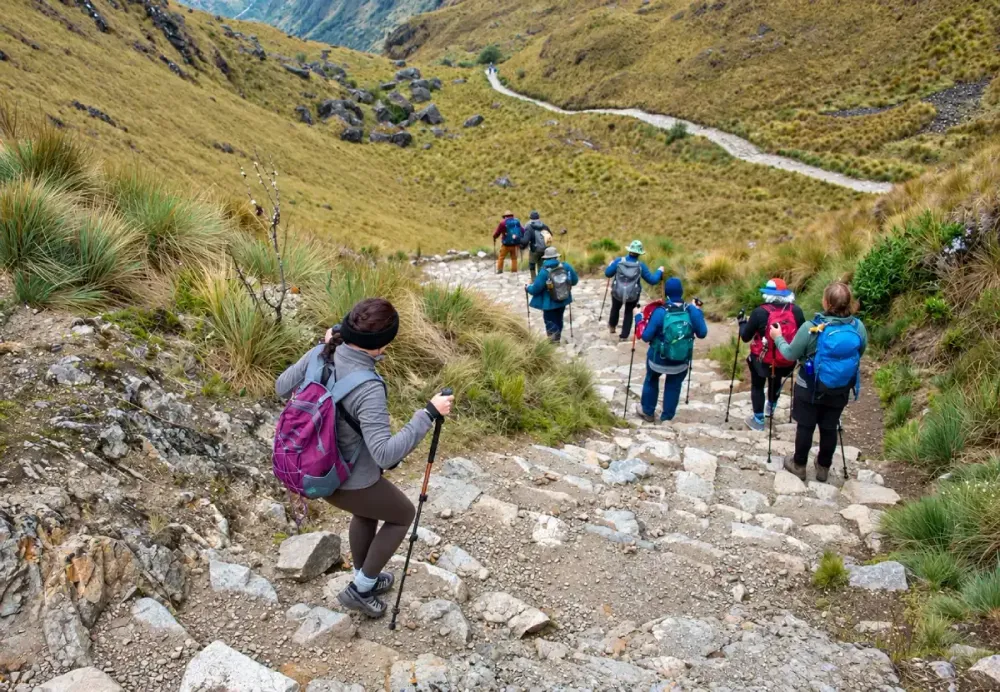
What should you train for the Inca Trail?
The most useful training usually resembles, as much as possible, the type of effort you will face during the trek. Running or using gym machines can improve endurance, but they do not fully prepare your legs for hours of hiking, stairways and changing gradients.
You should focus especially on cardiovascular endurance, leg strength, core stability and the ability to walk for several hours. It also helps to get used to uneven surfaces because the Inca Trail is not a smooth or consistently flat path.
Useful activities include long walks, hiking with elevation gain, stairs, uphill and downhill walking and basic leg-strength exercises. If you have access to natural trails, they can provide more specific preparation than doing all your training indoors.
You do not need to turn every session into an endurance test. A balanced combination of effort, recovery and gradual progression is usually more useful than training hard every single day.
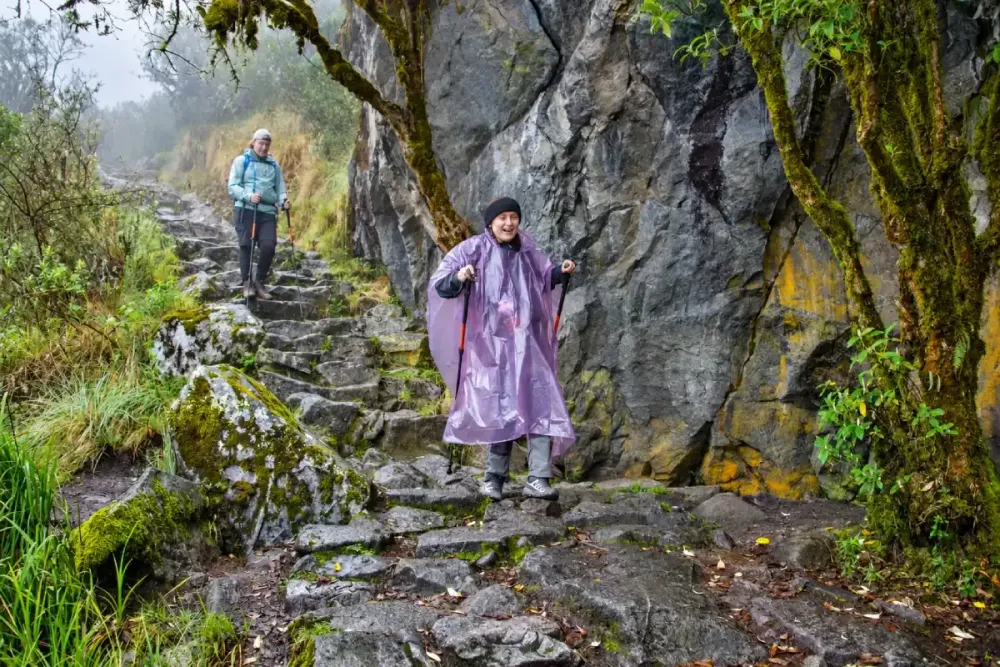
8-week Inca Trail training plan
An eight-week plan can work well as a general reference for travelers who already have a basic fitness level. The goal is to gradually increase your training volume and get closer to the type of effort required on the Classic Inca Trail 4 Days without trying to replicate every day of the trek exactly.
During the first few weeks, the main goal is consistency. After that, you can add more time, elevation gain and consecutive training days. In the final stage, your training should be consolidated and then gradually reduced before departure.
| Period | Main goal | Recommended training |
|---|---|---|
| Weeks 1–2 | Build a base | 45–60 minute walks, 3 times per week |
| Weeks 3–4 | Improve endurance | 1–2 hour walks, stairs and elevation gain |
| Weeks 5–6 | Get closer to real trekking effort | 1 long hike per week + 2 moderate sessions |
| Week 7 | Consolidate | Long hike with elevation gain and a light backpack |
| Week 8 | Recover before travel | Reduce intensity and prioritize rest |
During Weeks 5 and 6, it can be especially useful to train on two consecutive days. This helps you get used to starting a new walk while your legs still carry some fatigue from the previous day.
You do not need to hike 42 kilometers during a training session or try to reach the same elevations as the Inca Trail. The purpose is to prepare your body for several hours of repeated effort over consecutive days.
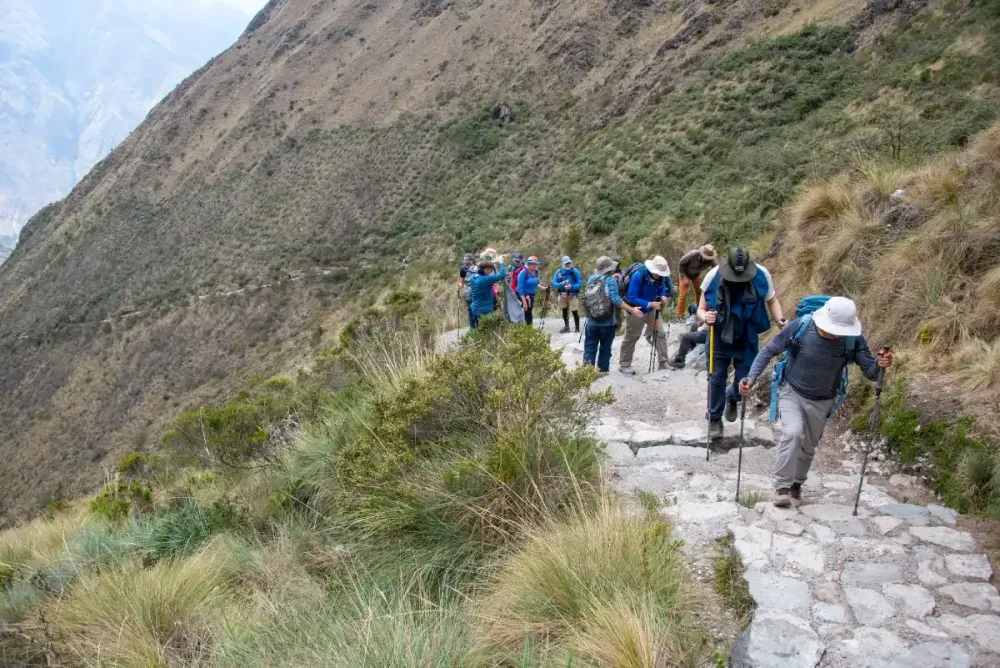
Why should you train for descents too?
Many travelers focus all their preparation on climbing because they immediately associate Inca Trail difficulty with Dead Woman’s Pass. However, a major part of the physical challenge comes during the descents.
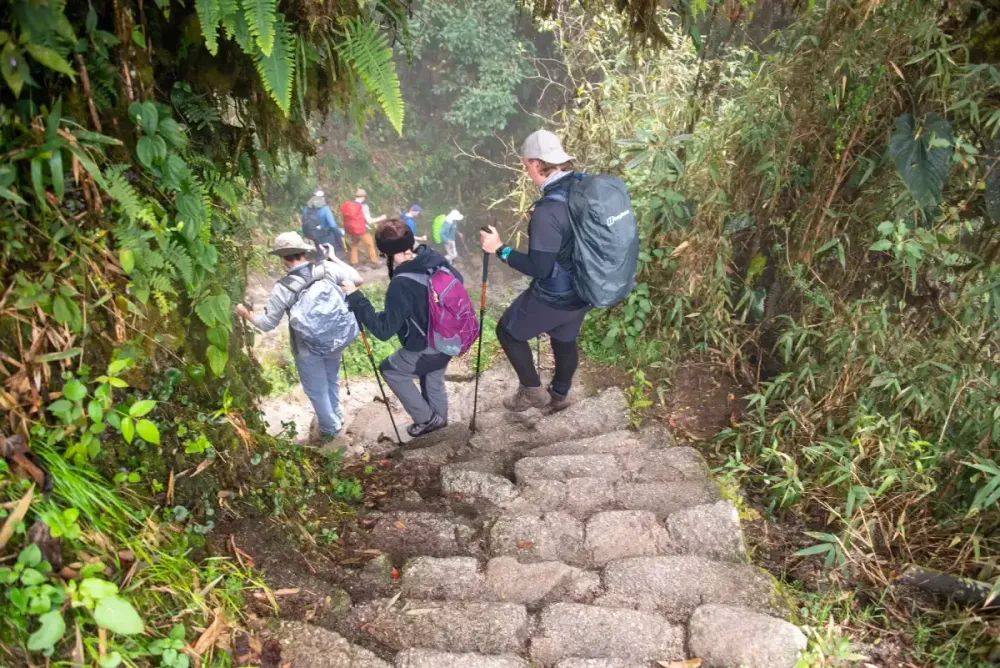
After crossing the mountain passes, you still need to descend long sections and negotiate numerous stone stairways. During these sections, your muscles work differently from the way they do on climbs, and your knees absorb more impact.
Day 3 of the Inca Trail is a good example. Even though the highest point is already behind you, there are still additional climbs, long descents and many steps before reaching Wiñay Wayna.
Try to include downhill sections and stairs in your training gradually. A route where you only hike uphill and return by vehicle will not fully prepare your legs for what you will face on the trek.
Should you train with a backpack?
Yes, but that does not mean starting with a heavy backpack. The goal is to gradually get your shoulders, back and posture used to walking for several hours while carrying the items you will actually have with you.
You can begin with water, a light jacket and a few personal items. Later, once you are comfortable, use a load similar to what you expect to carry during the trek. Starting with too much weight does not give you an important advantage and can create unnecessary discomfort.
On the Classic Inca Trail 4 Days, baggage distribution depends on the service booked and the porter system. Before training with an overly heavy pack, it is better to confirm how much weight you will actually need to carry yourself.
The most useful thing is learning how to adjust your backpack correctly and finding out before the trip whether the straps, weight distribution or size cause any discomfort.
How can you prepare your legs for the Inca Trail stairs?
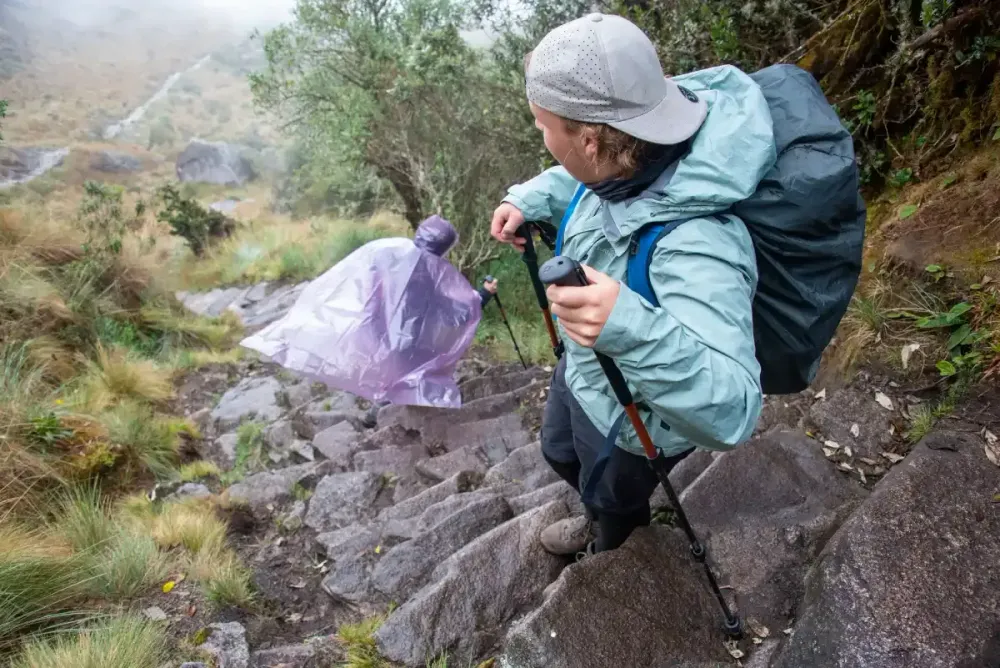
Stone stairways are an important part of the Inca Trail and deserve specific attention during training. They are not uniform steps like the ones in a modern building. Many vary in height, width and surface, so they require more stability and control.
Climbing stairs helps strengthen your quadriceps, glutes and calves. Descending them in a controlled way is also useful because it prepares your muscles for repeated impact during long downhill sections.
You do not need to spend hours on a stair machine. You can add stairs gradually to your normal workouts and combine them with real hills and trails. The main goal is to make sure your legs are already familiar with the movement before you face hundreds of steps on the trek.
Strength exercises can also help. Squats, lunges, step-ups and calf raises are useful additions, as long as they are adapted to your level and you do not continue exercising through pain.
Is it useful to train on consecutive days?
Yes, especially during the second half of your preparation. The Inca Trail is not one long hike followed by several days of rest. After finishing one stage, you will wake up and walk again the next day.
For that reason, two moderate days in a row can be more specific than one extremely hard workout each week. For example, you could complete a longer hike on Saturday and a shorter walk on Sunday.
The goal is not to be completely exhausted on the second day. It is to gradually get used to walking again when your legs still carry some fatigue from the previous session.
This kind of preparation is particularly useful for the Classic route. If you are doing the Short Inca Trail 2 Days, there is less accumulated effort, but the first day still concentrates several hours of hiking and preparation remains important.
Physical training does not replace acclimatization
You can arrive in Peru in excellent physical condition and still feel the effects of altitude. Training and acclimatization are different processes.
The Classic Inca Trail reaches approximately 4,200 meters at Dead Woman’s Pass, which means your body must adapt to exercising where less oxygen is available. Running, cycling or exercising regularly improves fitness, but it does not determine exactly how your body will respond to altitude.
At Dreamy Tours, we recommend avoiding a schedule where you start the Inca Trail immediately after arriving in Cusco from sea level. Having some time beforehand to adapt can help you begin the trek in better condition.
This topic deserves separate attention. For more detail, read Inca Trail altitude and altitude sickness on the Inca Trail.
What if you have never done a trek before?
Never having completed a multi-day trek does not automatically mean the Inca Trail is beyond your ability. Many travelers choose it as their first major trekking experience.
The difference is preparation. If you already walk regularly, do some form of exercise and spend several weeks improving your endurance, you can arrive with a solid base even without previous multi-day hiking experience.
Choosing the right route also matters. The Short Inca Trail 2 Days avoids the highest passes and camping of the Classic route, so it may be more manageable for some travelers. The Classic Inca Trail 4 Days requires more endurance because it combines four days, camping, altitude and a longer overall route.
If this will be your first experience of this kind, also read Inca Trail for beginners before deciding which version suits you best.
What mistakes should you avoid during training?
One of the most common mistakes is starting too late and trying to compensate by increasing intensity too quickly. Training very hard only during the final week does not replace several weeks of gradual adaptation and may leave you tired or sore before the trip even begins.
Another mistake is focusing only on running. Cardiovascular fitness is useful, but the Inca Trail requires walking, climbing, descending and using stairways for several hours. Your preparation should reflect that variety.
You should also avoid wearing brand-new hiking boots for the trek. Your footwear should already have been used on several walks. A small area of friction that seems harmless after 30 minutes can become a real problem after several hours.
Other mistakes include training intensely just before travel, ignoring recovery days, arriving dehydrated or beginning the trek without enough sleep. Preparation is not only about accumulating distance. Recovery is part of the process too.
Do you need to be in excellent physical condition?
You do not need extraordinary athletic performance to complete the Inca Trail. For most travelers, it is far more important to have reasonable fitness, train progressively and understand the level of effort the route involves.
Your goal should not be to walk faster than everyone else. Maintaining a sustainable pace is usually much more important than trying to arrive first at every stop. A traveler who manages energy well may finish the day feeling better than someone who started too quickly.
A practical benchmark is being able to complete long walks, handle elevation changes and recover well enough to exercise moderately again the following day.
If you have a pre-existing medical condition, relevant health history or concerns about prolonged exercise at altitude, it is sensible to speak with a healthcare professional before traveling.
How should you train during the final week before the Inca Trail?
The final week is not the time to dramatically improve your fitness. By that stage, the important work should already be done. Trying to make up for several missed weeks by suddenly increasing training can leave you fatigued just before the trek.
During the last few days, reduce your walking volume, keep activity light and prioritize rest, hydration and sleep. You can stay active, but you no longer need to test your limits.
It is also a good time to review your equipment. Wear your boots again, adjust your backpack and check the clothes you plan to use. This gives you time to identify discomfort before you leave.
The goal is to arrive in Cusco with prepared legs and enough energy. Your final training walk should not become a personal endurance challenge.
How can you tell if you are ready for the Inca Trail?
There is no single test that determines whether someone is “ready” for the Inca Trail. A positive sign is being able to complete a hike of several hours with elevation gain, recover reasonably well and return to moderate activity the following day.
You should also feel comfortable in your boots and backpack, understand your own pace on climbs and have practiced descents and stairs. You do not need to reach a point where you never feel tired. Trekking naturally causes fatigue. The important thing is that the fatigue remains manageable.
If you can walk for several hours, have trained your legs and endurance, practiced elevation changes and allowed time to acclimatize before departure, you will have a much stronger foundation for enjoying the trek.
From there, the choice depends on the experience you want. The Classic Inca Trail 4 Days offers the complete traditional route, while the Short Inca Trail 2 Days concentrates the historic hiking experience into a shorter format.
Good preparation does not remove the climbs, stone stairways or fatigue. What it changes is your ability to manage them without letting the physical effort overshadow everything around you: mountains, cloud forest, archaeological sites and the gradual approach to Machu Picchu.
Personal travel advice
Plan your trip with Dreamy Tours
Start a tailored journey with our exclusive tours and custom trips across Peru and other Latin American countries.