Search the blog
Tabla de contenidos
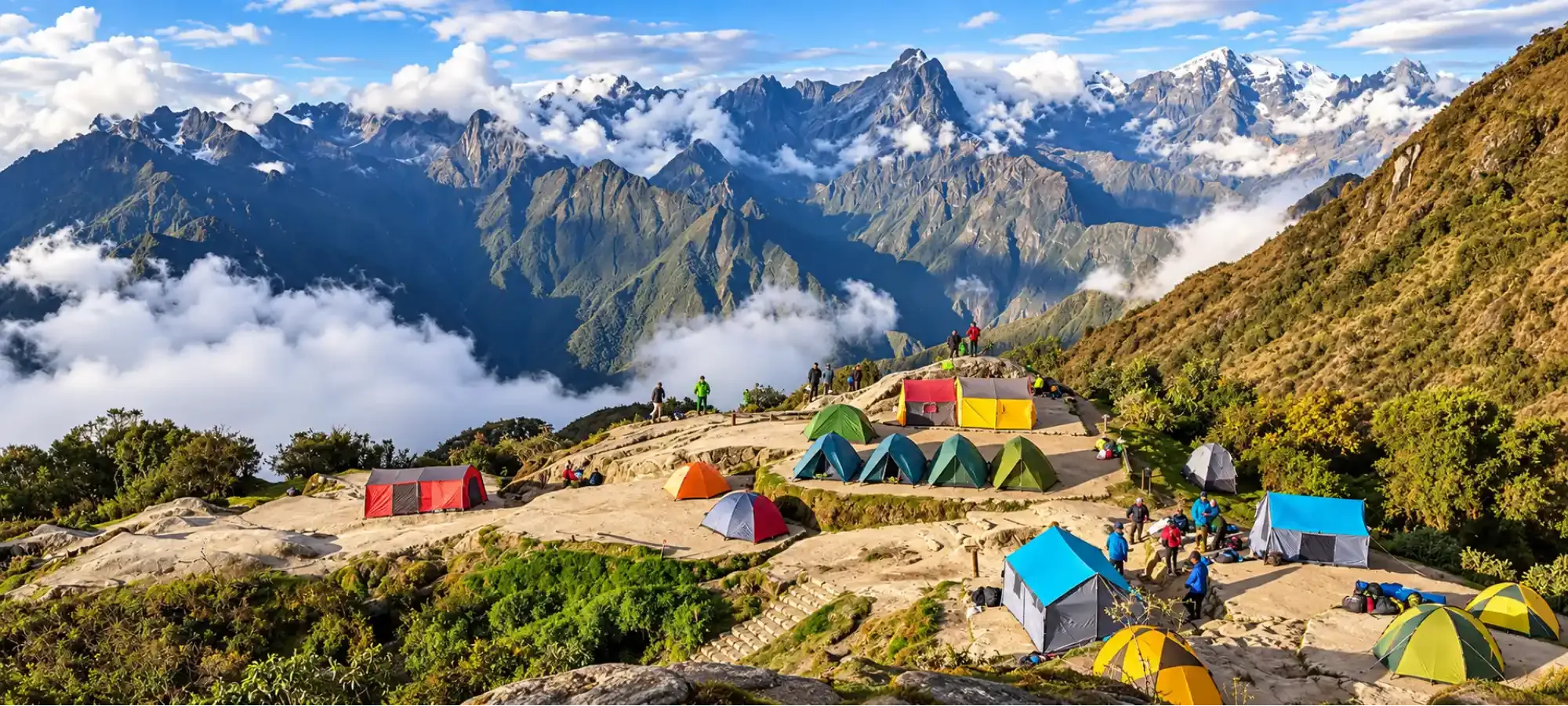
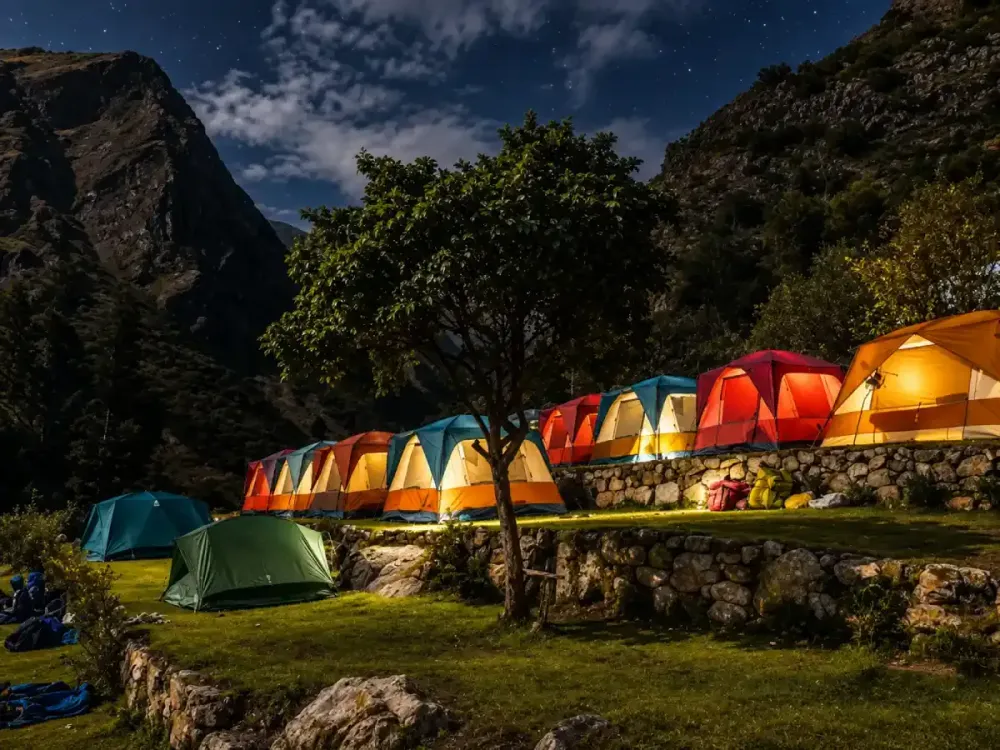
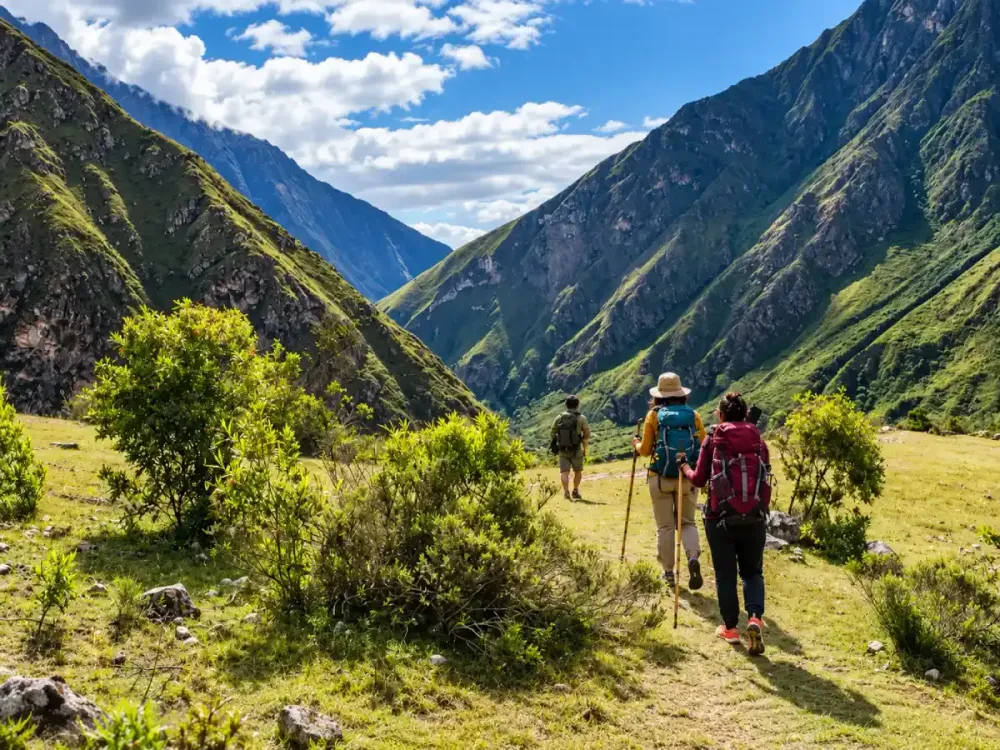
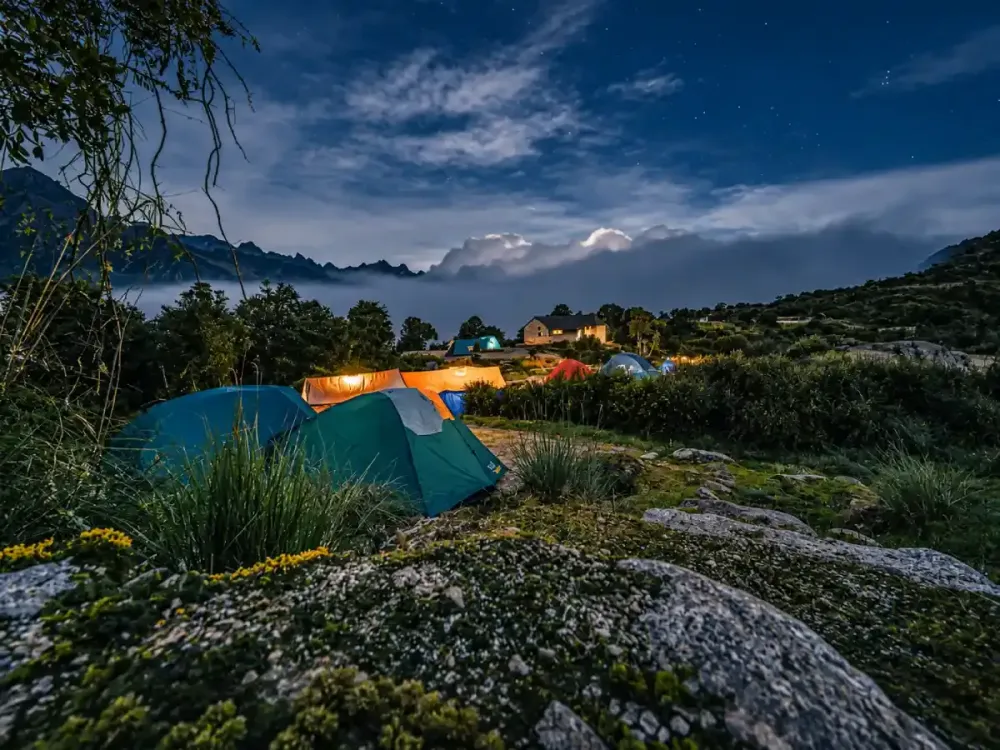
The Inca Trail campsites are an essential part of the experience of hiking the Classic route to Machu Picchu. During the Classic Inca Trail 4 Days, travelers spend three nights along the route, away from hotels and the usual services of a city. This means sleeping in tents, adapting to basic facilities and organizing each day around hiking, meals and rest.
The experience, however, is not simply about reaching the end of the day and looking for a place to pitch a tent. Organized groups use designated camping areas and operate with logistics that include tents, cooking equipment, dining spaces and staff responsible for transporting and setting up much of the gear.
The exact campsite location may depend on the confirmed itinerary and operational planning for each departure. What matters most is arriving with realistic expectations: you will sleep in the mountains with basic services, but within an organized trekking operation designed to help you recover after several hours of hiking.
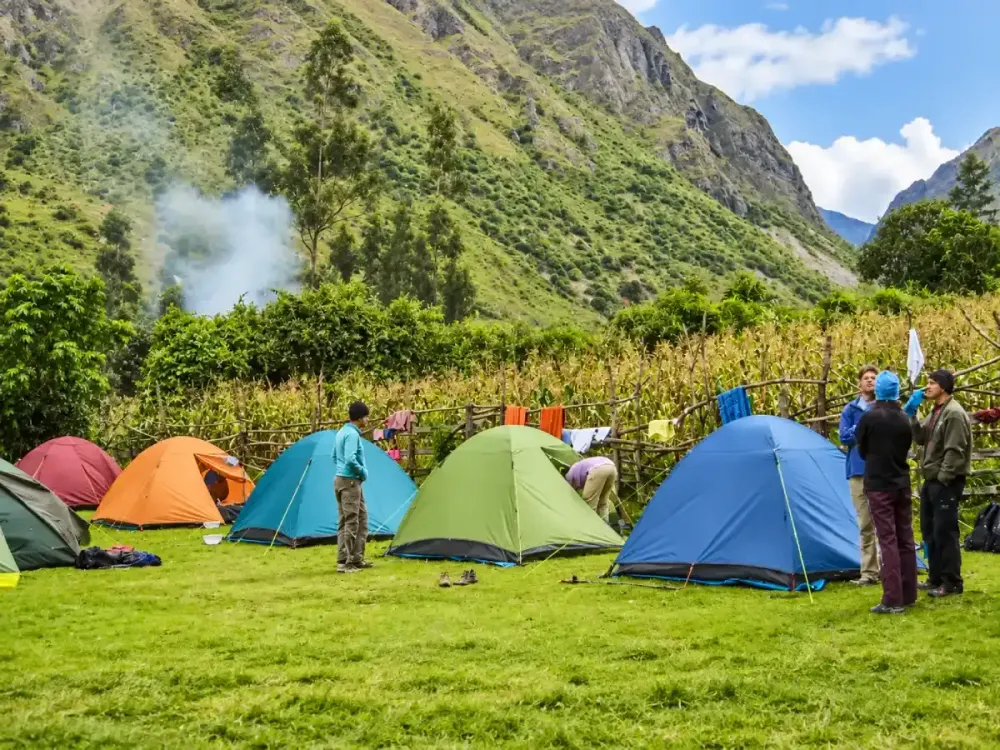
Where do you sleep during the Inca Trail?
On the Classic four-day route, you sleep at campsites located along the Inca Trail. Travelers do not simply choose any point on the trail to set up a tent. Organized groups use designated camping areas according to the planned itinerary and route logistics.
Depending on the program and campsite allocation, the first night may be spent in sectors such as Ayapata or another authorized area along the first section of the route. The second night follows the most demanding high-altitude sections, while the third night is generally closer to Wiñay Wayna and the final approach to Inti Punku.
| Night | Typical section of the route | Main characteristic |
|---|---|---|
| Night 1 | First-day campsite area | After hiking from Km 82 and entering the Classic route |
| Night 2 | High-route campsite area | After the most demanding mountain passes |
| Night 3 | Near Wiñay Wayna | Final night before Inti Punku and Machu Picchu |
The campsite sequence is closely connected to the distances, elevation changes and physical demands of each trekking day.
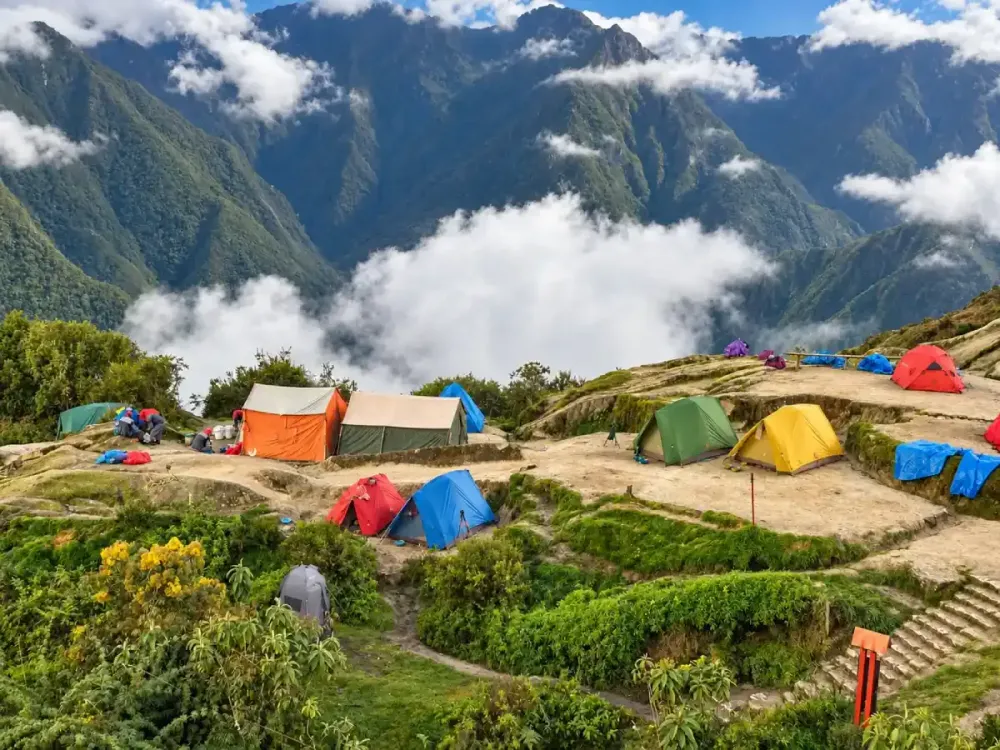
What are the Inca Trail campsites like?
The campsites are functional spaces designed mainly for resting, eating and recovering energy before continuing the trek the following day. You should not expect the infrastructure of a mountain lodge or the comfort of a hotel.
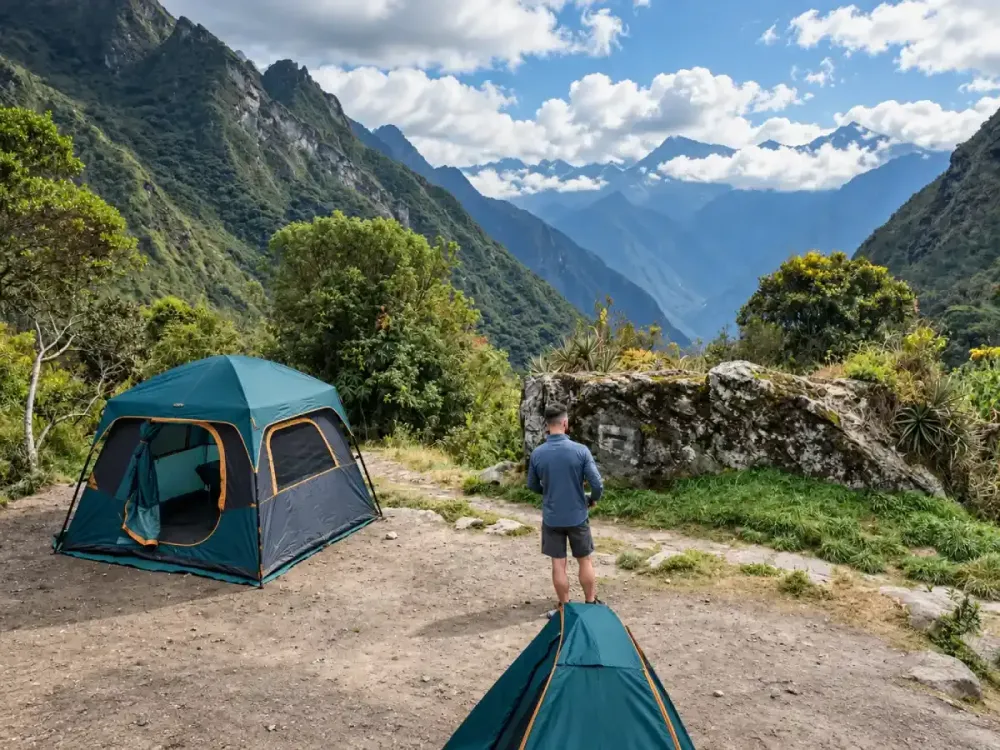
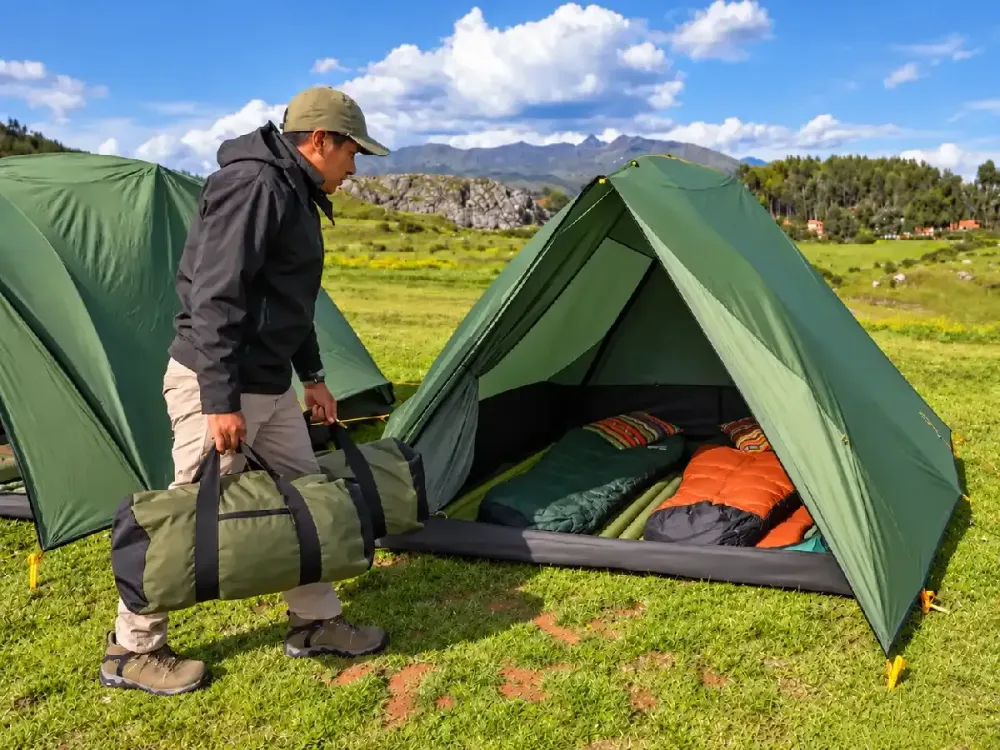
On an organized trek, the support team prepares the tents and arranges the areas needed for meals and cooking. Depending on the service booked, the camp setup can include tents, sleeping mats, dining tents, tables, chairs and kitchen equipment.
| Service | What you can expect |
|---|---|
| Sleeping tents | Main space for sleeping |
| Sleeping mat | Basic insulation and comfort |
| Dining area | Organized space for meals |
| Tables and chairs | Usually included in organized services |
| Kitchen equipment | Transported and used by the support team |
| Toilets | Basic facilities depending on the campsite |
| Electricity | Should not be expected |
| Internet | Limited or unavailable in many sections |
| Water | Managed according to the trekking logistics |
The setup is simple, but good organization makes a major difference. After several hours of hiking, arriving to find your tent ready and being able to sit down for a warm meal can feel more valuable than any city luxury.
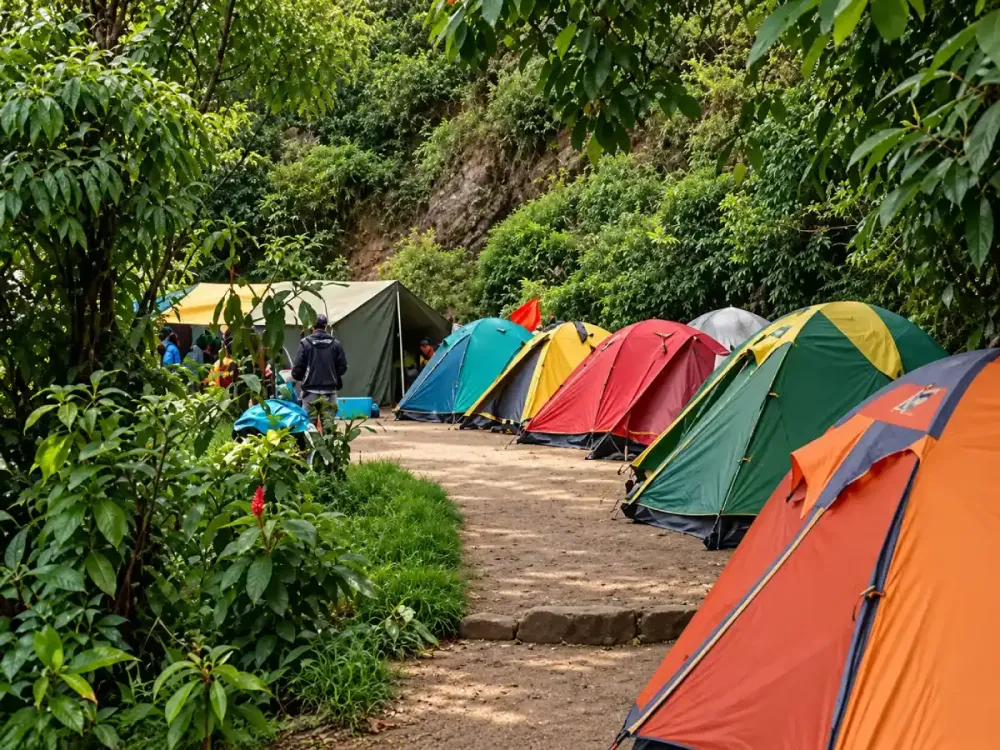
Do you sleep in a tent?
Yes. On the Classic Inca Trail, the three nights are normally spent in tents.
The support team transports and sets up the camping equipment required for the group. When you arrive after the day’s hike, you can usually focus on changing out of wet clothing, organizing your personal items, resting and preparing for dinner instead of setting up your own shelter.
The number of people per tent and the level of comfort can vary depending on the service booked. Before traveling, it is useful to know whether you will share a tent, whether a single-tent option is available and what type of sleeping mat is included.
The sleeping bag should also be checked separately. Depending on the tour package, it may not be included as standard equipment, so confirm whether you need to bring your own or rent one before departure.
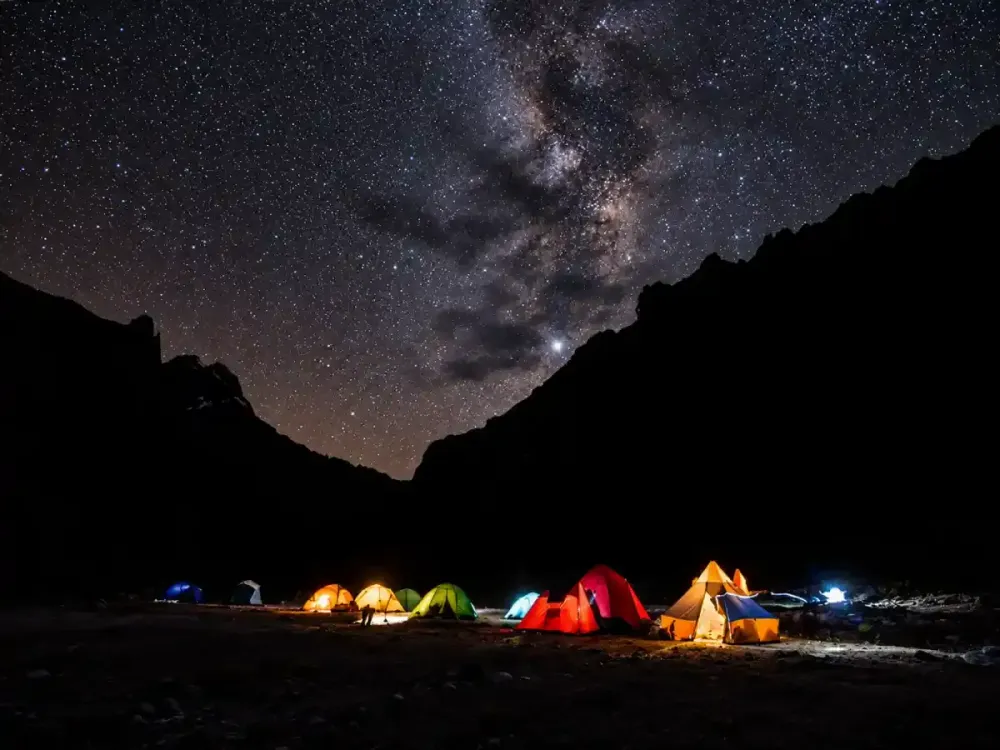
Do you need to bring your own tent?
Normally, no. If you hike the Inca Trail with an organized operator, bringing your own tent would usually add unnecessary weight and volume.
On the Classic Inca Trail 4 Days, collective camping equipment is generally handled as part of the trekking logistics, together with cooking equipment and other items needed to operate the camps.
This allows you to focus your personal luggage on what you actually need: clothing, hygiene items, warm layers, identification and the personal objects you will use during the trek.
Before packing, always review exactly what your service includes. A large amount of excess luggage comes from travelers bringing equipment that is already provided. Our guide to what to pack for the Inca Trail can help you separate what is essential from what can stay in Cusco.
What are the toilets like on the Inca Trail?
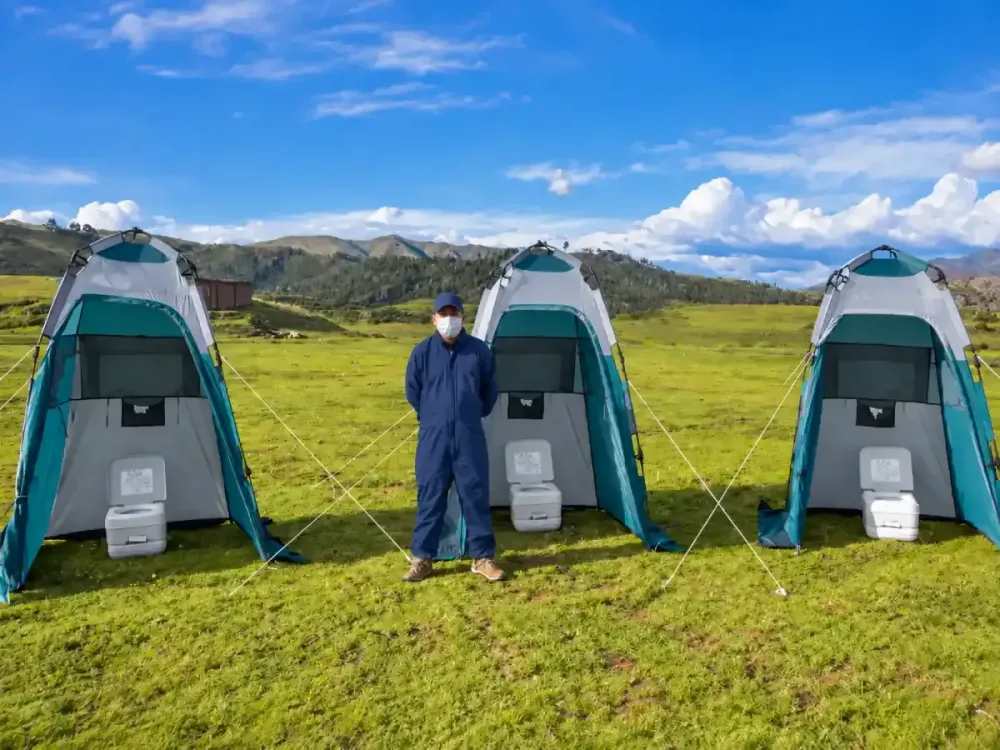
Toilets are one of the areas where adjusting expectations before the trek is especially important. Some campsites have basic toilet facilities, but their condition and level of comfort can vary significantly from one location to another.
You should not expect hotel-style bathrooms or identical facilities every night. You are traveling through a mountain route where infrastructure is limited by geography and by the nature of a multi-day trekking experience.
For that reason, it is useful to carry toilet paper, hand sanitizer and your own basic hygiene supplies. A small bag for personal waste can also be practical and helps avoid leaving rubbish along the route.
Even when your trekking service includes additional camp facilities, the overall bathroom experience will still be much simpler than what you would find in conventional accommodation.
Are there showers on the Inca Trail?
You should not plan the trek expecting a hot shower every night. Shower availability is limited and conditions may vary according to the campsite.
For most travelers, hygiene during the trek is handled practically. Wet wipes, a small towel, compact personal care products and clean clothing for camp are usually more useful than depending on shower facilities that may not be available.
It is also helpful to carry a clean T-shirt and dry underwear for the end of the hiking day. Changing clothes after arriving at camp can make you much more comfortable, especially if the clothing used while hiking is damp from sweat or rain.
The key is to remember that the Inca Trail is a multi-day trekking experience. A full shower can wait until the end of the route, and after several nights in the mountains, it may become one of the most appreciated comforts of the entire trip.
Is water available at the campsites?
Yes, organized trekking operations manage water for food preparation, camp use and other logistical needs. However, this does not mean you should assume that drinking water is freely available from a tap at every moment.
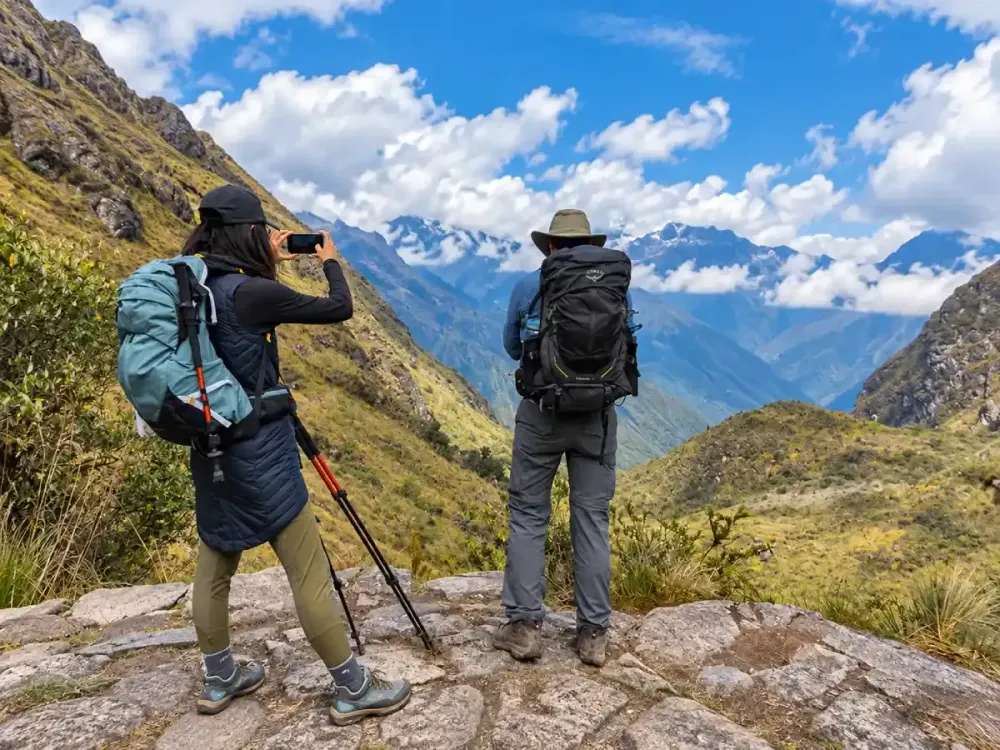
During the trek, your guide and support team will explain how drinking water is provided or replenished according to each stage. For that reason, you should carry a reusable water bottle or hydration system with enough capacity for the hours of walking between stops.
Water becomes especially important during long hiking days and major climbs. Waiting until you feel extremely thirsty is not the most comfortable strategy when several hours of walking remain.
Using reusable bottles also helps reduce unnecessary waste along a historic and natural route that requires careful conservation.
Is there electricity at the Inca Trail campsites?
You should not expect electricity as a regular campsite service on the Inca Trail. In many sections of the route, there are no standard electrical outlets or guaranteed charging points.
For this reason, a fully charged power bank is one of the most useful accessories if you plan to use your phone for photos, videos or offline information during the trek.
Battery management also helps. Using airplane mode when you do not need a connection, reducing screen brightness and avoiding constant phone use can significantly extend battery life.
If you travel with a separate camera, calculate how many batteries you will need for several days. The Inca Trail is an excellent place to take hundreds of photographs and a terrible place to realize that your spare batteries are still charging at your hotel in Cusco.
Is there phone signal or internet?
Mobile coverage can be limited or unavailable in different sections of the Inca Trail. You should not plan the four-day trek assuming that you will be able to make calls, check messages or access the internet whenever you want.
Before starting, let family members or close contacts know that you may be offline for extended periods. It is also useful to download important documents, travel information and anything else you may need without an internet connection.
For many travelers, this limited connectivity becomes an unexpectedly enjoyable part of the experience. For a few days, attention shifts away from the phone and toward the mountains, archaeological sites, the group and the rhythm of the trek.
Even without signal, keep your phone protected from rain and with enough battery. It will still be useful as a camera and for storing important information.
How are meals at the campsites?
Food is an important part of the Inca Trail logistics because your body needs to recover energy after several hours of physical activity.
On an organized four-day trek, the program generally includes the main meals required during the route, together with snacks and hot drinks. Cooking is handled along the way using equipment transported by the support team.
Meals are designed to provide enough energy for the following day. Depending on the menu, they may include soups, grains, rice, pasta, vegetables, eggs, chicken, meat, fruit and hot drinks.
If you are vegetarian, have food allergies or follow a specific diet, inform the operator before the trek begins. Waiting until the first campsite to mention an important dietary restriction makes it much harder for the team to adapt the meals.
Personal snacks can also be useful during the hiking day, especially if you already know which foods work well for you during physical activity.
Where do you eat during the Inca Trail?
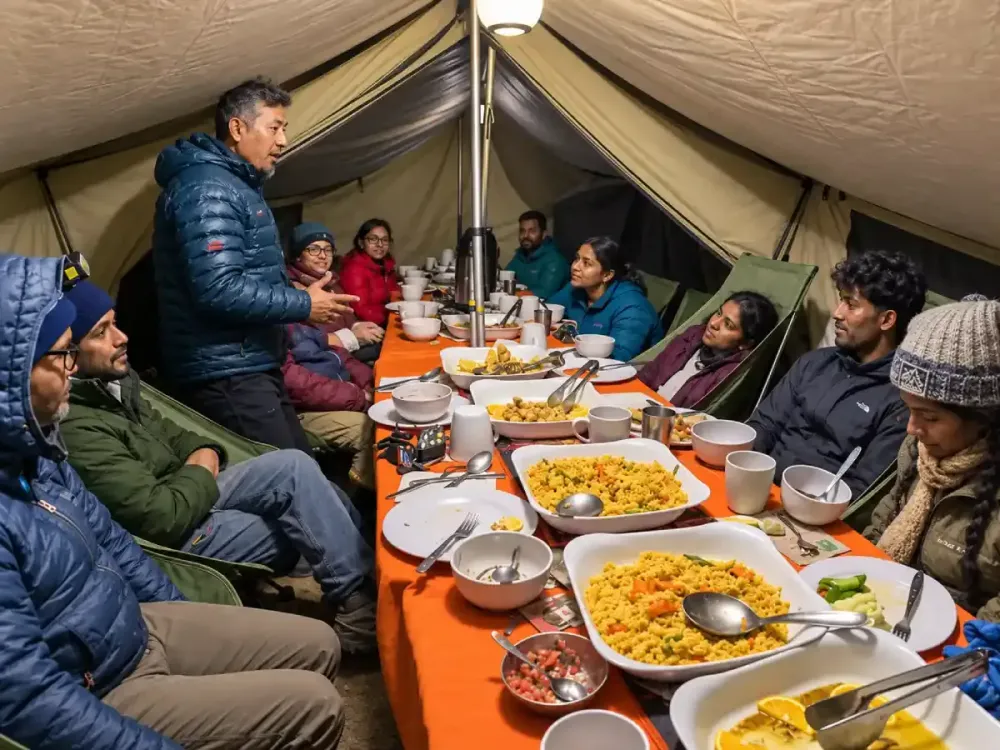
Meals are not always served in the same place where you sleep. During the day, lunch and rest stops are organized according to the route, while at camp a specific dining area may be prepared.
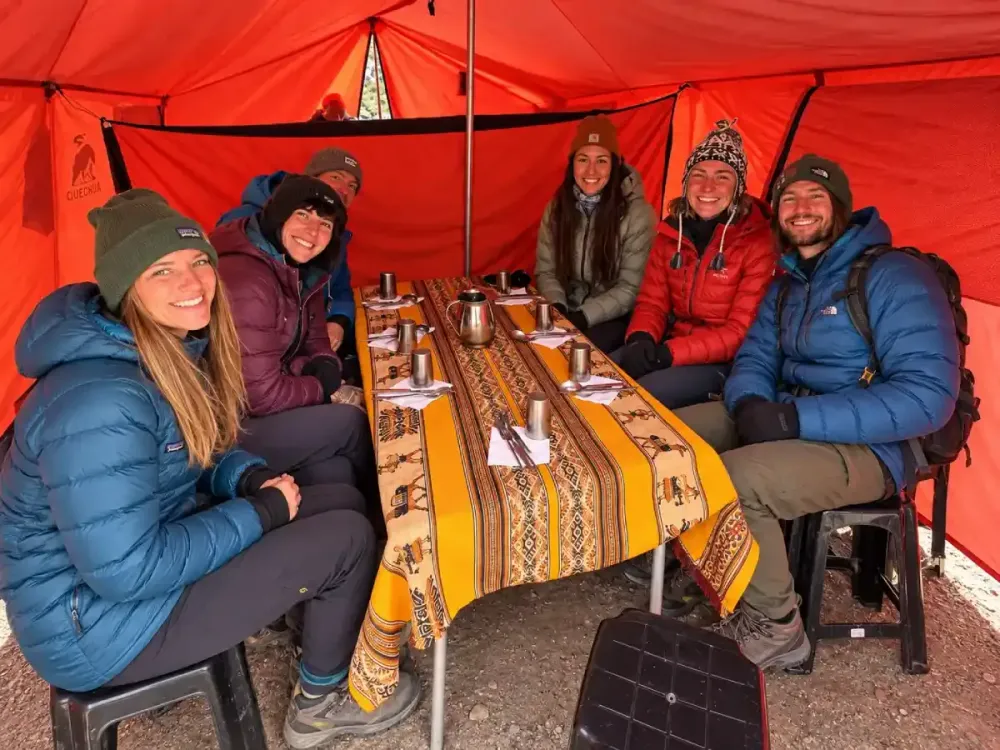
Organized services usually include a dining tent, tables and chairs, together with the cooking equipment needed to prepare the group’s meals.
These spaces often become an important part of the group experience. After walking for several hours, being able to sit down, eat something warm and talk about the day creates a very different pace from the trail itself.
Dinner usually marks the end of the hiking day. After the meal, the guide may explain the plan for the next stage, and travelers begin preparing for rest because some departures start very early.
The Inca Trail is not only about covering kilometers. Meals, rest periods and nights in camp are all part of the experience of traveling through the route over several days.
Yes, it can get cold at night, especially at campsites located in higher sections of the Inca Trail. The temperature can also change considerably depending on the season, wind and the specific conditions of each day.
Although you may hike in relatively light clothing during the day because of the physical effort and sun exposure, the temperature can fall quickly once you arrive at camp. For this reason, it is useful to have a lightweight thermal layer, fleece, warm hat, dry socks and a jacket suitable for colder conditions.
Your sleeping bag also plays an important role, especially on the Classic route. It should be suitable for mountain conditions and allow you to recover properly after several hours of hiking.
To prepare your clothing more effectively for each stage, read Inca Trail weather and Inca Trail altitude, where we explain how conditions change as you progress toward Machu Picchu.
Do porters carry the camping equipment?
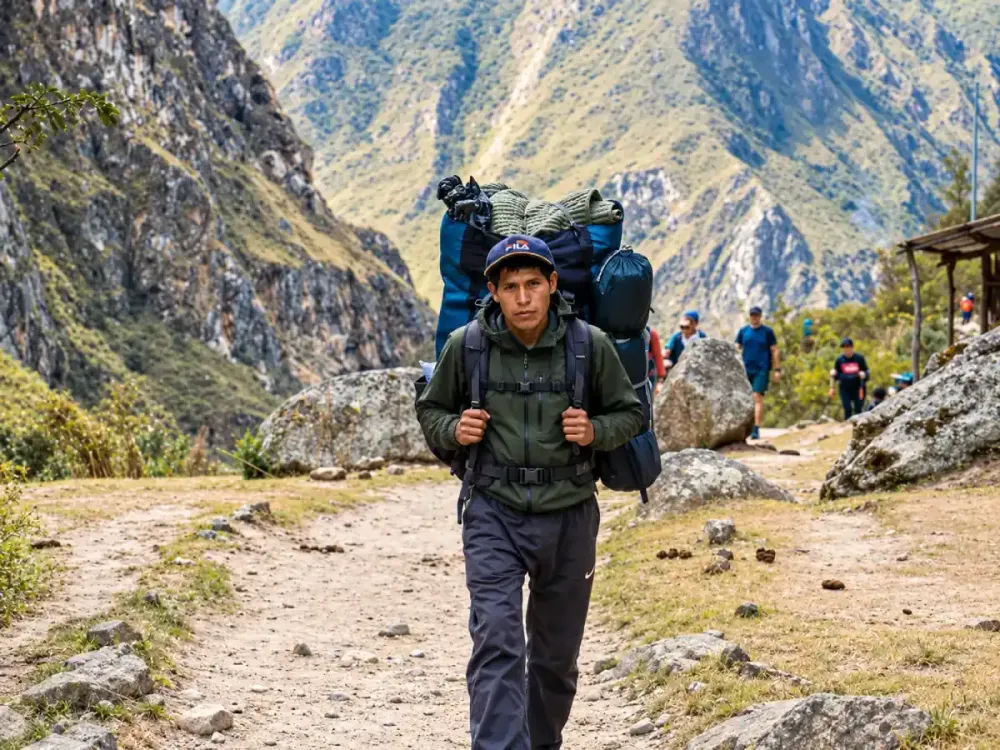
Yes. On the Classic Inca Trail, porters are an essential part of the trekking operation because they help transport much of the equipment required for the camps to function each day. Depending on the service booked, this can include tents, cooking equipment, food and other logistical items.
Transport of personal luggage, however, can vary depending on the operator and the type of service booked. Before traveling, it is important to confirm how much personal luggage can be carried by the support team and which items must remain with you during the hike.
In your daypack, you should normally carry the items you may need while walking, including water, sun protection, rain gear, personal documents, a warm layer and other important personal items.
Reviewing this distribution before leaving Cusco helps you avoid unnecessary weight from the beginning. Knowing clearly what the support team carries, what you carry yourself and how much personal luggage is allowed makes preparing for the Inca Trail much easier.
What should you carry in your daypack?
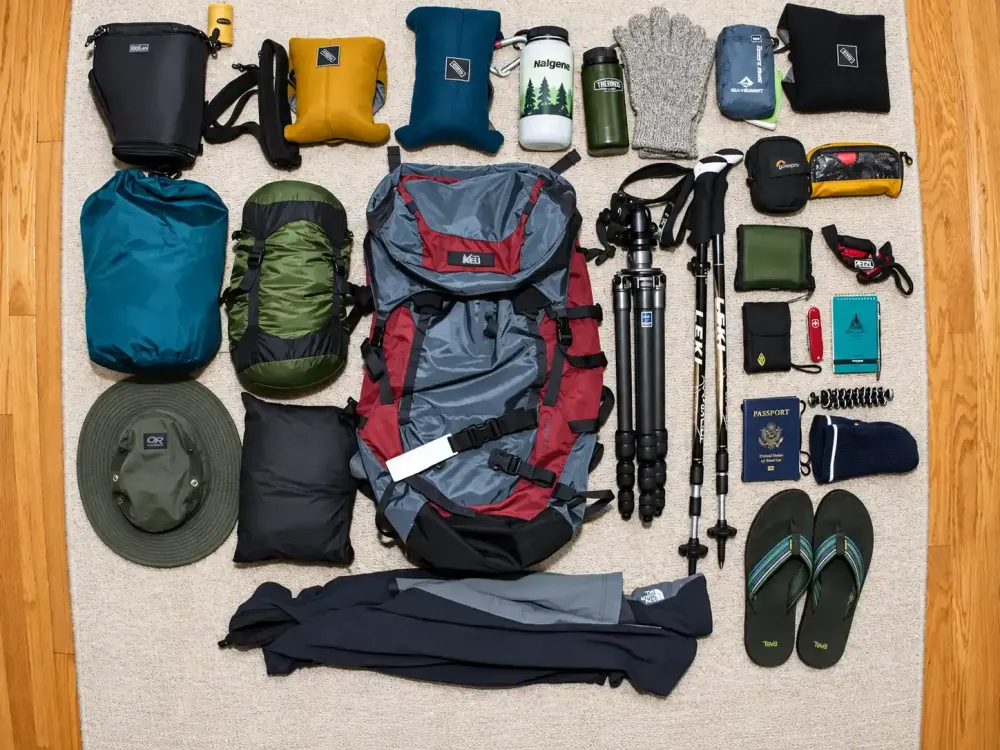
Even when part of the equipment and logistics are transported by the porter team, you will always need a daypack containing the items you may need while hiking. The goal is to have essential items within reach without carrying unnecessary weight for several hours.
| What to carry | Why you need it |
|---|---|
| Water | Maintain regular hydration while hiking |
| Sun protection | Protect your skin during exposed sections |
| Waterproof jacket | Be prepared for rain or sudden weather changes |
| Warm layer | Use when temperatures drop or at higher elevations |
| Documents | Present them when required at access controls |
| Camera or phone | Take photos and store important information |
| Snacks | Maintain energy between main meals |
| Personal medication | Keep essential medication within easy reach |
| Basic hygiene items | Cover personal needs during the hiking day |
Your daypack should remain as light and organized as possible. Frequently used items, such as water, rain protection and sunscreen, should be stored where they are easy to reach.
For a more complete packing guide, read what to pack for the Inca Trail and avoid carrying unnecessary weight for kilometers.
Personal travel advice
Plan your trip with Dreamy Tours
Start a tailored journey with our exclusive tours and custom trips across Peru and other Latin American countries.