Search the blog
Tabla de contenidos
Wiñay Wayna on the Inca Trail is one of the most impressive archaeological sites travelers encounter before reaching Machu Picchu.
Built into a mountainside covered in lush vegetation, this complex stands out for its extensive agricultural terraces, stone stairways, enclosures and structures that seem to grow naturally from the mountain.
Wiñay Wayna also has an important characteristic: it can be visited on both the Classic and Short Inca Trail routes.
On the Short Inca Trail 2 Days, travelers reach Wiñay Wayna after starting the hike at Km 104 and passing through Chachabamba. From here, the trail continues toward Inti Punku and finally Machu Picchu.
Understanding this site helps explain why the Inca Trail is much more than simply a hike to its final destination.
What is Wiñay Wayna?
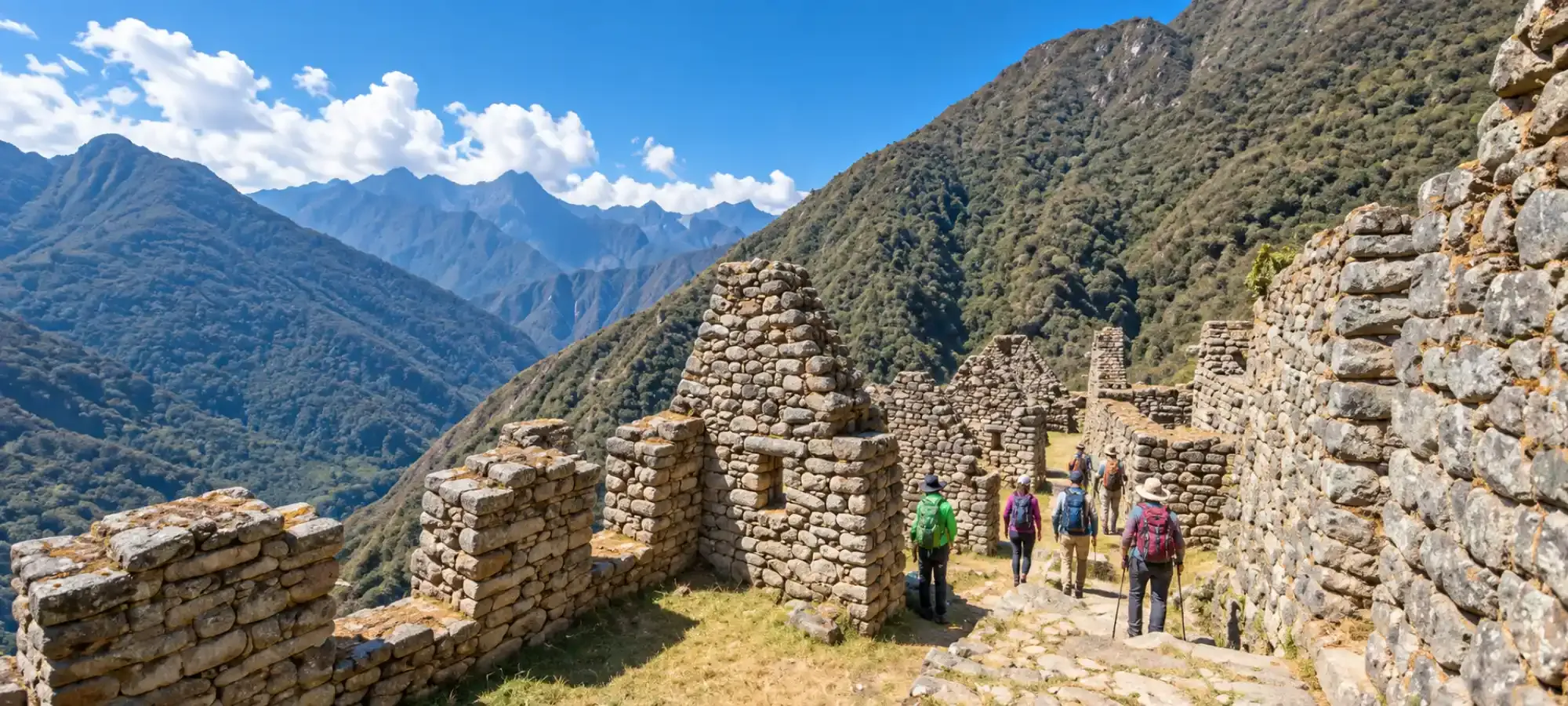
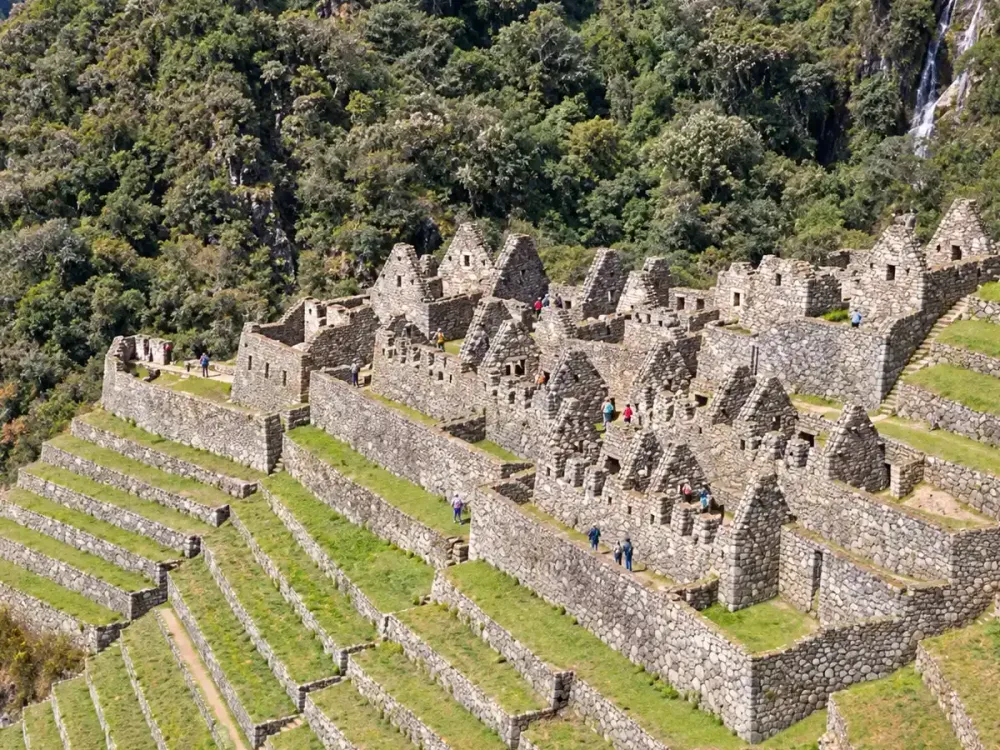
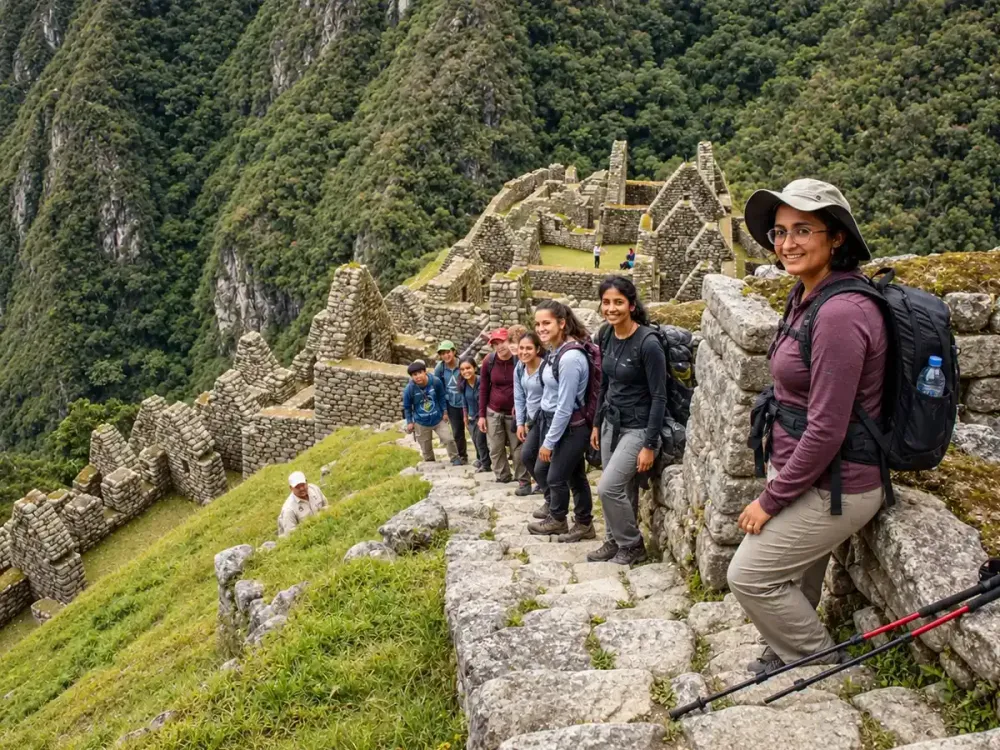
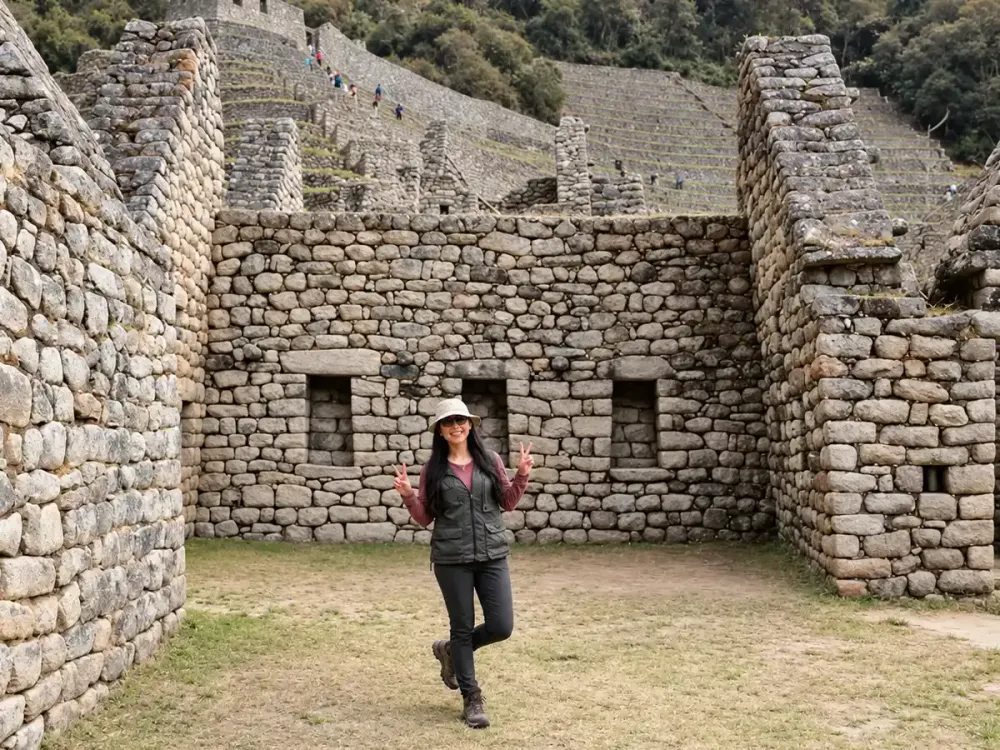
Wiñay Wayna is an Inca archaeological complex built into a mountainside along the final section of the Inca Trail to Machu Picchu.
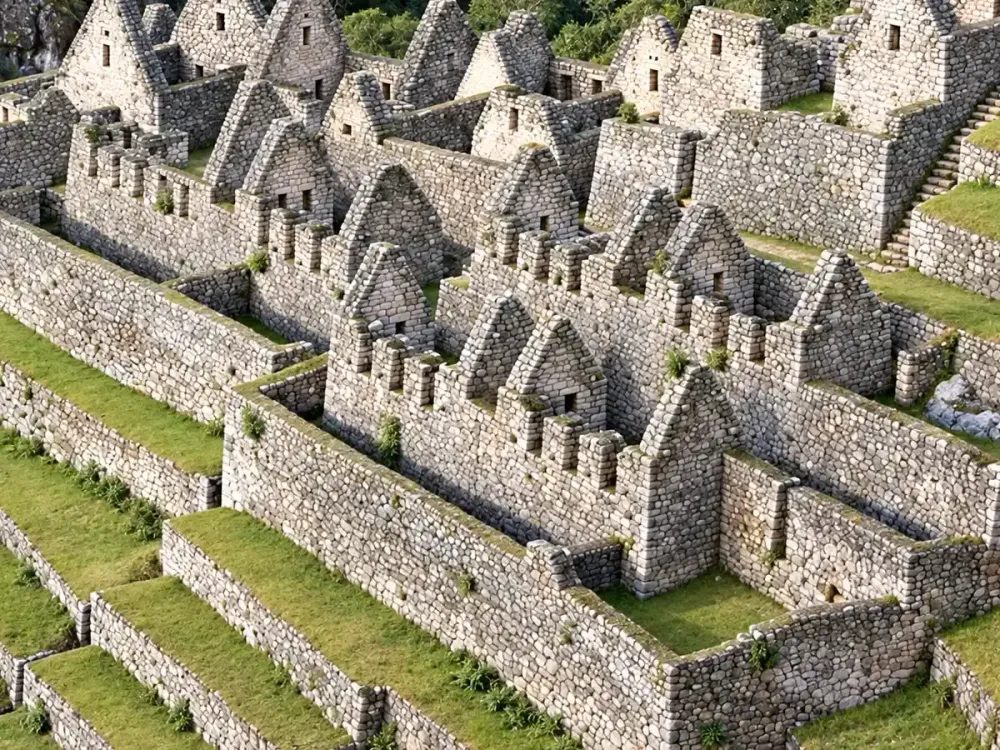
Its architecture combines terraces, stairways, stone enclosures and systems related to water management.
The way the structures follow the natural slope makes the site one of the clearest examples of how Inca architecture adapted to the Andean landscape.
These are not simply ruins beside the trail.
Wiñay Wayna forms part of the historic route itself and shows how roads, agriculture, water and architecture could be integrated within the same environment.
What does Wiñay Wayna mean?
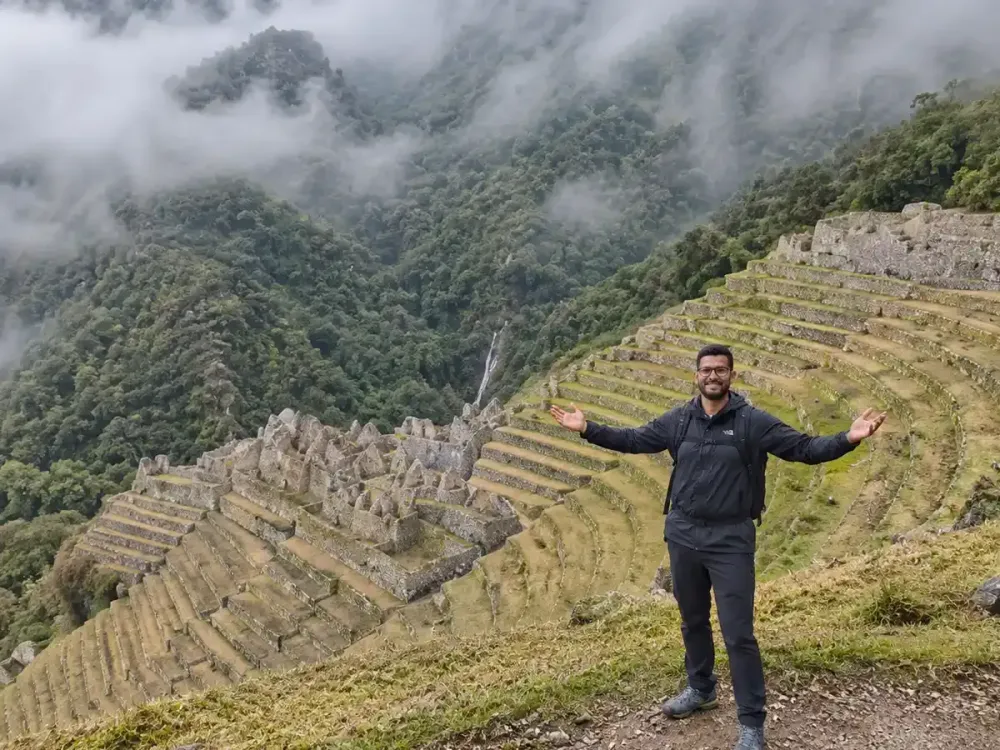
The name Wiñay Wayna is commonly translated as “Forever Young” or “Eternally Young.”
You may also see different spellings such as Wiñay Huayna or Wiñayhuayna.
Despite these spelling variations, they refer to the same archaeological complex on the Inca Trail.
For many travelers, the name becomes especially memorable because Wiñay Wayna appears at one of the most exciting points of the journey, when Machu Picchu is already getting close.
Where is Wiñay Wayna located?
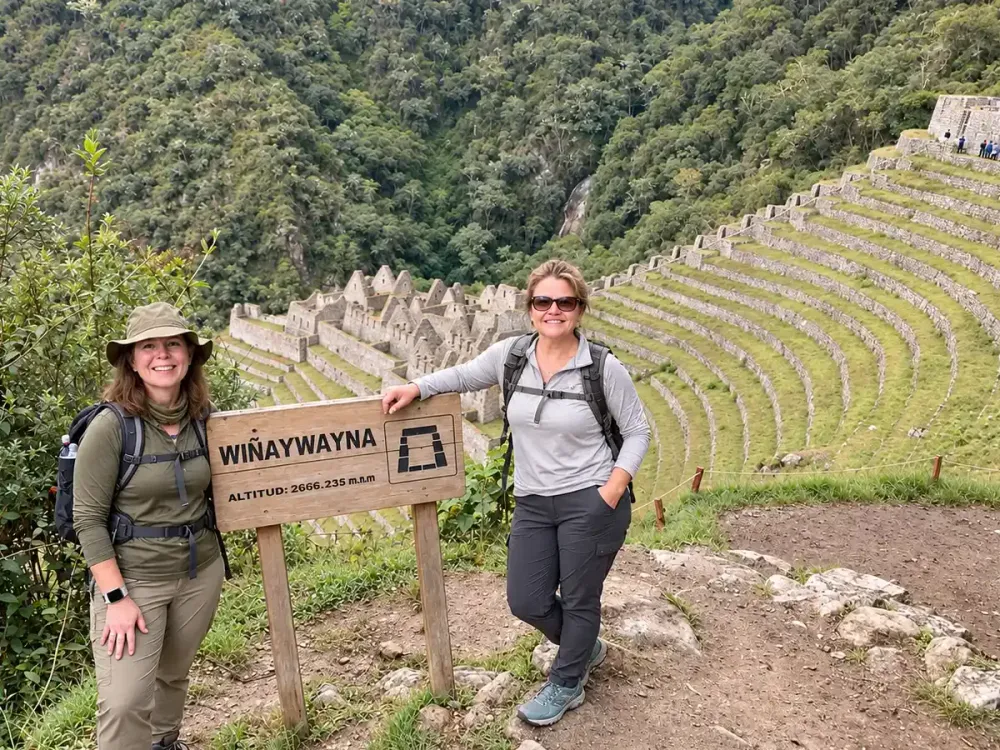
Wiñay Wayna is located on the final section of the Inca Trail, in the mountainous environment before Machu Picchu.
Its location marks an important change in the landscape.
Compared with the higher and more open areas of the Classic route, the vegetation here becomes much denser as the trail enters the cloud forest environment.
The Classic Inca Trail route also passes through Wiñay Wayna before continuing toward Inti Punku and Machu Picchu.
This means travelers on different versions of the Inca Trail can experience the site.
What is the altitude of Wiñay Wayna?
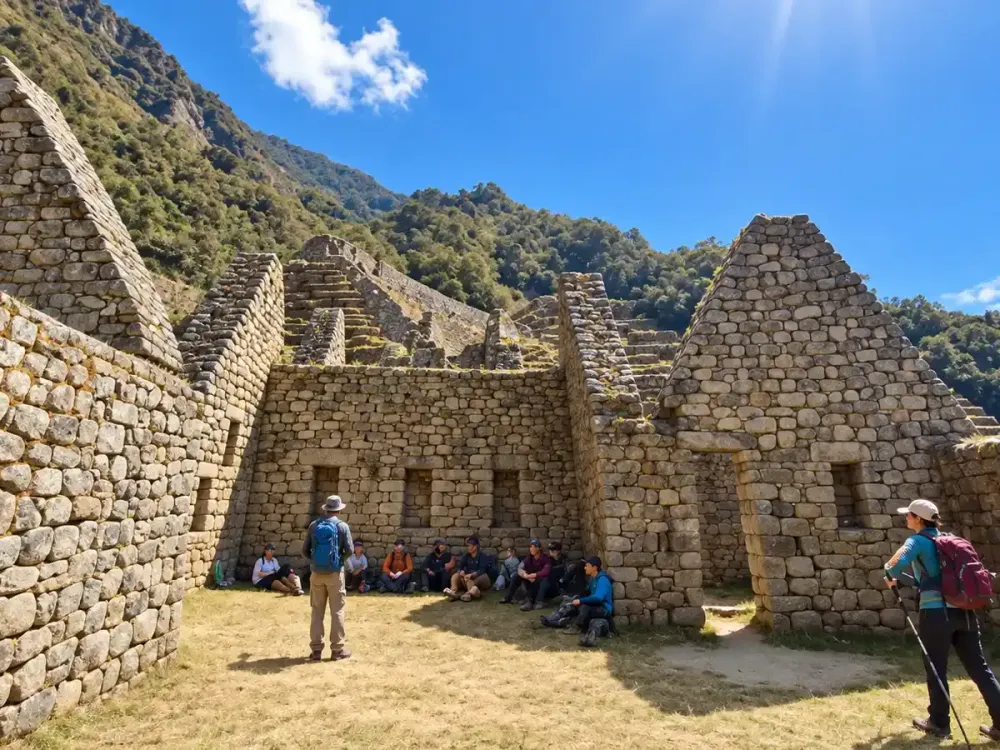
Wiñay Wayna is located at approximately 2,650 meters above sea level on Dreamy Tours’ Short Inca Trail itinerary.
This is considerably lower than the major mountain passes of the Classic route, such as Dead Woman’s Pass.
However, reaching Wiñay Wayna from Km 104 still requires several hours of hiking and a sustained uphill section.
For this reason, lower altitude does not mean the hike is effortless.
If you want to understand how elevation changes between the different routes, read Inca Trail altitude.
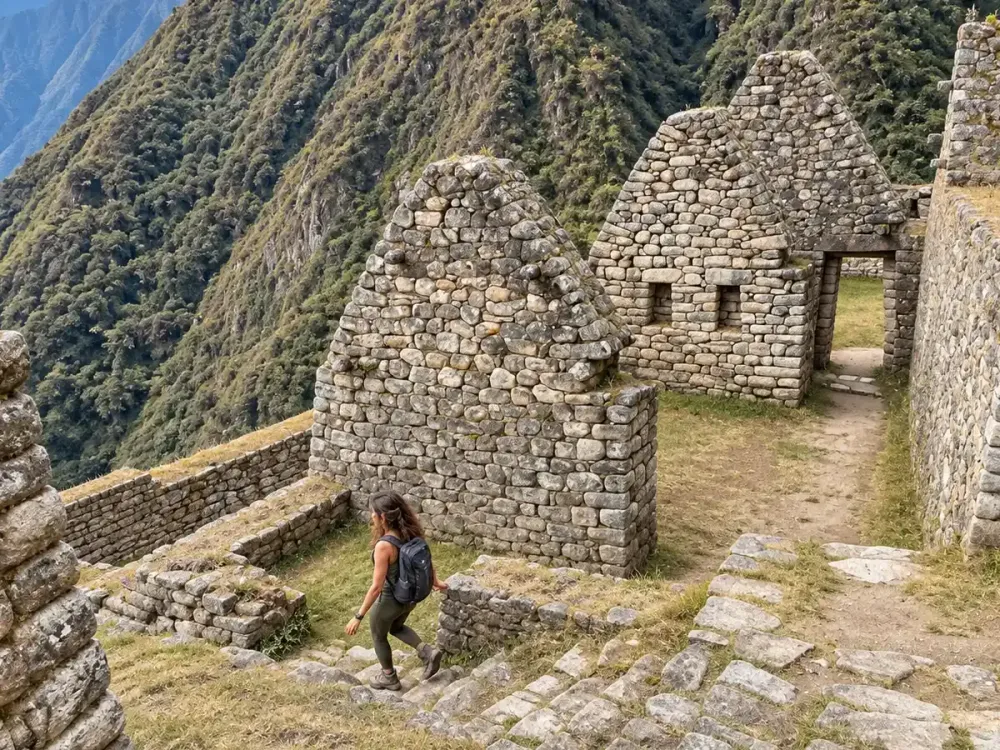
How do you reach Wiñay Wayna from Km 104?
On the Short Inca Trail, the experience begins with a train journey to Km 104.
After completing the required entry checks, travelers visit Chachabamba and begin climbing along ancient Inca paths.
The trail gradually continues toward Wiñay Wayna.
On Dreamy Tours’ itinerary, the first day covers approximately 12 kilometers and several hours of hiking before continuing toward Inti Punku.
The challenge is not determined by distance alone.
Stone stairways, uphill sections, weather conditions and individual hiking pace all influence how demanding the day feels.
What is the climb to Wiñay Wayna like?
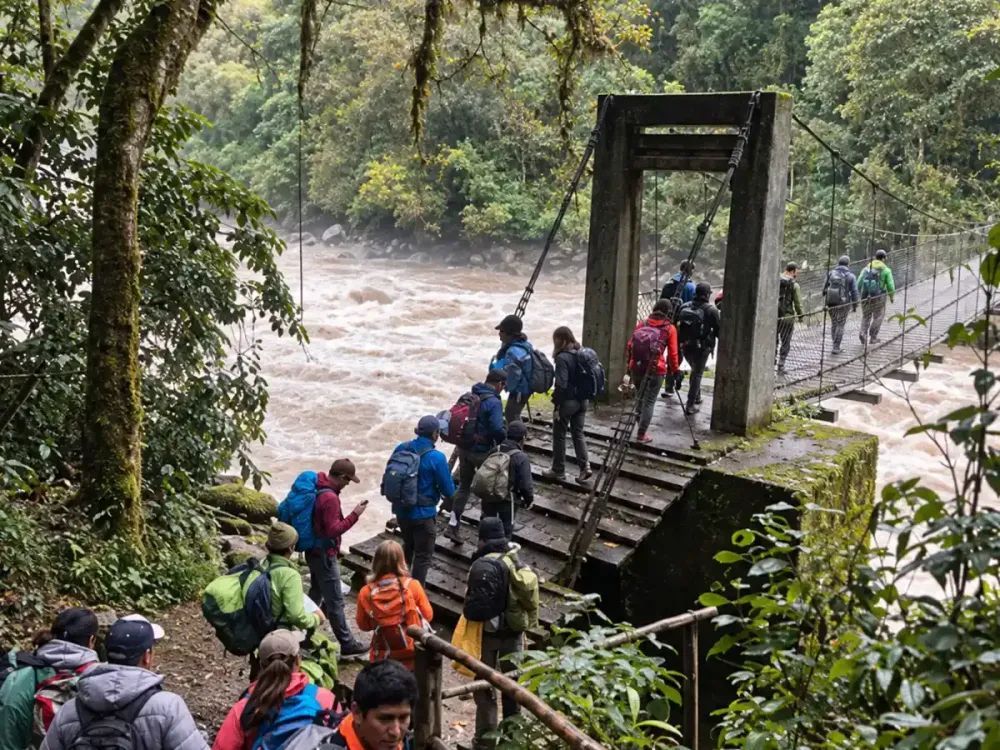
The climb from Chachabamba is one of the more physically demanding parts of the Short Inca Trail.
The path gains elevation gradually while passing through mountain scenery and increasingly dense vegetation.
Along the way, you will encounter ancient stone paths and numerous stairways.
On sunny days, the heat can make the ascent feel more intense.
The best strategy is to maintain a steady pace.
There is no need to rush.
Managing your energy is much more useful, especially because the trail continues beyond Wiñay Wayna toward Inti Punku and Machu Picchu.
For a broader look at the physical demands, read Inca Trail difficulty.
What is the architecture of Wiñay Wayna like?
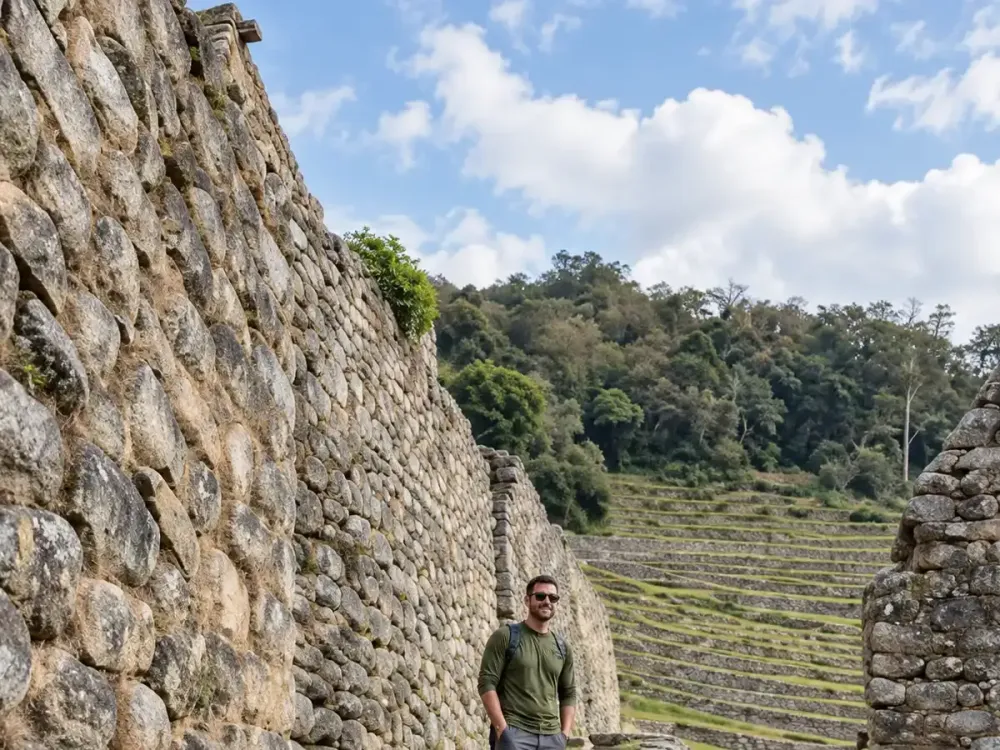
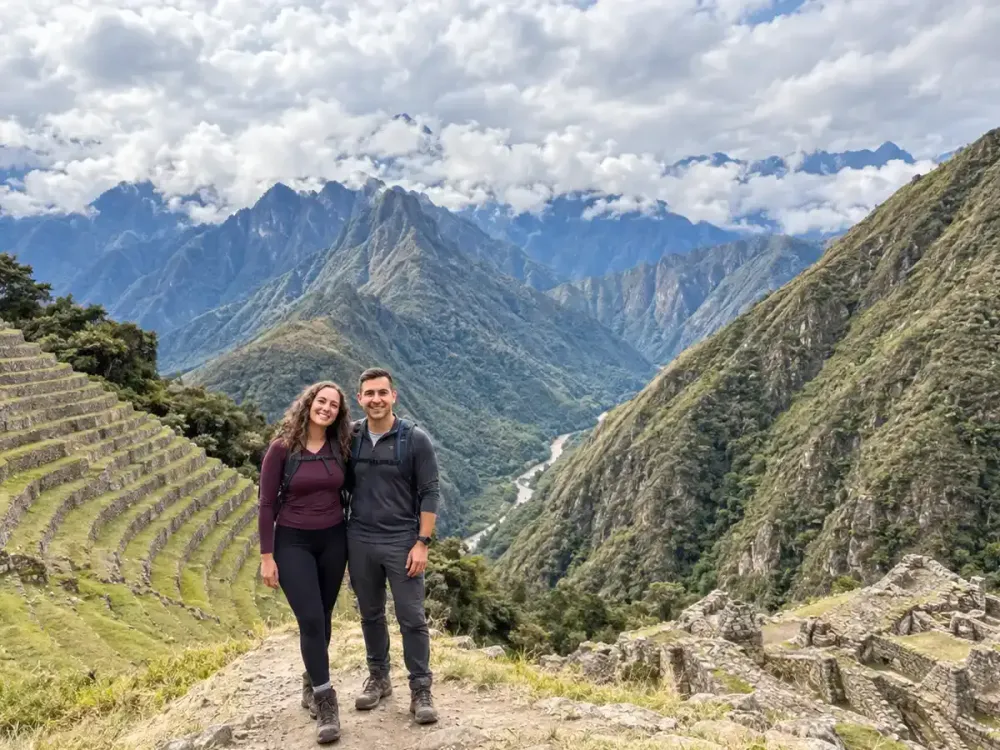
The terraces are usually the first feature that catches the eye.
They descend along the mountainside and transform a steep slope into an organized series of platforms.
The site also includes:
- Stone enclosures.
- Stairways.
- Agricultural terraces.
- Walls adapted to the mountain.
- Water channels.
- Paths connecting different sections.
The layout clearly shows how Inca architecture worked with the mountain rather than against it.
The result is a complex that appears almost fused with the landscape.
What was Wiñay Wayna used for?
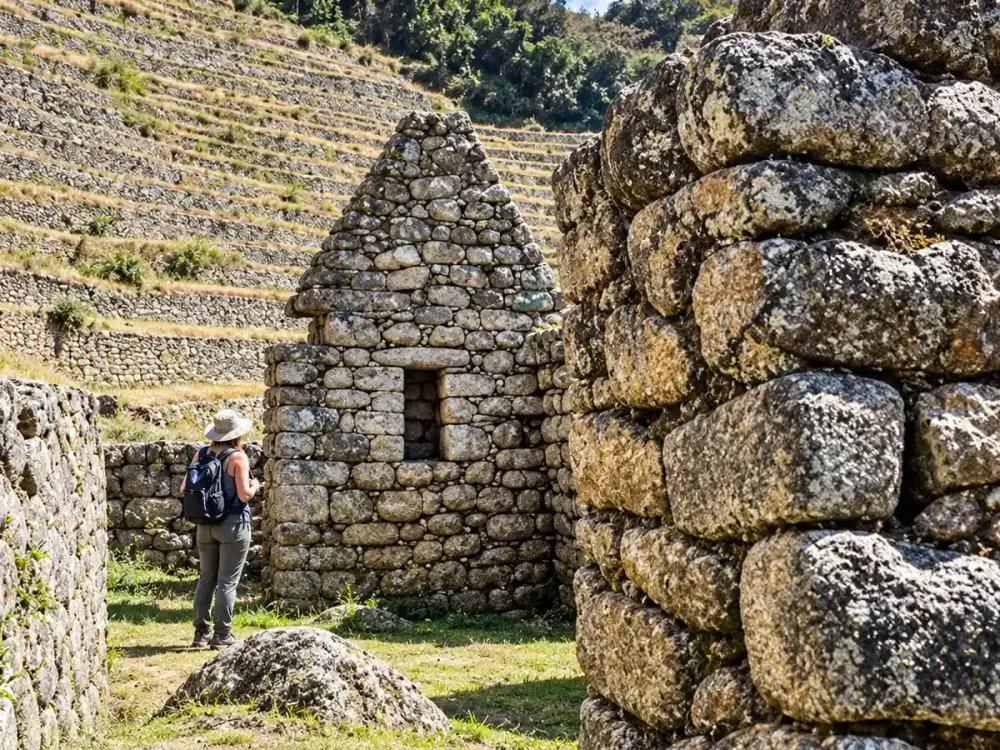
There is no single definitive interpretation of every function the complex may have served.
Its terraces clearly suggest agricultural use, while its enclosures and hydraulic systems have led to interpretations involving residential, administrative and ceremonial purposes.
Its location along the Inca Trail is also important.
Wiñay Wayna was not isolated.
It formed part of a broader network of roads, settlements and archaeological spaces connected across the Andes.
For this reason, it is more useful to understand the site as part of a larger system rather than reduce it to one single function.
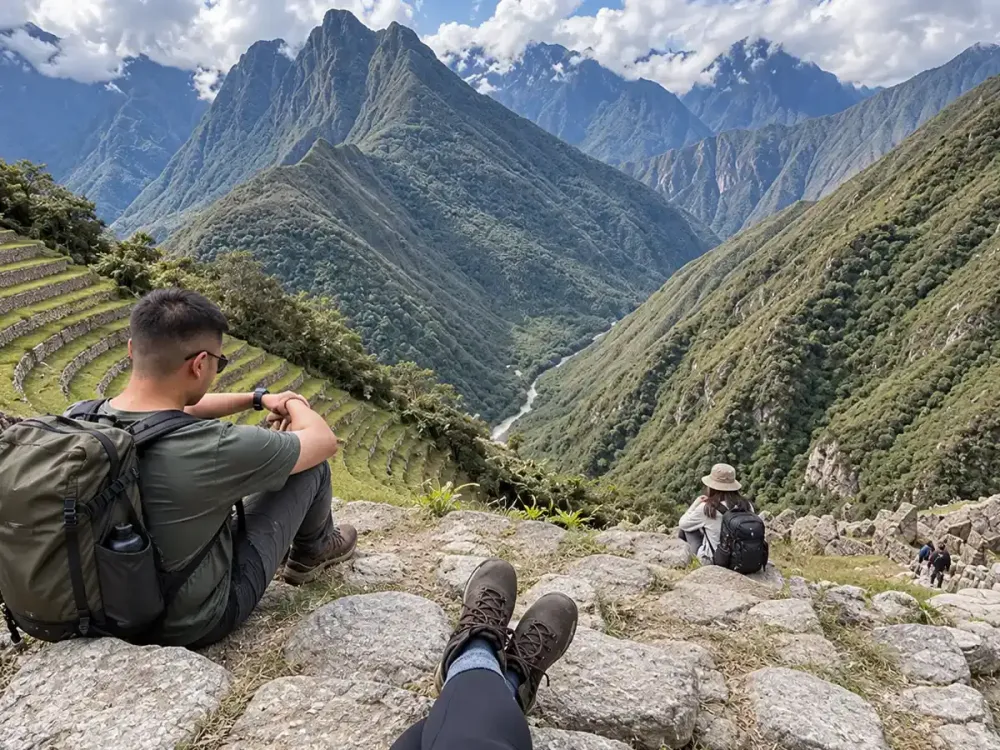
Why are the terraces at Wiñay Wayna important?
The terraces are among the most recognizable features of the site.
Beyond transforming the mountainside visually, they show how the Incas adapted agricultural spaces to difficult terrain.
Their arrangement helps visitors understand how Andean slopes could be organized and used efficiently.
For modern travelers, the terraces also create one of the most photogenic landscapes on the Inca Trail.
The combination of stonework, vegetation and mountain scenery feels very different from the higher mountain passes of the Classic route.
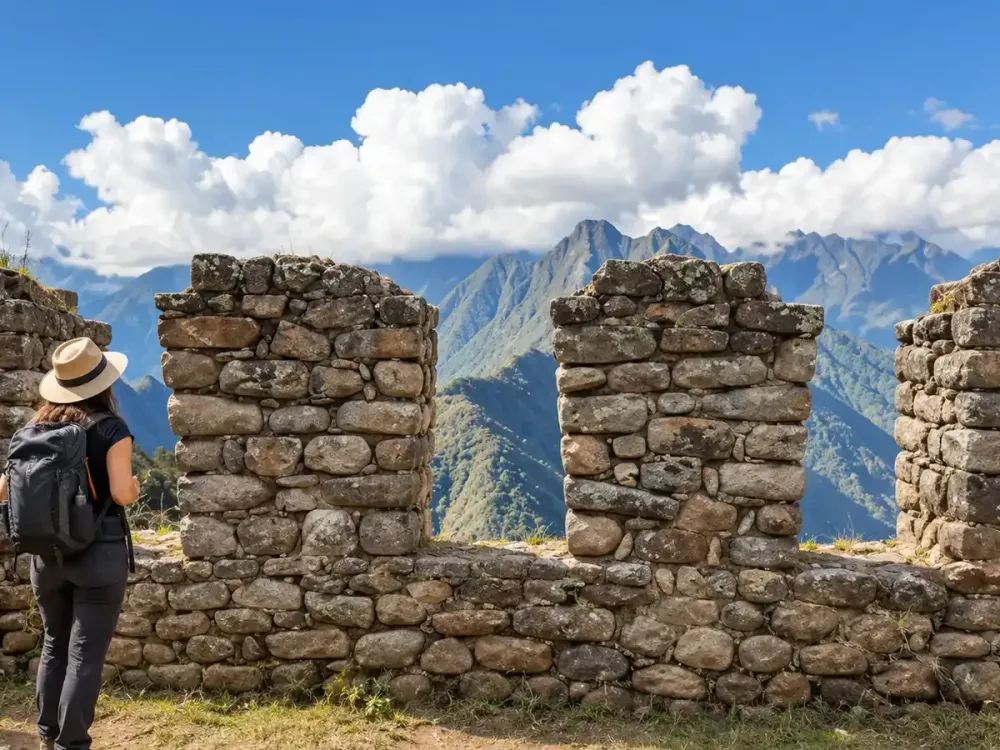
Are there water channels at Wiñay Wayna?
Yes.
Water management is another important element of the complex.
Hydraulic systems are integrated into the architecture and demonstrate the level of planning involved in the site.
As with other Inca complexes, water may have had both practical and possible ceremonial importance.
However, it is better not to present one interpretation as completely proven.
What can be clearly observed is that water was carefully incorporated into the design of Wiñay Wayna.
Is Wiñay Wayna part of the Short or Classic Inca Trail?
Both.
This is one of the most interesting characteristics of the site.
Travelers on the Short Inca Trail 2 Days pass through Wiñay Wayna while hiking from Km 104 toward Machu Picchu.
It also forms part of the Classic Inca Trail 4 Days.
The main difference is what happens before reaching the site.
On the Classic route, travelers arrive after several days of trekking through mountain passes and archaeological sites such as Runkurakay and Sayacmarca.
On the Short route, Wiñay Wayna is reached on the first hiking day after beginning at Km 104 and passing through Chachabamba.
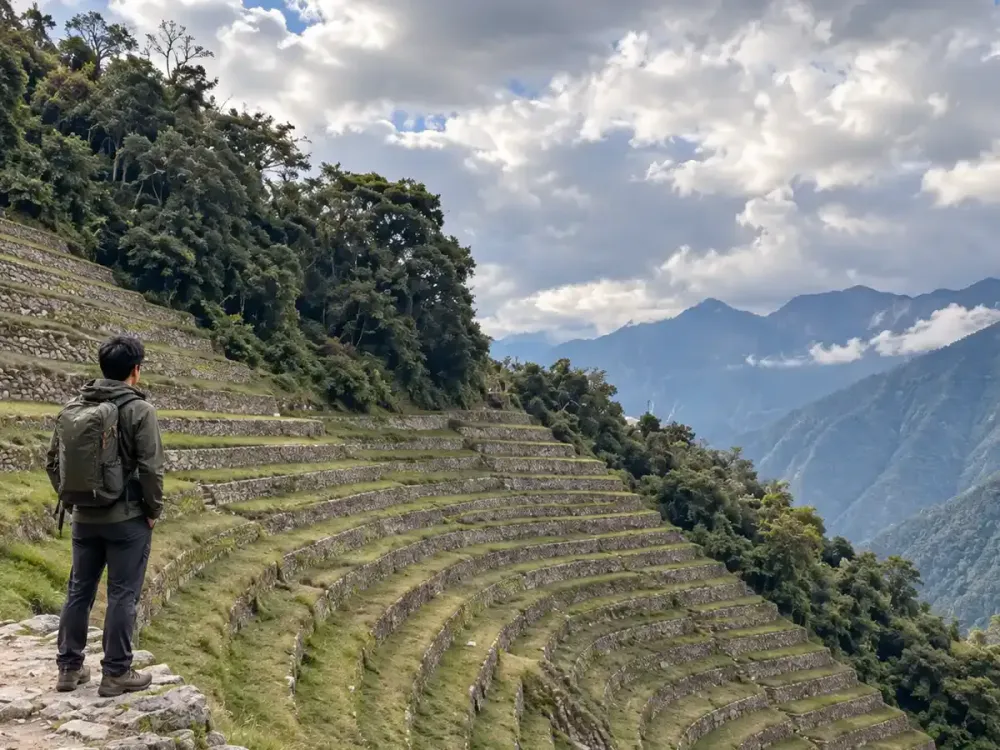
What happens after Wiñay Wayna?
After visiting the complex, the trail continues toward Inti Punku.
This section forms part of the final approach to Machu Picchu.
The path keeps many of the characteristics of the ancient Inca road and passes through dense vegetation before reaching the historic Sun Gate.
From Inti Punku, travelers experience one of the most anticipated moments of the journey: Machu Picchu gradually appears within the surrounding mountains.
On the Short Inca Trail 2 Days, the main sequence is Km 104, Chachabamba, Wiñay Wayna, Inti Punku and Machu Picchu.
Are Wiñay Wayna and Inti Punku the same place?
No.
Wiñay Wayna is an archaeological complex made up of terraces, enclosures, stairways and water systems.
Inti Punku is the Sun Gate and represents one of the historic entrances toward Machu Picchu.
Both appear near the end of the Inca Trail, but they play very different roles in the experience.
First, travelers visit Wiñay Wayna.
Then the trail continues toward Inti Punku.
Finally, Machu Picchu comes into view.
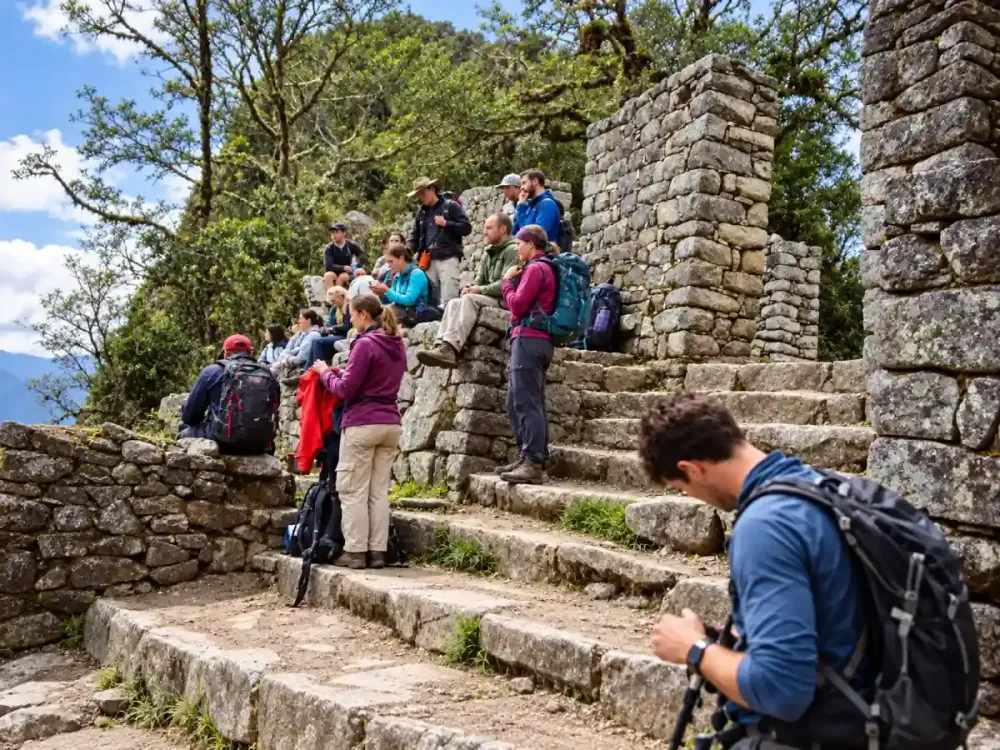
What is the difference between Wiñay Wayna and Chachabamba?
They are two different archaeological sites.
Chachabamba appears near the beginning of the Short Inca Trail from Km 104.
Wiñay Wayna is reached after a substantial climb and features a much larger complex dominated by terraces built across the mountainside.
The contrast between both sites helps travelers understand how the day develops.
Chachabamba introduces the archaeological experience.
Wiñay Wayna appears after the main physical effort of the ascent and signals that Machu Picchu is getting close.
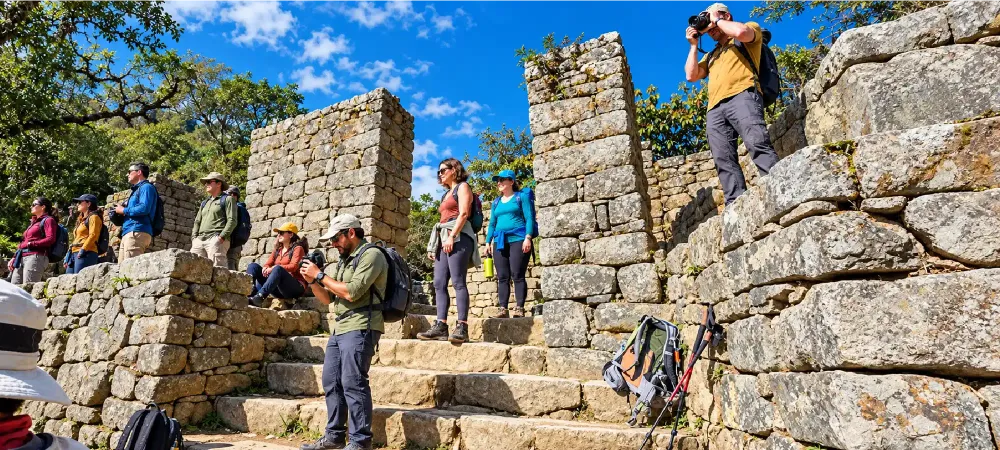
Is Wiñay Wayna difficult to reach?
That depends on your preparation and the route you choose.
On the Short Inca Trail, a significant part of the physical effort is concentrated in the ascent toward Wiñay Wayna.
Dreamy Tours currently classifies the Short Inca Trail 2 Days as moderate difficulty.
You do not need technical mountaineering experience.
However, being comfortable with several hours of walking, uphill sections and stone stairways is very helpful.
If this will be your first major trek, read Inca Trail for beginners.
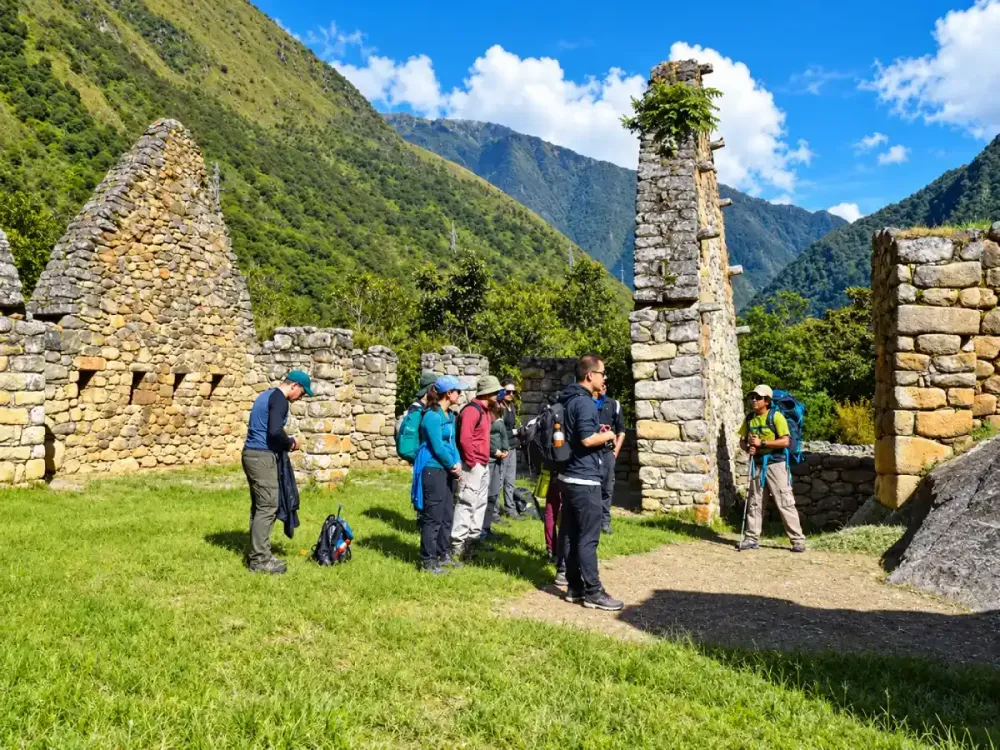
What should you pack for the hike to Wiñay Wayna?
You do not need a large backpack.
Especially on the Short Inca Trail, keeping your daypack light makes the hike much more comfortable.
Useful items include:
- Water.
- Sun protection.
- Hat or cap.
- Waterproof jacket.
- Light warm layer.
- Snacks.
- Travel documents.
- Personal medication.
- Camera or phone.
Dreamy Tours’ guide on what to pack for the Inca Trail provides more detail on preparing for both the Short and Classic routes.
Keeping your backpack light is especially useful because the climb toward Wiñay Wayna and the stairways beyond it still require energy.
Is Wiñay Wayna suitable for beginners?
It can be part of a good first trekking experience, especially when approached through the Short Inca Trail.
The Short route avoids Dead Woman’s Pass and the highest elevations of the Classic trek, but it still includes a genuine hiking day with a substantial climb toward Wiñay Wayna.
For this reason, “short” does not mean “effortless.”
With basic fitness, some preparation and a steady pace, this route can be a more accessible way to experience the historic Inca Trail.
The comparison 2 Day vs 4 Day Inca Trail can help you decide which route better matches your available time and trekking experience.
Is Wiñay Wayna worth visiting?
Yes.
Wiñay Wayna is one of the places that best demonstrates why the Inca Trail has value beyond Machu Picchu itself.
The complex brings together architecture, terraces, mountains, vegetation and ancient pathways in a single setting.
It also appears at a very special moment in the journey.
After the effort of the climb, reaching Wiñay Wayna marks the beginning of the final approach toward Inti Punku.
Machu Picchu is not visible yet, but it already feels close.
Wiñay Wayna: one of the great highlights before Machu Picchu
Wiñay Wayna on the Inca Trail is much more than a stop before Machu Picchu.
Its terraces, mountain architecture and location along the historic route help travelers understand the complexity of the Inca Trail itself.
You can visit it on the Short Inca Trail 2 Days or experience it as part of the complete Classic Inca Trail 4 Days.
We also recommend complementing this guide with the Classic Inca Trail route, Inca Trail altitude and Inca Trail difficulty.
Before choosing your trekking dates, check Inca Trail availability 2026 and plan your journey in advance.
Personal travel advice
Plan your trip with Dreamy Tours
Start a tailored journey with our exclusive tours and custom trips across Peru and other Latin American countries.