Search the blog
Tabla de contenidos
Inca Trail availability is one of the first things you should check if you want to reach Machu Picchu by hiking through the historic Inca Trail Network. Unlike many other treks around Cusco, entry is regulated, route capacities are limited, and each space is linked to a specific date and traveler information.
For 2026, official ticket sales opened on November 17, 2025. In September 2026, the Ministry of Culture also introduced a direct-sales system with confirmed payment to improve how available spaces are assigned. Travel agencies continue to participate in the booking process for the Inca Trail Network.
At Dreamy Tours, we recommend confirming the trek first and then building the rest of your itinerary around that date. If you want the full experience, review the Classic Inca Trail 4 Days. If you prefer a shorter option, the Short Inca Trail 2 Days uses a different access point and has a separate capacity.
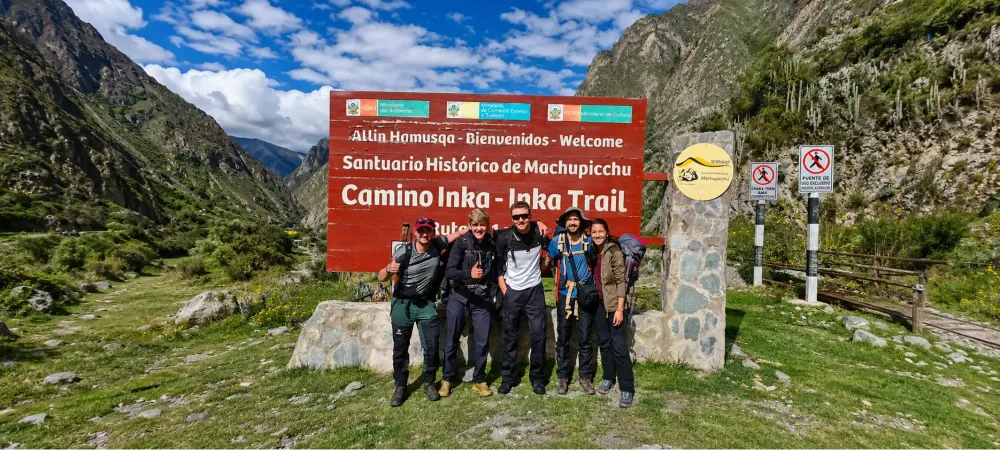
Is there Inca Trail availability for 2026?
Yes. Entry for the 2026 season officially opened on November 17, 2025, so the main question now is not whether permits are already on sale, but which dates and routes still have spaces available.
Availability changes as purchases are completed. This means a date may have spaces when you first check and then become more limited once other travelers confirm their bookings.
It is also important to distinguish between availability for the Classic route and the Short Inca Trail. Because they use different routes and capacities, one option may still have space while the other is already full.
If you are traveling in 2026, check your preferred date first and then review Inca Trail permits to understand how regulated access works.
Are 2027 Inca Trail spaces already available?
At the time of this update, there is no official Ministry of Culture announcement confirming the general opening of 2027 Inca Trail Network ticket sales.
This does not mean the trail will not operate in 2027. It simply means there is an important difference between planning a trip for that season and saying that official permits have already been released.
You can already choose an approximate month, decide whether you prefer the Classic or Short route and prepare your travel information. However, final permit confirmation should wait until the Ministry of Culture publishes the corresponding sales schedule.
For now, any commercial mention of “2027 availability” should be understood as advance planning, not as officially confirmed permit availability.
How does Inca Trail availability currently work?
Availability is linked to the official ticketing system for the Inca Trail Network. In September 2026, the Ministry of Culture announced a change from the previous temporary reservation model to a direct-sales system with confirmed payment.
Under the new mechanism, the buyer initially has a limited amount of time to complete the purchase. Once payment is confirmed, the ticket is assigned and issued in the traveler’s name. If payment is not completed within the allowed period, the space returns to availability.
For the Inca Trail Network, travel agencies and tourism operators continue to participate in the booking process. The change mainly affects how available spaces are offered, paid for and confirmed, but it does not make the Inca Trail an unrestricted trek.
For travelers, this makes it even more important to provide correct personal information and choose the route before confirmation.
How many spaces are available each day?
This is where it is important to avoid oversimplification. The Inca Trail Network does not operate with one single number of tourist permits for every route.
Current regulations establish capacities of 500 users per day for routes 01, 02, 03 and 04, 250 users per day for route 05 from Km 104, and 100 users per day for route 06. These figures refer to regulatory route capacities and should not automatically be interpreted as spaces exclusively available to tourists.
| Route or concept | Regulatory capacity |
|---|---|
| Routes 01, 02, 03 and 04 | 500 users per day per route |
| Route 05, Km 104 | 250 users per day |
| Route 06 | 100 users per day |
| Are all users tourists? | Not necessarily |
| Do all routes share availability? | No |
| Should you check a specific date and route? | Yes |
That is why the most useful question is never simply “How many permits are there?” but “How many spaces remain for my route and date?”
Which routes can be booked within the Inca Trail Network?
The Inca Trail Network includes different regulated routes and access points. For international travelers, the best-known options are the Classic Inca Trail and the Short Inca Trail.
The Classic Inca Trail route traditionally begins at Km 82, Piscacucho and continues over several days through historic paths, mountain passes and archaeological sites.
Along the way, travelers pass places that are already part of the Dreamy Tours content cluster, including Dead Woman’s Pass, Runkurakay and Sayacmarca, before continuing toward Phuyupatamarca, Wiñay Wayna and Inti Punku.
The Short route begins at Km 104 through the Chachabamba access point and continues toward Wiñay Wayna and Inti Punku. Because it uses a different route, its availability must be checked separately.
Classic Inca Trail 4 Days availability
The Classic Inca Trail 4 Days is the traditional route and one of the most complete trekking experiences for reaching Machu Picchu.
The route starts at Km 82 and combines approximately four days of hiking, climbs, descents, Inca Trail campsites, high mountain passes and several archaeological sites before reaching Inti Punku.
Because it is a highly requested experience with regulated access, some dates can fill much earlier than others. This is especially relevant for travelers with limited flexibility in Cusco.
If this will be your first major trek, we also recommend reading Inca Trail for beginners before booking. Availability alone does not automatically mean the route is the right option for every traveler.
Short Inca Trail 2 Days availability
The Short Inca Trail 2 Days uses the Chachabamba access point at Km 104 and then continues toward Wiñay Wayna, Inti Punku and Machu Picchu.
Current regulations assign route 05 from Km 104 a capacity of 250 users per day, so this option has its own availability system.
This means that in some cases, the Short route may still have spaces when the Classic route is already full. However, you should never assume availability because both routes are managed separately.
For travelers with less time, those who prefer hotel accommodation instead of camping, or those who want to avoid the highest sections of the Classic route, the Short Inca Trail can be a very attractive alternative.
Classic Inca Trail vs Short Inca Trail: availability
Availability is only one factor when choosing between the two routes. You should also consider duration, altitude, accommodation and the kind of experience you want.
| Feature | Classic Inca Trail 4 Days | Short Inca Trail 2 Days |
|---|---|---|
| Usual starting point | Km 82 | Km 104 |
| Duration | 4 days / 3 nights | 2 days / 1 night |
| Maximum elevation | Approx. 4,200 m | Approx. 2,700–2,800 m |
| Dead Woman’s Pass | Yes | No |
| Camping | Yes | No in the usual 2-day version |
| Wiñay Wayna | Yes | Yes |
| Inti Punku | Yes | Yes |
| Shared capacity | No | No |
| Availability | Must be checked by date | Must be checked by date |
If both routes have spaces, your decision should mainly depend on your travel style. The Classic route offers a deeper multi-day experience, while the Short route concentrates the historic hike into a shorter program.
For a fuller comparison, read 2-Day vs 4-Day Inca Trail.
When do Inca Trail spaces sell out fastest?
There is no single date or month when spaces sell out in exactly the same way every year. Demand depends on the month, the exact dates, the route selected and when travelers begin confirming their bookings.
Periods with better weather conditions often generate stronger demand, especially when they coincide with international holidays and fixed travel schedules. However, not every date during the dry season fills at the same speed.
For this reason, it is better to avoid absolute statements such as “permits always sell out six months in advance.” One date may fill quickly while another remains available much longer.
If you are still deciding when to travel, read best time to hike the Inca Trail before comparing availability.
How far in advance should you book?
If your dates are fixed and the Inca Trail is one of the main reasons for your trip to Peru, the safest approach is to start planning several months in advance.
There is no official rule guaranteeing availability if you book exactly two, three or six months ahead. Booking early simply increases your chances of finding a suitable date before other travelers confirm their spaces.
Planning ahead also makes it easier to organize acclimatization days, especially if you are hiking the Classic route and arriving from a city near sea level.
The best planning order is often the reverse of what many travelers do: first check Inca Trail availability, then confirm the trek, and only afterward arrange hotels, domestic flights and other tours around that date.
How can you check whether spaces are still available?
Availability needs to be checked for a specific route and date. A general answer such as “yes, there is Inca Trail availability in October” is not enough to confirm that space exists on the exact day you want to start.
When making an inquiry, it is best to provide your preferred date, one or two nearby alternatives if you are flexible, the number of travelers and whether you are interested in the Classic or Short route.
It is also important to distinguish between checking availability and confirming a space. Until the booking process is completed correctly, an initial availability check should not be treated as a final reservation.
If you are still unsure which version is right for you, read how many days you need for the Inca Trail before deciding.
What information do you need to check availability?
For an initial inquiry, you do not need to have your entire Peru itinerary finalized. The most important thing is to provide enough information to identify the route and dates that could work.
For the final reservation, personal details become more important because tickets are linked to traveler identification. The current official system maintains that relationship between ticket, confirmed payment and visitor identity.
It is useful to prepare your approximate date, number of travelers, preferred route and some flexibility if possible. When you are ready to confirm, you will also need to provide the corresponding travel document information.
Before booking, prepare the following:
- Preferred starting date.
- One or two alternative dates.
- Number of travelers.
- Chosen route, Classic or Short.
- Full names.
- Nationality.
- Date of birth when required.
- Passport or identification document used for the booking.
If you want to understand how those details connect to official access, continue with our guide to Inca Trail permits.
Personal travel advice
Plan your trip with Dreamy Tours
Start a tailored journey with our exclusive tours and custom trips across Peru and other Latin American countries.