Search the blog
Tabla de contenidos
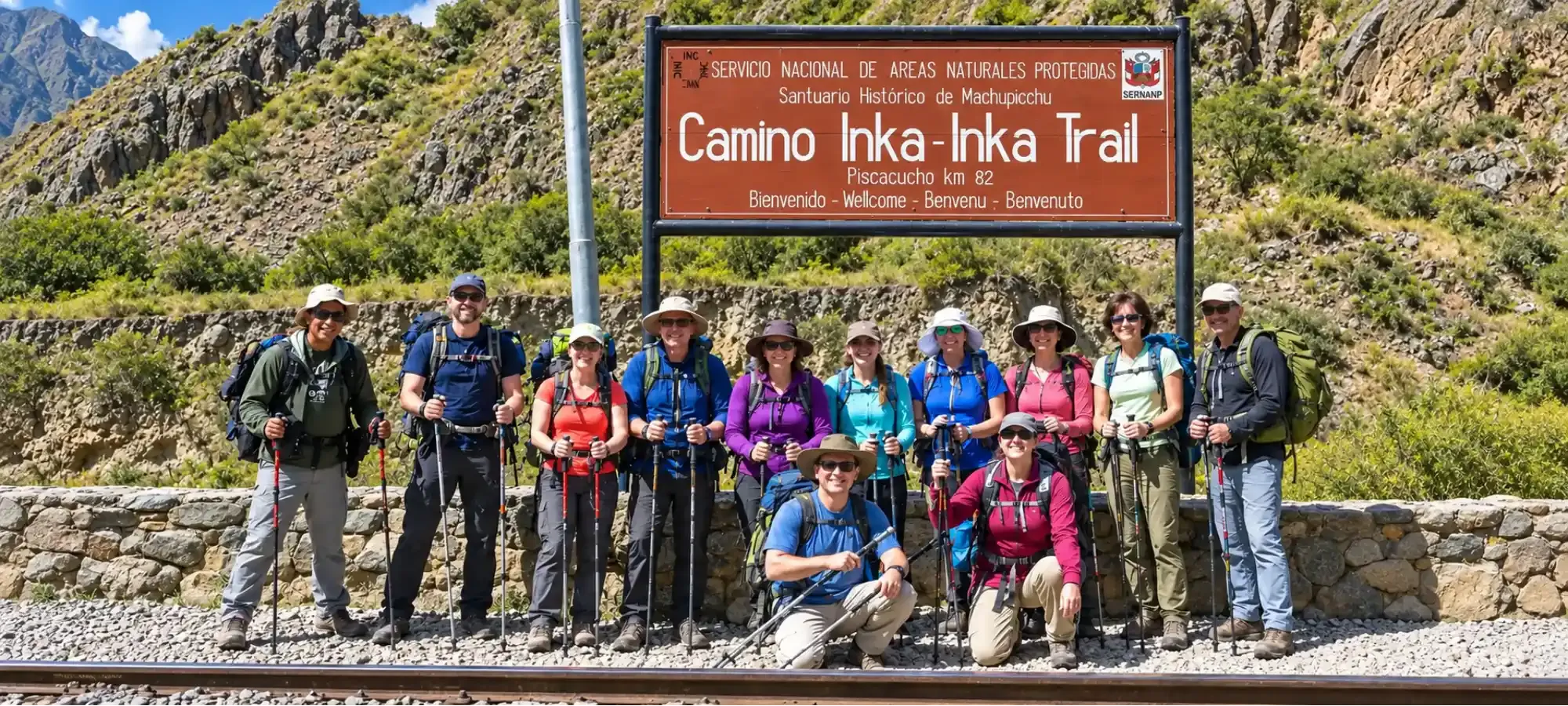
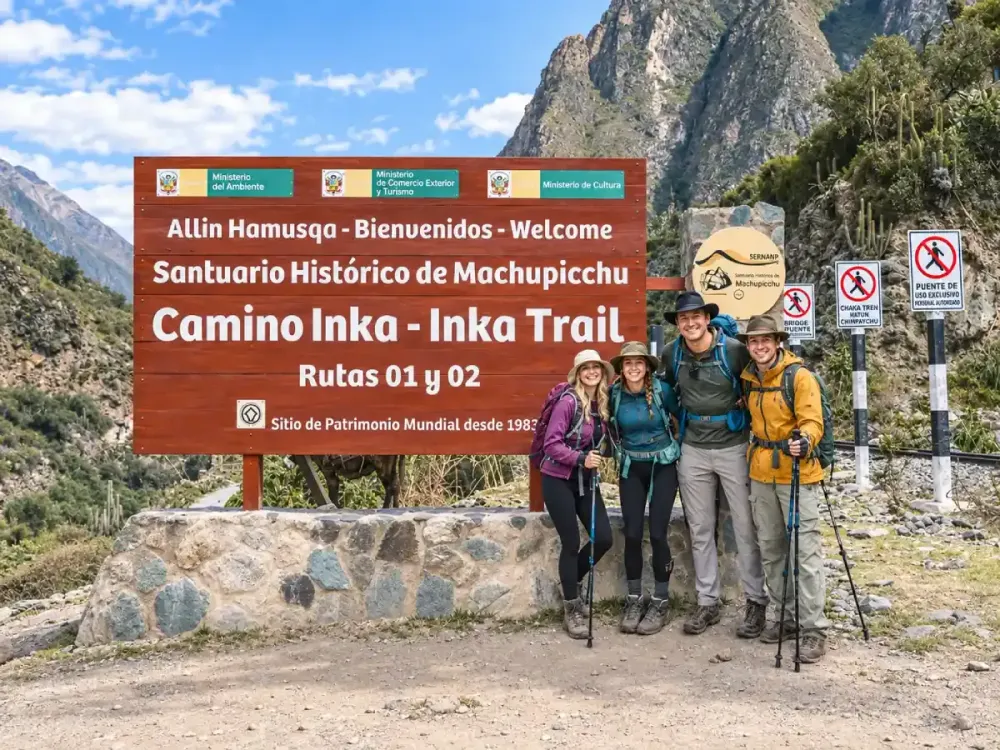
The Km 82 Inca Trail starting point, also known as Piscacucho or Piskacucho, is the traditional beginning of the Classic route to Machu Picchu. This is where the road transfer ends and the multi-day hiking experience begins through ancient paths, Andean landscapes, archaeological sites and high mountain passes.
For travelers hiking the Classic Inca Trail 4 Days, understanding what happens at this starting point makes the first day much easier to picture. It helps you know what to expect from the logistics, entry controls and the type of terrain you will encounter during the opening stage.
Km 82 should not be seen as simply a number beside the railway. It is the gateway to the , a trek that gradually leaves the Urubamba Valley behind, climbs toward much higher elevations and eventually descends toward Wiñay Wayna, Inti Punku and Machu Picchu.
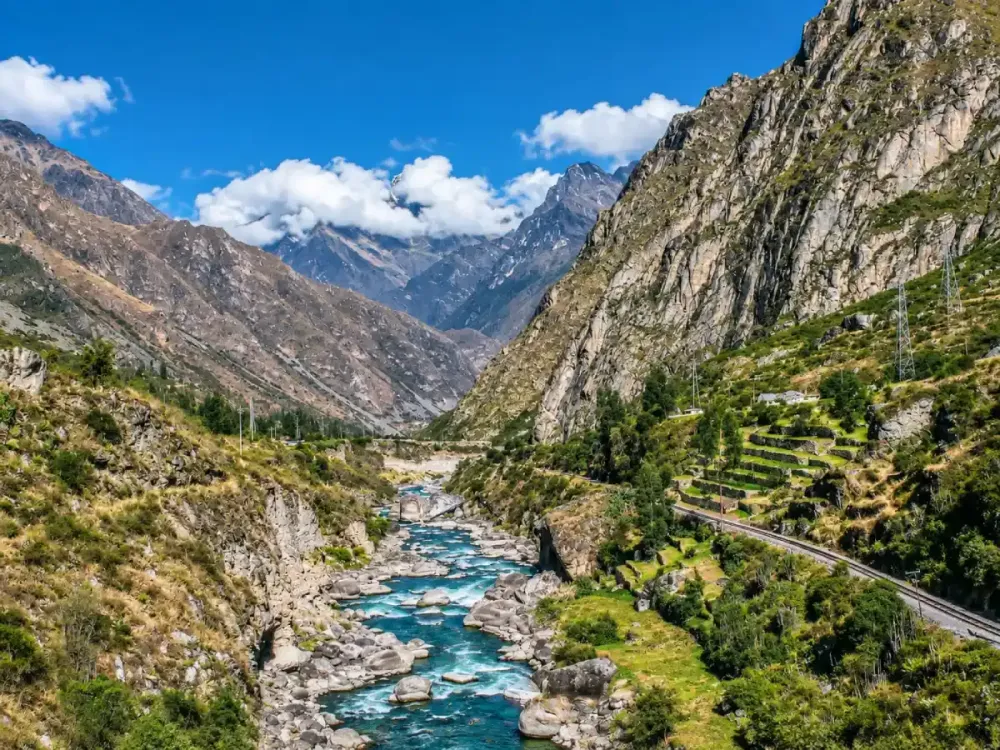
What is Km 82 on the Inca Trail?
Km 82 is the Piscacucho sector, the traditional starting point of the Classic Inca Trail. Its name comes from its position along the railway line that connects the Sacred Valley with Machu Picchu.
From this point, the trek begins along the historic route that later passes through areas such as Wayllabamba, Dead Woman’s Pass, Runkurakay, Sayacmarca, Phuyupatamarca, Wiñay Wayna and Inti Punku.
The Peruvian cultural authorities continue to recognize Piscacucho as one of the official access points to the Inca Trail Network. This means the route begins within a regulated system rather than as an unrestricted hiking trail.
If you want to see how all these sections connect, read our guide to the Classic Inca Trail route.
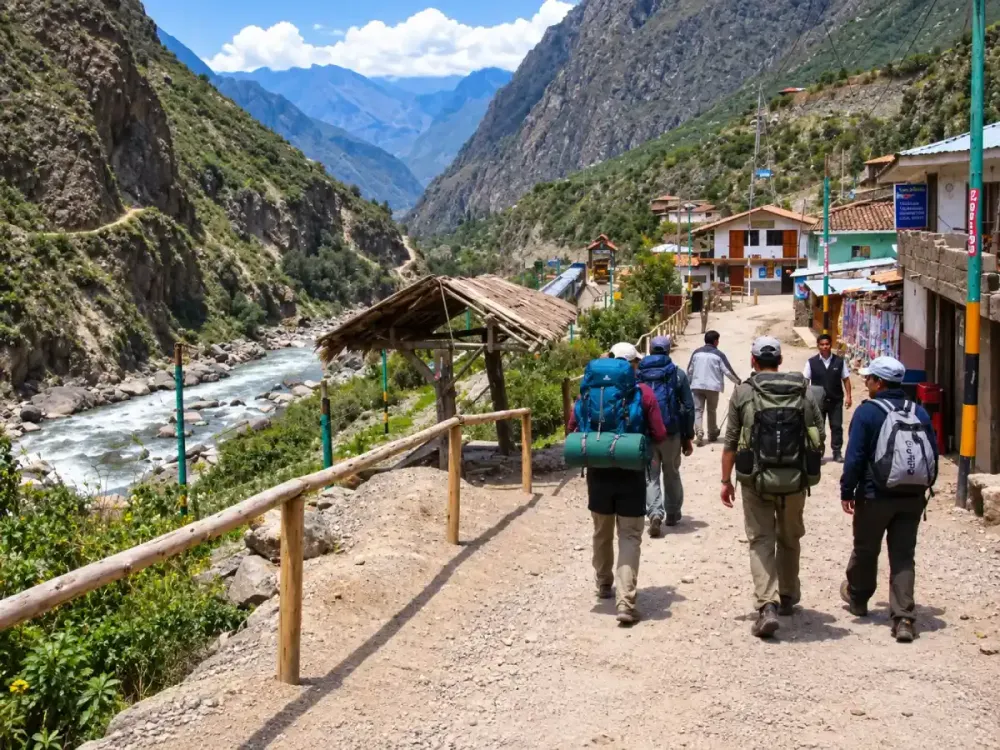
Where is Piscacucho Km 82 located?
Piscacucho is located in the Urubamba province, in the Ollantaytambo district, around 20 kilometers from the town of Ollantaytambo.
The area lies beside the Urubamba River and the railway line that continues toward Machu Picchu. From the very beginning, the setting already gives travelers a sense of how dramatically the landscape will change over the following days.
Piscacucho also marks a clear transition between two parts of the journey. Up to this point, travelers arrive by road as part of the tour logistics. After the corresponding access control, the experience continues on foot.
The starting elevation is approximately 2,650 meters above sea level, which is considerably lower than the highest point of the Classic route.
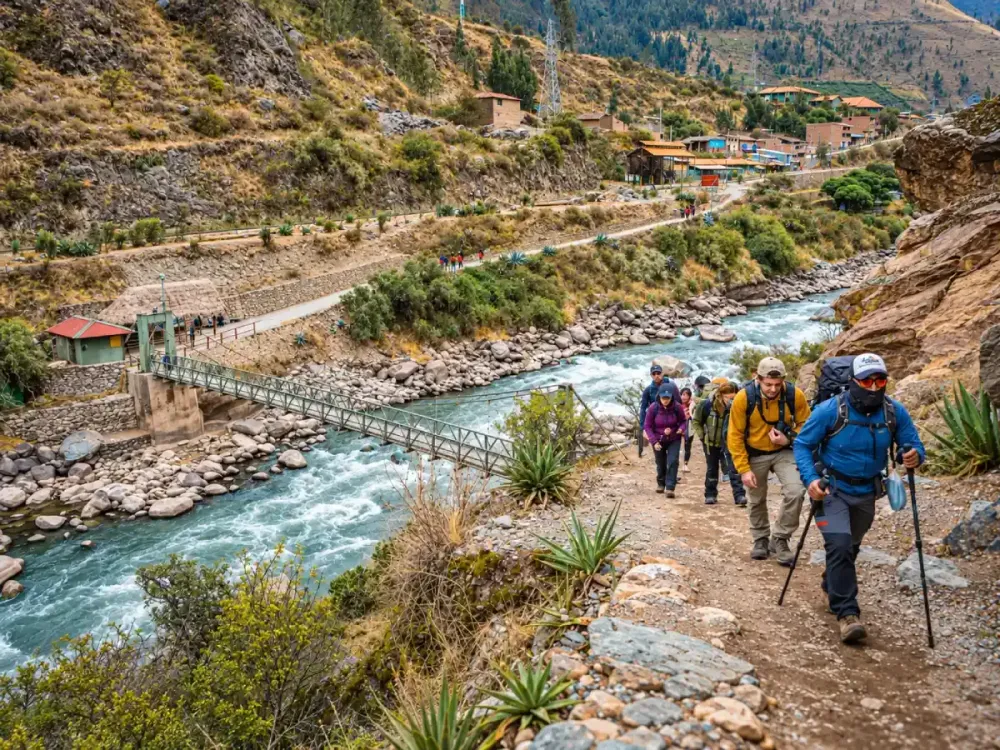
How do you get to Km 82?
On an organized trek, the transfer to Km 82 is normally included as part of the first-day logistics. The journey usually begins early from Cusco and continues through the Sacred Valley toward Ollantaytambo before reaching Piscacucho.
On our Classic Inca Trail 4 Days, this first section is organized so travelers can focus on preparing their daypack and beginning the trek without having to coordinate each transfer separately.
Once you arrive in Piscacucho, the group prepares for entry, organizes luggage and follows the guide’s instructions. From that moment onward, the vehicle is left behind and the journey continues on foot.
| Stage before hiking | What happens |
|---|---|
| Departure | Transfer from Cusco according to the itinerary |
| Sacred Valley | Travel toward the Ollantaytambo area |
| Arrival at Piscacucho | Group and luggage organization |
| Km 82 | Corresponding access control |
| Start of the trek | Hiking officially begins |
It is always a good idea to confirm your exact pickup time and service conditions before departure, as operational details may vary.
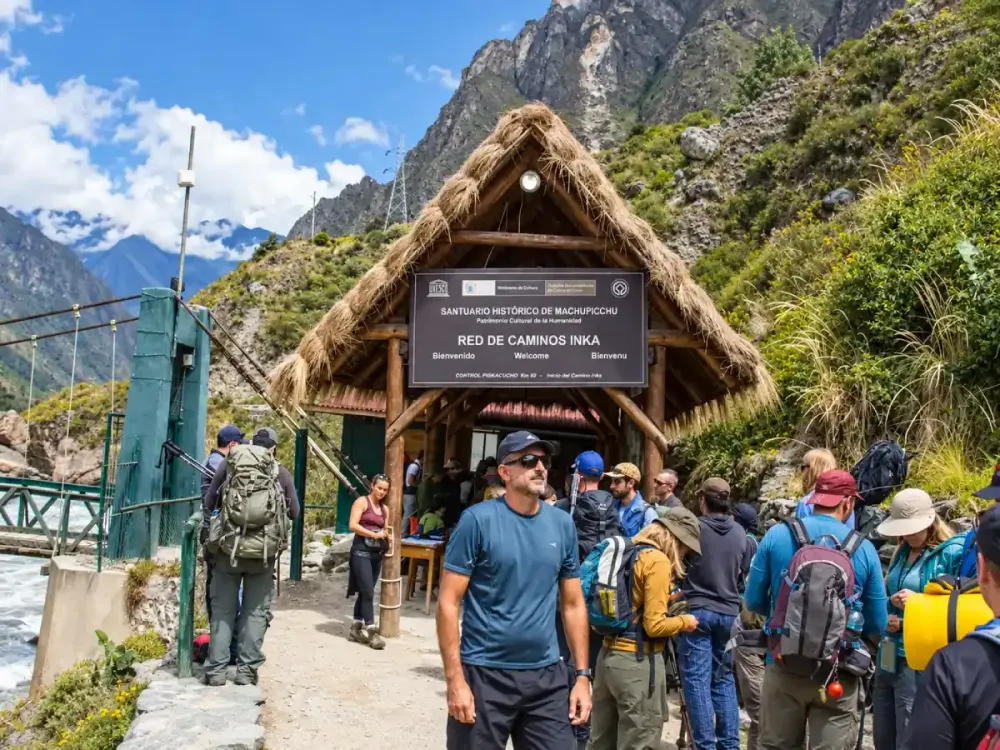
What happens before you start hiking?
Km 82 is not simply a place where the vehicle stops and everyone immediately starts walking. Before entering the Inca Trail Network, the group goes through the corresponding access process and organizes the final details for departure.
The route is part of a protected and regulated area, and Piscacucho Km 82 is recognized as an official access point to the Inca Trail Network. For this reason, visitors need to follow the established entry procedures.
You should carry the same personal identification document or passport used for your reservation and follow the guide’s instructions during the control process.
You should not arrive at Km 82 expecting to simply buy access on the spot and start hiking independently. If you are planning your trip, review Inca Trail permits and Inca Trail availability before organizing flights and other services around the trek.
How does the Inca Trail begin from Km 82?
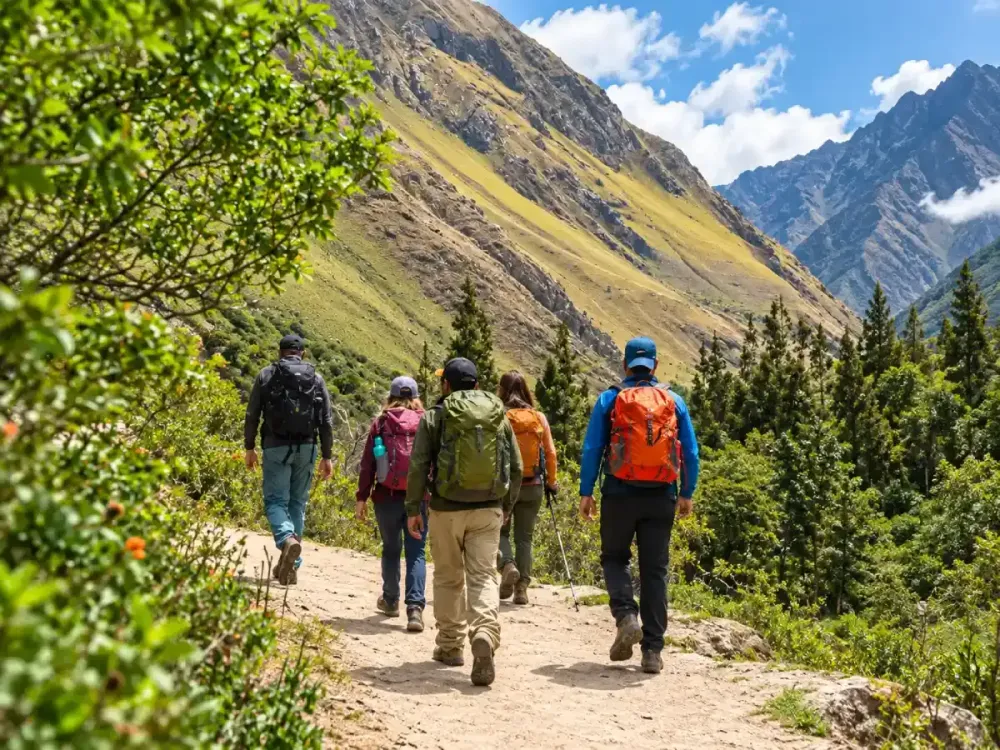
Once the access process is complete, the hike officially begins. The first few hours provide a gradual introduction to the route and give travelers time to find a comfortable pace before the more demanding elevation gains of the following days.
The trail follows the Urubamba Valley and begins to connect with ancient sections of the Inca road system. At this point, the elevation is still much lower than what you will eventually experience at Dead Woman’s Pass.
It is not a good idea to treat this more moderate section as an invitation to walk too fast. The Classic Inca Trail 4 Days is a trek where fatigue accumulates, so conserving energy during the first hours can make a real difference later.
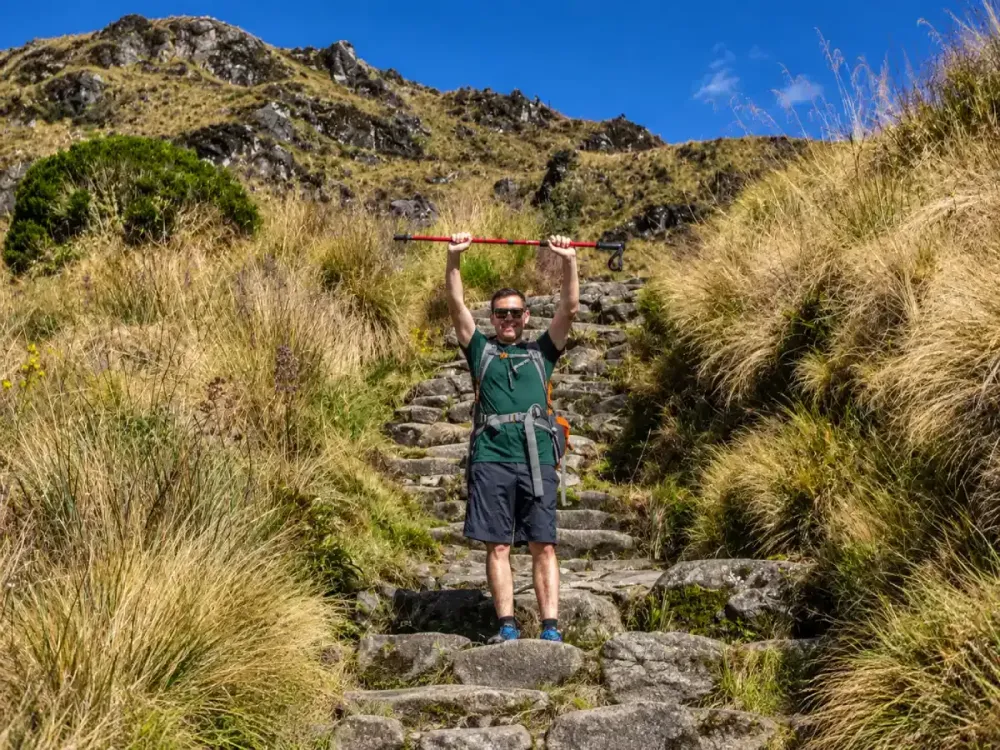
This is also a good moment to check whether your backpack is properly adjusted, your footwear feels comfortable and your trekking poles, if you use them, are working well for you.
What can you see during the first stage?
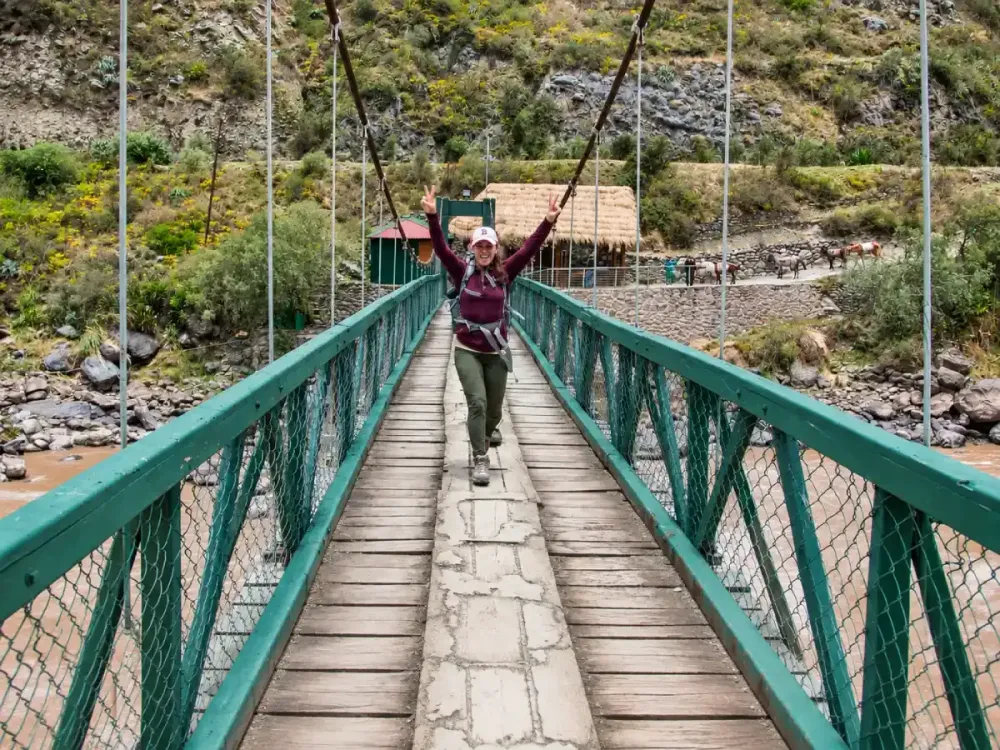
The first stage begins to reveal one of the main characteristics of the Inca Trail: the combination of natural landscapes and archaeological heritage.
The Urubamba Valley, surrounding mountains, historic paths and the first Inca structures gradually appear as you move away from Piscacucho.
One of the major highlights of the first day is Patallacta, sometimes referred to in route-related references as Llactapata. Its terraces and structures can be seen integrated into the valley, showing from the beginning that the goal of the trek is not simply to reach Machu Picchu.
As you continue, the vegetation, terrain and relationship with the river begin to change. The route gradually moves away from the lower valley and toward areas where the slopes become more noticeable.
You can follow the full sequence in our guide to the Classic Inca Trail route.
From Km 82 toward Wayllabamba
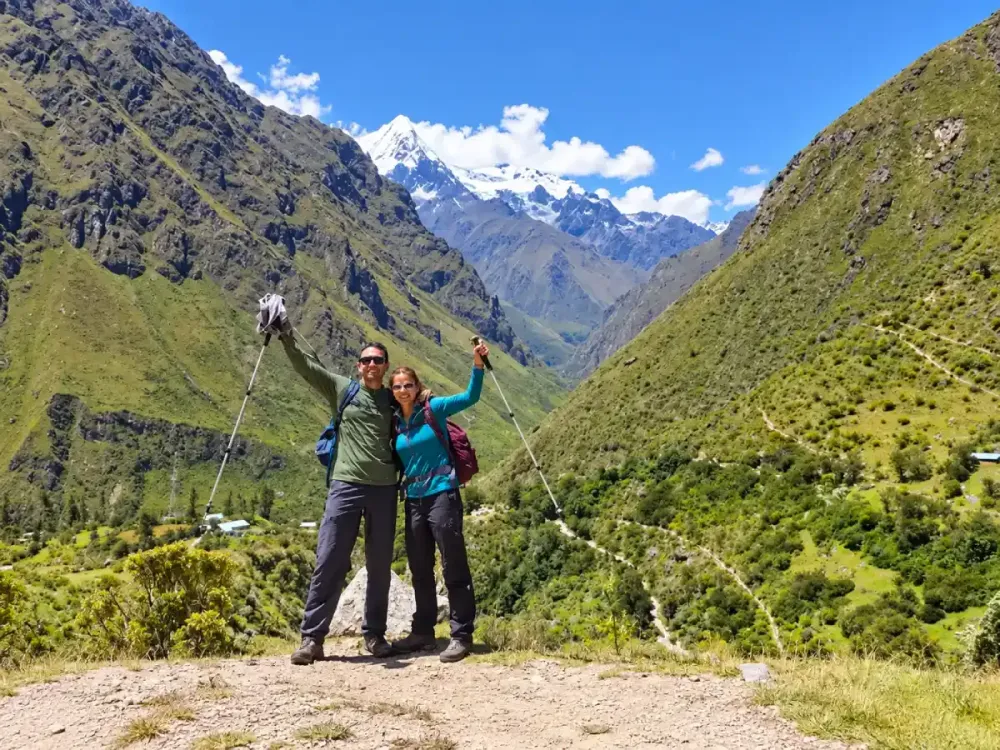
After leaving the initial Piscacucho area and the first valley landscapes behind, the route continues toward Wayllabamba, one of the traditional reference points on the first day of the Classic Inca Trail.
As the trail progresses, it gradually gains elevation. The valley becomes narrower and the slopes begin to hint at the mountain environment that will dominate much of the following days.
Wayllabamba is located at roughly 3,000 meters above sea level. From this area, the route later continues upward toward Llulluchapampa and, on Day 2, Dead Woman’s Pass.
This transition matters because Day 1 is not an isolated stage. Every kilometer from Piscacucho prepares the traveler for the increase in altitude and difficulty that follows. You can understand that progression better in Inca Trail altitude.
Is the first day from Km 82 difficult?
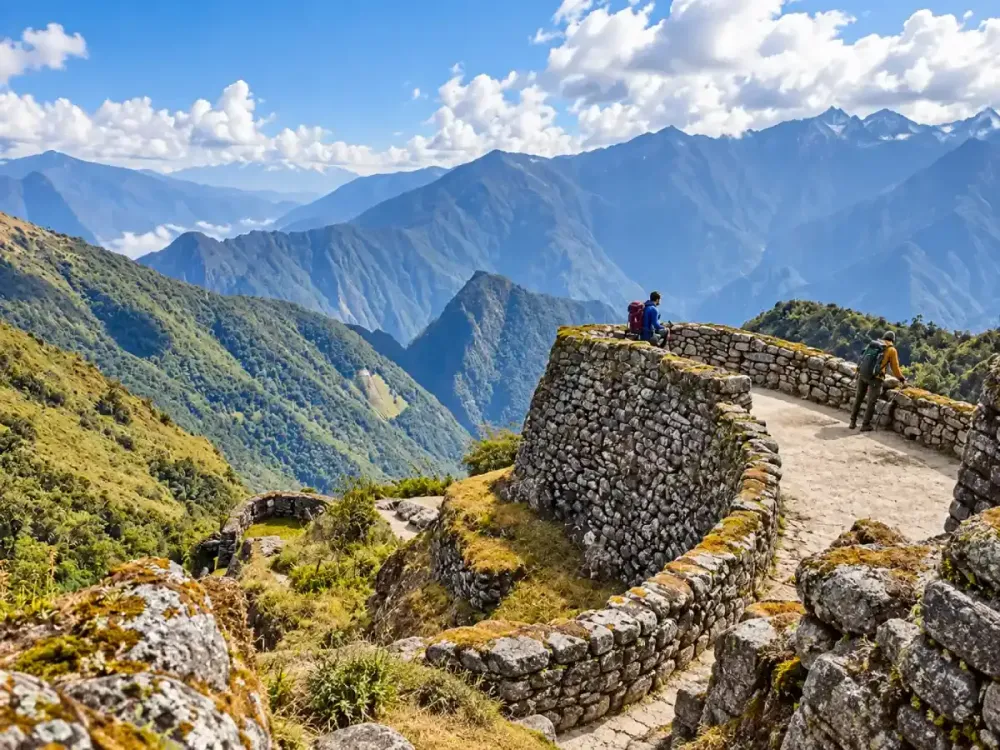
Compared with the climb to Dead Woman’s Pass on Day 2, the first day usually provides a more gradual introduction to the trek. That does not mean it is effortless.
Several hours of walking, the first uphill sections and the weight of your backpack can still create fatigue, especially for travelers who are not used to sustained physical activity.
How difficult the day feels also depends on your preparation. Someone who has trained with long walks, stairs and elevation gain will usually find the first stage more manageable than someone arriving without physical preparation.
| Factor | How it affects Day 1 |
|---|---|
| Hours of walking | Creates accumulated fatigue |
| Uphill sections | Become progressively more noticeable |
| Backpack | Extra weight increases effort |
| Altitude | Begins to affect the body more than at sea level |
| Pace | Starting too fast can waste energy |
| Previous training | Improves adaptation to the physical effort |
For a broader view of the trek, read Inca Trail difficulty and Inca Trail for beginners.
What is the elevation at the start of the Inca Trail?
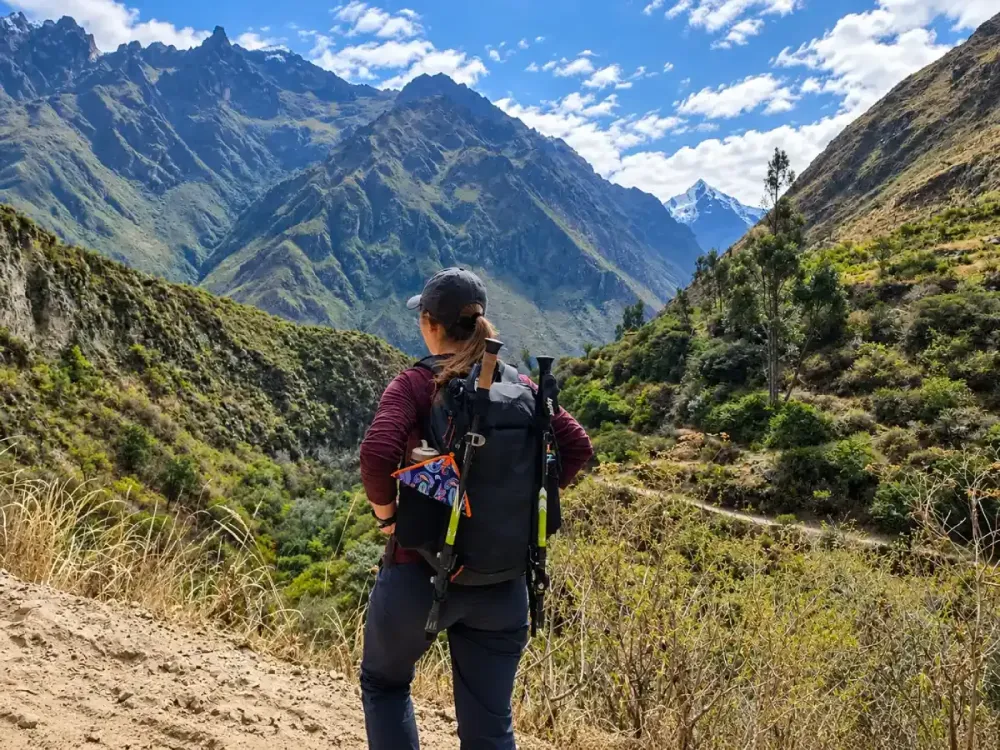
Piscacucho Km 82 sits at approximately 2,650 meters above sea level. From this point, the route begins gaining altitude progressively.
This is much lower than the highest point of the Classic route. On Day 2, hikers reach Dead Woman’s Pass at approximately 4,200 meters, creating one of the largest elevation changes of the trek.
For that reason, even though the Inca Trail does not begin above 4,000 meters, it is still wise to arrive in the region with enough time to adapt to altitude.
Good fitness helps with climbing, but it does not replace acclimatization. For more detail, read Inca Trail altitude and altitude sickness on the Inca Trail.
Is Km 82 the starting point for every Inca Trail route?
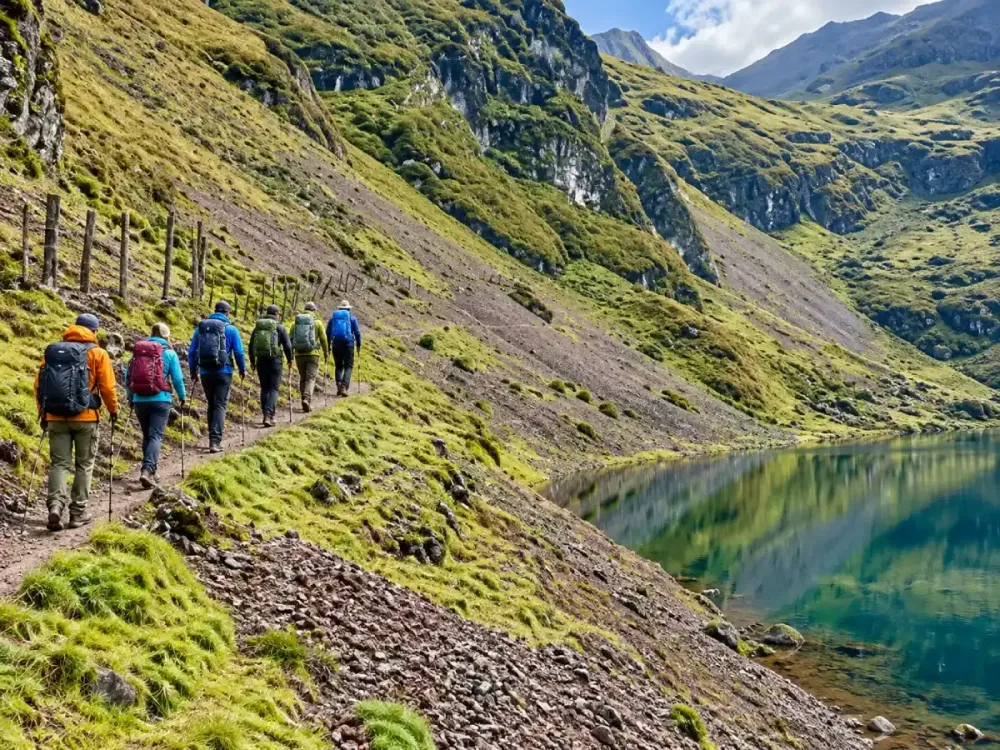
No. Km 82 is mainly associated with the traditional beginning of the Classic four-day route, but the Inca Trail Network has several authorized access points.
This is why talking about “the start of the Inca Trail” without specifying the route can be confusing.
For international travelers, the most common comparison is between the Classic route from Km 82 and the Short Inca Trail 2 Days, which uses the Chachabamba access point at Km 104.
That means two travelers may both say they are hiking the Inca Trail while actually beginning from completely different places depending on the itinerary they booked.
Km 82 vs Km 104: what is the difference?
The main difference is the type of experience.
Km 82 is the starting point for the Classic route, which involves several days of trekking, mountain passes, campsites and numerous archaeological sites before reaching Machu Picchu.
Km 104, on the other hand, is the access point used for the Short Inca Trail. From there, hikers enter through Chachabamba and continue toward Wiñay Wayna and Inti Punku without crossing Dead Woman’s Pass or the main high-altitude sections above 4,000 meters.
| Feature | Km 82 | Km 104 |
|---|---|---|
| Main route | Classic Inca Trail | Short Inca Trail |
| Typical duration | 4 days | 1 or 2 days |
| Access point | Piscacucho | Chachabamba |
| Dead Woman’s Pass | Yes | No |
| Camping | Yes on the Classic route | No on the usual 2-day version |
| Wiñay Wayna | Yes | Yes |
| Inti Punku | Yes | Yes |
| Experience | Multi-day trek | More concentrated hike |
If you want to understand the second access point in more detail, read Km 104: the starting point of the Short Inca Trail and our comparison of 2-Day vs 4-Day Inca Trail.
Do you need physical preparation before arriving at Km 82?
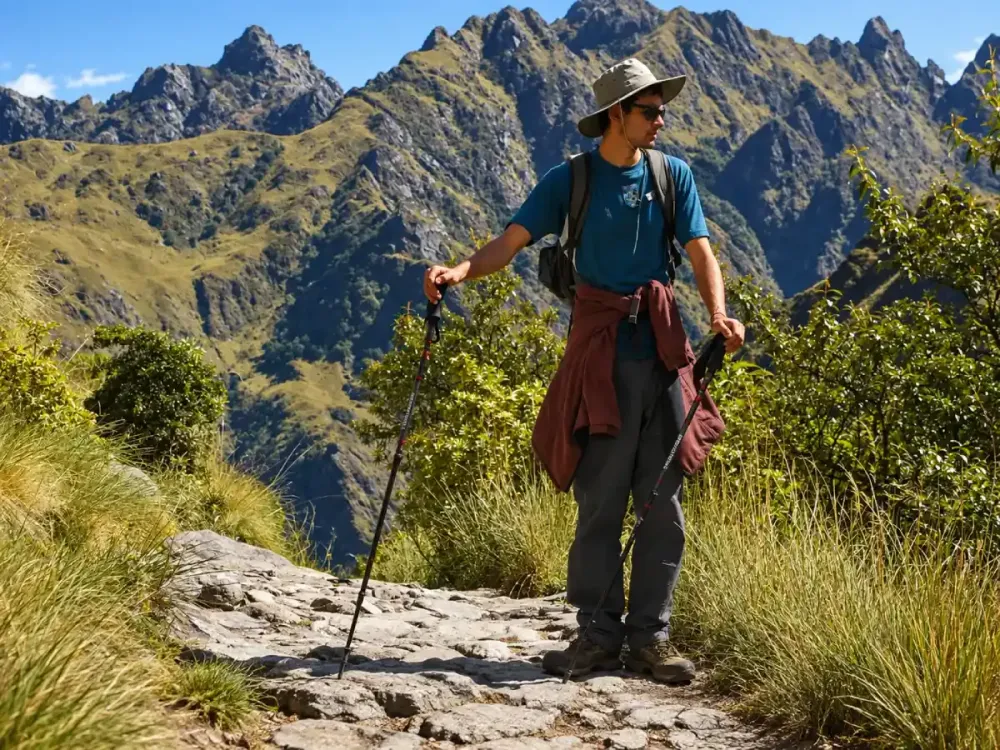
Yes. Although Piscacucho is only the starting point, arriving with a good fitness base can make the four-day Classic route much more manageable. Ideally, you should be comfortable walking for several hours, handling uphill sections and repeating physical effort on consecutive days.
Hilly walks, stair training, leg strengthening and cardiovascular exercise are especially useful. It is also worth practicing descents, as the long stone stairways can place considerable strain on your legs and knees.
Before traveling, complete a few walks using the same footwear and a backpack similar to the one you will carry during the trek. This helps identify possible discomfort and prevents you from carrying unnecessary weight.
For better preparation, read how to train for the Inca Trail and what to pack for the Inca Trail.
Personal travel advice
Plan your trip with Dreamy Tours
Start a tailored journey with our exclusive tours and custom trips across Peru and other Latin American countries.