Search the blog
Tabla de contenidos
Choosing between the Inca Trail and Salkantay Trek is one of the most important decisions for travelers who want to reach Machu Picchu after several days of hiking through the Andes. At first glance, the two experiences may look similar because both involve trekking, mountain scenery and significant changes in altitude, but in reality they offer very different journeys.
The Classic Inca Trail 4 Days is deeply connected with history. Along the route, you walk on ancient paths, pass archaeological sites and approach Machu Picchu through the original Inca road network before reaching Inti Punku. The Salkantay Trek 4 Days, on the other hand, places nature at the center of the experience, with snowcapped mountains, high passes, valleys and dramatic changes in landscape.
At Dreamy Tours, we do not see the question as simply deciding which route is “better.” The right choice depends on what you want to experience during the days before Machu Picchu. If archaeology and ancient Inca roads attract you most, one route will make more sense. If you are looking for high-mountain scenery and a stronger wilderness feel, the other may suit you better.
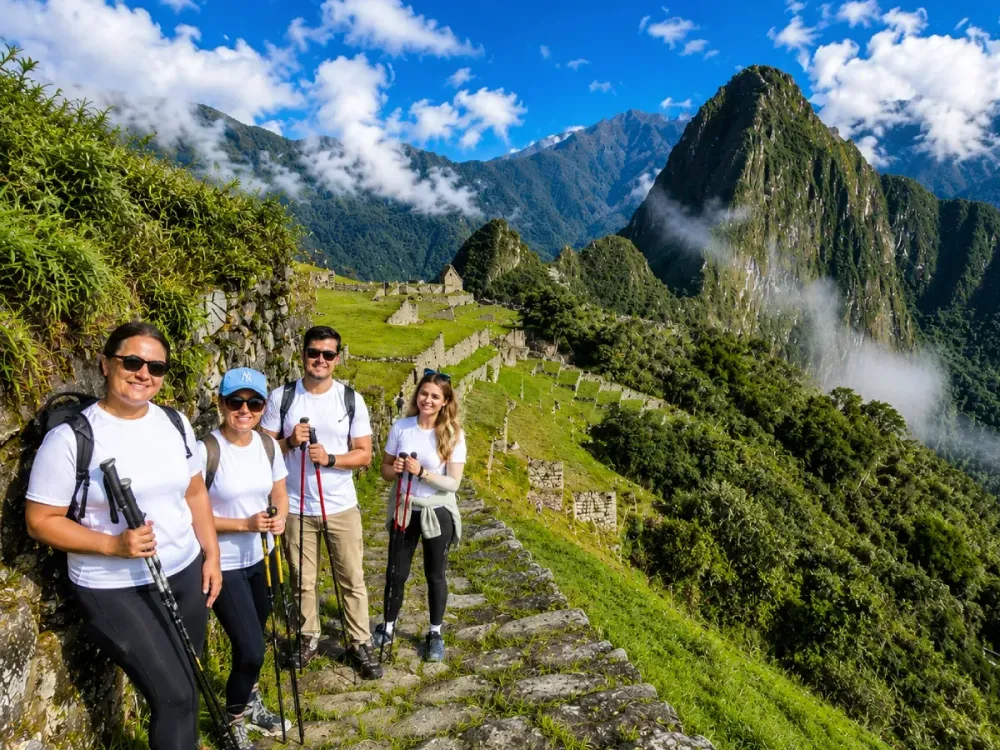
Inca Trail vs Salkantay: quick comparison
Before looking at each difference in detail, it helps to compare both treks from a broader perspective. The Classic Inca Trail is normally completed in four days and reaches approximately 4,200 meters at Dead Woman’s Pass. Dreamy Tours also operates a four-day Salkantay itinerary, but this route reaches approximately 4,600 to 4,650 meters at Salkantay Pass.
The most obvious difference is the character of each trek. The Inca Trail combines archaeology and historic paths throughout much of the journey. Salkantay focuses much more strongly on snowcapped peaks, high-altitude scenery and dramatic environmental changes.
| Feature | Inca Trail | Salkantay Trek |
|---|---|---|
| Main experience | History, archaeology and Inca paths | Mountains, nature and adventure |
| Typical duration | 4 days | 4 or 5 days |
| Approx. maximum altitude | 4,200 m | 4,600–4,650 m |
| Highest point | Dead Woman’s Pass | Salkantay Pass |
| Archaeology during trek | Very prominent | Less prominent |
| Snowcapped mountains | Present | Major highlight |
| Humantay Lake | Not part of Classic route | May be included |
| Arrival at Machu Picchu | Through Inti Punku | Usually via Machu Picchu Pueblo |
| Camping | Yes | Yes, depending on itinerary |
| Best for | History and Inca culture | Nature and high mountains |
The simplest way to understand the difference is this: the Inca Trail is a historical journey through the mountains, while Salkantay is a mountain journey that eventually connects with Machu Picchu.
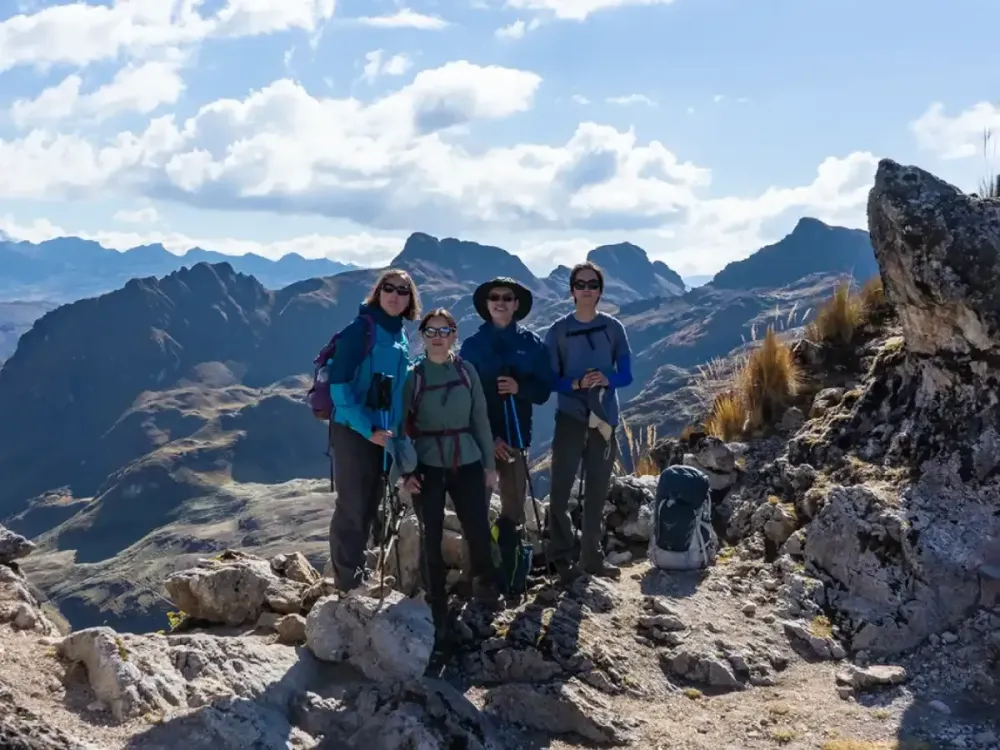
What is the main difference between the Inca Trail and Salkantay?
The main difference is what accompanies you throughout the trek. On the Inca Trail, history is present almost continuously. You are not only moving toward Machu Picchu, but walking on roads that formed part of the Inca road network while archaeological sites appear throughout the different stages.
Along the Classic route, travelers encounter places such as Runkurakay, Sayacmarca, Phuyupatamarka and Wiñay Wayna before reaching Inti Punku. This creates a sense of historical continuity, where each day becomes part of a gradual approach toward Machu Picchu.
On the Salkantay route, the experience has a different character. Mountains, glaciers and changing landscapes become the main focus. The trek climbs toward Salkantay Pass and then descends progressively into warmer and more humid environments. Depending on the itinerary, the journey may also include Humantay Lake.
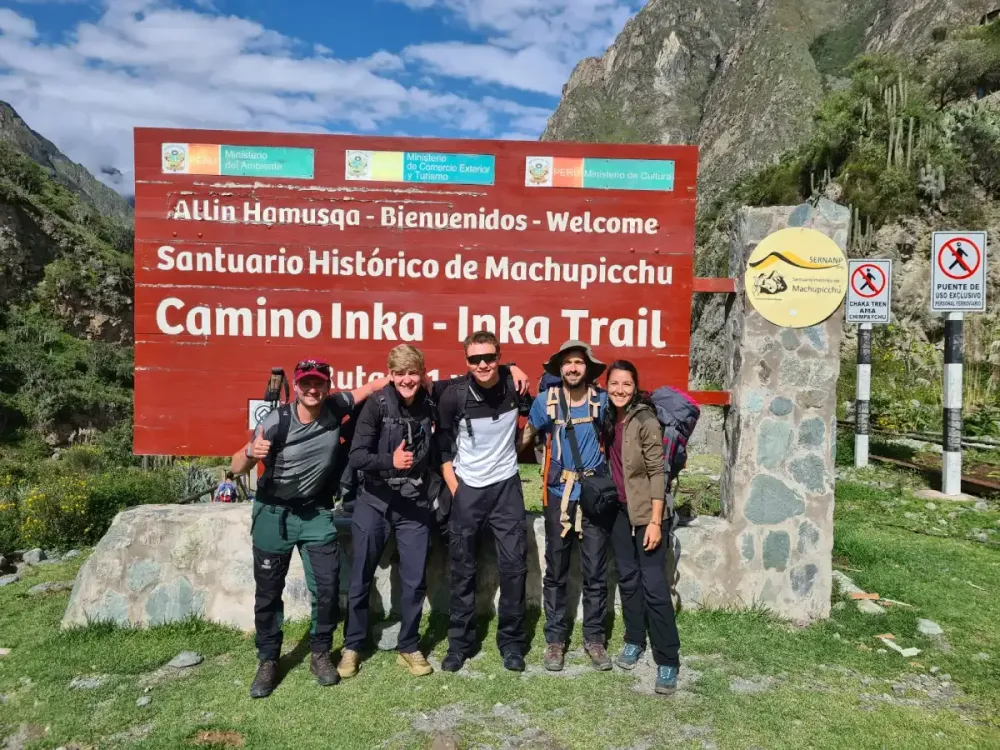
Inca Trail: history and archaeology throughout the trek
One of the features that separates the Inca Trail from many other treks around Cusco is that archaeology does not appear only at the end. It forms part of the journey and helps travelers understand that this route was much more than a mountain path.
The Classic Inca Trail 4 Days begins around Km 82 and continues through different environments and archaeological sites before reaching Machu Picchu. Representative places along the way include Llactapata, Runkurakay, Sayacmarca, Phuyupatamarka, Wiñay Wayna and Inti Punku.
This gives the journey a strong cultural dimension. The scenery is still important, but it is inseparable from the history. Mountains, stairways, terraces and ancient structures become part of the same narrative.
If you want to understand how these sections connect, review our guide to the Classic Inca Trail route.
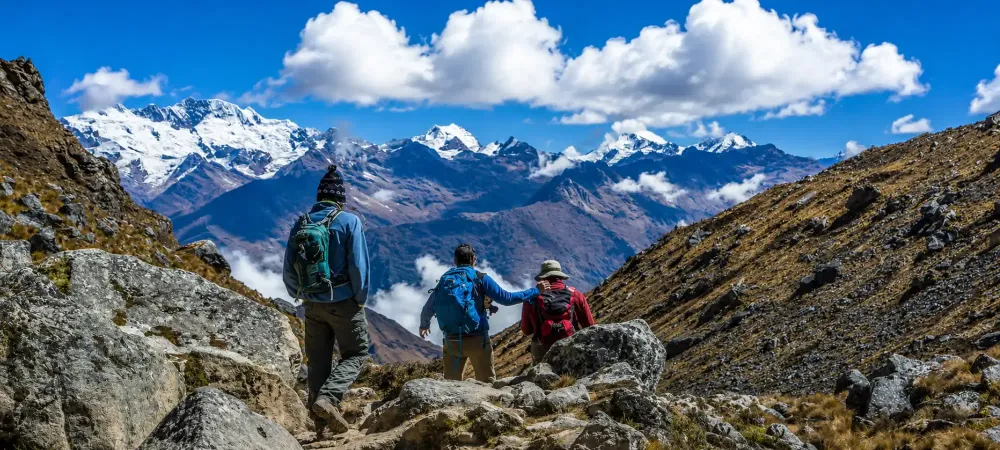
Salkantay Trek: mountains, glaciers and changing landscapes
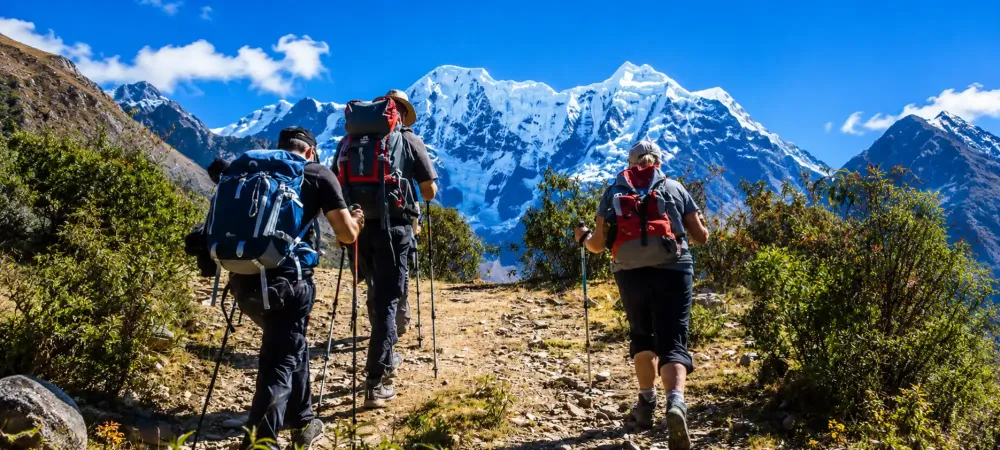
On Salkantay, the focus shifts. High-mountain landscapes have a much stronger presence. The journey includes views dominated by Salkantay Mountain, rocky terrain, broad valleys and progressively more humid environments as the route descends.
One of the most attractive features of this trek is how quickly the scenery changes. Over only a few days, travelers can move from cold, exposed mountain terrain into greener areas with noticeably different vegetation.
Depending on the itinerary selected, the route may include Humantay Lake before continuing toward Salkantay Pass. From there, the trek begins a long descent that changes the feeling of the journey entirely.
For this reason, Salkantay often appeals especially to travelers interested in nature, photography and large-scale Andean landscapes. This does not mean the route has no cultural value, but its strongest identity is clearly tied to the natural environment.
Which has better scenery: Inca Trail or Salkantay?
Both routes offer impressive landscapes, but it would be misleading to say that one has objectively “better” scenery. What changes is the type of landscape that dominates the trek.
On the Inca Trail, the environment combines mountains, valleys, cloud forest and archaeological sites. Much of its appeal comes from seeing how Inca structures blend into the landscape and how the historic trail passes through different environments before reaching Machu Picchu.
Salkantay offers a stronger high-mountain scale. The snowcapped peak dominates several parts of the route, the main pass reaches a higher elevation and the contrast between cold mountain terrain and warmer lower areas can be especially dramatic.
| Type of scenery | Inca Trail | Salkantay |
|---|---|---|
| Snowcapped mountains | Present | Major highlight |
| Glacial lake | Not a central feature | Humantay may be included |
| Cloud forest | Yes | Yes |
| Archaeological sites | Numerous | Fewer |
| Historic paths | Central to the experience | Less prominent |
| High-mountain scenery | Important | Very prominent |
| Ecosystem changes | Significant | Very pronounced |
If you want archaeology and scenery to remain closely connected throughout the trek, the Inca Trail usually fits better. If you are looking for large mountain landscapes and stronger natural contrasts, Salkantay has a more distinct personality.
Which route has more archaeology?
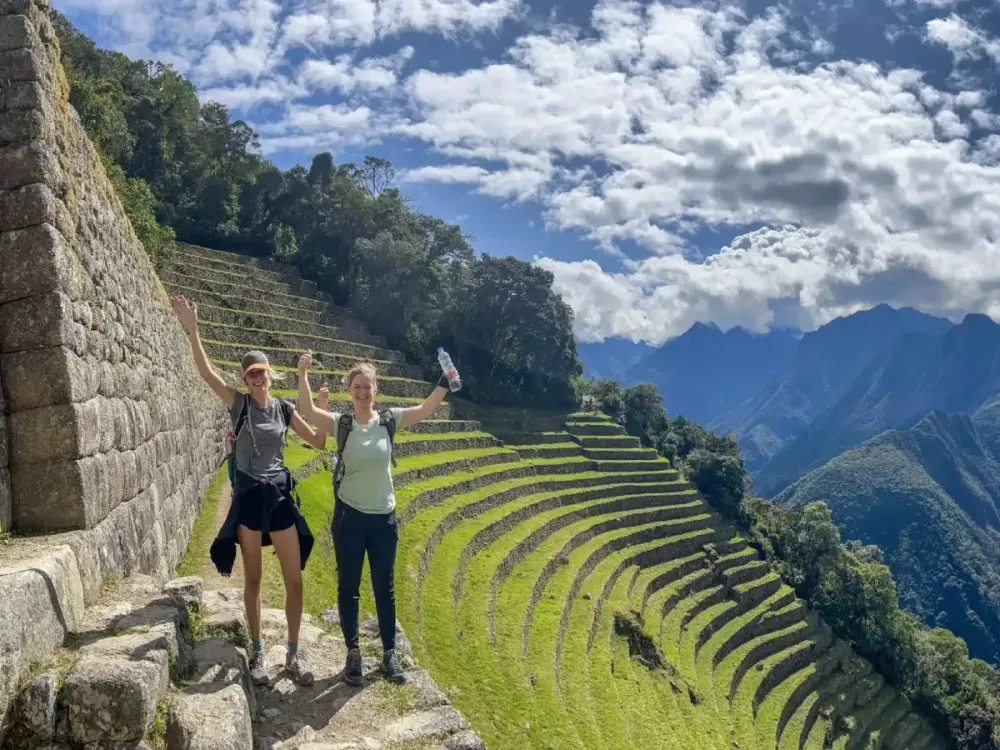
The difference here is quite clear: the Inca Trail has a much stronger archaeological presence throughout the trek.
Several archaeological sites appear along the Classic route before reaching Machu Picchu. Some are relatively small, while others are impressive because of the complexity of their construction in such mountainous terrain. You can explore sites such as Runkurakay, Wiñay Wayna and Inti Punku in more detail.
Salkantay can include archaeological components depending on the version chosen. Some longer itineraries may incorporate areas such as Llactapata, but archaeology does not appear with the same continuity throughout the route.
If one of your main reasons for traveling to Peru is to understand the Inca world while trekking, the Inca Trail has a clear advantage. On Salkantay, cultural elements are present, but the mountains remain the main attraction.
Which is harder: the Inca Trail or Salkantay?
Both treks require physical preparation, and neither should be underestimated. However, the difficulty is expressed differently on each route.
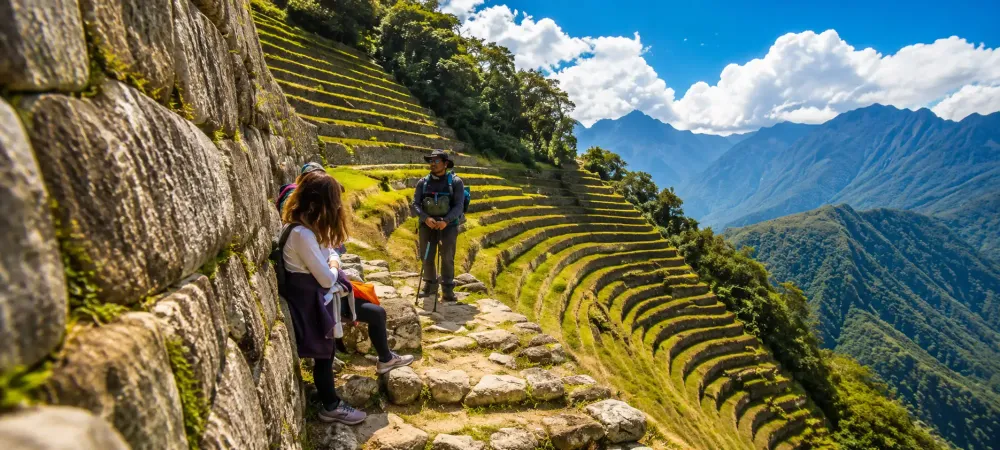
The Inca Trail combines long hours of hiking with climbs, descents and a large number of stone stairways. Fatigue also accumulates over several days, and the second day is usually especially demanding because of the ascent to Dead Woman’s Pass at around 4,200 meters.
Salkantay adds another important factor: higher altitude. On the current Dreamy Tours itinerary, Salkantay Pass reaches approximately 4,600 to 4,650 meters, and one trekking day can exceed 20 kilometers. This creates a combination of distance, elevation gain and high-altitude exposure.
For that reason, we do not recommend deciding which one is “easier” based on a single number. Salkantay may feel harder because of the altitude and the length of certain days, while the Inca Trail can place significant stress on the legs because of its stairways and repeated climbs and descents.
Inca Trail vs Salkantay: difficulty compared
Looking at the main physical demands side by side makes it easier to understand why both routes can be challenging in different ways.
| Factor | Inca Trail | Salkantay |
|---|---|---|
| Approx. maximum altitude | 4,200 m | 4,600–4,650 m |
| Most demanding day | Usually Day 2 | Usually Day 2 |
| Stone stairways | Very common | Less prominent |
| Long climbs | Yes | Yes |
| Long descents | Yes | Yes |
| Several hours of hiking | Yes | Yes |
| Technical mountaineering | No | No |
| Acclimatization recommended | Yes | Yes |
| Endurance required | High | High |
The main difference is how the effort is distributed. The Inca Trail requires strong endurance for repeated stairways, elevation changes and consecutive hiking days. Salkantay combines long distances with a significantly higher mountain pass.
Someone who is comfortable walking long distances may find the stairways of the Inca Trail more tiring than expected, while a traveler with little experience above 4,000 meters may feel the Salkantay Pass much more strongly.
For more detail about the Classic route, read Inca Trail difficulty.
Which route reaches a higher altitude?
Salkantay reaches the higher altitude.
The highest point of the Classic Inca Trail is Dead Woman’s Pass, at approximately 4,200 meters above sea level. This section takes place during the second day and represents one of the major challenges of the route. You can see how elevation changes throughout the trek in our guide to Inca Trail altitude.
On the current Dreamy Tours Salkantay itinerary, Salkantay Pass reaches approximately 4,600 to 4,650 meters. This places it more than 400 meters above the highest point of the Inca Trail.
On paper, that difference may not look dramatic, but above 4,000 meters even a few hundred additional meters can become noticeable during a sustained climb. This is especially important if you have little previous experience trekking at high altitude.
Do you need to acclimatize before either trek?
Yes. Both the Inca Trail and Salkantay reach elevations high enough to make prior acclimatization important.
Good physical fitness does not automatically guarantee that you will adapt quickly to altitude. You may train regularly, run or complete long hikes and still feel the effects of arriving too quickly at high elevations.
For that reason, we recommend arriving in Cusco with enough time before starting either trek. During those first days, lighter activities can give your body time to adapt gradually before the more demanding sections begin.
For the Inca Trail, you can review our guides to altitude sickness on the Inca Trail and physical preparation. Training can improve your ability to walk for several hours, but it does not replace acclimatization.
Which trek has longer hiking days?
The answer depends on the specific version of each trek. Two routes that both last four days can have very different daily distances, elevation changes and walking times.
On the Dreamy Tours Classic Inca Trail itinerary, there are several long trekking days, and the second day stands out because of the ascent to Dead Woman’s Pass. The current route information describes approximately 16 kilometers and 8 to 9 hours of walking for this stage.
On the Salkantay Trek 4 Days, the second day can reach approximately 22 kilometers and around 8 to 9 hours, while also crossing Salkantay Pass at high altitude.
This shows why comparing only the total number of days is not enough. Daily distance, elevation gain, altitude and terrain have much more influence on how demanding the trek feels than simply saying that both itineraries last four days.
How do you arrive at Machu Picchu on the Inca Trail?
This is one of the most distinctive differences between the two routes.
On the Classic Inca Trail, the final day continues along the historic path until reaching Inti Punku, the Sun Gate. From there, the final approach toward Machu Picchu begins. You do not first finish the trek in Machu Picchu Pueblo and then travel up to the citadel. Instead, the trail itself leads you toward the archaeological complex.
This changes the feeling of the arrival. Machu Picchu does not appear as a separate visit after the trek, but as the natural conclusion of several days spent following historic paths, crossing mountains and visiting archaeological sites.
This is one of the main reasons the Classic Inca Trail 4 Days has such a distinct identity compared with Salkantay. If it matters to you to approach Machu Picchu on foot along a historic route and arrive through Inti Punku, the Inca Trail offers exactly that experience.
If your priority is instead snowcapped peaks, high-mountain scenery, Salkantay Pass and dramatic landscape changes before visiting Machu Picchu, the Salkantay Trek 4 Days will likely suit you better. These are not two routes where one is good and the other is inferior. They are two very different ways of making the journey toward Machu Picchu an essential part of the trip.
Personal travel advice
Plan your trip with Dreamy Tours
Start a tailored journey with our exclusive tours and custom trips across Peru and other Latin American countries.