Search the blog
Tabla de contenidos
Knowing what to pack for the Inca Trail can make a noticeable difference to your trekking experience. Weather conditions can change quickly, elevations vary throughout the route, and you will spend several hours each day walking across stone paths, stairs, mountain passes and cloud forest.
The goal is not to carry as much as possible. A good Inca Trail packing list should help you stay comfortable while keeping your backpack light.
What you need will also depend on the route you choose. Packing for the Classic Inca Trail 4 Days is different from preparing for the Short Inca Trail 2 Days, especially because the Classic route includes several days of hiking and camping.
Before packing, we also recommend reading Inca Trail difficulty and best time to hike the Inca Trail, since the season and route can influence the clothing and equipment you need.
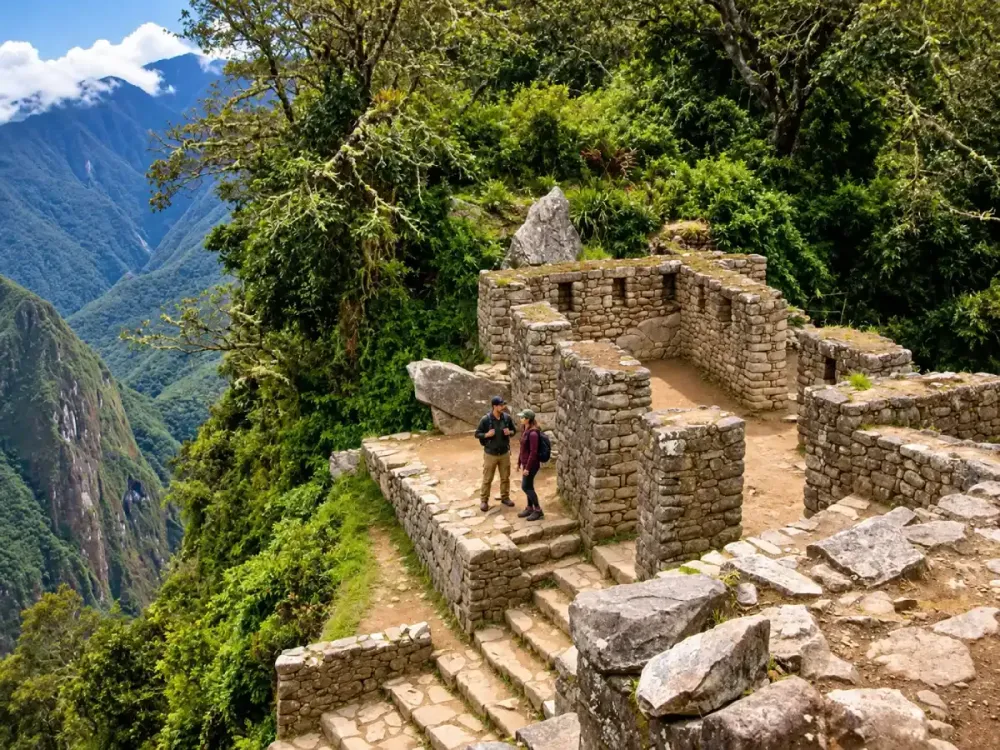
What backpack should you take on the Inca Trail?
Your Inca Trail backpack does not need to be very large.
A comfortable daypack with adjustable shoulder straps and enough space for your daily essentials is usually much more practical than carrying a heavy backpack throughout the trek.
If your tour includes porter service for some personal belongings, you can keep your daypack relatively light.
As a general reference, a 20 to 30-liter backpack can work well as a daypack. Travelers who need to carry more personal equipment may prefer something closer to 30 or 40 liters.
More capacity does not mean you should fill every available space.
On the Inca Trail you will encounter climbs, descents and hundreds of stone steps. Extra weight becomes much more noticeable after several hours of hiking.
If you are also preparing physically for the trek, read how to train for the Inca Trail.
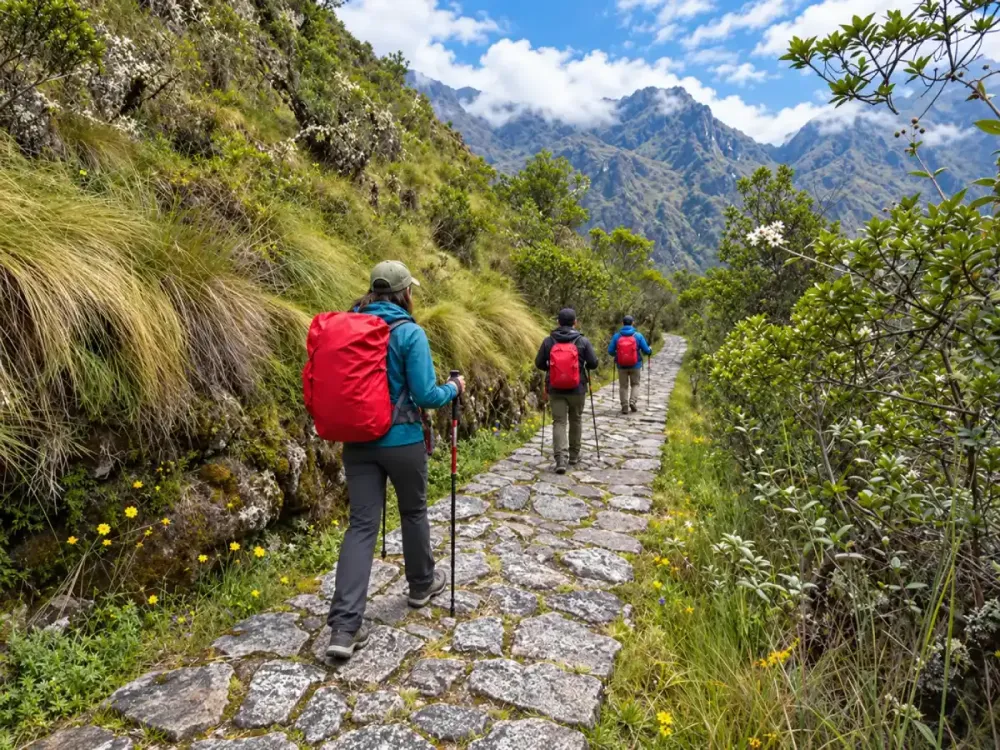
Essential Inca Trail packing list for 2026
Use this list as a practical starting point and adjust it according to your route, travel season and what your tour includes.
- Documents: original passport, travel documents and some cash in Peruvian soles.
- Backpack: comfortable trekking daypack and rain cover.
- Hiking clothes: quick-drying shirts, trekking pants and comfortable underwear.
- Warm layers: fleece or light thermal layer and a wind-resistant jacket.
- Rain protection: waterproof jacket or lightweight rain poncho.
- Footwear: broken-in hiking boots or trail shoes with good grip.
- Hiking socks: several comfortable pairs.
- Sun protection: hat, sunglasses and sunscreen.
- Cold-weather accessories: beanie and gloves, particularly for the Classic route.
- Water: reusable bottle or hydration system.
- Snacks: energy bars, nuts or other lightweight options.
- Personal hygiene: toilet paper, hand sanitizer, toothbrush and travel-size toiletries.
- Insect repellent: useful when entering warmer and more humid areas.
- Headlamp: especially important on the Classic Inca Trail.
- Headlamp: useful for your phone or camera.
- Trekking poles: preferably lightweight and fitted with rubber tips.
- Personal medication: bring any medication you normally use.
- Small waste bag: useful for keeping your backpack organized and carrying out your rubbish.
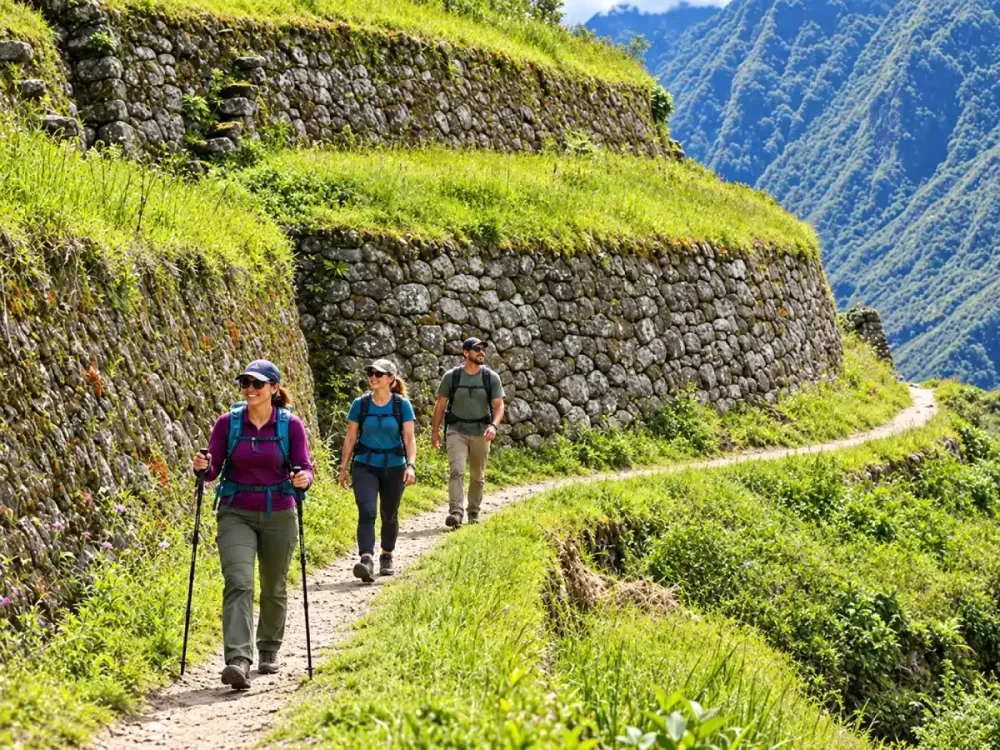
What clothes should you wear on the Inca Trail?
Layering is the most practical approach.
You may begin the morning feeling cold, become warm during a steep climb and need another layer later in the afternoon.
For this reason, what to wear on the Inca Trail is less about bringing heavy clothing and more about choosing versatile layers.
A quick-drying base layer works well for hiking. Add a fleece or light insulating layer for colder sections, followed by a waterproof or wind-resistant outer layer.
Avoid packing a completely different outfit for every part of the day.
Lightweight clothing that dries quickly and can be reused helps reduce backpack weight considerably.
Higher sections of the Classic route can also feel much colder, particularly early in the morning and at night. You can understand these elevation changes better in Inca Trail altitude.
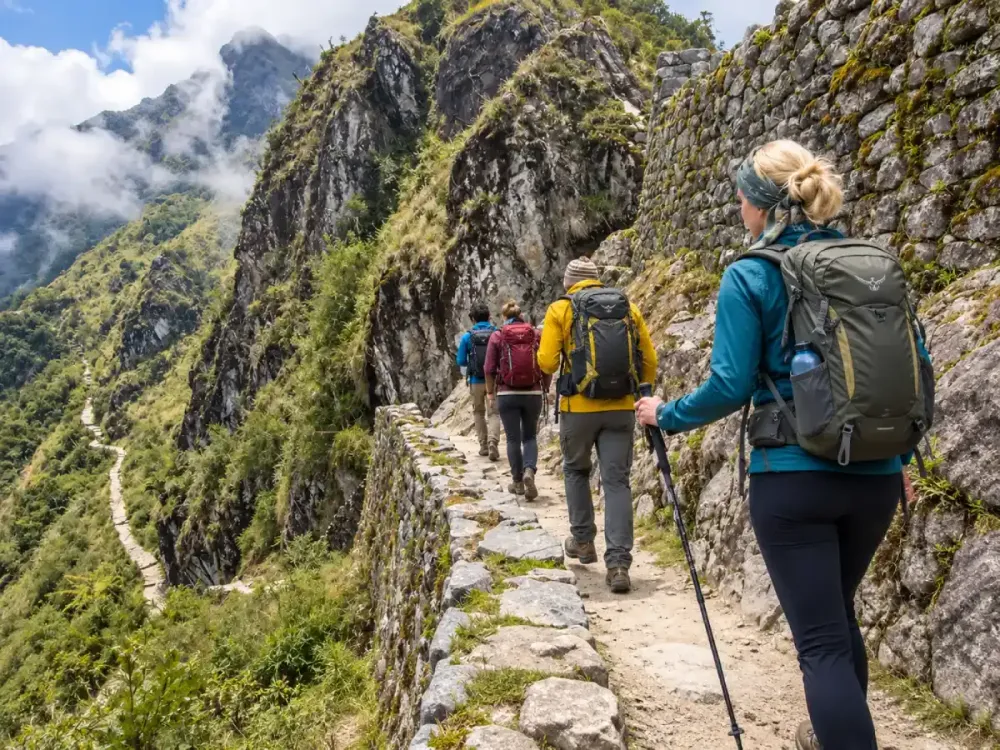
What shoes are best for the Inca Trail?
Your footwear should be comfortable, provide reliable grip and already be broken in before you arrive in Peru.
Do not make the Inca Trail the first long hike in a new pair of boots.
The route includes stone paths, dirt trails, steep stairs, uneven surfaces and areas that can become slippery when wet.
Some hikers prefer boots because of the additional ankle support, while others are more comfortable in lightweight hiking or trail shoes.
Both options can work.
The important thing is choosing footwear designed for uneven terrain and testing it on longer walks before your trip.
If this will be your first major trek, you may also want to read Inca Trail for beginners.
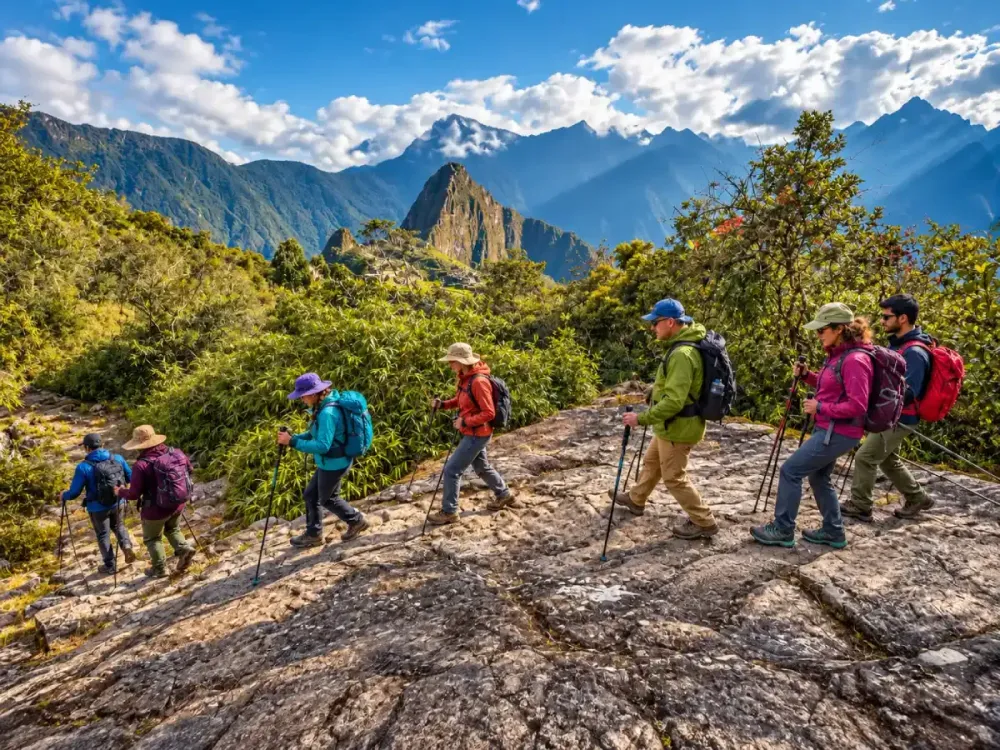
Do you need trekking poles for the Inca Trail?
Trekking poles are not mandatory for every traveler, but they can be very useful.
The Inca Trail has many stone staircases and long downhill sections. Trekking poles can provide extra stability and help reduce some of the strain on your legs during descents.
If you bring poles, they should have rubber tips to help protect the historic stone surfaces.
It is also worth practicing with them before traveling.
Using trekking poles for the first time on the trail itself can feel awkward and may slow you down rather than help.
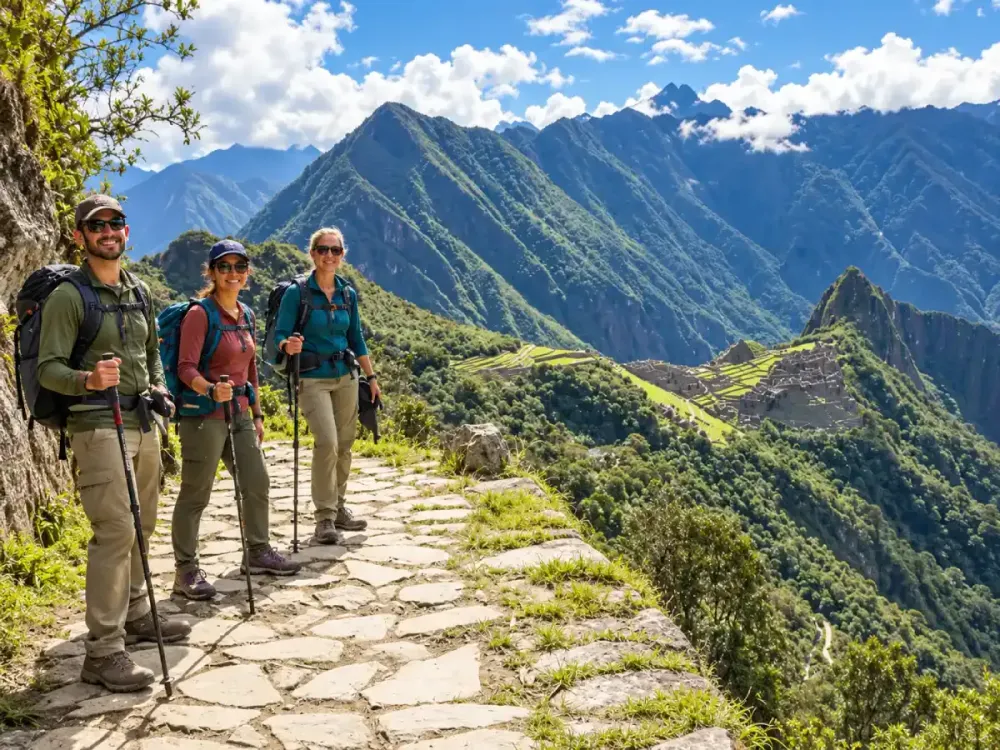
How heavy should your Inca Trail backpack be?
Backpack weight is one of the most important parts of planning your Inca Trail packing list.
There is no single ideal number for every traveler because it depends on your tour, porter service and how much personal equipment you need to carry yourself.
As a general rule, your daypack should contain only the things you are likely to use while hiking.
Water, sun protection, waterproof clothing, one warm layer, documents, snacks and essential personal items usually make up most of what you need.
Avoid carrying extra clothing simply because there is room in your backpack.
A few unnecessary kilograms may not seem important at your hotel in Cusco, but they can feel very different during a long climb or after several hours on stone stairs.
Before your trek, confirm with your tour operator how much personal luggage can be transported and what you need to carry yourself each day.
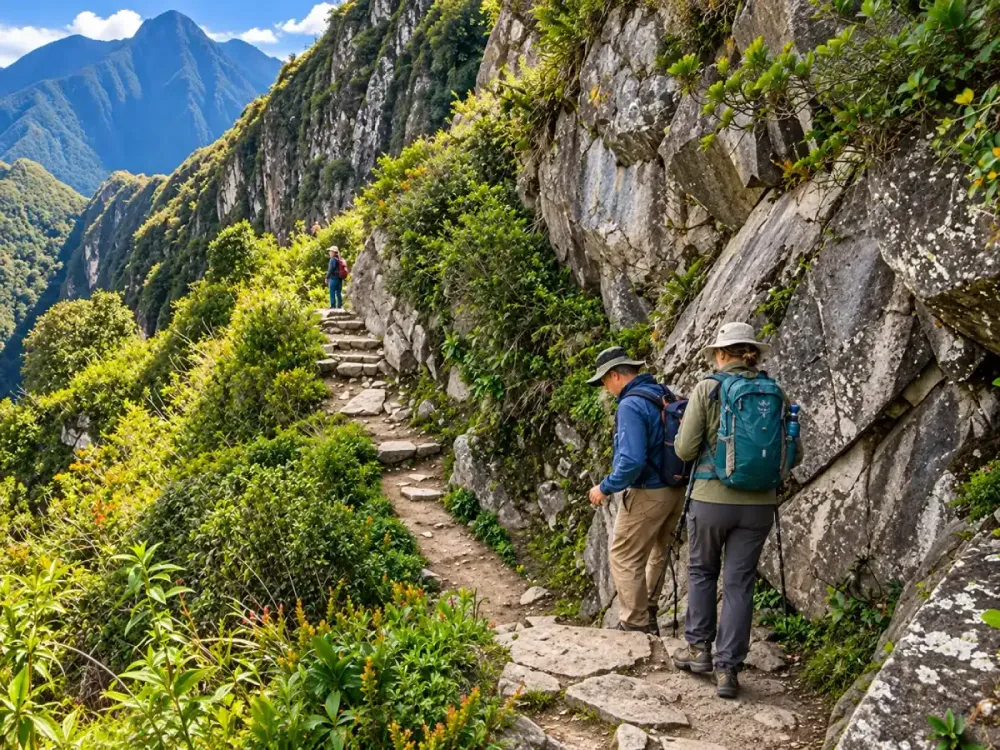
What to pack for the Classic Inca Trail 4 Days
The Classic Inca Trail 4 Days requires more careful packing because you will spend several days on the route and three nights away from your hotel.
In addition to hiking clothes, you will need warmer layers for camp, basic toiletries and personal items for several days.
Camping equipment varies according to the service included in your tour.
Before buying or packing bulky equipment, check what your operator already provides.
There is little benefit in bringing equipment from home if tents, sleeping arrangements or other camping items are already included.
The Classic route also reaches much higher elevations than the Short Inca Trail, making warm layers and reliable rain protection particularly important.
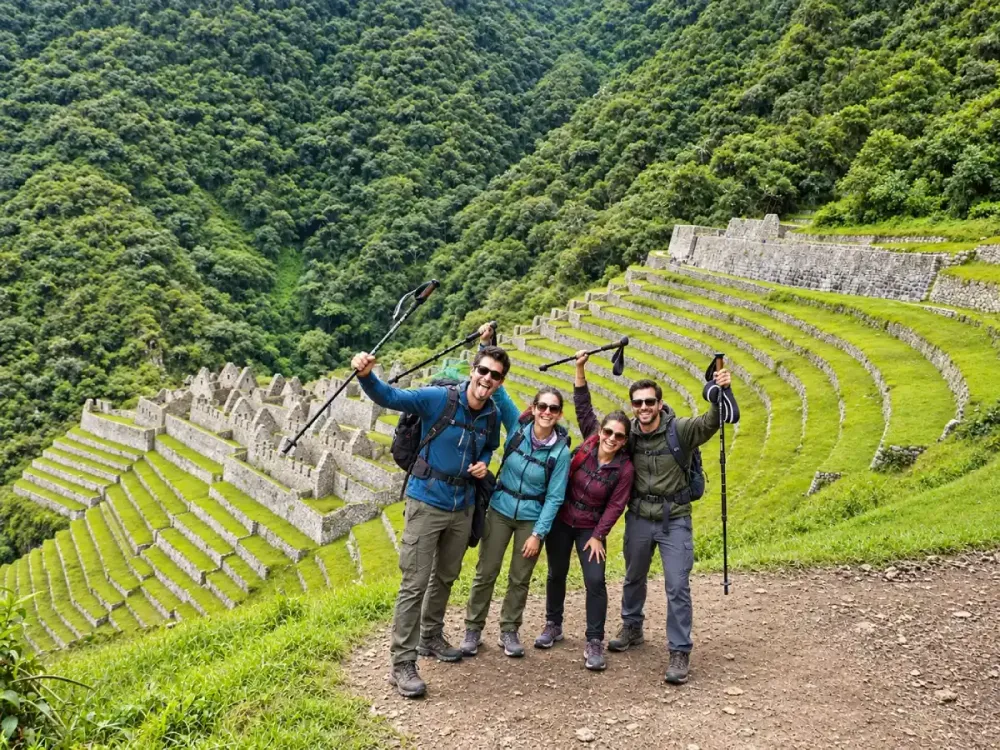
What to pack for the Short Inca Trail 2 Days
Packing for the Short Inca Trail 2 Days is much simpler.
The main hike takes place on the first day, followed by an overnight stay in Aguas Calientes. This means you do not need to prepare for several nights of camping.
A lightweight daypack with water, rain protection, sunscreen, snacks, your passport and a warm layer is usually far more practical than carrying a large trekking backpack.
However, a shorter route does not mean an effortless route.
You will still spend several hours hiking, climb toward Wiñay Wayna and walk through numerous stone staircases before reaching Inti Punku.
Keeping your backpack light remains important.
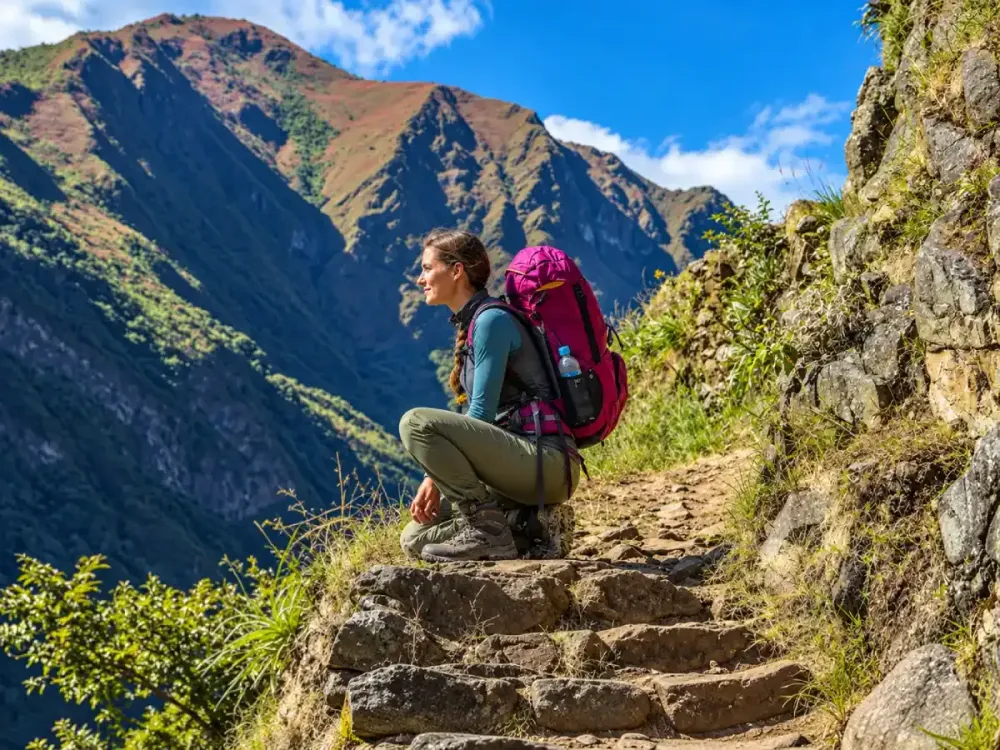
Does your packing list change by season?
Yes.
Your Inca Trail packing list should take the season into account.
During the drier months, hiking conditions are generally more stable, but mornings and nights can still feel cold, particularly at higher elevations.
During wetter months, waterproof equipment becomes even more important.
A backpack rain cover, waterproof jacket and quick-drying clothing can make a major difference if conditions change during the day.
Even during the dry season, mountain weather can be unpredictable, so we recommend carrying some form of rain protection throughout the year.
If you have not decided when to travel yet, read best time to hike the Inca Trail.
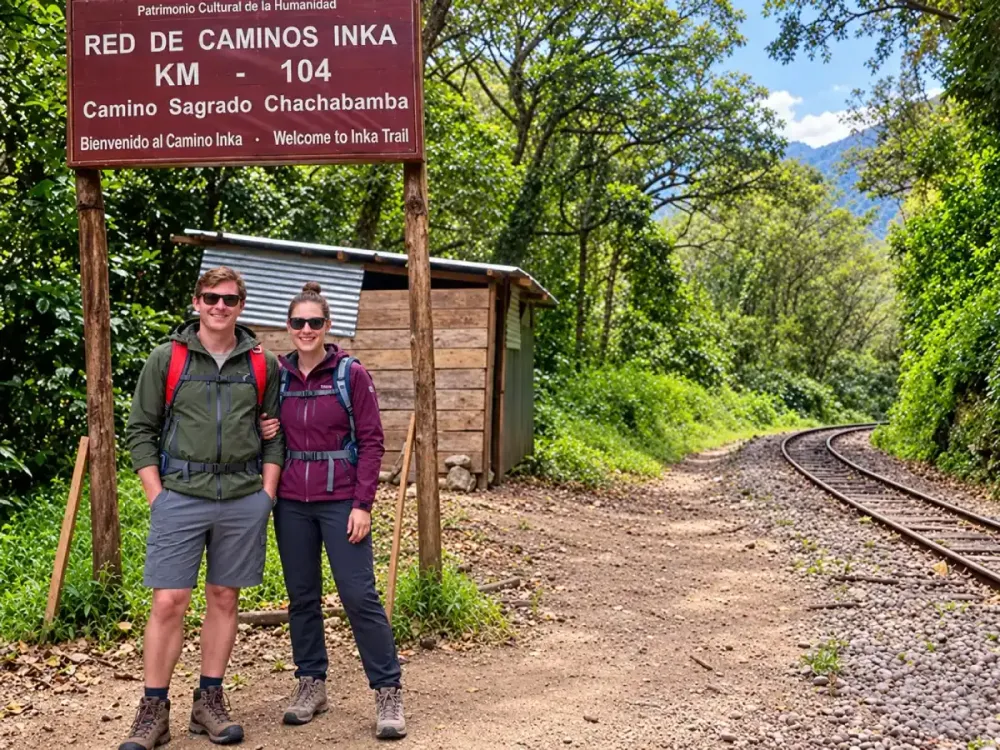
What should you leave behind?
Packing well also means knowing what not to bring.
Avoid carrying heavy jeans for hiking, several bulky jackets, large toiletry containers, unnecessary valuables and electronic equipment you are unlikely to use.
You also do not need multiple versions of the same clothing item “just in case.”
Most importantly, avoid testing new boots, backpacks or trekking poles during the actual trek.
Anything essential should be tested before traveling.
A lighter backpack allows you to focus more on the mountains, archaeological sites and experience rather than spending the trek thinking about everything you are carrying.
Check your backpack before starting the Inca Trail
Before leaving Cusco, check your passport, footwear, waterproof layer, sunscreen, water bottle and warm clothing one final time.
Then look at everything else and ask yourself a simple question:
Do I really need this while hiking?
For the Inca Trail, packing less but packing well is usually the better strategy.
If you are still planning your trek, complement this guide with Inca Trail difficulty, how to train for the Inca Trail, Inca Trail altitude and Inca Trail for beginners.
For the complete trekking experience, explore our Classic Inca Trail 4 Days. Travelers looking for a shorter option can consider the Short Inca Trail 2 Days.
Once you have chosen your route, check Inca Trail availability 2026 and 2027 and begin organizing your trek to Machu Picchu in advance.
Personal travel advice
Plan your trip with Dreamy Tours
Start a tailored journey with our exclusive tours and custom trips across Peru and other Latin American countries.