Search the blog
Tabla de contenidos
Understanding how to get to the Peruvian Amazon from Lima and Cusco is one of the first steps when planning a rainforest adventure. Although both cities offer opportunities to discover Peru's tropical forests, transportation routes vary considerably depending on your chosen destination, the length of your trip, and the experiences you want to enjoy.
The Peruvian Amazon covers an enormous part of the country's territory and has several gateways for tourism. Among the most important are Iquitos, in the Loreto region, and Puerto Maldonado, in Madre de Dios. Iquitos provides access to major Amazonian rivers and expeditions to Pacaya Samiria, while Puerto Maldonado is the main gateway to Tambopata and Lake Sandoval.
From Lima, flying is generally the most practical way to reach either destination. From Cusco, Puerto Maldonado has an additional advantage because it is connected by the Southern Interoceanic Highway. Iquitos, on the other hand, does not have a direct road connection to Peru's national highway network, so reaching it from the Andes requires a different travel plan.
Beyond transportation to the city, it is important to consider how you will reach your Amazon rainforest lodge or the natural attraction you intend to visit. Some tours begin after a relatively short boat journey, while others include road transfers, several hours of river navigation, and rainforest walks.
In this guide, you will discover the main ways to travel to the Amazon from Lima and Cusco, a comparison of air and road transportation, recommendations for choosing your destination, and practical tips for coordinating your journey. If you are still exploring the region's possibilities, start with our complete Peruvian Amazon travel guide.
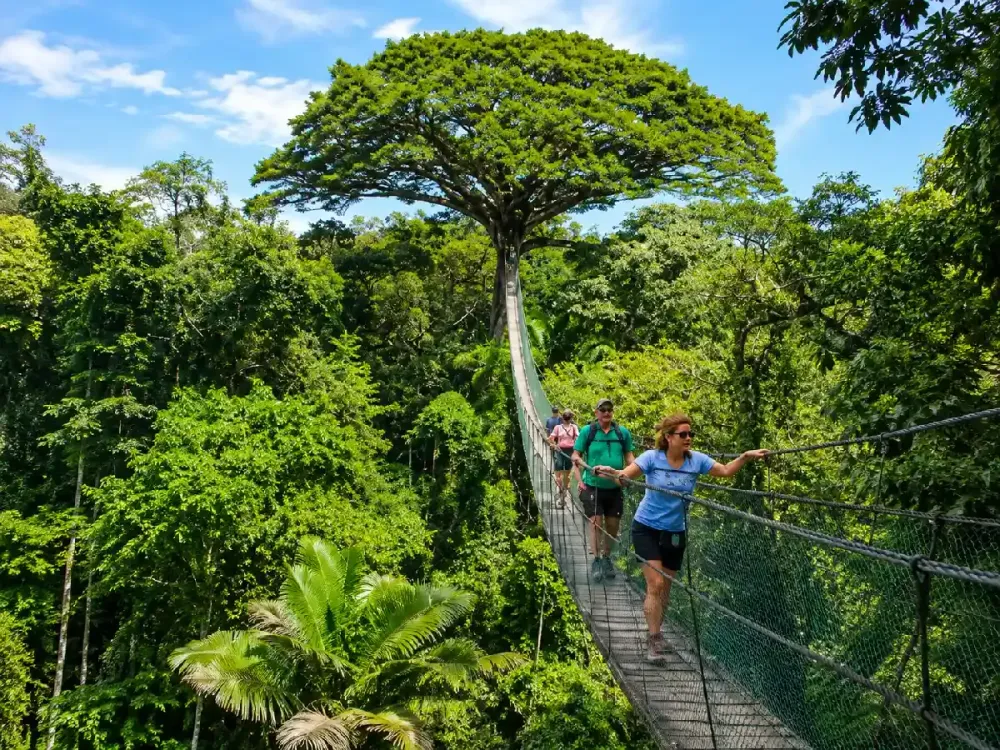
Which Parts of the Peruvian Amazon Can You Visit from Lima and Cusco?
The Peruvian Amazon is not a single tourist destination. It extends across several regions and includes rivers, tropical rainforests, protected natural areas, and cities that serve as starting points for exploring the rainforest. For this reason, before searching for a flight or bus ticket, it is important to decide which part of the Amazon you want to visit.
Iquitos is located in Loreto, in the northern Peruvian Amazon. It is one of the main gateways to the Amazon River and various river transportation routes. From the city, visitors can organize nature experiences, visits to local communities, and expeditions to Pacaya Samiria National Reserve and other tropical environments.
Puerto Maldonado is located in the Madre de Dios region of southeastern Peru. It serves as the starting point for visiting Tambopata National Reserve, Lake Sandoval, and several areas of Amazon rainforest where travelers can enjoy guided walks, boat excursions, and wildlife watching activities.
Other cities also provide access to different Amazonian environments, including Tarapoto, Pucallpa, and several destinations in Peru's central jungle. However, when the main objective is to visit biodiversity-rich reserves and join organized excursions from Lima or Cusco, Iquitos and Puerto Maldonado are two of the most relevant choices.
Choosing between these destinations depends on both attractions and logistics. Iquitos is particularly appealing to travelers who want to navigate major river systems and discover Loreto's flooded forests. Puerto Maldonado is generally more convenient for visitors who want to add a rainforest experience to a journey through Cusco and Machu Picchu.
For a more detailed comparison, read our guide to Iquitos or Puerto Maldonado: Which Should You Visit?. It explains the main differences in activities, climate, accessibility, and recommended trip durations.
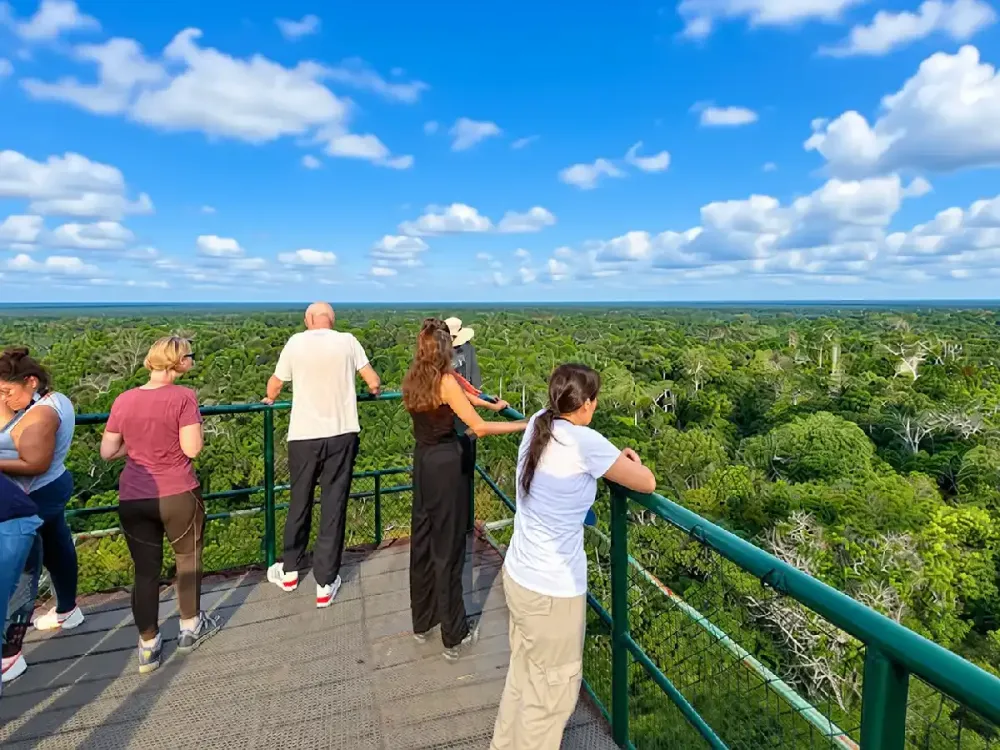
How to Get to the Peruvian Amazon from Lima by Plane
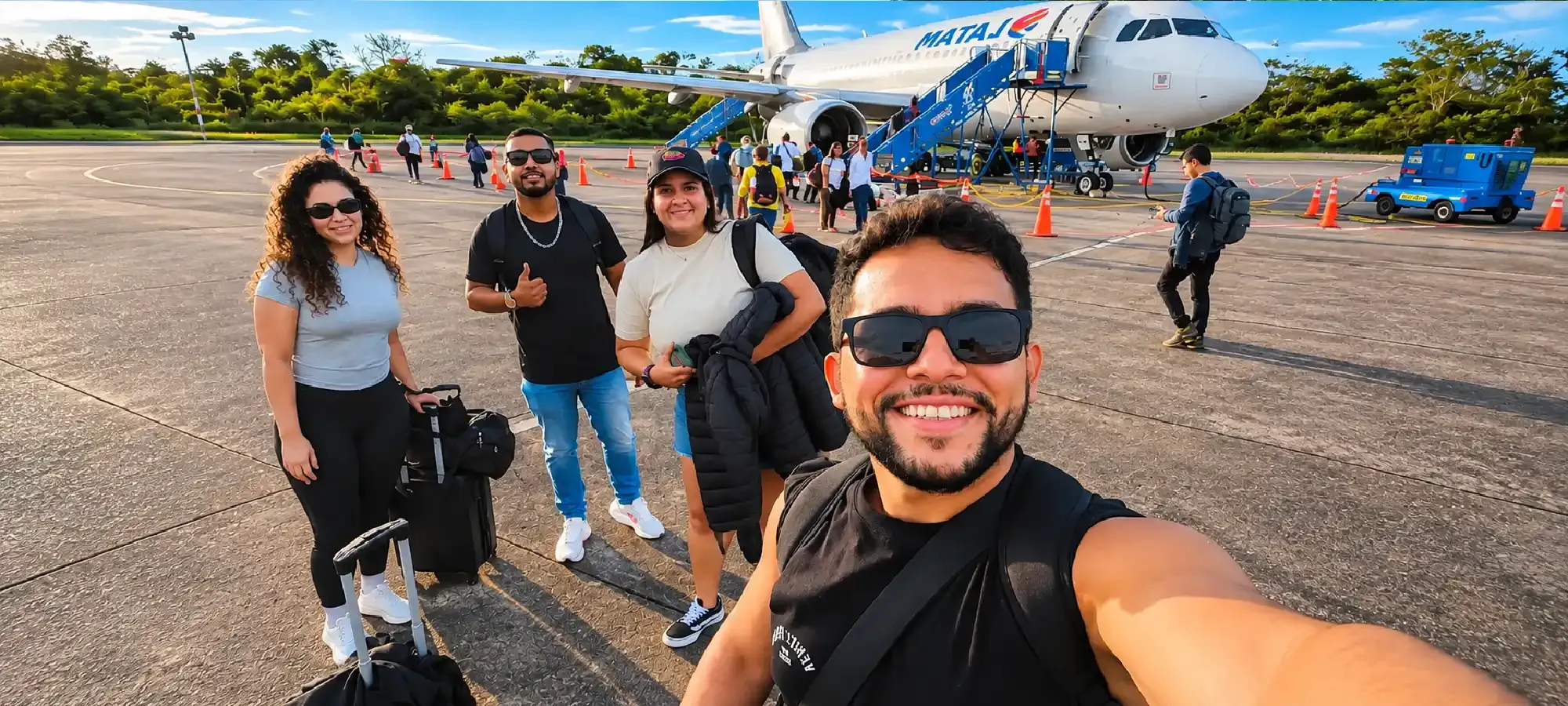
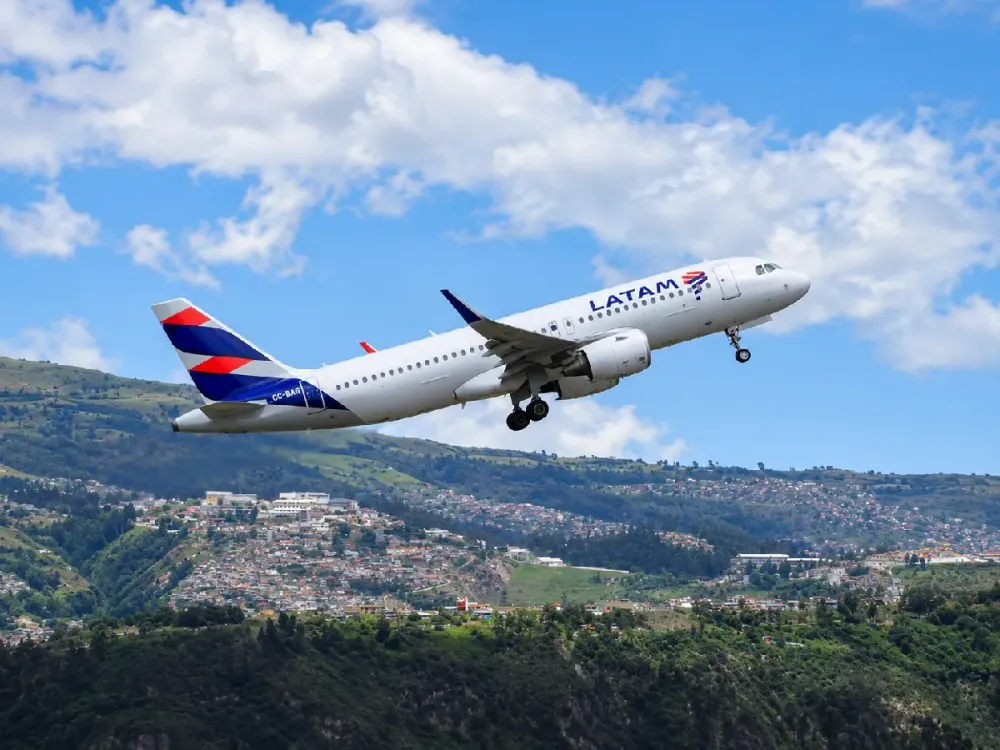
Flying is generally the fastest way to travel from Lima to the main tourist cities of the Peruvian Amazon. Jorge Chávez International Airport is one of the country's most important connections for domestic and international travelers continuing to destinations such as Iquitos and Puerto Maldonado.
To reach Iquitos, the usual route involves taking a flight to Coronel FAP Francisco Secada Vignetta International Airport. A direct flight from Lima takes approximately one hour and forty-five minutes, according to general tourism references, although actual flight times may vary depending on the airline and operating conditions.
Puerto Maldonado is served by Padre Aldamiz International Airport, which also provides access to Tambopata and other attractions in Madre de Dios. Flights are available from Lima according to airline schedules, but their frequency, duration, and availability should always be checked for your specific travel dates.
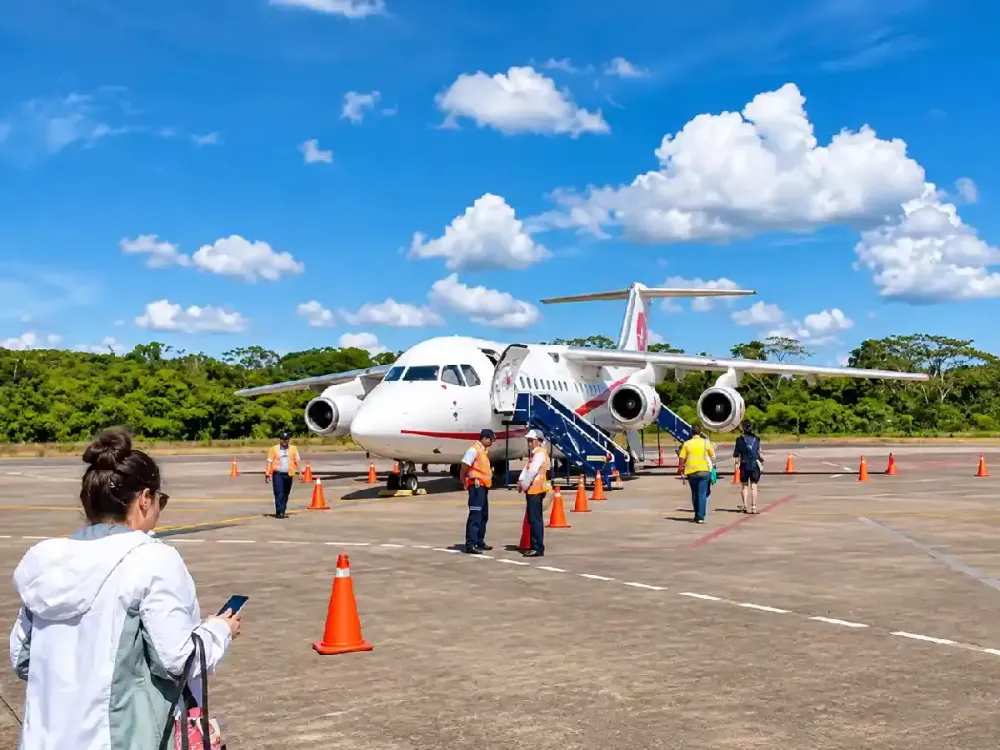
It is important to distinguish between reaching an airport and arriving at the rainforest location where your tour takes place. After landing, some programs require transportation to a river dock, followed by a boat journey and an additional transfer to the lodge. In other cases, a road journey may be necessary before rainforest exploration begins.
Departure and arrival times also deserve attention. If your flight lands too late, certain excursions may not be able to begin that same day, particularly when your accommodation is located far from the city or requires boat transportation under specific conditions.
| Destination from Lima | Usual Transportation | Approximate Travel Time | Main Attractions |
|---|---|---|---|
| Iquitos | Direct flight, subject to airline schedules | Approximately 1 hour 45 minutes | Amazon River, Yanayacu, and Pacaya Samiria |
| Puerto Maldonado | Flight, subject to airline schedules | Approximately 1 hour 30 minutes | Tambopata and Lake Sandoval |
| Tarapoto | Flight, subject to airline schedules | Depends on the service | Rainforests of San Martín |
| Pucallpa | Flight, subject to airline schedules | Depends on the service | Amazon rainforest of Ucayali |
These durations are general references rather than confirmed flight schedules. To organize a stay in Loreto, explore our guide on how to get to Iquitos from Lima and other cities. If you prefer to explore Madre de Dios, you will find the corresponding connections in how to get to Puerto Maldonado from Cusco and Lima.
How to Get to the Peruvian Amazon from Cusco
There are several ways to reach the Amazon from Cusco, but Puerto Maldonado stands out because of its direct road connection with the Andean region. This makes it possible to organize journeys that combine archaeological and cultural attractions with nature experiences within a single itinerary through southern Peru.
The Southern Interoceanic Highway connects Cusco with Puerto Maldonado along a route crossing mountainous landscapes and transition zones toward the lowland Amazon rainforest. According to SERNANP, the journey covers approximately 465 kilometers (289 miles) and takes around ten hours by road, although actual travel times may vary depending on driving conditions.
Another option is to look for flights to Puerto Maldonado. Flying may be more convenient for travelers with limited time, provided suitable services are available on their travel dates. Flight routes and frequencies can change, so it is important not to assume that direct flights operate every day.
If your chosen destination is Iquitos, transportation is different. There is no road connecting the city directly with Cusco through Peru's national highway network. The usual alternative is therefore to arrange connecting flights, often through Lima, depending on airline operations.
Choosing Puerto Maldonado may make it easier to combine the rainforest with destinations such as the Sacred Valley and Machu Picchu. However, travelers should also consider altitude acclimatization while staying in Cusco and check the return times of rainforest excursions before booking onward transportation.
For visitors who want to discover both regions within an organized journey, we recommend reading how to combine Machu Picchu and the Amazon rainforest. This guide compares transportation routes, travel times, and programs of different durations.
How to Get to Iquitos from Lima and Cusco
Iquitos is one of the best-known destinations in the Peruvian Amazon, and one of its most distinctive characteristics is the absence of a direct road connection with the rest of Peru's national highway network. Although there is a road between Iquitos and Nauta, this regional highway does not allow travelers to reach Iquitos directly by road from Lima or Cusco.
From Lima, flying is generally the easiest option. Flights arrive at Coronel FAP Francisco Secada Vignetta International Airport, where travelers can continue to accommodation in the city or head toward the river dock used by their selected tour operator.
From Cusco, the journey usually requires a connecting flight. Many options pass through Lima, although available connections may change according to airline routes and seasonal schedules. Allow sufficient time between flights and check whether your luggage will be transferred automatically or must be collected during your connection.
Iquitos can also be reached by river from other Amazonian towns. These routes use boats that may take considerably longer to complete their journeys, depending on service availability, river conditions, and the type of vessel. They do not provide a direct overland alternative from Lima or Cusco.
Once you arrive in Iquitos, your onward journey into the rainforest depends on the area you intend to visit. Some accommodations are located relatively close to docks used by tour operators, while expeditions to more remote destinations may require road transportation to Nauta followed by several additional hours of river navigation.
If you are organizing a short visit, explore our itineraries for Iquitos in 3 days and Iquitos in 4 days. Both guides help you understand how to divide your time between the city and nature experiences.
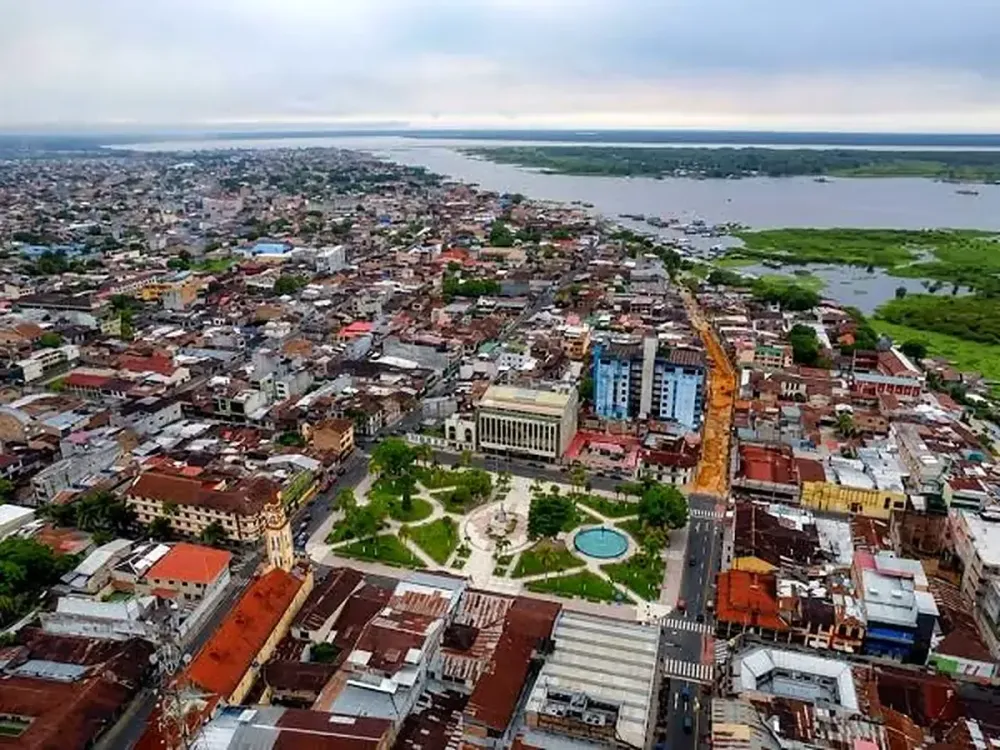
How to Get to Puerto Maldonado from Lima and Cusco
Puerto Maldonado is one of the most practical gateways to the rainforest of southern Peru. Its location in Madre de Dios makes it possible to organize journeys to Tambopata and Lake Sandoval while combining Amazon rainforest exploration with other destinations in the southern part of the country.
From Lima, air transportation is generally the most convenient option for travelers with limited time. Puerto Maldonado Airport receives commercial flights according to current airline schedules, although available connections and departure times should be checked before booking Amazon rainforest accommodation.
From Cusco, the Southern Interoceanic Highway provides an overland alternative. The route crosses different elevation zones and natural landscapes before descending toward the Amazon. Although the estimated journey takes around ten hours, weather conditions, traffic, and other factors may extend the travel time.
Flights between Cusco and Puerto Maldonado may also be available. When operating, these services can significantly reduce the time spent traveling. However, transportation should be selected according to the actual travel dates rather than relying solely on historical information about airline services.
After arriving in Puerto Maldonado, visitors generally continue toward an Amazon rainforest lodge or the starting point of their excursion. Transportation may combine road vehicles and boats, with journey times depending on the reserve sector or attraction being visited.
To discover the attractions accessible from the city, explore our guide on what to do in Puerto Maldonado. You can also compare available programs on our Puerto Maldonado rainforest tours page.
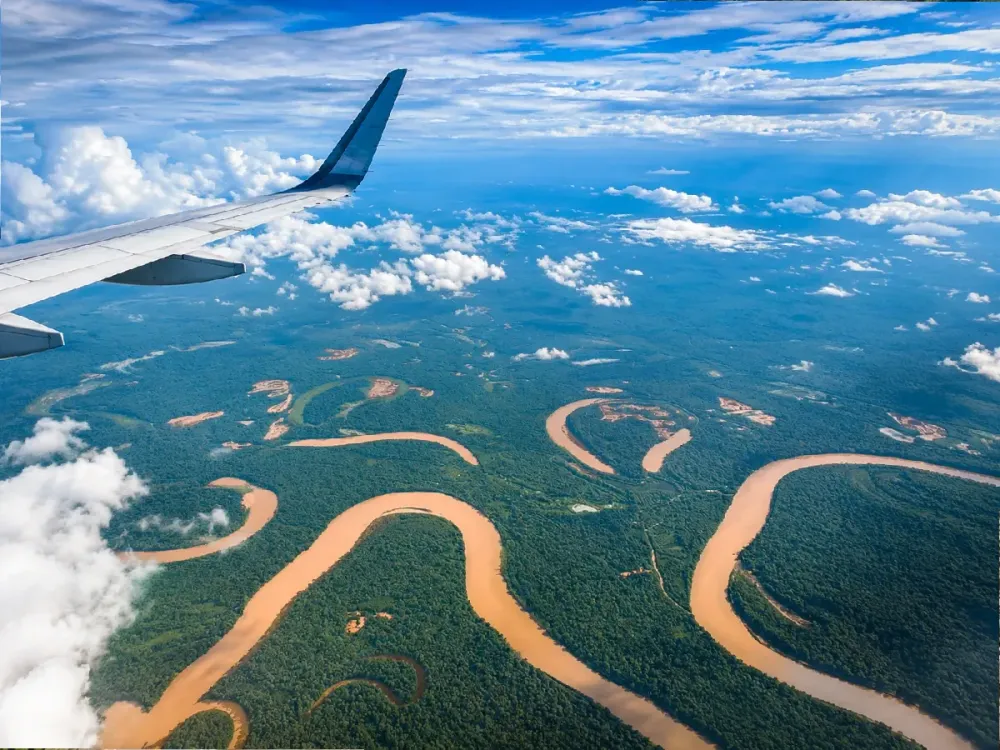
How to Get to Tambopata, Lake Sandoval, and Pacaya Samiria
Arriving in an Amazonian city does not necessarily mean that you have reached the natural attraction you want to explore. Both Loreto and Madre de Dios contain protected areas and tourism sectors that require river transportation, walking, or additional journeys from urban centers.
Tambopata National Reserve is located in Madre de Dios, with Puerto Maldonado serving as its main gateway. From the city, visitors can access different sectors using road and river routes. Travel times vary considerably depending on the entrance point and the location of the accommodation.
Lake Sandoval is one of Tambopata's best-known natural attractions. The usual access route involves navigating along the Madre de Dios River and walking approximately three kilometers (1.9 miles) to reach the lake. Along the way, visitors may encounter different species of birds, plants, and other organisms characteristic of the tropical rainforest.
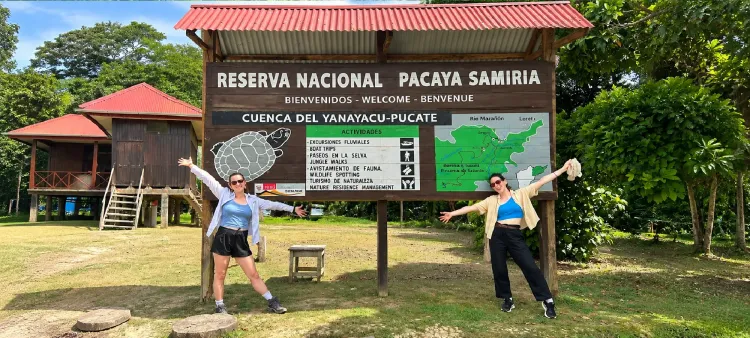
Pacaya Samiria National Reserve is located in Loreto, and one of its most frequently used tourism routes begins in Iquitos. The journey may continue by road to Nauta, followed by river navigation toward the sector included in the expedition. Some routes require several additional hours of transportation, making advance planning particularly important.
| Attraction | Gateway City | Additional Transportation | Recommendation |
|---|---|---|---|
| Tambopata National Reserve | Puerto Maldonado | Road and/or river transportation, depending on the sector | Confirm your route and lodge |
| Lake Sandoval | Puerto Maldonado | Boat journey and walk of approximately 3 km | Wear suitable walking shoes |
| Pacaya Samiria National Reserve | Iquitos and Nauta | Road transportation and navigation to the chosen sector | Allow several days |
| Yanayacu, Loreto | Iquitos | Boat transportation according to the program | Confirm the exact location |
For more information about these routes, read our guides to Tambopata National Reserve and Lake Sandoval: how to get there and what wildlife to see. If you are interested in Loreto, compare the available excursions in our Iquitos tours guide.
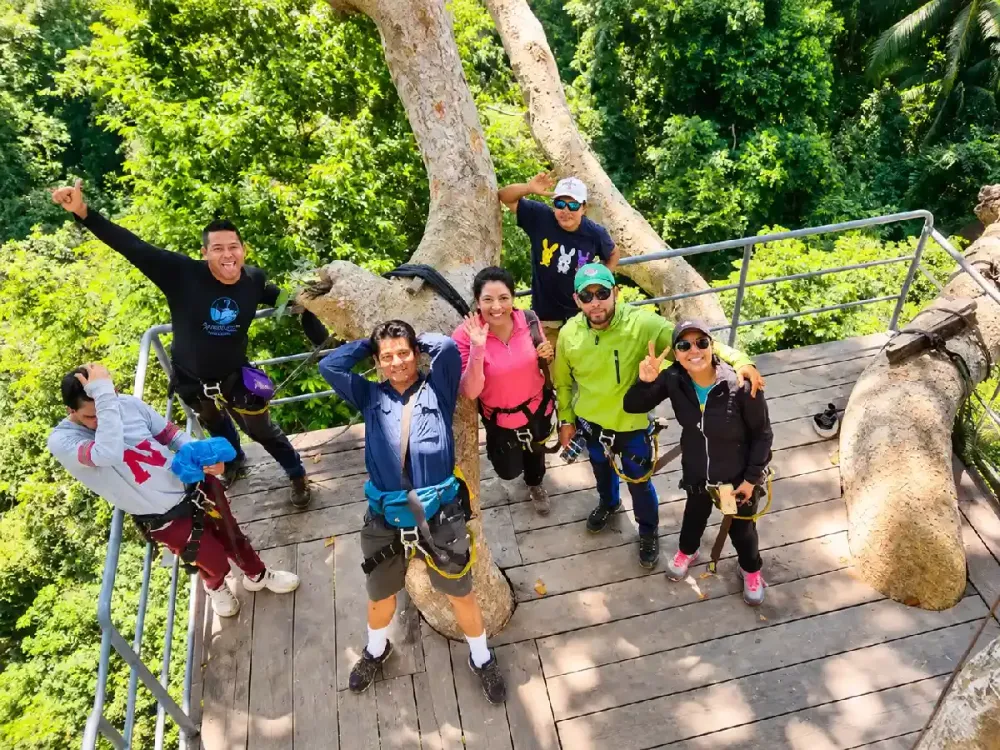
What Is the Best Way to Travel to the Peruvian Amazon: Plane, Bus, or Boat?
Your choice of transportation depends on the route, budget, available days, and type of experience you want to enjoy. No single transportation option is equally convenient for every Amazonian destination because of the geographical differences between Loreto and Madre de Dios.
Flying is generally the most practical alternative when traveling from Lima to Iquitos or Puerto Maldonado as quickly as possible. It may also be convenient for certain connections from Cusco, provided available airline routes are compatible with your itinerary.
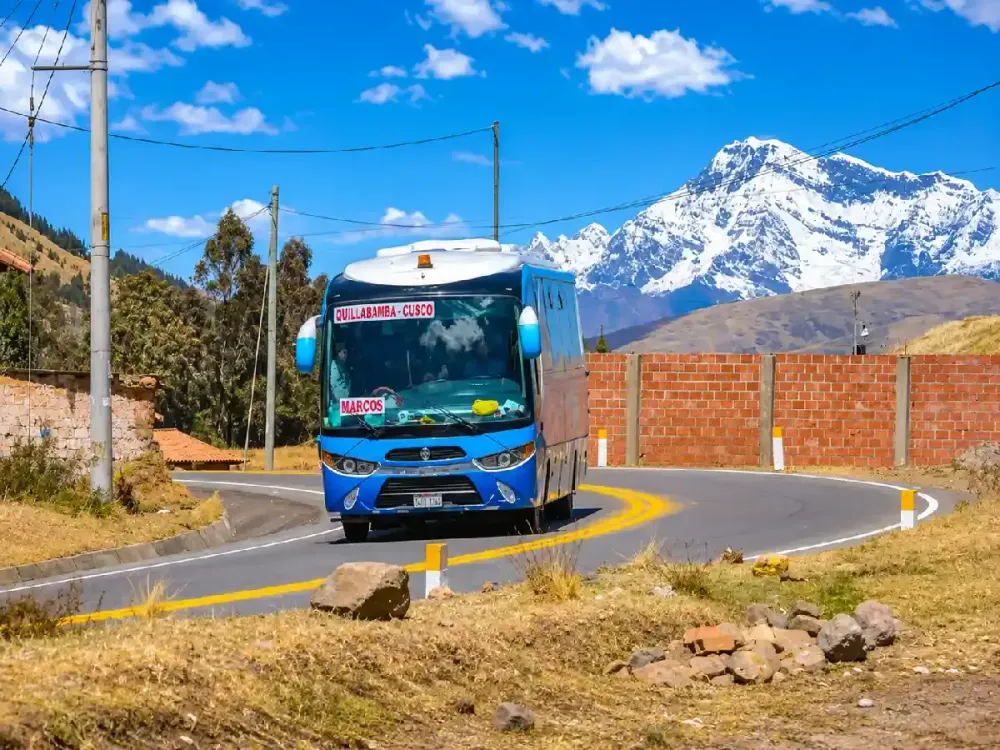
Traveling by bus can be an option between Cusco and Puerto Maldonado. This allows visitors to experience the Southern Interoceanic Highway and observe the transition between Andean and tropical landscapes, although it requires dedicating a considerable portion of the journey to road transportation.
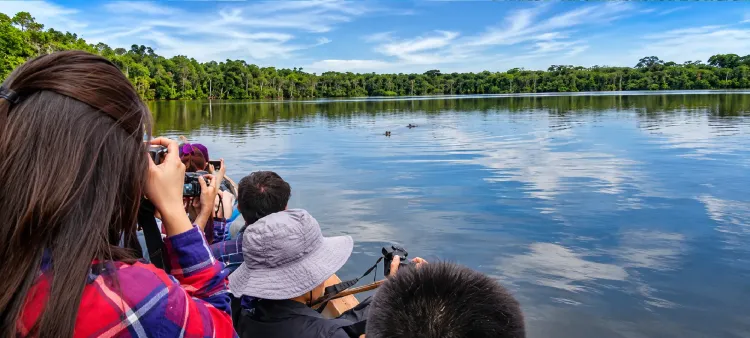
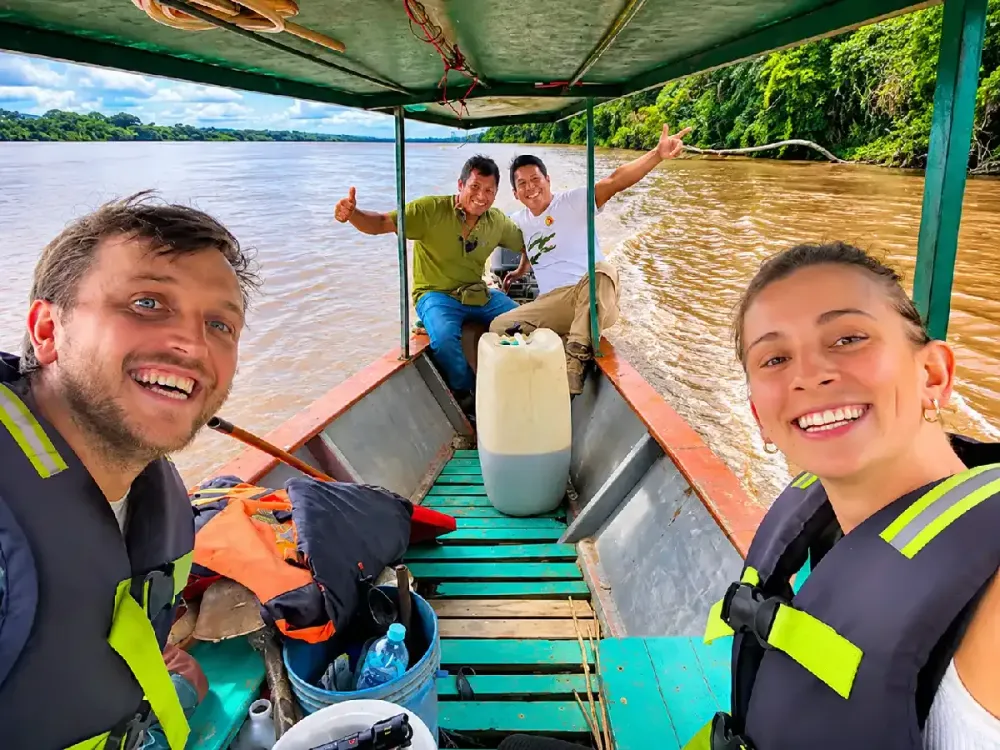
Boats are essential for many Amazon rainforest experiences. Although they are not always the main transportation method for arriving from Lima or Cusco, they are often necessary to reach lodges, protected natural areas, and attractions located along the region's rivers.
River transportation may involve speedboats or conventional vessels, depending on the destination and selected service. Travel times vary according to water levels, distance, safety conditions, and departure points, so a fixed duration should never be assumed without checking the specific route.
| Transportation | Main Advantage | Limitation | When to Choose It |
|---|---|---|---|
| Plane | Reduces travel time | Depends on airline routes, frequency, and fares | Short trips |
| Bus | Connects Cusco with Puerto Maldonado | Long journey | Itineraries with more available time |
| Riverboat | Provides access to natural areas and lodges | Depends on river and navigation conditions | Amazon rainforest excursions |
| Road and river combination | Reaches more remote sectors | Requires logistical coordination | Pacaya Samiria and certain areas of Tambopata |
Before choosing the cheapest transportation option, calculate the total cost of the experience. A lengthy connection may require an additional night in a hotel or reduce the time available for excursions. For this reason, the lowest fare does not always provide the best overall travel experience.
How Many Days Do You Need for a Trip to the Peruvian Amazon from Lima or Cusco?
The ideal duration of a Peruvian Amazon trip depends on both the attractions you want to explore and the time required to reach them. A short excursion near Puerto Maldonado is considerably different from visiting more remote areas of Pacaya Samiria, where river transportation can occupy a significant part of your itinerary.
A two-day experience may be suitable for travelers with very limited time who choose programs near Puerto Maldonado. For example, the 2-day Lake Sandoval tour combines Amazon rainforest accommodation, river navigation, and nature activities within a short itinerary.
Three days generally provide greater flexibility for exploring different environments. In Madre de Dios, the 3-day Lake Sandoval tour includes complementary activities. From Iquitos, certain three-day programs also combine river navigation, rainforest walks, and wildlife watching, although transportation time must be included within the total program duration.
Four-day excursions can be particularly appealing to travelers who want to spend more time exploring natural environments and participating in additional activities. In this case, it is important to check whether the itinerary includes lengthy transfers, overnight accommodation, and specialized excursions.
For an itinerary combining Cusco, Machu Picchu, and the Amazon, it is advisable to reserve several additional days beyond the archaeological visit. Machu Picchu entrance ticket availability, train schedules, and flights influence the order of travel and the amount of time you can actually spend exploring the rainforest.
If you are planning a broader vacation across Peru, our guide to combining Machu Picchu and the Amazon rainforest presents suggested itineraries lasting seven, nine, ten, and twelve days.
Best Time to Travel to the Peruvian Amazon from Lima and Cusco
The Peruvian Amazon experiences tropical conditions throughout the year, but rainfall intensity and river behavior can vary considerably by region. The best time to visit should therefore be evaluated according to your chosen destination and the activities you want to enjoy.
In Madre de Dios, May through October generally brings relatively less rainfall. These months may provide favorable conditions for certain walks and excursions in Tambopata, although humidity and occasional rain remain part of the Amazon rainforest experience.
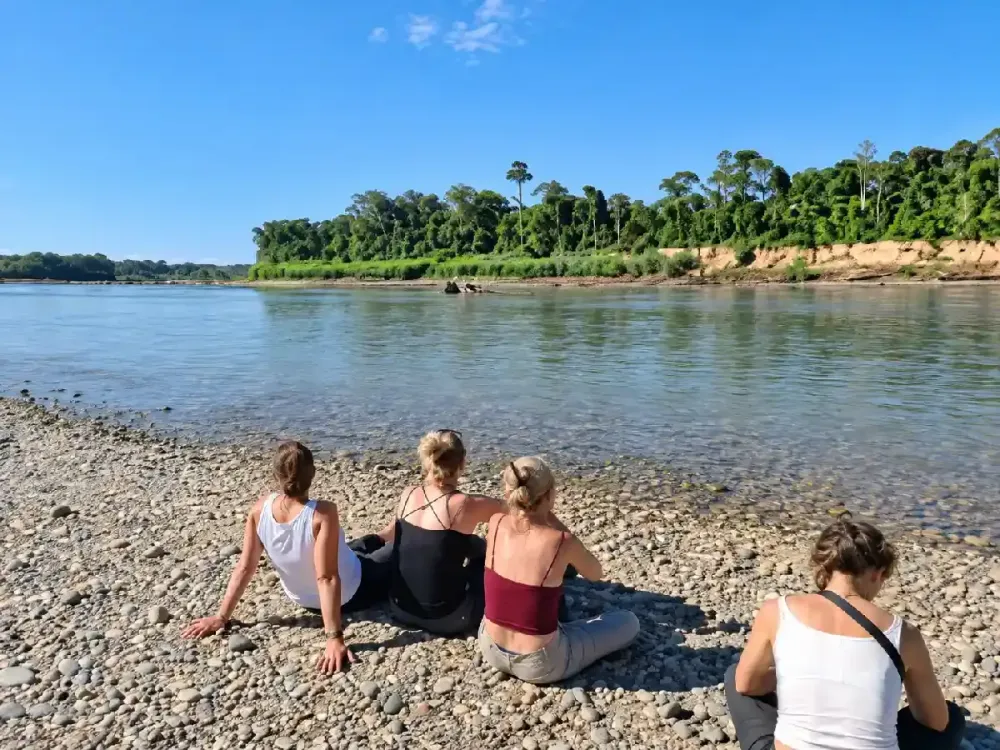
In Loreto, changing river levels have a particularly important influence on nature activities. During high-water periods, certain forests may become flooded and accessible by small boats. During the low-water season, some shorelines and trails may become exposed, changing the opportunities for exploration.
Your travel season can also influence transportation logistics from Cusco. Rainfall in the Andes may affect conditions along certain roads, while weather events can lead to changes in flight schedules. For this reason, allowing reasonable time between transportation connections is advisable.
The Amazonian climate should not be understood exclusively as a simple division between dry and rainy months. Temperature, humidity, trail conditions, and water levels change throughout the year, meaning that every season offers different experiences.
To understand these seasonal differences, explore our guide to the best time to visit the Peruvian Amazon and our specialized article on the best time to visit Iquitos.
Which Tours Should You Choose After Arriving in Iquitos or Puerto Maldonado?
Once you have chosen your gateway city, the next step is selecting a tourism program that fits your available time. In the Amazon, the distance to your accommodation and the location of natural attractions directly affect how many activities can be completed each day.
In Puerto Maldonado, experiences generally focus on environments such as Lake Sandoval and different areas of Tambopata. Two- and three-day programs may be suitable for a first visit, while longer expeditions allow travelers to include additional activities related to Amazonian biodiversity.
Dreamy Tours offers the 4-day Tambopata Amazon Expedition, focused on exploring tropical environments. The company also offers the 4-day Native Communities Program, combining nature activities with experiences related to Amazonian traditions.
From Iquitos, travelers can organize expeditions into different environments throughout Loreto. The 3-day Pacaya Samiria tour includes transportation from Iquitos toward Nauta and river navigation to the area included in the program. Other alternatives include the 3-day Yanayacu Amazon tour and the 4-day Yanayacu Iquitos tour.
Your choice should consider whether you want to explore flooded forests, participate in guided walks, look for birds and other wildlife, or enjoy authorized cultural experiences. It is also important to confirm arrival arrangements, transfer schedules, included services, and the characteristics of your accommodation.
To compare all available alternatives, explore our Iquitos rainforest tours and Puerto Maldonado rainforest tours. These pages feature tourism programs suited to different interests and trip durations.
Tips for Planning Your Peruvian Amazon Trip from Lima and Cusco
Before purchasing tickets, decide which Amazonian region you want to explore and how much time you can dedicate to the experience. If your journey begins in Lima and you want to discover Loreto's major rivers, Iquitos may be an excellent choice. If you are staying in Cusco and want to combine the rainforest with Machu Picchu, Puerto Maldonado generally offers more convenient logistics because of its road connection. Check available transportation routes first, then choose accommodation and excursions to avoid booking services with incompatible schedules.
Organize transfers with the understanding that arriving at an airport or bus terminal does not always mean that rainforest activities can begin immediately. Some programs require additional road transportation, river navigation, or walks to reach the accommodation. Arriving with sufficient time, confirming meeting points, and allowing a reasonable margin before your return flight are all recommended. If you choose an expedition to remote sectors of Pacaya Samiria or Tambopata, pay particular attention to actual transportation times and safety conditions.
Prepare your luggage for a warm and humid environment. Bring lightweight quick-drying clothing, long-sleeved shirts, insect repellent, sunscreen, a rain jacket, suitable footwear for wet terrain, and waterproof bags to protect documents and electronic devices. If you are traveling from Cusco, remember that temperatures and environmental conditions will be very different from those experienced in the Andes. Consult a healthcare professional about appropriate preventive measures for your Amazonian destination, and check whether your tour operator provides specialized equipment for walking and boating activities.
During your excursions, respect protected area regulations and follow your guides' instructions. Avoid feeding, chasing, or handling wild animals, wear life jackets during river transportation, and remain within authorized areas. Wildlife sightings depend on the natural behavior of each species, meaning that no responsible excursion should guarantee encounters with specific animals. It is also important to respect the decisions, customs, and personal spaces of host communities when cultural activities form part of the program.
At Dreamy Tours, we believe that the best way to reach the Peruvian Amazon is to choose the experience you want first and then organize transportation that suits your destination. Whether you prefer navigating the rivers of Loreto or exploring the tropical forests of Tambopata, you can browse our Iquitos rainforest tours and Puerto Maldonado tours to find an option that matches your travel dates and interests. Contact us to explore available programs and organize a journey that brings together transportation, accommodation, and nature activities in a practical and responsible way.
Personal travel advice
Plan your trip with Dreamy Tours
Start a tailored journey with our exclusive tours and custom trips across Peru and other Latin American countries.