Search the blog
Tabla de contenidos
Knowing how to get to Iquitos is one of the first steps in planning a trip to the Peruvian Amazon. Unlike most other destinations in Peru, this city has no direct road connection to the country's national highway network. Travelers must therefore choose between flying into Iquitos or taking a riverboat from certain Amazonian towns.
Located in the Loreto region, Iquitos is one of the main gateways to the great rivers and tropical rainforests of northern Peru. From here, visitors can organize expeditions to Pacaya Samiria National Reserve, explore Yanayacu, and discover landscapes where river navigation remains an essential part of everyday life.
For travelers departing from Lima, flying is usually the fastest option. From Cusco, an air connection is generally necessary, while travelers coming from places such as Tarapoto or Pucallpa can consider routes that combine road and river transportation. Each alternative differs significantly in travel time, comfort, and planning requirements.
In this guide, you will learn about the main routes to Iquitos, how long different journeys may take, what to consider before purchasing tickets, and how to continue toward Loreto's natural attractions.
If you are planning your first visit, explore our complete Peruvian Amazon travel guide and discover the best things to do in Iquitos once you arrive.
Where Is Iquitos and Why Can't You Drive There Directly?
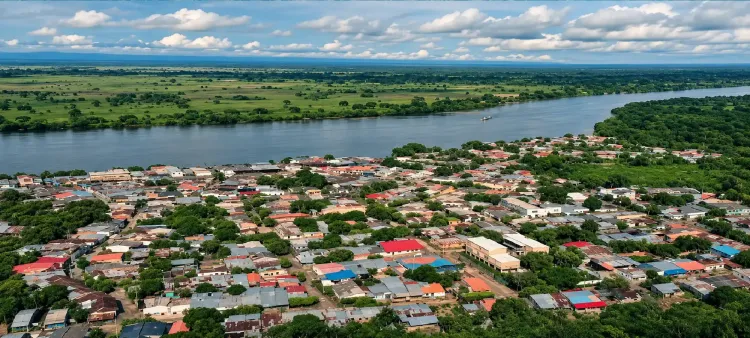
Iquitos is located in northeastern Peru and is the capital of Loreto, an extensive Amazonian region where major rivers, tropical forests, and seasonally flooded areas shape transportation between numerous communities.
One of the city's most unusual characteristics is that it has no direct land connection to Peru's national highway network. This means you cannot simply board a bus in Lima, Cusco, or Arequipa and travel all the way to central Iquitos without changing to another form of transportation.
Although a road connects Iquitos with Nauta, this is a regional road that does not link the city to the rest of Peru's highway network. As a result, the main ways to reach Iquitos from other parts of the country are by air or by river.
This geographical situation explains the importance of the Amazon, Marañón, and Ucayali rivers, along with numerous other waterways, for transporting passengers and goods. In many Loreto communities, boats perform the same essential transportation role that buses and other vehicles serve elsewhere in Peru.
For visitors with limited vacation time, flying is generally the most convenient option. River journeys are particularly interesting for travelers with more time who want navigation itself to be part of their Amazon adventure.
Before choosing how to travel, remember that Iquitos and Puerto Maldonado are separate destinations. Although both are in the Peruvian Amazon, their transportation connections and geographical characteristics differ significantly. You can learn more in our comparison of Iquitos or Puerto Maldonado.
How to Get to Iquitos from Lima by Plane
The most practical way to travel from Lima to Iquitos is to take a flight from Jorge Chávez International Airport to Coronel FAP Francisco Secada Vignetta International Airport, identified by the airport code IQT.
The Lima–Iquitos route has nonstop flights, with an approximate flight time of one hour and fifty minutes. The exact duration may vary according to the airline, flight schedule, and operating conditions.
Flight schedules reviewed for November 2026 include nonstop services operated by LATAM, SKY Airline, and Star Perú. However, airline availability, frequencies, and departure times can change, so always check the current schedule before making a reservation.
| Information | Lima to Iquitos |
|---|---|
| Departure airport | Jorge Chávez International Airport, Lima (LIM) |
| Arrival airport | Francisco Secada Vignetta Airport, Iquitos (IQT) |
| Flight type | Nonstop, depending on the schedule |
| Approximate flight time | 1 hour 50 minutes |
| Approximate air distance | 1,006 km |
| Main advantage | Shorter travel time |
For international visitors, Lima is also a common connecting point for reaching Loreto. If you are arriving in Peru from another country, you can arrange an onward flight to Iquitos, allowing sufficient time for immigration, baggage collection, and any necessary terminal changes or check-in procedures.
When purchasing separate flight tickets, leave a generous connection window. A delay on the first flight can affect your second booking, particularly when the two flights are not protected under a single ticket.
If you plan to begin an Amazon rainforest expedition on the same day you arrive, confirm the tour operator's latest meeting time. Some programs involve additional road or boat transfers and may not be able to begin after a late-night arrival.
For most visitors, flying from Lima is the easiest way to reach Iquitos and begin exploring Loreto's rainforest.
How to Get to Iquitos from Cusco and Machu Picchu
If you are visiting Cusco, the Sacred Valley, or Machu Picchu and want to continue to the Peruvian Amazon, you will need to arrange a connecting flight or consider a much longer journey combining road and river transportation.
Flight schedules reviewed for November 2026 do not show regular nonstop flights between Cusco and Iquitos. The usual alternative is to fly from Alejandro Velasco Astete International Airport in Cusco to Lima, then take a second flight to Iquitos.
This journey allows you to combine two very different regions of Peru: the Andean landscapes surrounding Cusco and the tropical rainforests of Loreto. However, flight schedules and connections need careful planning.
| Travel Stage | Transportation | Important Considerations |
|---|---|---|
| Cusco to Lima | Flight | First part of the journey |
| Connection in Lima | Airport layover | Depends on the itinerary |
| Lima to Iquitos | Flight | Approximately 1 hour 50 minutes |
| Iquitos Airport to hotel | Road transfer | Arrange transportation on arrival |
The total journey time depends largely on the connection in Lima. For this reason, simply adding the two flight durations does not give an accurate picture of how long your trip will take.
If you have just returned from Machu Picchu, carefully check your arrival time back in Cusco. Traveling from Aguas Calientes generally involves a train journey and a road transfer, so scheduling an immediate connecting flight can make your itinerary unnecessarily tight.
An alternative is to spend a night in Cusco or Lima before continuing to Iquitos. Whether this makes sense will depend on your budget, available flights, and the starting date of your rainforest expedition.
If you are still deciding which Amazon destination to combine with Machu Picchu, compare Iquitos and Puerto Maldonado. Puerto Maldonado has a road connection with Cusco, while Iquitos generally requires an air connection.
How to Travel to Iquitos from Arequipa and Other Peruvian Cities
For travelers in Arequipa, Trujillo, Chiclayo, Piura, or other Peruvian cities, the most convenient way to get to Iquitos depends on the flight routes available for your travel dates.
In many cases, the simplest option is to fly to Lima first and then continue to Iquitos. You should not assume that a nonstop flight is available from every city, as routes depend on airline schedules.
From Arequipa, for example, travelers can look for a connecting flight through Lima. This makes it possible to visit Loreto after exploring Arequipa's historic center or the Colca Canyon.
From northern cities such as Trujillo, Chiclayo, and Piura, it is worth comparing available flight connections with land routes to Amazonian towns where onward river transportation may be possible.
| Departure City | Possible Travel Option | Planning Advice |
|---|---|---|
| Arequipa | Connecting flight, usually via Lima | Compare layover times |
| Trujillo | Air connection or combined route | Check available schedules |
| Chiclayo | Air connection or combined route | Consider total travel time |
| Piura | Air connection or combined route | Review flight connections |
| Puno | Transfer to an airport with suitable flights | Allow extra travel time |
| Puerto Maldonado | Air connections or a long combined journey | No direct road to Iquitos |
Before purchasing tickets, compare the complete journey rather than just the price of each individual flight. A combination that appears inexpensive may require an extra hotel night or additional transfers, increasing your overall budget.
It is also important to check baggage allowances. You will need suitable clothing for a warm, humid rainforest environment, but that does not necessarily mean traveling with a large suitcase.
Planning these connections in advance helps you use your available days more efficiently and spend more time discovering the Amazon rather than waiting for transportation.
How to Get to Iquitos from Tarapoto and Yurimaguas
Tarapoto is one of the cities travelers can use as a starting point for a combined journey to Iquitos. However, there is no continuous road that takes you directly from Tarapoto to Loreto's capital.
One alternative is to travel overland from Tarapoto to Yurimaguas, a town with river connections to the Loreto region.
According to access information published by SERNANP for Pacaya Samiria, the road journey between Tarapoto and Yurimaguas can take approximately two hours, although road and traffic conditions may affect this estimate.
From Yurimaguas, travelers can continue to Iquitos by riverboat. The journey may take several days, depending on the vessel, route, intermediate stops, and river levels.
This option may appeal to travelers who want to discover different parts of the Amazon and experience an extended river journey. However, it requires more planning than flying.
Before choosing this route, confirm the boat's actual departure arrangements, available onboard services, safety conditions, and exact arrival point.
Public passenger boats do not necessarily offer the same comfort as organized tourist excursions. Seating, meals, sanitary facilities, and baggage arrangements may vary considerably between vessels.
If your goal is to join a three-day rainforest tour from Iquitos, traveling by river from Yurimaguas may use up a significant portion of your vacation. This option is therefore more suitable for itineraries with several additional days available.
How to Get to Iquitos from Pucallpa
Pucallpa, the capital of Ucayali, is another Amazonian city from which travelers can plan a journey to Iquitos. Both cities are located in regions connected by major river systems, but there is no direct road linking them.
The main combined land-and-river alternative involves reaching Pucallpa and continuing by boat along the Ucayali River toward Loreto.
According to reference travel times published by SERNANP, the river journey from Pucallpa to Iquitos can take approximately five days. This estimate applies to multi-day river transportation and should not be treated as a guaranteed journey time.
The actual duration varies according to the type of vessel, navigation conditions, river levels, and stops along the route.
Travelers who prioritize comfort or have limited time should also check available flight connections between Pucallpa and Iquitos, whether nonstop or with a connection, depending on the schedules for their dates.
If you choose river transportation, ask where boarding takes place, how the journey is organized, which services are available onboard, and what safety precautions are recommended.
The journey offers a different perspective on the Amazon, but it should not be confused with a guided wildlife tour. Its primary purpose is to transport passengers between communities and towns.
For a conventional vacation, choosing between a plane and a boat depends on your available time and whether extended river travel is an experience you genuinely want to include.
Can You Reach Iquitos by Boat Along the Amazon River?
Yes, it is possible to reach Iquitos by riverboat from certain cities and towns in the Amazon. However, river travel is very different from driving and requires considerably more flexibility.
The rivers form an extensive transportation network connecting Loreto's towns, ports, and communities with other Amazonian regions. Some routes use faster passenger boats, while others operate vessels carrying passengers and cargo.
Multi-day journeys may include stops at communities and intermediate ports. Travel times and facilities depend on the operator, river conditions, and departure schedules.
| Starting Point | Main Transportation | Reference Travel Time |
|---|---|---|
| Yurimaguas | Riverboat | Around 3 days, according to SERNANP |
| Pucallpa | Riverboat | Around 5 days, according to SERNANP |
| Nearby Loreto towns | Regional boats | Varies by distance |
| Lima | No direct river route | First travel to an Amazonian port |
| Cusco | No practical direct river route | Requires additional connections |
These times are approximate. River routes may change because of water levels, weather conditions, operating schedules, and the characteristics of individual vessels.
Before boarding, check that life jackets are available, confirm the vessel's authorized passenger capacity, and understand which facilities and services are included. Keep travel documents, medication, and electronic devices protected from water.
If you want to reach Iquitos quickly and begin a rainforest excursion, flying is generally the better choice. If you are interested in Amazonian river transportation and have several extra days, a boat journey can become part of your travel experience.
Iquitos Airport: How to Reach the City Center and Your Hotel
Coronel FAP Francisco Secada Vignetta International Airport is the main arrival point for travelers flying into Iquitos. Its airport code is IQT, and it is located within the city's urban area.
After landing, you will need to arrange transportation to your hotel, accommodation, or meeting point with your tour operator.
Common options include taxis and vehicles arranged in advance by hotels or travel agencies. Other forms of local transportation are also available, although not all are convenient for travelers carrying large amounts of luggage.
The best option depends on your accommodation's location, arrival time, group size, and the services included in your booking.
If you are joining an organized rainforest expedition, check whether airport pickup is included. Some programs begin by meeting travelers at the airport and continuing toward a port or boarding point, while others require an overnight stay in the city first.
Before accepting a transfer, confirm the price, destination, and service conditions. If you arrive at night or are visiting Iquitos for the first time, prearranged transportation may be particularly convenient.
Keep your accommodation's name and address readily available, along with a working contact number in case you need to report a delay.
When your journey includes a multi-day rainforest expedition, coordinating arrival times is especially important. A late flight may make it impossible for a group to begin its river journey on the same day.
How to Get from Iquitos to Nauta, Pacaya Samiria, and Yanayacu
Arriving in Iquitos is only the first step toward discovering some of Loreto's most remarkable natural attractions. Many tour programs require additional road or river transfers before rainforest activities can begin.
Nauta is a town south of Iquitos, connected to the city by a regional road. According to reference information published by SERNANP, traveling overland from Iquitos to Nauta may take approximately two hours.
Near Nauta is the confluence of the Marañón and Ucayali rivers, conventionally recognized as the beginning of the Amazon River's main course. The town also serves as a gateway to different natural areas in Loreto.
Visiting Pacaya Samiria may involve traveling overland to Nauta and continuing by boat. The duration of this second stage depends on the reserve sector, vessel type, and river conditions.
SERNANP indicates that reaching certain ranger stations from Nauta may require several additional hours of navigation. This is why it is important to review the complete tour itinerary rather than focusing only on the road journey between Iquitos and Nauta.
If you would like to explore these environments, consider the 3-day Pacaya Samiria tour, combining transportation with guided activities in the Amazon.
Yanayacu is another option for discovering tropical forest landscapes and waterways surrounded by lush vegetation. Tour programs may include river excursions, guided walks, and birdwatching.
Available experiences include the 3-day Yanayacu Amazon tour and the 4-day Yanayacu program.
Before booking any excursion, confirm the departure point, transfer duration, and scheduled return time, especially if you have a flight booked for the end of your rainforest adventure.
How Much Time and Money Do You Need to Reach Iquitos?
Travel time and costs depend mainly on your departure city and chosen transportation. For most tourists traveling from Lima or connecting through other cities, flying is the fastest option.
Airfares can vary considerably according to the season, how far in advance you book, included baggage, and demand for specific dates. For this reason, giving a single fixed ticket price would be misleading.
For river journeys, the ticket cost should also be considered alongside additional expenses. A multi-day boat journey may involve food, transportation to the port, and extra accommodation before or after the trip.
| Route | Approximate Travel Time | Main Consideration |
|---|---|---|
| Lima to Iquitos by plane | 1 hour 50 minutes in the air | Add airport processing time |
| Cusco to Iquitos by plane | Depends on the connection | Usually via Lima |
| Arequipa to Iquitos | Varies | Connecting flights |
| Tarapoto to Yurimaguas | Around 2 hours by road | Depends on road conditions |
| Yurimaguas to Iquitos | Approximately 3 days by river | Depends on the vessel |
| Pucallpa to Iquitos | Approximately 5 days by river | Depends on the vessel |
| Iquitos to Nauta | Around 2 hours by road | Regional road transfer |
These durations are planning references, not guaranteed arrival times.
When comparing options, consider the complete cost of flights or boat tickets, baggage, transfers, meals, and possible additional hotel nights.
It is also advisable to allow enough time before your scheduled tour begins. If you are joining a Pacaya Samiria or Yanayacu expedition, arriving the previous day can reduce the risk of missing activities because of flight schedule changes.
For travelers with limited vacation time, flying usually allows more days to enjoy the rainforest. For those planning a longer journey, river navigation can be an interesting part of the Amazon experience.
What Is the Best Time to Travel to Iquitos and Take Riverboats?
Iquitos has a warm, humid tropical climate throughout the year. Rainfall is frequent, and river levels change according to conditions across the Amazon Basin.
These variations are especially important for river transportation and access to certain natural areas. During high-water periods, some flooded forest sections can be explored by small boats.
When water levels fall, certain riverbanks and trails become exposed, making other types of excursions possible. However, navigation and access conditions depend on each route.
For Pacaya Samiria National Reserve, SERNANP identifies May through September as the recommended visiting period. This is a useful planning reference, but it does not mean every part of Loreto experiences identical conditions during those months.
Flights to Iquitos may operate throughout the year, subject to airline schedules and weather conditions. You therefore do not need to wait for a particular season to visit the city.
If you plan to take a multi-day river journey, confirm navigation conditions close to your departure date and leave some flexibility in your itinerary.
For more detailed information, read our guide to the best time to visit the Peruvian Amazon.
Travel Tips for Planning Your Iquitos Trip and Exploring the Amazon
Good planning begins with deciding what you want to experience in Loreto. If your main interest is exploring the city, visiting markets, and discovering its history, a relatively short stay may be enough. If you want to explore Pacaya Samiria, Yanayacu, or join specialized activities, you will need several additional days.
A useful approach is to choose your rainforest expedition dates first and then look for flights that fit the start and end of the program. This reduces the risk of arriving too late or booking a departure flight before the tour finishes.
Weather and packing requirements are also important. Iquitos experiences warm temperatures and high humidity throughout much of the year, so lightweight, quick-drying clothing, insect repellent, sunscreen, and a rain jacket are useful essentials.
If you are planning a rainforest expedition, keep documents and electronic devices in waterproof bags. Review current travel health recommendations and check which equipment and services are provided by your operator.
To choose the attractions that best fit your interests, explore our guide to tourist attractions in Iquitos, covering the historic center, Belén, the Amazon River, and different natural environments in Loreto.
If you are still deciding how many days to spend in the region, our article on things to do in Iquitos offers ideas for combining city experiences with rainforest adventures.
At Dreamy Tours, we believe that the best way to plan a trip to Iquitos is to coordinate flights and transfers around the activities you want to experience, especially when your itinerary includes river journeys to remote natural areas.
Explore the Iquitos Amazon rainforest tours and compare expeditions to Pacaya Samiria, Yanayacu, and specialized birdwatching programs.
With carefully organized connections and sufficient time for transportation, arriving in Iquitos becomes the beginning of an unforgettable journey through the great rivers and tropical rainforests of the Peruvian Amazon.
Personal travel advice
Plan your trip with Dreamy Tours
Start a tailored journey with our exclusive tours and custom trips across Peru and other Latin American countries.