Search the blog
Tabla de contenidos
Tambopata National Reserve is one of the most remarkable natural destinations in the Peruvian Amazon. Located in the Madre de Dios region, it protects extensive tropical forests, rivers, lakes, and habitats that support an extraordinary variety of wildlife. Its landscapes offer an opportunity to discover a region where vegetation, water, and Amazonian species play essential roles in maintaining the balance of natural ecosystems.
Its main attractions include Lake Sandoval, the Chuncho and Colorado macaw clay licks, Lake Cocococha, and different natural areas accessible through boat journeys and rainforest walks. Each offers a distinctive experience, from observing giant river otters to exploring trails where travelers can identify plants, listen to birds, and understand how tropical forest ecosystems function.
Visiting Tambopata requires a different approach to travel planning compared with other destinations in Peru. The size of the reserve, river distances, and conservation regulations directly influence the organization of excursions. Before traveling, it is therefore important to understand the available visitor areas, entrance requirements, and differences between tourism programs.
In this guide, you will find information about Tambopata's location, biodiversity, main attractions, entrance fees, the best time to visit, and practical recommendations for enjoying a responsible Amazon rainforest experience.
If you are planning your first rainforest adventure, you can also explore our complete Peruvian Amazon travel guide and discover what to do in Puerto Maldonado to complement your visit to the reserve.
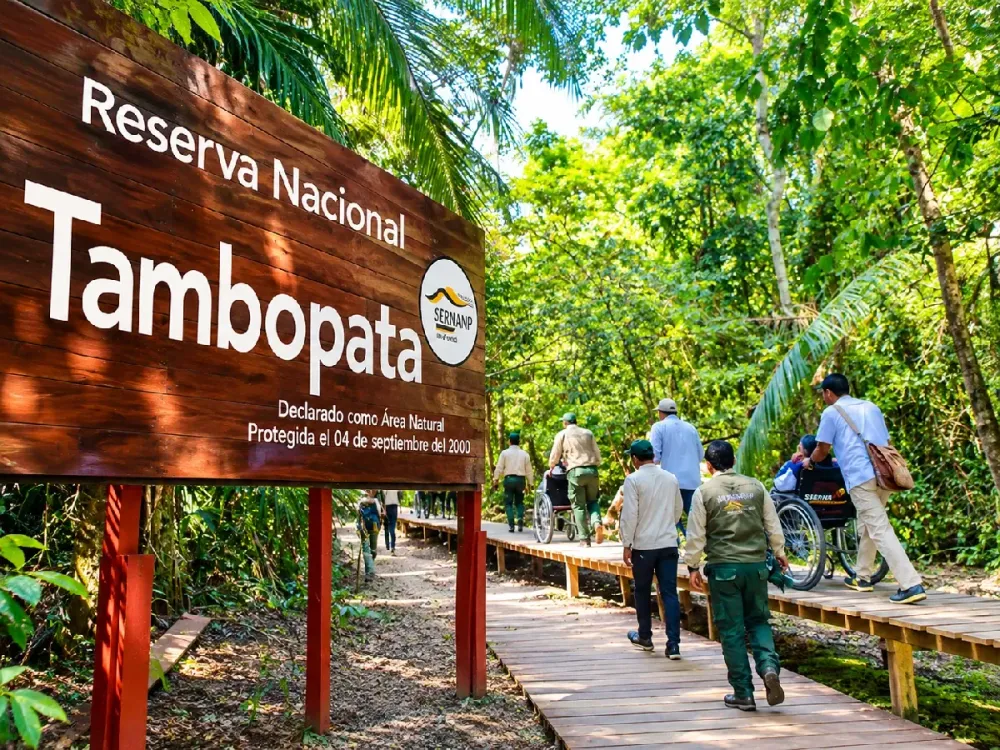
Where Is Tambopata National Reserve and Why Is It Important?
Tambopata National Reserve is located in Tambopata Province, in the Madre de Dios region of southeastern Peru. Established on September 4, 2000, it protects approximately 274,690 hectares of Amazonian ecosystems. Its location within a region of exceptional biological richness makes it an essential area for conserving plant and animal species, as well as protecting environments associated with Amazonian river basins.
The reserve forms part of a territory where tropical forests play essential roles in maintaining biodiversity, regulating water cycles, and storing carbon. Its different types of vegetation provide food and shelter for numerous species, while rivers and lakes support aquatic and terrestrial communities that depend on these natural resources.
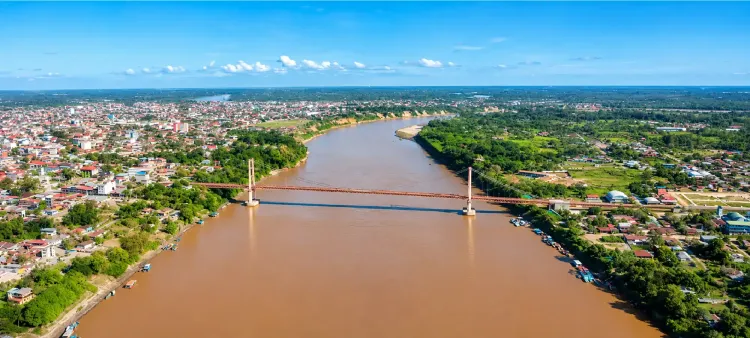
Its main tourism gateway is Puerto Maldonado, a city with air and road connections to other destinations in Peru. From there, visitors can continue toward different areas by boat, vehicle, and on foot, depending on the characteristics of each itinerary. This accessibility makes it possible to combine an Amazon rainforest experience with other destinations in southern Peru, such as Cusco, the Sacred Valley, and Machu Picchu.
It is important to distinguish Tambopata National Reserve from nearby protected areas, such as Bahuaja Sonene National Park. Although both belong to a region of considerable ecological importance, they have different boundaries, protection categories, and access regulations. Not every excursion advertised under the name Tambopata necessarily takes place within the boundaries of the national reserve.
The importance of this area is also connected to the communities living around it, whose cultural and economic activities maintain close relationships with Amazonian forests. Responsible tourism can contribute to the appreciation of these environments through local services and activities compatible with conservation. To discover other destinations with similar characteristics, explore our selection of the best places to visit in the Peruvian Amazon.
Main Visitor Areas in Tambopata National Reserve
Tambopata covers an extensive territory, with attractions distributed across different natural environments and access routes. To help travelers plan their first visit, tourism information from SERNANP identifies three main areas: Sandoval, Middle Tambopata, and Upper Tambopata. Each has particular navigation requirements, travel times, and activities, making it worthwhile to understand their differences before booking.
The Sandoval area is one of the most accessible from Puerto Maldonado. It is home to Lake Sandoval and other natural environments, including the Palma Real and Briolo streams. Excursions may combine forest trails, boat journeys, and wildlife observation, making this area an appealing option for travelers with limited time or those visiting the reserve for the first time.
The Middle Tambopata area includes natural attractions such as lakes Cocococha, Sachavacayoc, and Condenado, along with environments associated with the La Torre River. These routes offer opportunities to explore different aquatic and forest ecosystems, although they generally require longer transfers and specific arrangements for accommodation and activities.
Upper Tambopata is particularly well known for the Chuncho and Colorado macaw clay licks. Reaching certain attractions in this area may require several hours of river navigation, so multi-day programs and conveniently located rainforest accommodation are worth considering.
| Visitor Area | Main Attractions | Experience | Approximate River Access from Puerto Maldonado |
|---|---|---|---|
| Sandoval | Lake Sandoval, Palma Real, and Briolo | Lakes, trails, and wildlife | 30 minutes for the Sandoval route, followed by a walk |
| Middle Tambopata | Cocococha, Sachavacayoc, and Condenado | Lake and rainforest exploration | Around 3 hours, plus walking |
| Upper Tambopata | Chuncho and Colorado clay licks | Macaw and parrot observation | Approximately 5 hours and 30 minutes |
These travel times are general references for the routes identified by SERNANP and do not represent the duration of every commercial tour. Some itineraries use alternative road access or begin from nearby accommodation. Your choice of visitor area should depend on the activities you want to experience and the actual availability of authorized routes.
Lake Sandoval: One of Tambopata's Main Attractions
Lake Sandoval is one of the best-known natural environments in Tambopata National Reserve. Formed through the natural movements of the Madre de Dios River, it features a landscape surrounded by tropical vegetation, palm trees, and forest that provides shelter for numerous animal species. Covering approximately 127 hectares, the lake offers opportunities to explore different parts of its aquatic environment.
The usual access route from Puerto Maldonado combines navigation along the Madre de Dios River with a walk of approximately three kilometers. During the forest walk, travelers can discover tropical vegetation, listen to the sounds of different species, and learn about an environment where humidity plays an important role in trail conditions.
Once at the lake, excursions may continue using authorized boats, generally paddle-powered depending on the program. This peaceful form of transportation allows visitors to explore the aquatic environment and observe the vegetation along its shores. Wildlife sightings depend on the animals' natural behavior, the time of day, and weather conditions.
One of Lake Sandoval's most emblematic species is the giant river otter, known locally in Spanish as the lobo de río. These mammals use aquatic environments for feeding and social activities. Caimans, turtles, monkeys, and various bird species may also be encountered, although sightings of any particular animal are never guaranteed.
The area has tourism facilities, including interpretation and observation spaces that can complement the nature experience. However, current operating conditions and accessibility should be confirmed before traveling, particularly for visitors with reduced mobility or those who prefer less physically demanding excursions.
At Dreamy Tours, we offer the 2-day Lake Sandoval tour and the 3-day Lake Sandoval tour. Both programs provide opportunities to discover this attraction, but their duration and complementary activities differ. Before choosing, review the complete itinerary, included services, and arrival arrangements in Puerto Maldonado.
Chuncho and Colorado Macaw Clay Licks
Clay licks, locally known as collpas, are places where certain animal species gather to consume materials from the soil. In Tambopata National Reserve, some of the best-known clay licks are found along exposed clay riverbanks, where parrots, parakeets, and macaws may gather to consume soil. These gatherings make clay licks some of the most distinctive natural attractions in the Madre de Dios region.
The Chuncho Clay Lick is located in Upper Tambopata and is internationally recognized for its opportunities to observe different species of macaws and parrots. Visits are generally organized during the early morning, when conditions may favor bird activity. Visitors must remain within designated observation areas and avoid behavior that could disturb the surrounding environment.
The Colorado Clay Lick is another important alternative for travelers interested in discovering this natural phenomenon. Located along the Tambopata River, it features exposed clay banks surrounded by tropical vegetation, where different bird species may gather to feed. Because of its location, access times and logistical arrangements should be carefully considered when selecting an excursion.
Although clay consumption is associated with mineral intake and other possible dietary benefits, the reasons for this behavior may vary among species. There is also no specific time that guarantees the arrival of large groups of birds. Rainfall, predator activity, and other natural factors can influence activity at a clay lick on any given day.
To make the most of these experiences, bring binoculars, protect your camera against humidity, and follow your guide's instructions. Specialized birdwatching excursions often require patience, particularly when birds take longer to approach or remain at some distance from the observation areas.
The 4-day Tambopata Amazon Expedition offers activities related to birdwatching and rainforest exploration, including a visit to a clay lick. Before booking, confirm the exact name and location of the clay lick included in the program, as not every excursion in Madre de Dios visits Chuncho or Colorado.
Lakes Cocococha, Sachavacayoc, and Condenado: Other Places to Explore
Beyond Lake Sandoval, Tambopata protects several lake environments that reveal the diversity of Amazonian ecosystems. The lakes of Middle Tambopata offer interesting alternatives for travelers who want to discover other natural areas and have sufficient time for longer journeys.
Lake Cocococha is associated with the Tambopata River basin and provides suitable habitats for observing aquatic and terrestrial wildlife. Its surrounding forests and waterways offer opportunities to discover species connected to these ecosystems, including giant river otters. As with other Amazonian lakes, sightings depend on natural conditions and animal behavior.
Lake Sachavacayoc takes its name from the Amazonian tapir, locally known as the sachavaca, one of the region's most representative herbivorous mammals. Tapirs are generally difficult to observe, so the attraction should not be presented simply as a place where visitors are guaranteed to encounter this species. Forest walks and aquatic excursions provide opportunities to discover an environment also inhabited by birds, reptiles, and other mammals.
Lake Condenado offers another opportunity to explore tropical vegetation and natural environments associated with the Tambopata River. Reaching this area may require river navigation and walking, making it important to consider access times and trail conditions. It can be particularly appealing to visitors interested in nature photography and exploring different habitats.
There are also routes associated with the La Torre lakes and other natural areas within Middle Tambopata. However, not all of them form part of conventional tourism circuits or are automatically included in programs advertised under the reserve's name. Before booking an excursion, confirm which attractions are visited, where the journey begins, and which entrance regulations apply.
Exploring these alternatives helps travelers understand that Tambopata is much more than a single lake or clay lick. The reserve brings together landscapes and ecosystems that can be discovered through different experiences, provided the itinerary follows authorized routes and matches the time available.
Flora and Fauna of Tambopata National Reserve
Biodiversity is one of Tambopata's greatest natural assets. Its forests and aquatic environments support a wide variety of species adapted to different levels of humidity, vegetation, food availability, and water levels. This diversity means that walking through the rainforest can provide a very different experience from exploring a lake or traveling along a river.
Among the reserve's most representative mammals are monkeys, giant river otters, capybaras, tapirs, and jaguars. Some species may be easier to observe in particular habitats, while others are especially elusive and avoid human presence. Jaguars, for example, are part of Tambopata's biodiversity, but encountering one during a conventional tourist excursion is uncommon.
Birds are another major attraction for visitors. The reserve has approximately 600 recorded bird species, including macaws, parrots, toucans, and various species associated with aquatic and forest environments. The richness of these habitats makes Madre de Dios an especially interesting destination for birdwatching and nature photography.
The reserve is also home to numerous reptiles and amphibians, including caimans, snakes, frogs, and turtles, as well as an extraordinary diversity of insects. Some animals are most active at night, which is why certain excursions include guided nighttime walks. These experiences allow visitors to discover sounds and behavior that might otherwise go unnoticed during the day.
| Wildlife Group | Representative Species | Observation Environments |
|---|---|---|
| Mammals | Monkeys, capybaras, and tapirs | Forests, trails, and riverbanks |
| Aquatic mammals | Giant river otters | Lakes and river environments |
| Birds | Macaws, parrots, and toucans | Clay licks, forest canopy, and woodland |
| Reptiles | Caimans, turtles, and snakes | Lakes, rivers, and vegetation |
| Amphibians and insects | Frogs, butterflies, and various insects | Trails and humid environments |
Tambopata's flora includes large trees, palm trees, climbing vines, and numerous plants adapted to tropical environments. During guided walks, naturalist guides can explain how these species provide food and shelter for wildlife while illustrating the relationships between vegetation and water cycles.
Responsible wildlife observation involves maintaining an appropriate distance, avoiding feeding animals, and never handling wild species. A meaningful Amazon rainforest experience is not simply about the number of animals photographed. It is also about understanding how ecosystems function and why their conservation matters.
How to Get to Tambopata National Reserve from Puerto Maldonado
Puerto Maldonado is the main gateway to Tambopata National Reserve. The city has an airport receiving domestic flights and road connections through the Southern Interoceanic Highway. For travelers who want to combine the Amazon with the Andes, traveling from Cusco offers an opportunity to include both destinations within a single itinerary.
Flights from Lima serve Padre Aldamiz International Airport, identified by the IATA code PEM. Flights from Cusco may also be available depending on airline schedules. Travelers who prefer road transportation can take intercity bus services from Cusco, covering approximately 465 kilometers (289 miles) in a journey that generally takes around ten hours.
Once in Puerto Maldonado, the route into the reserve depends on the area you want to visit. Reaching Lake Sandoval generally involves traveling by boat along the Madre de Dios River, followed by a forest walk. Other areas require navigation along the Tambopata River or journeys that combine road and river transportation.
Organized tour programs may include airport pickup, transportation to a departure dock, and onward travel to an Amazon rainforest lodge. However, not every program includes the same services or begins at the same time. Before purchasing flights or bus tickets, confirm the meeting point, transfer duration, and luggage arrangements.
Because of the region's natural characteristics, weather conditions and river levels may affect certain routes. During the rainier months, checking road and trail conditions is also important, particularly if you plan to combine an overland arrival with an excursion beginning on the same day.
To organize transportation correctly, it is advisable to select the area of Tambopata you want to explore before booking flights or road transportation. If you are still comparing Amazonian destinations, our guide to Iquitos or Puerto Maldonado: which should you visit? explains the differences in accessibility, landscapes, and travel experiences between the two regions.
Tambopata National Reserve Entrance Fees and Visiting Hours
Tambopata National Reserve is a protected natural area managed by Peru's National Service of State-Protected Natural Areas, known as SERNANP. Visits must follow the regulations established for each area, including entrance through authorized routes and the use of tourism services with the appropriate permissions.
The general visiting hours published by SERNANP are Monday through Sunday, from 5:00 a.m. to 7:00 p.m. However, individual routes have particular characteristics, and certain attractions may require specific visiting schedules. Nighttime activities included in some programs must take place only in designated areas and under authorized conditions.
Entrance fees are organized according to the duration of the visit and the visitor's category. Different rates apply to general visitors, Peruvian nationals, and local residents who meet the relevant requirements. Children may also be eligible for special rates under applicable regulations.
| Visitor Category | 1 Day | 2 to 3 Days | 4 to 30 Days |
|---|---|---|---|
| General admission | S/ 30 | S/ 60 | S/ 150 |
| Peruvian adults | S/ 15 | S/ 30 | S/ 75 |
| Peruvian children aged 5 to 16 | S/ 8 | S/ 15 | S/ 35 |
| Local residents | S/ 8 | S/ 15 | S/ 35 |
According to the official fee schedule referenced on November 18, 2026, children under five receive free admission. Local residents must provide their Peruvian national identity document (DNI) to establish their eligibility. All prices are expressed in Peruvian soles and may change, so travelers should consult the official SERNANP Tambopata National Reserve visitor information before traveling.
The entrance fee does not represent the total cost of a rainforest excursion. Tour programs may include accommodation, guides, road and river transportation, meals, and additional activities. Before booking, check whether entrance to the reserve is included or must be paid separately, along with any conditions associated with the length of your visit.
Best Time to Visit Tambopata National Reserve
Tambopata has a warm, humid tropical climate, with rainfall influencing vegetation, trail conditions, and river dynamics. Although visits can be organized at different times throughout the year, seasonal characteristics may favor particular activities or affect access to certain areas.
May through October generally brings relatively less rainfall to Madre de Dios and coincides with the period recommended by SERNANP for visiting the reserve. During these months, some forest walks may be more comfortable because rainfall tends to be less frequent. However, Amazonian weather remains variable, and rain can occur even during the generally more favorable months.
According to SERNANP's tourism information, the rainiest period typically occurs between December and March. During these months, certain forest trails may become muddy, and rivers may experience significant changes in water levels and flow. These conditions can lead to itinerary adjustments, although they do not necessarily mean that all tourism activities are suspended.
Macaw observation at clay licks also depends on weather and bird behavior. A sunny morning may provide favorable conditions, but it does not guarantee that a particular number of birds will gather. Similarly, wildlife observation around Amazonian lakes depends on several factors and cannot be reduced to choosing a specific month.
Another important consideration is the friaje, a weather event associated with cold air moving into the southern Amazon. These episodes can cause temporary temperature drops, even during relatively less rainy months. In addition to lightweight clothing and rain protection, packing a warm layer is therefore advisable.
To understand climatic differences between Madre de Dios and other Amazonian regions, explore our guide to the best time to visit the Peruvian Amazon. Choosing a suitable season can help you organize your excursions, but maintaining some flexibility for possible weather changes is always recommended.
How Many Days Do You Need to Visit Tambopata National Reserve?
The ideal length of a Tambopata visit depends on the areas you want to explore and the type of experience you are looking for. A single day may allow you to discover certain attractions relatively close to Puerto Maldonado, while other destinations require several hours of navigation and a longer stay. For this reason, there is no single trip duration that suits every traveler.
With two days and one night, it is possible to organize an introductory experience focused on Lake Sandoval and other activities compatible with the booked program. This alternative is particularly appealing to visitors with limited time, although part of the first and final days will be dedicated to transfers and arrival or departure arrangements.
Three days and two nights provide a more balanced schedule for travelers who want to enjoy different nature activities. A stay of this length may combine rainforest walks, boat journeys, and wildlife observation at different times of day, depending on the selected itinerary. It also allows travelers to spend more time at an Amazonian lodge and discover certain aspects of rainforest life after sunset.
Programs lasting four days or longer may be suitable for travelers interested in exploring more remote areas, observing birds, or including cultural experiences. However, a longer stay does not guarantee access to every attraction within the reserve. Accommodation location and the routes included in the program determine which areas can realistically be visited.
| Duration | Recommended Program | Main Focus |
|---|---|---|
| 2 days / 1 night | Lake Sandoval | Introduction to Amazonian nature |
| 3 days / 2 nights | Lake Sandoval and complementary activities | Exploration of different natural environments |
| 4 days / 3 nights | Tambopata Amazon Expedition | Nature, birdwatching, and river excursions |
| 4 days / 3 nights | Native Communities Program | Nature and Amazonian traditions |
| 5 days or longer | Specialized itinerary based on available areas | More extensive exploration |
If you want to combine nature activities with experiences connected to local traditions, the 4-day Native Communities Program offers an alternative that includes a visit to Lake Sandoval. Before booking, review the arrangements for cultural activities and respect the decisions of participating families and communities.
To compare different program durations and characteristics, explore our Puerto Maldonado and Tambopata rainforest tours. The most important consideration is choosing a realistic experience that allows you to enjoy natural environments without rushing between destinations.
Where to Stay and What to Pack for Tambopata
Amazon rainforest accommodation is an important part of the Tambopata travel experience. Unlike a city hotel, a rainforest lodge may be located near a river, surrounded by tropical forest, or positioned in an area that provides convenient access to particular excursions. Its location directly influences transportation times and the activities available during your stay.
Before booking, check whether the accommodation is located within an authorized area of the reserve or in its surroundings. Both options may provide interesting excursions, but they differ in terms of access and available services. It is also important to review room conditions, bathroom facilities, mosquito net availability, electricity, and internet connectivity.
Meals are another relevant consideration, particularly in programs where visitors spend several nights away from the city. Check which meals are included and communicate any dietary restrictions in advance. You should also ask about access to safe drinking water, storage conditions for personal medications, and the operator's emergency procedures.
Your luggage should be suitable for the tropical conditions of Madre de Dios. Lightweight quick-drying clothing, long-sleeved shirts, and comfortable trousers are useful for rainforest walks. Insect repellent, sunscreen, a rain jacket, a hat, and footwear suitable for wet terrain are also recommended. Depending on the program, rubber boots may be necessary or provided by the accommodation.
Travelers interested in photography and wildlife observation may benefit from bringing binoculars, spare batteries, and a camera protected against humidity. Travel documents and electronic devices should be kept in waterproof bags, particularly during river transfers. A small backpack makes excursions easier and helps avoid carrying unnecessary belongings along forest trails.
Before traveling, consult a healthcare professional about preventive health measures appropriate for the Peruvian Amazon. Protection against mosquito-borne diseases and other medical considerations depend on personal circumstances and the areas you intend to visit. Preparing properly allows you to enjoy your activities with greater peace of mind and respond more effectively to natural conditions.
Tips for Visiting Tambopata Responsibly and Safely
Before organizing your visit, identify which areas of Tambopata National Reserve you want to explore and select a program that matches your interests. If your priority is observing aquatic wildlife, Lake Sandoval may be a suitable option, while travelers interested in macaws should confirm which clay licks are included in their excursion. Review accommodation locations, navigation times, and scheduled activities to avoid expectations that do not match the booked itinerary.
Use authorized tourism services and respect the access regulations established by SERNANP. During rainforest walks, remain on designated trails and follow your guide's instructions, particularly in areas inhabited by wildlife. Avoid feeding or handling animals, removing plants or other natural materials, and generating unnecessary waste. These practices help protect ecosystems and preserve the conditions needed for future responsible tourism experiences.
Safety during transportation also deserves special attention. Wear appropriate life jackets during boat journeys, bring clothing suitable for humid conditions, and protect your belongings against unexpected rainfall. If you are traveling with children, older adults, or people with specific mobility requirements, ask about the characteristics of the trails, boats, and accommodation beforehand. Not every area of the reserve offers the same level of accessibility or physical difficulty.
Organize your flights and road connections according to the actual departure and return schedules of your excursions. Arriving in Puerto Maldonado during the morning may make it easier to join certain programs, but this possibility should be confirmed with the tour operator. It is also advisable to allow sufficient time between returning from the rainforest and catching your departure flight, as changing weather and navigation conditions may affect the original schedule.
At Dreamy Tours, we believe that visiting Tambopata National Reserve is an opportunity to discover Amazonian biodiversity and understand the importance of conserving its ecosystems. Whether you want to navigate Lake Sandoval, explore other natural environments, or participate in cultural experiences, you can compare our Puerto Maldonado rainforest tours and select a program suited to your available time and interests. A well-organized experience allows you to discover the Amazon rainforest of Madre de Dios while respecting nature and the communities that form part of it.
Personal travel advice
Plan your trip with Dreamy Tours
Start a tailored journey with our exclusive tours and custom trips across Peru and other Latin American countries.