Search the blog
Tabla de contenidos
Discovering what to do in Iquitos in 4 days allows you to plan an experience that combines the city's history with the natural landscapes of the Peruvian Amazon. Located in the Loreto region, Iquitos is one of the main gateways to the great Amazonian rivers, tropical rainforests, and communities whose daily lives are closely connected to these ecosystems.
Unlike many other destinations in Peru, Iquitos has no direct road connection to the country's national highway network. Most travelers therefore arrive by plane, while rivers remain essential for transportation and excursions. This geographical feature also influences how itineraries are organized, especially when you want to combine city sightseeing with activities farther into the rainforest.
With four days available, there are two main alternatives. The first is to spend one day exploring the historic center and cultural attractions of Iquitos, followed by a three-day, two-night rainforest expedition. The second is to choose a four-day, three-night nature-focused program featuring river navigation, guided walks, and Amazonian wildlife observation.
Both options offer opportunities to discover different aspects of Loreto, but they should not be confused. An organized four-day expedition generally occupies almost your entire stay, while an itinerary combining the city and rainforest requires more careful planning of activities and transportation.
In this guide, you will discover how to organize four days in Iquitos, which places to visit, how Pacaya Samiria and Yanayacu programs differ, what budget considerations to keep in mind, and how to make the most of your available time.
Before planning your trip, explore our complete Peruvian Amazon travel guide and discover the best things to do in Iquitos according to your interests.
How to Plan a 4-Day Trip to Iquitos
Planning a four-day stay in Iquitos means deciding whether you want to explore the city, join rainforest excursions, or combine both experiences. Although four days offer more possibilities than a shorter visit, river journeys can take several hours and limit the number of activities you can realistically include.
For travelers interested in both local history and Amazonian landscapes, one recommended approach is to reserve the first day for city sightseeing and the following three days for an organized rainforest expedition. This allows you to discover some of Iquitos' main urban attractions before traveling to accommodation surrounded by tropical forest.
However, your arrival time is important. If your flight lands in the morning, you can enjoy much of the first day exploring the historic center. If you arrive at night, you will have less time for sightseeing and may need to adjust the program.
Another alternative is to join a four-day, three-night expedition from the beginning. In this case, the itinerary focuses on nature activities, navigation along Amazonian rivers, and guided exploration. City sightseeing is limited to any time available before or after the program.
| Type of Trip | Suggested Schedule | Main Experience |
|---|---|---|
| City and rainforest | 1 city day + 3 expedition days | Culture and nature |
| Full Yanayacu expedition | 4 days / 3 nights on an organized program | River navigation and Amazon exploration |
| Birdwatching expedition | 4 days / 3 nights on a specialized program | Birdwatching |
| Iquitos and nearby excursions | 4 days based in the city | History, cuisine, and river landscapes |
You should also check what each booking includes. Programs may provide land and river transportation, meals, accommodation, and guides, but the exact services should be reviewed before purchasing flight tickets.
If you are still comparing trip lengths, a three-day Iquitos itinerary offers a shorter alternative and helps identify which activities would benefit from additional time.
The best plan is one that allows sufficient time for transportation and avoids trying to visit too many places in a single day.
Day 1: Historic Center, Plaza de Armas, and Belén Neighborhood
Your first day can be dedicated to discovering the city of Iquitos, provided you arrive with enough time for sightseeing. Its historic center features buildings associated with Loreto's commercial development, cultural spaces, and streets where everyday Amazonian life can be observed.
The Plaza de Armas is one of the city's most recognizable starting points. Nearby stands Iquitos Cathedral, also known as Iglesia Matriz, along with buildings that reveal different aspects of local architecture.
One of the best-known attractions is the Iron House, or Casa de Fierro, a metal building associated with the Amazonian rubber boom. Its presence recalls a period when trade brought major economic and urban changes to the region.
From the city center, you can continue toward Tarapacá Waterfront, a historic promenade offering river views and a collection of older buildings. Among them is the former Hotel Palace, known for its decorative architectural features and connection to Iquitos' history.
If you have enough time, consider visiting the Museum of Indigenous Amazonian Cultures or the Amazonian Museum. These institutions provide a cultural perspective that complements later excursions into the rainforest. Opening hours and visitor access should be confirmed before your visit.
Another interesting experience is exploring the Belén neighborhood and its traditional market. This area has a close relationship with the Itaya River and includes homes adapted to seasonal changes in water levels.
At Belén Market, you can find tropical fruits, fish, spices, and other ingredients used in regional cuisine. Visiting with a local guide is recommended, as is maintaining a respectful attitude toward vendors and residents.
If your time is limited, choose a few attractions rather than attempting to visit everything. The historic center and waterfront can be combined relatively easily, while Belén deserves dedicated time to experience it properly.
For more information about individual attractions, read our guide to tourist attractions in Iquitos.
At the end of the day, enjoy a regional dinner and prepare the items you will need for your rainforest expedition beginning the following morning.
Day 2: Travel into the Amazon Rainforest and First Activities
After exploring the city, the second day can mark the beginning of an organized three-day, two-night rainforest expedition. This is one of the most practical ways to combine a cultural day with a nature experience during a four-day trip.
Your route will depend on the program you choose. For Pacaya Samiria, the itinerary may begin with an overland transfer from Iquitos to Nauta, followed by navigation toward the reserve and communities associated with the route.
In other programs, including certain Yanayacu experiences, transportation begins at a river departure point in Iquitos and continues along Amazonian waterways toward the accommodation.
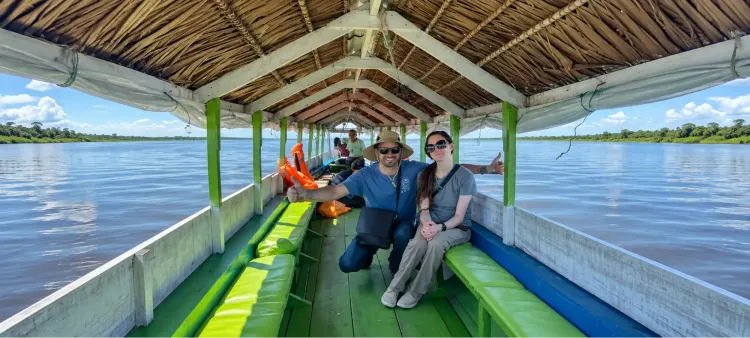
During navigation, you can observe tropical vegetation, regional boats, and different river environments. The great rivers are an essential part of the journey and help explain why everyday life in Loreto is so closely connected to water.
Upon arrival in the expedition area, your guide will usually explain the characteristics of the environment, safety rules, and the activities planned for the following days.
Depending on the booked program, the first day in the rainforest may include a guided walk to identify plants, trees, and different tropical habitats. Some experiences also feature nighttime excursions, allowing visitors to discover the sounds and wildlife activity of the forest after sunset.
It is important to bring quick-drying clothing, insect repellent, rain protection, and suitable footwear. Accommodation and meal arrangements depend on the program and should be confirmed in advance.
If you choose an expedition to Pacaya Samiria, explore the 3-day Pacaya Samiria tour. Another option for Amazon rainforest exploration is the 3-day Yanayacu Amazon tour.
These two programs have different itineraries. Their activities should not be combined or presented as though they were part of the same excursion.
Day 3: River Navigation, Rainforest Walks, and Wildlife Watching
Your third day can be dedicated to exploring the natural environments of your chosen program in greater depth. After spending a night in the rainforest, travelers may take part in early-morning activities, when many bird species are particularly active.
Guided excursions allow visitors to explore different habitats, identify characteristic plants and trees, and learn about the relationships between rivers, vegetation, and Amazonian animals.
In Pacaya Samiria, activities on the three-day program include exploring rivers, lagoons, and trails within the reserve, depending on conditions in the sector being visited. During these excursions, there may be opportunities to observe monkeys, birds, turtles, and other species living in the wild.
In Yanayacu, programs may feature birdwatching, river excursions, and activities focused on understanding tropical environments. Boat journeys offer views of landscapes where water, trees, and vegetation form ecosystems that change throughout the year.
One of the most important things to understand about these experiences is that wildlife does not follow a tourist schedule. Sightings depend on the natural behavior of each species, weather conditions, and accessible habitats.
River dolphins may be found in certain Amazonian areas, while various bird and primate species inhabit forests near the waterways. However, no responsible excursion should guarantee specific wildlife encounters.
It is also important to follow your guide's instructions and avoid handling wild animals. Observing wildlife from an appropriate distance allows you to enjoy the experience without disturbing natural behavior.
Some excursions may include nighttime walks or boat rides after dinner. These activities depend on the booked itinerary, group safety, and environmental conditions.
Spending a full day surrounded by nature allows you to experience different habitats without rushing. This is one of the main advantages of combining city sightseeing with a multi-day rainforest expedition.
Day 4: Final Rainforest Experiences and Return to Iquitos
The fourth day is dedicated to completing the scheduled activities and returning to Iquitos. Although it may include a final nature experience, remember that part of the day will be spent traveling back to the city or airport.
On the three-day Pacaya Samiria program, the final day includes navigation across an Amazonian lagoon and the return toward the community of Buenos Aires. The journey then continues to Nauta, followed by the transfer to Iquitos or the airport, according to the arrangements made.
On the three-day Yanayacu Amazon tour, the published final-day itinerary includes a visit to a traditional Amazonian sugarcane mill, known as a trapiche, a cultural experience associated with a Yagua community, and the return to the city. Specific activities should be confirmed before traveling and carried out with respect for the communities involved.
These routes demonstrate why the return day cannot be considered an entirely free day. River navigation and transfer times can vary according to water levels, weather, and operating conditions.
For this reason, knowing the estimated arrival time in Iquitos is essential before booking your return flight. If the program finishes in the afternoon, an early flight may not be compatible with the excursion.
It is also advisable to allow extra time for possible delays. River transportation is a central part of travel in the Amazon, but it depends on environmental conditions that can change.
If your flight departs the following day, you may have time during the final afternoon to rest, enjoy regional cuisine, or visit somewhere you missed. However, that option requires additional time beyond the four-day itinerary.
For a trip limited strictly to four days, the best approach is to prioritize a well-organized return and avoid activities that could jeopardize your flight connection.
Iquitos 4-Day Itinerary at a Glance: City and Rainforest
The following itinerary combines one day in the city with an organized three-day, two-night rainforest expedition. It is a suggested plan for travelers who want to discover Iquitos' history and spend most of their journey immersed in Amazonian nature.
| Day | Main Activities | Location | Accommodation |
|---|---|---|---|
| Day 1 | Plaza de Armas, Iron House, Tarapacá Waterfront, and cultural sightseeing | Iquitos city | Hotel in Iquitos |
| Day 2 | Tour departure, transfers, and first rainforest activities | Chosen expedition area | Rainforest accommodation |
| Day 3 | River navigation, guided walks, and nature observation | Loreto rainforest | Rainforest accommodation |
| Day 4 | Final activities, return journey, and transfer toward Iquitos | Return route | Depends on departure schedule |
The exact arrangements depend on the booked itinerary. Some programs begin with airport pickup, while others may arrange collection from a hotel. If you plan to stay in Iquitos on the first night, confirm the meeting point for the second day.
Not all programs finish at the same time. Before booking flights, check the expected return journey and any included transfer services.
This proposal also does not mean you can visit every attraction in Iquitos and join any three-day tour without adjustments. City activities depend on your arrival time, while the rainforest expedition follows its own schedule.
If you want a completely nature-focused trip, choosing a full four-day, three-night program may be more practical than dividing your stay between city sightseeing and the rainforest.
Alternative: 4-Day, 3-Night Yanayacu Tour
For travelers who want to spend all four days exploring the Amazon, one alternative is the 4-day Yanayacu Iquitos tour. This Dreamy Tours program includes Amazonian accommodation and a range of organized activities over four days and three nights.
Unlike the combined city-and-rainforest itinerary, this experience begins with reception in Iquitos and transportation to the accommodation. It therefore does not include a separate day for exploring the historic center.
On the first day, the program includes navigation along the Nanay and Momón rivers, a cultural visit associated with a Bora community, and a stop at a viewpoint overlooking the Amazon River. The journey then continues toward the lodge, where the first activities take place.
The itinerary also includes traditional fishing and a nighttime walk to experience rainforest environments and sounds after sunset.
The second day focuses on activities such as birdwatching and an ethnobotanical walk. These experiences provide opportunities to identify different plants, trees, and natural environments with knowledgeable guides.
Later activities include visits related to regional traditions, navigation, and excursions to look for river dolphins. The day may end with an evening boat ride.
On the third day, the published itinerary includes navigation along Yanayacu toward Monkey Island, along with a community-based tourism experience in a riverside settlement. These visits should respect animal welfare and the customs of the host communities.
The fourth day includes activities related to Amazonian wildlife and a visit to Fundo Pedrito, where visitors can see aquatic plants such as the giant water lily, Victoria amazonica. The program then returns to the city and includes the corresponding transfer arrangements.
This program can appeal to travelers who prefer spending more time on the rivers and in the rainforest rather than combining city sightseeing with shorter excursions.
Before booking, verify the current activities, animal welfare practices at wildlife facilities, program inclusions, and return time. Routes may be adapted according to the season and navigation conditions.
Alternative: 4 Days of Birdwatching in Iquitos
Iquitos also offers specialized experiences for travelers interested in discovering Amazonian biodiversity through birdwatching in natural habitats.
The 4-day birdwatching tour in Iquitos focuses on guided excursions through different Amazonian environments, with activities during the day and, depending on the program, at night.
This type of experience differs from a general sightseeing itinerary because it prioritizes the times and habitats where particular species may be found. Outings are often organized around early mornings and other favorable periods for observation.
On the first day, the published program includes transportation to Amazonian accommodation and a walk in the surrounding area to learn about the local vegetation and begin looking for birds.
The second day includes an early-morning excursion into a forest environment and activities associated with the Yanayacu River. The itinerary features observation areas that allow visitors to discover different types of vegetation and river landscapes.
Throughout the program, naturalist guides can help identify species, interpret bird calls, and understand the behavior of birds found in the region.
To enjoy this type of journey, binoculars, clothing in discreet colors, rain protection, and a suitable camera are useful, especially if you are interested in wildlife photography.
However, no itinerary can guarantee sightings of particular species. The presence of birds depends on their natural behavior, the season, and the characteristics of the habitats explored.
This option is intended for travelers whose priority is birdwatching rather than visiting Iquitos' urban attractions.
If you also want to explore the city, consider adding an extra day before or after the program.
Which 4-Day Option Is Best: City and Rainforest, Yanayacu, or Pacaya Samiria?
Choosing the best itinerary depends on which experiences you want to prioritize. Four days can be enough for a first introduction to Loreto's history and natural environments, but your time needs to be allocated carefully.
Combining the city and rainforest is appealing for first-time visitors who want to discover some of Iquitos' cultural heritage before joining an organized expedition.
On the other hand, a full four-day Yanayacu program allows travelers to dedicate their entire stay to Amazonian exploration, with activities spread across several days and nights in rainforest accommodation.
Pacaya Samiria is an option for travelers interested in visiting a protected national reserve and exploring its rivers, lagoons, and tropical forests. Dreamy Tours' published program lasts three days and two nights, making it possible to combine the expedition with one additional day in the city.
| Option | Schedule | Main Experience | Best For |
|---|---|---|---|
| City + Pacaya Samiria | 1 city day + 3-day tour | History and protected reserve | Culture and nature |
| City + Yanayacu Amazon | 1 city day + 3-day tour | City and Amazonian exploration | First-time visitors |
| Full Yanayacu expedition | 4 days / 3 nights | Navigation and rainforest activities | More time in nature |
| Full birdwatching expedition | 4 days / 3 nights | Specialized birdwatching | Photography and wildlife |
| Four days based in Iquitos | City and nearby excursions | History, markets, and cuisine | Flexible travel |
If you are considering other Amazonian destinations, read our comparison of Iquitos or Puerto Maldonado to understand the differences between these two gateways to the Peruvian rainforest.
If you want to discover more options in Loreto and beyond, our guide to the best places to visit in the Peruvian Amazon introduces other natural destinations.
The main recommendation is to select your preferred type of experience first and then organize transportation. Trying to include too many activities within four days can reduce the time you actually spend enjoying each place.
How Much Does a 4-Day Trip to Iquitos Cost?
The budget for a four-day trip to Iquitos depends on your departure city, travel season, accommodation preferences, and chosen activities.
Flights can represent a significant part of the cost, especially when a connection is needed from Cusco, Arequipa, or another Peruvian city. Airfares vary according to how far in advance you book, availability, and included services.
For an itinerary combining the city and rainforest, you will generally need to budget for the first night's accommodation in Iquitos and the cost of the organized three-day program. You may also have expenses for meals during your city day, local transportation, and entrance fees at certain attractions.
Four-day expeditions have a different cost structure. Depending on the program, they may include lodge accommodation, meals, guides, and land and river transportation. However, it is essential to review the booking conditions because inclusions vary between products.
| Expense | City + Rainforest | 4-Day Expedition |
|---|---|---|
| Flights | Budget separately | Budget separately |
| Accommodation | City hotel + rainforest accommodation | According to lodge program |
| Meals | City expenses + tour meals | Check included meals |
| Transportation | City, road, and river transfers | According to booked services |
| Activities | Cultural sightseeing + expedition | Scheduled nature activities |
| Extras | Entrance fees, drinks, and personal expenses | Excluded services and tips |
It is not advisable to establish a single fixed budget in US dollars without knowing the travel dates and type of experience. A four-day program may include more services than an independently organized stay, but the total cost should always be compared.
You should also consider possible extra nights if flight schedules do not match the starting and finishing times of your expedition.
To explore available options, compare the Iquitos Amazon rainforest tours and check the inclusions and exclusions of each program.
Best Time to Visit Iquitos for a 4-Day Itinerary
Iquitos experiences a warm, humid tropical climate throughout the year. Rainfall is common, even during the relatively less rainy months, so there is no completely dry season.
June, July, and August generally record lower average rainfall than other periods of the year. However, this does not guarantee rain-free conditions during excursions.
For a city-based stay, most attractions can be visited in any season, provided weather conditions and opening hours are taken into account.
On rainforest expeditions, river levels are another important factor. During high-water periods, some flooded forest areas can be explored by boat. During low-water periods, certain riverbanks and trails may become accessible.
In Pacaya Samiria, SERNANP identifies May through September as the recommended visiting period. This is useful guidance, but navigation and access conditions can vary between different sectors of the reserve.
If you are planning four days combining the city and rainforest, check current river conditions and the activities expected to be available on your chosen program.
For detailed monthly information, explore our guide to the best time to visit Iquitos, which includes temperature, rainfall, and river-season information.
You can also read about the best time to visit the Peruvian Amazon to compare conditions across different rainforest destinations.
Choosing a suitable travel season does not mean avoiding rain altogether. It means selecting dates that work well with the experiences you want to enjoy.
How to Get to Iquitos and Make the Most of Your Itinerary
Most tourists reach Iquitos by plane because the city has no direct road connection to the rest of Peru's national highway network.
Nonstop flights operate from Lima to Coronel FAP Francisco Secada Vignetta International Airport, identified by the code IQT. The flight generally takes approximately one hour and fifty minutes, although schedules and flight times can vary.
If you are traveling from Cusco, you will normally need a connecting flight, usually through Lima. This is particularly important for visitors planning to combine Machu Picchu with an Amazon rainforest experience.
For a four-day itinerary that includes one city day and a three-day expedition, arriving in Iquitos on the morning of the first day is recommended. This gives you time for cultural sightseeing and rest before the rainforest program begins.
The expedition would start on the second day, according to the confirmed meeting time and location. The return would take place on day four, so your departure flight must be compatible with the tour's actual finishing time.
Do not assume that every program allows you to take a flight on the same day you return from the rainforest. River navigation, road transfers, and changing water levels can affect estimated schedules.
For more details on transportation, read our guide on how to get to Iquitos from Lima, Cusco, and other cities.
Your luggage should also be suitable for the Amazonian climate. Bring lightweight, quick-drying clothing, long-sleeved shirts, comfortable trousers, a rain jacket, sunscreen, insect repellent, and a small backpack.
Protect documents and electronic devices in waterproof bags. If your itinerary involves rainforest walks, confirm whether the tour operator provides rubber boots or other equipment.
Before traveling, review health recommendations for the Peruvian Amazon. Depending on your itinerary and personal circumstances, a healthcare professional may advise preventive measures against mosquito-borne diseases.
During nature activities, use authorized tourism services and follow conservation guidelines. It is also important to maintain an appropriate distance from wild animals and respect the communities welcoming visitors.
At Dreamy Tours, we believe that the best way to enjoy Iquitos in four days is to plan a balanced itinerary, allowing enough time to discover the city and explore the rainforest without rushing between destinations.
If you want to combine history, culture, and nature, one city day followed by a three-day expedition can be an excellent choice. If you prefer to spend your entire stay in the Amazonian environment, four-day Yanayacu and birdwatching programs offer a longer nature-focused experience.
Explore the Iquitos Amazon tours and compare the available programs to discover Loreto's rivers, tropical forests, and remarkable natural landscapes.
Personal travel advice
Plan your trip with Dreamy Tours
Start a tailored journey with our exclusive tours and custom trips across Peru and other Latin American countries.