Search the blog
Tabla de contenidos
Combining Machu Picchu and the Amazon rainforest in a single trip allows you to discover two of Peru's most extraordinary regions. From ancient Inca structures nestled among the mountains of Cusco to the extensive tropical forests of Madre de Dios, this experience brings together archaeological heritage, history, biodiversity, and natural landscapes that reflect the country's geographical and cultural diversity.
One of the best ways to organize this journey is to combine Cusco, the Sacred Valley, and Machu Picchu with Puerto Maldonado, the main gateway to Tambopata National Reserve. Road connections and available flight options make it possible to include several days of Amazon rainforest exploration without having to organize two completely separate trips.
During your stay in Cusco, you can explore archaeological sites, discover Andean traditions, and visit one of the most important Inca cities in South America. In the Amazon, the experience changes completely, with boat excursions, tropical forest walks, and opportunities to observe monkeys, macaws, caimans, and giant river otters in their natural habitats.
Planning this type of journey requires considering excursion durations, Machu Picchu ticket availability, transportation schedules, altitude acclimatization, and the weather conditions of both regions. Choosing the right order of destinations helps you make better use of your available time and enjoy different experiences without rushing between locations.
In this guide, you will discover the main ways to combine the Andes and the Amazon, recommended itineraries, differences between available tours, and practical travel planning tips. You can also explore our complete Peruvian Amazon travel guide to learn more about the country's main rainforest destinations.
Why Combine Machu Picchu and the Amazon Rainforest in One Trip?
Peru's geographical diversity allows visitors to discover remarkably different natural and cultural environments within a single country. While Cusco preserves important evidence of the Inca civilization, the Peruvian Amazon is home to extensive tropical ecosystems supporting an extraordinary variety of plant and animal species. Combining these regions provides a more complete understanding of Peru's heritage.
Machu Picchu represents one of South America's most significant archaeological experiences. Its architecture, agricultural terraces, spatial organization, and integration with the mountainous landscape reveal different aspects of Inca engineering and society. Visiting the archaeological site also provides an opportunity to appreciate the natural surroundings of the Historic Sanctuary of Machu Picchu.
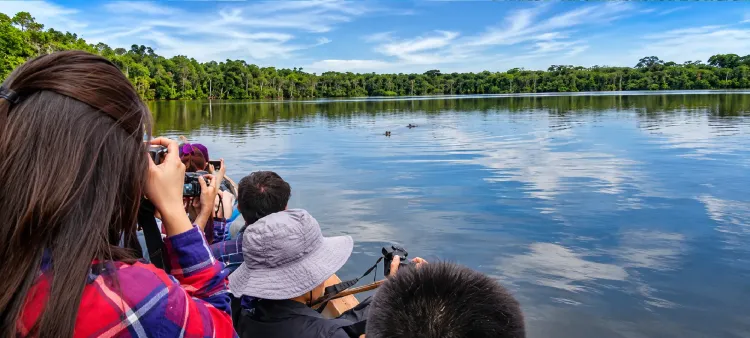
Meanwhile, the Amazon rainforest of Madre de Dios allows travelers to discover environments where rivers, forests, and wildlife maintain essential relationships that support ecological balance. Excursions may include boat journeys along the Madre de Dios River, interpretive rainforest walks, birdwatching, and visits to protected natural areas such as Lake Sandoval and different parts of Tambopata.
The contrast between these regions is also reflected in their climates and cultural traditions. Cusco features Andean landscapes, variable temperatures, and traditions associated with mountain communities, while Puerto Maldonado offers warm, humid environments where daily activities maintain close connections with the resources of Amazonian forests and rivers.
This combination is particularly appealing to international travelers who want to make the most of their time in Peru without focusing exclusively on one type of tourism. If you want to discover other natural environments that could be included in your journey, explore our selection of the best places to visit in the Peruvian Amazon.
Puerto Maldonado or Iquitos: Which Amazon Destination Is Best for Combining with Machu Picchu?
Puerto Maldonado and Iquitos are two of the main gateways to the Peruvian Amazon, but they differ considerably in location, accessibility, and travel experiences. Choosing between these cities depends on your available time, personal interests, and the transportation connections needed to continue toward Cusco and Machu Picchu.
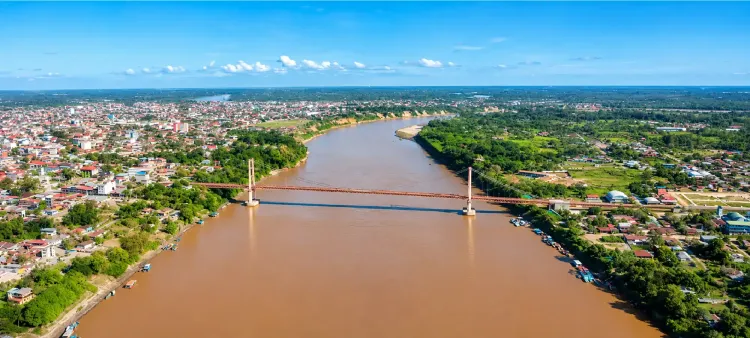
Puerto Maldonado is located in the Madre de Dios region of southeastern Peru. Its connection with Cusco through the Southern Interoceanic Highway makes it possible to organize itineraries that directly combine the Andes and the Amazon. Flight connections between these destinations may also be available, depending on airline schedules.
From Puerto Maldonado, travelers can visit Tambopata National Reserve, explore Lake Sandoval, and participate in excursions through tropical environments offering opportunities to observe wildlife. Two-, three-, and four-day programs allow visitors to adapt their Amazon rainforest experience to different trip durations.
Iquitos, on the other hand, is located in the Loreto region of the northern Peruvian Amazon. For many travelers, its main appeal is the opportunity to discover the Amazon River, explore seasonally flooded forests, and visit protected natural areas such as Pacaya Samiria. However, combining Iquitos with Cusco generally requires additional flight connections, often through Lima.
| Feature | Puerto Maldonado | Iquitos |
|---|---|---|
| Region | Madre de Dios | Loreto |
| Connection with Cusco | Road transportation and flight options, subject to availability | Generally requires connecting flights |
| Main experiences | Tambopata, Lake Sandoval, and clay licks | Amazon River, Yanayacu, and Pacaya Samiria |
| Suggested Amazon stay | 2 to 4 days or more | 3 to 5 days or more |
| Combining with Machu Picchu | Easier because of its road connection | Requires more logistical planning |
| Best for | Trips through southern Peru | Experiences focused on the major Amazonian rivers |
For travelers who want to visit Machu Picchu and the Amazon rainforest within a limited itinerary, Puerto Maldonado is generally the more practical option. If you are still deciding which region to visit, our comparison of Iquitos or Puerto Maldonado: which should you visit? explains the differences between both destinations in greater detail.
Should You Visit Machu Picchu or the Amazon Rainforest First?
There is no mandatory order for combining Machu Picchu and Puerto Maldonado. Both travel sequences can work well when flights, entrance tickets, accommodation, and excursions are arranged appropriately. Your choice depends on available transportation connections and the travel pace you prefer.
Starting in Cusco allows you to focus initially on archaeological and cultural experiences. After exploring the Sacred Valley and Machu Picchu, travelers can continue toward Puerto Maldonado to spend several days surrounded by nature. This option is particularly appealing to those who want to finish their vacation in a tropical environment, enjoying activities different from those experienced in the Andes.
However, beginning in Cusco also requires considering altitude acclimatization. The city is located approximately 3,400 meters (11,155 feet) above sea level, so avoiding physically demanding activities immediately after arrival is advisable. A gradual schedule allows you to rest and observe how your body responds before participating in longer excursions.
The second option is to begin your journey in the Amazon. Travelers can fly from Lima to Puerto Maldonado, enjoy rainforest excursions, and subsequently continue toward Cusco. This sequence allows visitors to start their journey at a low elevation, although sufficient acclimatization time is still necessary when arriving in the Andes.
Dreamy Tours' 9-day Peru package featuring the Amazon rainforest and Machu Picchu follows this second approach. The journey begins in Lima, continues to Puerto Maldonado, and subsequently includes Cusco, the Sacred Valley, and Machu Picchu.
Regardless of which sequence you choose, Machu Picchu ticket availability should be considered before confirming other travel services. It is also advisable to check the finishing times of your Amazon rainforest excursions to avoid overly tight transportation connections between Puerto Maldonado and Cusco.
How to Travel Between Cusco, Machu Picchu, and Puerto Maldonado
Cusco is the main tourism hub for organizing a visit to Machu Picchu before continuing toward the Amazon rainforest of Madre de Dios. From the city, travelers can arrange transportation toward the Sacred Valley, railway stations, and the services connecting the Andean region with Puerto Maldonado.
To visit Machu Picchu through a conventional route, travelers can continue to an authorized railway station such as Ollantaytambo and take a train to Machu Picchu Pueblo, also known as Aguas Calientes. From there, access to the archaeological site is possible through authorized bus services or by walking along the designated route, depending on the visitor's physical condition.
After completing your Machu Picchu experience, you must return to the appropriate transportation connection points before continuing toward Puerto Maldonado. Machu Picchu's geographical location should not be confused with the existence of a direct tourist connection to Tambopata, as transportation between these destinations is generally organized through Cusco and its regional transportation network.
By road, Cusco and Puerto Maldonado are connected through the Southern Interoceanic Highway. SERNANP indicates an approximate distance of 465 kilometers (289 miles), with a journey lasting around ten hours. This route crosses mountainous landscapes, climatic transition zones, and tropical forests, although road conditions may affect estimated travel times.
Flying can considerably reduce transportation time when direct flights are available. Connections from Lima can also be arranged, particularly when an itinerary begins in Puerto Maldonado before continuing toward Cusco. Flight frequencies and departure schedules should always be checked for your specific travel dates.
For detailed transportation information, explore our guide on how to get to Puerto Maldonado from Cusco and Lima. It explains available flights, bus services, the Interoceanic Highway, and how to coordinate transfers toward Amazon rainforest lodges.
How Many Days Do You Need to Visit Machu Picchu and the Peruvian Amazon?
The recommended trip duration for combining Machu Picchu and the Amazon rainforest depends mainly on how many additional destinations you want to visit. An itinerary focused exclusively on Cusco and Puerto Maldonado differs considerably from one that also includes Lima, the Sacred Valley, Rainbow Mountain, or other attractions in southern Peru.
A seven-day itinerary may be possible when activities are carefully selected and convenient transportation connections are available. In this case, it is advisable to focus the Andean experience on Cusco, the Sacred Valley, and Machu Picchu while reserving two or three days for the Amazon rainforest. If your trip includes international flights, additional travel days may be necessary.
Nine days offer an appealing alternative for travelers who want to include Lima and discover important cultural and natural attractions without excessively reducing their Amazon stay. This duration allows time to explore the Peruvian capital, spend two nights in the rainforest, and continue with several days of exploration around Cusco.
With ten or twelve days, you can expand your experiences in either region, include additional resting time, or select four-day Amazon rainforest programs. This also provides greater flexibility for visiting other attractions around Cusco while considering altitude acclimatization and the physical requirements of each excursion.
| Total Duration | Suggested Time Allocation | Recommended Experience |
|---|---|---|
| 7 days | Cusco, Sacred Valley, and Machu Picchu: 4 days. Amazon: 3 days | Focused Andes and rainforest trip |
| 9 days | Lima: 2 days. Amazon: 3 days. Cusco and Machu Picchu: 4 additional days | Combined journey through three regions |
| 10 days | Lima: 2 days. Cusco and Machu Picchu: 4 days. Amazon: 4 days | More time for nature exploration |
| 12 days | Lima: 2 days. Cusco region: 6 days. Amazon: 4 days | More extensive cultural and natural experiences |
| 14 days or more | Customized time allocation between regions | Broader journey with additional activities and rest |
These suggestions are general guidelines and should be adjusted according to actual transportation schedules, overnight accommodation arrangements, and available activities. Transfer days may be shared between two regions and do not always represent full days of sightseeing. For a broader comparison, explore our guide on how many days you need in Peru.
Recommended 9-Day Itinerary Through Lima, Puerto Maldonado, and Machu Picchu
One of the most interesting ways to discover Peru within a relatively short period is to organize a nine-day journey combining the coast, the Andes, and the Amazon rainforest. This type of itinerary allows travelers to experience three different geographical environments without including too many destinations located far apart.
The journey begins with arrival in Lima and transportation to your hotel. On the second day, travelers can explore historical and urban attractions throughout the Peruvian capital. This initial stay provides an opportunity to discover part of Lima's cultural heritage and rest before continuing toward the Amazon region.
On the third day, the journey continues to Puerto Maldonado, where the rainforest experience begins. Depending on the selected accommodation, visitors can continue toward an Amazon rainforest lodge and participate in the activities included in their program. The fourth day is dedicated to excursions through the natural environments of Madre de Dios, with specific activities depending on the chosen lodge.
On the fifth day, the itinerary includes returning from the rainforest lodge and continuing toward Cusco. The sixth day features a tour of the city's main cultural attractions and nearby archaeological sites. This arrangement allows travelers to transition from the lowland Amazon to the Andean environment before continuing toward the Sacred Valley.
The seventh day is dedicated to the Sacred Valley, including visits to attractions such as Pisac and Ollantaytambo, followed by a train connection toward Machu Picchu Pueblo when applicable under the confirmed itinerary. Visiting Machu Picchu and returning toward Cusco are the main experiences of the eighth day. The journey concludes on the ninth day with transportation to the airport.
Our 9-day Peru package: Lima, Amazon Rainforest and Machu Picchu allows you to organize this combination within a single travel program. The published package includes accommodation, guided services, entrance tickets, and transfers as specified in its itinerary. Domestic and international flights are not included, and specific Amazon rainforest activities depend on the selected lodge, so these details should be confirmed before booking.
What to Visit in Cusco and the Sacred Valley Before or After Machu Picchu
Cusco offers much more than a transportation connection toward Machu Picchu. Its historic center, nearby archaeological sites, and Sacred Valley communities provide opportunities to understand different aspects of Andean history and culture. Spending several days in the region enriches the experience and helps organize a more balanced travel schedule.
Within Cusco, important attractions include Qoricancha, Plaza de Armas, and various buildings that demonstrate the integration of Inca and colonial architecture. The surrounding area is also home to archaeological sites such as Sacsayhuaman, Qenqo, Puka Pukara, and Tambomachay, which can be explored through organized excursions.
The Sacred Valley of the Incas represents another of the region's main experiences. Its agricultural landscapes, traditional villages, and archaeological sites reveal different characteristics of Inca territorial organization. Among its most representative attractions are Pisac and Ollantaytambo, both offering opportunities to discover local cultural and commercial activities.
Ollantaytambo is particularly important for tourism logistics because of its railway connection with Machu Picchu Pueblo. Organizing your Sacred Valley visit before continuing toward Machu Picchu can help you make better use of the journey and reduce unnecessary transfers, provided train schedules and entrance tickets are compatible.
Travelers with additional days may also consider complementary experiences such as Maras and Moray, Humantay Lake, or Rainbow Mountain. However, some of these excursions take place at high elevations and involve greater physical demands, so they should be scheduled after proper acclimatization to Andean conditions.
Visiting every attraction around Cusco is not necessary to enjoy a rewarding trip. When your itinerary also includes Puerto Maldonado, choosing experiences that fit your available time is generally more practical. Explore our tours in Cusco to discover activities that best complement your Amazon rainforest adventure.
Things to Do in Puerto Maldonado and Tambopata National Reserve
Puerto Maldonado is the main starting point for discovering the Amazon rainforest of Madre de Dios. River excursions, tropical forest walks, and visits to protected natural areas are organized from the city. These experiences offer a significant contrast to the mountainous landscapes and archaeological sites of Cusco.
One of the region's main attractions is Lake Sandoval, located within Tambopata National Reserve. The usual access route combines navigation along the Madre de Dios River with a walk of approximately three kilometers (1.9 miles). Once at the lake, visitors can continue in paddle-powered boats and look for wildlife in its natural habitat.
Among the species that may be observed are giant river otters, caimans, turtles, monkeys, and various Amazonian birds. Encounters depend on animal behavior, weather conditions, and the characteristics of each excursion, meaning that no responsible tourism program should guarantee specific wildlife sightings.
Other areas of Tambopata offer opportunities to discover parrot and macaw clay licks, explore interpretive rainforest trails, and visit natural environments different from those surrounding Lake Sandoval. Some expeditions require several hours of river navigation, making it important to consider the accommodation location and total program duration.
There are also experiences related to Amazonian traditions, regional products, and the daily activities of local communities. These visits can complement nature excursions when they are carried out with respect for the decisions and customs of the participating communities.
To choose attractions that best suit your journey, explore our guides on what to do in Puerto Maldonado and Tambopata National Reserve. Both articles provide detailed information about the region's main natural experiences and visiting requirements.
Best Amazon Rainforest Tours to Combine with Machu Picchu
Choosing an Amazon rainforest tour should involve considering the total duration of your trip and the activities you want to experience before or after visiting Machu Picchu. A short excursion may be sufficient for a first rainforest experience, while longer programs provide opportunities to discover different natural environments and activities.
The 2-day, 1-night Lake Sandoval tour is an alternative for travelers with limited time. It combines Amazon rainforest accommodation, river navigation, forest walks, and a visit to Lake Sandoval, allowing visitors to discover some of the main natural attractions near Puerto Maldonado.
The 3-day, 2-night Lake Sandoval tour provides a broader experience, with additional activities that allow travelers to explore different aspects of the rainforest. This duration generally fits well within nine- or ten-day Peru itineraries that include Cusco and Machu Picchu.
For travelers particularly interested in biodiversity and birdwatching, the 4-day Tambopata Amazon Expedition represents another alternative. Its activities focus on exploring tropical environments, river excursions, and opportunities to observe wildlife.
The 4-day Native Communities Program combines nature experiences with activities related to Amazonian traditions. This program may be particularly appealing to travelers who want to complement Andean cultural heritage with a respectful introduction to the customs of Madre de Dios.
| Amazon Rainforest Tour | Duration | Main Experience | Recommended Combined Trip Length |
|---|---|---|---|
| Lake Sandoval | 2 days / 1 night | Introduction to the rainforest and lake exploration | Trips lasting 7 to 9 days |
| Lake Sandoval | 3 days / 2 nights | Nature and complementary activities | Trips lasting 8 to 10 days |
| Tambopata Amazon Expedition | 4 days / 3 nights | Biodiversity and birdwatching | Trips lasting 10 to 12 days or more |
| Native Communities Program | 4 days / 3 nights | Nature and Amazonian traditions | Trips lasting 10 to 12 days or more |
These durations should be considered general recommendations rather than guaranteed itinerary combinations. You can compare all our Puerto Maldonado and Tambopata rainforest tours to determine which program best fits your travel dates, preferences, and transportation connections.
Best Time to Visit Machu Picchu and the Amazon Rainforest
Choosing the best time to combine Machu Picchu with the Peruvian Amazon involves considering climatic differences between the Andes and tropical rainforest regions. Although both destinations can be visited at different times throughout the year, rainfall, temperatures, and access conditions influence the organization of certain activities.
May through September generally brings relatively less rainfall to Cusco and much of the southern Peruvian Amazon. This period is particularly appealing for combined trips because it may provide more favorable conditions for walking around archaeological sites and exploring Amazon rainforest trails.
June, July, and August generally coincide with high tourism demand in Cusco and Machu Picchu. During these months, booking entrance tickets, trains, and accommodation in advance is especially important. In the Amazon, although rainfall may be less frequent, humidity and the possibility of rain remain part of the experience.
Between December and March, rainfall is generally more frequent in Tambopata and the Cusco region. These conditions can affect particular trails, change transportation times, and lead to adjustments in excursion schedules. However, they also provide opportunities to appreciate landscapes with abundant vegetation and different natural cycles.
Madre de Dios may experience weather events known locally as friajes, associated with cold air masses entering the region and causing temporary temperature drops. For this reason, even during months generally considered favorable for visiting the Amazon, packing a warm layer in addition to tropical clothing is advisable.
For more detailed information about seasonal conditions, explore our guide to the best time to visit the Peruvian Amazon. Your choice of travel dates should consider both weather conditions and ticket and service availability, without expecting any particular season to guarantee sunny days or wildlife sightings.
What Is Included in a Machu Picchu and Amazon Rainforest Package?
Booking a travel package that combines Machu Picchu and the Amazon rainforest can simplify trip organization, particularly when different transportation connections, accommodation arrangements, and excursions are involved. However, before confirming a reservation, it is essential to carefully review which services are included and which must be arranged separately.
A combined travel program may include airport pickup, hotel transfers, accommodation, guided services, entrance tickets to selected attractions, and organized rainforest activities. The number of included meals and the characteristics of each service depend on the itinerary and the specific conditions of the booked travel product.
Machu Picchu entrance tickets require particular attention. Access is organized through designated circuits, routes, and time slots with limited availability. Before confirming your itinerary, check which circuit is included, which areas can be visited, and whether additional tickets are necessary. Official ticket availability can be checked through the Ministry of Culture's TuBoleto platform.
The Amazon rainforest also has specific access requirements. Visits to Tambopata National Reserve must follow regulations established by SERNANP and use authorized tourism services. It is important to verify whether protected area entrance fees, river transfers, and lodge activities are included in the package price.
Domestic and international flights are another important consideration when planning your budget. Dreamy Tours' published nine-day package does not include airfare, so flights must be arranged separately. It is also advisable to review conditions relating to luggage, beverages, gratuities, and other services not specified in the itinerary.
Before choosing between booking a complete package and arranging activities independently, compare the total cost of both alternatives and the time required to coordinate all services. Our 9-day Peru, Amazon Rainforest and Machu Picchu travel package brings the main experiences together within an organized itinerary, subject to availability and applicable booking conditions.
Tips for Planning Your Machu Picchu and Amazon Rainforest Trip
Before booking your journey, determine how many days you have available and which experiences you want to prioritize. If your main objective is visiting Machu Picchu and discovering the Amazon rainforest for the first time, an itinerary of approximately nine days can provide an appealing combination. If you also want to include longer rainforest expeditions, additional cultural activities, or mountain excursions, consider extending your trip. Confirm ticket availability and essential travel services before purchasing transportation connections that may be difficult to change.
Prepare your luggage with the understanding that you will visit two different climatic environments. For Cusco, warm clothing, sun protection, and layers suitable for changing temperatures are recommended. In Puerto Maldonado, you will need lightweight quick-drying clothing, long-sleeved shirts, insect repellent, a rain jacket, and footwear suitable for wet terrain. It is also advisable to protect documents and electronic devices using waterproof bags and check luggage restrictions imposed by airlines, railway companies, and Amazon rainforest lodges.
Physical preparation and health recommendations should also form part of your travel planning. Cusco is located at a considerable elevation, while the Amazon rainforest presents high temperatures, humidity, and different environmental conditions. Allow time to acclimatize to the altitude, avoid strenuous physical activity immediately after arrival, and consult a healthcare professional about appropriate preventive measures for your trip, including those related to mosquito-borne diseases in Amazonian regions.
During your excursions, respect the conservation regulations of Machu Picchu and Tambopata National Reserve. Use authorized routes, follow your guides' instructions, avoid disturbing archaeological structures, and maintain an appropriate distance from wildlife. Organize transportation with sufficient flexibility to accommodate possible weather changes, delays, or itinerary adjustments. Responsible travel planning contributes to protecting these destinations while improving the overall quality of your experience.
At Dreamy Tours, we believe that combining Machu Picchu and the Amazon rainforest is one of the most rewarding ways to discover Peru's cultural and natural diversity in a single journey. You can begin with our 9-day Peru package: Lima, Amazon Rainforest and Machu Picchu or complement your Cusco itinerary with our Puerto Maldonado rainforest tours. Contact us to discover the available options based on your travel dates, interests, and available time, and organize an unforgettable experience bringing together the heritage of the Andes and the extraordinary biodiversity of the Amazon rainforest.
Personal travel advice
Plan your trip with Dreamy Tours
Start a tailored journey with our exclusive tours and custom trips across Peru and other Latin American countries.