Search the blog
Tabla de contenidos
Lake Sandoval is one of the most iconic natural attractions in the Peruvian Amazon. Located within Tambopata National Reserve, in the Madre de Dios region, it is known for its calm waters, extensive palm forests, and the diversity of wildlife inhabiting its surroundings. Its proximity to Puerto Maldonado makes it an excellent destination for travelers discovering the Amazon rainforest for the first time.
One of the most interesting experiences at this destination is exploring the lake in paddle-powered boats while looking for wildlife in its natural habitat. Among its most emblematic inhabitants are giant river otters, caimans, turtles, monkeys, and various bird species that find food and shelter within its aquatic and forest ecosystems.
Reaching Lake Sandoval involves combining river transportation with a walk through the rainforest. Along the way, visitors can discover different types of vegetation, listen to the sounds of the tropical forest, and understand how humidity, rivers, and natural cycles influence Amazonian biodiversity.
In this guide, you will find information about Lake Sandoval's location, how to get there from Puerto Maldonado, what wildlife you can observe, available activities, the best time to travel, and practical recommendations for organizing a responsible visit.
If you are planning a trip to Madre de Dios, we recommend complementing this information with our Tambopata National Reserve visitor guide and discovering what to do in Puerto Maldonado to explore other experiences available in the region.
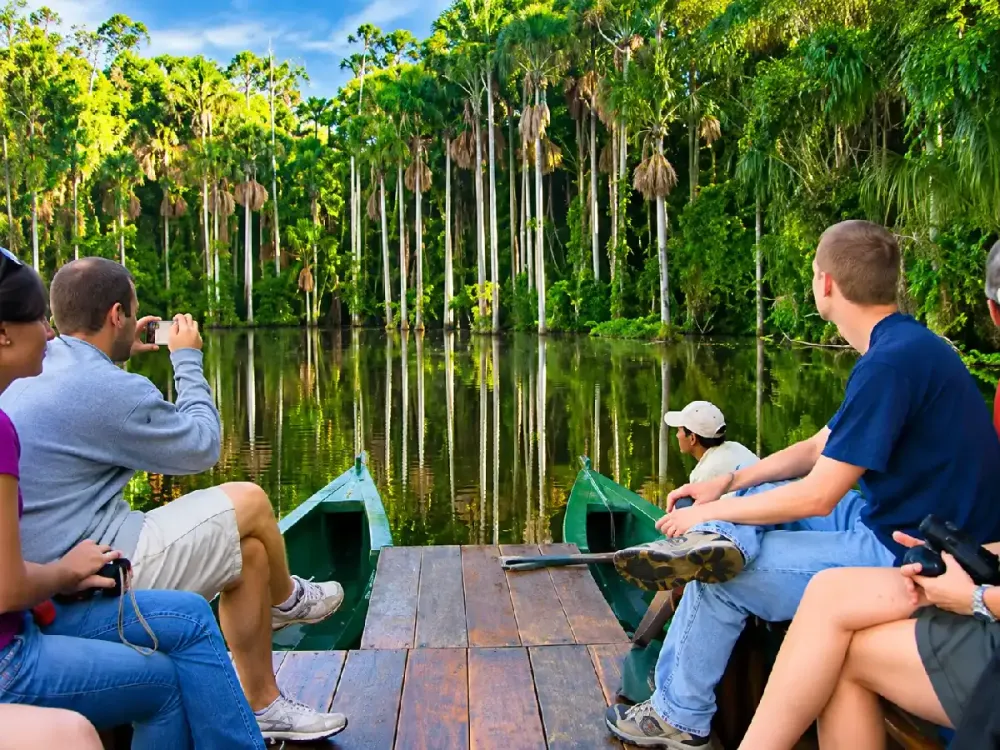
Where Is Lake Sandoval and What Makes It Special?
Lake Sandoval is located in Tambopata Province, in the Madre de Dios region, within Tambopata National Reserve. It lies in the Madre de Dios River basin, relatively close to Puerto Maldonado, one of the main gateways to the southern Peruvian Amazon. Its location makes it possible to organize short visits and multi-day expeditions without the lengthy transfers required to reach some of the reserve's more remote areas.
According to tourism information from Peru's National Service of State-Protected Natural Areas, known as SERNANP, the lake covers approximately 127 hectares. Its waters are surrounded by tropical vegetation and extensive palm swamps, locally known as aguajales, where aguaje palms and other plants adapted to wet environments are found. This combination of ecosystems creates suitable conditions for numerous aquatic and terrestrial species.
Lake Sandoval has a riverine origin associated with natural changes in the course of the Madre de Dios River. Over time, the dynamics of Amazonian rivers can isolate former river bends, creating bodies of water where distinctive ecosystems develop. These environments generally differ from large rivers because of their slower-moving waters and the vegetation growing around them.
The lake's tourism appeal goes beyond its scenery. Opportunities to observe wildlife, explore Amazonian trails, and navigate through a protected environment make it particularly interesting for travelers who want to discover Peru's biodiversity without participating in activities that involve handling wild animals.
Lake Sandoval forms part of an extensive natural region that includes other lakes, rivers, clay licks, and tropical forests. To understand how these environments relate to other Amazonian destinations, explore our selection of the best places to visit in the Peruvian Amazon, where you will find additional opportunities to expand your rainforest adventure.
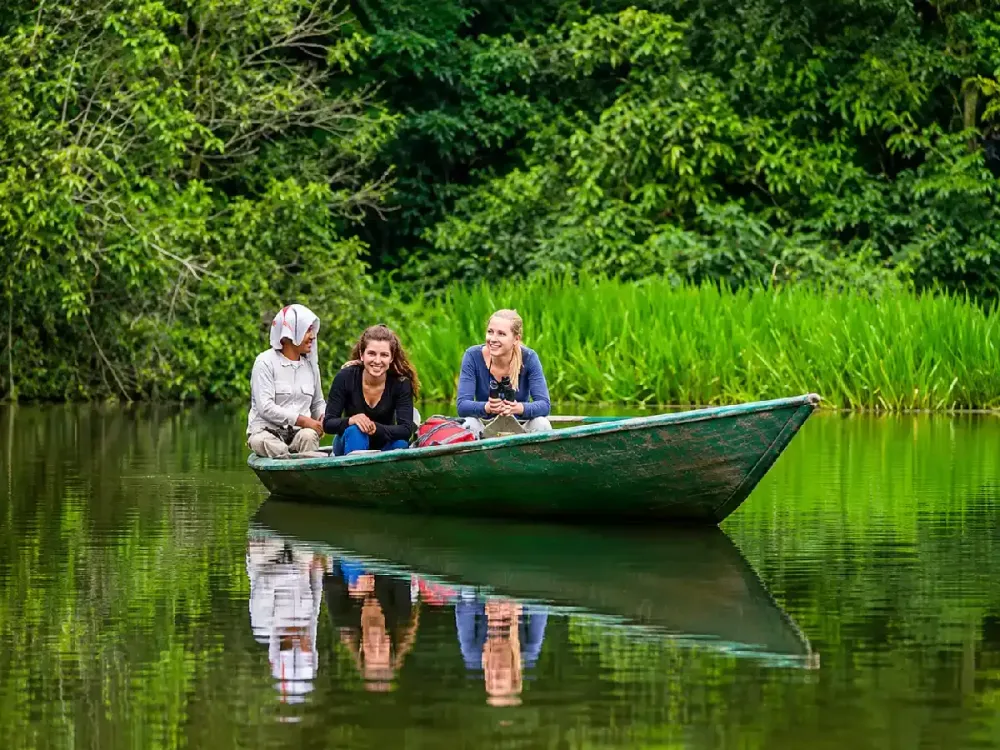
How to Get to Lake Sandoval from Puerto Maldonado
Puerto Maldonado is the main gateway to Lake Sandoval. From the city, visitors travel to a departure dock before continuing by boat along the Madre de Dios River toward the reserve's access area. Depending on the booked program, the journey may begin directly in the city or from an Amazon rainforest lodge located elsewhere along the river.
According to SERNANP, the usual access route from Puerto Maldonado involves approximately thirty minutes of river navigation, followed by a walk of around three kilometers (1.9 miles). These estimates provide a general understanding of the route, although travel times may vary depending on the departure dock, river conditions, and accommodation location.
Upon reaching the Sandoval sector, visitors must complete the entrance procedures established by the reserve's administration. The journey then continues along a trail passing through different tropical environments until reaching the lake's boat departure area. During this walk, there may also be opportunities to observe birds, insects, plants, and small animals inhabiting the forest.
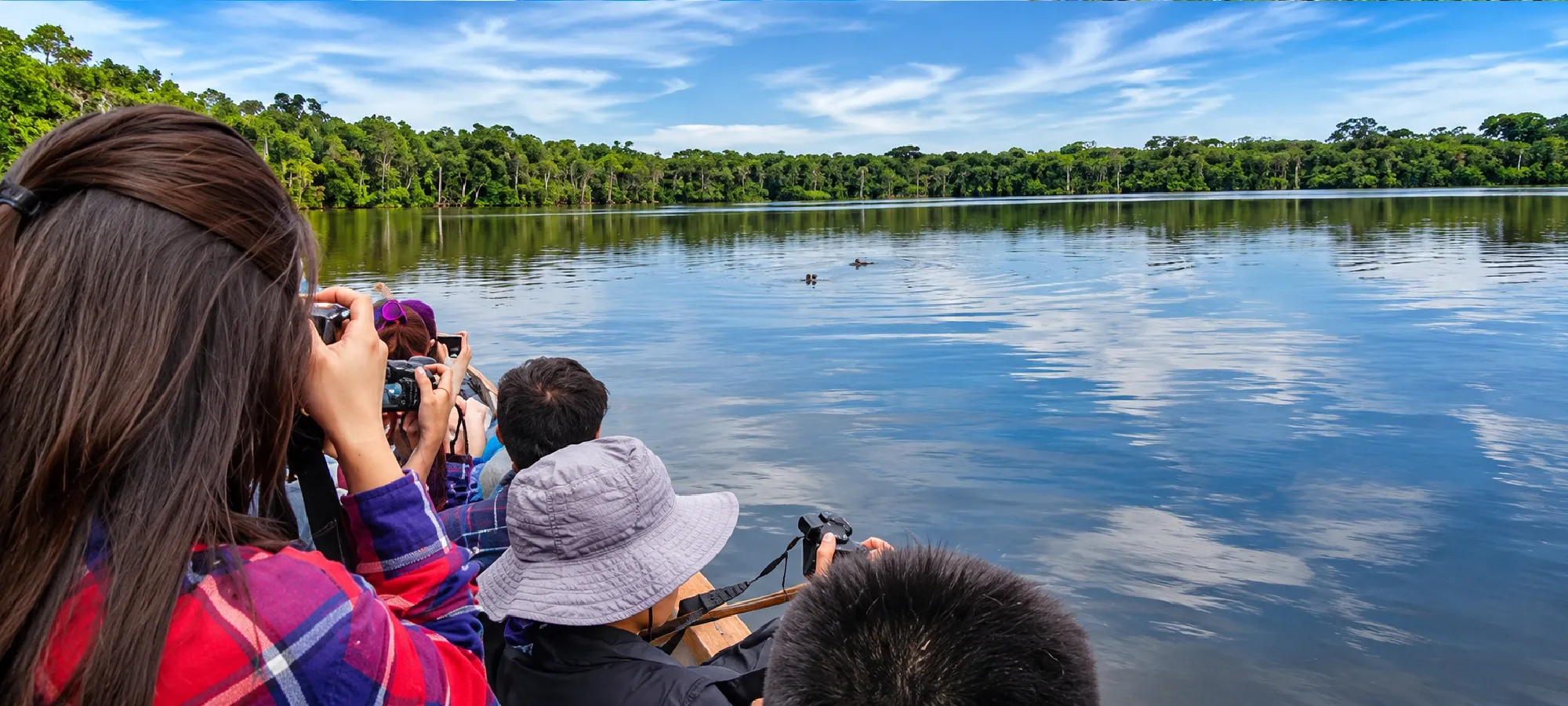
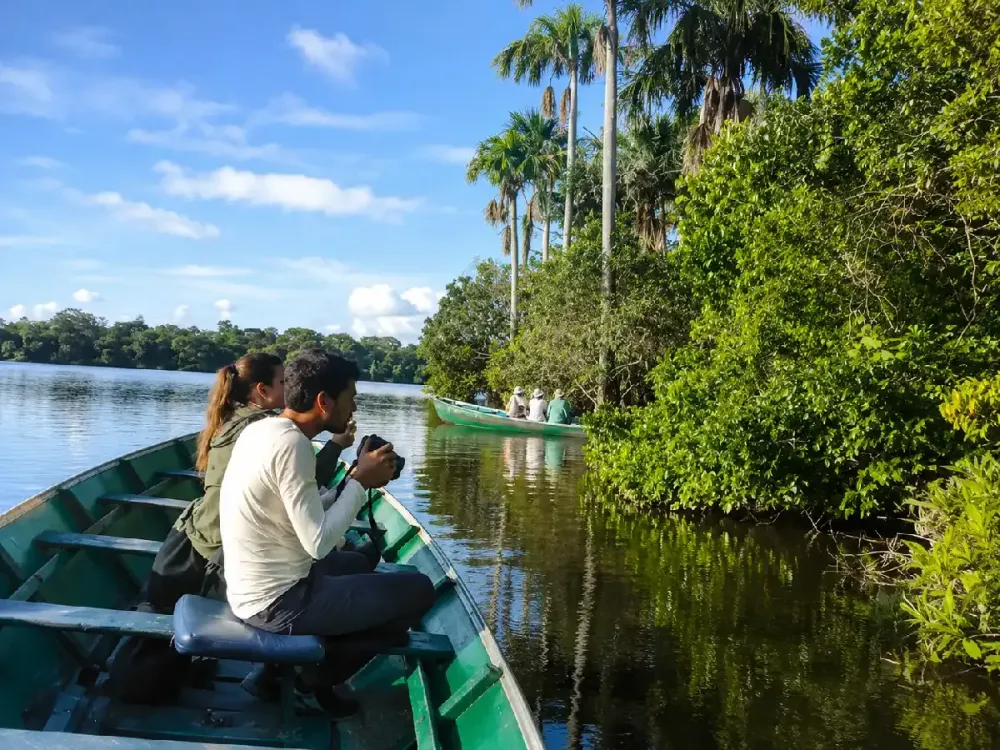
Exploration of the lake takes place using authorized boats, generally powered by paddles. This form of transportation allows visitors to explore designated areas of the lake and observe vegetation along the shore without generating the same level of noise as a motorized boat. The duration of the excursion depends on natural conditions and the selected itinerary.
| Stage of the Journey | Transportation | Approximate Time or Distance |
|---|---|---|
| Puerto Maldonado to the departure dock | Road transportation | Depends on the starting point |
| Departure dock to Sandoval sector | Boat along the Madre de Dios River | 30 minutes |
| Entrance checkpoint | Visitor registration | Depends on visitor numbers |
| Trail to the lake | Walking | Approximately 3 kilometers (1.9 miles) |
| Lake Sandoval exploration | Paddle-powered boat | According to the authorized program |
| Return journey | Walking and river navigation | Depends on conditions and accommodation |
If you are traveling from another region of Peru, you must first organize your arrival in Madre de Dios. Our guide on how to get to Puerto Maldonado from Cusco and Lima explains the main air and road connections, travel times, and recommendations for coordinating transportation with Amazon rainforest excursions.
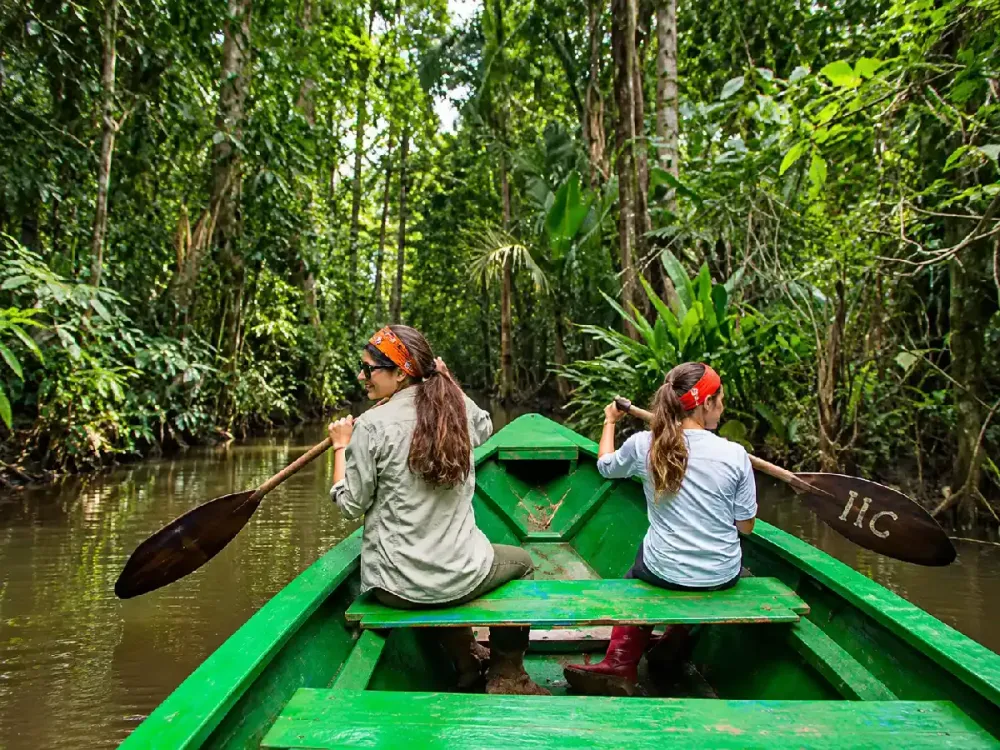
What Is the Walk to Lake Sandoval Like?
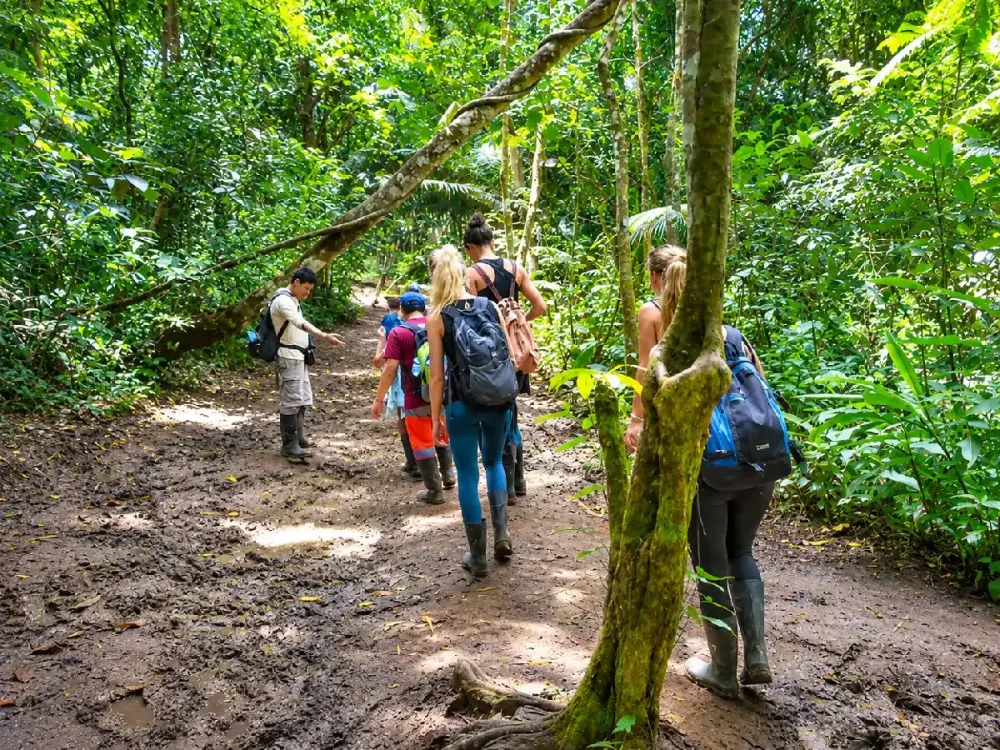
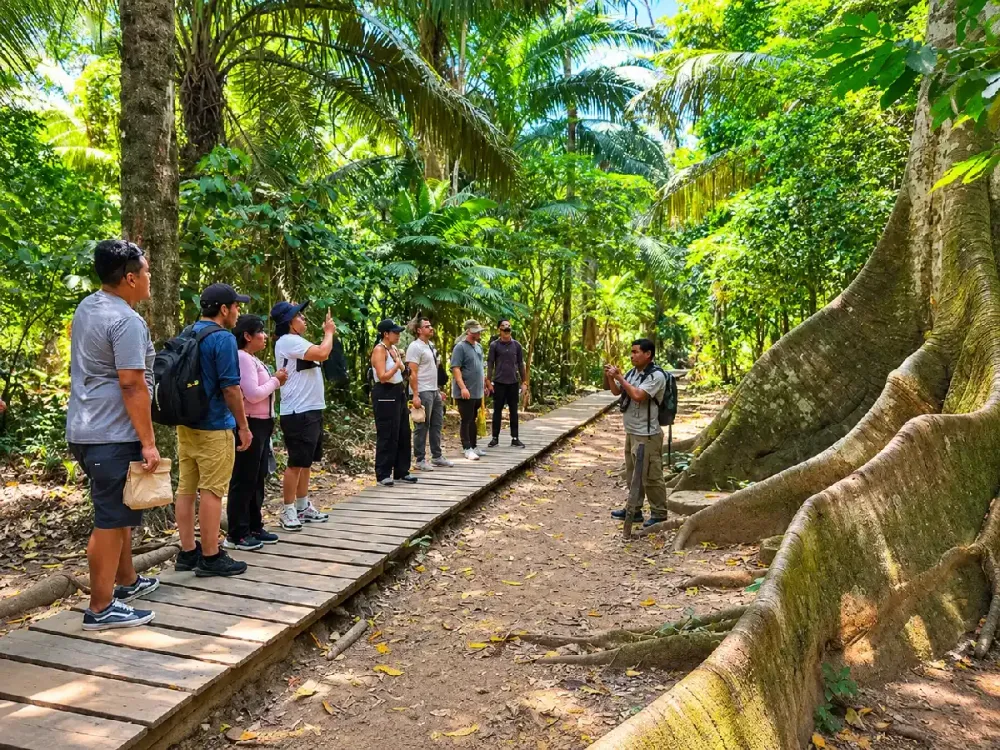
The walk to Lake Sandoval is an important part of the experience, as it allows visitors to discover the surrounding forest environments before beginning their boat excursion. Unlike mountain hikes in the Peruvian Andes, this route takes place at a low elevation, where heat, humidity, and ground conditions are the main factors influencing physical difficulty.
In 2019, Peru's Ministry of the Environment announced the opening of an elevated wooden boardwalk approximately 2,800 meters long. It was constructed to improve access to the lake and make visits easier for people with disabilities and older adults. This infrastructure represents an important improvement for inclusive tourism, although its current condition and the characteristics of the boat docks should be confirmed before organizing a visit with specific mobility requirements.
In 2026, a new project to improve public tourism services at Lake Sandoval was also formalized. Because infrastructure improvements may temporarily affect certain access routes, travelers are advised to check current trail and access conditions with their tour operator before traveling.
Along the trail, visitors may observe tropical trees, palm trees, climbing vines, plants adapted to humid environments, and different organisms that form part of the Amazon rainforest. Naturalist guides can explain how these species relate to wildlife and how the decomposition of organic matter, rainfall, and water cycles contribute to the functioning of tropical ecosystems.
Although the route does not feature the steep slopes commonly encountered on hiking trails around Cusco, it should not automatically be considered suitable for every visitor. Humidity, heat, and potentially slippery surfaces may make walking more challenging. Bringing drinking water, wearing appropriate footwear, and walking at a comfortable pace can help you enjoy the journey without rushing to reach the lake.
For travelers enjoying their first Amazon rainforest experience, the 2-day Lake Sandoval tour combines this forest walk with river navigation and nature activities through an organized itinerary departing from Puerto Maldonado.
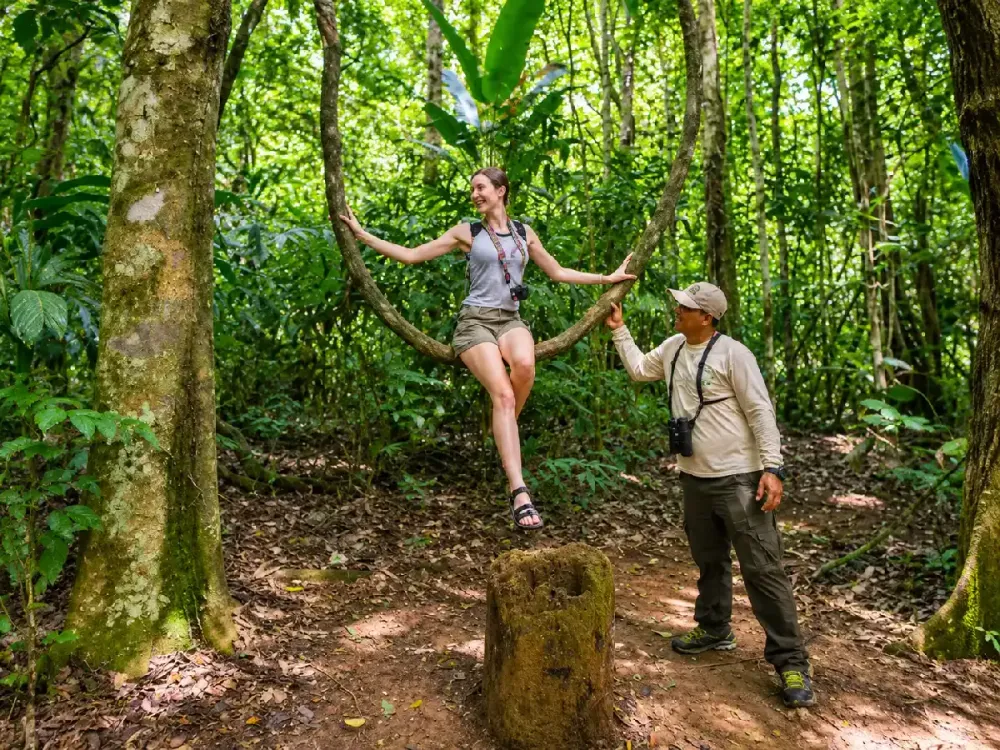
What Animals Can You See at Lake Sandoval?
Lake Sandoval and its surroundings support a remarkable diversity of species associated with aquatic environments, tropical forests, and vegetation growing along the shore. This variety provides opportunities to observe different groups of animals during a single excursion, although the presence of each species depends on natural conditions.
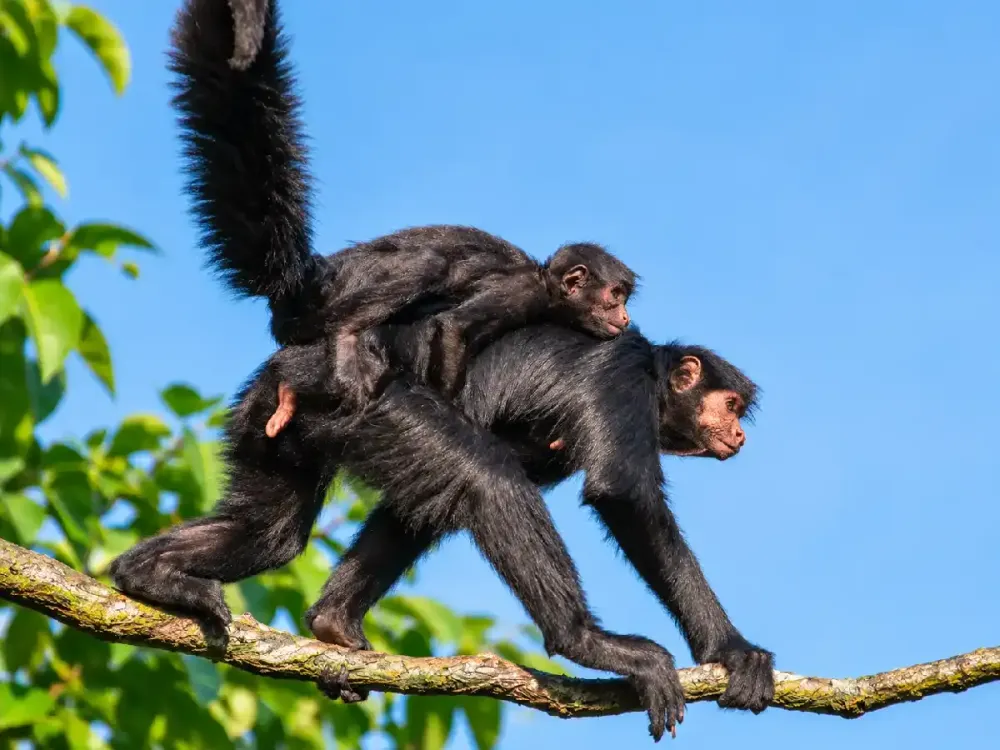
Giant river otters, known locally in Spanish as lobos de río, are among the lake's most emblematic animals. Visitors may also look for caimans and turtles that use these waterways for movement, feeding, and resting. Various species of monkeys and birds inhabit the trees and surrounding forests, and some are easier to detect by their calls than by sight.
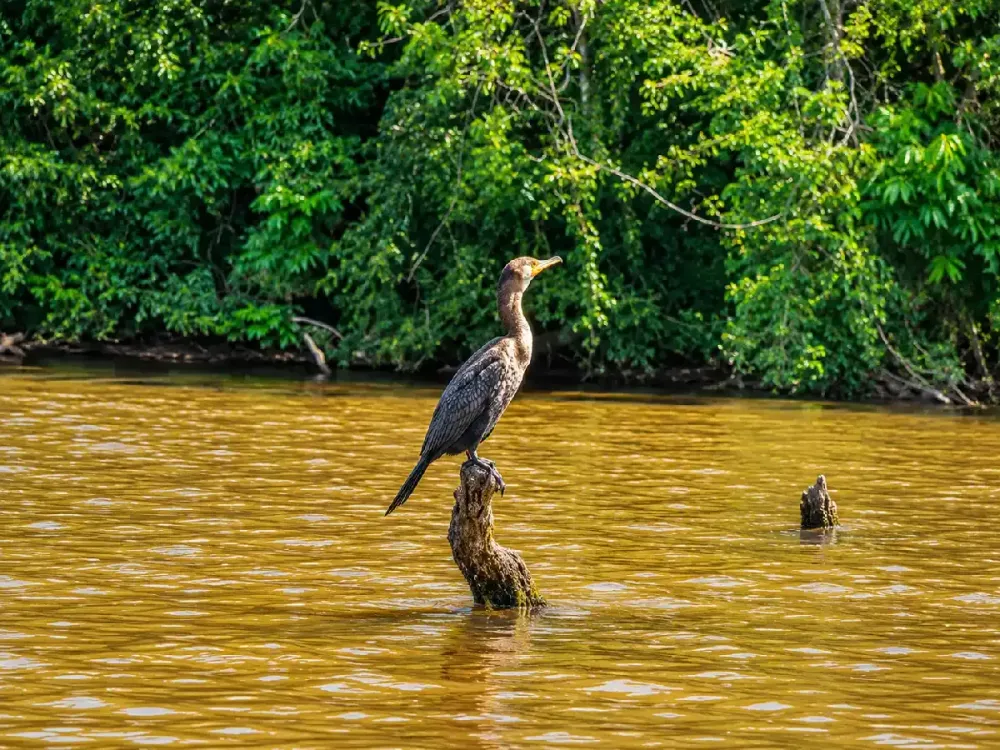
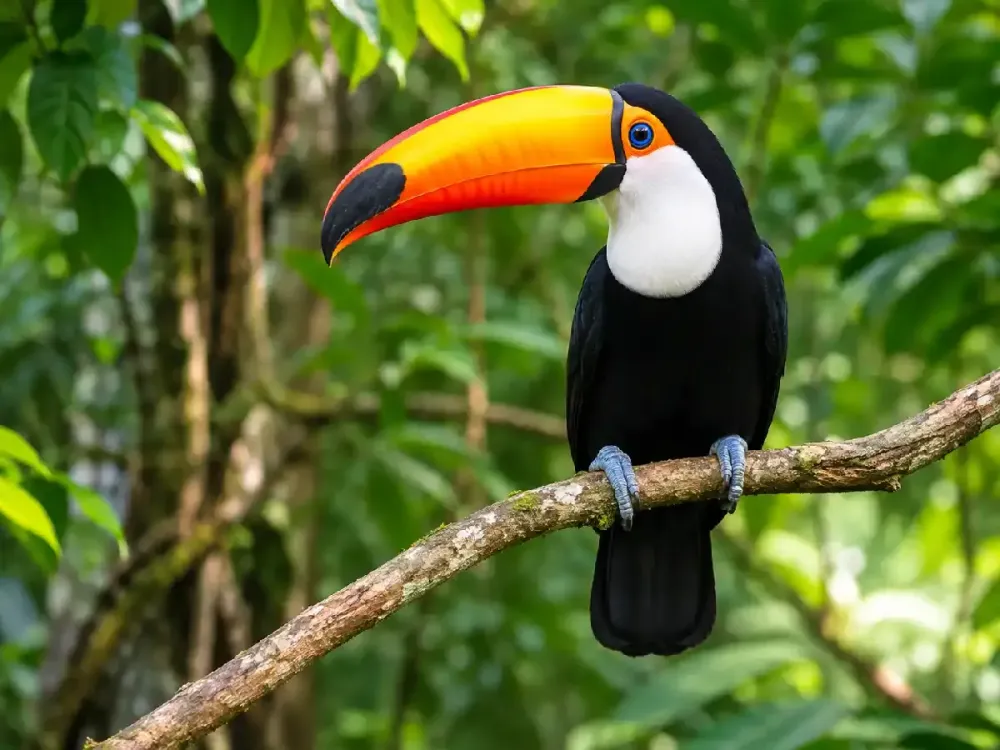
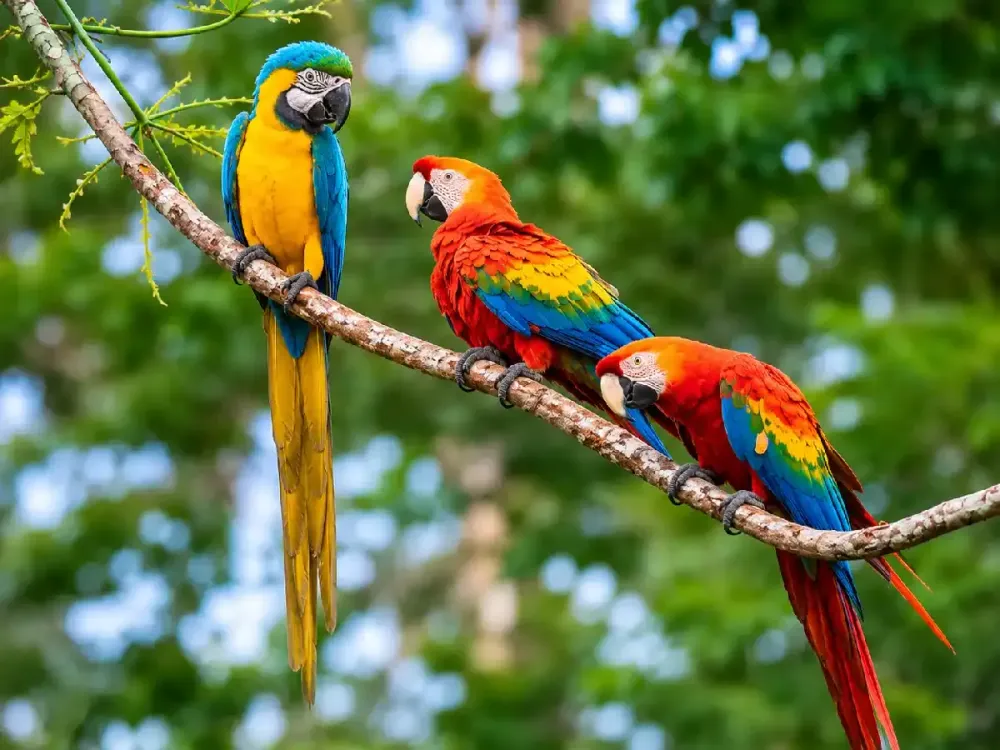
Birds are one of the most interesting wildlife groups for visitors. Species associated with the Lake Sandoval environment include macaws, toucans, wild ducks, and hoatzins, locally known as shanshos. Each uses different environmental resources, ranging from the forest canopy to vegetation growing near the water.
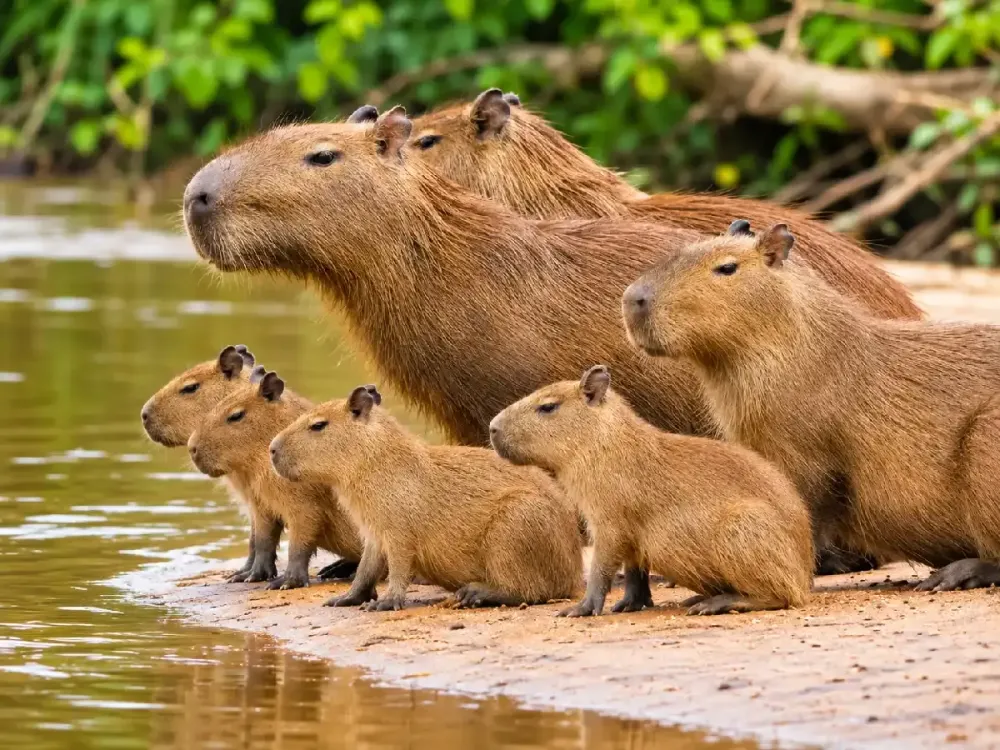
Other mammals, such as capybaras and Amazonian tapirs, are also part of the area's ecosystems. However, some are particularly elusive or inhabit areas that visitors cannot always access. Their presence in the region does not mean they can easily be observed during a conventional tourist excursion.
| Animal or Wildlife Group | Habitat Where They May Be Observed | Wildlife Watching Recommendation |
|---|---|---|
| Giant river otters | Lake and shoreline vegetation | Observe from the boat without approaching |
| Caimans | Shorelines and aquatic environments | Maintain a safe distance and follow your guide |
| Monkeys | Forest canopy and surrounding woodland | Pay attention to movements and calls |
| Freshwater turtles | Logs, shorelines, and waterways | Avoid disturbing resting animals |
| Macaws and parrots | Palm trees and forest canopy | Use binoculars |
| Hoatzins and wild ducks | Vegetation near the water | Keep noise to a minimum while boating |
| Toucans | Forest canopy and surrounding vegetation | Look for movement among the branches |
| Capybaras and tapirs | Riverbanks and forest environments | Remember that sightings may be occasional |
Wildlife observation should always be approached with realistic expectations. Wild animals do not follow tourist schedules and may change their activities because of rainfall, temperature, food availability, or human presence. A responsible excursion offers opportunities to observe wildlife but never guarantees an encounter with a particular species.
Giant River Otters of Lake Sandoval: The Amazon's Remarkable Aquatic Mammals
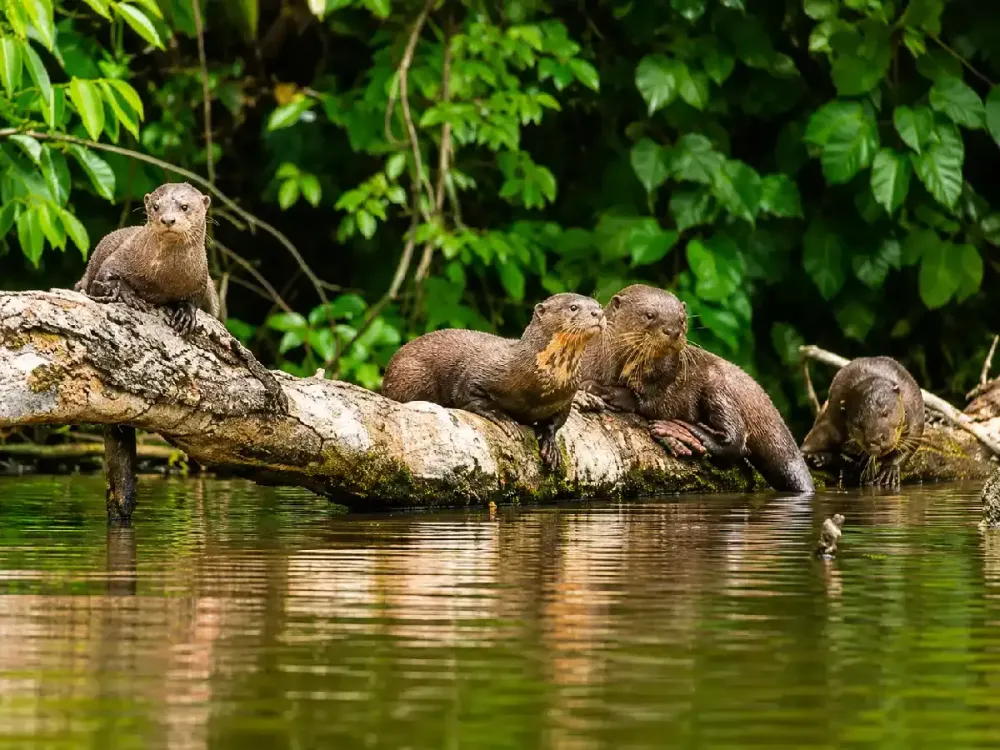
The giant river otter, scientifically known as Pteronura brasiliensis, is one of the most representative aquatic mammals of the South American Amazon. Known in Peru as the lobo de río, it can reach approximately 1.8 meters (5.9 feet) in length, including its tail, and has physical characteristics adapted to swimming and finding food in aquatic environments.
This species carries out many of its daily activities in family groups. Group members may travel together, search for fish, and communicate through different vocalizations. Observing these behaviors helps visitors understand that giant river otters have complex social structures and depend on natural environments that provide food, shelter, and suitable breeding conditions.
Lake Sandoval provides favorable conditions for this species because of its fish populations, shoreline vegetation, and relatively calm waters. SERNANP identifies a resident population of giant river otters within the lake, making this area particularly interesting for travelers who want to observe these animals in the wild.
Early mornings may offer opportunities to observe feeding activities and movement across the water. On certain occasions, individual otters may also be seen resting or grooming themselves on logs near the shore. However, the existence of a resident population does not guarantee that visitors will encounter them during every excursion.
Giant river otters face several threats, including changes to aquatic habitats, pollution, and human disturbance. The conservation of protected areas such as Tambopata helps preserve the environments where these animals carry out their natural activities. Tourism excursions must therefore maintain appropriate distances and avoid attempting to chase, feed, or attract the animals.
If you are particularly interested in observing this species, a multi-day stay may provide greater flexibility when organizing your Amazonian activities. The 3-day Lake Sandoval tour includes a visit to the lake and other nature experiences, although encounters with giant river otters will still depend on their natural behavior.
Caimans, Turtles, and Monkeys: Other Wildlife at Lake Sandoval
In addition to giant river otters, Lake Sandoval and its surrounding environments offer opportunities to discover other animals characteristic of the Peruvian Amazon. Reptiles and primates are particularly interesting because they use different parts of the ecosystem, allowing visitors to encounter them in very different settings during rainforest walks and boat excursions.
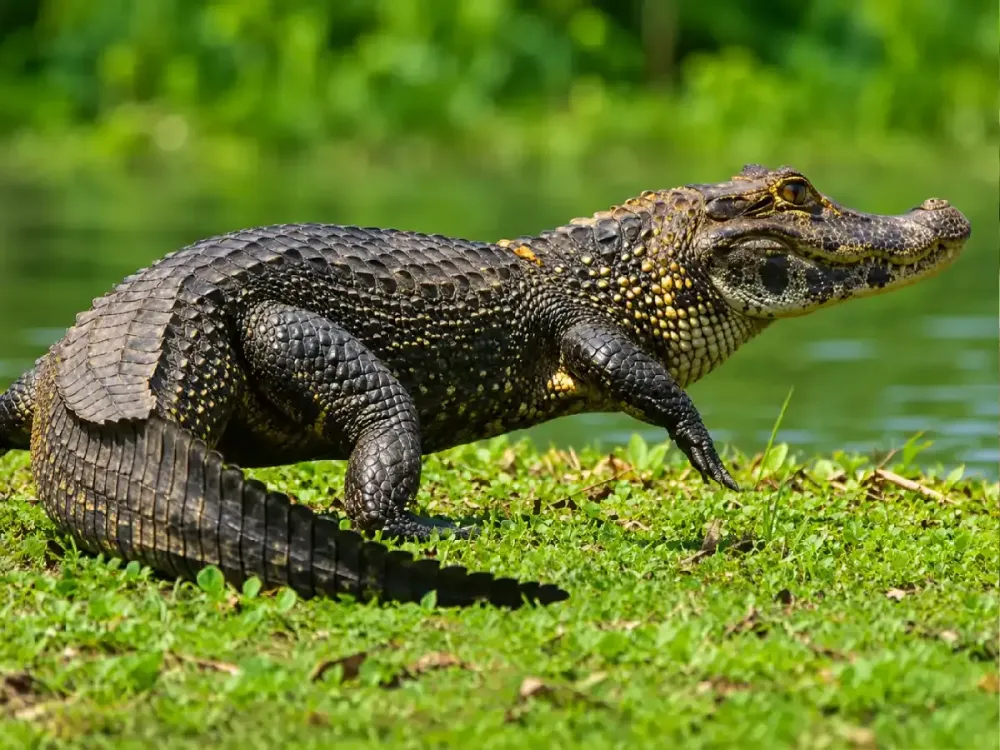
Caimans are part of the wildlife associated with the rivers and lakes of Madre de Dios. These reptiles may remain partially submerged in the water or rest close to the shore, where they find suitable conditions for regulating their body temperature. Observation should always take place from a safe distance without attempting to approach the animals.
Freshwater turtles also use different parts of the lake. During brighter periods of the day, some may rest on logs or exposed surfaces to absorb warmth from the sun. Their activities depend on water and weather conditions, meaning that not every visit provides the same wildlife watching opportunities.
Several species of primates inhabit the surrounding forests, including capuchin monkeys and other groups found in the Madre de Dios Amazon. These animals use the forest canopy to travel and search for food, although some may approach areas where vegetation grows close to the water. Movement among branches and distinctive calls can help visitors detect their presence.
Visitors may also encounter amphibians, insects, and other organisms that play important roles within tropical ecosystems. Although they generally receive less attention than large mammals, they form part of the food web and contribute to the functioning of Amazonian biodiversity.
To better understand these relationships, it is advisable to explore the rainforest with a naturalist guide. Their knowledge can help identify species and behaviors that might otherwise go unnoticed during an independent visit, while also explaining why respecting natural environmental conditions is essential.
Birds of Lake Sandoval: Macaws, Toucans, and Hoatzins
Birdwatching is one of the most interesting activities at Lake Sandoval. The combination of aquatic environments, tropical forests, and extensive palm swamps provides different habitats where birds find food and shelter. This diversity offers opportunities for wildlife observation both from boats and along rainforest trails.
Macaws stand out for their size, distinctive calls, and brightly colored feathers. Some species use palm trees and large forest trees for movement, feeding, and resting. The aguaje palm swamps surrounding the lake provide important habitats for different Amazonian birds, although their visibility varies according to natural conditions.
Toucans are another particularly appealing group for travelers interested in wildlife photography. They generally inhabit forest environments and move through the canopy in search of food. Because of their behavior, they can be difficult to detect from ground level, making binoculars and the guidance of an experienced naturalist especially useful.
One of the most unusual birds found in this environment is the hoatzin, scientifically known as Opisthocomus hoazin. Locally called the shansho, it is recognizable by its distinctive feathered crest and diet consisting primarily of plant material. Its digestive system has adaptations that allow food to ferment, an unusual characteristic among birds.
Wild ducks and other species that use vegetation growing close to the water may also be observed. During the early morning, the lake's natural soundscape can be particularly interesting, as bird calls reveal the activity of different species even when they remain hidden among the foliage.
If your main interest is watching macaws, it is important to distinguish between birds found around Lake Sandoval and those gathering at the large clay licks located in other parts of Tambopata. Our Tambopata National Reserve guide explains the characteristics of the Chuncho and Colorado clay licks, along with other natural environments suitable for specialized birdwatching experiences.
Things to Do at Lake Sandoval Beyond Wildlife Watching
Although wildlife is one of Lake Sandoval's greatest attractions, visiting the area offers other opportunities to understand and enjoy the Amazon rainforest of Madre de Dios. Boat excursions, interpretive forest walks, and appreciating the scenery allow visitors to discover different aspects of the ecosystem, even when its most emblematic animals do not appear.
Exploring the lake in a paddle-powered boat is one of the destination's most representative experiences. This activity allows travelers to appreciate shoreline vegetation, observe reflections of trees on the water, and listen to the sounds of the surrounding environment. The peaceful pace of the excursion is suitable for looking for birds, identifying plants, and observing wildlife respectfully.
Interpretive walks provide opportunities to discover trees, palms, climbing vines, and other plants adapted to tropical conditions. During these excursions, guides can explain the relationships between vegetation, wildlife, and changing water levels. They may also discuss traditional uses of certain Amazonian resources without encouraging their removal from the protected area.
The Sandoval sector also has facilities designed for environmental interpretation and landscape observation. SERNANP identifies an interpretation center near the entrance checkpoint and an observation tower offering views of the lake. Before traveling, check whether these facilities are currently available, particularly when maintenance or tourism infrastructure improvement projects are taking place.
Nature photography is another recommended activity. Changing light, reflections on the water, and the different textures of tropical vegetation provide opportunities to capture Amazonian landscapes without relying entirely on wildlife encounters. Protecting photography equipment against humidity and avoiding unnecessary flash helps ensure a more responsible photography experience.
To expand your adventure beyond the lake, you can explore other Puerto Maldonado and Tambopata rainforest tours combining forest walks, river navigation, cultural visits, and activities related to the biodiversity of Madre de Dios.
Best Time to Visit Lake Sandoval
Lake Sandoval is located in a region with a warm, humid tropical climate, where rainfall influences forest conditions, water levels, and transportation times. Although visits can be organized throughout different months of the year, understanding seasonal characteristics helps travelers prepare their luggage and choose dates compatible with their preferred activities.
May through October generally brings relatively less rainfall to Madre de Dios. This period coincides with SERNANP's general recommendation for visiting Tambopata National Reserve. During these months, some forest walks may be more comfortable because of less frequent rainfall, although humidity and occasional rain remain part of the Amazonian experience.
According to official tourism information for the reserve, the rainiest period typically occurs between December and March. Trails may become wet, and river navigation conditions can vary. These changes do not necessarily mean that excursions are suspended, but they may require adjustments related to safety and accessibility.
The best time to see wildlife at Lake Sandoval cannot be determined exclusively by a calendar. Giant river otters, caimans, and birds carry out activities influenced by several factors, including food availability, temperature, rainfall, and water levels. Visiting during the relatively drier season does not guarantee more wildlife sightings.
In addition to choosing a travel month, it is important to consider the time of day. Early mornings may provide favorable conditions for observing certain animals and generally offer more comfortable temperatures for walking. However, natural activity varies daily, making it advisable to follow your guide's recommendations.
If you are comparing travel dates across different Amazonian destinations, our guide to the best time to visit the Peruvian Amazon explains the main climatic differences between Madre de Dios and Loreto. This information can help you plan an experience suited to your interests and available time.
Lake Sandoval Entrance Fees, Visiting Hours, and Access Requirements
Lake Sandoval forms part of Tambopata National Reserve, so visits are subject to the regulations established by SERNANP. Visitors must enter through authorized routes and use tourism services with the appropriate permissions. These requirements aim to protect natural ecosystems and ensure that tourism activities are properly organized.
According to official information referenced on November 19, 2026, the general visiting hours for Tambopata National Reserve are Monday through Sunday, from 5:00 a.m. to 7:00 p.m. However, these hours apply to the protected area in general and do not mean every Lake Sandoval excursion can begin at any time within this period.
General admission to Tambopata costs S/ 30 for one day, S/ 60 for visits lasting two to three days, and S/ 150 for visits lasting four to thirty days. Peruvian adults have reduced rates of S/ 15, S/ 30, and S/ 75, respectively. Special conditions also apply to children and eligible local residents, while children under five receive free admission according to the published fee schedule. All prices are expressed in Peruvian soles.
These fees cover entrance to the protected area and do not represent the total cost of a rainforest excursion. Tourism programs may include additional services such as road transportation, river navigation, accommodation, meals, guides, and boats for exploring the lake. Before booking, check whether entrance fees are included in the advertised price.
Before traveling, consult the official Tambopata National Reserve visitor information published by SERNANP to confirm entrance fees, visiting hours, available routes, and access requirements. You can also ask your tour operator about visitor registration procedures and potential changes to access arrangements.
Organizing these details in advance helps avoid unexpected expenses and makes better use of your available time. This is particularly important when your trip includes flights or road connections that must be coordinated with the schedules of your Amazon rainforest activities.
Lake Sandoval Tours for 1, 2, and 3 Days: Which Should You Choose?
The time needed to visit Lake Sandoval depends on whether you want to explore only the lake or participate in a broader experience across the natural environments of Madre de Dios. SERNANP indicates that the route can be completed as a half-day or full-day visit, while multi-day tourism programs incorporate additional activities and overnight rainforest accommodation.
A full-day excursion may be suitable for travelers who are already staying in Puerto Maldonado and have limited time. In this case, the main objective is generally to combine river navigation, the forest walk, and lake exploration within a single day. The availability of this type of service should be confirmed with an authorized tour operator.
Dreamy Tours' 2-day, 1-night Lake Sandoval tour begins with passenger reception in Puerto Maldonado and navigation toward the Amazon rainforest lodge. The first day includes an excursion to Cocha Caimán, while the second day focuses on the forest walk and boat excursion at Lake Sandoval before returning to the city.
The 3-day, 2-night Lake Sandoval tour provides a more extensive rainforest experience. Its itinerary includes activities related to traditional latex extraction, nighttime river navigation to look for caimans, and a visit to Lake Sandoval on the second day. The program also includes an observation tower, an experience related to Amazonian Brazil nuts, and a visit to a parrot clay lick during the final day.
| Duration | Main Experience | Best For |
|---|---|---|
| Half-day or full-day | Forest walk and boat excursion at Lake Sandoval | Travelers with limited time who are staying in the city |
| 2 days / 1 night | Lake Sandoval, Cocha Caimán, and rainforest accommodation | First-time visitors to the Amazon |
| 3 days / 2 nights | Lake Sandoval, forest walks, wildlife watching, and additional activities | Travelers wanting to explore different natural environments |
| 4 days / 3 nights | Lake Sandoval combined with cultural experiences, depending on the program | Longer stays in Madre de Dios |
For travelers interested in experiences connected to Amazonian traditions, the 4-day Native Communities Program offers an alternative combining nature and cultural activities. The 4-day Tambopata Amazon Expedition is another option focused on tropical environments, rainforest exploration, and wildlife observation.
Your choice should consider the total length of your trip, accommodation location, and arrival and return schedules in Puerto Maldonado. A longer program allows you to include additional activities, but it does not necessarily mean spending more days exploring Lake Sandoval or guarantee a greater number of wildlife sightings.
Tips for Visiting Lake Sandoval Responsibly
Before organizing your visit to Lake Sandoval, decide what type of experience you want and how much time you have available in Madre de Dios. If your main interest is discovering the lake and looking for giant river otters, an excursion focused on this attraction may be sufficient. However, if you also want to participate in nighttime forest walks, discover other aquatic environments, or learn about Amazonian traditions, consider choosing a multi-day program. Review the complete itineraries, included services, and transportation schedules before confirming your reservation.
Prepare your luggage according to the tropical conditions of the region. Lightweight quick-drying clothing, long-sleeved shirts, comfortable trousers, insect repellent, sunscreen, a rain jacket, and footwear suitable for wet terrain are recommended. Binoculars can be particularly useful for observing animals from a respectful distance. Protect documents and electronic devices using waterproof bags, and consult a healthcare professional about suitable preventive health measures for traveling to the Peruvian Amazon.
During your visit, respect SERNANP regulations and follow your guide's instructions. Avoid feeding, chasing, or handling wildlife, remain on authorized trails, and maintain an appropriate distance from any animals you encounter. While exploring the lake by boat, keep noise to a minimum and use the appropriate safety equipment. These practices help preserve the tranquility of the environment and allow animals to continue their natural activities without unnecessary disturbance.
Organize your transportation connections with the understanding that reaching the lake involves river navigation and walking. If you are traveling with children, older adults, or people with reduced mobility, check the current conditions of the elevated boardwalk, boat docks, and vessels beforehand. It is also important to allow sufficient time between returning from your excursion and catching your departure flight, particularly during rainy periods or when temporary changes affect access conditions.
At Dreamy Tours, we believe that visiting Lake Sandoval is an opportunity to discover Amazonian biodiversity and understand the importance of protecting Tambopata's natural environments. Whether you want to observe giant river otters, explore waterways surrounded by palm forests, or discover other wildlife species, you can compare our Puerto Maldonado rainforest tours and choose an experience that matches your interests. A well-organized visit allows you to discover the Amazon rainforest of Madre de Dios while respecting its ecosystems and the communities that contribute to their conservation.
Personal travel advice
Plan your trip with Dreamy Tours
Start a tailored journey with our exclusive tours and custom trips across Peru and other Latin American countries.