Search the blog
Tabla de contenidos
The weather on the Inca Trail can change significantly during the same day. You may start the morning in cold conditions, spend several hours hiking under strong sun, encounter wind and cloud cover at higher elevations, and finish the day in a much more humid environment. This variety is not unusual. It is a natural result of hiking through a route that crosses different altitudes and ecosystems.
On the Classic Inca Trail 4 Days, the route begins in a valley environment, climbs progressively above 4,000 meters at Dead Woman’s Pass, and then descends toward greener and more humid areas before reaching Wiñay Wayna, Inti Punku and Machu Picchu. For that reason, the weather on the first day can feel very different from the conditions you experience near the end of the trek.
Rather than searching for a forecast that promises “perfect weather,” it is more useful to understand how conditions change throughout the route and prepare your clothing and equipment for several possibilities. If you are still deciding which month to travel, read our guide to the best time to hike the Inca Trail.
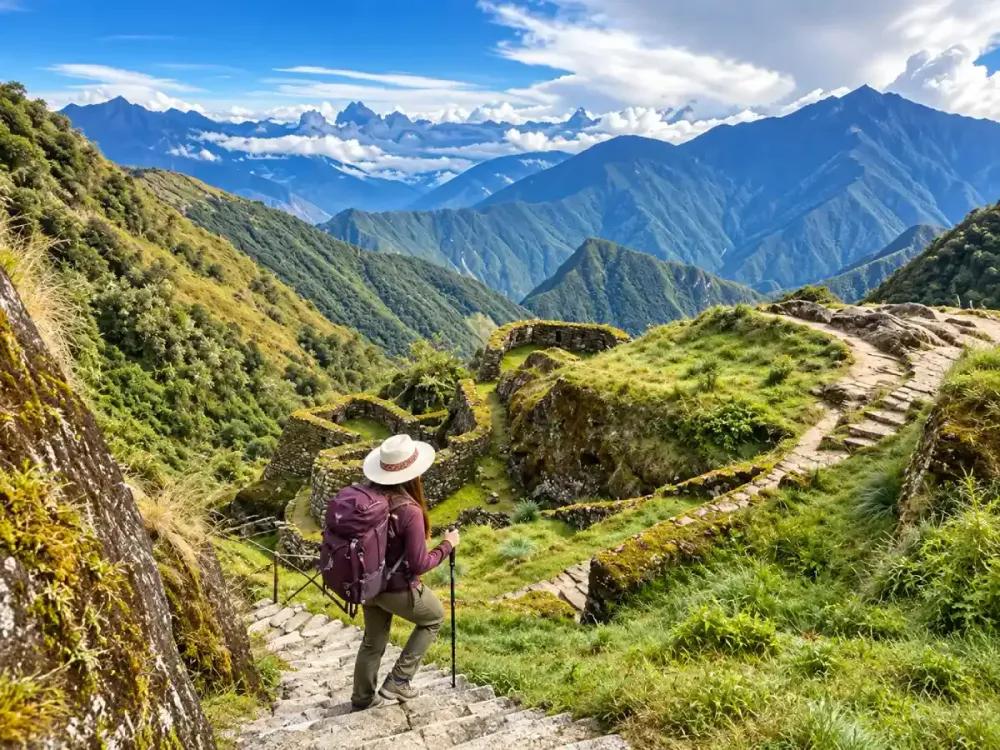
What is the weather like on the Inca Trail?
Weather conditions depend mainly on the season, elevation and the section of the route you are hiking.
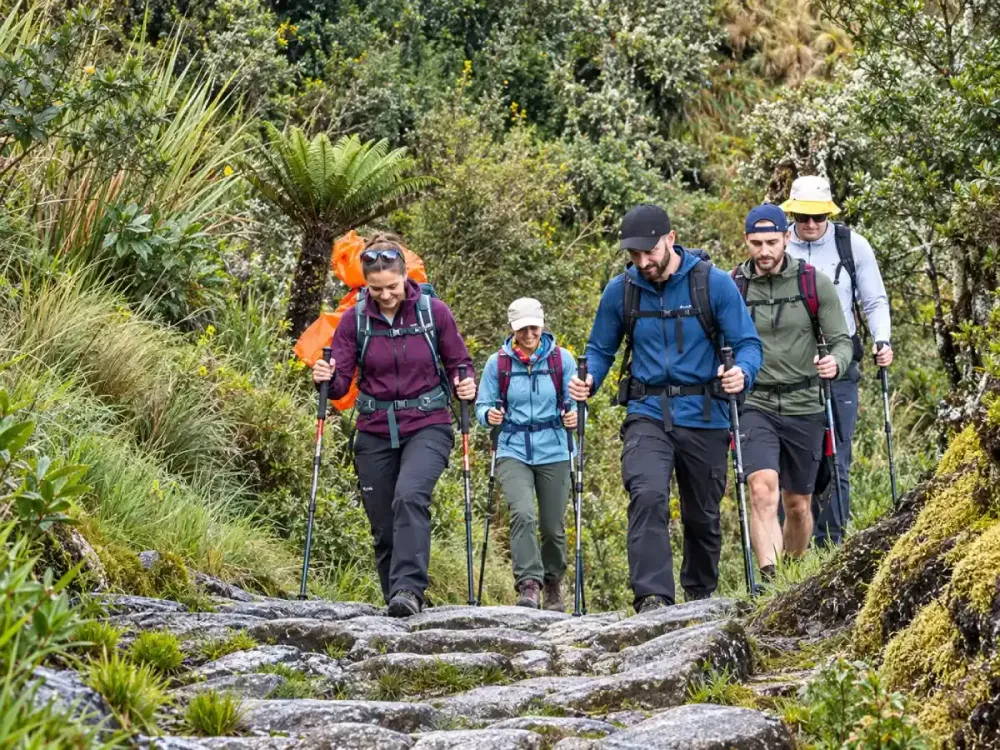
Lower areas can feel relatively warm during the day, especially when the sun is out. As you climb higher, mornings and evenings become colder and wind can make conditions feel even cooler.
After crossing the highest mountain passes, the trail gradually descends toward greener and more humid environments.
This means you may use sunscreen in the morning and need a waterproof jacket later the same day.
The most practical approach is to dress in layers and prepare for both sunshine and sudden weather changes.
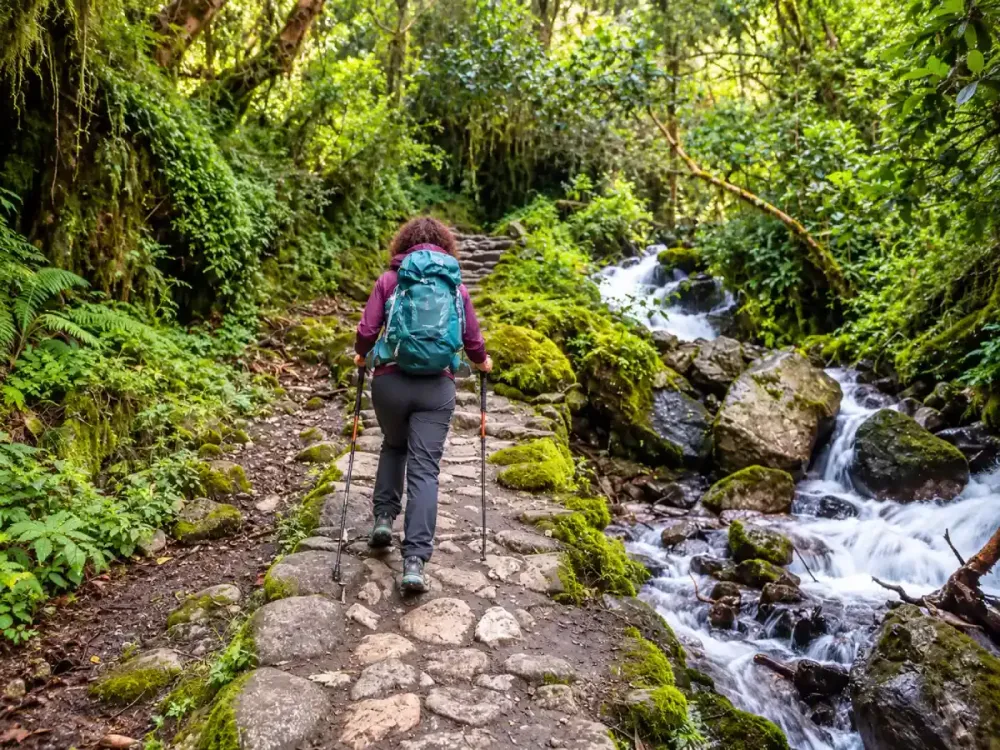
When is the dry season on the Inca Trail?
The driest period in the Cusco Andes is generally concentrated between May and September. During these months, rainfall is usually less frequent and there is a greater chance of clearer mountain views, which can make both hiking conditions and visibility more favorable.
However, the term “dry season” does not mean that rain completely disappears. The Inca Trail crosses mountain and cloud forest environments, so conditions can still change even during these months. A clear morning can turn into cloud cover or light rain later in the day.
Another important characteristic of this period is the cold. Early mornings and nights can feel significantly colder, especially at higher campsites. Even if you travel in July or August, you should combine sun protection, waterproof clothing and warm layers.
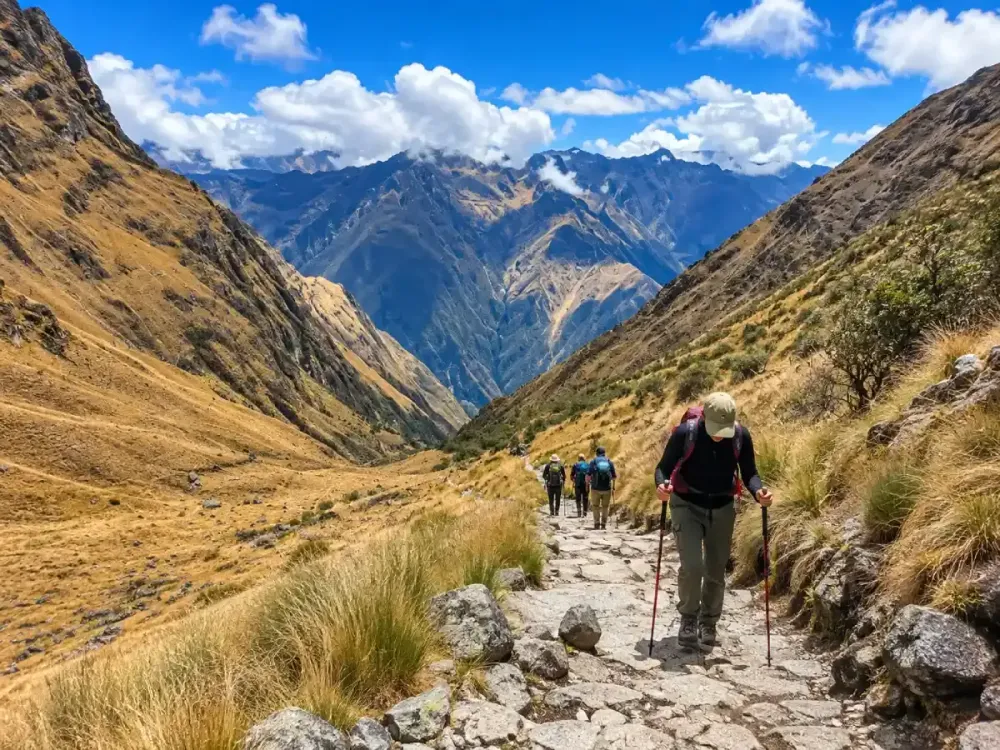
What is the rainy season like on the Inca Trail?
Rain becomes more frequent mainly between November and March.
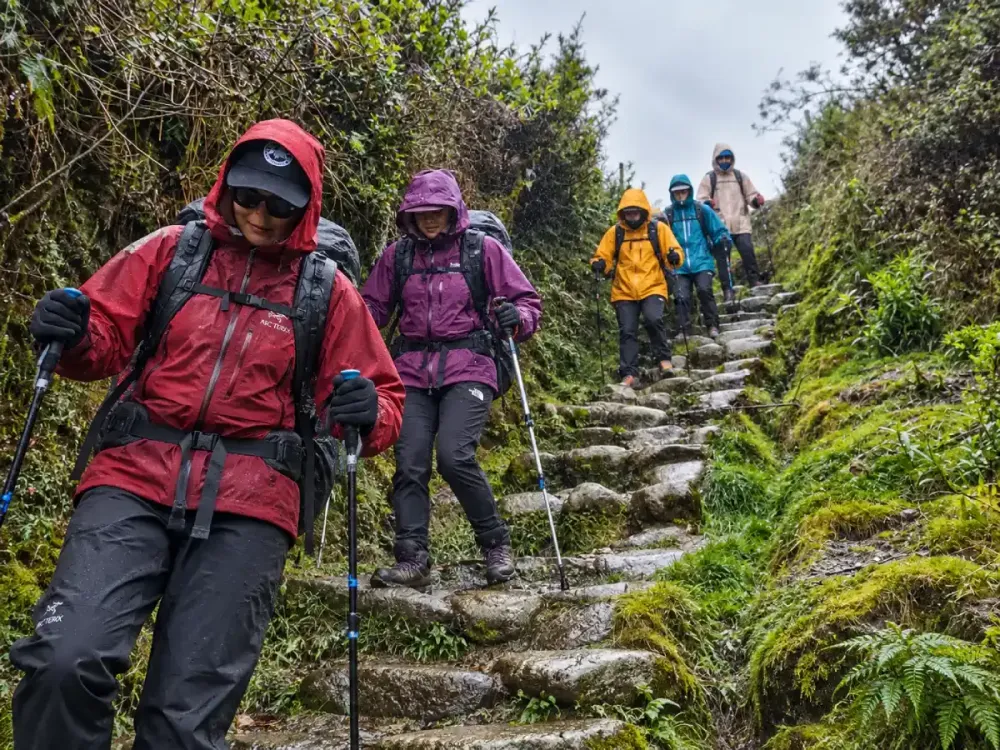
During this period, hikers are more likely to encounter wet trails, clouds, mist and periods of rainfall.
That does not mean it rains continuously all day.
You may begin with clear skies, experience rain later and then see conditions improve again.
The landscape also becomes noticeably greener during the wetter months, especially as the trail approaches the cloud forest.
If you are hiking the Inca Trail during the rainy season, a waterproof jacket, backpack cover and quick-drying clothing become especially useful.
You can find a complete equipment guide in what to pack for the Inca Trail.
What temperatures can you expect on the Inca Trail?
There is no single temperature that accurately represents the entire Inca Trail. The route crosses several elevations, and the way the temperature feels also changes depending on time of day, wind, humidity and direct sun exposure.
During the day, lower and sunnier sections can feel quite warm. Your body also generates heat during long climbs, so it is normal to remove layers while hiking. At higher elevations, mornings and nights can become very cold, particularly around mountain campsites, where temperatures can approach 0°C under colder conditions.
After crossing the main high passes, the descent toward Wiñay Wayna and Machu Picchu gradually brings you into a milder and more humid environment. This is why understanding Inca Trail altitude also helps explain the weather changes throughout the trek.
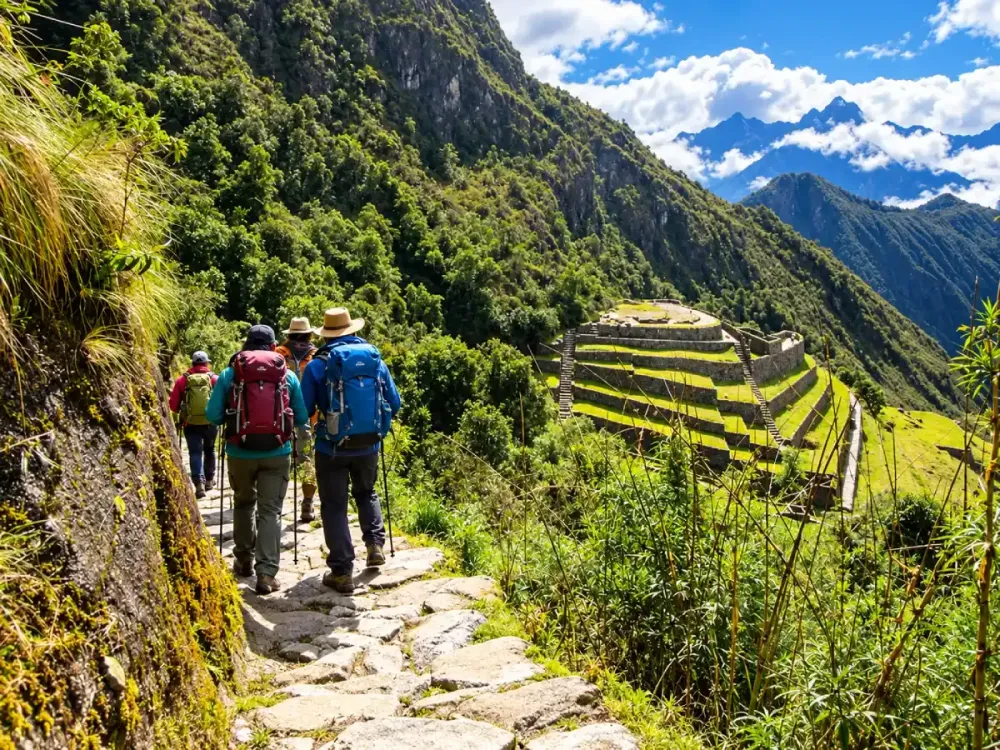
How does the weather change during the 4-day Inca Trail?
A common mistake is to imagine that all four days will feel similar. In reality, the Classic Inca Trail 4 Days crosses different elevation zones and landscapes, so each day has its own general conditions.
The first day takes place mostly through the valley and lower sections where altitude begins to increase gradually. The second day reaches the highest point of the route. The third combines mountain terrain with a progressive descent toward more humid environments, while the fourth takes place in the greener surroundings of Wiñay Wayna, Inti Punku and Machu Picchu.
| Day | General area | Conditions you may encounter |
|---|---|---|
| Day 1 | Km 82 toward Wayllabamba | Relatively mild conditions, sun and gradual temperature changes |
| Day 2 | Dead Woman’s Pass and Pacaymayo | Cold, wind and high-mountain conditions |
| Day 3 | Runkurakay, Sayacmarca and descent | Temperature changes and increasing humidity |
| Day 4 | Wiñay Wayna, Inti Punku and Machu Picchu | More humidity, vegetation, cloud cover and possible mist |
Understanding this progression makes it easier to organize your clothing each day rather than wearing exactly the same layers throughout the trek.
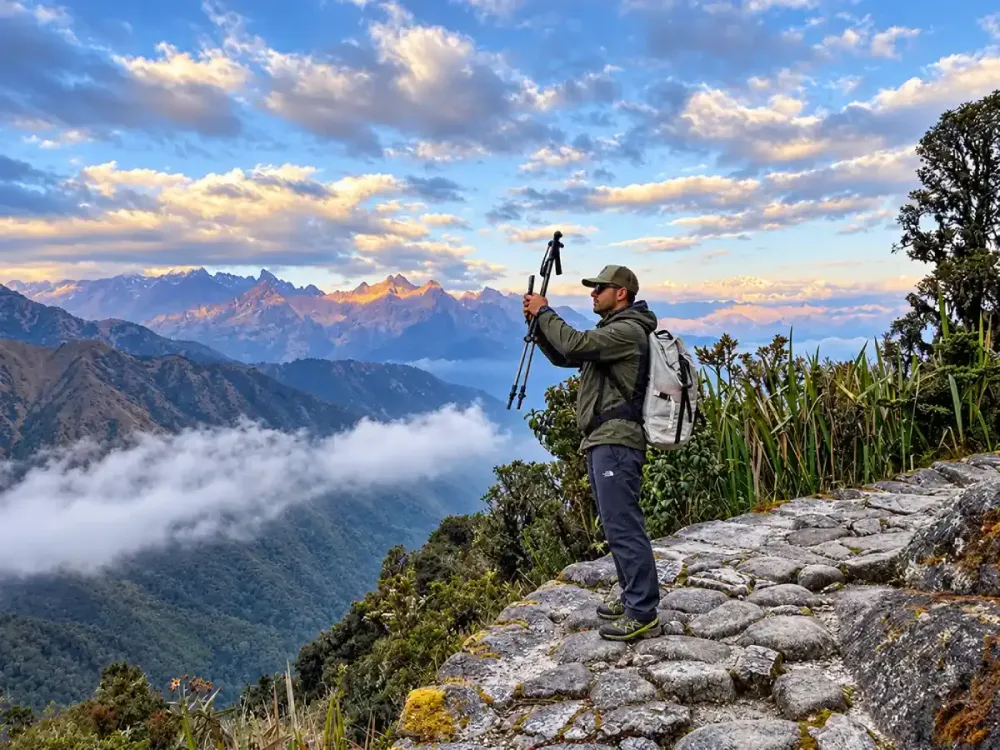
What is the weather like at Dead Woman’s Pass and higher sections?
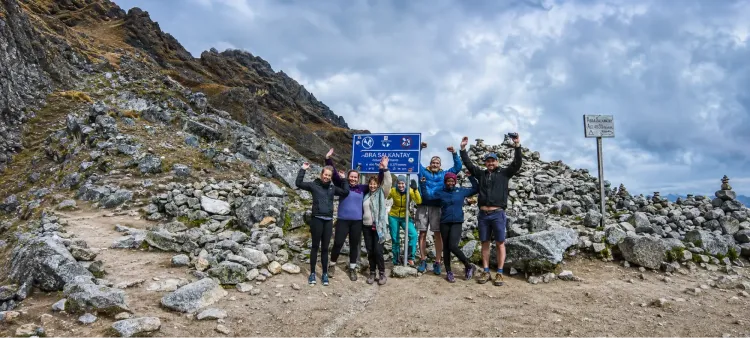
The second day of the Classic route clearly shows how altitude affects the weather. As you climb toward Dead Woman’s Pass, the highest point of the Inca Trail, the temperature can decrease progressively and the wind may become more noticeable.
Physical effort also changes how the cold feels. During the ascent, your body produces a lot of heat, but once you stop at the pass or take a longer break, you can cool down quickly. This is why it is useful to keep a warm layer easily accessible rather than buried at the bottom of your backpack.
This day combines weather with physical effort, so its difficulty should not be judged only by temperature. Long uphill sections, elevation gain and altitude all play an important role. You can explore this in more detail in our guide to Inca Trail difficulty
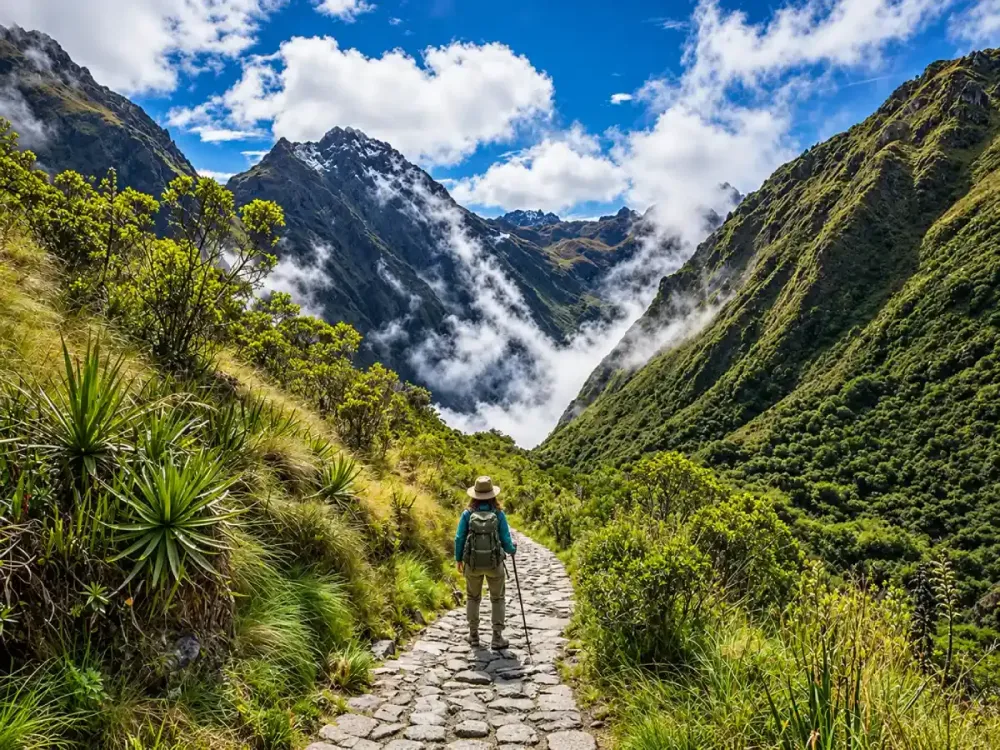
How does the weather change near Wiñay Wayna and Machu Picchu?
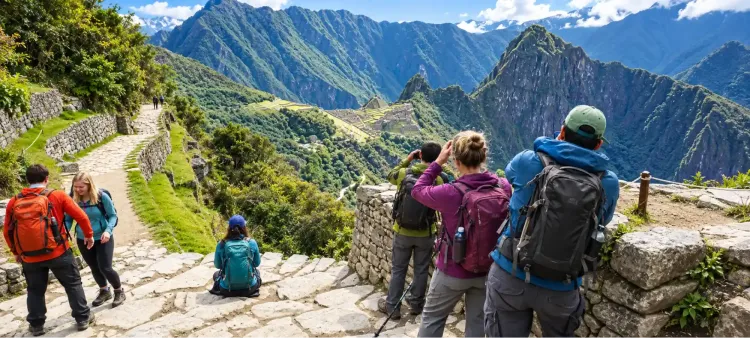
After the highest sections of the trail, the environment begins to change. As you descend, vegetation becomes denser and humidity increases, especially near Wiñay Wayna and Machu Picchu.
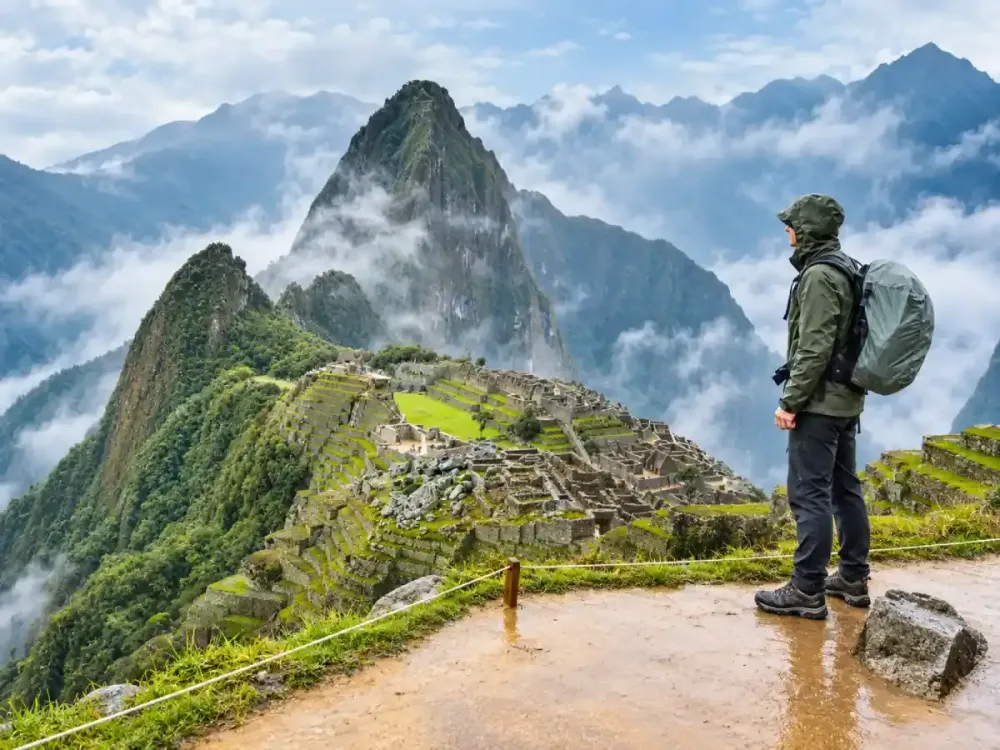
Clouds and mist can appear quickly in this area. This is why some travelers reach Inti Punku and see Machu Picchu completely clear, while others find the site partly hidden by clouds. Both situations can happen even during the same season.
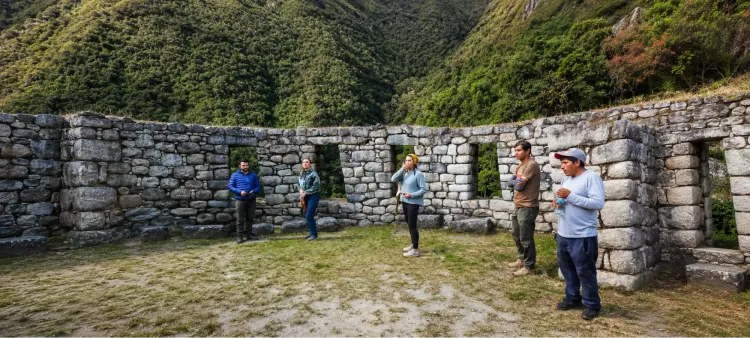
Wiñay Wayna is one of the places where this transition becomes especially noticeable. After crossing major mountain passes, travelers arrive at terraces surrounded by much richer vegetation. Later, Inti Punku marks the final approach toward Machu Picchu within this wetter mountain environment.
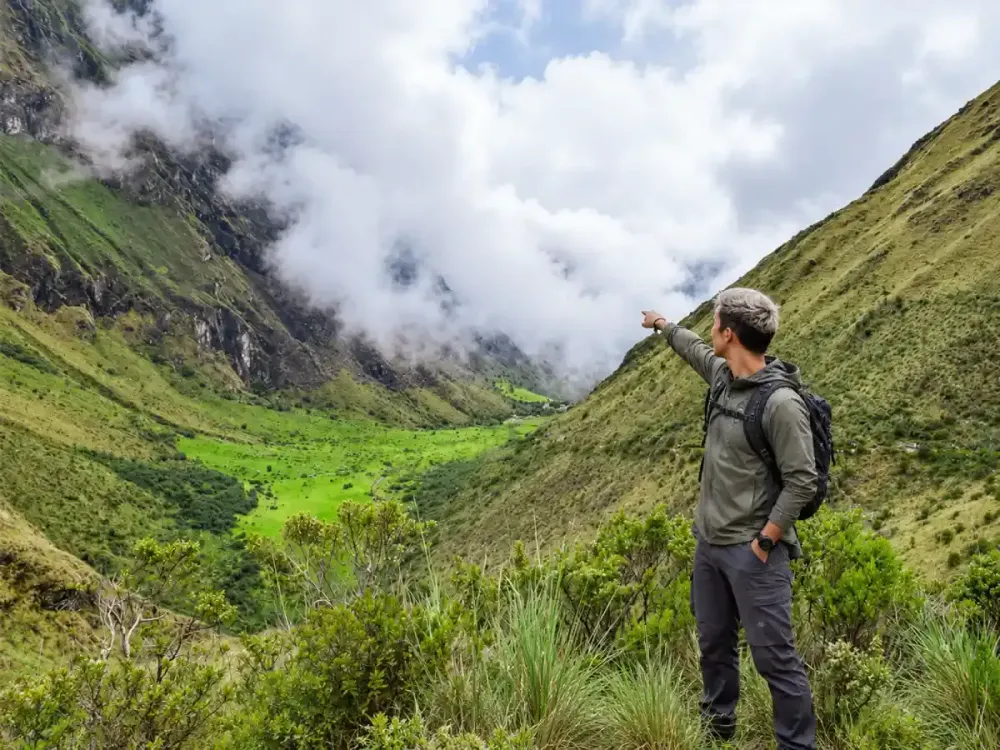
Is it better to hike in sun or under clouds?
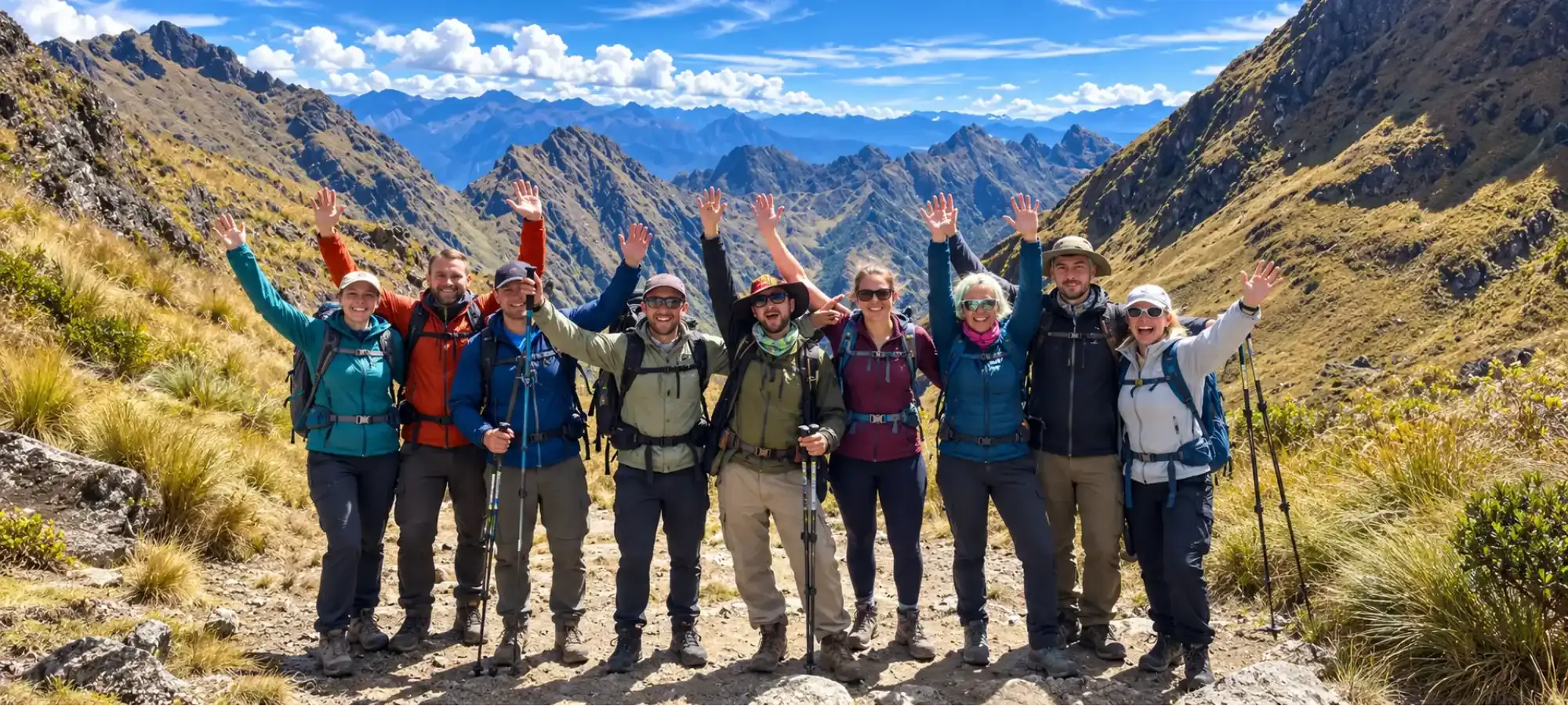
A completely clear day offers wide mountain views and is especially attractive for photography. However, hiking for several hours under strong sun can also increase fatigue, particularly during uphill sections and in areas with little shade.
Partly cloudy conditions can make some hiking days more comfortable because direct sun exposure is reduced. That does not mean you can forget sun protection. UV exposure remains important at altitude even when clouds are present.
For that reason, we recommend sunscreen, a hat or cap and sunglasses regardless of whether the sky is completely clear. Cloud cover can change quickly and should not determine your preparation by itself.
What clothes should you wear for Inca Trail weather?
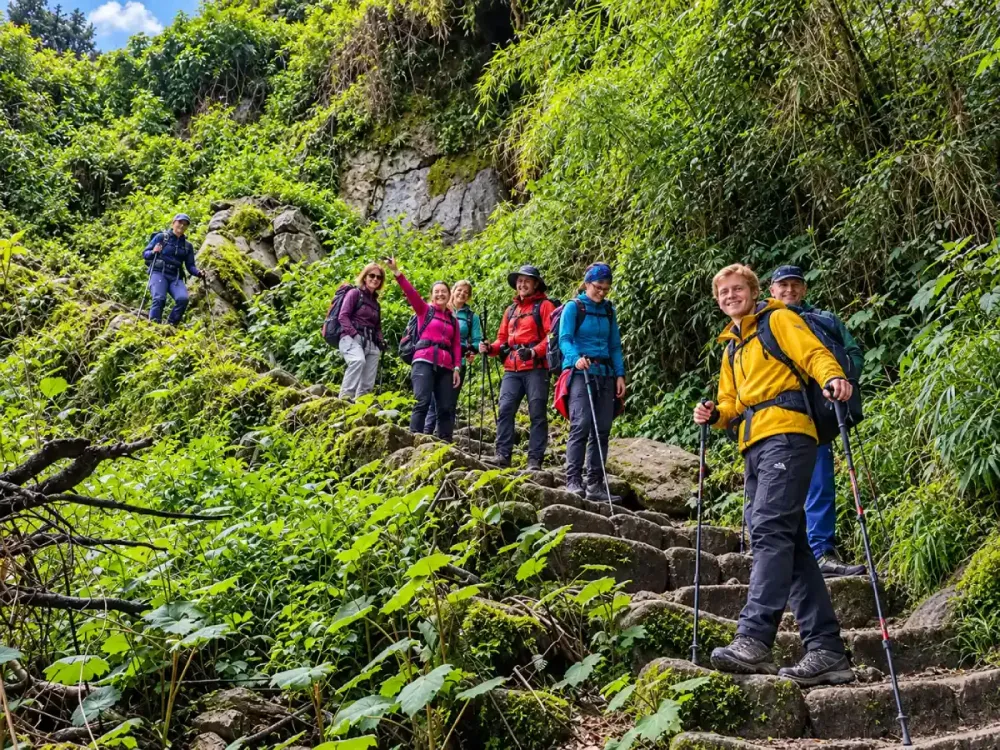
The most practical strategy is to dress in layers. Instead of relying on one very heavy garment throughout the day, combine different pieces that you can add or remove as the temperature and your activity level change.
A comfortable base layer that dries reasonably quickly works well during hiking hours. Over it, you can add a warm layer when temperatures drop and use a waterproof outer layer when rain or wind appears.
A useful base packing list includes:
- Comfortable trekking shirts.
- Thermal or light insulating layer.
- Waterproof jacket.
- Hiking pants.
- Hat or cap.
- Sun protection.
- Hiking shoes with good grip.
- Dry clothing for camp.
- Waterproof backpack protection.
You do not need to carry your entire wardrobe on your back. The goal is to create versatile combinations while keeping weight under control. Our guide to what to pack for the Inca Trail explains the packing list in more detail.
Does the weather make the Inca Trail more difficult?
Yes, but weather is an additional factor rather than the only source of difficulty. The main physical challenge comes from several hours of hiking, uphill and downhill sections, stone stairways, altitude and accumulated fatigue. Weather can make these elements feel easier or harder.
In rain, you need to walk more carefully on wet stone and protect your equipment. On very sunny days, heat and exposure can increase fatigue during long climbs. At higher elevations, cold and wind can become uncomfortable during breaks.
This is why two travelers can complete exactly the same itinerary and describe the difficulty differently depending on the conditions they encountered. If physical effort is your main concern, read how difficult the Inca Trail is.
Does the Short Inca Trail have the same weather as the 4-day route?
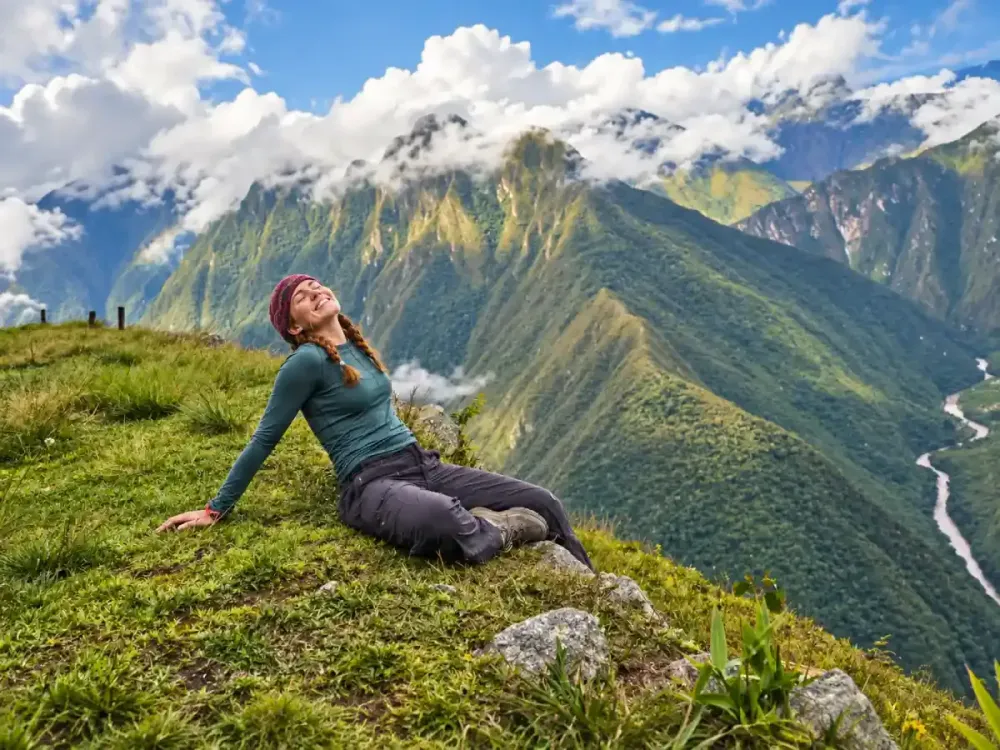
Not exactly. The Short Inca Trail 2 Days shares the final section toward Wiñay Wayna, Inti Punku and Machu Picchu, but it does not cross the highest mountain passes of the Classic route.
Because it begins at Km 104 and takes place mainly at lower elevations, travelers avoid the high-mountain conditions found around Dead Woman’s Pass. However, this does not mean the Short Inca Trail is always warm or dry. It still crosses a mountainous and humid environment where strong sun, rain, clouds and mist can all appear during the same day.
The biggest difference is exposure. On the Classic Inca Trail, you spend several days dealing with changes in altitude and weather while also sleeping at campsites. On the Short route, most of that exposure is concentrated into one main trekking day.
How should you prepare for changing weather?
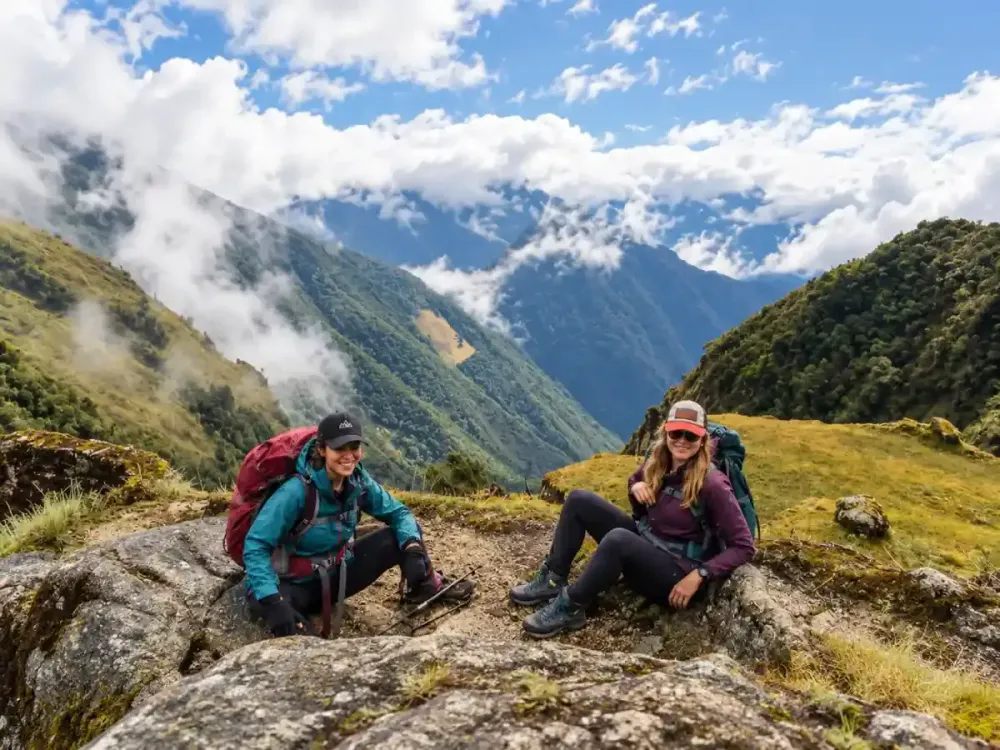
The best preparation is to assume from the beginning that conditions may change. Checking the forecast before the trek can provide a useful reference, but it should not be treated as a guarantee of what will happen over several days in the mountains.
Keep important clothing where you can reach it quickly. A waterproof jacket is not very useful during a sudden rain shower if it is buried underneath everything else in your backpack. The same applies to sunscreen, a hat or a light warm layer.
It is also a good idea to protect documents, phones, batteries and other moisture-sensitive items inside waterproof bags or compartments. Preparing for several possible conditions is usually more effective than trying to predict the exact moment when rain will arrive.
Before your departure, combine this information with what to pack for the Inca Trail and review the Classic Inca Trail route to understand where the main elevation changes occur.
What should you realistically expect from Inca Trail weather?
The most realistic expectation is variety. During a multi-day trek, you may experience sun, cold, wind, clouds, humidity, rain and mist without any one of these conditions defining the entire journey.
The dry season, mainly from May through September, usually reduces the chance of rain, while the wetter months bring greener landscapes together with a higher probability of precipitation. Even so, no month completely removes the natural variability of mountain weather.
If your main question is when to travel, continue with best time to hike the Inca Trail. If your dates are already fixed and you need to prepare your backpack, read what to pack for the Inca Trail.
You can then choose between the Classic Inca Trail 4 Days and the Short Inca Trail 2 Days according to the amount of time and type of experience you want. Once your route is selected, check Inca Trail availability before finalizing the rest of your itinerary.
Personal travel advice
Plan your trip with Dreamy Tours
Start a tailored journey with our exclusive tours and custom trips across Peru and other Latin American countries.