Search the blog
Tabla de contenidos
The animals of the Peruvian Amazon are among the country's greatest natural treasures. Deep within its tropical rainforests live jaguars, monkeys, macaws, pink river dolphins, caimans, and thousands of other species that make up remarkably diverse ecosystems. Some can be spotted during guided rainforest excursions, while others remain hidden in dense vegetation or inhabit remote areas that are difficult to reach.
The Peruvian Amazon covers a vast portion of the country and contains a wide range of natural habitats. Its rivers, lakes, seasonally flooded forests, and towering trees provide food and shelter for mammals, birds, reptiles, amphibians, fish, and countless invertebrates. Every species plays an important role in maintaining the natural balance, from dispersing seeds to regulating other animal populations.
For travelers, destinations such as Iquitos, Pacaya Samiria National Reserve, Puerto Maldonado, and Tambopata offer opportunities to observe wildlife with experienced local guides. However, it's important to remember that these animals live freely in their natural habitats. Sightings depend on factors such as weather, time of day, food availability, and each species' natural behavior.
In this guide, you'll discover some of the most representative animals of the Peruvian Amazon, where they live, how likely you are to encounter them, and how to enjoy responsible wildlife watching. You'll also learn about the best destinations for experiencing Amazonian biodiversity during your next trip to Peru.
What Animals Live in the Peruvian Amazon Rainforest?
The Peruvian Amazon is home to an extraordinary variety of animals thanks to its enormous size, tropical climate, and diverse habitats. Its ecosystems include upland rainforests, flooded forests, rivers, streams, and lakes, each supporting species adapted to different environmental conditions.
Among the best-known mammals are jaguars, lowland tapirs, capybaras, monkeys, and giant river otters. Aquatic environments are also home to pink river dolphins, Amazonian manatees, and other mammals adapted to life within the rainforest's extensive river systems.
Birds are another exceptionally diverse group. Macaws, toucans, parrots, kingfishers, and herons inhabit different areas of the Amazon. Some species feed in the forest canopy, while others frequent riverbanks, lakes, and open environments.
Reptiles, amphibians, and fish also play essential ecological roles. Caimans help regulate populations of aquatic animals, frogs form part of complex food webs, and fish such as the arapaima are important components of Amazonian river ecosystems.
| Animal Group | Representative Species | Typical Habitat |
|---|---|---|
| Wild cats | Jaguar, ocelot, puma | Tropical forests |
| Primates | Squirrel monkeys, howler monkeys, spider monkeys | Forest canopy and wooded areas |
| Terrestrial mammals | Tapirs, capybaras, peccaries | Forests, trails, and riverbanks |
| Aquatic mammals | Pink river dolphins, manatees, giant river otters | Rivers, lakes, and lagoons |
| Birds | Macaws, toucans, parrots, herons | Trees, clay licks, and wetlands |
| Reptiles | Caimans, anacondas, Amazon river turtles | Rivers, lakes, and vegetation |
| Amphibians | Tree frogs and ground-dwelling frogs | Humid rainforest environments |
| Fish | Arapaima, piranhas, catfish | Rivers, lakes, and channels |
The distribution of these animals varies according to the region and the characteristics of each ecosystem. Not every species lives in the same locations, and many cannot be seen during a typical rainforest tour.
To understand the environments where these animals live, explore our complete Peruvian Amazon travel guide, which introduces the region's main destinations, ecosystems, and experiences available to visitors.
Mammals of the Peruvian Amazon: Jaguars, Tapirs, and Capybaras
Among the most iconic mammals of the Peruvian Amazon is the jaguar, locally known as the otorongo. This remarkable wild cat, scientifically named Panthera onca, is the largest feline in the Americas. Its golden-yellow coat covered with dark rosettes provides excellent camouflage, while its muscular build makes it a powerful predator capable of moving through different forest environments.
Although jaguars inhabit protected areas such as Tambopata and Pacaya Samiria, seeing one during a rainforest tour is extremely uncommon. Jaguars generally avoid human contact and may roam across extensive territories. Finding footprints or other signs of their presence is considerably more likely than encountering one directly.
Another representative species is the lowland tapir, locally called sachavaca and scientifically known as Tapirus terrestris. This large mammal has a sturdy body and a flexible snout that it uses to feed on leaves, fruits, and other plant material. By dispersing seeds, tapirs contribute to forest regeneration and the long-term health of tropical ecosystems.
Capybaras, also known locally as ronsocos, are large rodents that frequently inhabit the banks of rivers, lakes, and other wetlands. Their social behavior and strong connection to aquatic environments make them fascinating animals to observe during certain river excursions.
The region is also home to collared peccaries, white-lipped peccaries, ocelots, and several deer species. Some are primarily nocturnal, while others move in groups through the forest in search of food.
If you'd like to learn about one of the most important protected habitats for Amazonian mammals, read our Tambopata National Reserve visitor guide. Located in Madre de Dios, this reserve protects extensive tropical forests where numerous mammal species live.
Monkeys of the Peruvian Amazon and Where to See Them
Monkeys are among the most fascinating animals to observe during a visit to the Peruvian Amazon. Their agility among the branches, distinctive calls, and complex social interactions provide a glimpse into life high above the rainforest floor.
One of the most recognizable primates is the squirrel monkey, known for its small size and energetic movements. These monkeys often travel in groups, searching for fruits, insects, and other foods among the branches. In some forest areas, their movements and vocalizations reveal their presence before visitors can actually see them.
Howler monkeys are famous for their powerful calls, which can carry over considerable distances. They use these sounds to communicate and announce their presence within a territory. During the early morning, their calls can become one of the most distinctive sounds of the Amazon rainforest.
Spider monkeys, locally known as maquisapas, have long limbs and a prehensile tail that helps them move between trees. Fruits make up an important part of their diet, allowing these monkeys to contribute to seed dispersal and the regeneration of rainforest vegetation.
Capuchin monkeys, woolly monkeys, and other primate species also inhabit the region, although their distribution varies geographically. Not all primates occur in the same areas, so an experienced naturalist guide can help identify which species are likely to live in the forest you're exploring.
In destinations such as Pacaya Samiria and Tambopata, guided rainforest walks provide opportunities to explore habitats frequented by different monkey species. If you're planning a visit to Loreto, read our guide to the best things to do in Iquitos, which includes nature experiences and wildlife observation opportunities.
Birds of the Peruvian Amazon: Macaws, Toucans, and Parrots
Birds are among the most colorful and captivating animals in the Amazon rainforest. Their plumage, calls, and behavior can be observed in many different environments, from the upper forest canopy to riverbanks and tropical lakes.
Macaws are particularly striking because of their size and brilliant colors. Some species display combinations of red, blue, yellow, and green feathers. They often travel in pairs or groups and produce loud calls while flying above the forest.
Certain areas of Tambopata contain natural clay licks, locally called collpas, where macaws, parrots, and parakeets gather to consume clay. This behavior can be observed in areas such as the Chuncho and Colorado clay licks, although the number of birds present depends on environmental conditions and their natural activity patterns.
Toucans are another distinctive group of Amazonian birds. They are recognized by their large, colorful bills, which they use mainly to handle food. Despite being closely associated with rainforest imagery, finding them requires patience and careful attention to their calls and movements in the canopy.
Other birds that visitors may encounter include kingfishers, herons, oropendolas, and various birds of prey. Some frequent rivers and wetlands, while others prefer forest habitats where they search for fruits, insects, and small animals.
For travelers interested in nature photography, specialized birdwatching excursions provide a different experience from general rainforest tours. Dreamy Tours offers a 4-day birdwatching tour in Iquitos, designed for visitors who want to explore different Amazonian environments with knowledgeable guides.
You can also explore our guide to Iquitos rainforest tours and how to choose the best experience to compare trips focused on nature, river navigation, and wildlife observation.
Pink River Dolphins and Other Aquatic Mammals of the Amazon
The pink river dolphin is one of the most emblematic animals of the Peruvian Amazon. Scientifically known as Inia geoffrensis, this species inhabits different freshwater systems throughout the Amazon Basin. Unlike marine dolphins, it is adapted to life in rivers, channels, and seasonally flooded environments.
The coloration of these dolphins varies between individuals. Some have predominantly gray skin, while others develop more noticeable pink tones. Their appearance, behavior, and adaptations to river environments make them especially interesting for travelers exploring the Amazon by boat.
Another freshwater dolphin inhabiting Amazonian rivers is the tucuxi, scientifically known as Sotalia fluviatilis. Although it shares some habitats with the pink river dolphin, it differs in physical appearance and behavior. Experienced guides can help visitors distinguish between these species during excursions.
The Amazonian manatee, scientifically named Trichechus inunguis, is another remarkable aquatic mammal. It feeds on aquatic vegetation and spends most of its life underwater. Because of its discreet behavior and habitat preferences, encountering a wild manatee is considerably more difficult than spotting dolphins in certain river areas.
Giant river otters, known locally as lobos de río, also inhabit Amazonian waterways. These social mammals live in family groups and depend on rivers and lakes, where they feed mainly on fish. Their presence is associated with aquatic habitats that provide suitable conditions for their daily activities.
One of the most important destinations for discovering these environments is Pacaya Samiria National Reserve. Its flooded forests, lagoons, and river systems offer opportunities to search for dolphins and other aquatic animals during organized expeditions.
It's important to remember that wildlife sightings are never guaranteed. Animals move freely, and their visibility depends on the weather, food availability, season, and natural conditions during each excursion.
Amazon Rainforest Reptiles: Caimans, Anacondas, and Turtles
Reptiles are an important part of the Peruvian Amazon's biodiversity. Although some species inspire curiosity or fear among visitors, they perform essential ecological functions and should always be observed from a safe distance.
Caimans are among the best-known rainforest reptiles. Species such as the black caiman and spectacled caiman inhabit Amazonian rivers, lakes, and other aquatic environments. These animals may remain partially submerged, making them difficult to detect during the daytime.
On certain nighttime excursions, guides use lights to identify the reflection of caimans' eyes near the water's surface. These activities take place from boats or authorized observation areas, avoiding unnecessary approaches and any attempt to handle wildlife.
The green anaconda is another iconic species associated with Amazonian wetlands. This large snake is well adapted to environments near water and can inhabit different tropical ecosystems. However, encountering a wild anaconda during a tourist excursion is relatively uncommon.
Among the Amazon's aquatic turtles are the yellow-spotted river turtle, locally known as taricaya, and the South American river turtle, commonly called charapa. Both inhabit Amazonian river systems and are involved in conservation and sustainable management initiatives led by different communities.
Pacaya Samiria is home to conservation activities focused on protecting turtles and their habitats. To learn more about visiting the reserve, explore our guide to how to get to Pacaya Samiria from Iquitos and Nauta.
During excursions, avoid approaching snakes, caimans, or other reptiles just to take photographs. Always follow your guide's instructions and observe these animals without disturbing their natural behavior.
Frogs, Butterflies, and Insects of the Peruvian Amazon
Beyond its large mammals and colorful birds, the Peruvian Amazon is home to an enormous diversity of smaller animals that play fundamental roles in tropical ecosystems. Frogs, butterflies, ants, beetles, and countless other invertebrates contribute to pollination, decomposition, and food webs throughout the forest.
Amazonian frogs display an extraordinary variety of shapes, sizes, and colors. Some species live among vegetation on the forest floor, while others inhabit leaves, branches, and tree trunks. Their calls are particularly distinctive during humid nights.
Some of the most striking amphibians are brightly colored frogs that use chemical substances as defensive mechanisms. However, not every colorful frog is poisonous, and not every potentially harmful species has bright warning colors. For safety and conservation reasons, visitors should avoid touching wild amphibians.
Butterflies are another fascinating feature of tropical forests. Some display brilliant wing colors, while others use patterns that provide camouflage among vegetation. They can often be observed along trails, in open areas, and near places where they find food or minerals.
Leafcutter ants are equally interesting because of their highly organized social behavior. These insects carry pieces of vegetation into their colonies, where they use the plant material to cultivate fungi that form an important part of their diet.
During guided rainforest walks, paying attention to these smaller organisms reveals aspects of the Amazon that visitors often overlook. The forest's biodiversity depends not only on large animals but also on thousands of smaller species that sustain essential natural processes.
Fish of the Peruvian Amazon: Arapaima, Piranhas, and Other Species
The rivers and lakes of the Peruvian Amazon support a remarkable variety of fish adapted to different aquatic environments. Some species inhabit major rivers, while others use lagoons, channels, and flooded forests for feeding, shelter, or reproduction.
One of the best-known fish is the arapaima, locally called paiche and scientifically known as Arapaima gigas. This species is remarkable for its large size and its ability to breathe atmospheric air, an adaptation that helps it survive in certain Amazonian aquatic environments.
Arapaima are ecologically important and also form part of sustainable management initiatives developed by Amazonian communities. In Pacaya Samiria, conservation programs involving this species aim to combine ecosystem protection with regulated use of natural resources.
Piranhas are another widely recognized group of Amazonian fish. Although movies and popular stories often portray them as extremely aggressive, their behavior is more complex and varies by species and environmental conditions. Some feed on fish, invertebrates, and other available food sources.
Amazonian catfish also represent an important group. Different species inhabit the region's river systems, and some undertake movements associated with their biological cycles. These fish contribute to aquatic food webs and are important to the fishing activities of various local communities.
During rainforest tours, directly observing fish may be more difficult than watching birds or mammals that appear above the water's surface. However, naturalist guides can explain their characteristics and the ecological importance of Amazonian rivers.
Understanding these aquatic environments helps explain why protecting river ecosystems is essential for conserving the wildlife of the Peruvian Amazon.
Where Can You See Wildlife in Iquitos and Pacaya Samiria?
Iquitos is one of the main starting points for discovering the animals of the Peruvian Amazon. From this city, travelers can arrange excursions into different areas of Loreto, including rivers, tropical forests, lakes, and authorized visitor sectors of Pacaya Samiria National Reserve.
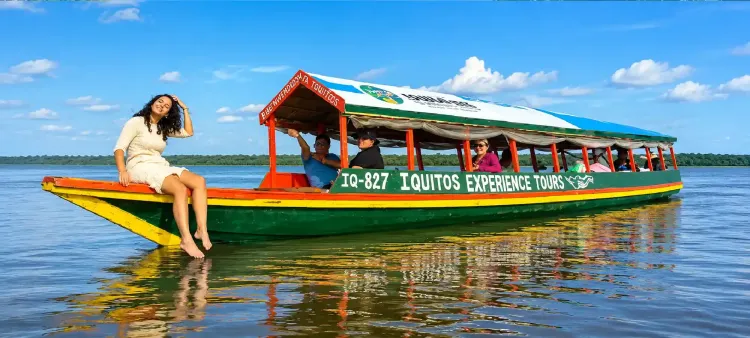
Wildlife watching often begins during river journeys. Depending on the route, visitors may encounter waterbirds, hear monkeys calling in nearby forests, and search for freshwater dolphins. However, not every excursion offers the same opportunities for seeing animals.
Pacaya Samiria is particularly notable for its extensive flooded forests and aquatic environments. Pink and gray river dolphins, caimans, Amazonian turtles, monkeys, and numerous bird species inhabit the reserve. It also protects more elusive animals, including manatees, jaguars, and tapirs.
| Wildlife Watching Location | Representative Animals | Type of Experience |
|---|---|---|
| Rivers of Loreto | River dolphins and waterbirds | Guided boat excursions |
| Pacaya Samiria | Dolphins, monkeys, caimans, turtles | Rainforest expeditions |
| Forests near Iquitos | Monkeys, birds, amphibians, insects | Guided jungle walks |
| Flooded forest habitats | Birds, reptiles, aquatic wildlife | Boat trips and observation |
| Rainforest trails | Primates, insects, other forest animals | Naturalist-guided walks |
Choosing the right program depends on the animals you hope to observe, your available travel time, and access conditions. Some excursions focus on river navigation, while others include walking trails, nighttime activities, and specialized birdwatching experiences.
If you'd like to explore your options, visit our Iquitos rainforest tours. You can also read our guide to Iquitos in 3 days: itinerary and travel tips for ideas on organizing a short Amazon adventure.
For travelers interested in visiting the reserve, we recommend reading about the best time to visit Pacaya Samiria. Seasonal changes in river levels can influence navigation routes and the habitats used by different species.
What Wildlife Can You See in Puerto Maldonado and Tambopata?
Puerto Maldonado is one of the main gateways to the southern Peruvian Amazon. From this city, visitors can explore different areas of Madre de Dios, including Tambopata National Reserve, Lake Sandoval, and other tropical forest environments.
Tambopata is particularly famous for its macaw clay licks, where different bird species gather at certain times to consume clay. These gatherings are among the region's most memorable natural spectacles, although bird activity depends on weather conditions and the animals' behavior.
Mammals inhabiting the reserve's forests include monkeys, tapirs, capybaras, jaguars, and numerous other wild animals. Some can be observed during conventional rainforest excursions, while others are difficult to encounter and require particular conditions.
Lake Sandoval is one of the region's most important wildlife-watching destinations. Its waters and surrounding palm forests provide habitats for giant river otters, caimans, turtles, monkeys, and different bird species.
Giant river otters are among the lake's most sought-after wildlife sightings. These animals live in family groups and use aquatic environments for feeding and traveling. However, sightings depend on their movements and cannot be guaranteed during any particular visit.
To learn more about the destination, read our guide to Lake Sandoval: how to get there and what wildlife to see. You can also explore the best things to do in Puerto Maldonado to discover other nature experiences in the region.
If you're planning your trip, explore our Puerto Maldonado rainforest tours, which include experiences connected to Tambopata's tropical forests and the main natural attractions of Madre de Dios.
What Is the Best Time of Day and Season to See Amazon Wildlife?
Wildlife watching in the Peruvian Amazon depends on several factors, including animal behavior, food availability, weather conditions, and the type of habitat visited. No season guarantees sightings of every species during a single excursion.
Generally, the early morning can provide good opportunities to observe birds and certain monkey species. During this period, some animals are actively searching for food or moving between branches.
Late afternoon can also offer opportunities for wildlife encounters, particularly near rivers and lakes. However, each species follows its own activity patterns, which can change according to the weather and local environmental conditions.
Nighttime excursions reveal a different side of the rainforest. Some frogs, insects, small mammals, and reptiles become more active after sunset. These outings should always be conducted with experienced guides and in accordance with the rules of protected natural areas.
| Time or Environmental Condition | Wildlife to Look For | Recommendation |
|---|---|---|
| Early morning | Birds and some monkeys | Walk quietly and observe carefully |
| Late afternoon | Birds and riverbank wildlife | Join guided excursions |
| Nighttime | Frogs, insects, some caimans | Participate in authorized night tours |
| High-water season | Wildlife in flooded forests | Adapt boat routes to river conditions |
| Low-water season | Waterbirds and wildlife near certain bodies of water | Check current local conditions |
High-water and low-water seasons are particularly important in Loreto's ecosystems. When river levels rise, certain animals can move through flooded forests. During low-water periods, some aquatic habitats shrink, changing the distribution of particular species.
In Madre de Dios, rainfall can also affect access to forest trails and macaw clay licks. To choose suitable travel dates, read our guide to the best time to visit the Peruvian Amazon.
If you haven't decided which Amazon destination to visit, explore Iquitos or Puerto Maldonado: which should you choose?. This comparison will help you identify the wildlife and nature experiences that best match your interests.
Final Recommendations for Wildlife Watching in the Peruvian Amazon
Wildlife watching in the Peruvian Amazon is an experience that requires patience, respect, and realistic expectations. Although the rainforest supports an extraordinary diversity of species, wild animals don't remain in fixed locations waiting for visitors to arrive. Their behavior depends on the forest's natural cycles, food availability, and environmental conditions. Enjoying the experience also means learning to recognize sounds, tracks, and other signs of wildlife that may otherwise go unnoticed.
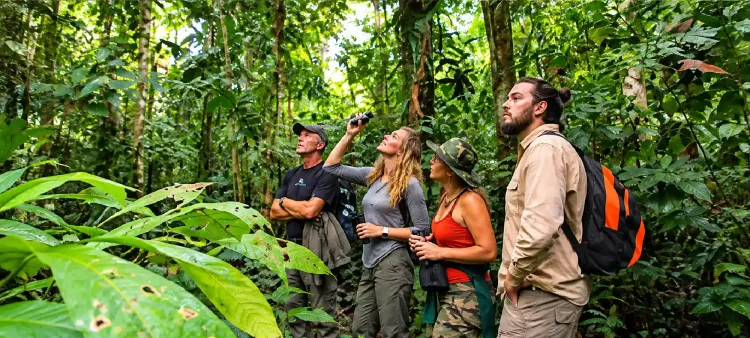
Traveling with experienced naturalist guides helps visitors understand animal behavior and recognize the habitats where different species may be found. These professionals know the characteristics of local trails, the activity patterns of certain animals, and the safety precautions necessary for exploring rainforest environments. They can also explain the relationships between species and the ecosystems they inhabit, transforming each excursion into a meaningful learning experience.
During wildlife encounters, always maintain an appropriate distance, avoid feeding animals, and never attempt to touch or handle them. Using artificial sounds to attract wildlife, chasing animals with boats, or disturbing their shelters for photographs should also be avoided. Responsible observation allows travelers to enjoy natural encounters without unnecessarily interfering with the behavior of Amazonian species.
Before traveling, pack lightweight long-sleeved clothing, appropriate hiking shoes, insect repellent, sunscreen, and water-resistant accessories. Binoculars and a camera with a zoom lens can be particularly useful for observing birds and mammals from a respectful distance. Planning your equipment in advance will help you stay comfortable during walks, river journeys, and longer excursions through the rainforest.
At Dreamy Tours, we can help you explore Amazonian biodiversity through organized experiences in Iquitos, Pacaya Samiria, Puerto Maldonado, and Tambopata. Our programs provide opportunities to discover different natural landscapes, walk through tropical forests, and navigate waterways inhabited by some of the most representative wildlife species of the Peruvian Amazon. With thoughtful planning and knowledgeable local guides, you can enjoy a responsible adventure while discovering the extraordinary natural richness of this region of Peru.
Personal travel advice
Plan your trip with Dreamy Tours
Start a tailored journey with our exclusive tours and custom trips across Peru and other Latin American countries.