Search the blog
Tabla de contenidos
Understanding how to get to Pacaya Samiria from Iquitos and Nauta is essential when planning an expedition to one of the most important protected natural areas in the Peruvian Amazon. Located in the Loreto region, the reserve is home to extensive flooded forests, rivers, lakes, and an extraordinary diversity of wildlife. However, its attractions are spread across different areas that require specific access routes.
Most travelers arriving from other parts of Peru begin their journey in Iquitos. From this city, one of the usual options is to travel by road to Nauta and then continue by boat along Amazonian rivers toward the chosen visitor area. The length of the journey depends on the type of boat, river levels, and the location of the reserve's access point.
It is important to understand that Pacaya Samiria does not have a single entrance that visitors can reach simply by taking a bus. Covering approximately 2,080,000 hectares, the reserve has different access routes to Yanayacu Pucate, the Samiria River, and other areas that may require several hours of river transportation.
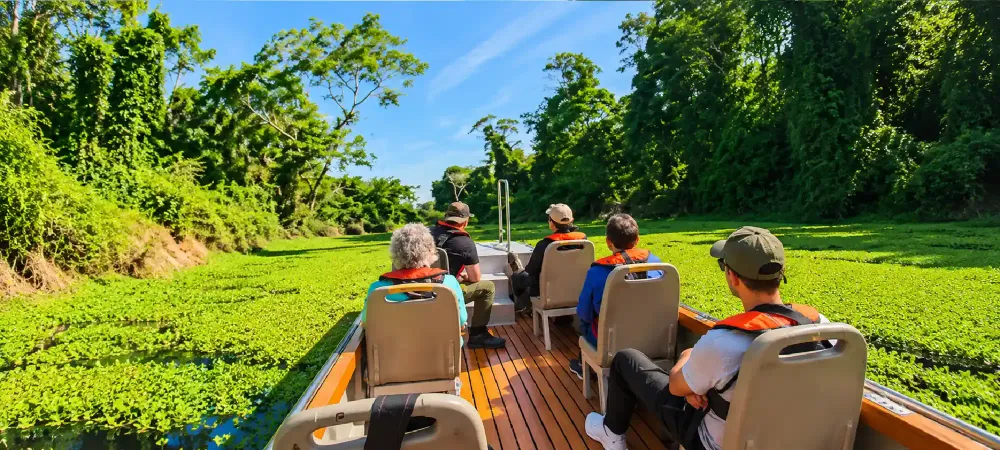
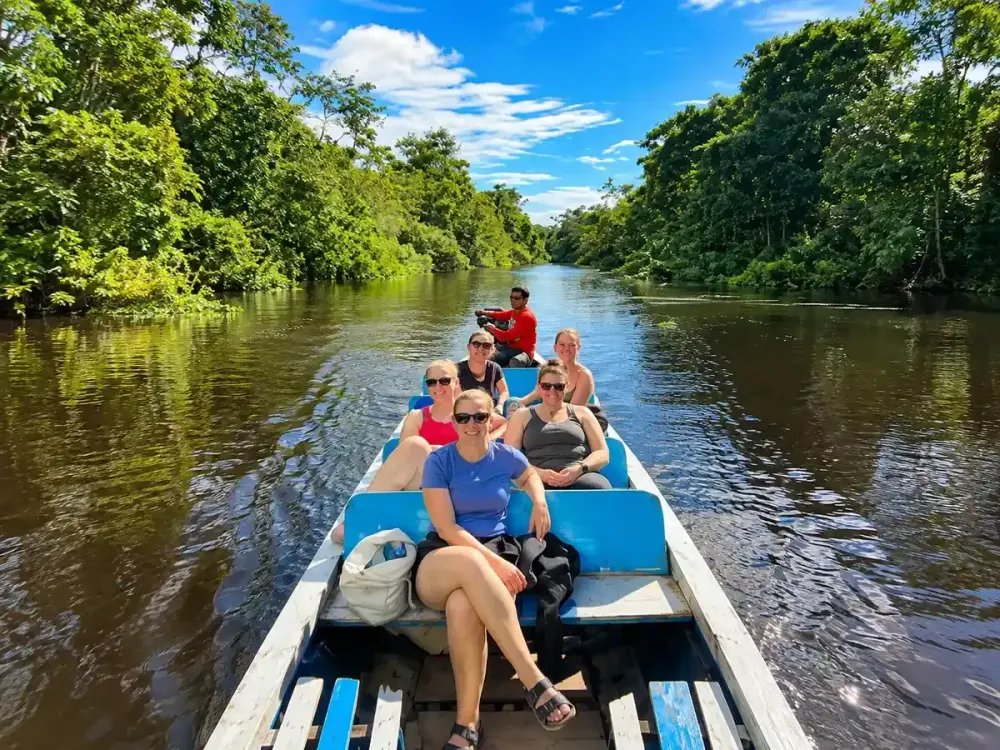
Traveling to the reserve is also part of the experience. Boats navigate waterways surrounded by tropical vegetation, where visitors may have opportunities to observe birds, river dolphins, and different Amazonian species. However, wildlife sightings depend on natural conditions and should never be considered guaranteed.
In this guide, you will discover the main routes from Iquitos and Nauta, transportation times published by SERNANP, differences between visitor areas, entrance requirements, and practical recommendations for organizing your visit. To learn more about biodiversity, natural attractions, and available activities, you can also read our complete Pacaya Samiria National Reserve travel guide.
Where Is Pacaya Samiria and What Is Its Main Gateway?
Pacaya Samiria National Reserve is located in the Loreto region of northeastern Peru. It extends across territories within the provinces of Loreto, Requena, Ucayali, and Alto Amazonas, protecting an extensive area of tropical forests, waterways, and ecosystems associated with the Marañón and Ucayali rivers.
Because of its enormous size, the reserve has several access areas. Some are connected to the Yanayacu Pucate River basin, while others correspond to routes along the Samiria River or more remote areas of the Pacaya basin. Each has distinctive natural characteristics and logistical requirements.
Iquitos is one of the main cities used to organize expeditions into these environments. Commercial flights arrive in the city, where tourism services coordinate road transfers, boats, and guided activities. Its infrastructure makes planning multi-day expeditions through the Amazon rainforest of Loreto easier.
Nauta serves a different purpose. Connected to Iquitos by road, this town is a river transportation departure point for certain areas of Pacaya Samiria. From its docks, visitors can arrange boat journeys to ranger stations and communities associated with the reserve's tourism routes.
Therefore, the answer to how to reach Pacaya Samiria depends on the exact destination within the protected area. For many organized programs departing from Iquitos, Nauta is an important connection, but it is not the final destination. Before booking, identify the entrance sector and the location where your activities will begin.
How to Get to Iquitos from Lima, Cusco, and Other Cities
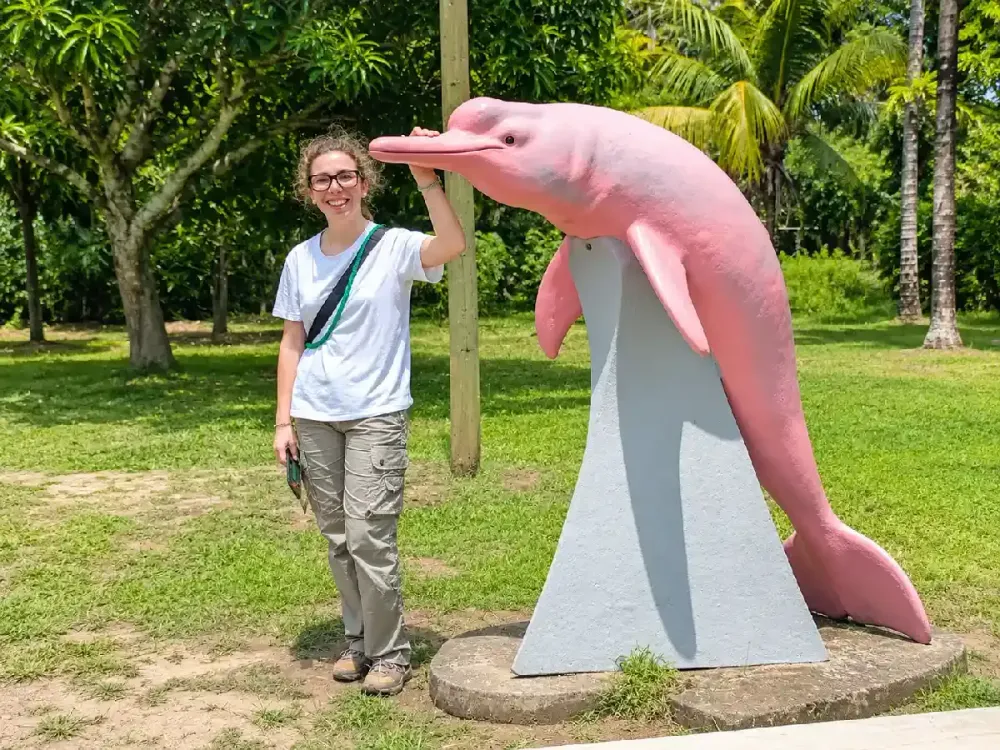
For many visitors, the first step is reaching Iquitos. This Amazonian city is served by Coronel FAP Francisco Secada Vignetta International Airport, which receives travelers from Lima and other destinations through available commercial flight connections.
From Lima, flying is generally the most practical alternative. According to tourism references published by SERNANP, a flight to Iquitos takes approximately one hour and forty-five minutes. This duration is an estimate and should be checked against actual airline schedules.
Travelers departing from Cusco generally need connecting flights, frequently through Lima. Iquitos does not have a road connecting it directly to Peru's national highway network, so completing the entire journey from Cusco by conventional overland transportation is not possible.
River transportation is also available from other Amazonian towns. However, these alternatives usually require different travel arrangements and considerably longer journey times. For a three- or four-day expedition, flying to Iquitos generally allows visitors to make better use of their available time.
Once in Iquitos, it is important to coordinate your meeting point with the tour operator before traveling toward Nauta. Some programs include airport reception or hotel pickup, while others establish specific departure points. These arrangements should be confirmed before booking.
If you have not yet organized the first part of your trip, read our article on how to get to Iquitos from Lima, Cusco, and other cities. You can also explore our guide on how to get to the Peruvian Amazon from Lima and Cusco to compare other gateways to the rainforest.

How to Travel from Iquitos to Nauta by Road
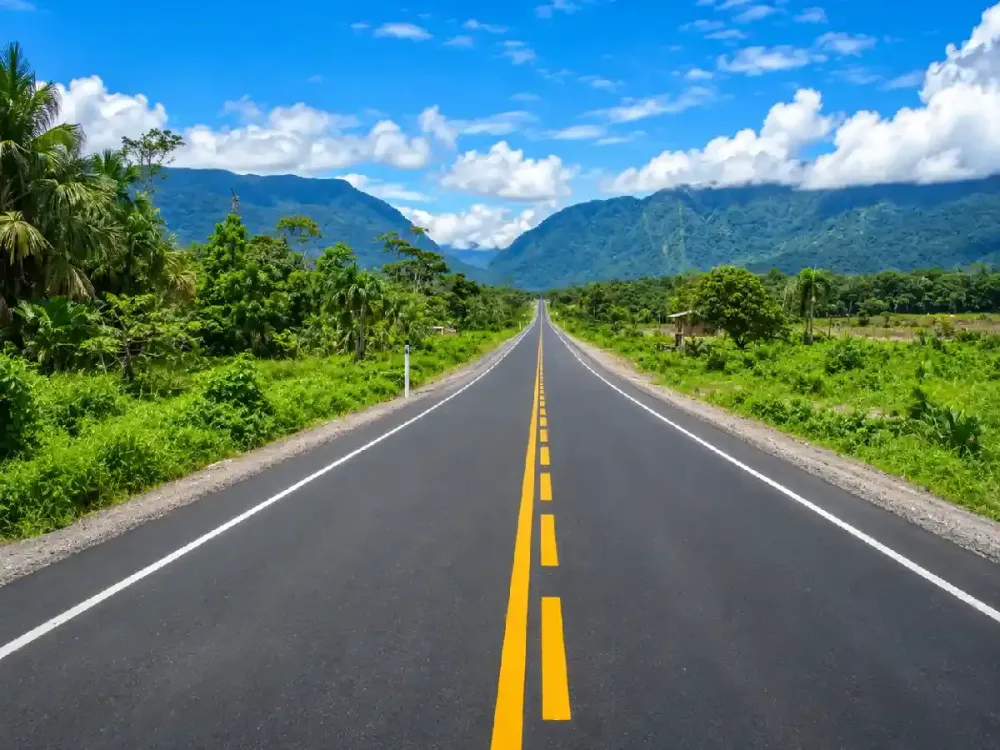
The road journey between Iquitos and Nauta is one of the most common stages for visitors traveling to Pacaya Samiria. The two towns are connected by the Iquitos-Nauta Highway, which allows travelers to head south through Loreto and reach the river docks used by certain expeditions.
According to SERNANP's official visitor information, the journey takes approximately two hours by road. In practice, travel times may vary depending on the departure point, type of vehicle, road conditions, and any stops included in the itinerary.
Visitors can arrange this transfer through a previously booked tourism service. Local transportation options to Nauta are also available, but their suitability depends on departure schedules, luggage requirements, and the need to arrive at a particular dock to begin the boat journey.
When the journey forms part of an organized excursion, the road transfer is usually coordinated with the boat departure. This arrangement helps travelers avoid arriving at the dock without a confirmed boat or missing activities because road and river transportation schedules do not match.
Nauta is located in an area of considerable importance for Amazonian river navigation, near the confluence of the Marañón and Ucayali rivers. Its geographical position supports transportation toward different natural areas of Loreto and explains its role as a connection point for numerous tourism programs.
However, arriving in Nauta does not mean that you have entered Pacaya Samiria. After completing the road journey, visitors must still continue by boat, identify the appropriate ranger station, and follow the procedures established by the reserve's administration.
From Nauta to Pacaya Samiria: River Docks and Boat Transportation
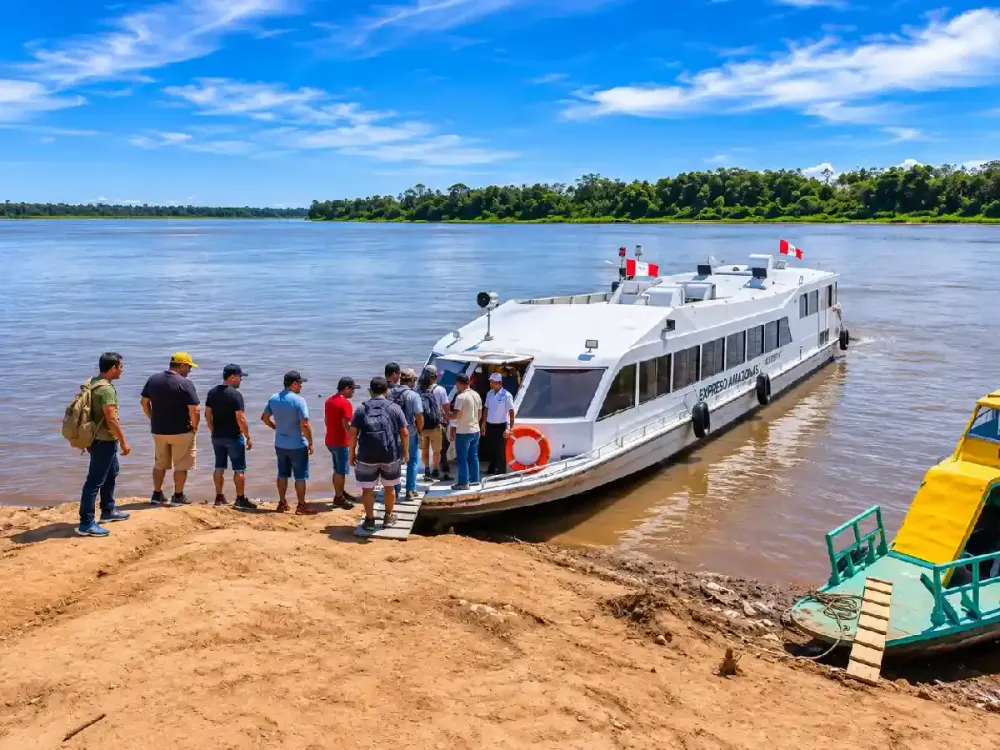
The river journey begins at the dock designated by the tour operator. From Nauta, excursions depart toward different parts of the reserve using conventional boats or faster vessels, depending on the itinerary and river conditions.
The route may follow sections of major Amazonian rivers before continuing along waterways associated with the protected area. The exact journey depends on the entrance station and the attractions included in the program. For this reason, there is no single route applicable to every Pacaya Samiria expedition.
Conventional motorboats and speedboats differ significantly in travel time. A faster boat can shorten certain stages of the journey, but its use depends on service availability, navigation conditions, and the characteristics of the route.
SERNANP publishes reference travel times for the Yanayacu and Samiria access areas, among others. These estimates help visitors understand transportation requirements, although they do not necessarily represent the total time needed to reach a lodge, a community, or a particular wildlife observation point.
| Access Route | Transportation | Approximate Travel Time |
|---|---|---|
| Lima to Iquitos | Airplane | 1 hour 45 minutes |
| Iquitos to Nauta | Road vehicle | 2 hours |
| Nauta to Yanayacu ranger station | Conventional motorboat | 3 hours |
| Nauta to Yanayacu ranger station | Speedboat | 1 hour |
| Nauta to Samiria ranger station | River transportation | 4 hours |
| Access to the Pacaya sector | Motorboat, according to official references | Up to 48 hours |
| Access to the Pacaya sector | Speedboat, according to official references | Approximately 8 hours |
These times are based on references published by SERNANP for different ranger stations and must be checked before traveling. The routes may have different departure points, so they should not be interpreted as consecutive stages of the same itinerary.
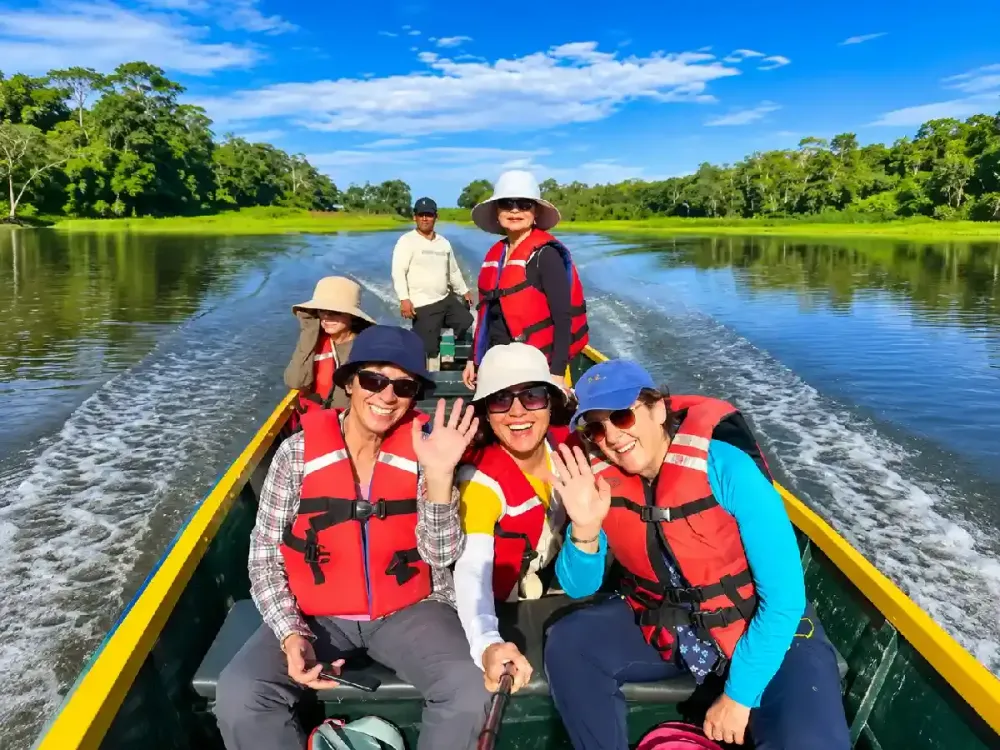
During boat transportation, always wear a life jacket and follow the instructions of the responsible crew. It is also advisable to protect your luggage from rain and avoid carrying objects that could easily fall into the water.
Which Route Should You Choose: Yanayacu Pucate, Samiria, or the Pacaya Sector?
Choosing the visitor area determines much of your travel logistics. Pacaya Samiria contains different river basins and tourism areas, making it important to distinguish between routes before deciding how many days to reserve and which type of expedition to book.
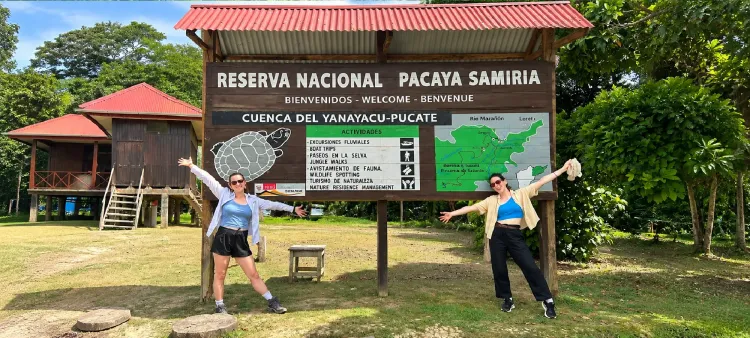
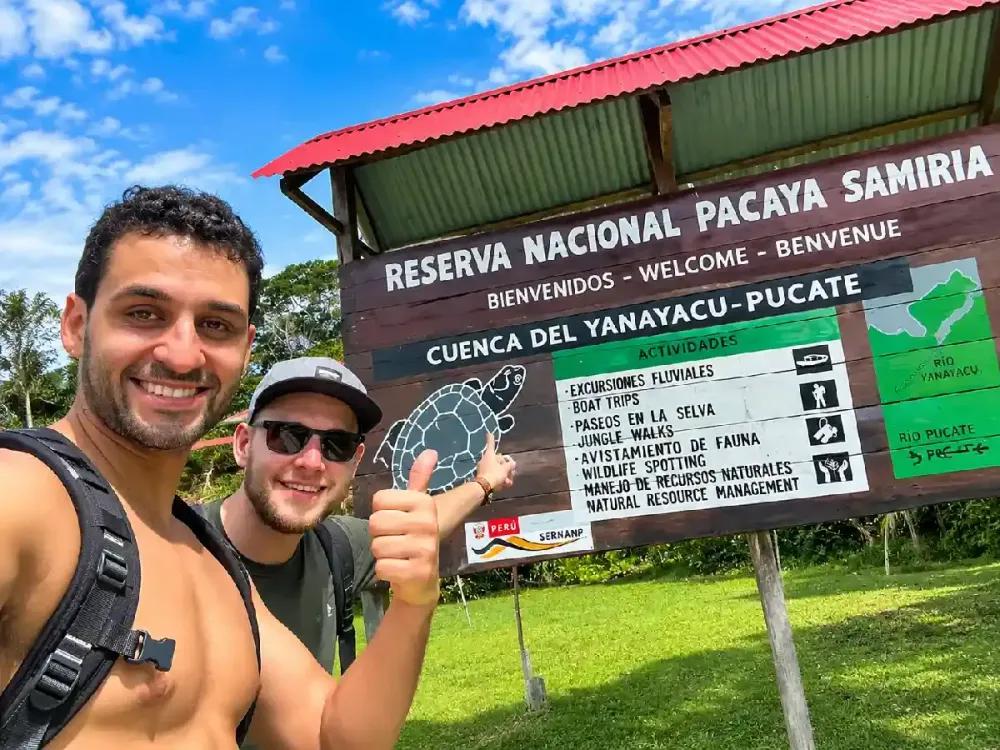
Yanayacu Pucate is one of the most frequently used access areas. SERNANP identifies it as a commonly used route for exploring flooded forests, waterways, and areas near communities such as Yarina. Activities may include boat excursions, birdwatching, and experiences related to the sustainable management of natural resources.
The Samiria River sector allows visitors to explore aquatic and forest environments associated with its river basin. Access can be arranged through river routes involving communities and ranger stations. Depending on the program, excursions may include rainforest walks, wildlife observation, and community-based activities.
The Pacaya sector offers other exploration opportunities, but reaching certain locations may require considerably longer transportation times. Official access references demonstrate that the type of boat used can significantly influence the duration of the journey.
| Visitor Area | Main Characteristics | What to Consider |
|---|---|---|
| Yanayacu Pucate | Flooded forests, waterways, and wildlife watching | Frequently used access route and multi-day programs |
| Samiria River | Lakes, forests, and community experiences | Confirm the entrance station and river route |
| Pacaya sector | More remote natural environments | Longer transportation times |
| Cocha El Dorado | Community conservation and biodiversity | Confirm the specific expedition |
Cocha El Dorado is one of the attractions associated with the Yanayacu Pucate basin and community-led conservation initiatives. Not every program entering through this area reaches the lake, so its inclusion should be clearly stated in the itinerary.
Before confirming a reservation, request information about the name of the visitor area, the destination community or accommodation, the entrance station, and the scheduled activities. This allows you to compare expeditions that genuinely explore equivalent environments and avoid confusing routes with similar names.
How to Get to Pacaya Samiria from Tarapoto, Yurimaguas, and Lagunas
Although Iquitos and Nauta are among the most commonly used tourism routes, Pacaya Samiria can also be visited from other parts of the Amazon region. These alternatives may be particularly interesting for travelers already visiting northern Peru or planning an expedition through different sectors of the reserve.
One option begins in Tarapoto, a city in the San Martín region with road and air transportation connections. From there, travelers can continue to Yurimaguas, a town that serves as a departure point for various river transportation services.
According to SERNANP, traveling from Tarapoto to Yurimaguas may take approximately two hours by road. From Yurimaguas, the route toward Lagunas involves a boat journey of around five hours by fast vessel, depending on service conditions.
Lagunas serves as a departure point for reaching certain environments associated with the reserve. However, arriving in this town does not automatically mean that visitors have reached their chosen tourism area. Additional transfers and entrance procedures may still be necessary.
The duration of these routes depends on river conditions, boat schedules, and the exact location of the selected program. They should therefore not be compared solely with the Iquitos-to-Nauta transfer without considering the differences between the visitor areas reached.
If you are looking for a first rainforest experience departing from Iquitos, the connection through Nauta may be more practical. Access routes through Yurimaguas and Lagunas, on the other hand, may better suit specialized itineraries and travelers already visiting other Amazonian cities.
Entrance Tickets, Permits, and Requirements for Visiting Pacaya Samiria
Pacaya Samiria National Reserve is managed by Peru's National Service of State-Protected Natural Areas, known as SERNANP. Visitors must respect official regulations and use the services of authorized tourism operators or local tourism groups.
Visitors must register at the ranger stations corresponding to their route. There, they receive instructions applicable to the entrance area, including visiting conditions and recommendations designed to protect the reserve's ecosystems.
The general tourism visiting hours published by SERNANP are Monday through Sunday, from 6:00 a.m. to 5:00 p.m. Programs involving overnight stays and nighttime activities must comply with the permits and specific conditions established for each sector.
Entrance fees depend on the length of the visit and the visitor category. The reserve entrance fee is separate from the total cost of an expedition, which may include transportation, boats, guides, meals, accommodation, and other services.
| Visitor Category | 1 Day | 2 to 3 Days | 4 to 30 Days |
|---|---|---|---|
| General admission | S/ 30 | S/ 60 | S/ 150 |
| Peruvian adults | S/ 15 | S/ 30 | S/ 75 |
| Peruvian visitors aged 5 to 16 | S/ 8 | S/ 15 | S/ 35 |
| Local residents | S/ 8 | S/ 15 | S/ 35 |
According to the official fee schedule, children under five receive free admission, while local residents must provide the appropriate identity document to confirm their eligibility. All prices are expressed in Peruvian soles. These published rates should be checked again before traveling.
You can consult the official Pacaya Samiria National Reserve visitor information to verify entrance conditions and the list of authorized operators. If you book a travel package, ask for written confirmation of whether the entrance permit is included and which additional services require payment.
How Long Does It Take to Get There and How Many Days Should You Book?
The total time needed to reach Pacaya Samiria depends on where your journey begins and which part of the reserve you intend to visit. Travelers arriving by plane in Iquitos must still consider the road transfer to Nauta and the corresponding boat journey before beginning the main activities of their expedition.
Using the usual route as a reference, the road journey between Iquitos and Nauta may take approximately two hours. From there, reaching certain entrance stations can require between one and several hours of navigation, depending on the type of boat and the destination's location.
For this reason, it is important to distinguish between the total duration of a tour and the time actually spent exploring the reserve. A three-day, two-night program normally includes arrival and departure transfers that reduce the hours available for rainforest walks, guided river excursions, and other activities.
A three-day expedition may be suitable for a first visit when the itinerary focuses on an accessible area. Excursions to more remote environments, however, may require additional days so transportation does not occupy most of the experience.
Travelers who want to explore Iquitos in addition to Pacaya Samiria should allow extra time for the city. One alternative is to dedicate several days to the expedition and reserve a separate day for urban attractions, provided flight connections are compatible.
To organize your dates more effectively, explore our itineraries for Iquitos in 3 days and Iquitos in 4 days, along with our guide to Iquitos tours and how to choose the best rainforest excursion.
What Is a 3-Day Tour from Iquitos to Pacaya Samiria Like?
One option for combining transportation and exploration within a single program is Dreamy Tours' 3-day, 2-night Pacaya Samiria tour. The published itinerary combines road transportation, river navigation, rainforest walks, and wildlife watching activities in Amazonian environments.
During the first day, travelers depart from Iquitos toward Nauta. The expedition then continues by boat toward the designated visitor area, with references to the Santo Domingo community as an entrance point and the Buenos Aires community as part of the program.
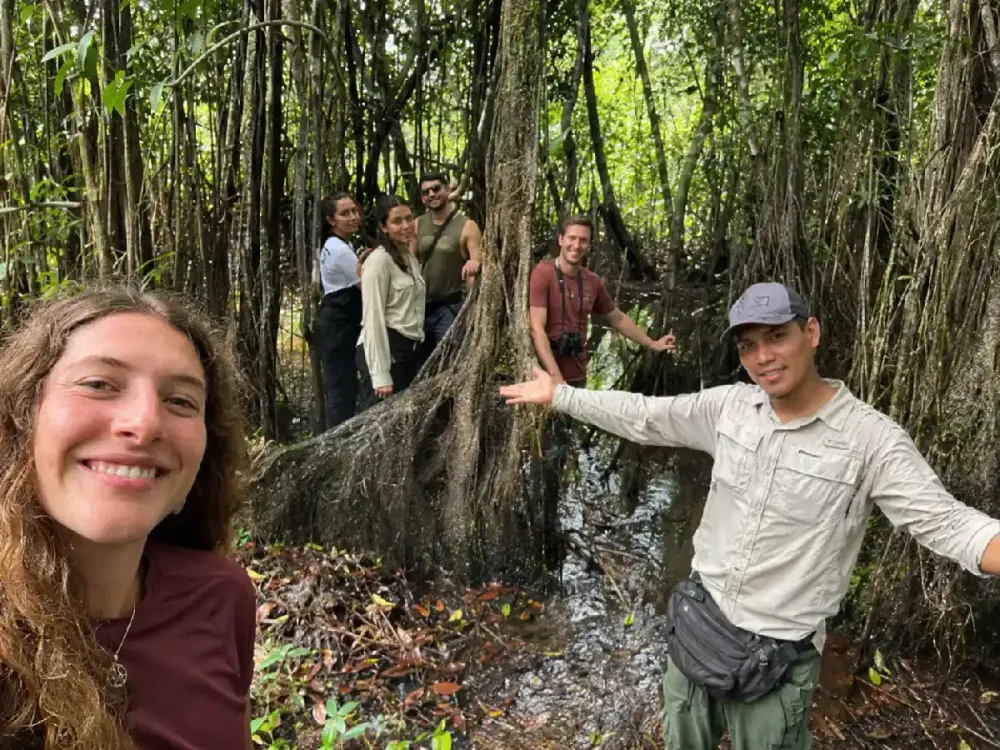
The river journey provides opportunities to appreciate Loreto's landscapes and look for wildlife such as river dolphins and Amazonian birds. Once in the exploration area, the program includes a rainforest walk and a nighttime activity to discover the natural environment after sunset.
The second day focuses on exploring natural environments associated with the reserve. Depending on the operating itinerary and route conditions, activities may include trips along smaller rivers, visits to lakes, and guided walks, always accompanied by local guides.
The third day includes the return journey toward Nauta and Iquitos. Before completing the expedition, additional birdwatching activities may take place, subject to the program's conditions and the time available for the return transfer.
This type of excursion brings several transportation stages and nature activities together within a single itinerary. However, before booking, it is advisable to confirm the exact arrangements for both nights of accommodation, the boats used, included services, and the estimated return time to Iquitos.
To compare this program with other experiences in Loreto, visit our Iquitos rainforest tours page. Not every Amazon rainforest tour operates within Pacaya Samiria, so checking each program's actual location is important.
Best Time to Travel from Iquitos and Navigate Toward Pacaya Samiria
Pacaya Samiria experiences warm and humid tropical conditions throughout the year. Rainfall and river levels affect both boat transportation and access to certain rainforest trails and flooded forests.
SERNANP identifies May through September as a recommended period for visiting the reserve. During these months, conditions may be relatively favorable for different activities, although rainfall is still possible.
October through April generally corresponds to the rainy period identified by the reserve's administration. However, river levels also depend on conditions throughout the river basin and do not necessarily coincide exactly with rainfall recorded at one particular location.
During the high-water season, some forest areas become flooded and can be explored using small boats. These changes may also affect certain routes and the locations where visitors carry out nature observation activities.
During the low-water season, falling water levels may make it possible to walk through areas that remain flooded at other times of the year. At the same time, certain river routes may need adjustments because of shallower water.
The best time to visit depends on the experiences you want to enjoy and the specific area included in your program. For more information, read our guide to the best time to visit Iquitos and our article about the best time to visit the Peruvian Amazon.
Tips for Planning Your Trip to Pacaya Samiria from Iquitos and Nauta
Before booking your tickets, identify the exact area of Pacaya Samiria you want to visit and confirm that your program includes the necessary transfers from Iquitos and Nauta. Not every entrance leads to the same attractions, and transportation times can vary considerably. Request information about the departure dock, ranger station, estimated navigation time, and the location of the community or accommodation where you will spend the night. If you are still comparing Amazonian destinations, explore our Peruvian Amazon travel guide to better understand the available alternatives.
Organize your flight connections with the understanding that traveling from Iquitos to your exploration area may take several hours. Arriving one day before the expedition can provide greater flexibility when international connections or tight flight schedules are involved. It is also advisable to allow sufficient time for the return journey, especially during rainy periods or when navigation depends on changing river levels. Confirm pickup times, meeting points, and return arrangements before purchasing flights that may be difficult to change.
Prepare your luggage for a warm and humid environment where part of your journey will take place on boats. Bring lightweight quick-drying clothing, long-sleeved shirts, comfortable trousers, insect repellent, sunscreen, a rain jacket, a flashlight, and suitable footwear for wet terrain. Protect your documents, camera, and electronic devices using waterproof bags. Also check which equipment your tour operator provides, and consult a healthcare professional about appropriate health precautions before traveling to the Amazon rainforest.
During excursions, follow the regulations established by SERNANP and the instructions of guides and park rangers. Wear life jackets during boat journeys, register your entrance at the appropriate ranger stations, remain on authorized routes, and avoid feeding or chasing wild animals. If your program includes community visits, respect the customs, decisions, and personal spaces of your hosts. Conserving Pacaya Samiria requires both protecting its ecosystems and encouraging responsible behavior among visitors.
At Dreamy Tours, we believe that properly organizing transportation from Iquitos and Nauta is essential for enjoying Pacaya Samiria without unnecessary travel complications. You can explore our 3-day Pacaya Samiria tour or browse other Iquitos rainforest tours to find an experience compatible with your dates and available time. Contact us to confirm included services, access conditions, and transfer schedules, and plan an Amazon rainforest expedition that combines nature, learning, and respect for Loreto's biodiversity.
Personal travel advice
Plan your trip with Dreamy Tours
Start a tailored journey with our exclusive tours and custom trips across Peru and other Latin American countries.