Search the blog
Tabla de contenidos
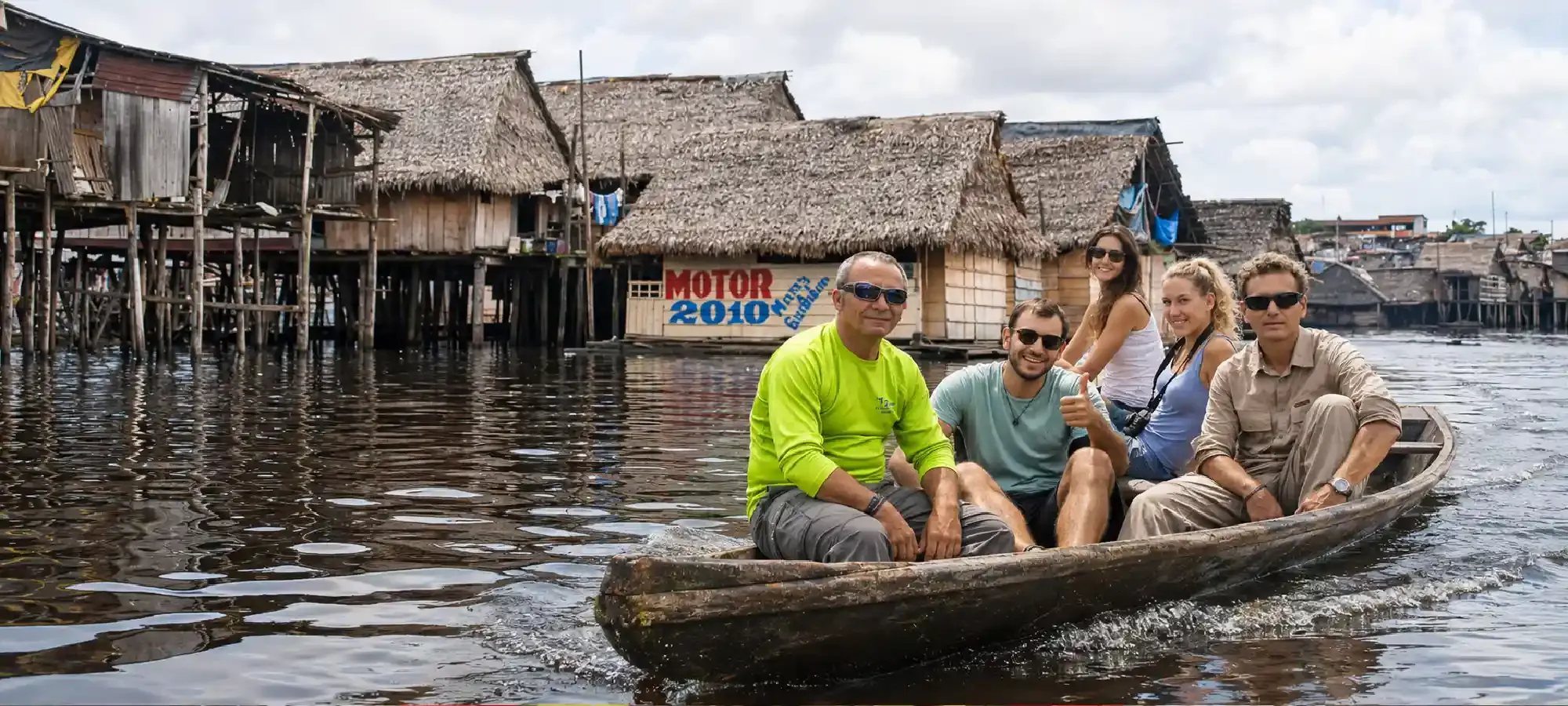
The Belén neighborhood in Iquitos is one of the city's most distinctive places and one of the best areas for experiencing everyday life in the Peruvian Amazon. Its traditional markets, busy commercial streets, wooden houses, and small boats navigating the waterways of the Itaya River reveal a close relationship between local communities and their river environment.
Located in southeastern Iquitos, Belén is often nicknamed the Venice of the Amazon because some areas flood when river levels rise. However, the neighborhood's importance goes far beyond its houses built on stilts or floating platforms. Belén is a center of commerce, urban history, and Amazonian traditions that form an essential part of Loreto's cultural identity.
One of its main attractions is Belén Market, where vendors sell fish, tropical fruits, agricultural products, and other ingredients brought from different Amazonian communities. Nearby, Pasaje Paquito is known for its medicinal plants, traditional preparations, and products associated with the region's local knowledge and customs.
For travelers, visiting Belén offers a different perspective on Iquitos, away from experiences focused exclusively on rainforest landscapes. In this guide, you'll discover the neighborhood's history, its main attractions, the differences between Upper and Lower Belén, how to organize a visit, and practical recommendations for exploring the area while respecting its residents.
Where Is the Belén Neighborhood in Iquitos?
The Belén neighborhood is located southeast of central Iquitos, in Maynas Province, Loreto Region. It extends across areas connected to the Itaya River and commercial districts that link the city with surrounding riverside communities.
Its location is one reason Belén became important to Iquitos' economy. For generations, rivers have served as transportation routes for food, building materials, and goods arriving from different Amazonian settlements. This connection to river trade contributed to the growth of markets and trading areas that remain central to the neighborhood's identity.
Belén is relatively close to Iquitos' main urban attractions, making it possible to include the neighborhood in a cultural sightseeing itinerary. However, its different sections have distinct access conditions, particularly when river levels rise.
The area known as Upper Belén contains commercial spaces and streets that can generally be explored on foot. Lower Belén, meanwhile, is more closely associated with waterways, landing points, and homes designed to accommodate seasonal flooding.
To understand how this neighborhood fits into a broader city itinerary, explore our guide to what to do in Iquitos: best places and experiences, which introduces other cultural and natural attractions worth visiting.
History of the Belén Neighborhood and Its Importance to Iquitos
Belén's history is closely connected to the urban development of Iquitos and the importance of rivers as transportation routes throughout the Peruvian Amazon. Its location beside major waterways encouraged the movement of people, products, and commercial activities, contributing to the development of one of the city's traditional neighborhoods.
The area's urban history dates back to the nineteenth century. According to documents from the District Municipality of Belén, Iquitos was divided into four neighborhoods in August 1884, including Belén. This historical record shows that the neighborhood's identity was already taking shape during an important period of the city's growth.
Over time, trade became one of the area's main activities. Products transported from communities throughout Loreto arrived in Belén for distribution and sale. This commercial role was closely related to navigation along the Itaya River and the need to supply the growing urban population.
The neighborhood's riverside location also created challenges because of changing water levels. Families developed construction and transportation methods adapted to seasonal flooding, including homes raised on stilts, floating platforms, and boats used to move through inundated areas.
These solutions reflect a long history of adapting to the Amazonian environment. However, flooding has also created difficulties involving housing, sanitation, infrastructure, and access to essential services. Understanding Belén means recognizing both its cultural richness and the challenges faced by the people who live there.
Today, the neighborhood retains an identity shaped by commercial activity, regional traditions, and riverside life. Its history reveals a side of Iquitos that complements excursions into Loreto's rivers and tropical forests.
If you'd like to explore more of the city, read our guide to Iquitos tourist attractions: 11 must-visit places, featuring historical, cultural, and natural destinations throughout the region.
Upper Belén and Lower Belén: What's the Difference?
One of Belén's defining characteristics is its division into Upper Belén and Lower Belén, locally known as Alto Belén and Bajo Belén. Although both areas belong to the same urban and cultural environment, they differ in elevation, housing, accessibility, and everyday activities.
Upper Belén occupies higher ground and contains much of the neighborhood's traditional commercial activity. Belén Market, Pasaje Paquito, and other streets lined with businesses selling regional products can be found here. Many areas are accessible on foot, although commercial activity can make the streets particularly busy.
Lower Belén extends across areas closer to the Itaya River and environments affected by seasonal flooding. In these sectors, some houses are built on wooden stilts, while others stand on floating structures that adapt to changing water levels.
At certain times of the year, residents and visitors may travel through parts of Lower Belén using canoes or small boats. When river levels fall, previously submerged areas become exposed, changing the way people move through the neighborhood.
| Feature | Upper Belén | Lower Belén |
|---|---|---|
| Location | Higher ground | Low-lying areas near the Itaya River |
| Main activities | Commerce, markets, and services | Residential life and riverside activities |
| Housing | Buildings on higher ground | Stilt houses and floating structures |
| Transportation | Mainly walking and urban roads | Walking or boats, depending on water levels |
| Main attractions | Belén Market and Pasaje Paquito | Flood-adapted architecture and river scenery |
| Visiting recommendation | Guided commercial and cultural walk | Respectful visit with a local guide |
Understanding the differences between these areas helps travelers plan a visit properly. Exploring the market isn't the same as entering residential areas affected by flooding, where access conditions and safety considerations may be significantly different.
The best approach is to arrange a visit with someone familiar with the neighborhood who can explain its characteristics without disrupting residents' everyday lives.
Belén Market: Amazonian Products and Traditional Commerce
Belén Market is one of the best-known commercial spaces in Iquitos. Its activity reflects the diversity of products arriving from different parts of Loreto and introduces visitors to ingredients that play an important role in Amazonian cuisine and everyday life.
Market stalls may offer various types of fish, tropical fruits, agricultural products, and prepared foods. The selection changes depending on the season, product availability, and daily commercial activity.
Amazonian fish are particularly important in the market. Visitors may encounter species traditionally used in regional dishes, such as boquichico and sábalo, alongside other products originating from rivers and lakes throughout the region. This variety reveals the close relationship between local food traditions and aquatic ecosystems.
Tropical fruits also attract attention because of their distinctive shapes, colors, and flavors. Depending on the season, products such as camu camu, aguaje, and cocona may be available, along with other regional fruits used in juices, desserts, and traditional recipes.
The market also includes areas selling spices, plants, utensils, and everyday household items. Its importance extends far beyond tourism, as it is primarily a place of work and an essential source of supplies for many local families.
When visiting, take your time, pay attention to the busy commercial environment, and avoid blocking stalls or narrow aisles. If you'd like to photograph vendors, ask for permission beforehand and respect their decision if they decline.
Travelers should also avoid purchasing wild animals, products made from protected species, or items of uncertain origin. Responsible tourism should support legal trade and respect for Amazonian biodiversity.
Pasaje Paquito: Traditional Medicine and Amazonian Culture
Pasaje Paquito is one of the most recognizable sections of Belén's commercial district. It is associated with the sale of medicinal plants, traditional preparations, and other products connected to popular healing practices and Amazonian customs.
Visitors may encounter plants, tree bark, roots, and preparations traditionally used by different Amazonian populations. Well-known examples include uña de gato (cat's claw), sangre de grado (dragon's blood resin), and chuchuhuasi, all of which are among the products sold in the region.
These items reflect knowledge and cultural practices passed down through generations. However, it's important to distinguish the historical and cultural significance of their traditional uses from scientific evidence concerning their safety and effectiveness.
Some preparations may contain substances with pharmacological effects or interact with prescription medications. For this reason, consuming unfamiliar products, homemade mixtures, or substances marketed as cures without professional medical advice is not recommended.
Alongside plant-based products, Pasaje Paquito may also feature amulets, traditional objects, and items associated with the beliefs and popular customs of the region. Together, these products form part of a distinctive commercial environment within Amazonian urban life.
A guided visit can help travelers understand the cultural importance of this area, learn how different products are sold, and hear explanations of local traditions without treating traditional practices as scientifically proven medical treatments.
For more cultural destinations, explore our guide to the best places to visit in the Peruvian Amazon, which introduces urban attractions and natural environments throughout the region.
Belén's Floating Houses and Their Adaptation to Seasonal Flooding
The houses found in Lower Belén are among the most recognizable images associated with Iquitos. Their architecture responds to a practical need: living alongside changing water levels in a river environment that transforms throughout the year.
In certain areas, houses are raised on wooden stilts. These structures help keep living spaces above the ground when river levels rise. Some buildings have different levels that can be used in different ways depending on the season.
Other homes stand on floating platforms that rise and fall with the water. This type of construction adapts to seasonal floods, although it requires maintenance and depends on local environmental conditions.
During high-water periods, some routes through the lower parts of the neighborhood become submerged, and residents travel using canoes or small boats. Everyday activities continue, but they must adapt to the river's conditions.
When water levels decrease, areas that were previously flooded may become visible. This transformation changes access routes, daily activities, and the appearance of the neighborhood, demonstrating how closely local life is connected to the natural cycles of Amazonian rivers.
Although Belén's architecture attracts visitors, these buildings are people's homes. They shouldn't be treated as tourist sets open to the public. Never enter a private house or photograph its interior without permission.
To understand how environmental conditions change throughout the year, read our guide to the best time to visit Iquitos: weather and rainfall, which explains seasonal patterns and their effects on travel experiences.
How Can You Visit Belén from Downtown Iquitos?
Reaching the Belén neighborhood from central Iquitos is relatively straightforward because of its proximity to the city's main urban attractions. However, you should plan the route according to which part of the neighborhood you want to explore and whether you also intend to visit riverside residential areas.
One option is to take a mototaxi toward the market area and begin exploring Upper Belén. Mototaxis are a common form of transportation in Iquitos and are widely used for traveling between different parts of the city.
According to Peru's Ministry of Foreign Trade and Tourism (MINCETUR) tourism inventory, the overland route from Iquitos' Plaza de Armas to Belén covers approximately 1.9 kilometers. Travel time can vary depending on traffic, road conditions, and the exact destination.
Once in Upper Belén, you can explore the commercial district and visit the market area. For Lower Belén, it's advisable to arrange a local guide who understands current conditions and can identify appropriate access routes.
Some visits to the lower areas may involve short trips on small boats, particularly when water levels are high. These activities depend on river conditions, navigation safety, and the availability of suitable services.
| Stage of the Visit | Recommended Activity | What to Consider |
|---|---|---|
| Central Iquitos | Transfer to Belén | Confirm the exact arrival point |
| Upper Belén | Walk through commercial areas | Visit during market activity |
| Belén Market | Discover regional products | Respect vendors and customers |
| Pasaje Paquito | Guided cultural visit | Avoid consuming unfamiliar preparations |
| Lower Belén | Observe houses and riverside life | Explore with a local guide |
| Return | Transportation to central Iquitos | Arrange your return in advance |
You don't need to complete every activity during a single visit. The experience can be adapted to your available time, current neighborhood conditions, and cultural interests.
If you're planning a longer stay, explore our guide to Iquitos in 3 days: itinerary and travel tips, which includes suggestions for combining Belén with other urban and natural attractions.
What Is the Best Time of Year and Day to Visit Belén?
The Belén neighborhood can be visited at different times of the year, although the experience changes considerably according to river conditions. This is especially noticeable in the lower areas, where seasonal flooding affects streets, accessibility, and residents' transportation.
During high-water periods, some parts of Lower Belén become flooded. Houses built on stilts or floating platforms reveal their adaptations to the river environment more clearly, and certain routes may require travel by small boat.
During low-water periods, river levels decrease and previously submerged areas become exposed. This can make some walking routes more accessible, although muddy ground, uneven surfaces, and other conditions may still require care.
Generally, the most significant flooding occurs during periods when rainfall accumulates across the river basin. However, exact dates and water levels vary from year to year. Travelers shouldn't assume that visiting in a particular month guarantees boat access to every part of the neighborhood.
For Belén Market, the early morning is often especially interesting because of the commercial activity. Daytime visits are recommended, preferably accompanied by a local guide, with current conditions confirmed beforehand.
MINCETUR lists Belén as a tourism attraction that can be visited throughout the year and provides a general daytime visiting reference of 6:00 a.m. to 5:00 p.m. This should not be interpreted as the official opening hours of every business or a guarantee that all tours and access routes will be available.
If you'd like to combine Belén with other attractions, read our guide to Iquitos in 4 days: city and rainforest itinerary. It provides ideas for organizing cultural visits alongside nature excursions in Loreto.
Is the Belén Neighborhood Safe to Visit?
As with other busy markets and urban neighborhoods, visiting Belén requires basic precautions related to personal safety and respect for the local environment. Conditions may differ between Upper and Lower Belén, particularly when flooding or limited access affects certain areas.
For first-time visitors, exploring with a local guide or someone who knows the neighborhood well is recommended. This makes navigation easier, helps identify suitable areas for visitors, and provides a better understanding of local commercial and cultural activities.
During your visit, avoid displaying expensive belongings, carrying large amounts of cash, or leaving phones and cameras unattended. It's also sensible to keep important documents in a secure place and bring only what you need.
At the market, pay attention to your belongings and avoid stopping in narrow aisles when pedestrian traffic is heavy. Photography should never interfere with vendors or shoppers going about their work.
In Lower Belén, additional precautions may be necessary because of walkways, ground conditions, and access routes. If you travel by boat, make sure the service is suitable, wear a life jacket, and follow the instructions of the person responsible for the trip.
Avoid exploring unfamiliar areas independently when access or safety conditions are unclear. You should also never enter private homes or residential spaces without an invitation.
To plan organized experiences in the city and surrounding region, explore our Iquitos rainforest tours and check which activities match your interests.
What Cultural and Food Experiences Can You Discover in Belén?
A visit to Belén offers an opportunity to experience aspects of everyday Amazonian culture through markets, regional products, and local commerce. Unlike excursions focused primarily on natural landscapes, the main appeal here is understanding how life is organized within an urban community closely connected to the rivers.
Food is one of the region's most interesting cultural expressions. Markets in Iquitos sell ingredients used in traditional Loreto dishes, including river fish, plantains, cassava, chili peppers, and tropical fruits.
Representative regional dishes include juane, a seasoned rice preparation traditionally wrapped in leaves, and tacacho con cecina, made with mashed roasted plantain and cured or smoked pork. Fish-based dishes are also an important part of Amazonian cuisine and can be found at different food establishments throughout Iquitos.
The significance of river products also reflects the city's relationship with fishing and regional trade. Food transported from other communities reaches the markets through overland and river routes connecting different parts of the Amazon.
Another important cultural element is the tradition of using plants and local knowledge. Pasaje Paquito provides an opportunity to observe how certain plant products and traditional preparations are part of everyday commerce, although visitors should approach consumption with caution.
While exploring the neighborhood, travelers can also observe forms of transportation, construction, and commercial activity that differ from those found in many other Peruvian cities. These characteristics help reveal the country's remarkable cultural diversity.
If you'd like to discover more experiences in Loreto, our guide to what to do in Iquitos offers suggestions for combining food, urban history, and nature.
How Can You Combine Belén with Other Attractions in Iquitos?
The Belén neighborhood can be included in a broader tour of Iquitos. Its proximity to several urban attractions makes it possible to dedicate part of a day to learning about its history, visiting its markets, and exploring other representative places in the city center.
One option is to begin early with a guided visit to Belén Market and Pasaje Paquito. Afterward, you can explore other historic areas of Iquitos, including the Plaza de Armas and Tarapacá Waterfront.
The city also preserves buildings connected to its historical development, including the Iron House, locally known as Casa de Fierro, and other traditional structures. These places help explain how Iquitos developed into an important urban center within the Amazon.
Travelers with more time can complement their cultural visit with river excursions. The surroundings of Iquitos offer opportunities to navigate the Amazon, Nanay, and other waterways, although specific routes should always be checked against the chosen tour itinerary.
Multi-day programs to Yanayacu and Pacaya Samiria National Reserve are also available. These experiences allow travelers to explore natural environments inhabited by birds, monkeys, river dolphins, and other Amazonian wildlife.
If you'd like to explore a protected natural area, read our complete Pacaya Samiria National Reserve guide. To compare programs, you can also consult Iquitos tours: how to choose the best rainforest trip.
If you're still organizing transportation to Loreto, check our guide to how to get to Iquitos from Lima, Cusco, and other cities for help coordinating flights and transfers.
What Should You Know Before Visiting Belén?
Before exploring the Belén neighborhood, plan your visit around the weather, time of day, transportation, and the kind of experience you'd like to have. Although the neighborhood is close to central Iquitos, certain areas require additional precautions because of the riverside environment.
Lightweight, comfortable clothing is a good choice for walking through commercial districts. Given Iquitos' warm and humid climate, it's also advisable to wear sunscreen, carry safe drinking water, and prepare for the possibility of sudden rainfall.
Footwear should match your planned route. Comfortable, closed-toe shoes are useful when exploring the market. If your visit includes Lower Belén, you may encounter damp ground, mud, or raised walkways that require extra attention.
Food hygiene is another important consideration. Before consuming food or drinks, choose establishments that maintain appropriate preparation and handling practices.
Mosquito protection may be useful when visiting areas near water. Travelers who also plan rainforest excursions should review the specific health recommendations for the destinations included in their itinerary.
To organize your luggage, read our complete Peruvian Amazon packing list. If your itinerary includes rainforest lodges or remote natural areas, check the health and vaccination recommendations appropriate to those destinations before departure.
Finally, remember that Belén is a neighborhood where people live and work. Ask permission before photographing residents, avoid entering private spaces, and choose services that respect the community's everyday activities and decisions.
Final Recommendations for Visiting the Belén Neighborhood in Iquitos
Visiting the Belén neighborhood offers an opportunity to discover one of Iquitos' most distinctive cultural environments and understand how Amazonian communities have developed ways of living closely connected to rivers. Its history, commercial activity, and homes adapted to seasonal flooding reveal a different side of the Peruvian Amazon. Beyond photographs of houses standing above the water, the neighborhood's real significance lies in its residents, everyday activities, and important place within Loreto's identity.
For a well-rounded experience, begin by exploring the commercial areas of Upper Belén, visiting the market, and discovering Pasaje Paquito. These places introduce visitors to regional products, Amazonian ingredients, and traditional trading practices. If you'd like to continue into Lower Belén, arrange a visit with a local guide who understands current access conditions and can explain the characteristics of the houses and riverside environment without interfering with residents' daily lives.
The time of year has a particularly noticeable effect on the appearance of Lower Belén, as changes in the Itaya River's water levels influence access and transportation. It's therefore advisable to confirm local conditions before setting out, wear suitable footwear, and schedule your visit during daylight hours. You should also follow basic safety recommendations, keep personal belongings secure, and avoid exploring unfamiliar areas without appropriate guidance.
Respect for residents should remain a priority throughout the visit. Belén isn't a destination created exclusively for tourists but a neighborhood with businesses, homes, schools, and everyday community activities. Asking permission before taking photographs, making responsible purchases, and choosing appropriate local services are ways to appreciate the experience without intruding on private spaces. Understanding this reality helps visitors value both the neighborhood's cultural traditions and the challenges of living in an Amazonian environment affected by seasonal flooding.
At Dreamy Tours, we can help you organize a visit to Iquitos that combines the city's cultural attractions with experiences along Loreto's rivers and rainforests. The Belén neighborhood can be included in a cultural tour of the city before continuing toward destinations such as Yanayacu or Pacaya Samiria, depending on the available itineraries and services. Explore our travel options, discover the region's main attractions, and prepare for an experience that introduces you to the Peruvian Amazon through both its remarkable natural environment and the history and everyday lives of its communities.
Personal travel advice
Plan your trip with Dreamy Tours
Start a tailored journey with our exclusive tours and custom trips across Peru and other Latin American countries.