Search the blog
Tabla de contenidos
The Salkantay Trek is one of the best-known trekking routes in Cusco and one of the main alternatives for travelers who want to combine several days in the mountains with a final visit to Machu Picchu.
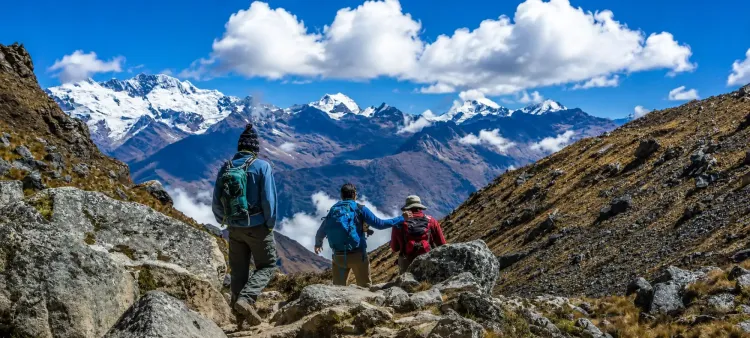
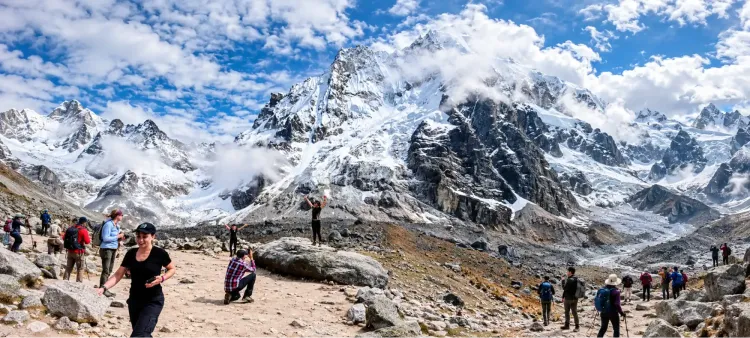
One of its greatest attractions is the constant change of scenery. In just a few days, you can move from glacial lakes and snow-capped mountains to cloud forest, coffee plantations and much warmer valleys before approaching Machu Picchu.
At Dreamy Tours, we believe that preparing properly for this route means understanding much more than the itinerary. Altitude, difficulty, season, packing, duration and Machu Picchu availability can significantly affect the experience.
If you are still comparing routes, you can also review our best alternative treks in Cusco before making a decision.
What is the Salkantay Trek?
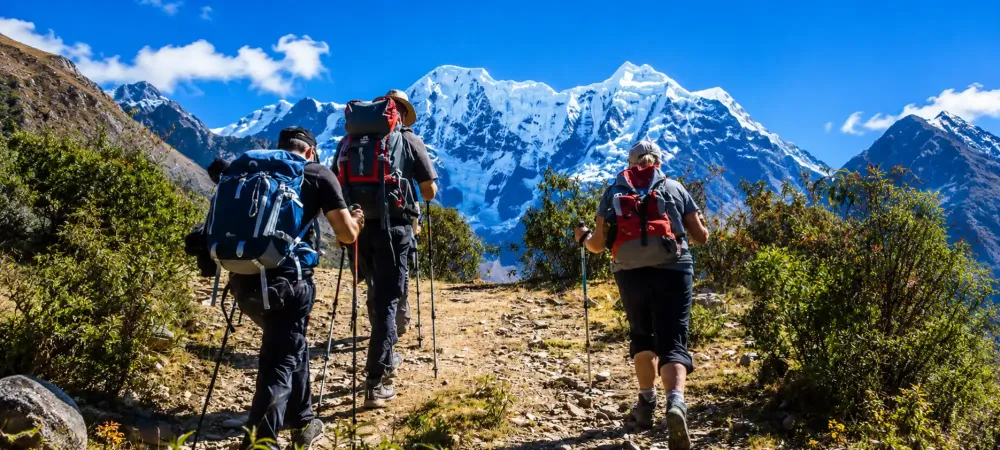
The Salkantay Trek is a multi-day hike through the Vilcabamba mountain range in the Cusco region. Its name comes from Salkantay Mountain, one of the dominant peaks along the route.
Unlike the Classic Inca Trail, the experience focuses especially on nature and dramatic changes in ecosystems. The itinerary crosses high-Andean valleys, glacial landscapes and mountain passes before descending toward cloud forest.
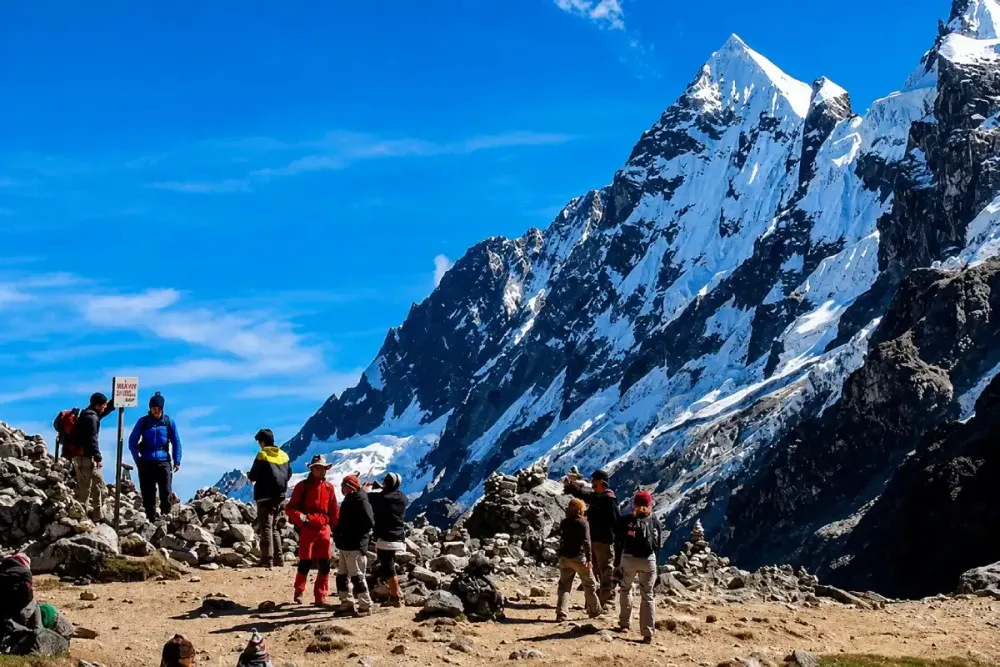
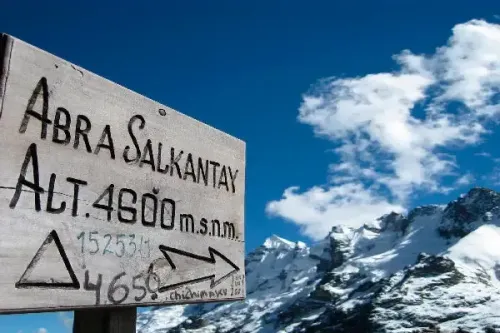
The highest section of the route is around Salkantay Pass, at approximately 4,600 meters above sea level. From there, the trail begins a long descent toward progressively greener and warmer environments.
Another important difference is that the traditional Salkantay route does not use the limited Inca Trail permit system required for the Classic Inca Trail. If you want to explore that comparison in greater detail, read our Inca Trail vs Salkantay guide.
What places can you visit during the Salkantay Trek?
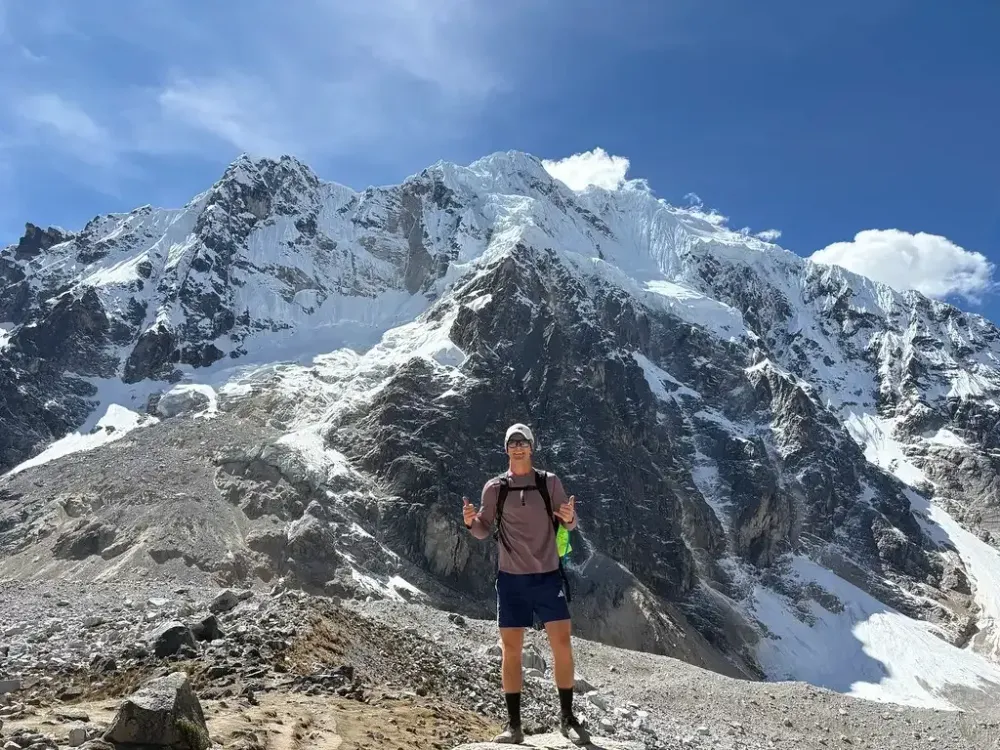
The exact route depends on whether you choose four or five days, but several landscapes define the essence of the Salkantay Trek. On our itineraries, the journey begins in high-Andean environments and ends near the subtropical forests surrounding Machu Picchu.
Humantay Lake can be visited during the first day. The route then continues toward Salkantay Pass, followed by the descent toward Chaullay, Collpapampa and the warmer environments of the cloud forest.
On our five-day version, we also include Lucmabamba and Llactapata. This option allows travelers to experience the transition toward agricultural areas more gradually and approach Machu Picchu from a different perspective.
| Place or section | Approximate altitude | What characterizes this stage? |
|---|---|---|
| Soraypampa | 3,700–3,900 m | Beginning of the trek and high-Andean environment |
| Humantay Lake | ≈ 4,200 m | Glacial lake and first major altitude experience |
| Salkantay Pass | ≈ 4,600 m | Highest point and one of the most demanding stages |
| Chaullay / Collpapampa | ≈ 3,000 m | Transition toward cloud forest |
| Lucmabamba | ≈ 2,000 m | Crops, coffee and warmer conditions |
| Llactapata | Varies by section | Archaeological site and views toward the Machu Picchu region |
| Machu Picchu Pueblo | ≈ 2,040 m | Final stage before visiting Machu Picchu |
These elevations should be considered reference values because the exact route and campsites may vary. The most important point is the significant altitude change you will experience over just a few days.
How difficult is the Salkantay Trek?
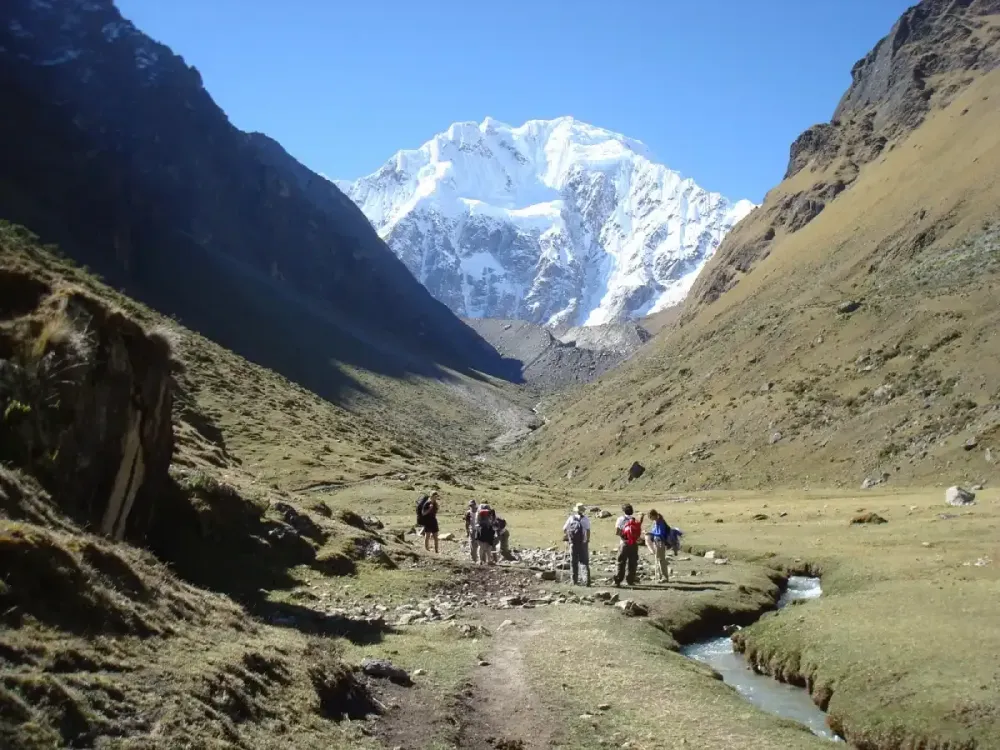
The difficulty of the Salkantay Trek can be considered moderate to challenging. You do not need climbing experience or technical mountaineering skills, but you do need enough endurance to hike for several hours on consecutive days.
The most difficult section is usually the day that reaches Salkantay Pass. On our four-day itinerary, this stage can include approximately 22 km and around eight to nine hours of hiking, combining an ascent at high altitude with a long descent.
Difficulty also depends on your fitness level, previous hiking experience, backpack weight, weather conditions and acclimatization. Two travelers can therefore experience the exact same route very differently.
You can read our complete guide to Salkantay Trek difficulty if you want to understand which stages require the greatest effort.
What is the altitude of the Salkantay Trek and how should you acclimatize?
Altitude is one of the factors that most influences this trek. Cusco is located at approximately 3,400 meters above sea level, and the route later climbs to around 4,600 meters at Salkantay Pass.
Being physically fit helps, but it does not guarantee perfect adaptation. A traveler who trains regularly at sea level can still experience headaches, fatigue or a noticeable reduction in walking pace at altitude.
At Dreamy Tours, we recommend arriving in Cusco with enough time before beginning the trek. For many travelers, allowing two or three days for acclimatization is a sensible approach, with progressive activities and without intense physical effort immediately after arrival.
If altitude is one of your main concerns, our Salkantay Trek altitude guide explains how elevation changes throughout the journey and why Salkantay Pass requires special attention.
What is the best time to hike the Salkantay Trek?
Weather conditions along the Salkantay Trek change considerably because of altitude. The same route can bring very cold mornings in the mountains and significantly warmer temperatures after descending toward the cloud forest.
The drier season in this part of Cusco runs mainly from May to September. These months generally offer more stable conditions and a lower probability of prolonged rainfall, although nights and early mornings can be very cold.
April and October can also be good options if you are looking for a balance between greener landscapes, fewer visitors and reasonably stable conditions. Between November and March, rainfall, mud and the possibility of access disruptions increase.
Before choosing your dates, read our guide to the best time to hike the Salkantay Trek, where we explain the route month by month.
Salkantay Trek 4 or 5 days: which one should you choose?
One of the most important decisions is choosing between the Salkantay Trek to Machu Picchu 4 Days and the Salkantay Trek and Llactapata 5 Days.
The four-day version is more concentrated. After crossing the high-mountain section, the third day continues toward Hidroeléctrica and Machu Picchu Pueblo, leaving the fourth day for the visit to Machu Picchu.
The five-day option includes more time in areas such as Lucmabamba and adds a separate hiking day through Llactapata. It is not simply the same route completed more slowly, but a journey that adds extra experiences before reaching Machu Picchu.
If you are still undecided, our comparison Salkantay Trek 4 or 5 Days: Differences and Which One to Choose explains how the pace and daily stages change.
What should you pack for the Salkantay Trek?
Packing for Salkantay means preparing for several climates within the same journey. At higher elevations, you may encounter cold temperatures, wind, intense sun and rapid weather changes, while lower sections can become warm and humid.
A layering system is recommended, including a base layer, insulating layer and waterproof outer layer. Your footwear should already be broken in before the trip, because wearing brand-new boots on a multi-day trek is an impressively efficient way to manufacture blisters.
Sun protection, a hat, gloves, reusable water bottle, insect repellent, personal documents and a small daypack are also important.
You can review our complete guide on what to pack for the Salkantay Trek to organize clothing, footwear, backpack and accessories more precisely.
Do you need a permit or entrance ticket for the Salkantay Trek?
It is important to distinguish Salkantay from the Inca Trail. You do not need an Inca Trail Network permit to hike the traditional Salkantay route.
However, local access controls and entrance fees exist in certain sections of the route. The District Municipality of Mollepata has specific regulations for the trail toward Humantay Lake, and regional authorities currently participate in the management of the Humantay-Salkantay-Machupicchu route.
These local fees are not Ministry of Culture tickets and should not be confused with a “Salkantay Tourist Ticket.” They are also separate from Machu Picchu entrance tickets.
On our programs, always check the Included section, where we specify which entrance fees and services are part of each experience. This avoids having to interpret each individual payment made during the journey.
What Machu Picchu ticket do you need after Salkantay?
When the itinerary ends with a visit to Machu Picchu, you need an official entrance ticket for a specific date, circuit, route and entry time. The official platform of Peru's Ministry of Culture is TuBoleto Cultura.
To register and purchase a ticket, you need a national ID, foreign resident card or passport, together with an email address. The platform then requires you to select Machu Picchu, the circuit, route, date, time and visitor category.
In the official tariff documentation currently available, standard Machu Picchu routes maintain a reference price of S/152 for general foreign admission, S/77 for students and S/70 for minors. Certain special routes, such as the Great Cavern, use higher rates.
| Access / concept | Official reference price | Document or condition |
|---|---|---|
| Machu Picchu, standard routes | General S/152 | Valid passport, national ID or foreign resident card |
| Machu Picchu, student | S/77 | Valid document and student accreditation |
| Machu Picchu, minor | S/70 | Traveler aged 3 to 17 and corresponding document |
| Great Cavern Route | General S/200 | Specific ticket for the selected route and date |
| Salkantay Trek | Does not use Inca Trail permit | Local access fees may apply |
| Humantay Lake | Local management | Locally regulated access control |
| BTC | Does not provide access to Salkantay or Machu Picchu | Only covers designated attractions |
For specific high-season dates in 2026, the Ministry of Culture established a maximum capacity of 5,600 visitors per day at Machu Picchu, so ticket availability remains a key factor for any Salkantay itinerary that ends there.
Do you need the Cusco Tourist Ticket for Salkantay?
No. The Cusco Tourist Ticket (BTC) is not a permit for hiking Salkantay, visiting Humantay Lake or entering Machu Picchu.
The BTC covers a specific group of attractions in Cusco. The full ticket for foreign visitors currently costs S/130 and is valid for ten days, while the foreign student ticket costs S/70 under the conditions established by COSITUC.
Partial tickets cost S/70 for foreign visitors. For example, Circuit III includes Pisac, Ollantaytambo, Chinchero and Moray, so it may be useful if you combine Salkantay with an independent visit to the Sacred Valley.
You can check the official Cusco Tourist Ticket rates before adding other visits to your itinerary.
Is the Salkantay Trek worth it?
For travelers who enjoy mountains and are prepared to hike for several days, yes. One of Salkantay's greatest strengths is that the landscape never remains static.
You can begin the journey walking among snow-capped peaks and glacial lakes, cross a pass at approximately 4,600 meters and, only a few hours later, begin to notice much denser vegetation. That transformation continues until you reach the Machu Picchu region.
At Dreamy Tours, we offer both the Salkantay Trek to Machu Picchu 4 Days and the Salkantay Trek and Llactapata 5 Days so travelers can adapt the experience to their available time and preferred pace.
If you want to experience Inca archaeological sites throughout much of the trek, the Inca Trail offers a different type of journey. If you prioritize nature, high mountains and dramatic ecosystem changes, Salkantay has a character of its own.
Frequently Asked Questions about the Salkantay Trek
Where is the Salkantay Trek located? The route is located in the Cusco region, within the Peruvian Andes, and passes through areas of the Vilcabamba mountain range before continuing toward the Machu Picchu area.
What is the highest point of the Salkantay Trek? The highest point is the Salkantay Pass, located at approximately 4,600 meters (15,090 feet) above sea level.
Do you need to be in good physical condition? Yes. Technical mountaineering experience is not required, but it is recommended to have the stamina to hike for several hours and to be properly acclimatized before starting.
Does the Salkantay Trek go to Machu Picchu? The main tourist routes of the Salkantay Trek continue toward Machu Picchu Pueblo (Aguas Calientes) and culminate with a visit to Machu Picchu.
How many days does the Salkantay Trek take? The most common options include 4-day and 5-day itineraries. The best alternative depends on your available time, hiking pace, and the places you want to include along the route.
Personal travel advice
Plan your trip with Dreamy Tours
Start a tailored journey with our exclusive tours and custom trips across Peru and other Latin American countries.