Search the blog
Tabla de contenidos
Altitude is one of the most important factors to consider before hiking the Salkantay Trek.
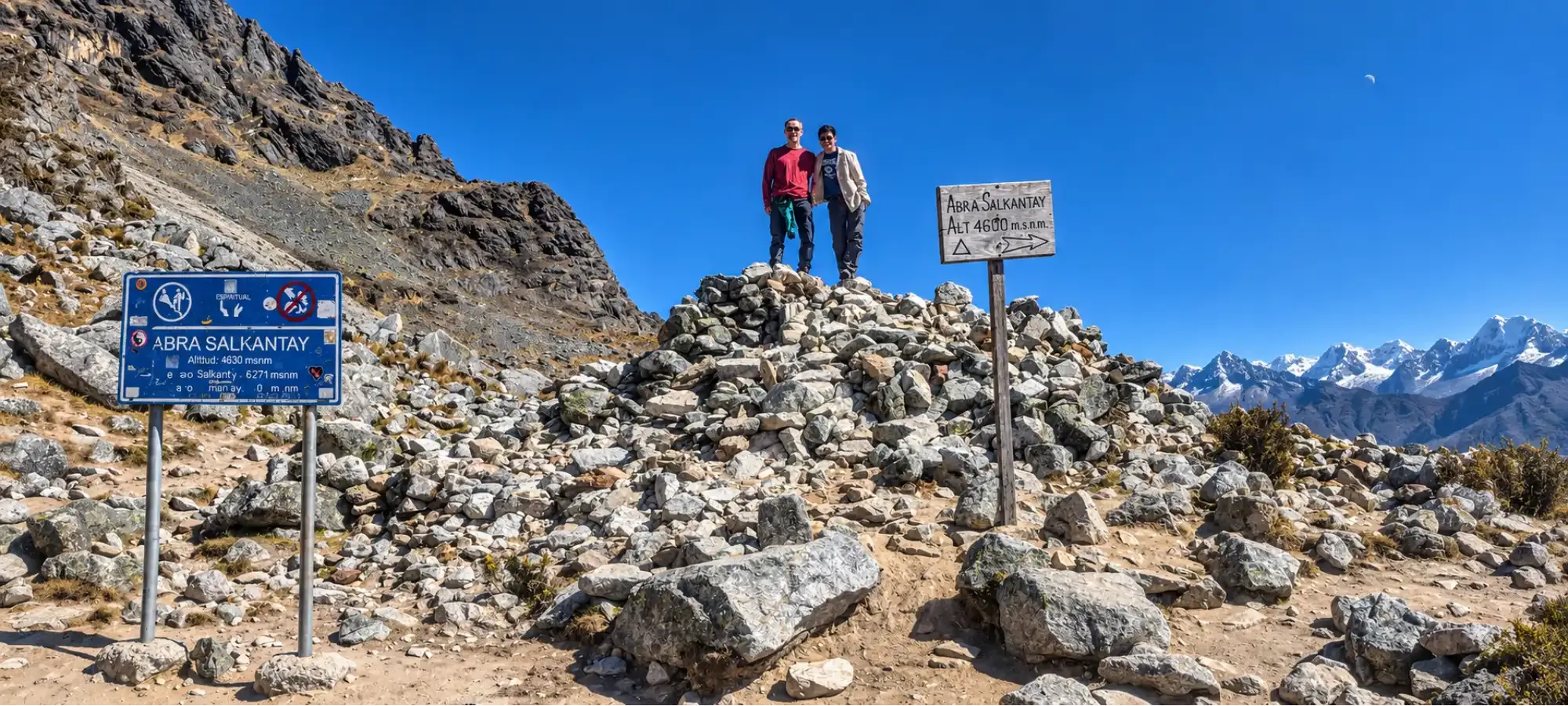
The route crosses high-altitude Andean terrain and reaches approximately 4,600 meters above sea level at Salkantay Pass, the highest point of the trek. After crossing the pass, the trail gradually descends toward warmer and lower environments on the way to Machu Picchu.
For many travelers, altitude is a bigger challenge than distance.
You can be physically fit and still feel the effects of hiking above 4,000 meters. That is why proper acclimatization in Cusco and understanding how your body responds to elevation can make a major difference.
If you are still learning about the route itself, our Salkantay Trek Guide explains the itinerary, landscapes, difficulty and main trekking options.
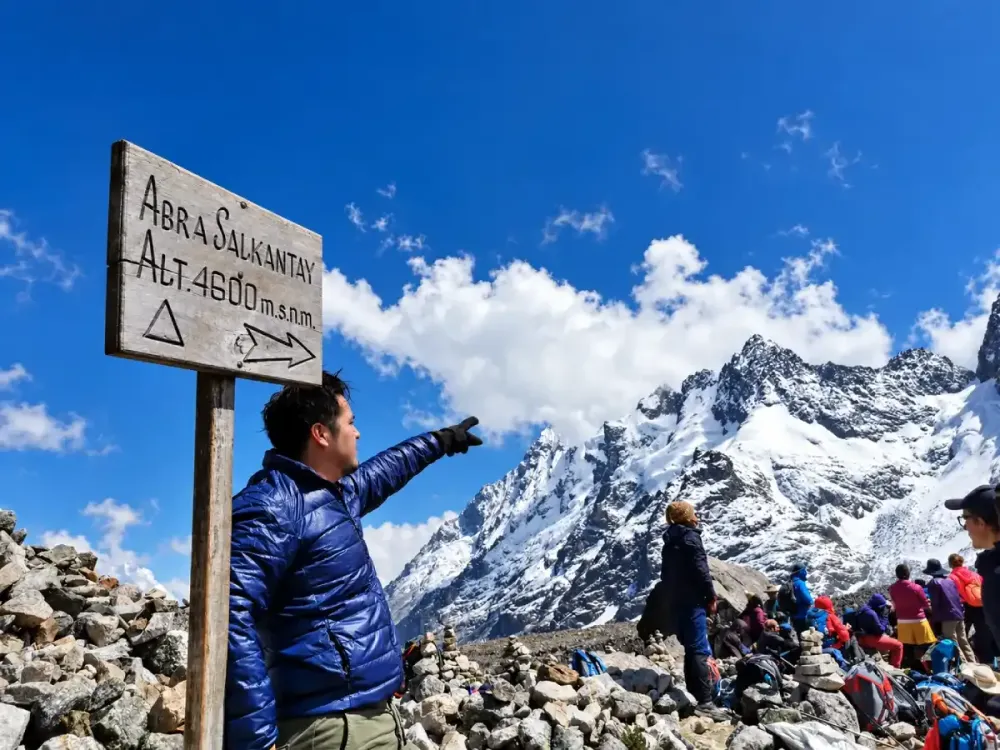
What is the highest altitude on the Salkantay Trek?
The highest point of the Salkantay Trek is Salkantay Pass, located at approximately 4,600 meters above sea level.
This is one of the most demanding moments of the route.
The combination of climbing, cold temperatures and reduced oxygen means even experienced hikers often need to slow down.
At this altitude, maintaining the same walking pace you use at lower elevations should not be the goal.
A steady rhythm, controlled breathing and regular short breaks are usually much more effective.
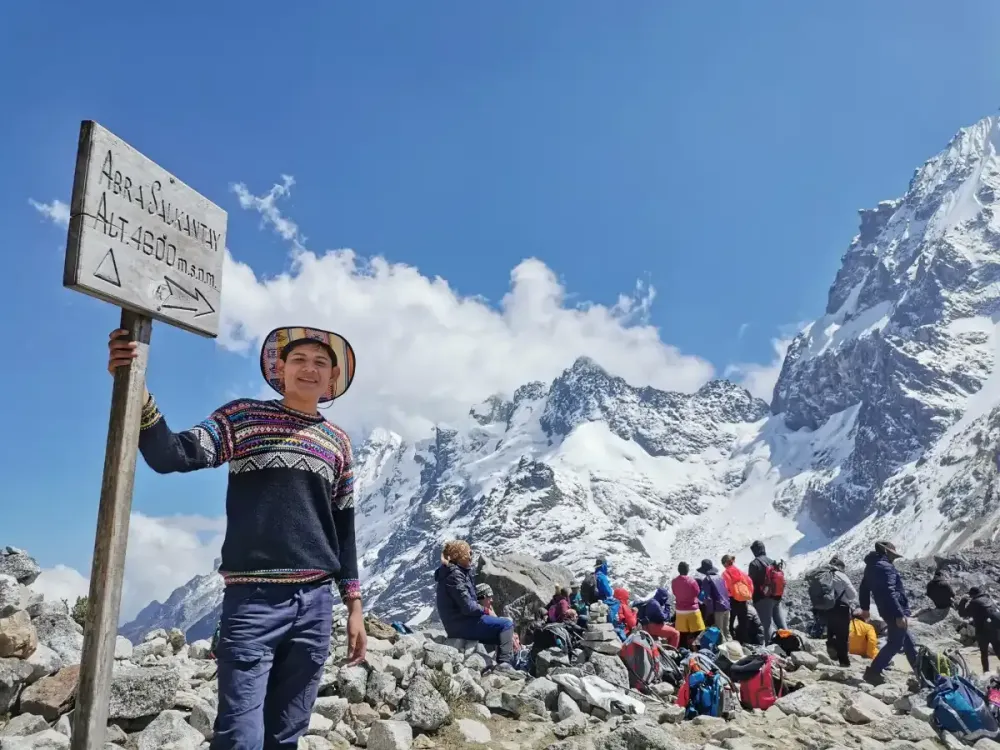
Why does altitude make the Salkantay Trek harder?
As altitude increases, atmospheric pressure decreases.
This means your body receives less available oxygen with every breath.
As a result, uphill walking requires more effort and your heart and breathing rate may increase.
You may notice that you need more breaks or that your normal hiking pace feels much slower.
That does not necessarily mean you are unfit.
It is simply your body responding to high altitude.
This is why Salkantay Trek difficulty should always be considered together with elevation gain, trail conditions and daily hiking time.
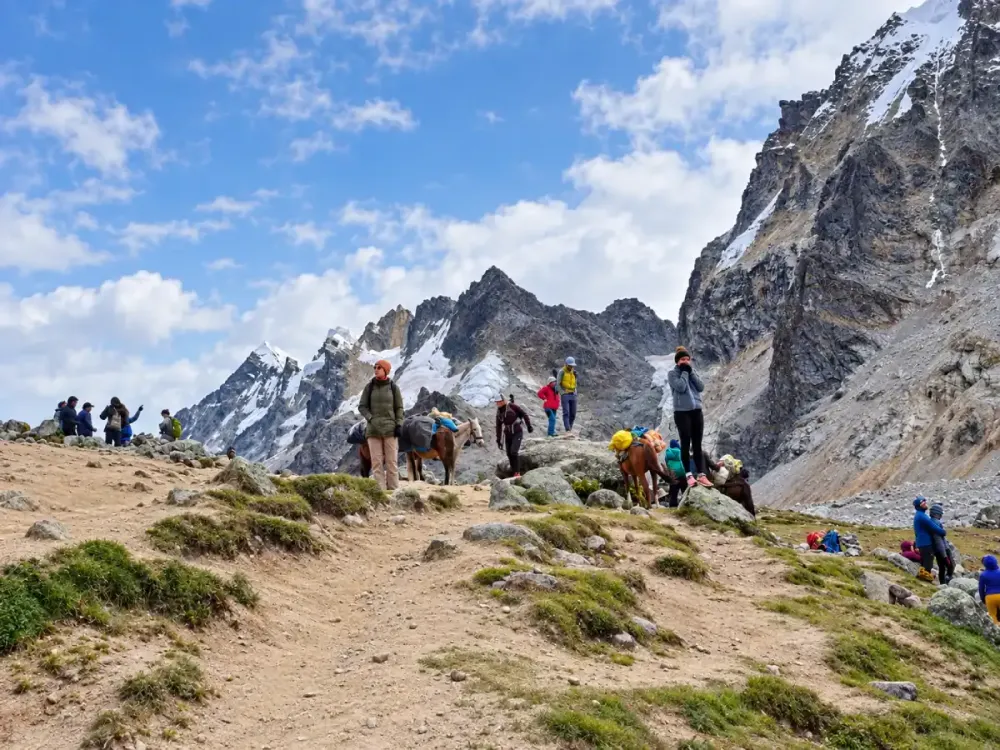
How high is Cusco before the trek?
Cusco sits at roughly 3,400 meters above sea level.
This means your acclimatization can begin before the trek even starts.
Travelers arriving from Lima, coastal destinations or cities near sea level may feel the difference almost immediately.
At Dreamy Tours, we recommend arriving in Cusco with enough time to adjust before starting the Salkantay Trek.
During those first days, lighter activities, proper rest and gradual movement can help you understand how your body responds before going higher into the Andes.
How does altitude change during the Salkantay Trek?
The elevation does not remain constant throughout the route.
The first sections take place in high Andean environments, and the trail gradually climbs toward Salkantay Pass.
After reaching the highest point, the route begins to descend.
That descent creates one of the most noticeable transitions of the trek.
Cold, open mountain landscapes gradually give way to greener valleys, warmer temperatures and more humid conditions.
Physically, this also changes the experience.
At higher elevations, altitude and cold are often the main challenges. Later, walking may still be long and tiring, but breathing usually becomes easier as elevation decreases.
What is acclimatization?
Acclimatization is the process through which your body gradually adapts to lower oxygen availability at higher elevations.
It does not happen instantly.
Your body needs time.
That is why flying into Cusco and starting a high-altitude trek immediately is not the best strategy.
Spending time at altitude before reaching Salkantay Pass gives your body an opportunity to adjust gradually.
Everyone responds differently, so two travelers at the same elevation may feel completely different.
How many days should you acclimatize before the Salkantay Trek?
There is no exact number that works for everyone.
However, travelers arriving from low-altitude destinations usually benefit from spending at least a couple of days in Cusco before beginning a high-altitude trek.
During that time, avoid pushing yourself too hard.
Gentle walks, sightseeing and moderate activities are usually better than intense exercise immediately after arrival.
The goal is to let your body adjust, not to exhaust yourself before the trek begins.
What altitude symptoms can occur?
Some travelers notice very little.
Others may experience mild symptoms during their first days at altitude.
These can include:
- Headache.
- Fatigue.
- Shortness of breath during activity.
- Difficulty sleeping.
- Dizziness.
- Reduced appetite.
- Nausea.
- The intensity varies from person to person.
The important thing is to pay attention to whether symptoms are improving or getting worse.
If discomfort becomes stronger during the trek, tell your guide immediately rather than trying to push through it.
What is altitude sickness?
Altitude sickness can occur when the body ascends too quickly without enough time to adapt.
Early symptoms can include headache, nausea, dizziness and unusual fatigue.
More serious symptoms require immediate attention.
On a high-altitude route, significant or worsening symptoms should never be ignored simply because you want to complete the trek.
Your guide should always be informed if you begin to feel unwell.
Can you prevent altitude sickness?
There is no way to guarantee that altitude symptoms will never occur, but you can reduce the risk.
Useful steps include:
- Arrive in Cusco before the trek.
- Avoid intense exercise immediately after arrival.
- Stay properly hydrated.
- Eat regularly.
- Sleep well.
- Walk at a steady pace.
- Avoid trying to match faster hikers.
- Follow your guide’s instructions.
- Report worsening symptoms early.
- The most valuable factor is usually time.
Giving your body enough time to adapt is far more useful than trying to “beat” altitude through fitness alone.
Does drinking water prevent altitude sickness?
Hydration is important, but drinking water does not eliminate altitude sickness.
Staying hydrated helps your body function properly and can prevent dehydration from making headache or fatigue worse.
However, the main issue is still exposure to high altitude.
Water supports acclimatization, but it does not replace it.
Does fitness help with altitude?
Fitness helps with the physical demands of trekking, but it does not guarantee perfect acclimatization.
A strong runner arriving directly from sea level can still struggle at 4,000 meters.
A moderately fit traveler who has already spent several days in Cusco may feel much better.
Fitness and acclimatization are different.
You need both for the most comfortable experience.
What is the hardest high-altitude section?
Salkantay Pass is the highest point and one of the sections where altitude is felt most strongly.
The climb can require a slower pace and more frequent breaks.
Weather also matters.
High-altitude areas can be cold and windy, and conditions may change quickly.
This is why clothing and preparation are important.
Our guide on what to pack for the Salkantay Trek explains what to bring for cold mornings, wind, sun and changing mountain conditions.
Does weather make altitude feel harder?
Yes.
Cold temperatures, wind and rain can make a high-altitude hiking day feel more demanding because your body is also using energy to stay warm.
During the dry season, conditions are usually more stable, but nights and early mornings can still be very cold.
During wetter months, mud and slippery trails can add extra effort.
Our guide to the best time to hike the Salkantay Trek explains how seasonal conditions change the experience.
Is Salkantay higher than the Inca Trail?
Yes.
Salkantay Pass reaches approximately 4,600 meters above sea level.
The highest point on the Classic Inca Trail, Dead Woman’s Pass, is around 4,200 meters.
From a maximum-elevation perspective, Salkantay goes higher.
That does not automatically mean the entire trek is more difficult.
The Inca Trail has its own challenges, including stone staircases, repeated climbs and long descents.
But if your main concern is altitude, Salkantay requires particularly careful acclimatization.
Does altitude differ between the 4-day and 5-day Salkantay Trek?
The 4-day and 5-day itineraries may distribute hiking time, distances and activities differently.
However, both involve high-altitude terrain.
The Salkantay Trek to Machu Picchu 4 Days concentrates the experience into a shorter itinerary.
The Salkantay Trek 5 Days spreads the route differently and may include additional sections depending on the program.
Choosing five days does not remove the effects of altitude.
Proper acclimatization is still important for both options.
What pace should you keep at high altitude?
A slow and steady pace is usually best.
One of the most common mistakes is trying to keep up with faster hikers.
At altitude, everyone responds differently.
Walking slowly helps control breathing and avoids wasting energy on short bursts of speed.
Near Salkantay Pass, a steady rhythm is often more effective than walking quickly and stopping repeatedly.
The goal is not to arrive first.
The goal is to arrive feeling well.
What should you wear at the highest elevations?
At the highest sections, you should be prepared for cold temperatures, wind and rapid weather changes.
A layering system works better than relying on one bulky jacket.
Thermal clothing, a warm mid-layer, waterproof outer layer, gloves and a hat can all be useful.
Sun protection is also important.
UV exposure can be strong at altitude even when the air feels cold.
Later in the trek, as elevation drops, lighter clothing becomes more comfortable.
Should you worry about Salkantay Trek altitude?
You should respect it, not fear it.
Altitude is part of what makes the Salkantay Trek such a remarkable high-Andean experience.
The biggest problems usually appear when travelers underestimate it, arrive without acclimatization, walk too fast or ignore symptoms.
At Dreamy Tours, we consider preparation to begin before the first day of hiking.
Arriving in Cusco early, acclimatizing, walking at your own pace and communicating with your guide can make a huge difference.
Frequently asked questions about Salkantay Trek altitude
What is the highest point of the Salkantay Trek?
Salkantay Pass is the highest point of the standard route at approximately 4,600 meters above sea level.
How high is Cusco?
Cusco sits at roughly 3,400 meters above sea level, which makes it a useful place to begin acclimatizing before the trek.
Do I need to acclimatize before Salkantay?
Yes. Travelers coming from low-altitude destinations should allow time in Cusco before beginning the trek.
Is shortness of breath normal?
At high altitude, physical effort can feel harder and you may need to walk more slowly. Significant or worsening symptoms should always be reported to your guide.
Can fit people get altitude sickness?
Yes. Good fitness helps with hiking but does not guarantee that your body will adapt automatically to elevation.
Is Salkantay higher than the Inca Trail?
Yes. Salkantay Pass reaches about 4,600 meters, while the highest point of the Classic Inca Trail is around 4,200 meters.
Does the route descend after Salkantay Pass?
Yes. After crossing the pass, the trail gradually descends toward lower, warmer and greener environments.
Can I hike Salkantay if I have never been above 4,000 meters?
Yes, but proper acclimatization becomes especially important. Arriving in Cusco early and paying attention to how your body responds can help you prepare for the higher sections.
Personal travel advice
Plan your trip with Dreamy Tours
Start a tailored journey with our exclusive tours and custom trips across Peru and other Latin American countries.