Search the blog
Tabla de contenidos
Choosing the best time to hike the Salkantay Trek can make a noticeable difference to your experience.
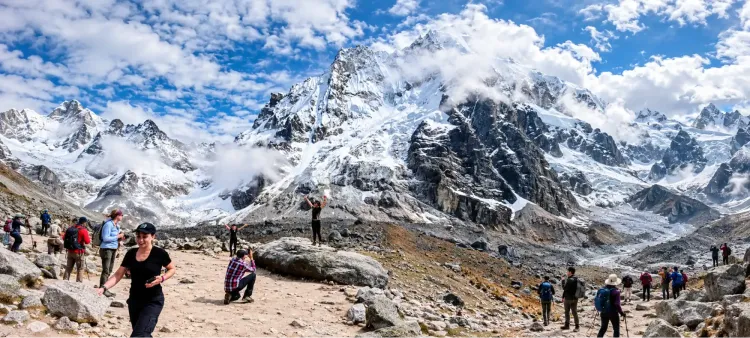
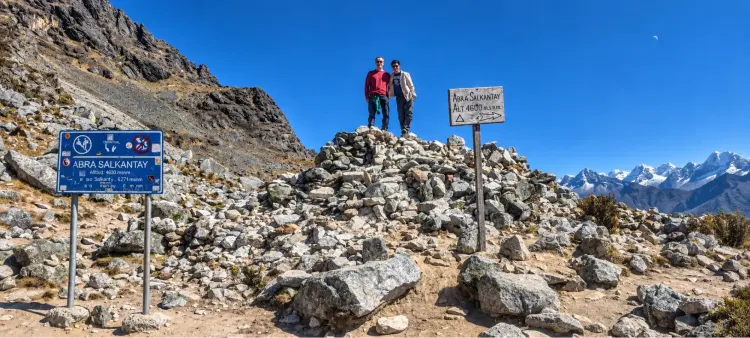
The route crosses high-altitude Andean landscapes near Mount Salkantay before descending toward warmer and more humid environments on the way to Machu Picchu. Because of these major changes in elevation, Salkantay Trek weather can vary considerably during the same journey.
In general, the dry season offers the most stable hiking conditions. However, shoulder-season months such as April, May, September and October can also be excellent choices for travelers who prefer greener landscapes and fewer visitors.
For many hikers, May, June and September offer some of the best overall conditions.
If you are still learning about the complete route, our Salkantay Trek Guide explains the itinerary, altitude, difficulty and main trekking options.
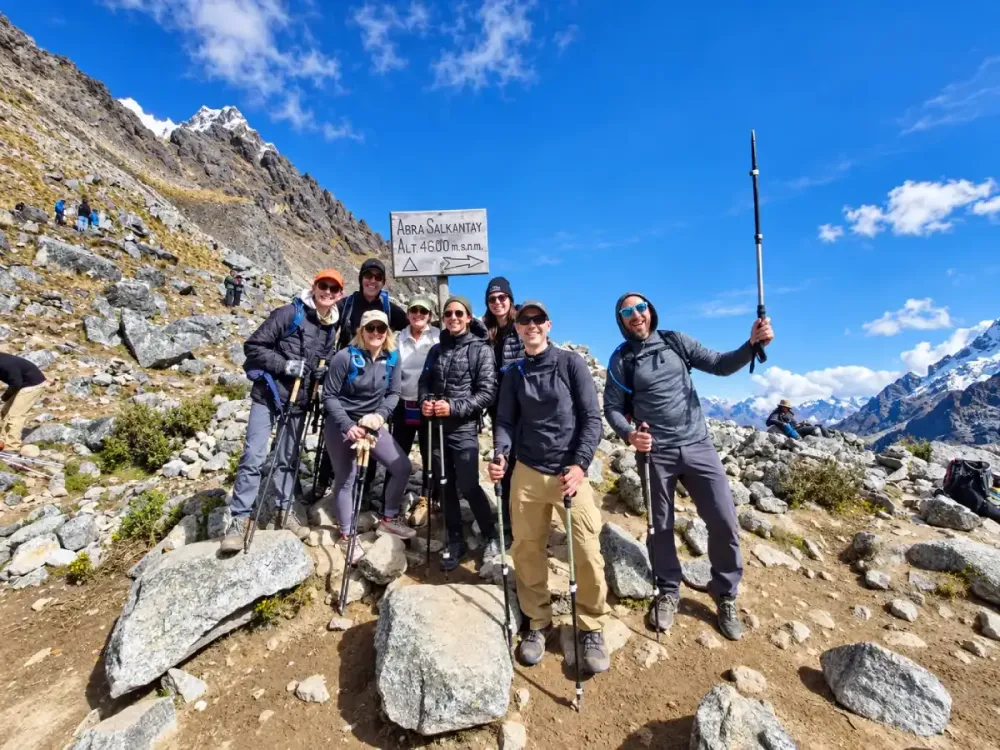
When is the best time to hike the Salkantay Trek?
The best time for the Salkantay Trek is generally between April and October, when rainfall is lower and trail conditions tend to be more stable.
During these months, hikers usually have a better chance of clear mountain views and firmer trails.
May and September are particularly attractive because they often combine favorable weather with fewer travelers than the busiest months of July and August.
June is another excellent option for dry weather, although nights at higher elevations can be very cold.
So when deciding on the best month for the Salkantay Trek, it is useful to think beyond rainfall. Temperature, crowds, landscape conditions and your tolerance for unpredictable weather should also influence your decision.
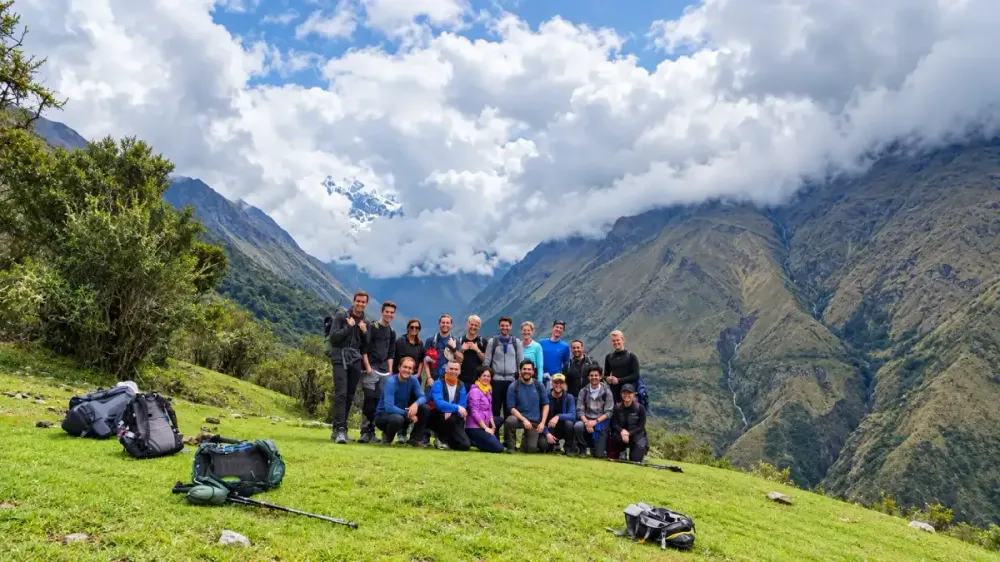
Salkantay Trek during the dry season
The Salkantay dry season generally runs from around April or May through October.
Rainfall becomes less frequent during this period, making the trail more comfortable for multi-day hiking.
Drier conditions usually mean less mud and a better chance of seeing the surrounding mountains without heavy cloud cover.
However, dry season does not mean warm weather.
At higher elevations, nights and early mornings can be extremely cold, particularly around June and July.
This means warm layers remain essential even if the weather forecast shows clear skies throughout your trek.
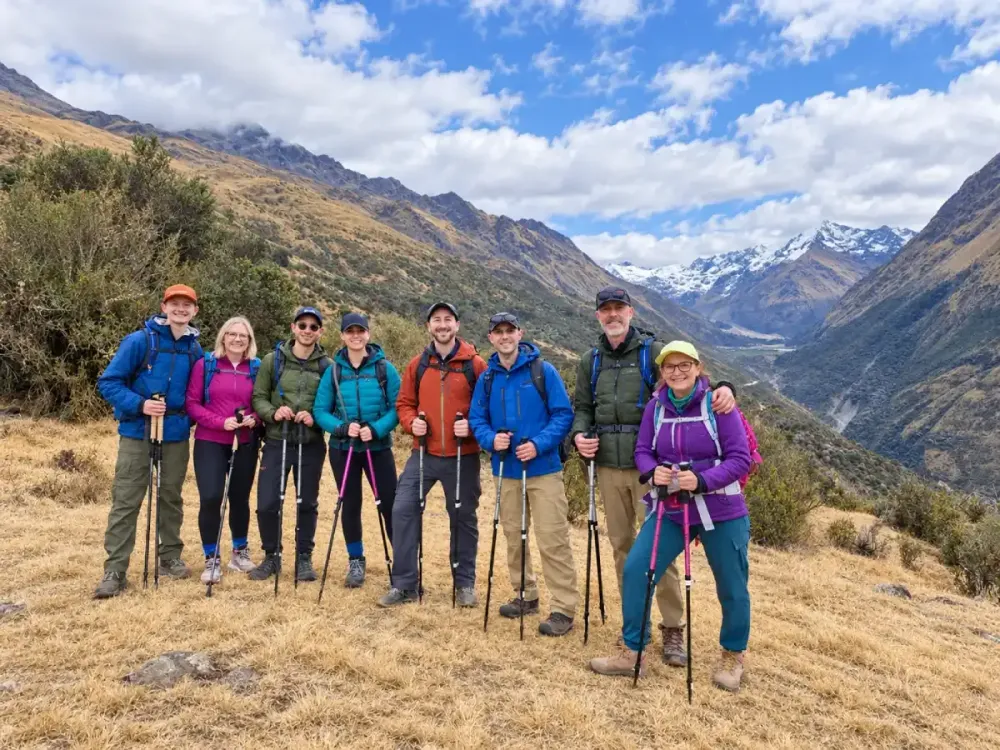
Salkantay Trek in May
May is one of the best months to hike the Salkantay Trek.
The rainy season is ending, while the landscapes often remain green from the previous months of precipitation.
Trail conditions usually become more stable, and the likelihood of clear mountain views increases.
May also tends to be less crowded than July and August.
For travelers who want a combination of good weather, green scenery and moderate visitor numbers, May is an excellent choice.
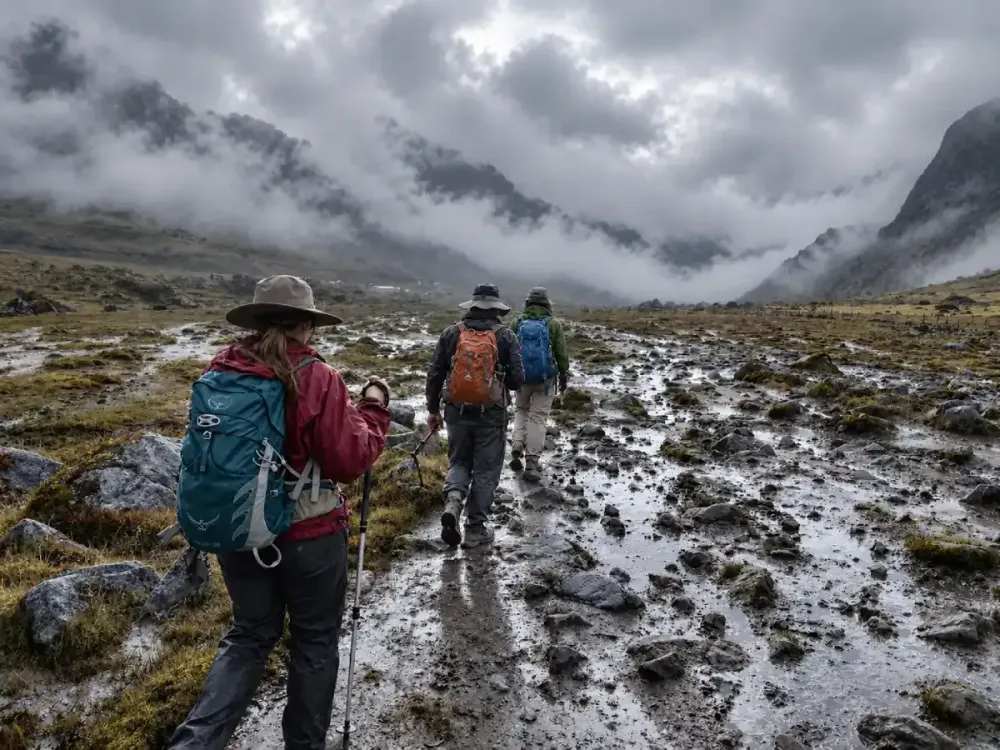
Salkantay Trek in June
June falls firmly within the dry season and generally offers favorable hiking conditions.
Rainfall is relatively low, and hikers often have good opportunities to see Mount Salkantay and the surrounding peaks under clear skies.
The main challenge is temperature.
Nights at high altitude can become very cold, particularly around mountain camps.
June is also an important tourism month in Cusco, so travelers planning to combine the trek with Machu Picchu should organize their trip in advance.
Salkantay Trek in July and August
July and August are among the driest months for hiking the Salkantay Trek.
These months usually offer firm trails, lower rainfall and good visibility in the mountains.
For hikers whose main priority is avoiding rain, they can be excellent choices.
The trade-off is that July and August are also popular travel months for international visitors.
Cusco and Machu Picchu receive higher numbers of travelers, and nights in the mountains can be particularly cold.
If you do not mind traveling during peak season, both months offer strong conditions for trekking.
Salkantay Trek in September
September is one of the most balanced months for the Salkantay Trek.
Dry-season conditions generally continue, while temperatures may begin to feel slightly milder than during June or July.
Visitor numbers also tend to ease compared with the busiest part of the season.
This makes September particularly appealing to travelers who want good hiking weather without choosing the peak months.
For that reason, September is often one of the first months we would consider when balancing weather, temperature and crowds.
Salkantay Trek in October
October is a transition month between the dry and rainy seasons.
Many days can still be suitable for trekking, particularly earlier in the month, but rainfall becomes increasingly possible as the month progresses.
The advantage is that visitor numbers are generally lower than in July or August, while vegetation begins to become greener again.
October can therefore work very well for travelers who prefer a quieter trail and are comfortable with slightly less predictable weather.
Can you hike the Salkantay Trek during the rainy season?
Yes, but you should expect a different experience.
The Salkantay rainy season generally runs from November through March.
During this period, hikers are more likely to encounter rain, muddy trails, wet conditions and increased cloud cover in the mountains.
Some parts of the trail can also become more slippery.
The positive side is that the landscape becomes much greener and the trail often feels quieter.
For some travelers, that is an attractive trade-off.
However, if your priority is more predictable hiking conditions, the dry season is generally the safer choice.
Is January or February a good time for the Salkantay Trek?
January and February are typically among the wettest months.
Rain does not necessarily fall continuously throughout the day, but showers are more frequent and trail conditions can become muddy.
Heavy rainfall can also occasionally affect roads, access routes or trekking conditions.
If your travel dates are flexible, other months normally provide more reliable weather for the Salkantay Trek.
Travelers visiting during January or February should always check current route conditions before departure.
Is April a good month for the Salkantay Trek?
April can be an excellent choice.
It marks the transition from the rainy season toward drier conditions.
Some rainfall is still possible, particularly earlier in the month, but landscapes are often beautifully green and visitor numbers remain lower than during the main dry-season months.
For travelers who do not mind some weather uncertainty, April offers an attractive balance between scenery, fewer crowds and improving trail conditions.
When are the best views of Mount Salkantay?
The dry season usually offers the best chances of clear mountain views.
May, June, July, August and September are particularly favorable months for travelers hoping to see Mount Salkantay without extensive cloud cover.
Still, mountain weather is unpredictable.
Even during the dry season, clouds can move in quickly and conditions may change within hours.
No month can guarantee completely clear skies every day.
When is the coldest time on the Salkantay Trek?
The coldest nights usually occur during the Andean winter, particularly in June and July.
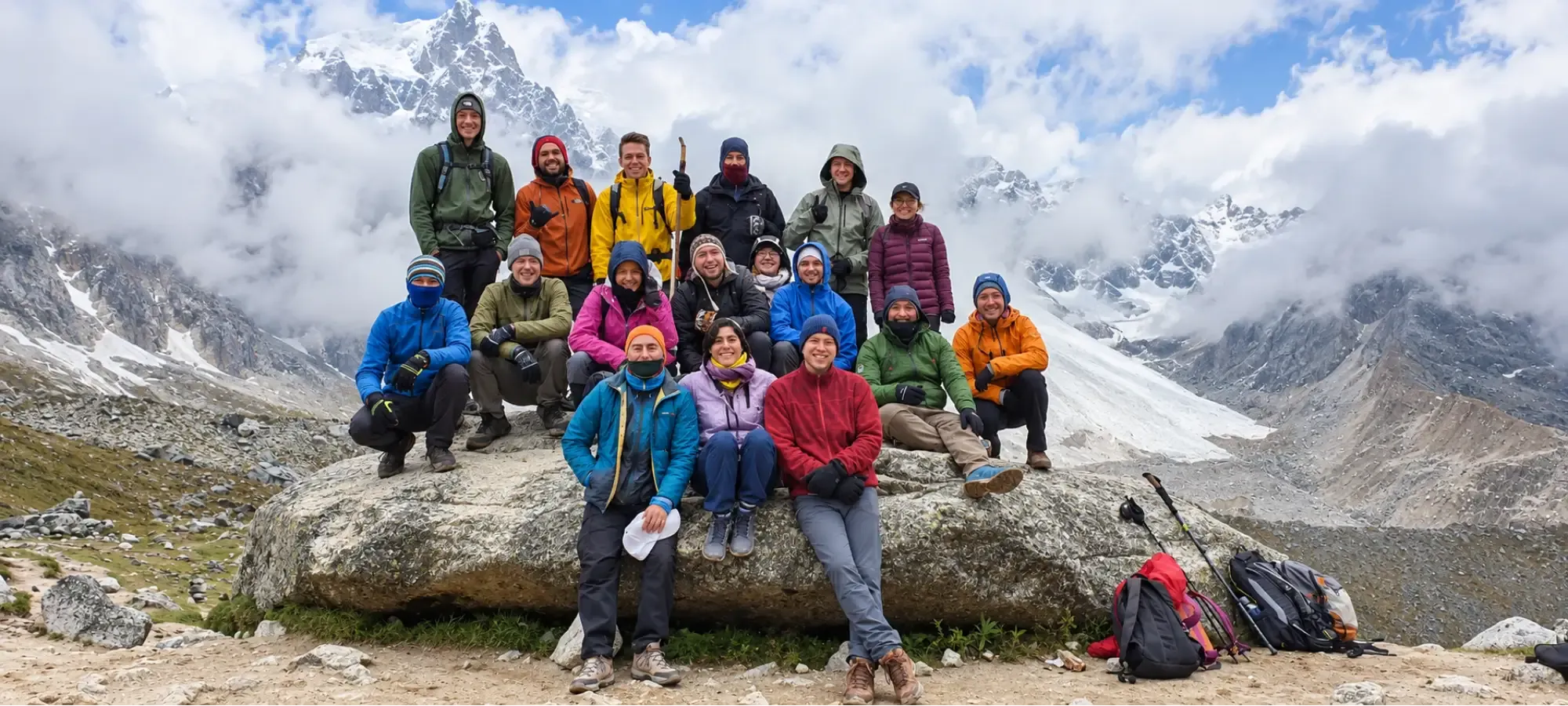
Daytime sunshine can feel surprisingly strong, but temperatures fall quickly after sunset at higher elevations.
This temperature contrast makes layering especially important.
You may begin a hiking day wearing warm clothing and later switch to lighter layers as the route descends toward lower and warmer areas.
How does the weather change along the Salkantay route?
One of the most interesting features of the Salkantay Trek is the variety of climates encountered along the way.
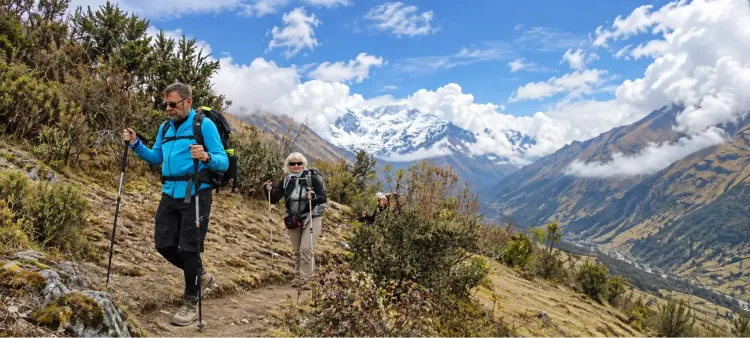
The first part of the route passes through high-altitude Andean environments, where temperatures can be low and weather conditions change quickly.
After crossing the high mountain sections, the trail gradually descends toward cloud forest and warmer valleys.
As elevation decreases, temperatures rise and humidity becomes more noticeable.
This means your packing strategy needs to cover very different environments during the same trek.
Our guide on what to pack for the Salkantay Trek will go deeper into clothing and equipment for each section of the route.
Does weather affect Salkantay Trek difficulty?
Yes.
Altitude, elevation gain and long hiking days are the main factors behind the physical challenge, but weather can make the route feel considerably harder.
During the dry season, cold temperatures may be one of the main difficulties.
During the rainy season, mud, wet trails and slippery sections can require additional energy and concentration.
If you want to understand how altitude, terrain and daily hiking combine, read our guide to Salkantay Trek difficulty.
What is the best time to avoid crowds?
Travelers who want favorable conditions without choosing the busiest months should consider April, May, September and October.
May and September are especially attractive because they normally retain relatively stable weather.
April and October may be slightly less predictable but can provide a quieter hiking experience.
The rainy-season months also have fewer visitors, although weather conditions become more challenging.
Should you book the Salkantay Trek in advance?
Yes, especially if your itinerary includes Machu Picchu.
The Salkantay Trek itself does not use the same limited permit system as the Classic Inca Trail, but entrance to Machu Picchu is subject to availability.
Demand is especially strong during the main travel season.
Booking ahead therefore helps organize Machu Picchu admission, transportation and the rest of the trekking logistics.
At Dreamy Tours, you can choose between the Salkantay Trek to Machu Picchu 4 Days and the Salkantay Trek 5 Days, depending on your available time and preferred pace.
So, what is the best time to hike the Salkantay Trek?
For most travelers, May, June and September are excellent choices.
May offers green landscapes with increasingly dry conditions.
June provides a strong chance of clear skies, although nights can be very cold.
September combines relatively dry weather with fewer travelers than July and August.
April and October are also worth considering if you prefer fewer crowds and are comfortable with a slightly greater chance of rain.
Ultimately, the best time for the Salkantay Trek depends on whether you prioritize dry weather, warmer temperatures, fewer people or greener scenery.
Frequently asked questions about the best time for the Salkantay Trek
What is the best month for the Salkantay Trek?
May, June and September generally offer an excellent balance of dry weather, mountain visibility and trail conditions.
When is the Salkantay Trek dry season?
The driest conditions are generally found between approximately April or May and October.
When is the rainy season on the Salkantay Trek?
Rain is more frequent between November and March, with January and February typically among the wetter months.
Is July a good time to hike Salkantay?
Yes. July usually provides dry conditions and good visibility, although it can be cold at night and busier than shoulder-season months.
Is September a good month for Salkantay?
Yes. September is one of the strongest options because it combines relatively dry weather with slightly milder temperatures and fewer visitors than July or August.
Is October good for the Salkantay Trek?
Yes. October can still provide favorable trekking conditions, although the chance of rain gradually increases as the wet season approaches.
Can you hike Salkantay during the rainy season?
Yes, but expect wetter trails, mud, more variable visibility and less predictable weather.
Personal travel advice
Plan your trip with Dreamy Tours
Start a tailored journey with our exclusive tours and custom trips across Peru and other Latin American countries.