Search the blog
Tabla de contenidos
The Inca Jungle Trek is one of the most dynamic ways to reach Machu Picchu from Cusco. Unlike a traditional trek, it combines downhill biking, hiking through the high jungle, small towns and adventure activities before finishing at the Inca citadel.
The experience begins in the Andes around Abra Málaga and changes dramatically as the route descends toward Santa María and Santa Teresa. It then continues through Hidroeléctrica to Machu Picchu Pueblo, where the final visit to Machu Picchu takes place.
At Dreamy Tours, we believe this route works especially well for active travelers who want variety and do not want to spend four days doing only trekking. Our Inca Jungle to Machu Picchu 4 Days combines biking, hiking and Machu Picchu within a four-day experience.
If you are still comparing options, you can also explore our best alternative treks in Cusco and our guide to Inca Trail alternatives.

What is the Inca Jungle Trek?
The Inca Jungle Trek is a multi-day adventure route between Cusco and Machu Picchu. Its main difference from other treks is that not all of the journey is completed on foot.
Mountain biking plays a major role on the first day. After that, the experience continues with hikes through lower-altitude and warmer environments until reaching Santa Teresa, Hidroeléctrica and Machu Picchu Pueblo.
On the Dreamy Tours Inca Jungle 4 Days, the journey begins with a transfer from Cusco toward Abra Málaga, at approximately 4,350 meters above sea level. From there, travelers begin a downhill bike ride that can last between four and five hours.
Because of this combination of activities, Inca Jungle should not be understood simply as an “Inca Trail without a permit.” It is a completely different experience, much more focused on adventure, high jungle scenery and rapid changes in landscape.

What is the Inca Jungle route like and how does the biking from Abra Málaga work?
The first day begins with a transfer from Cusco, passing through parts of the Sacred Valley before climbing toward Abra Málaga, at approximately 4,350 meters above sea level. From there begins one of the most characteristic parts of the journey: the downhill bike ride.
On the current Dreamy Tours itinerary, the biking activity lasts around four to five hours and descends from the high-Andean environment into much warmer areas. The current commercial page estimates approximately 55 kilometers of cycling.
The second day replaces the bike with a long trekking stage from Santa María to Santa Teresa. Our program includes around eight hours of hiking through rural paths, older trails and areas near the Urubamba River.
The third day continues toward Hidroeléctrica and then Machu Picchu Pueblo. This stage includes around five to six hours of walking. The fourth day is dedicated to Machu Picchu and the return to Cusco.
| Day / section | Approximate altitude or duration | Main experience |
|---|---|---|
| Cusco – Abra Málaga | Abra Málaga ≈ 4,350 m | Transfer to the highest point of the adventure |
| Abra Málaga – Santa María | 4–5 h biking | Downhill cycling from the Andes |
| Santa María – Santa Teresa | ≈ 8 h hiking | Trekking through high jungle and rural paths |
| Santa Teresa – Hidroeléctrica – Machu Picchu Pueblo | 5–6 h hiking | Rivers, waterfalls, vegetation and railway-side walking |
| Machu Picchu | Day 4 | Guided visit to the Inca citadel and return |
This distribution explains why Inca Jungle feels very different from Salkantay or the Inca Trail. Your body is not repeating the same type of effort for four days. The activity and landscape keep changing.

What activities are included in the Inca Jungle Trek?
Mountain biking is the activity that immediately defines Inca Jungle. The first day allows you to experience a dramatic change in altitude and climate while descending from Abra Málaga toward Santa María.
Trekking becomes the main activity from the second day onward. The hikes cross areas with denser vegetation and high-jungle environments that feel very different from the cold, elevated landscapes at the beginning of the trip.
Depending on the program and operating conditions, additional activities such as ziplining may also be available around Santa Teresa. The current Dreamy Tours tour page mentions this activity within its frequently asked questions.
These extra activities should always be confirmed when booking because they may not automatically form part of the base price. Check the Included section of the specific program before assuming an optional activity is already covered.
The experience finishes with a visit to Machu Picchu, which on our current program is listed among the included services together with the bus ride up from Machu Picchu Pueblo and the return train toward Ollantaytambo.

How difficult is the Inca Jungle Trek?
The Inca Jungle Trek difficulty can be considered moderate, although the physical effort should not be underestimated. The challenge comes less from spending several days at extreme altitude and more from combining biking with long hiking stages.
The second day is particularly important. The current itinerary includes around eight hours of trekking between Santa María and Santa Teresa, so endurance, proper footwear and the ability to walk for many hours are still essential.
The third day may also involve five to six hours of hiking. In addition, the heat and humidity of the high jungle can make the physical effort feel very different from trekking at higher elevations.
You do not need technical mountaineering experience. However, you should feel comfortable controlling a bicycle, walking for several hours and staying physically active for consecutive days.
For travelers looking for a more traditional high-mountain trekking experience, our Salkantay Trek Guide shows a considerably different type of journey.

What altitude does the Inca Jungle Trek reach?
The highest point appears at the beginning of the adventure. Abra Málaga is located at approximately 4,350 meters above sea level on the current Dreamy Tours itinerary.
However, there is an important difference compared with Ausangate or Salkantay: you do not remain at that altitude for several days. Shortly after reaching Abra Málaga, you begin descending by bicycle.
Santa María and Santa Teresa are located in considerably lower and warmer environments. This means the challenge of Inca Jungle depends less on prolonged exposure to very high altitude.
Even so, arriving in Cusco beforehand deserves attention. If you are coming directly from a city near sea level, spending at least one or two days acclimatizing before beginning intense activity can help you start the trip in better condition.
Acclimatization also matters because the first day combines travel to high altitude with several hours of cycling. Looking at Abra Málaga from a vehicle window is one thing. Starting an adventure there on a bike is quite another.

Santa Teresa and the Cocalmayo Hot Springs
Santa Teresa is one of the best-known stops on the Inca Jungle route. Its climate is considerably warmer than Cusco and marks another stage in the transition toward Machu Picchu.
Nearby are the Cocalmayo Hot Springs, a group of thermal pools fed by natural hot water sources. Official tourism information places the complex at approximately 1,500 meters and indicates water temperatures between 38°C and 44°C.
The currently published rates are S/10 for foreign visitors and S/5 for Peruvian visitors, with listed opening hours from 7:00 a.m. to 6:00 p.m.
On our current itinerary, Cocalmayo appears during the stage between Santa María and Santa Teresa. Before traveling, we recommend confirming again whether admission is included or must be paid separately, as commercial inclusions can change.
After a long day of hiking, Cocalmayo provides a very different kind of pause. Your legs may finally withdraw their formal complaint for a few minutes.

What is the best time to do the Inca Jungle Trek?
Inca Jungle crosses two very different environments, so weather conditions should be considered both around Abra Málaga and in the high jungle.
The drier months from May to September generally provide better conditions for combining biking and trekking. Rainfall is less frequent and trails usually have less mud.
At Abra Málaga, even during the dry season, you can still encounter cold temperatures, wind, fog and rapid weather changes. After descending, Santa María and Santa Teresa are much warmer and more humid.
Between November and March, the rainy season becomes more pronounced. On a route involving biking, mountain roads, rivers and jungle trails, rain can affect safety conditions and may lead to operational changes.
For this reason, checking only the Cusco weather forecast is not enough. Inca Jungle crosses very different altitude zones in just a few days, and conditions can change dramatically from one stage to the next.

Inca Jungle vs Salkantay: which route should you choose?
Inca Jungle and Salkantay can both finish at Machu Picchu, but they are designed for different travel styles.
The Salkantay Trek focuses much more heavily on hiking. It crosses high-mountain landscapes, reaches approximately 4,600 meters at Salkantay Pass and then descends toward cloud forest.
Inca Jungle reaches a similar altitude at the start, around 4,350 meters at Abra Málaga, but immediately begins descending by bicycle. The rest of the experience combines trekking, high jungle and adventure activities.
| Feature | Inca Jungle | Salkantay Trek |
|---|---|---|
| Main experience | Biking, trekking and adventure | High-mountain trekking |
| Key altitude | Abra Málaga ≈ 4,350 m | Salkantay Pass ≈ 4,600 m |
| Biking | Yes | No |
| Trekking | Yes | Yes, with a stronger focus |
| High jungle | Yes | Yes, after the mountain pass |
| Cocalmayo | May be part of the itinerary | Not usually included |
| Machu Picchu | Yes | Yes on standard itineraries |
| Best for | Active traveler looking for variety | Traveler focused on trekking and mountains |
If your priority is snow-capped peaks, long hiking days and a more traditional mountain route, read our complete Salkantay Trek Guide.
If you prefer to alternate biking, trekking, tropical climates and adventure before Machu Picchu, Inca Jungle is usually the better fit.
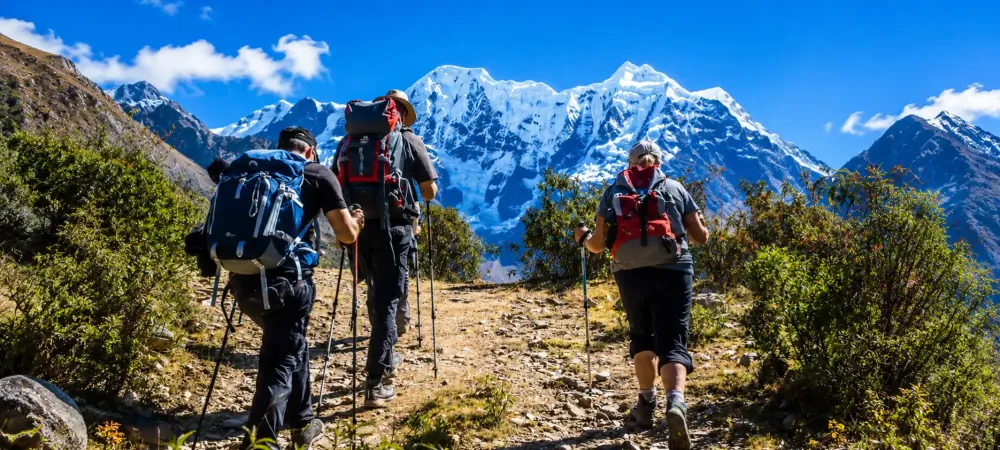
Inca Jungle vs Inca Trail: main differences
The Classic Inca Trail and the Inca Jungle can both lead to Machu Picchu, but that is where most of the similarity ends.
The Classic Inca Trail 4 Days follows a regulated historic route, crosses archaeological sites and reaches Machu Picchu through Inti Punku.
Inca Jungle does not follow that historic path throughout the journey. Its identity comes from biking down from Abra Málaga, hiking through the high jungle and traveling through Santa María, Santa Teresa and Hidroeléctrica.
Another major difference is the permit system. The Inca Trail Network has regulated visitor capacity and an official booking system. The standard Inca Jungle route does not require an Inca Trail permit.
That does not mean you can travel without booking ahead. Machu Picchu operates with tickets assigned to specific circuits, routes, dates and times, so entrance availability still affects the trip.
If you are comparing several alternatives, our guide to Inca Trail alternatives helps compare these experiences according to difficulty and travel style.

What should you pack for the Inca Jungle Trek?
Packing for Inca Jungle means preparing for two very different climates. Abra Málaga can feel cold, windy and damp, while Santa María and Santa Teresa are usually much warmer.
We recommend using a layering system. A lightweight waterproof jacket is especially useful because you may need wind protection during biking and rain protection in tropical sections.
You should also bring already-tested trekking shoes, quick-drying clothing, sunscreen, sunglasses, a hat or cap and insect repellent.
A reusable bottle, personal documents, any regular medication and a small daypack complete the essentials. For biking, our current product includes a helmet and gloves.
Avoid filling your backpack with too many heavy clothes. The goal is to adapt to several climates, not carry all four seasons on your back.
Permits, entrance tickets, TuBoleto and the Cusco Tourist Ticket
The standard Inca Jungle route does not require an Inca Trail Network permit. The biking section from Abra Málaga and the hiking stages through Santa María and Santa Teresa do not use the limited permits required for the Classic Inca Trail.
However, the final section enters the broader environment of the Historic Sanctuary of Machupicchu. The Amazonian access through Intiwatana / Km 122 Hidroeléctrica is officially recognized as one of the access sectors in the area.
To enter Machu Picchu itself, you need an official ticket assigned to a specific date, circuit, route and entry time. The official platform is TuBoleto Cultura. To register, travelers need a national ID, foreign resident card or passport, along with an email address.
Machu Picchu continues to operate with regulated daily visitor capacity. In 2026, the base limit is 4,500 visitors per day and rises to as many as 5,600 visitors on officially designated high-season dates.
| Access or ticket | Is it needed for Inca Jungle? | Current information |
|---|---|---|
| Inca Trail Network permit | No | Standard Inca Jungle does not use the Classic Inca Trail permit |
| Machu Picchu | Yes | Nominative ticket by circuit, route, date and time |
| TuBoleto Cultura | For Machu Picchu | Requires identity document and email |
| Hidroeléctrica / Intiwatana access | Part of the route corridor | Sector within the wider Historic Sanctuary environment |
| Cocalmayo | If you choose to enter | S/10 foreign visitor; S/5 Peruvian visitor |
| Full BTC for foreign visitors | Not for Inca Jungle | S/130, valid for 10 days |
| Partial BTC | Not for Inca Jungle | S/70 depending on circuit |
The Cusco Tourist Ticket does not provide access to the Inca Jungle route or Machu Picchu. The full ticket for foreign visitors currently costs S/130, while partial tickets cost S/70.
The BTC covers attractions such as Saqsayhuaman, Q'enqo, Puka Pukara, Tambomachay, Pisac, Ollantaytambo, Chinchero and Moray, depending on the selected circuit. Therefore, you only need it if you add one of those places to your itinerary.
On the Dreamy Tours Inca Jungle to Machu Picchu 4 Days, the Machu Picchu entrance ticket is currently listed as included, together with the bus ride up and the return train from Machu Picchu Pueblo toward Ollantaytambo.
Is the Inca Jungle Trek worth it?
Yes, especially for travelers looking for an active and varied experience before visiting Machu Picchu.
Its biggest advantage is that every day feels different. You begin in a high-mountain environment, descend by bicycle, continue hiking through tropical areas and eventually approach Machu Picchu from the Hidroeléctrica sector.
At Dreamy Tours, we believe the Inca Jungle to Machu Picchu 4 Days works best for travelers who enjoy physical activity but do not want the entire four-day journey to focus exclusively on trekking.
If your priority is original archaeological trails, the Inca Trail is a better fit. If you want high mountains and long hiking stages, Salkantay has a stronger trekking focus. If you want biking, high jungle and adventure, Inca Jungle has a personality of its own.
Frequently asked questions about the Inca Jungle Trek
How many days is the Inca Jungle Trek?
Four days is one of the most common versions of the route. Dreamy Tours offers the Inca Jungle to Machu Picchu 4 Days experience.
Does the Inca Jungle Trek go to Machu Picchu?
Yes. The route continues toward the Machu Picchu area and finishes with a visit to the archaeological site.
Is the Inca Jungle Trek difficult?
It is generally considered moderate. Travelers should be comfortable with several days of physical activity, including hiking and biking.
Do you need mountain biking experience?
You do not necessarily need advanced mountain biking skills, but you should feel comfortable riding a bicycle and following safety instructions during a long downhill section.
Is the Inca Jungle only a hiking trail?
No. This is one of its biggest differences from other routes. The Inca Jungle Trek combines hiking with mountain biking and may also include additional adventure activities.
Is the Inca Jungle Trek good for beginners?
It can be suitable for active travelers without previous multi-day trekking experience, but fitness, confidence on a bicycle and preparation are important. Read our Inca Jungle for beginners: safety and preparation guide before deciding.
Personal travel advice
Plan your trip with Dreamy Tours
Start a tailored journey with our exclusive tours and custom trips across Peru and other Latin American countries.