Search the blog
Tabla de contenidos
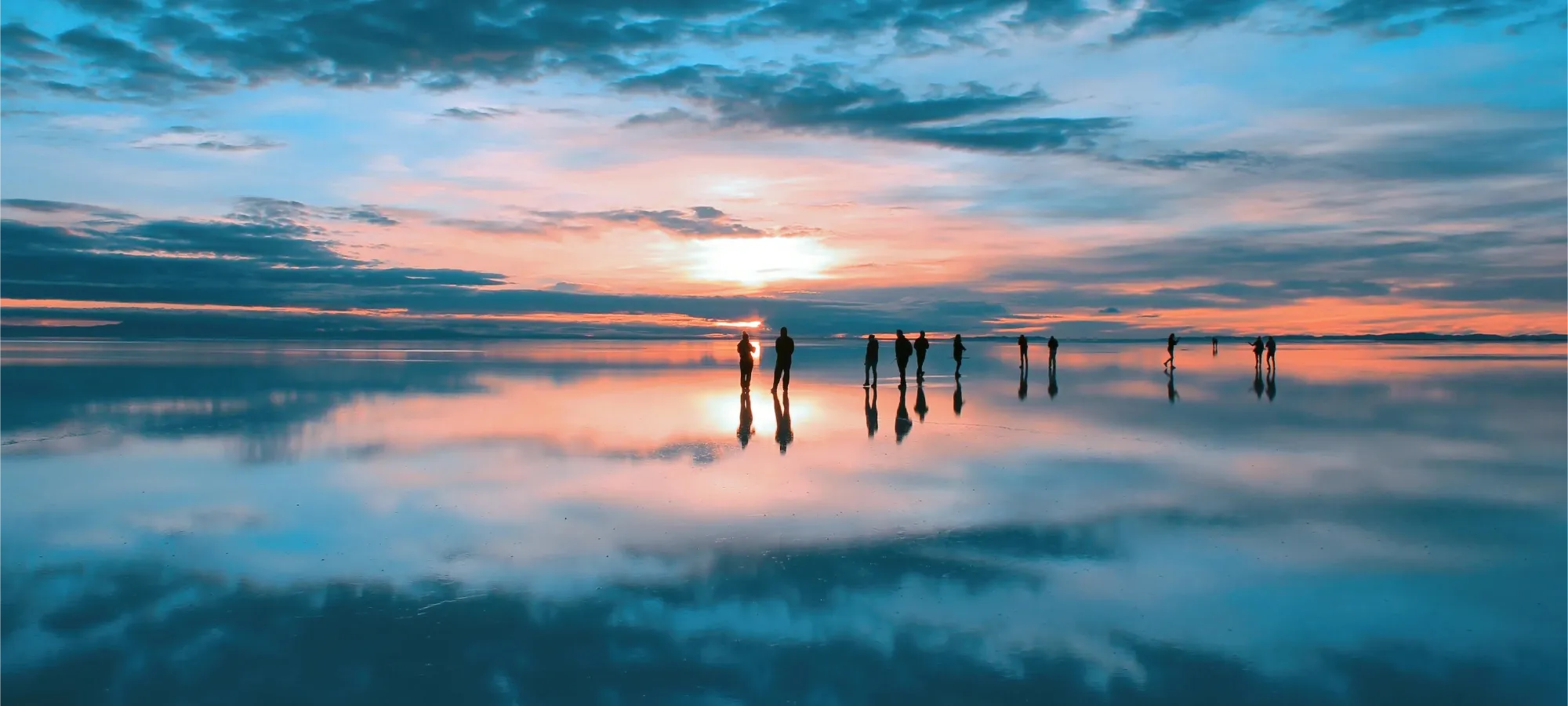
The best time to visit Uyuni Salt Flats depends on the experience you want. During the rainy season, a thin layer of water can transform the salt flats into the famous mirror effect. During the dry season, Uyuni becomes an endless white landscape covered with striking geometric salt patterns.
Both seasons are worth experiencing, but they offer very different views of one of Bolivia’s most famous natural attractions.
When is the best time to visit Uyuni Salt Flats?
There is no single perfect month for everyone.
In general, Uyuni has two main travel seasons:
- Rainy season: approximately December to March or April.
- Dry season: approximately May to November.
If seeing the Uyuni Salt Flats mirror effect is your priority, January through March usually offers the best chances.
If you prefer the classic white salt desert and easier access across the flats, May through October is an excellent choice.
Uyuni Salt Flats rainy season
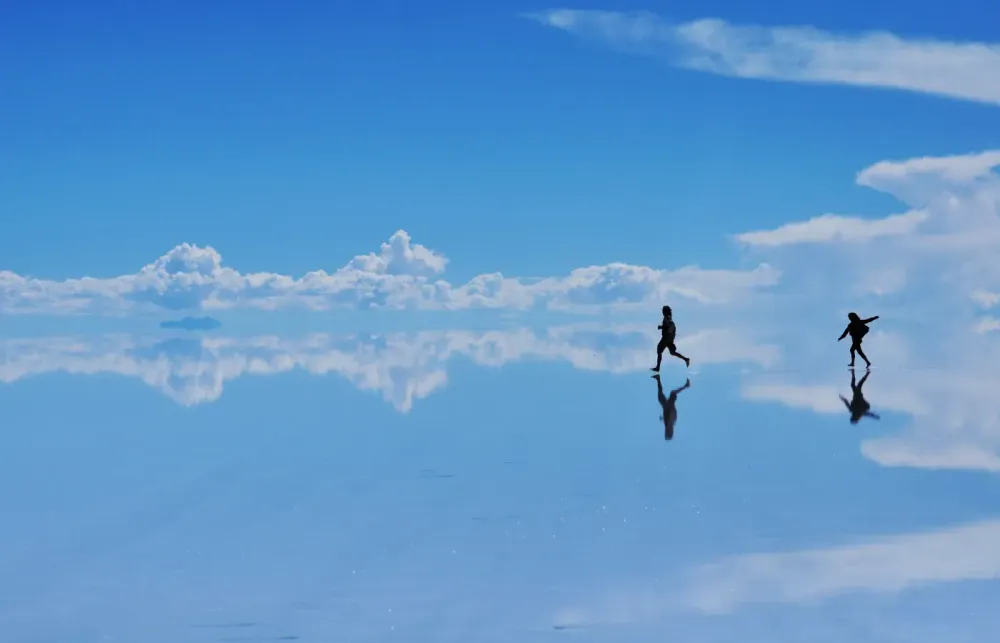
The Uyuni Salt Flats rainy season completely changes the landscape.
When rainwater creates a shallow layer across the salt surface, the sky reflects on the ground and the horizon almost disappears. This is the famous mirror effect that attracts travelers and photographers from around the world.
January and February are often among the most popular months for this experience, although conditions vary every year.
The mirror effect cannot be guaranteed on a specific day because it depends on rainfall, water levels and wind conditions.
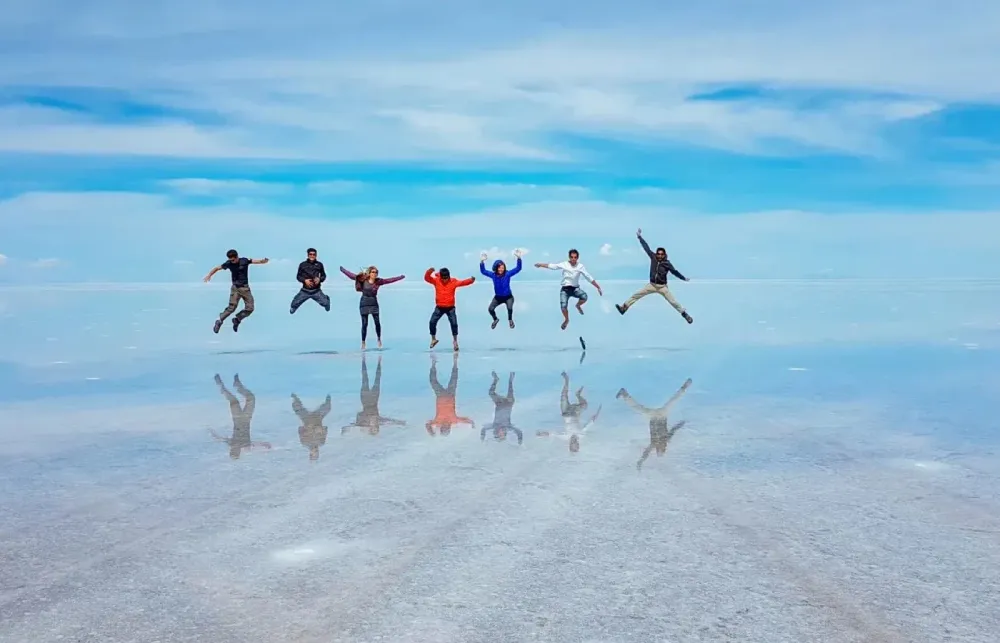
Why visit Uyuni during the rainy season?
The main reason is the scenery.
Reflections can create spectacular views during the day and around sunset, making this season especially attractive for photography.
The rainy season is a good choice if you want to:
- See the famous mirror effect
- Photograph reflections
- Experience Uyuni during the Bolivian summer
- See a completely different side of the salt flats
Keep in mind that heavy rainfall can make some areas inaccessible, so routes may change depending on conditions.
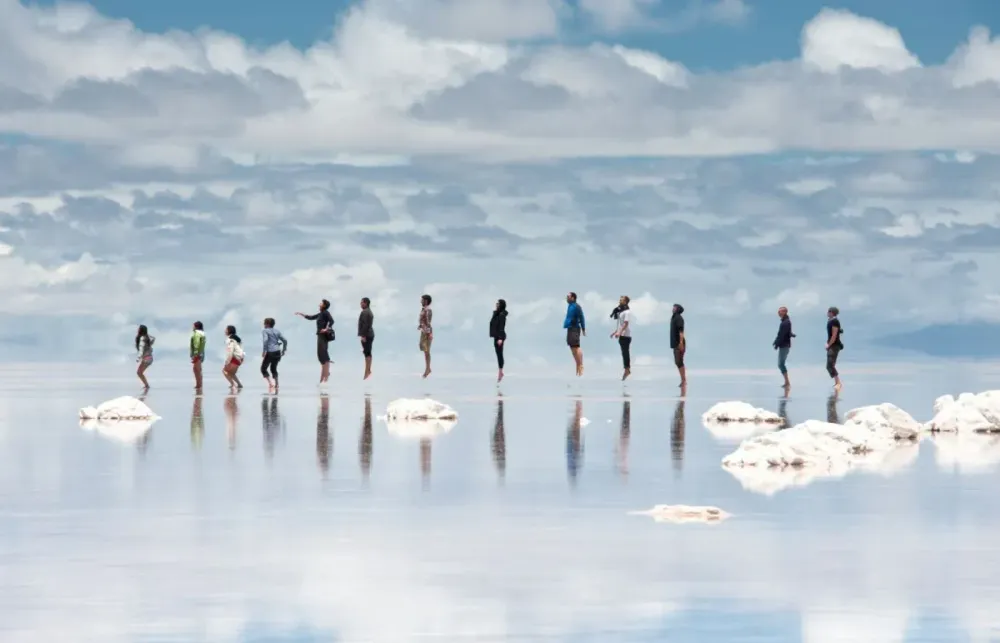
Uyuni Salt Flats dry season
During the Uyuni Salt Flats dry season, the water disappears and the famous white landscape takes over.
The surface becomes firm, revealing natural hexagonal salt patterns and enormous open horizons.
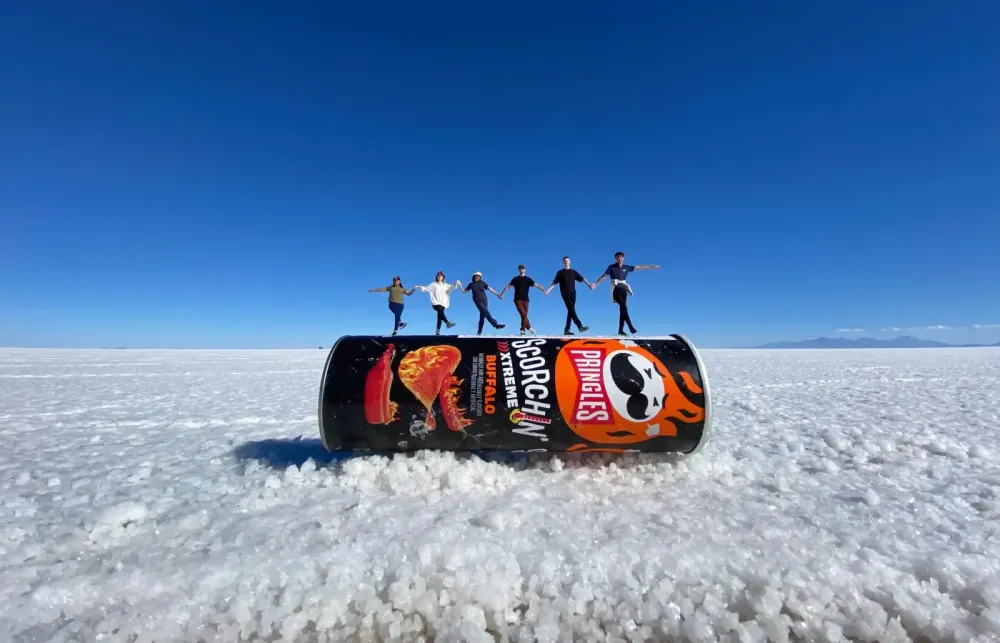
This is also the classic season for perspective photography, where the flat landscape makes objects appear much larger or smaller than they really are.
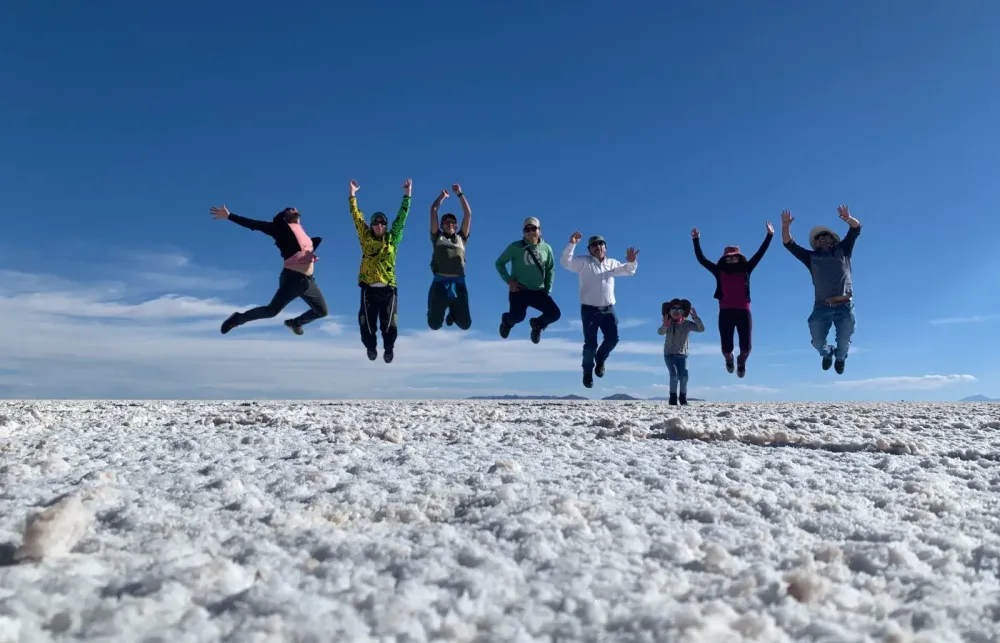
Why visit Uyuni during the dry season?
Dry conditions usually make it easier to explore more areas of the salt flats and surrounding Altiplano.
This season is ideal if you want to:
- See the classic white salt desert
- Take perspective photos
- Explore more areas of Uyuni
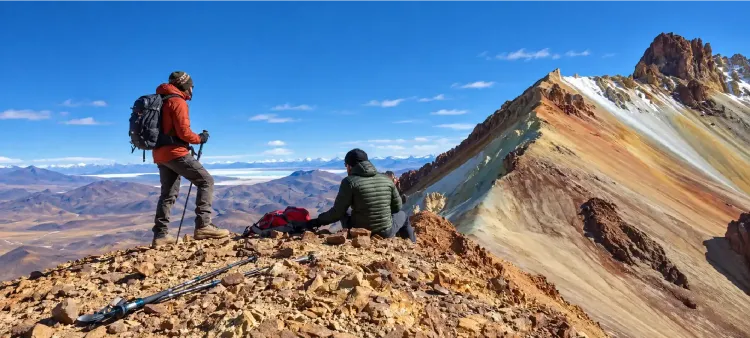
- Visit landscapes around Tunupa Volcano
- Continue deeper into the Bolivian Altiplano
The main consideration is the cold. June, July and August can bring very low temperatures, especially early in the morning and at night.
Warm layers are essential during this period.
Mirror effect or white salt flats: which is better?
Neither experience is better. They are simply different.
Choose the rainy season if:
Your priority is seeing the Uyuni mirror effect, photographing reflections and experiencing the salt flats covered by a shallow layer of water.
Choose the dry season if:
You want to see the enormous white salt landscape, geometric patterns and explore more areas of the region.
A simple way to decide is:
Mirror effect → January to March
White salt flats → May to October
April and November are transition months, so conditions can vary.
Best time to visit Uyuni Salt Flats for photography
Uyuni offers excellent photography opportunities throughout the year.
During the rainy season, reflections create dramatic images where the sky and ground seem to merge.
During the dry season, the open landscape is perfect for the famous perspective photos that have become closely associated with Uyuni.
Sunrise and sunset can also produce beautiful light in either season.
So, when deciding when to visit Uyuni Salt Flats, think about the type of photos and landscapes you want to experience.
Can you visit Uyuni Salt Flats year-round?
Yes. You can visit Uyuni Salt Flats throughout the year.
What changes is the scenery and the areas that can be explored.
During the rainy season, some parts of the salt flats may become difficult or impossible to access because of water levels.
During the dry season, travel across the salt surface is generally easier and longer routes can continue toward other parts of the Altiplano.
For this reason, keeping some flexibility in your itinerary is always a good idea.
What to wear in Uyuni according to the season
Weather in the Bolivian Altiplano can change quickly.
Useful items include:
- Warm layers
- Windproof jacket
- Sunglasses
- Sunscreen
- Hat or cap
- Comfortable shoes
- Lip balm
- Water
If you are traveling between June and August, bring extra warm clothing for cold mornings and evenings.
During the rainy season, waterproof protection for your clothes, camera and electronics can also be useful.
Is Uyuni worth visiting without the mirror effect?
Absolutely.
One common mistake is thinking that the Uyuni Salt Flats are only worth visiting during the rainy season.
The dry white landscape is equally impressive. The geometric salt patterns, huge open spaces and mountain views create the classic Uyuni scenery that many travelers come to Bolivia to experience.
Dry conditions can also make it easier to explore other places around the salt flats.
If you want to go beyond the classic route, visiting areas around Tunupa Volcano can add another dimension to your Uyuni experience.
So, when should you visit Uyuni Salt Flats?
The best time to visit Uyuni Salt Flats comes down to the landscape you want to see.
Choose January to March if experiencing the mirror effect is your main goal.
Choose May to October if you prefer the white salt desert, geometric patterns and easier access to different areas of the Altiplano.
Whichever season you choose, Uyuni offers one of the most remarkable landscapes in Bolivia.
If you want more time to explore beyond the main salt flats, discover our Uyuni Salt Flats and Tunupa Volcano 2 Days experience and explore a wider part of this extraordinary region.
Personal travel advice
Plan your trip with Dreamy Tours
Start a tailored journey with our exclusive tours and custom trips across Peru and other Latin American countries.