Search the blog
Tabla de contenidos
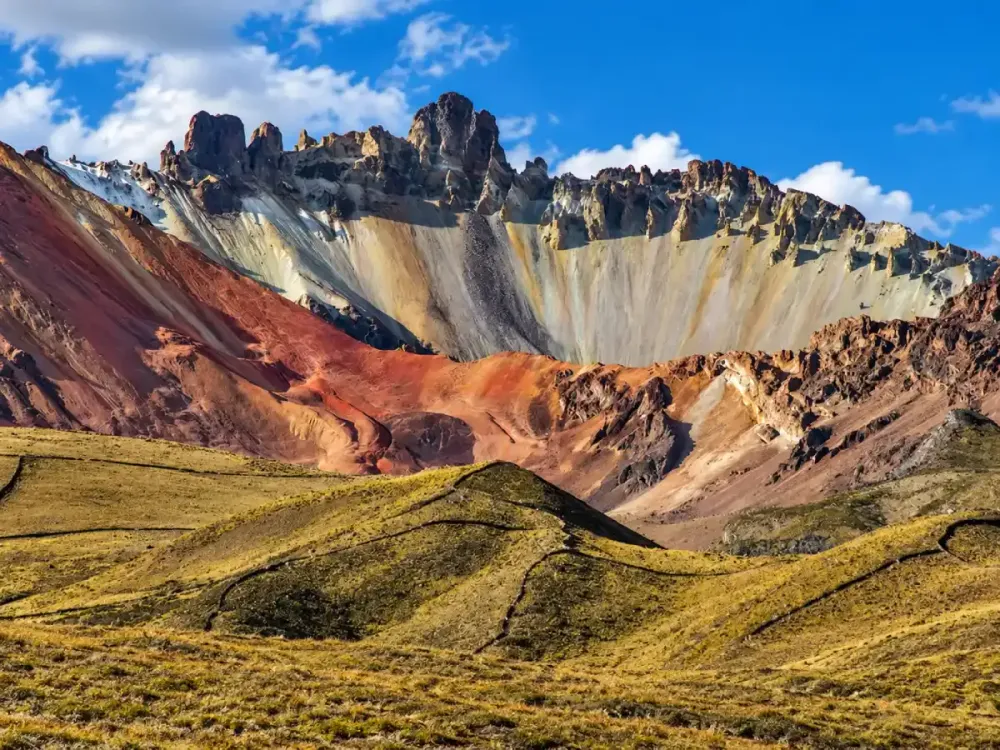
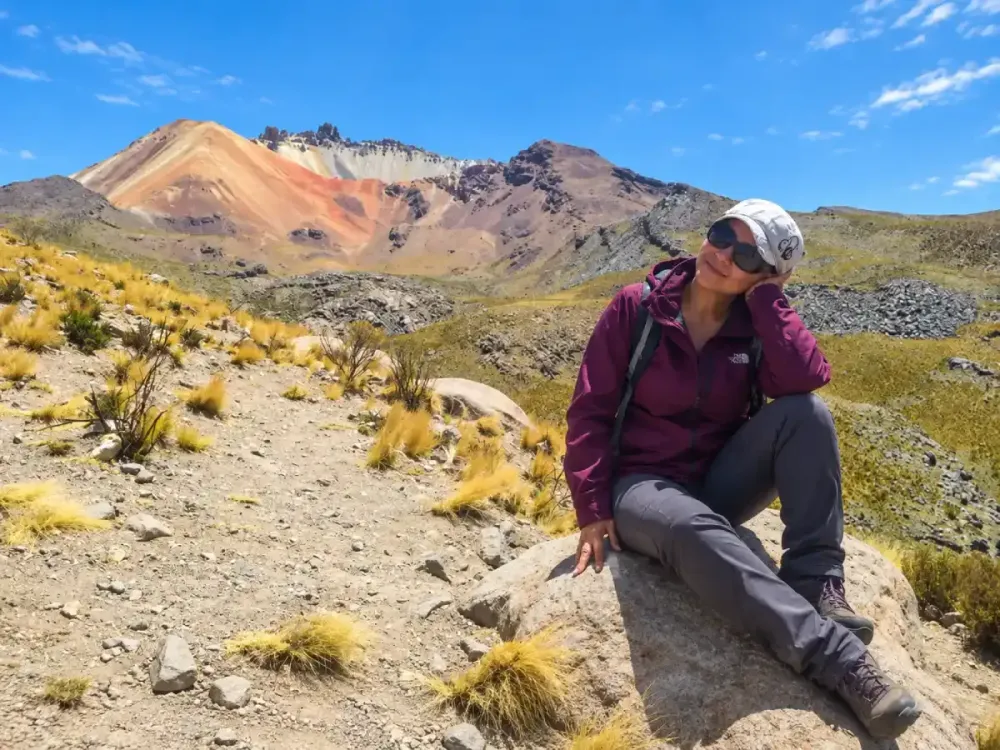
North of the Uyuni Salt Flats rises a mountain of reddish, ochre and yellow tones that completely breaks with the vast white landscape: Tunupa Volcano. Its silhouette dominates this part of the Altiplano and reveals a very different side of Uyuni, where nature, Andean communities, viewpoints and cultural heritage come together.
Many travelers arrive in Uyuni thinking only about the salt flats. However, dedicating a second day to the Tunupa area allows you to see the white plain from above, visit the community of Coquesa and learn about ancient funerary remains preserved on the slopes of the mountain.
Tunupa also has an important cultural dimension within the Andean world. In official Bolivian documentation, it appears among the sacred sites of the State in the department of Potosí, so its significance goes far beyond being simply a scenic viewpoint.
If you are still planning the region, start with our Uyuni Salt Flats Travel Guide to understand how Tunupa fits into a one, two or three-day itinerary.
Where is Tunupa Volcano?
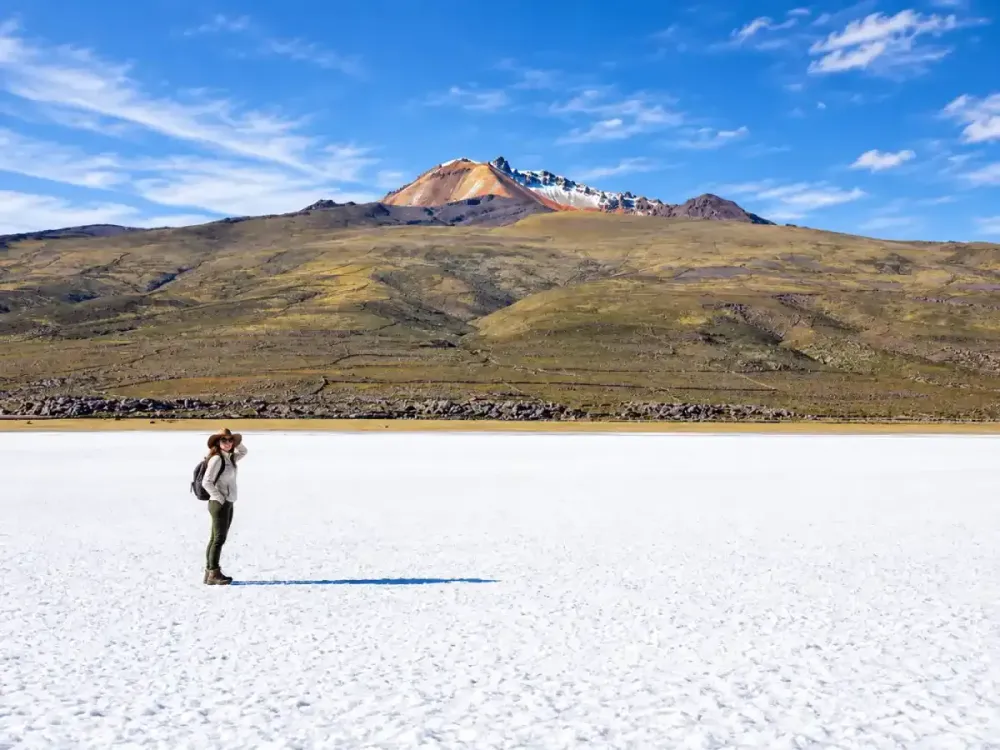
Tunupa Volcano is located beside the northern sector of the Uyuni Salt Flats in the Bolivian Altiplano. Its massive silhouette can be seen from different parts of the salar and is one of the most recognizable natural landmarks in this section of the landscape.
At its base lies the community of Coquesa, which usually serves as the access point for exploring the surrounding area, visiting ancient funerary remains and following trails toward natural viewpoints.
The volcano rises well above 5,000 meters, although standard tourist routes do not involve reaching the summit. Most visits focus on the lower slopes, cultural sites and panoramic areas.
The contrast between the mountain’s mineral colors and the enormous white surface of the Uyuni Salt Flats explains why this sector offers some of the most distinctive views in the region.
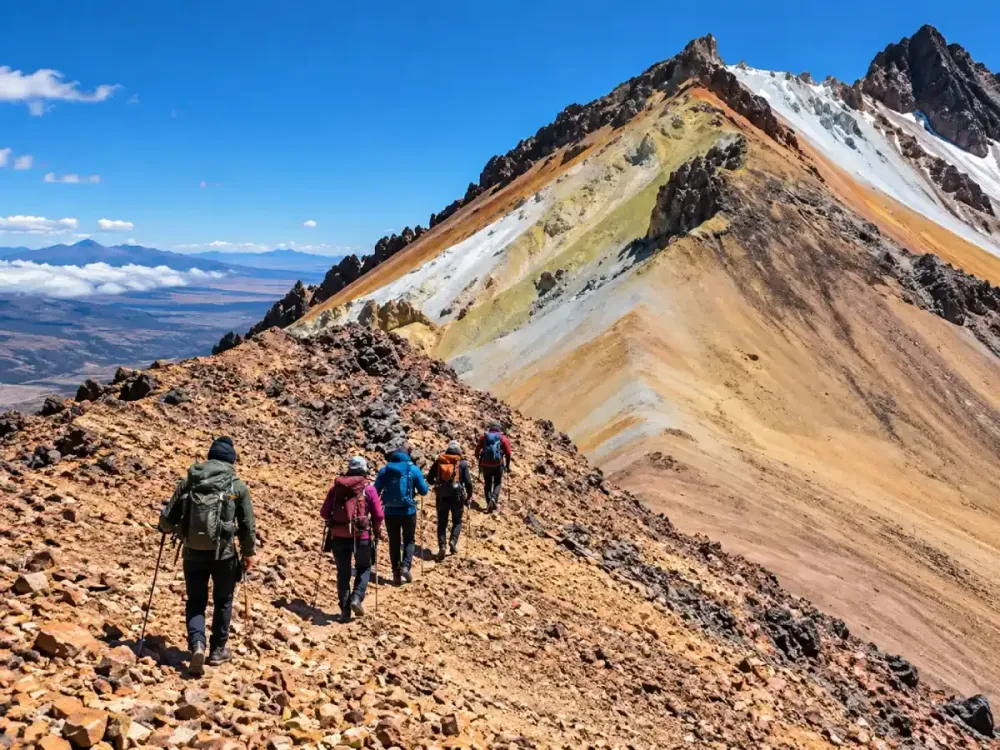
What can you see at Tunupa Volcano?
Visiting Tunupa means discovering much more than a mountain seen from a distance. The experience combines scenery, culture and short walks in a high-altitude environment.
| Place or experience | What it adds to the visit |
|---|---|
| Coquesa community | Local life and access to the Tunupa area |
| Coquesa mummies | Ancient funerary heritage of the region |
| Tunupa viewpoints | Panoramic views over the Uyuni Salt Flats |
| Volcanic slopes | Mineral colors and natural formations |
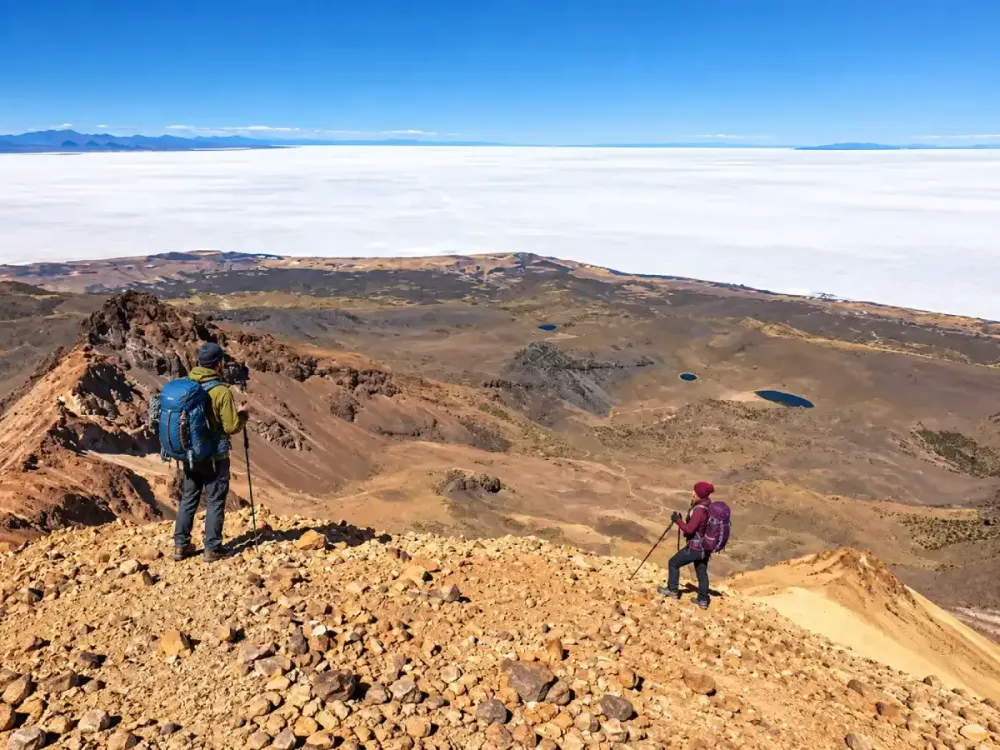
| Uyuni Salt Flats | Elevated perspective of the white plain |
| Andean communities | Cultural context of northern Uyuni |
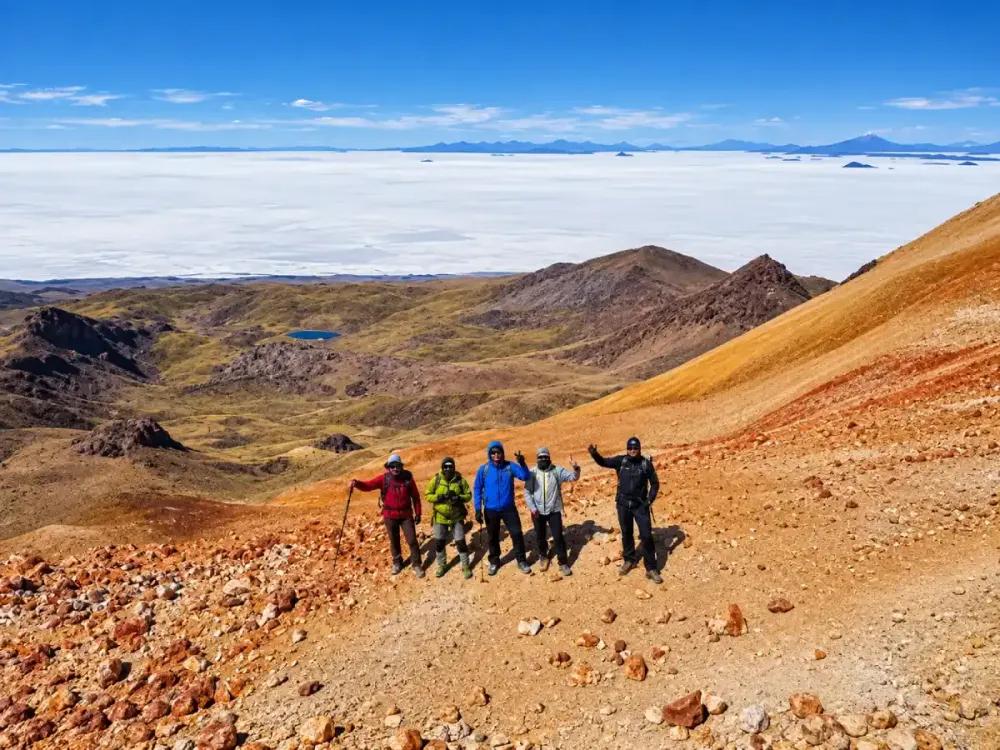
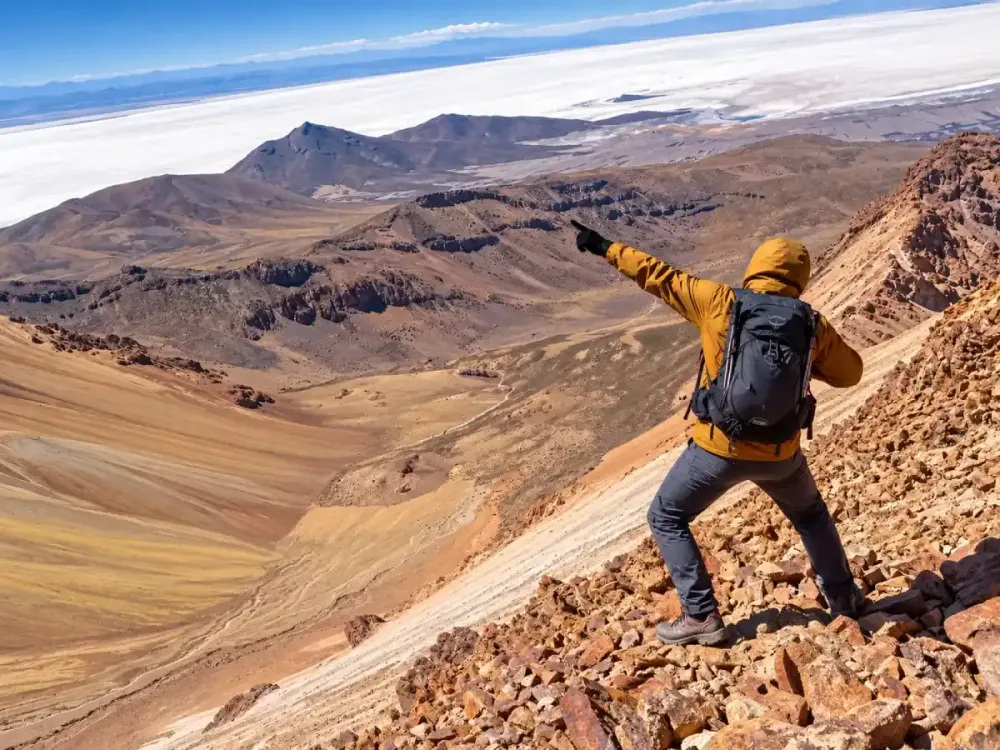
The biggest difference compared with a standard Full Day is perspective. During most Uyuni tours, you experience the salt flats from surface level. At Tunupa, you can look down over them from the mountain slopes.
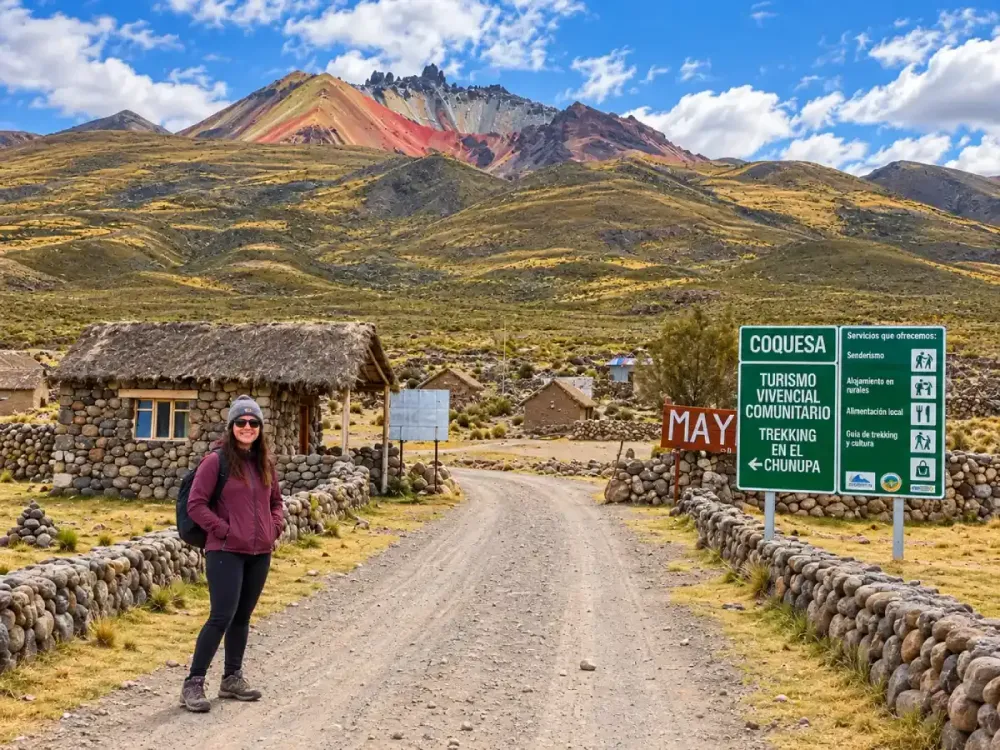
Coquesa, the community at the foot of Tunupa
Coquesa is located on the lower slopes of the volcano and is one of the central points of the experience.
The community is surrounded by typical Altiplano scenery, with Tunupa rising behind it and the vast salt surface stretching out in front. This contrast creates a natural transition between the salar and the mountain.
From Coquesa, routes continue toward different areas of the volcano and panoramic viewpoints located at higher elevations.
On the Uyuni Salt Flats and Tunupa Volcano 2 Days, the second day focuses precisely on this part of the route, allowing much more time than a rushed visit.
Beyond the scenery, Coquesa adds a human dimension to the journey. Uyuni stops being only a vast natural landscape and begins to show the communities that live in this part of the Altiplano.
The Coquesa mummies and Tunupa’s cultural heritage
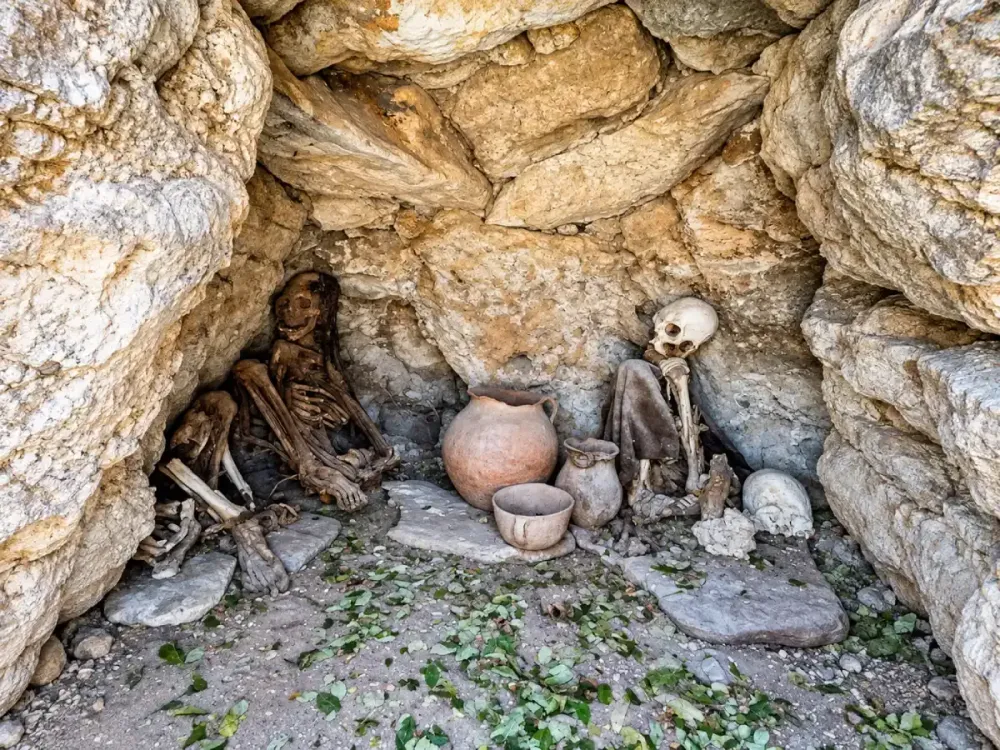
One of the most distinctive places on the route is the area known for the Coquesa mummies, where ancient funerary remains associated with pre-colonial Andean populations are preserved.
They are found inside a natural cavity on the slopes of Tunupa and form part of the local cultural heritage. For that reason, they should always be visited respectfully, without touching the remains, moving objects or interfering with the site.
Tunupa also has a significance that goes beyond tourism. In official Bolivian documentation, it is recognized among the sacred sites of the State in the department of Potosí.
This helps explain why the route should not be treated as simply another photo stop. Nature, memory, spirituality and culture all exist within the same mountain.
If any local access condition or contribution applies during your visit, it is best to confirm it before traveling, since we do not use unverified prices for cultural heritage access.
Do you need to climb to the summit of Tunupa Volcano?
No.
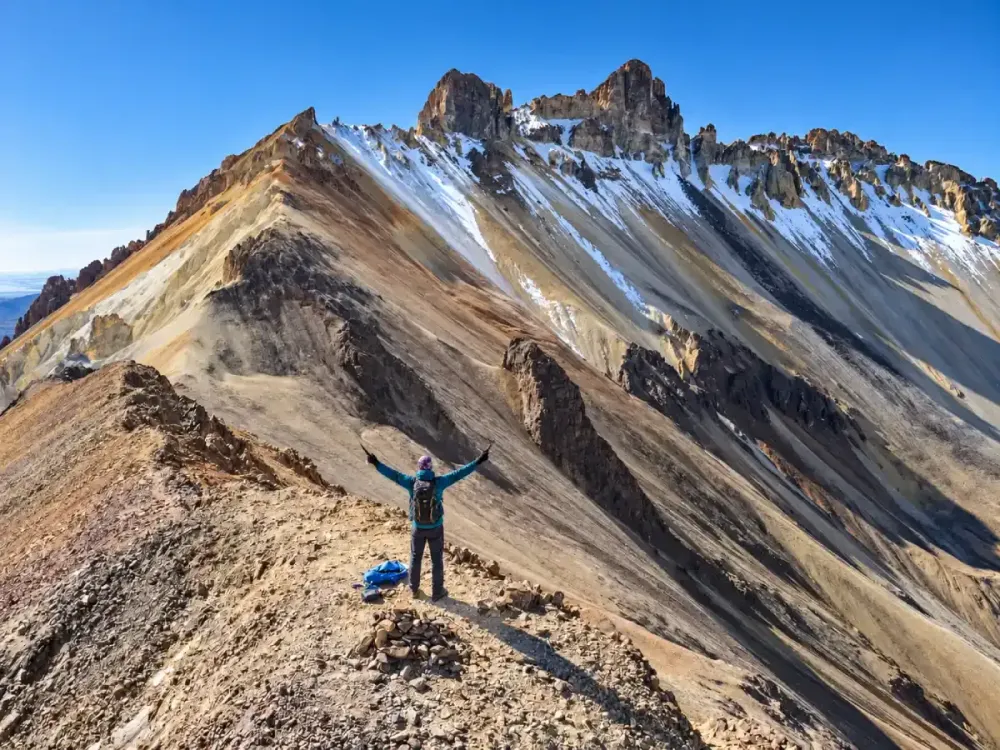
A standard visit to Tunupa Volcano should not be confused with a summit expedition. You do not need to reach the top to enjoy the main viewpoints or understand the landscape.
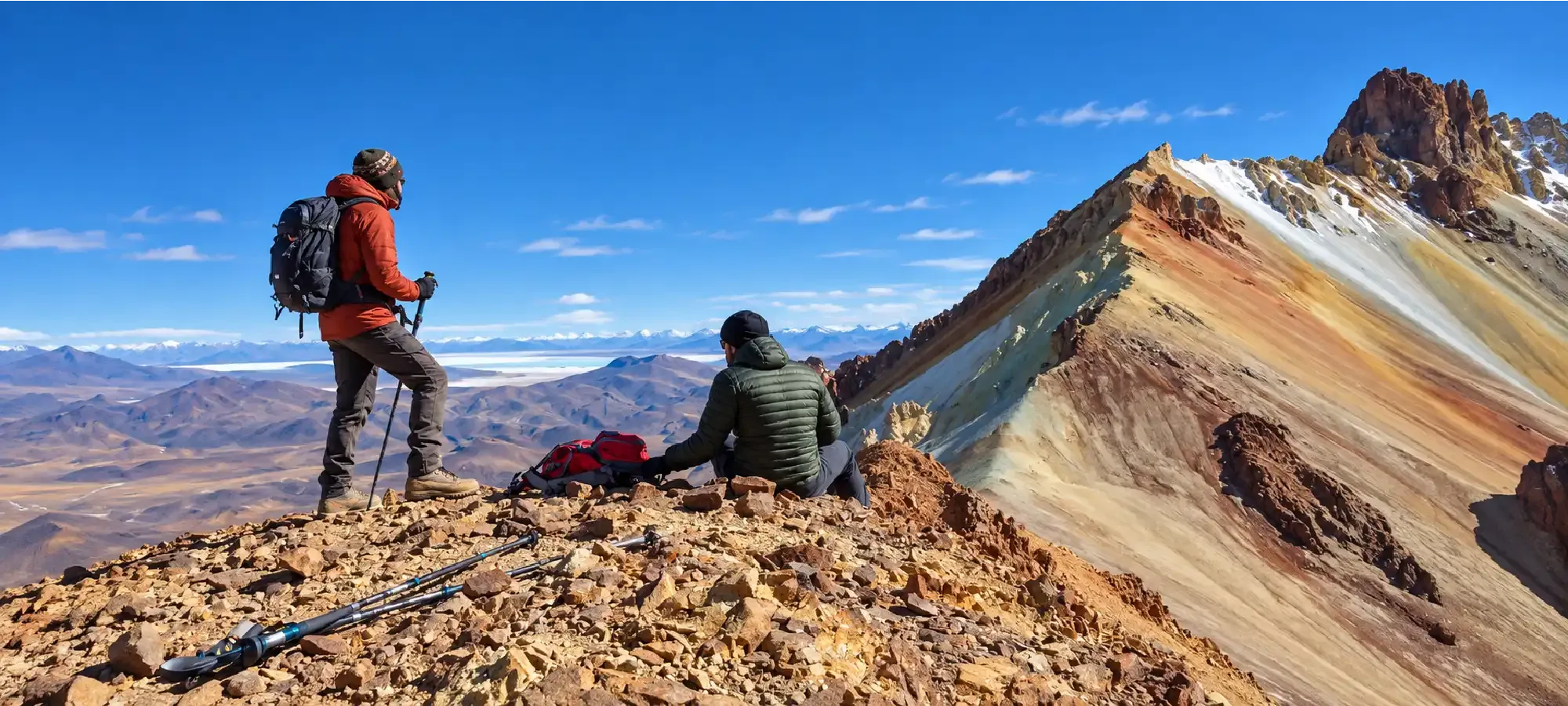
Typical routes usually focus on Coquesa, the ancient mummies and a walk toward selected viewpoints. On the current Dreamy Tours itinerary, the panoramic area is around 4,400 meters above sea level.
Going higher or attempting a full summit ascent is a different activity that requires more time, stronger physical preparation and different planning.
For most travelers who want to combine the salt flats, culture and panoramic views, reaching the viewpoint is more than enough.
How do you get to Tunupa Volcano from Uyuni?
The most practical way is by 4x4 as part of a route through the northern sector of the Uyuni Salt Flats.
From Uyuni town, the journey crosses different parts of the salar before continuing toward Coquesa and the lower slopes of the volcano.
The distances involved mean Tunupa does not work particularly well as a last-minute extra added to the end of any Full Day. It is better to reserve dedicated time for this area.
That is why a two-day route is especially comfortable: the first day focuses on the salt flats, while the second is centered on Tunupa and Coquesa.
If you still need to organize transportation to Uyuni town, read How to Get from La Paz to Uyuni.
How many days do you need to visit Tunupa?
To include Tunupa comfortably in a Uyuni trip, two days usually offer one of the best balances.
The first day can be dedicated to the main salt-flat landscapes, while the second gives you time to visit Coquesa, the funerary remains and the volcano viewpoints without turning the itinerary into a race.
| Duration | What you can see | Does it include Tunupa? |
|---|---|---|
| 1 day | Salt flats, Colchani and classic highlights | Usually no |
| 2 days | Salt flats + Coquesa + Tunupa + viewpoints | Yes |
| 3 days | Salt flats + deserts + Altiplano lagoons | Tunupa is usually not the focus |
| More days | Wider regional combinations | Depends on itinerary |
The two-day option is not simply a Full Day with extra hours. It takes you into another geographical sector and completely changes the perspective of the salt flats.
If you are still deciding on trip length, read How Many Days Do You Need for the Uyuni Salt Flats?.
Tunupa Volcano or Incahuasi Island: what is the difference?
They are different experiences, and when route conditions allow, you do not necessarily have to choose only one.
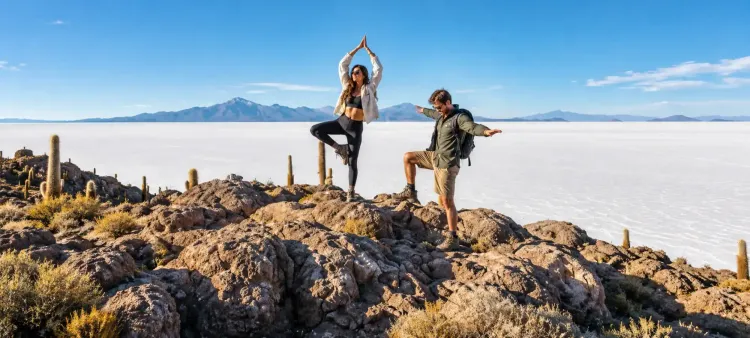
Incahuasi Island is known for its giant cacti, rocky trails and viewpoints from a formation located inside the salt flats.
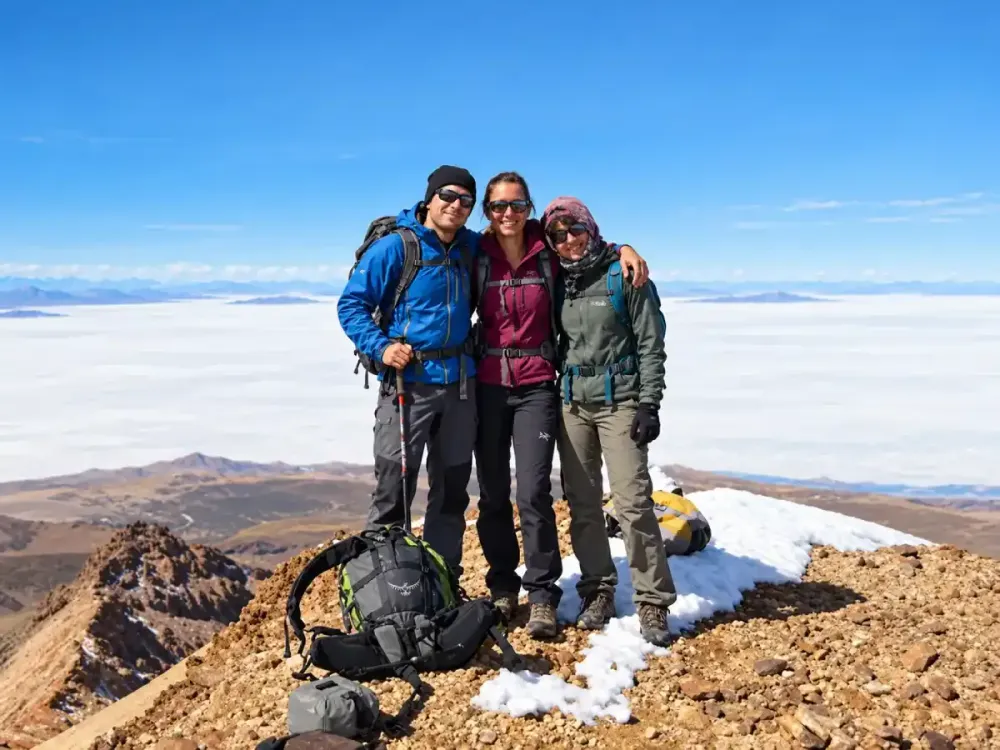
Tunupa, by contrast, offers a large-scale mountain, an Andean community, funerary heritage and much higher viewpoints over the white surface.
Incahuasi gives you the feeling of standing on an island surrounded by salt. Tunupa lets you look down over that same vastness from a mountain.
Access to Incahuasi can change during the rainy season, while reaching Tunupa also depends on route and water conditions across the salar.
What is the best time to visit Tunupa Volcano?
The drier months are usually especially favorable for exploring this part of Uyuni.
From May to October, dry conditions dominate across the salar, which generally makes it easier to travel toward different areas. However, June, July and August can also bring very low temperatures, especially early in the morning and at night.
April and November are transition months, and conditions may vary from year to year.
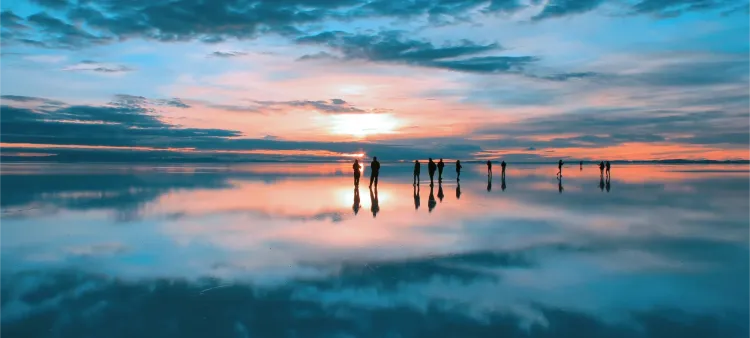
From January to March, water on the salt flats increases the chances of seeing the mirror effect, but it can also change access to more distant areas.
If Tunupa is a priority, read Best Time to Visit Uyuni Salt Flats. If reflections are your main goal, also see When to See the Uyuni Salt Flats Mirror Effect.
Is it cold at Tunupa Volcano?
Yes, and the cold can feel much stronger because of the wind and altitude.
Even if the temperature feels comfortable in direct sunlight, the viewpoints are at high elevation and conditions can change quickly.
The best strategy is to dress in layers. A comfortable or thermal base layer, fleece or sweater and a wind-resistant jacket make it easier to adapt during the walk.
You should also bring UV-protection sunglasses, sunscreen, water, a warm hat, comfortable footwear and a power bank for your phone or camera.
During June, July and August, extra warm clothing becomes even more important.
For a full packing list, read What to Pack for Uyuni Salt Flats.
Tips for visiting Tunupa Volcano
The first tip is to walk at a relaxed pace. The viewpoints are at high altitude, and even a moderate climb can feel more demanding than expected.
Stay hydrated, use sun protection and carry enough clothing for wind and sudden temperature changes.
Always respect instructions from local communities, especially when visiting areas connected with cultural heritage or funerary remains.
Do not touch, move or remove anything from the areas where the mummies are preserved. These places are part of the region’s cultural memory and should not be treated as photo props.
Avoid leaving waste and stay on indicated paths whenever possible.
The experience is not about collecting as many stops as possible. Part of Tunupa’s appeal lies in slowing down and watching how the Uyuni Salt Flats change when viewed from the mountain.
Is Tunupa part of a classic Uyuni tour?
It is not usually part of the shortest one-day route.
A Full Day concentrates on the Train Cemetery, Colchani, the salt surface and other classic attractions depending on conditions.
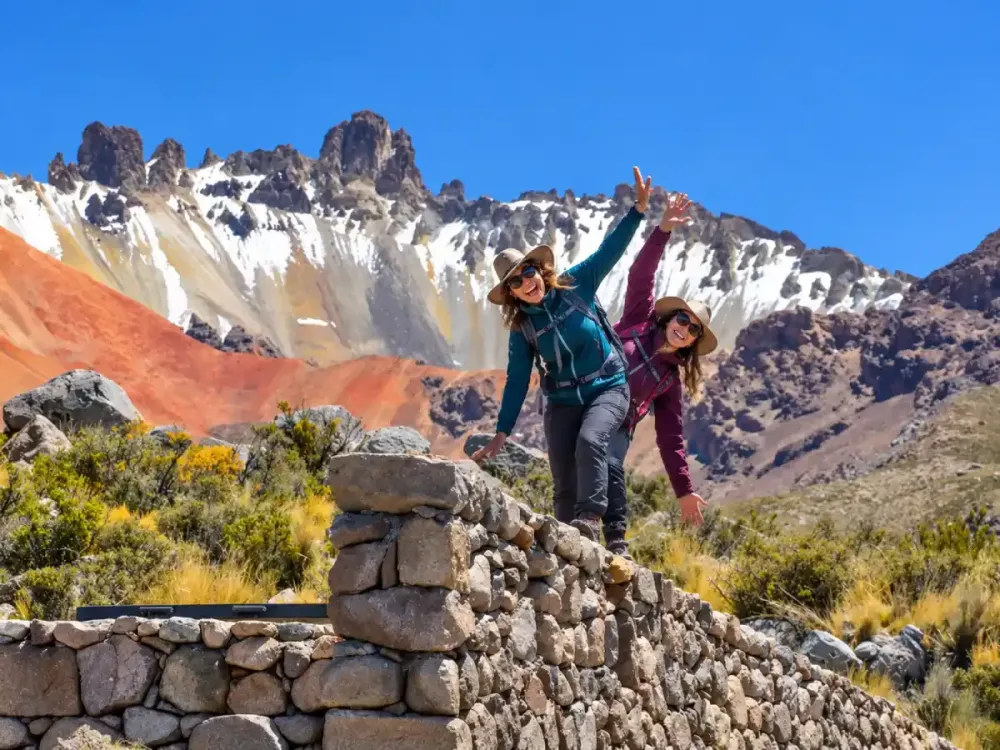
To reach the northern sector, visit Coquesa and walk toward the Tunupa viewpoints, it is much more practical to dedicate a second day.
That is why the Uyuni Salt Flats and Tunupa Volcano 2 Days serves a different travel purpose from the Uyuni Salt Flats Full Day.
If your priority is instead deserts, lagoons, flamingos and southern Altiplano landscapes, the better option is the Uyuni Salt Flats and Colored Lagoons 3 Days.
Is Tunupa Volcano worth visiting?
Yes, especially if you can spend more than one day in Uyuni and want to experience something beyond the classic white salt surface.
Tunupa offers a perspective that a short tour cannot provide: seeing the Uyuni Salt Flats from above. After spending hours crossing the plain, looking down over the same landscape from the slopes of a mountain completely changes your sense of its scale.
The Coquesa community, the volcano’s mineral colors and its cultural heritage add even more depth to the experience.
At Dreamy Tours, we consider Tunupa particularly well suited to travelers who want to combine scenery, moderate walking and culture within a two-day route.
Personal travel advice
Plan your trip with Dreamy Tours
Start a tailored journey with our exclusive tours and custom trips across Peru and other Latin American countries.