Search the blog
Tabla de contenidos
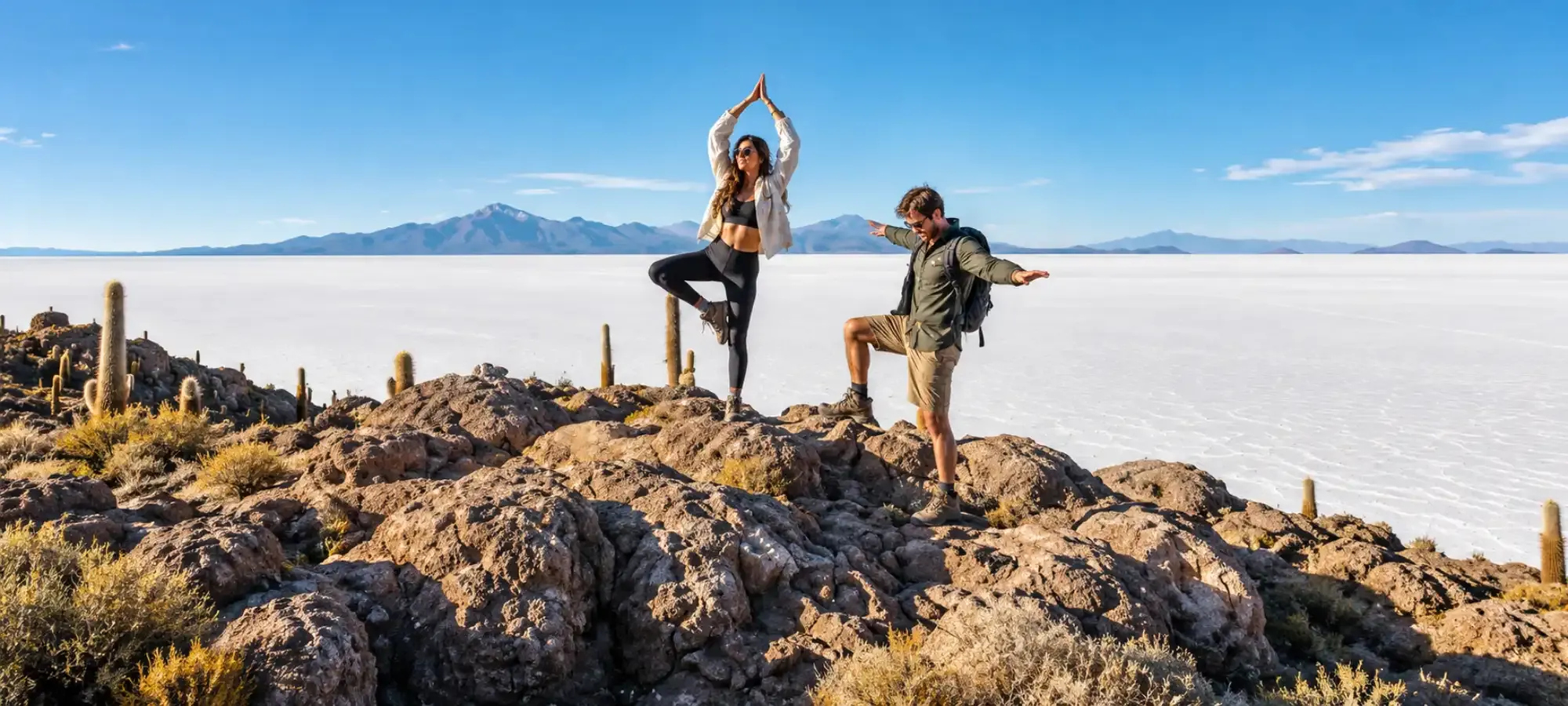
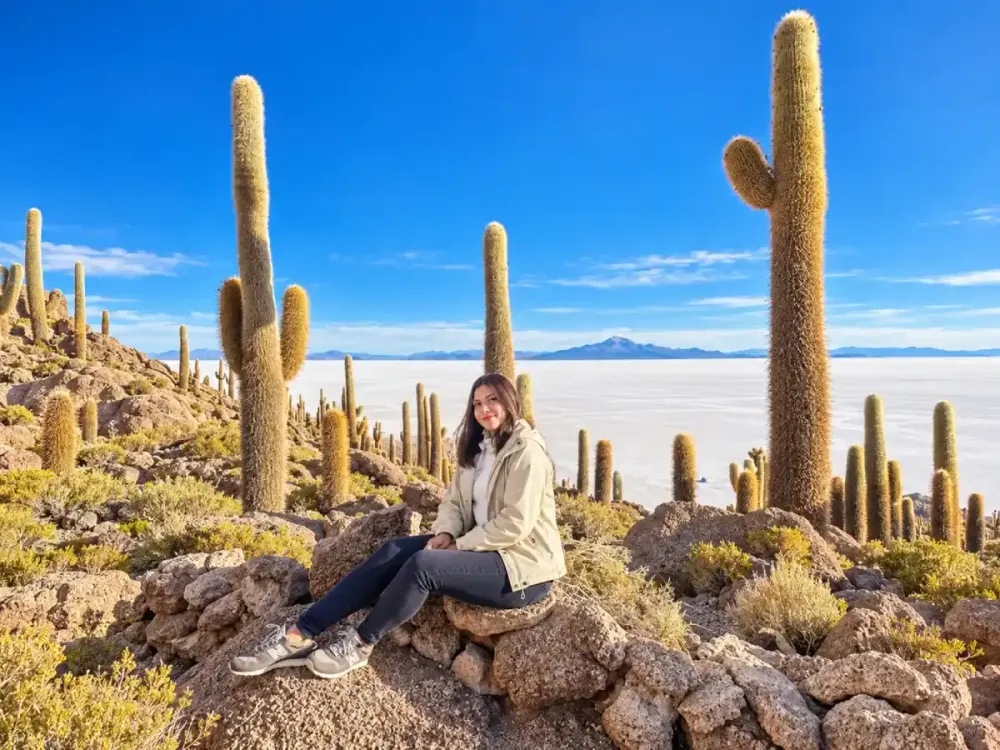
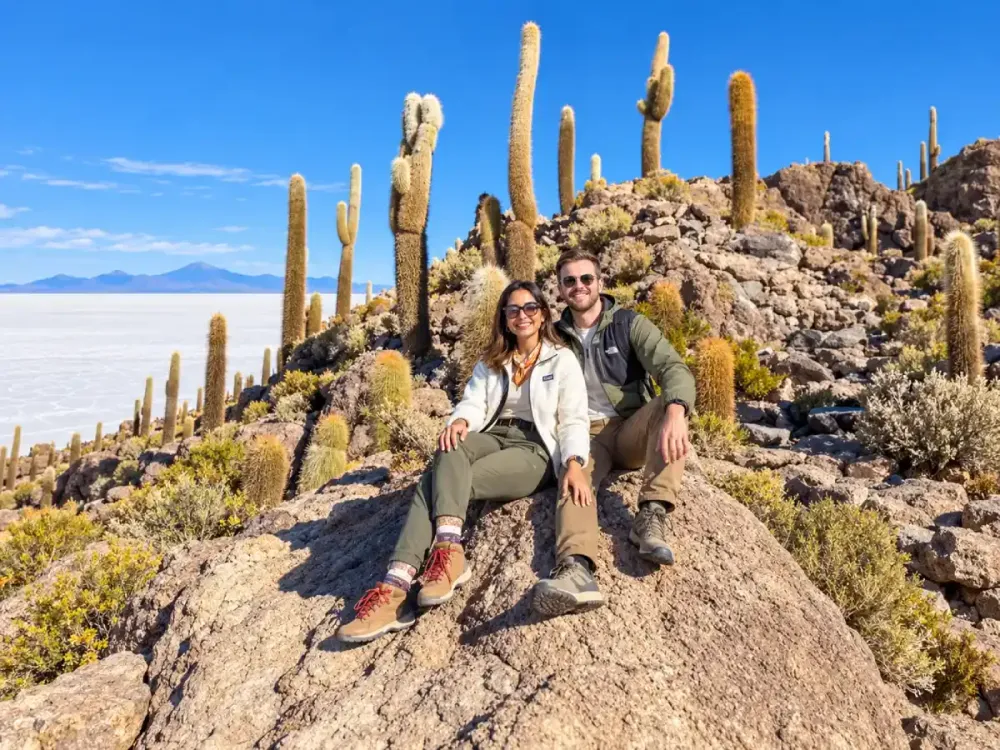
In the middle of the vast white surface of the Uyuni Salt Flats rises a completely different landscape: Incahuasi Island, a rocky formation covered with giant columnar cacti that stands above the salt plain. After traveling for kilometers across an almost perfectly flat surface, walking among rocks, cacti and trails creates a striking change of scenery.
Incahuasi is one of the best-known stops on Uyuni routes when conditions allow access. Its main attraction is not only the vegetation, but also the opportunity to gain elevation and look out across the salt flats from above, especially during the dry season.
Access, however, can change depending on the season. During the rainy months, when large parts of Uyuni may be covered by water, some routes need to be adjusted. If you are planning your first visit, start with our Uyuni Salt Flats Travel Guide to understand how Incahuasi fits into a wider itinerary.
What is Incahuasi Island?
Incahuasi Island is a rocky formation located within the Uyuni Salt Flats in Bolivia’s Potosí department. Although today it is surrounded by an enormous salt surface, its geological history is connected to the ancient lake systems that once covered this part of the Altiplano.
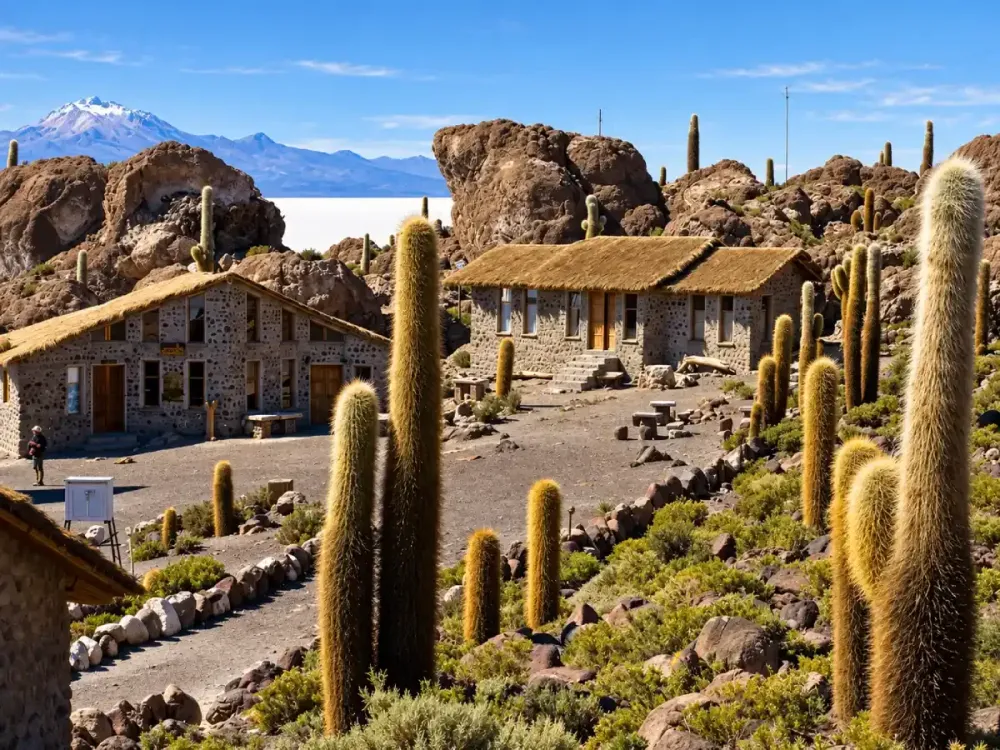
The contrast is immediate. After driving for kilometers across a white and almost perfectly horizontal landscape, Incahuasi introduces rock, elevation, vegetation and walking trails into the middle of the salar.
Its name may also appear as Inkawasi or Inca Wasi. Regardless of the spelling, it is best known today for its giant cacti and panoramic viewpoints.
The visit is normally included as part of a wider Uyuni route rather than being treated as a separate excursion from town.
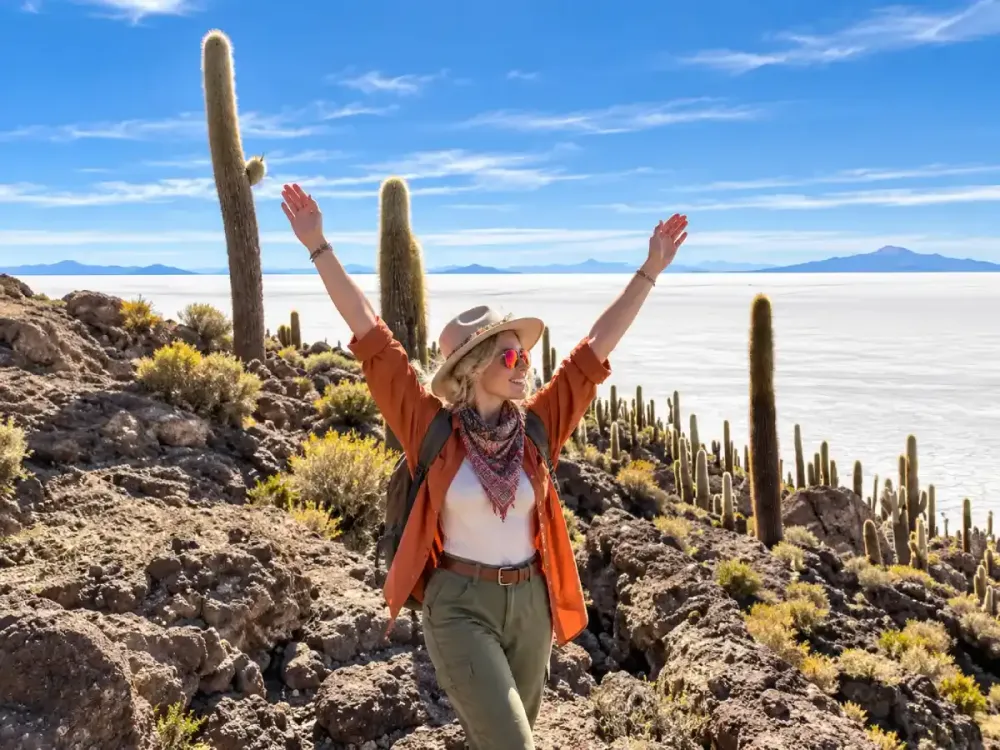
The giant cacti of Incahuasi Island
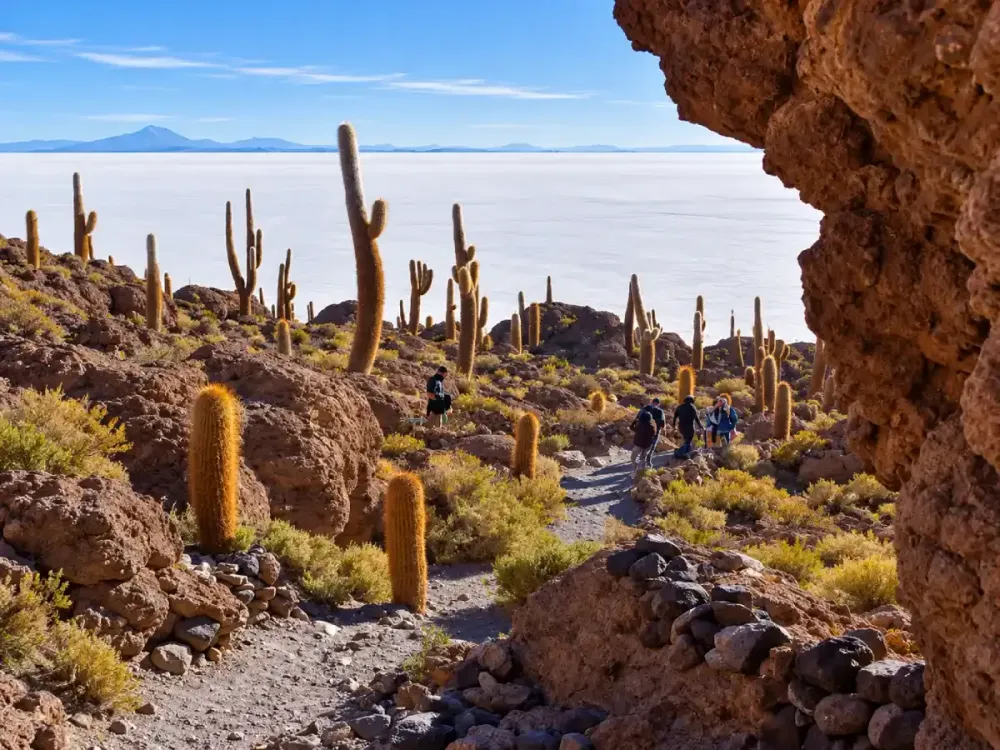
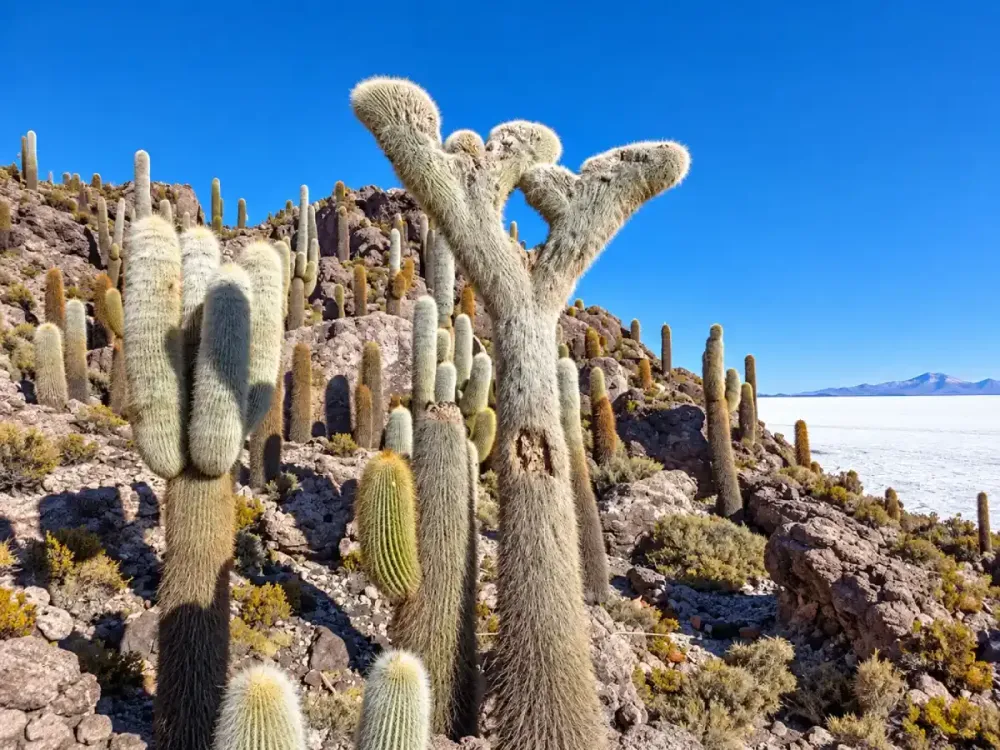
The main natural feature of Incahuasi is its large columnar cacti, which have adapted over centuries to dry conditions, intense solar exposure and strong temperature changes across the Altiplano.
Some specimens grow to more than ten meters in height, creating an extraordinary visual contrast with the flat white surface surrounding them. From certain angles, the cacti almost seem to rise directly from a sea of salt.
Their growth is extremely slow, which means the largest plants represent decades and even centuries of adaptation to a difficult environment.
These cacti should be observed without touching or damaging them, and visitors should avoid leaving established trails unnecessarily. Part of Incahuasi’s value lies precisely in the fragility of an ecosystem that has taken a very long time to develop.
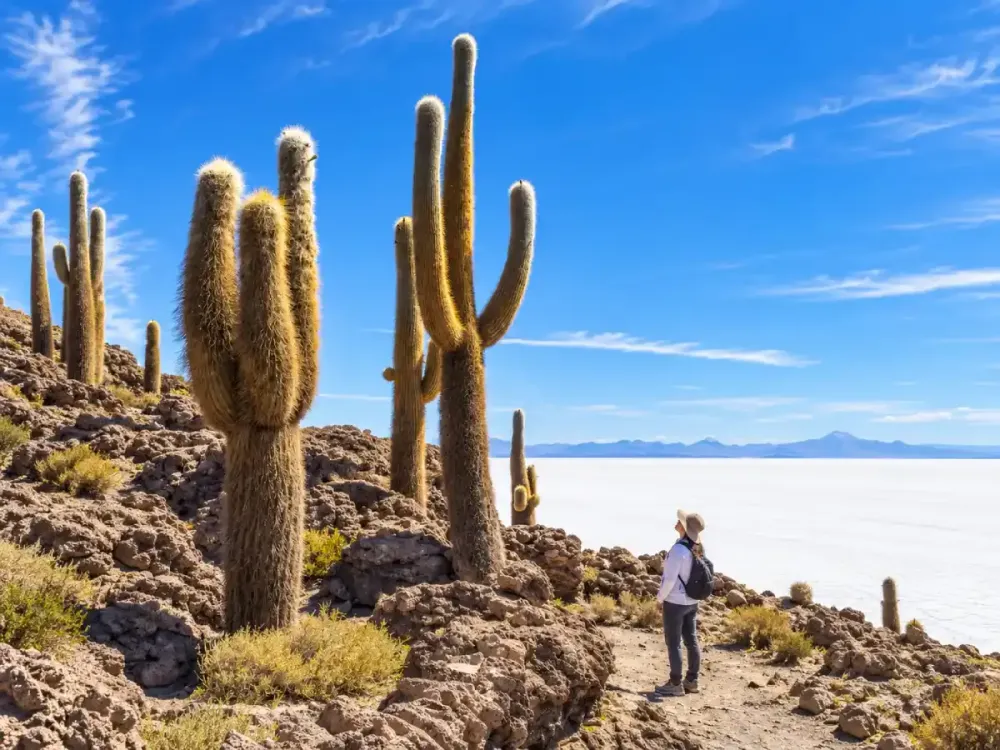
What can you see on Incahuasi Island?
Incahuasi does not require half a day, but it contains enough interesting features to make it one of the most rewarding stops on a Uyuni itinerary.
| What to see | Why it stands out |
|---|---|
| Giant cacti | The island’s most iconic natural feature |
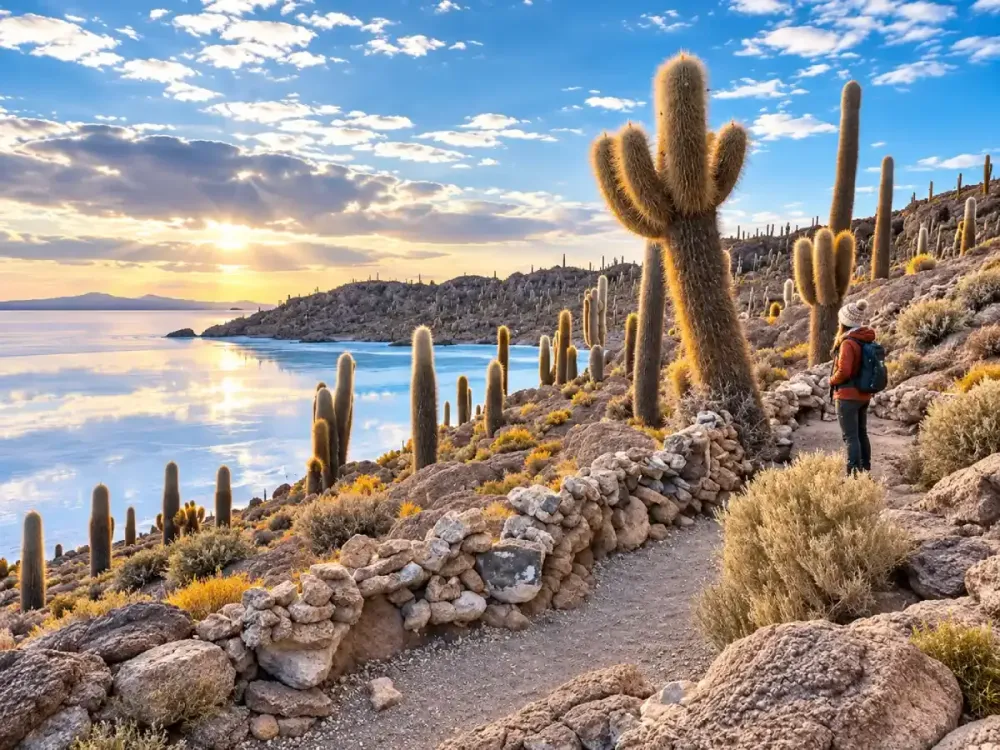
| Rocky trails | Allow you to explore the interior of Incahuasi |
| Natural viewpoints | Offer panoramic views across the Uyuni Salt Flats |
| Geological formations | Create a completely different landscape from the salar |
| Vegetation and salt contrast | One of the best photography settings on the route |
The main experience is simply walking through the trails at a comfortable pace and watching the perspective of the salt flats change as you climb higher.
To better understand the other places that can be included in the journey, read our Uyuni Salt Flats Travel Guide.
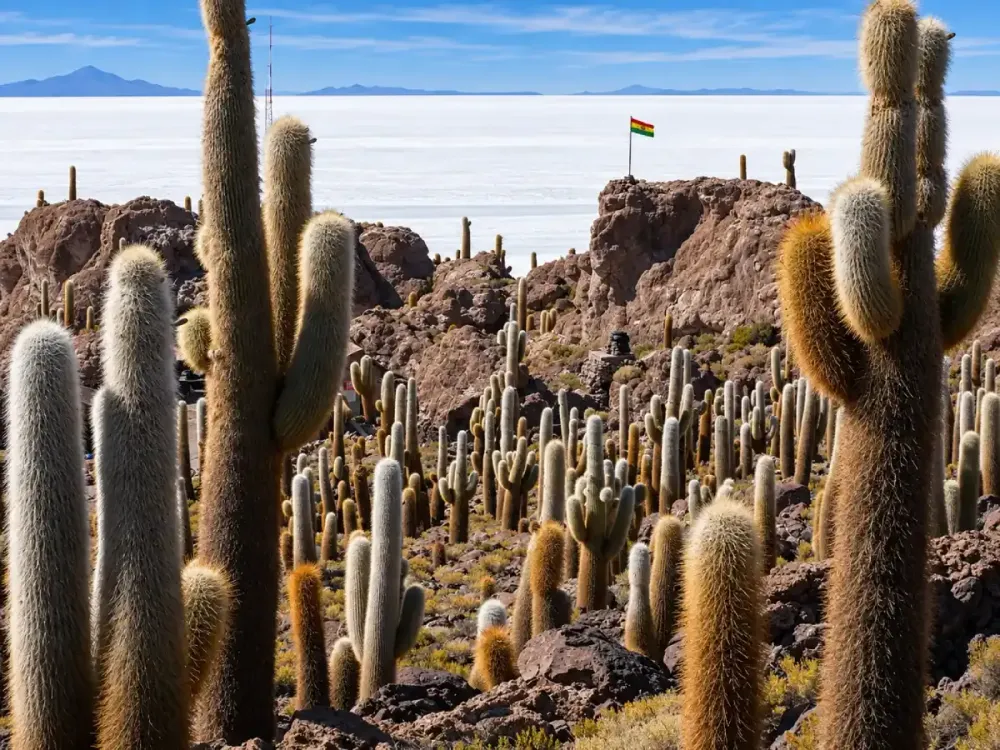
The Incahuasi viewpoint
One of the most rewarding parts of the visit comes when you reach the higher sections of the island.
From there, the Uyuni Salt Flats extend in several directions until they visually merge with the surrounding mountains and horizon. During the dry season, the contrast between the white salt surface, dark rocks and green cacti becomes especially dramatic.
The view also helps you appreciate the scale of the salar. From inside a vehicle, the landscape can feel like a long flat plain. From a higher viewpoint, its enormous dimensions become much more obvious.
The climb should be done at a relaxed pace. Even though this is not a high-mountain trek, you are still above 3,600 meters, and the effort may feel more demanding if you are not fully acclimatized.
For clothing and gear recommendations, read What to Pack for Uyuni Salt Flats.
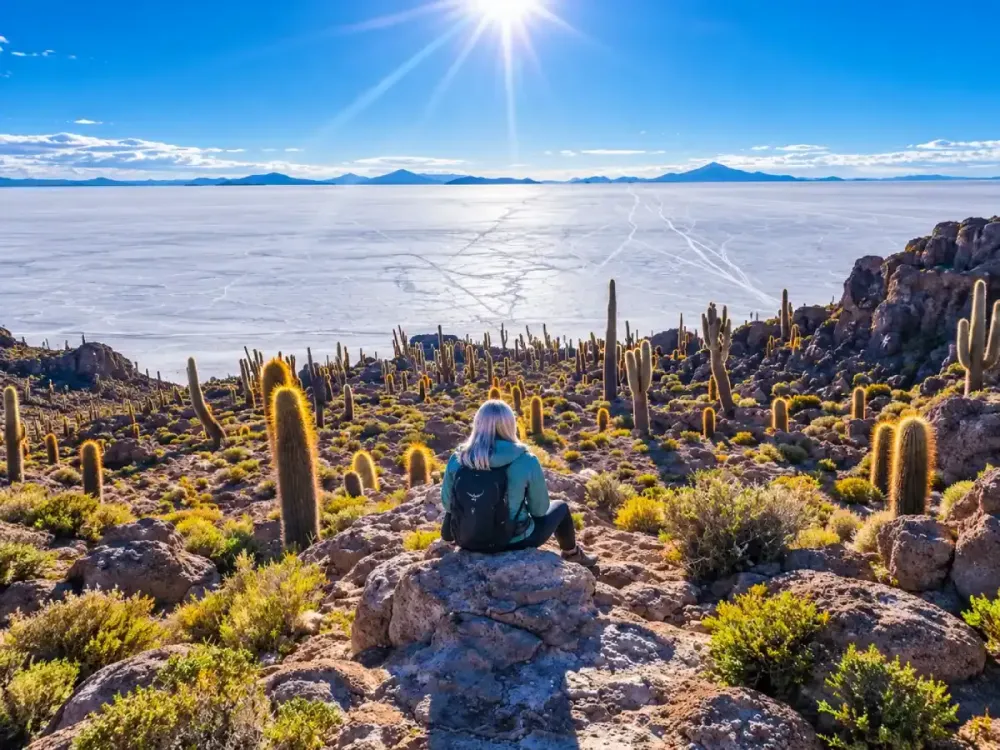
How long does a visit to Incahuasi Island take?
Incahuasi is usually part of a broader day across the Uyuni Salt Flats, so the amount of time available depends on the itinerary, group pace and route conditions.
As a general reference, the stop usually allows enough time to follow the main trails, see the giant cacti and reach a panoramic area without needing to spend several hours there.
It is worth walking slowly, especially if you have recently arrived from a lower-altitude city. The goal is not to rush to the top, but to enjoy the views and the change in scenery.
The actual visit time can also vary according to the season. When conditions on the salt flats force changes to routes or driving times, the schedule may be adjusted.
If you are comparing options, read How Many Days Do You Need for the Uyuni Salt Flats? before choosing between a one, two or three-day trip.
Is Incahuasi the same as Isla del Pescado?
No. Incahuasi Island and Isla del Pescado are different places, although the names are sometimes confused in informal maps, travel blogs and tour descriptions.
Incahuasi is the formation that appears most frequently in traditional Uyuni itineraries and is especially known for its giant cacti and panoramic walking trails.
Isla del Pescado is another formation within the salt flats and should not automatically be used as a synonym for Incahuasi.
This distinction matters when reviewing an itinerary. If Incahuasi is a priority for you, check that the program specifically names Incahuasi Island rather than simply mentioning a generic “cactus island.”
Can you visit Incahuasi Island during the rainy season?
Not always.
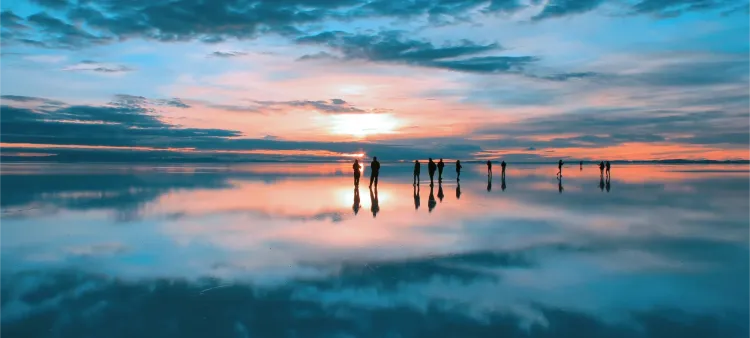
During the rainy season, especially between January and March, a layer of water can spread across large parts of the Uyuni Salt Flats and create the famous mirror effect.
The same phenomenon that produces those reflections can also make access to Incahuasi more difficult. When water levels are high, routes may be changed and the island may temporarily be left out of the itinerary.
That is why, if visiting Incahuasi is your absolute priority, the drier months generally provide a better chance of reaching it.
If your main dream is mirror photography, you should understand that Incahuasi and a perfect mirror effect cannot always be combined in the same day.
Read When to See the Uyuni Salt Flats Mirror Effect to understand this trade-off more clearly.
What is the best time to visit Incahuasi Island?
If Incahuasi is one of your main priorities, the dry season is usually the most practical reference because it tends to make travel across different parts of the salar easier.
From May to October, dry conditions dominate and the classic white-salt landscape is more common. June, July and August, however, can also bring particularly cold nights.
Transition months can be more variable, while January, February and March are more attractive for travelers prioritizing the mirror effect.
| Period | Access to Incahuasi | Typical landscape |
|---|---|---|
| January–March | May be limited | Mirror effect and wet areas |
| April | Variable | Transition between wet and dry |
| May–October | Generally more favorable | White salt flats and salt patterns |
| November | Variable | Mostly dry, transitional |
| December | Depends on rainfall | Wet areas begin to appear |
To choose your dates more carefully, read Best Time to Visit Uyuni Salt Flats.
How do you get to Incahuasi Island?
The usual way to reach Incahuasi is by 4x4 as part of a route starting in Uyuni town and crossing different parts of the salt flats.
Incahuasi is not connected by conventional public transportation. It is normally included in an itinerary that may also feature the Train Cemetery, Colchani and different photography stops on the salt surface.
You first need to reach Uyuni town and then join the appropriate excursion from there.
If you are traveling from Bolivia’s administrative capital, read How to Get from La Paz to Uyuni for a comparison of overnight bus and flight options.
Once you arrive in Uyuni, the exact route to Incahuasi depends on surface conditions and the season.
Is Incahuasi included in a one-day Uyuni tour?
Yes, Incahuasi can be included in a one-day itinerary when conditions on the salt flats allow access.
A full-day route may combine the Train Cemetery, Colchani, different areas of the salt flats and Incahuasi in the same journey.
However, the island should not be considered a guaranteed stop throughout the entire year because water levels can change the route.
If you want to focus on the main attractions, you can explore the Uyuni Salt Flats Full Day.
If you have more time, longer routes expand the landscape considerably.
The Uyuni Salt Flats and Tunupa Volcano 2 Days continues toward the northern sector and Tunupa, while the Uyuni Salt Flats and Colored Lagoons 3 Days heads toward deserts and high-altitude lagoons.
Tips for visiting Incahuasi Island
The first tip is not to underestimate the altitude. Walk slowly, especially on uphill sections, and stay hydrated throughout the visit.
Bring sunglasses with good UV protection, sunscreen, a hat and layered clothing. Even on cold days, solar exposure can be intense because of the altitude and the reflection from the white salt surface.
Wear comfortable shoes with soles that provide good grip on rocky terrain. Technical mountaineering boots are not necessary for a standard visit, but unstable footwear is best avoided.
Always respect marked trails and avoid touching or damaging the cacti. It is also a good idea to keep your phone and camera protected from dust, salt or moisture depending on the season.
You can prepare your daypack with our What to Pack for Uyuni Salt Flats guide.
Is Incahuasi Island worth visiting?
Yes, especially if you want to experience more than the classic flat white landscape of the Uyuni Salt Flats.
Incahuasi completely changes the way the region feels. Giant cacti, rocks and walking trails break the horizontal character of the salar, while the higher viewpoints offer a perspective that is difficult to get anywhere else.
It is also a particularly interesting stop for photography because vegetation, rock, salt and mountains can all appear in the same composition.
At Dreamy Tours, we consider Incahuasi well worth including whenever conditions allow access. If you have limited time, you can try to include it in the Uyuni Salt Flats Full Day. If you want to explore farther, continue toward Tunupa Volcano or Laguna Colorada on a multi-day route.
Personal travel advice
Plan your trip with Dreamy Tours
Start a tailored journey with our exclusive tours and custom trips across Peru and other Latin American countries.