Search the blog
Tabla de contenidos
Knowing what to pack for Uyuni Salt Flats can make a major difference between enjoying the landscape comfortably and spending much of the trip dealing with cold, wind, strong sunlight or wet conditions. Uyuni sits at more than 3,600 meters above sea level and combines intense solar exposure with significant temperature changes throughout the day.
Your packing list also changes with the season. During the dry months, cold nights and wind become more important, while during the rainy season you need to prepare for wet areas if you are hoping to see the famous mirror effect.
Trip length matters too. What you need for the Uyuni Salt Flats Full Day is not exactly the same as what you should bring for a two or three-day journey through the Altiplano.
If you are still planning the whole experience, start with our Uyuni Salt Flats Travel Guide to decide your season, trip length and route.
What clothes should you wear at the Uyuni Salt Flats?
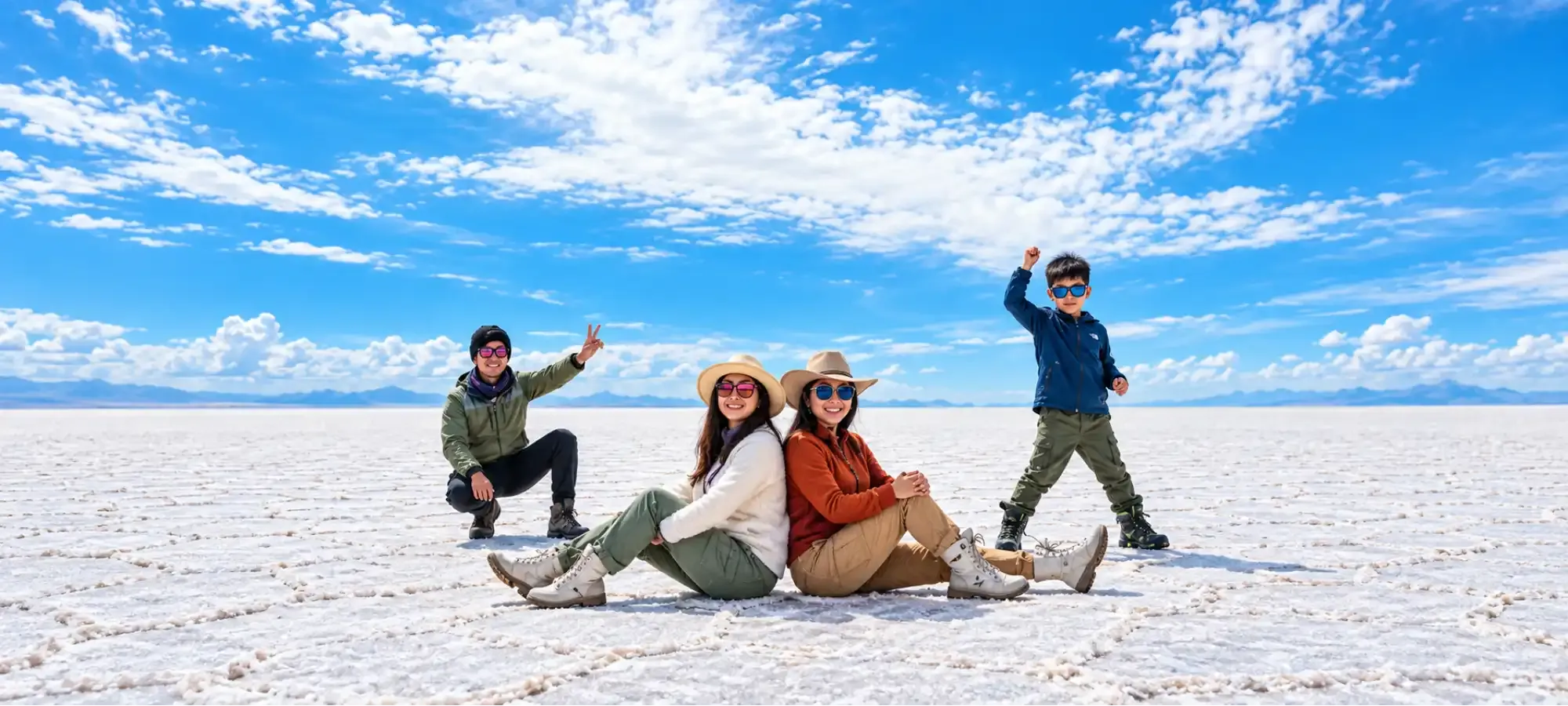
The most practical strategy is to dress in layers. Conditions can change considerably between early morning, midday and evening, so several removable layers are usually more useful than relying on one extremely heavy jacket.
For your base layer, choose a comfortable shirt and, especially during colder months or on multi-day routes, a thermal top. Add a fleece or sweater and finish with a jacket that protects you from the wind.
For your lower body, wear comfortable trousers that allow easy movement. During colder periods or longer Altiplano routes, thermal leggings underneath can be very useful.
| Clothing item | Full Day | 2–3 day tour | Cold season |
|---|---|---|---|
| Comfortable shirt | Yes | Yes | Yes |
| Thermal base layer | Optional | Recommended | Highly recommended |
| Fleece or sweater | Yes | Yes | Yes |
| Windproof jacket | Yes | Yes | Yes |
| Heavy warm jacket | Depending on season | Yes | Yes |
| Hat and gloves | Optional | Recommended | Highly recommended |
| Warm socks | Yes | Yes | Yes |
If you have not chosen your dates yet, read Best Time to Visit Uyuni Salt Flats before finalizing your luggage.
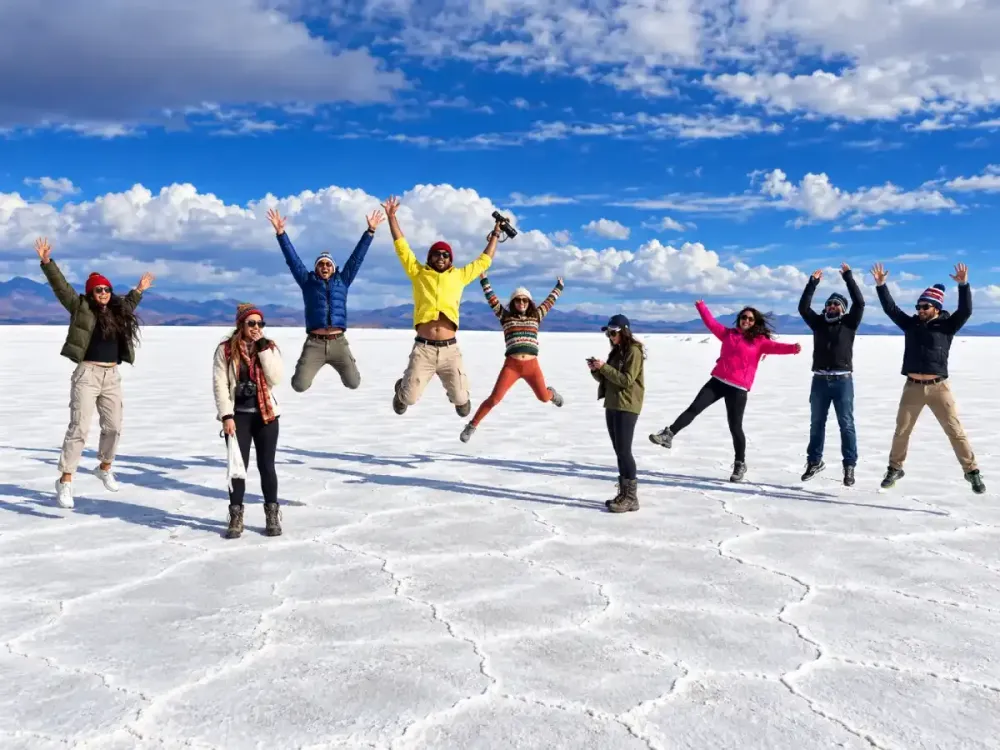
Does it get very cold at the Uyuni Salt Flats?
It can get very cold, but the temperature depends on the season, time of day and route.
During daylight hours, the sun can be strong enough to make conditions feel relatively comfortable while you are outdoors. Once the sun disappears, however, temperatures can drop quickly.
This becomes even more noticeable on multi-day routes that continue through higher parts of the Altiplano. Mornings and nights can feel much colder than the middle of the day.
June, July and August are months when you should pay particular attention to warm clothing. If you are taking a multi-day trip, bring thermal layers, gloves, a warm hat and several pieces you can combine.
One of the most common mistakes is checking only daytime temperatures. In Uyuni, your luggage needs to work for bright sunshine and cold evenings within the same journey.
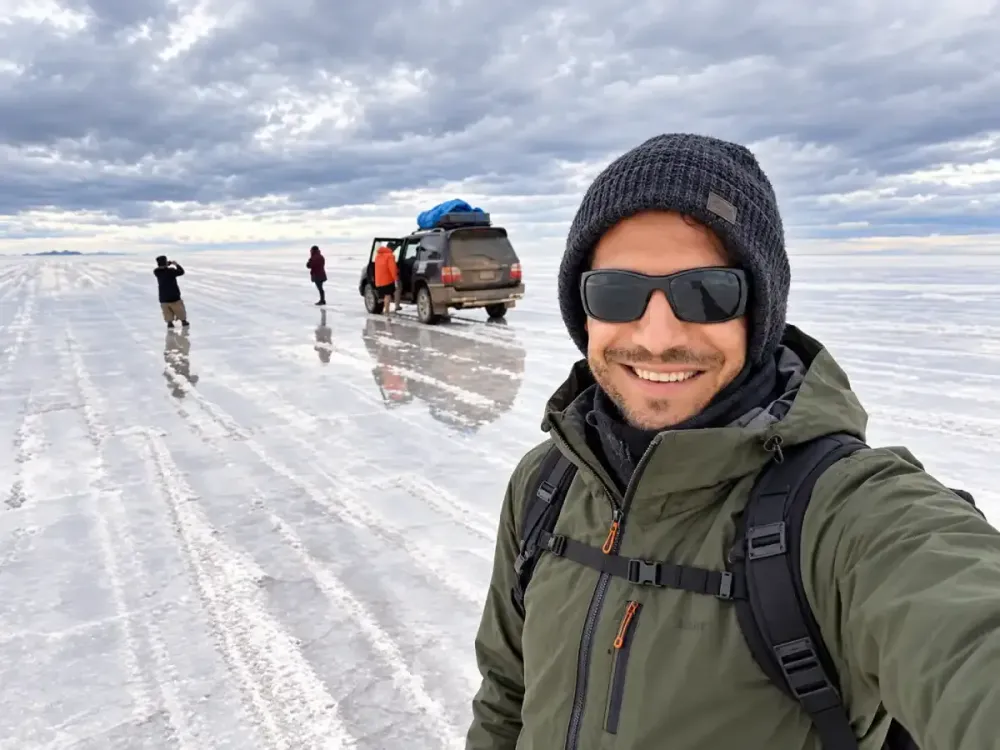
Sun protection: one of the essentials
Sun protection is one of the most important parts of your Uyuni packing list.
The combination of altitude, clear skies and an extremely bright surface increases exposure during several hours outdoors. Even when the air feels cool, the sun can still be very strong.
Bring high-protection sunscreen and apply it before starting the trip. Do not forget areas such as your neck, ears and hands, which can remain exposed for long periods.
You should also carry sunglasses with good UV protection, a hat or cap and lip balm. The dry Altiplano air can cause lips to become dry quickly.
Water is equally important. A reusable bottle makes it easier to stay hydrated throughout the day without adding unnecessary weight.
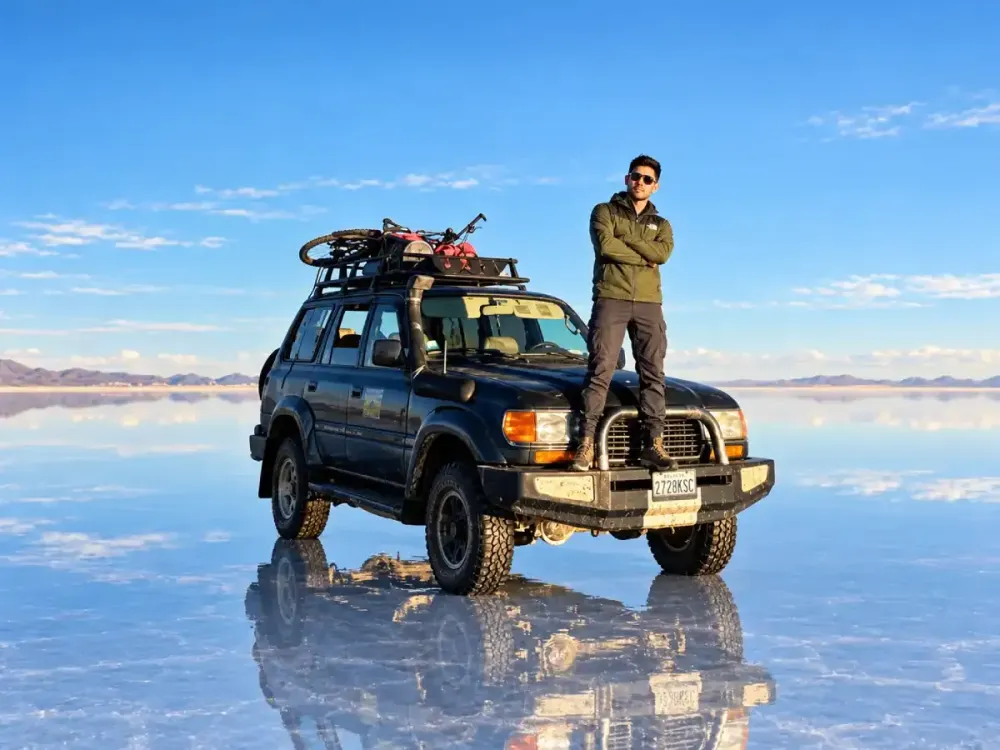
What footwear should you wear in Uyuni?
For a one-day trip during the dry season, closed, comfortable shoes with good soles are usually enough.
You do not need technical high-mountain boots simply to walk on the salt flats. Comfort, stability and shoes that are already broken in are much more important.
During the rainy season, conditions change. You may encounter areas covered with water, so waterproof footwear or suitable protection becomes more useful.
On two or three-day trips, you will also walk on terrain that is different from the flat salt surface. Routes may include uneven paths, viewpoints, rocky areas and desert landscapes.
Avoid wearing brand-new shoes in Uyuni. A small discomfort at the beginning of the day can become a surprisingly loud travel companion after several hours.
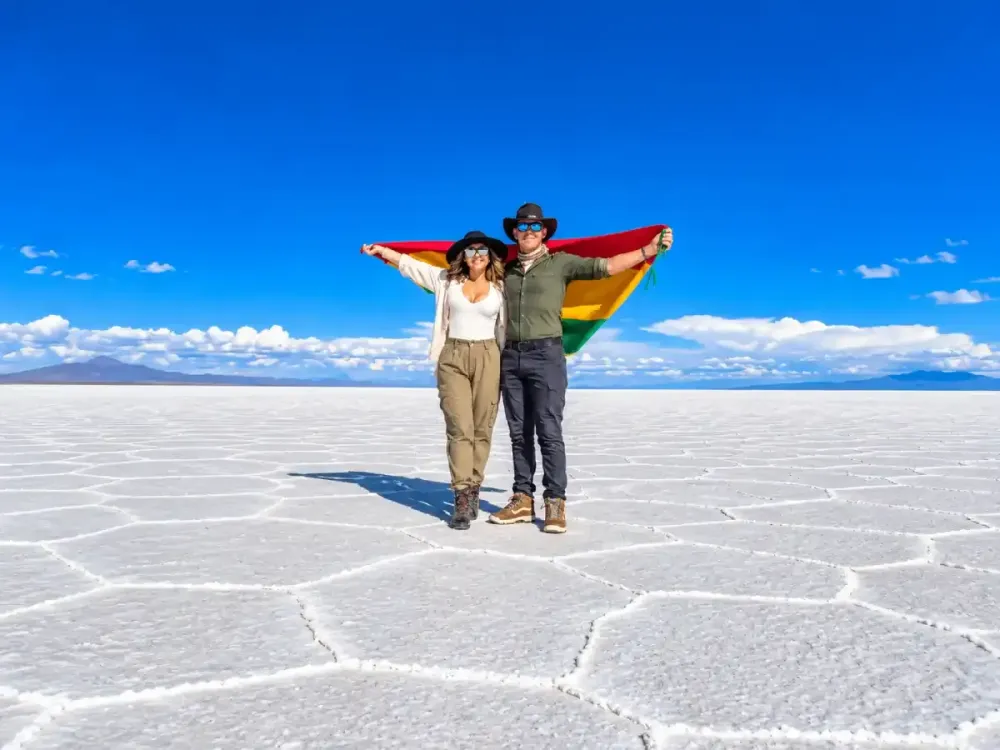
What should you pack for the Uyuni mirror effect?
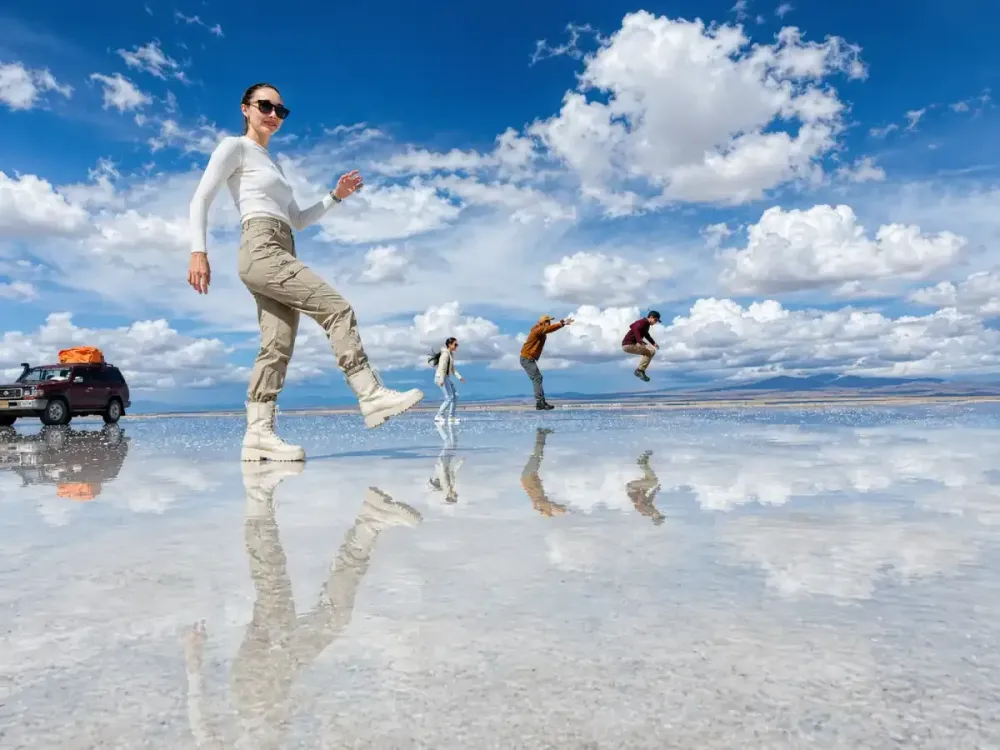
If you travel between January and March hoping to see the mirror effect, add waterproof protection to your luggage.
A lightweight waterproof jacket is useful because conditions can change during the day. You should also consider a backpack rain cover and waterproof protection for your phone, camera and important documents.
Bring extra socks. If your footwear gets wet, having a dry pair can make the rest of the day much more comfortable.
| Item | Dry season | Rainy season |
|---|---|---|
| Windproof jacket | Yes | Yes |
| Waterproof jacket | Optional | Recommended |
| Backpack rain cover | Optional | Recommended |
| Phone/camera protection | Useful | Highly recommended |
| Extra socks | Useful | Highly recommended |
| Water-resistant footwear | Not essential | Recommended |
| Sunglasses | Yes | Yes |
Water levels can also change the route. If you are traveling specifically for reflections, read When to See the Uyuni Salt Flats Mirror Effect before packing.
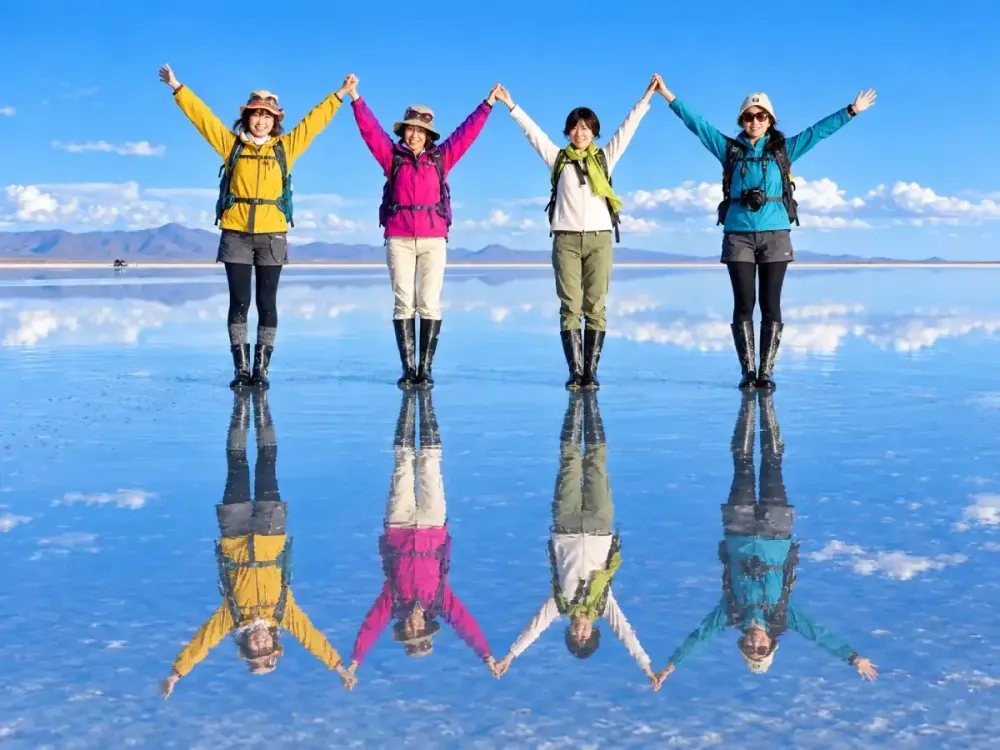
How should you protect your camera and phone in Uyuni?
Uyuni is one of those places where even travelers who claim they “do not take many photos” suddenly discover a new personality.
Make sure you have enough storage space and begin the day with fully charged batteries. A power bank is especially useful during long tours.
If you use a camera, consider carrying an extra battery and a microfiber cloth for cleaning the lens. Dust, salt and moisture can all appear depending on the season and route.
During mirror season, use a waterproof case or protective bag for electronic devices.
Cold temperatures can also reduce battery performance, particularly on multi-day trips. Keeping spare batteries in a protected section of your bag can help them retain power for longer.
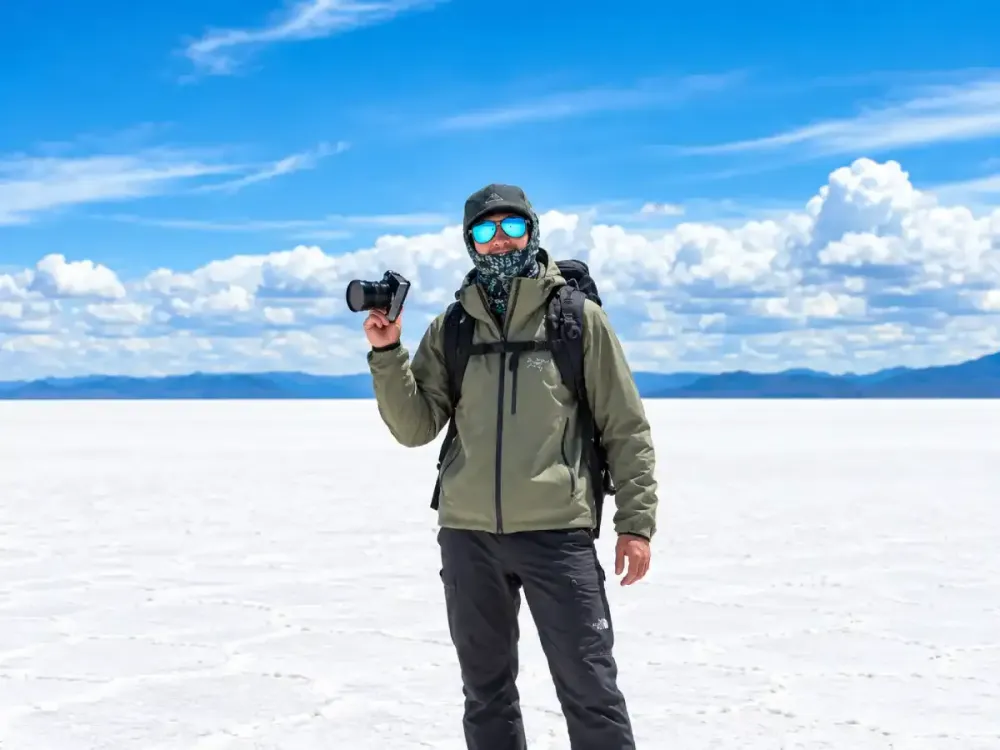
What should you bring for the altitude?
The Uyuni Salt Flats sit at more than 3,600 meters above sea level, and some multi-day routes reach even higher parts of the Altiplano.
Traveling light does not mean ignoring basic items that help you remain comfortable throughout the day.
Carry enough water and avoid unnecessary physical exertion during your first hours if you are not yet acclimatized. Getting a good night’s sleep before a long journey is also useful.
If you take personal medication, keep it with you rather than inside luggage that may be stored away during transportation.
If Uyuni is part of a wider route through the country, read What to Pack for Bolivia to adapt your luggage for La Paz, Lake Titicaca, the Altiplano and other regions.
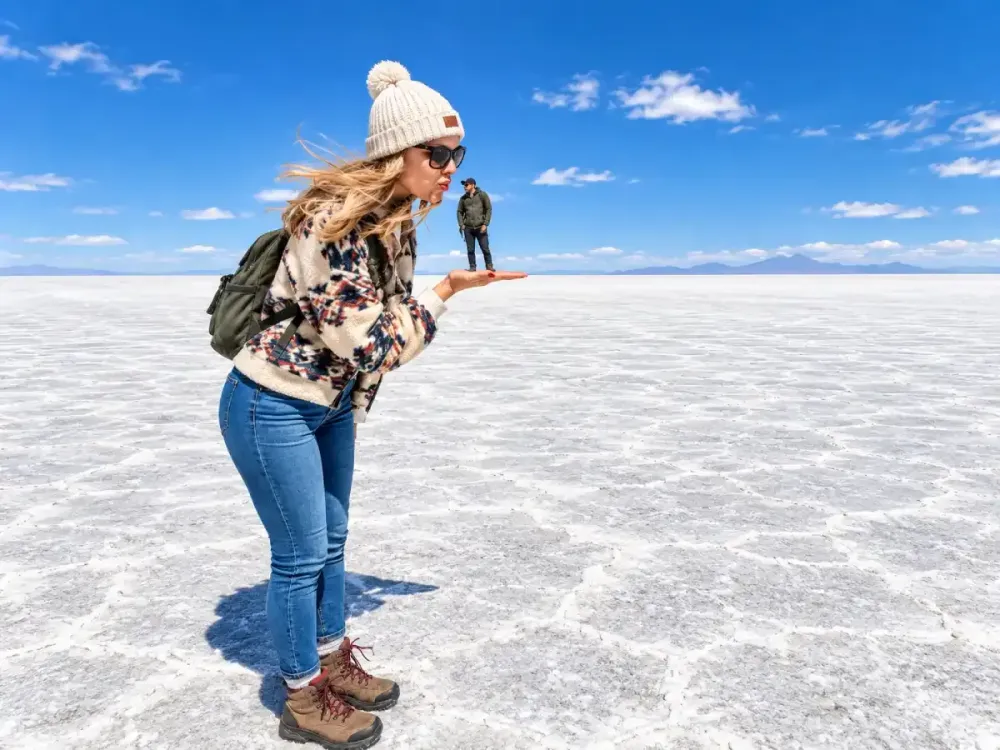
Do you need different clothing for a 3-day Uyuni tour?
Yes. A three-day Altiplano route requires more preparation than a Full Day.
The journey gradually leaves the salt flats and continues toward higher and more remote areas, where nighttime temperatures can be considerably lower.
In addition to your basic layers, pack thermal clothing, gloves, a warm hat, extra socks and enough underwear for the route.
You will also need personal hygiene items, a power bank, water, personal snacks and any medication you normally use.
Depending on your accommodation and the service included in the tour, it is worth confirming what bedding and warm equipment are provided so you do not carry unnecessary items.
If you are taking the Uyuni Salt Flats and Colored Lagoons 3 Days, pack not only for Uyuni itself but also for Laguna Colorada and the higher areas of the route.
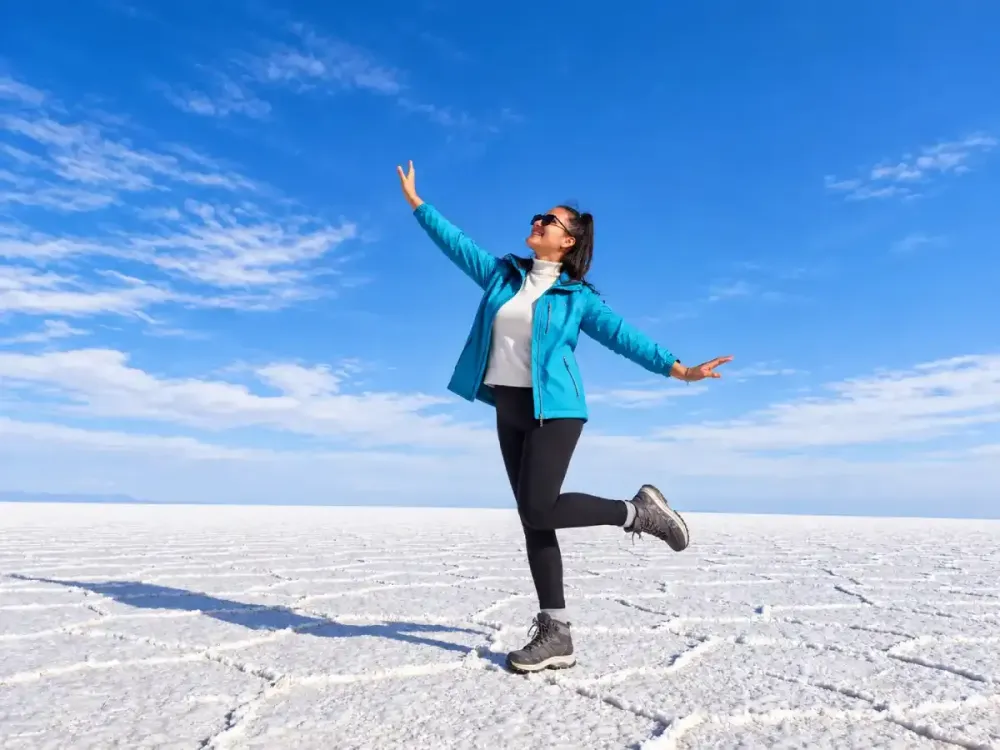
What should always be in your daypack?
Your daypack should contain only what you will actually need while you are away from the vehicle.
There is no need to carry your entire suitcase every time you stop for a photograph. A lightweight backpack keeps important items within reach without turning every stop into a luggage-moving exercise.
Prioritize sunscreen, sunglasses, water, identification, your phone, a power bank and one extra warm layer.
You can also carry a few small snacks, particularly if you have specific dietary preferences or like to have something available between scheduled meals.
As a simple rule, your daypack should cover five things: sun, cold, water, power and documents.
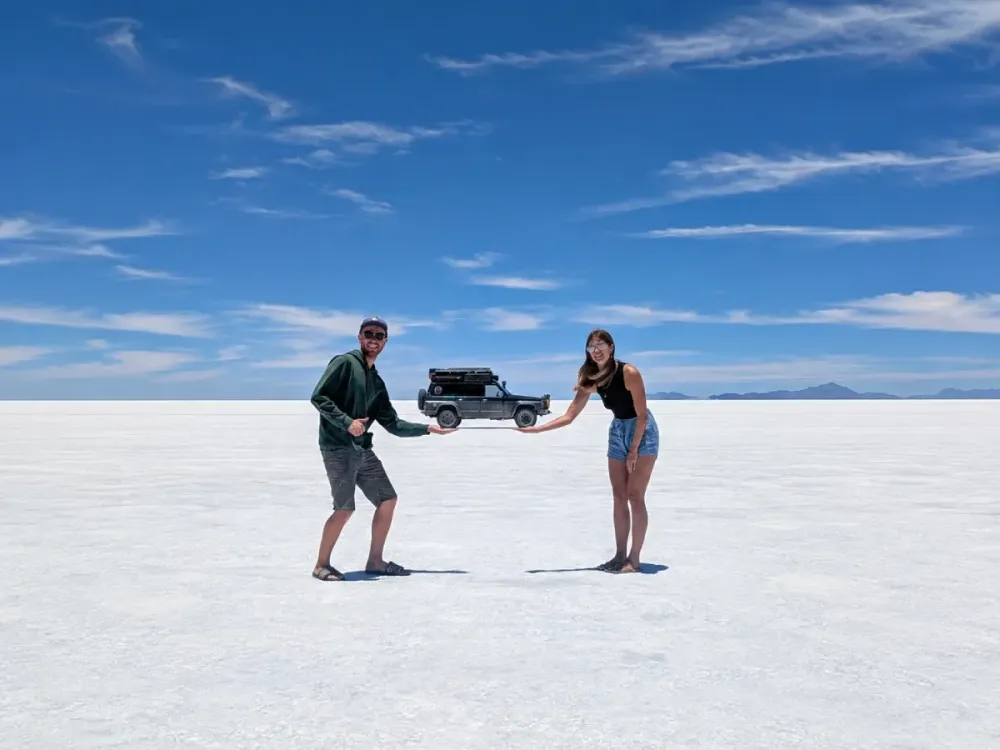
How much luggage should you take to Uyuni?
Less is usually better.
For a one-day trip, a small or medium backpack is normally enough because you return to Uyuni at the end of the day.
For two or three-day routes, bring only the clothing and personal items you will actually use during those days. When possible, leave larger luggage at your accommodation or in secure storage and travel with a smaller, more manageable bag.
This is particularly practical because longer routes usually involve several passengers and luggage sharing space in or on the vehicle.
If you are still deciding your trip length, read How Many Days Do You Need for the Uyuni Salt Flats?. A one-day trip, a route toward Tunupa Volcano and a three-day Altiplano circuit require different levels of preparation.
Tips for preparing your luggage before traveling
Before closing your bag, check three things: season, duration and route.
Do not pack for a Full Day as if you were spending three nights in the Altiplano, but do not travel in July wearing the same clothes you would pack for a tropical destination.
Check the weather forecast before departure, but do not rely only on the maximum daytime temperature. Temperature differences between midday and nighttime can be significant.
Charge your batteries, download any maps or information you want available offline and leave enough free storage on your phone or camera.
If you are traveling from La Paz, also read How to Get from La Paz to Uyuni so you can organize transportation without carrying unnecessary luggage during the connection.
So, what should you pack for the Uyuni Salt Flats?
The ideal luggage combines layered clothing, sun protection, warm outerwear, comfortable footwear and a lightweight daypack with essential items.
For a Full Day, focus on sun protection, adaptable clothing, water, your camera or phone and a jacket. For a two-day route toward Incahuasi Island or Tunupa, add more warm clothing and personal items. For a three-day Altiplano circuit, include thermal layers, gloves, a warm hat, hygiene items and enough protection for cold nights.
During mirror season, add waterproof protection. During the drier and colder months, prioritize thermal layers.
At Dreamy Tours, we recommend preparing your luggage after choosing your dates and trip length, not before. Compare the Uyuni Salt Flats Full Day, Uyuni Salt Flats and Tunupa Volcano 2 Days and Uyuni Salt Flats and Colored Lagoons 3 Days to understand exactly what kind of packing list you will need.
Personal travel advice
Plan your trip with Dreamy Tours
Start a tailored journey with our exclusive tours and custom trips across Peru and other Latin American countries.