Search the blog
Tabla de contenidos
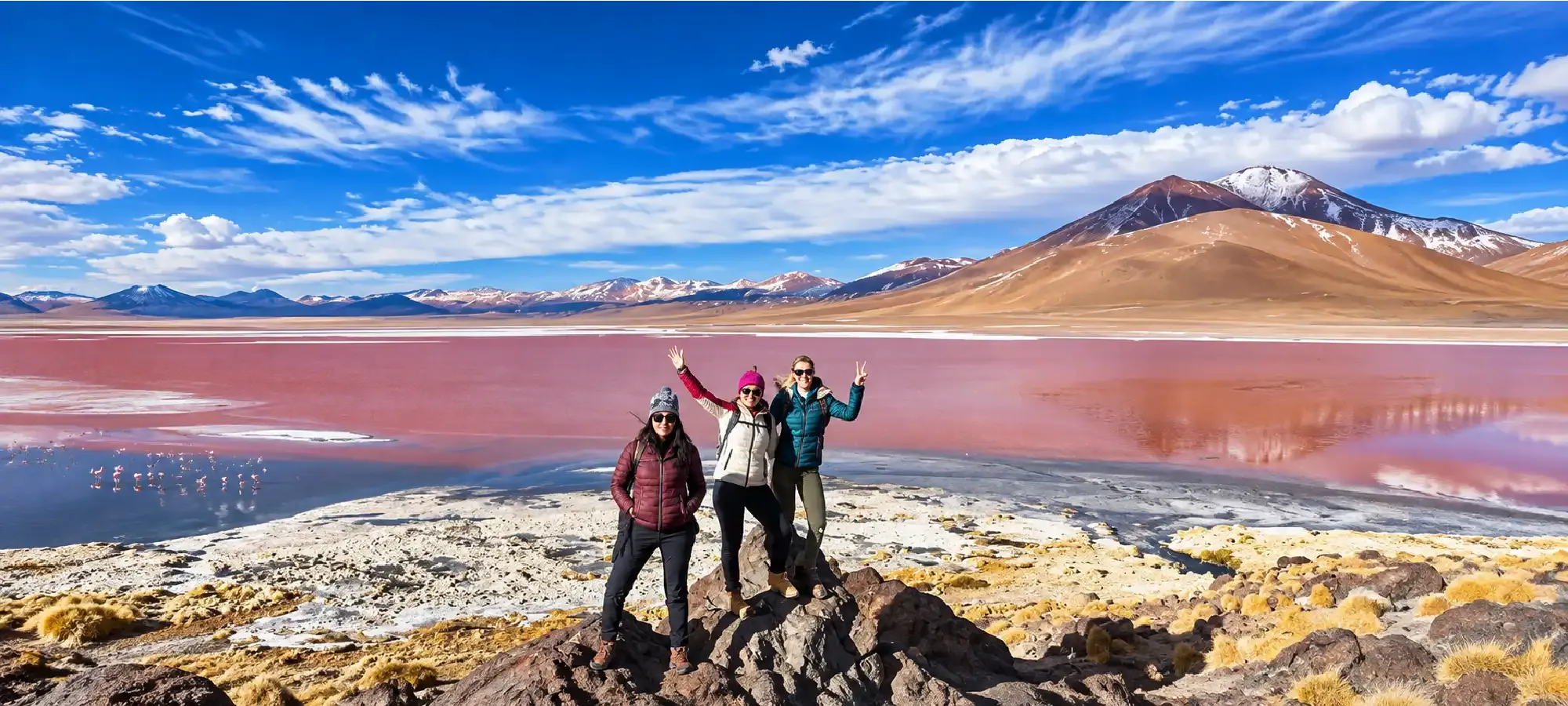
Laguna Colorada Bolivia is one of the most striking landscapes in the Altiplano and one of the major highlights on routes that continue south after the Uyuni Salt Flats. Surrounded by volcanoes, desert plains and mountains, it is best known for the reddish tones of its water and the frequent presence of flamingos.
The lagoon lies inside the Eduardo Avaroa Andean Fauna National Reserve, a remote part of Bolivia’s Potosí department where the scenery constantly shifts between lagoons, deserts, rock formations, volcanoes and geothermal areas.
For many travelers, Laguna Colorada is the moment when it becomes clear that Uyuni is much more than the salt flats themselves. A multi-day journey reveals a much broader section of the Bolivian Altiplano. If you are still planning the region, start with our Uyuni Salt Flats Travel Guide.
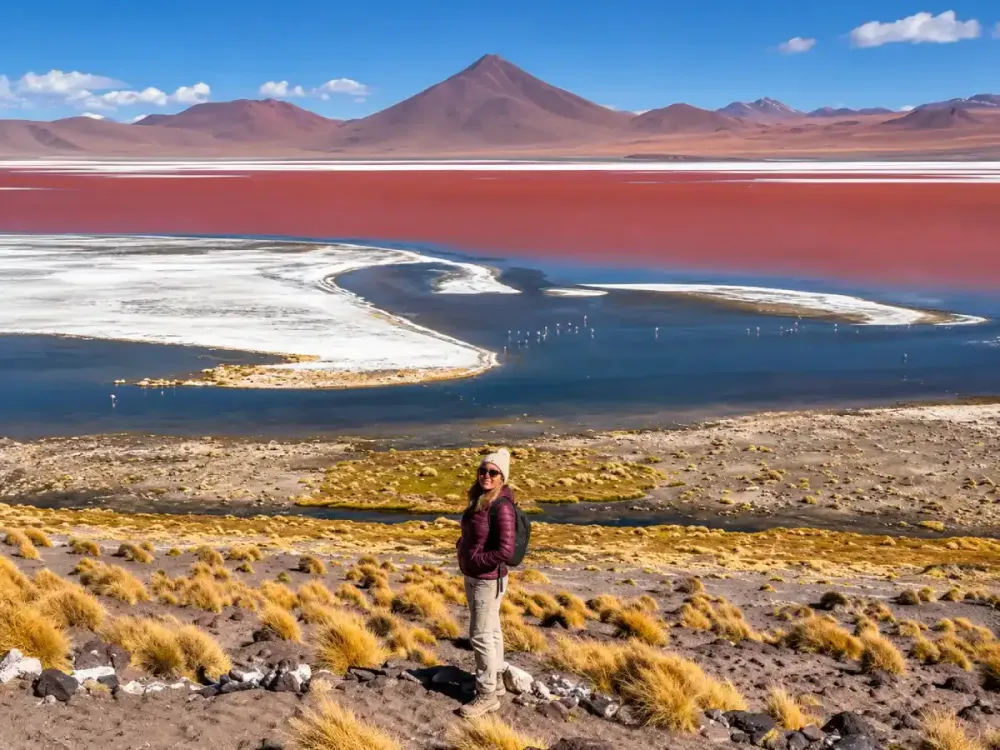
Where is Laguna Colorada?
Laguna Colorada is located in southwestern Bolivia, inside the Eduardo Avaroa Andean Fauna National Reserve in the department of Potosí.
It sits at more than 4,000 meters above sea level, making it one of the high-altitude highlights on southern Bolivia itineraries. Reaching the lagoon means covering long distances across Altiplano roads and remote tracks.
It is not usually visited as a quick independent day trip from a nearby city. The most common way to see it is as part of a multi-day 4x4 route starting in Uyuni and crossing several different landscapes.
On the Uyuni Salt Flats and Colored Lagoons 3 Days, Laguna Colorada is typically reached during the second day after visiting high-altitude lagoons, the Siloli Desert and the Stone Tree.
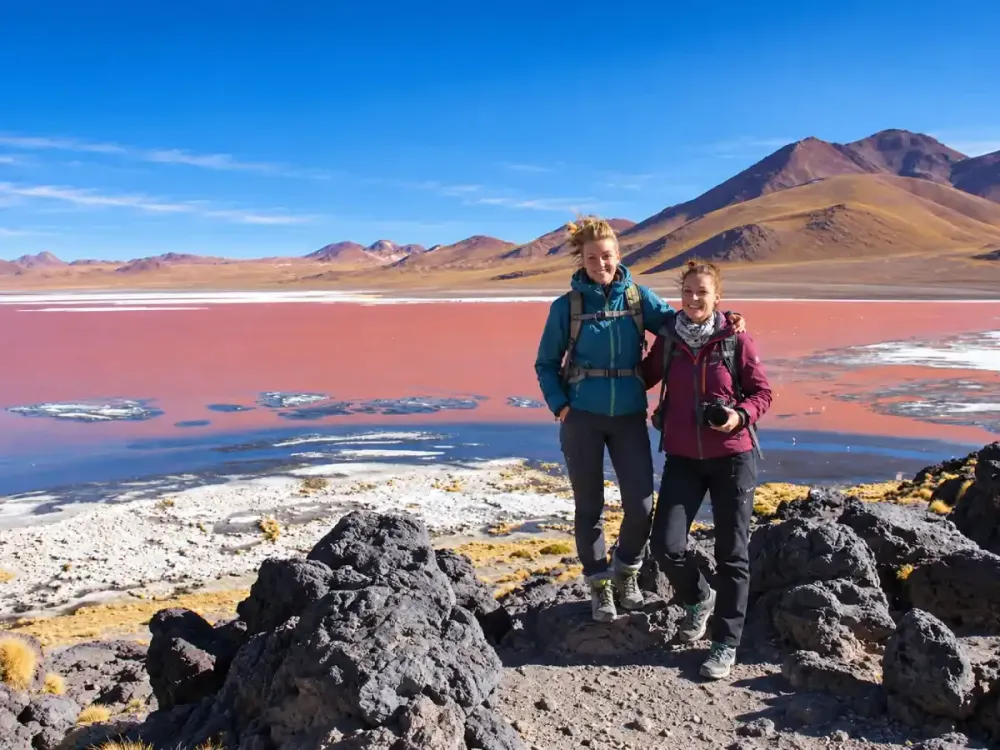
Why is Laguna Colorada red?
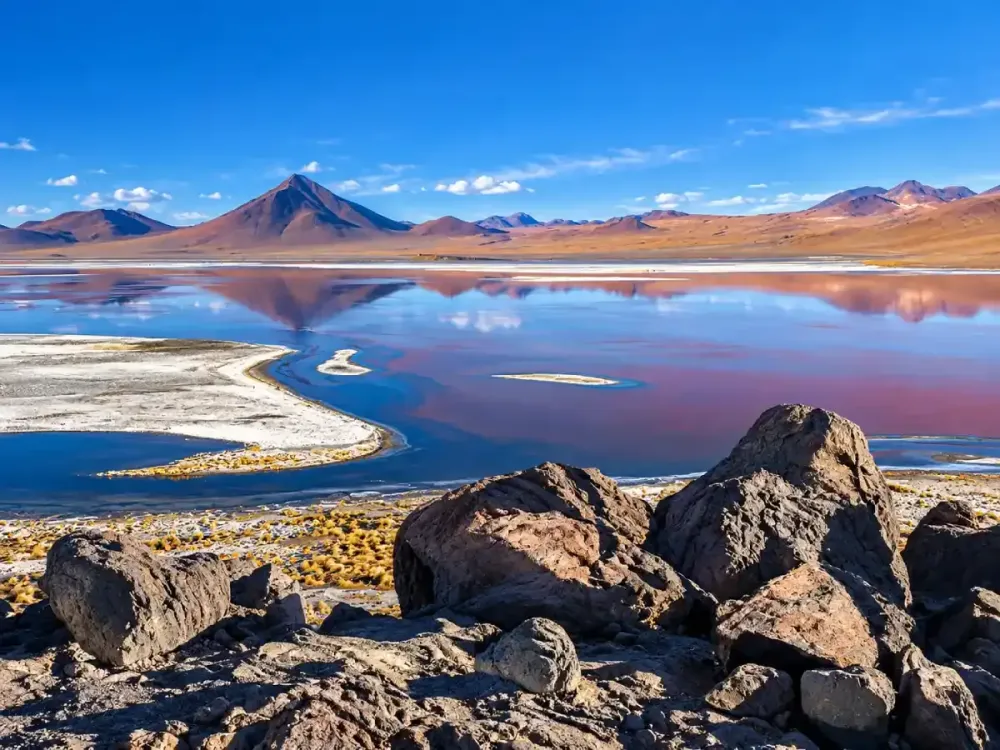
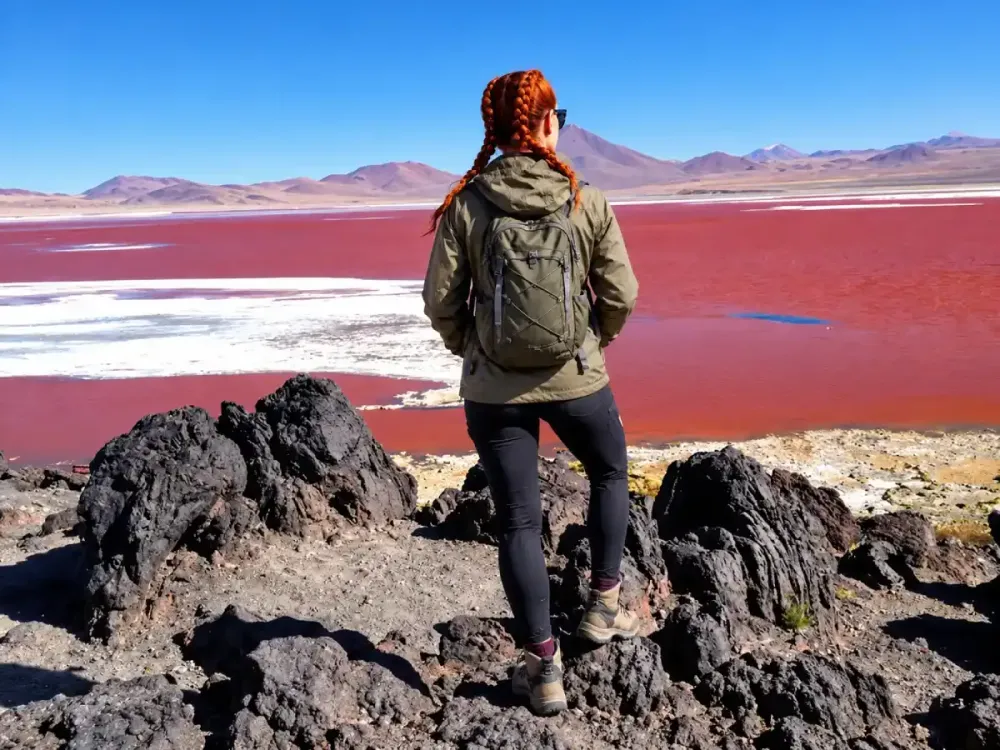
The color of the lagoon changes depending on light, wind and daily conditions, but its reddish tones are related to microorganisms, algae and mineral components found in the water and sediments.
That is why the lagoon does not show exactly the same color throughout the day. Depending on sunlight and atmospheric conditions, it can shift from softer reddish tones to much more intense shades.
The contrast becomes even more dramatic because white areas also appear across parts of the surface due to mineral deposits.
The result is a landscape combining red, white, blue, brown and the darker tones of the surrounding mountains. This mixture is exactly what makes Laguna Colorada one of the most recognizable landscapes in the Bolivian Altiplano.
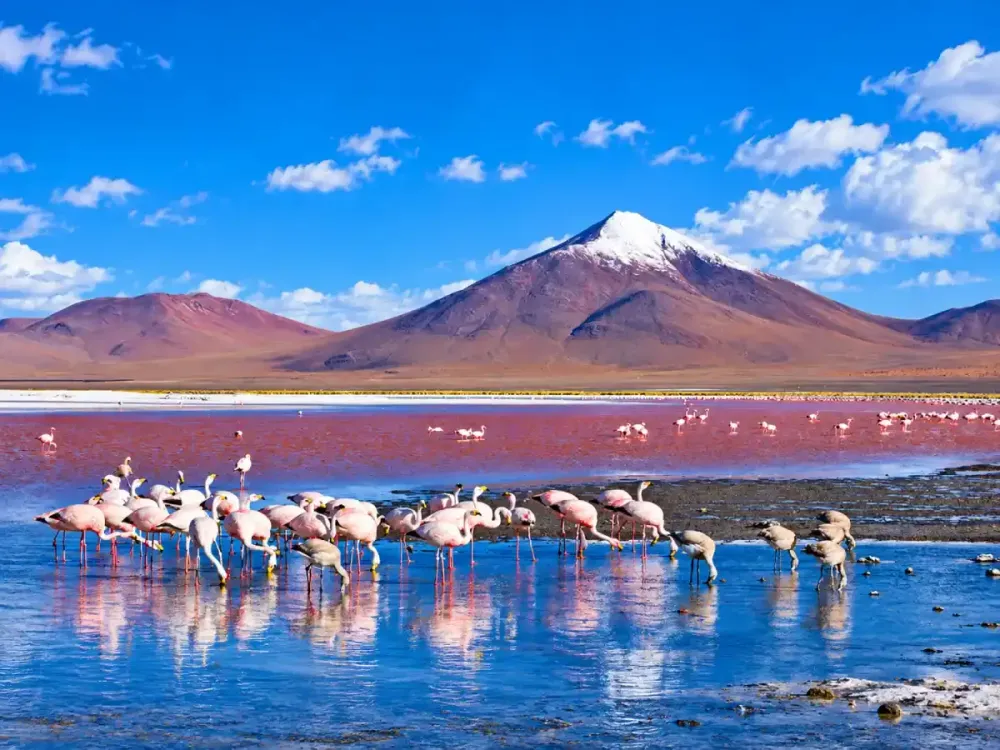
Flamingos at Laguna Colorada
Flamingos are one of the main attractions at Laguna Colorada.
The lagoon and other wetlands in the Altiplano provide habitat for several species, including Andean, Chilean and James’s flamingos. Their numbers can vary according to season, natural conditions and environmental factors.
| Species | General characteristic |
|---|---|
| Andean flamingo | One of the most representative flamingos of the Altiplano |
| Chilean flamingo | Has a wider distribution across South America |
| James’s flamingo | Strongly associated with high-altitude lagoons |
| Other Altiplano birds | May be seen in different parts of the reserve |
Watching them requires keeping a respectful distance and avoiding disturbance. It is better not to approach too closely just for a photograph or interfere with areas where the birds are feeding or resting.
Laguna Colorada is not an outdoor zoo. Its value comes from seeing wildlife in a naturally demanding high-altitude ecosystem.
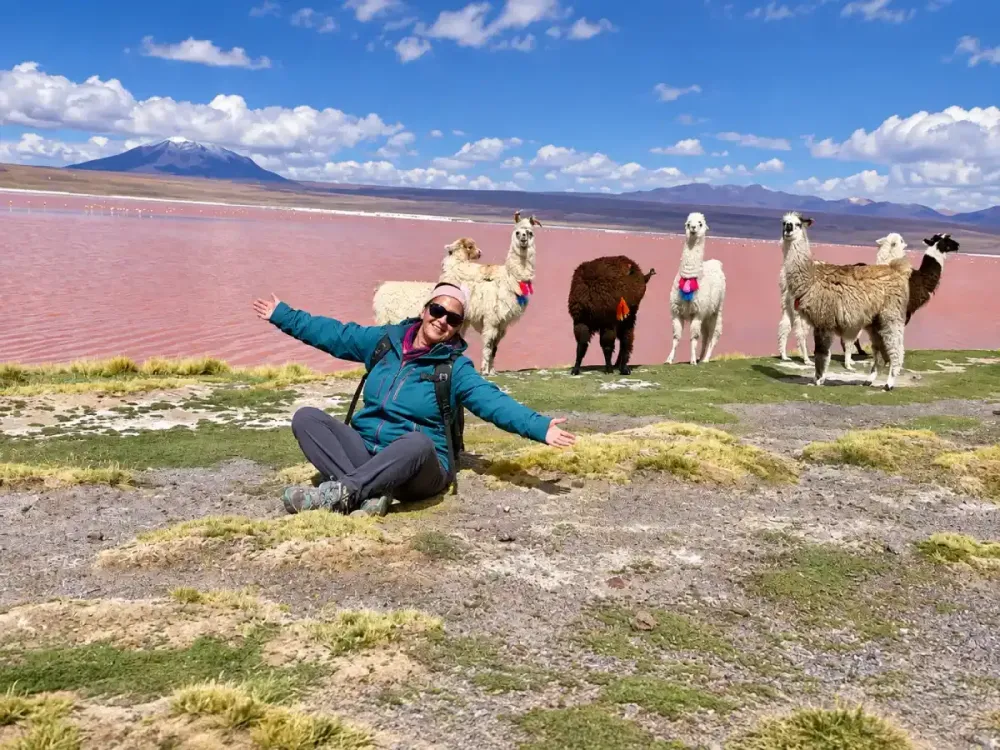
How high is Laguna Colorada?
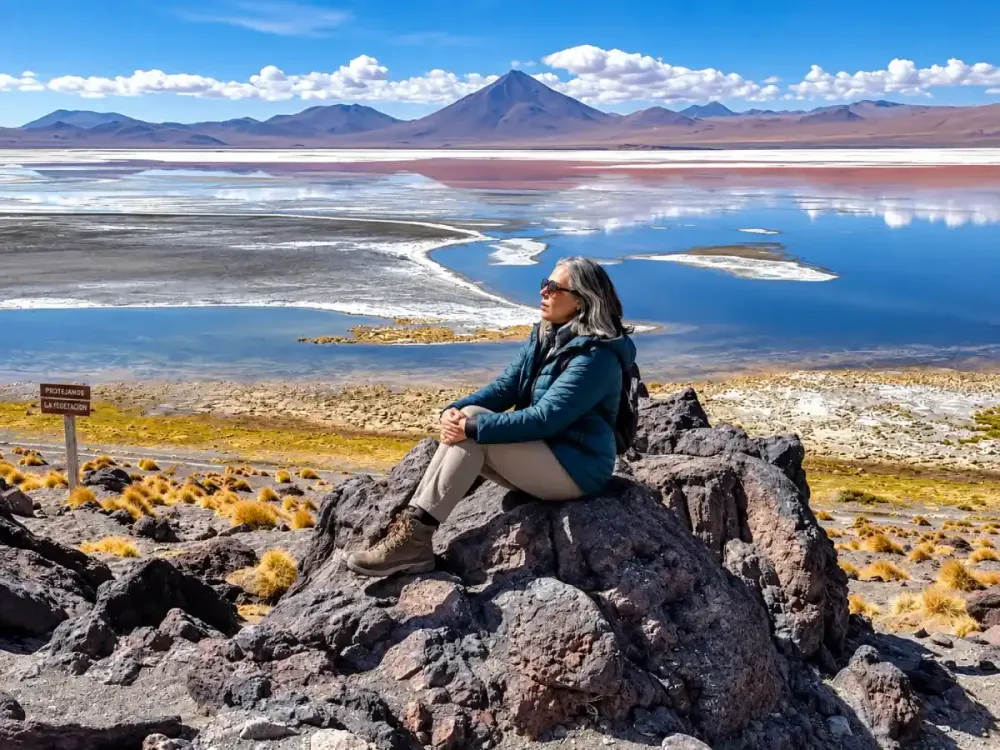
Laguna Colorada sits at approximately 4,300 meters above sea level, so altitude is one of the most important factors to consider before visiting.
At this elevation, walking quickly or making unnecessary physical effort can feel much harder, especially if you are not yet acclimatized.
Three-day routes also pass through even higher areas of the Altiplano, including geothermal zones and fumaroles close to 4,900 meters.
That is why it is useful to reach Uyuni with some level of altitude adaptation when possible, especially if you have already spent time in La Paz, Puno or other high-altitude destinations.
Keep a comfortable pace, stay hydrated and avoid treating every stop as a race against the clock.
What is the best time to visit Laguna Colorada?
Laguna Colorada can be included in tours during much of the year, but conditions change significantly between seasons.
The drier months generally make travel across the Altiplano easier and often provide clearer skies, although they also include some of the coldest nights of the year.
The rainy season can transform parts of the landscape and may also affect routes, particularly around the Uyuni Salt Flats.
| Period | General conditions | What to consider |
|---|---|---|
| January–March | Rainy season | Routes may change depending on terrain |
| April | Transition | Mix of wetter and drier conditions |
| May–October | Drier season | Colder nights and generally more stable routes |
| November–December | Transition toward rains | Variable conditions |
If your trip also includes Uyuni, read Best Time to Visit Uyuni Salt Flats because your travel dates should make sense for the entire route, not only Laguna Colorada.
How do you get to Laguna Colorada from Uyuni?
The most common way is by 4x4 as part of a multi-day tour.
From Uyuni town, the route usually crosses the salt flats first and then continues toward communities, volcanoes, lagoons and desert landscapes in the Altiplano.
Laguna Colorada is commonly visited during the second day of classic three-day itineraries. On Dreamy Tours routes, the journey includes Ollagüe Volcano, high-altitude lagoons, the Siloli Desert and the Stone Tree before reaching Laguna Colorada.
If you first need to reach Uyuni town, read How to Get from La Paz to Uyuni for the main transportation options.
Because of the distances and terrain, Laguna Colorada is not a practical destination to visit using conventional public transportation.
How much time do you need to visit Laguna Colorada?
Laguna Colorada is not normally visited as an isolated destination. It is part of a wider Altiplano route.
That means that although the stop at the lagoon itself may take only part of a day, you need to consider the full travel time required to reach the region.
A three-day route from Uyuni is the most common option for combining the salt flats with Laguna Colorada and the other highlights of southern Bolivia.
A Uyuni Full Day does not reach Laguna Colorada, and the lagoon is also not normally included on a two-day itinerary focused on Tunupa Volcano.
If you are still comparing route lengths, read How Many Days Do You Need for the Uyuni Salt Flats?.
Laguna Colorada on a 3-day route
The real value of a three-day journey lies in the variety of landscapes.
The first day usually focuses on the Uyuni Salt Flats, Colchani, the Train Cemetery and, when conditions allow, Incahuasi Island.
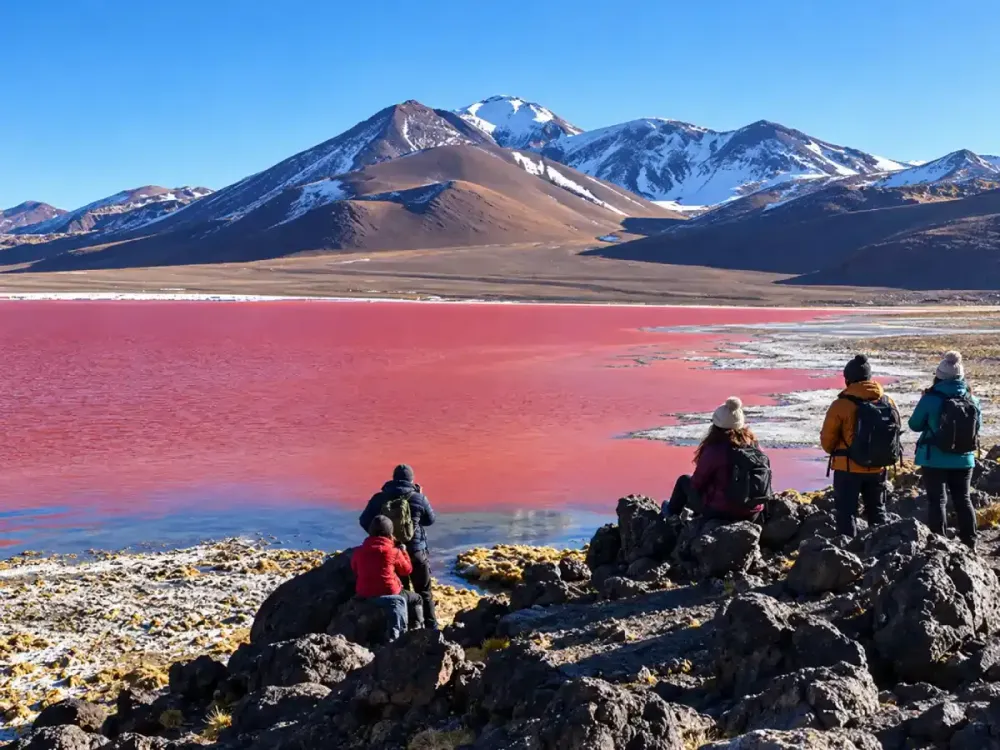
The second day feels completely different. Volcanoes, high-altitude lagoons, the Siloli Desert, the Stone Tree and finally Laguna Colorada become the main scenery.
The third day generally continues toward geothermal areas, fumaroles, hot springs and Laguna Verde before returning toward Uyuni.
That is why a three-day trip should not be seen as simply a longer version of a one-day Uyuni tour. It is a completely different Altiplano experience.
What is the weather like at Laguna Colorada?
The climate can be cold, dry and windy, with significant changes between sunny daytime hours and nighttime.
Altitude intensifies these conditions. Although the sun may feel strong during the day, temperatures can drop quickly once solar radiation decreases.
Wind also has a major impact on how cold it feels. A temperature that looks relatively moderate can feel much colder when you are exposed for several minutes.
For that reason, even when traveling during comparatively mild months, you should carry clothing that adapts easily to changing conditions.
Altiplano weather can also shift quickly. It is better to carry one extra layer and not use it than to discover too late that you needed it.
What should you pack for Laguna Colorada?
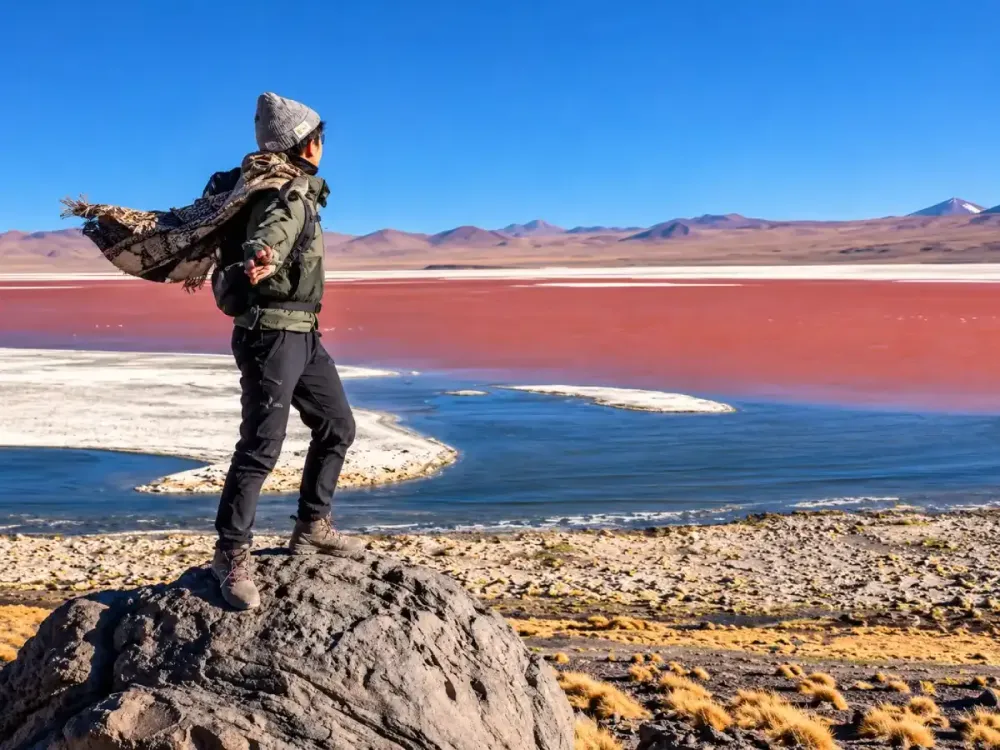
The main rule is to dress in layers.
Bring a comfortable or thermal base layer, a fleece or sweater, a wind-resistant jacket and enough warmth for early mornings and evenings.
You should also bring sunglasses with good UV protection, sunscreen, a warm hat, gloves, lip balm and water.
| Item | Importance |
|---|---|
| Layered clothing | Essential for changing temperatures |
| Warm jacket | Highly recommended |
| Hat and gloves | Important in mornings and evenings |
| UV sunglasses | Essential at high altitude |
| Sunscreen | Necessary even in cold weather |
| Comfortable shoes | Important for stops and uneven terrain |
| Water and reusable bottle | Useful during long travel days |
| Power bank | Recommended for multi-day routes |
Because Laguna Colorada is usually part of a three-day route, it is best to pack for the whole journey. Our What to Pack for Uyuni Salt Flats guide explains what clothing and equipment work well for this kind of trip.
Tips for photographing Laguna Colorada
Photography is one of the main reasons to visit this region, but it is worth looking beyond close-up pictures of flamingos.
Include the mountains, lagoon surface and color contrasts in your composition. This gives a much better sense of scale.
Light can change the reddish tone of the water significantly, so do not worry if the color you see does not look exactly like a photograph you found online.
Use zoom if you want to photograph birds without getting too close. Keeping your distance helps you capture more natural behavior without disturbing them.
Bring enough battery power too. Three-day Altiplano routes generate an almost unreasonable number of photo opportunities, and Laguna Colorada often appears right when your phone starts reconsidering its life choices.
Is Laguna Colorada worth visiting?
Yes, especially if you want an experience that goes far beyond the Uyuni Salt Flats.
Laguna Colorada creates one of the strongest contrasts of the journey. After the immense white salt surface, the scenery shifts into mountains, volcanoes, deserts and a red-toned lagoon filled with flamingos.
The distance required to reach it means this is not the right option if you only have one day available in Uyuni. But if you can dedicate three days, the landscape variety more than justifies the journey.
At Dreamy Tours, we consider Laguna Colorada one of the main reasons to choose a complete Altiplano route rather than limiting the trip to the salt flats.
You can experience it on the Uyuni Salt Flats and Colored Lagoons 3 Days or as part of a longer itinerary such as Bolivia 13 Days: La Paz, Uyuni and Amazon.
Personal travel advice
Plan your trip with Dreamy Tours
Start a tailored journey with our exclusive tours and custom trips across Peru and other Latin American countries.