Search the blog
Tabla de contenidos
Getting to Machu Picchu from Cusco requires combining several travel stages because there is no conventional road that leads directly to the entrance of the Inca citadel. For most travellers, the journey includes a ground transfer, train ride, arrival in Machu Picchu Pueblo and finally the bus up to the archaeological site.
There are also trekking alternatives such as the Inca Trail and Salkantay. Each option changes the travel time, physical effort and way you arrive at Machu Picchu.
At Dreamy Tours, we recommend confirming your travel date and Machu Picchu ticket first. After that, it is much easier to coordinate trains, transfers and accommodation without building the trip around incompatible connections.
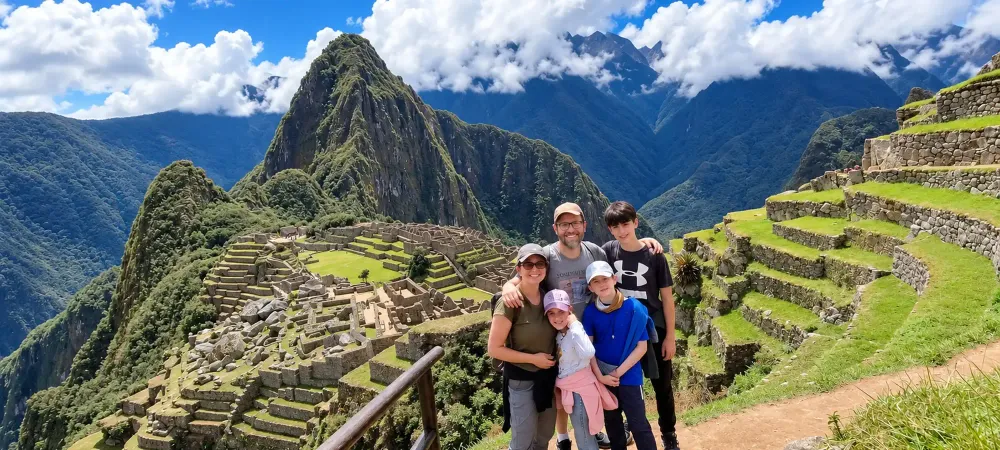
What is the easiest way to get to Machu Picchu from Cusco?
For most travellers, the easiest option is to travel from Cusco to Ollantaytambo, continue by train to Machu Picchu Pueblo and then take the bus up to the entrance of Machu Picchu.
This route can be completed in one day or divided over two days with an overnight stay in Aguas Calientes. It also works well for families, older travellers and visitors who do not want to complete a multi-day trek.
The standard route can be summarised as:
Cusco → Ollantaytambo → Machu Picchu Pueblo → bus → Machu Picchu.
Our Machu Picchu Full Day Tour from Cusco follows this same structure, coordinating the transfer, train, bus and guided visit within one organised day.
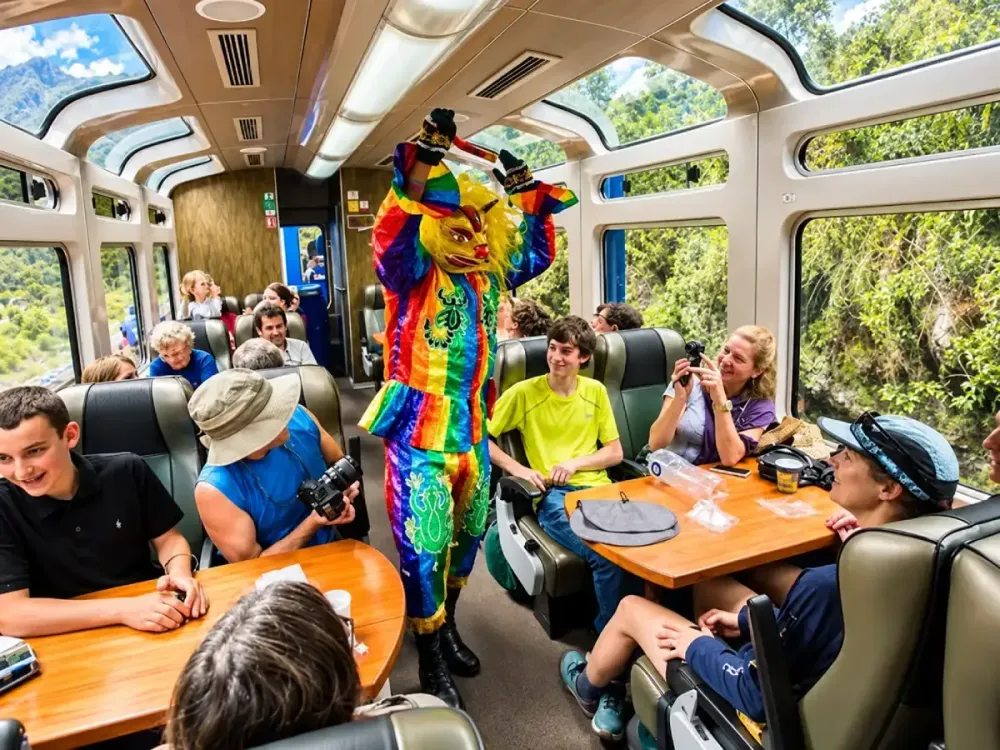
From Cusco to Ollantaytambo: the first stage of the journey
Ollantaytambo is one of the main railway connection points for Machu Picchu Pueblo. From Cusco, it is reached by road through the Sacred Valley.
For many travellers, staying overnight in Ollantaytambo is a practical option, especially when the train leaves early. This avoids beginning the day with a very early transfer from Cusco.
If you also want to visit the Ollantaytambo archaeological park, remember that this entrance is separate from the Machu Picchu ticket. Ollantaytambo is included in Circuit III of the Cusco Tourist Ticket, together with Pisac, Chinchero and Moray.
Our Cusco, Machu Picchu, Maras and Moray 5-Day Tour combines the Sacred Valley, Ollantaytambo and Machu Picchu within a progressive itinerary.
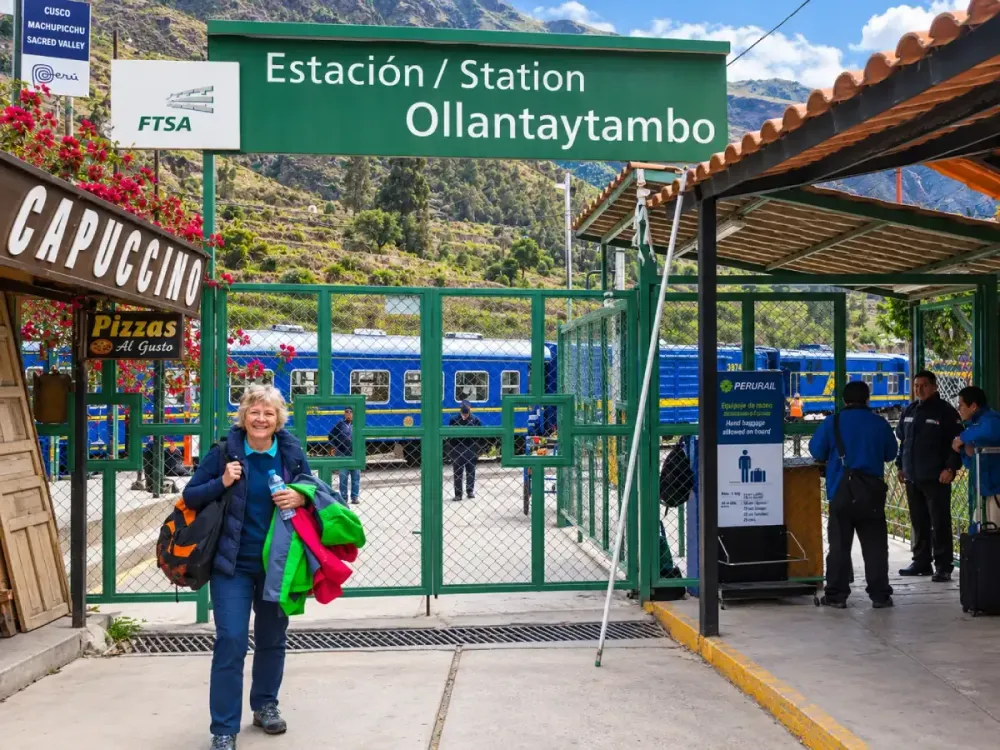
Train from Ollantaytambo to Machu Picchu Pueblo
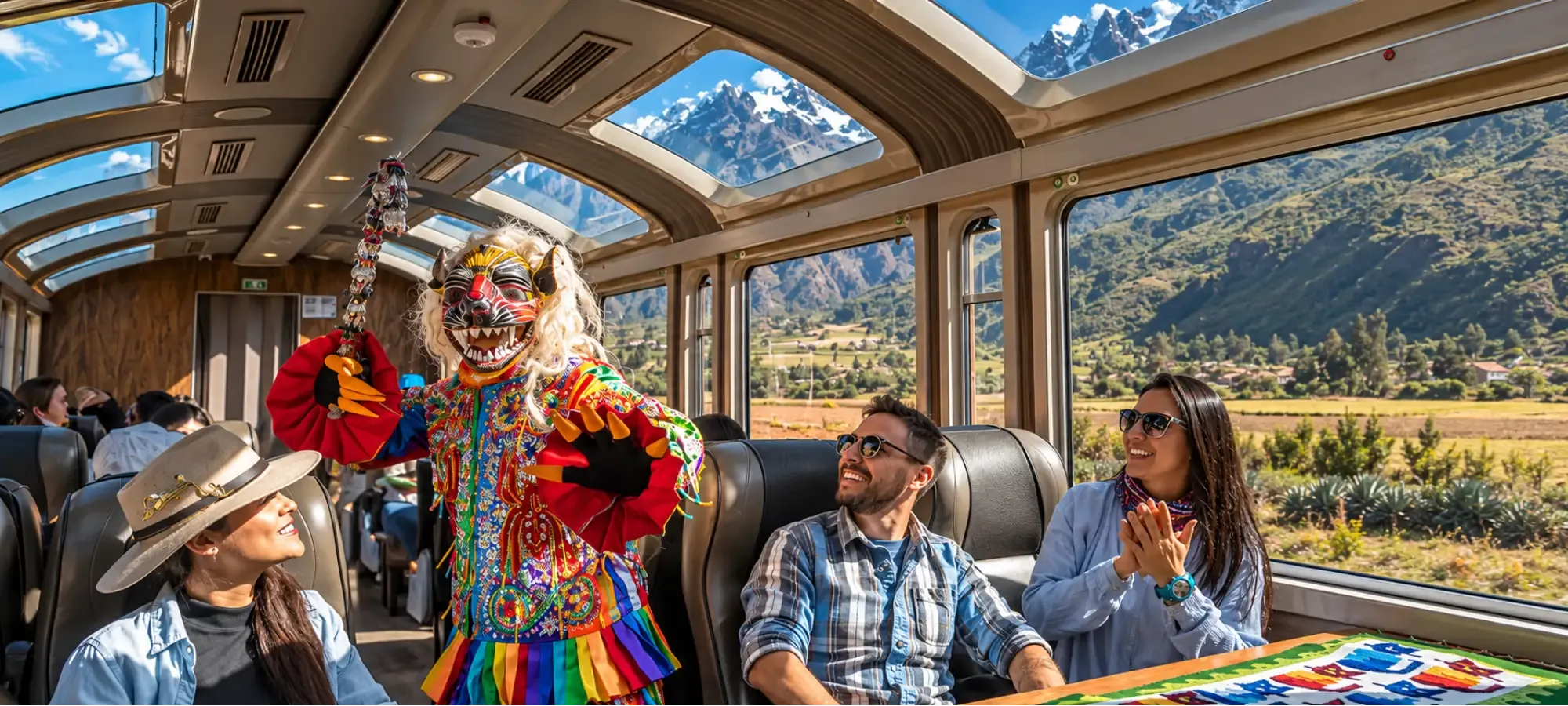
The train is the main connection for travellers who are not trekking. Ollantaytambo has several departures to Machu Picchu Pueblo, and the journey usually takes around an hour and a half depending on the service.
Train operators offer different service categories, schedules and configurations. For this reason, we do not recommend choosing only by price. The train needs to match your Machu Picchu entrance time and leave enough time to continue by bus.
Some 2026 services from Ollantaytambo to Machu Picchu Pueblo take approximately 1 hour and 30 minutes, although exact times depend on the operator and departure selected.
To compare stations, luggage policies and service formats, read our complete guide to the train to Machu Picchu.
| Option from Cusco | Approximate duration | Physical level | Best for | Key reservation |
|---|---|---|---|---|
| Transfer + train via Ollantaytambo | 1 or 2 days | Low | First-time visitors, families, limited time | Entrance ticket + train |
| Bimodal service | Depends on schedule and operator | Low | Travellers who want a coordinated departure from Cusco | Entrance ticket + full transport service |
| Short Inca Trail | 1 or 2 days | Moderate | Trekking with limited time | Inca Trail permit + Machu Picchu entry |
| Classic Inca Trail | 4 days | Moderate to demanding | Full historic trekking experience | Named permit |
| Salkantay Trek | 4 or more days | Moderate to high | High mountains and adventure | Machu Picchu entry + trek services |
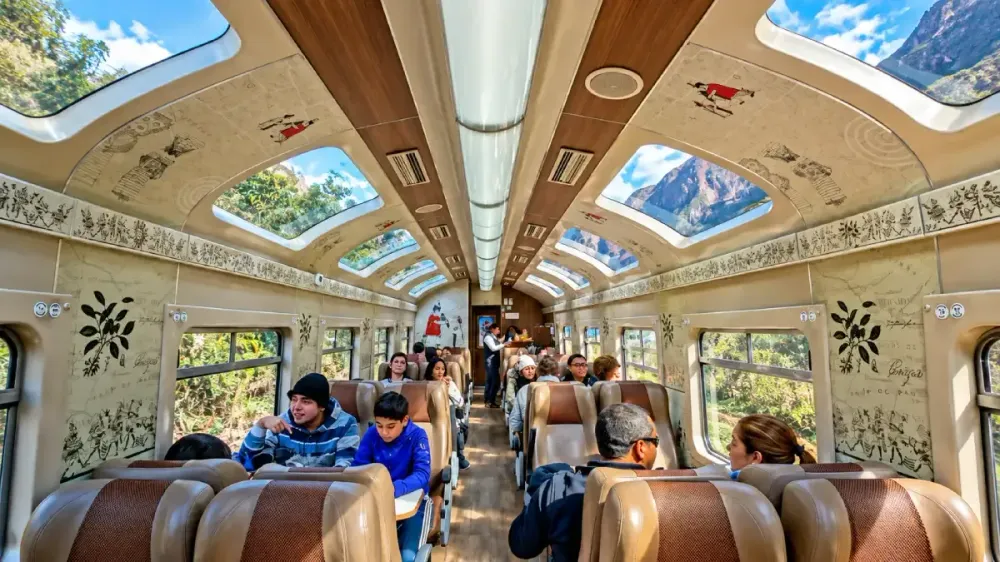
Can you take the train directly from Cusco?
Yes, there are services that begin in Cusco, but not all of them complete the entire journey exclusively by rail. Some operate as bimodal services, combining bus and train transportation within one booking.
Depending on the season and operator, the journey may begin at a departure point in Cusco before continuing to another station for the railway section.
This means that a ticket marketed as “Cusco to Machu Picchu” does not always mean that the entire route is travelled by train.
At Dreamy Tours, we recommend checking five details before paying: departure point, whether the service is direct or bimodal, check-in time, where the rail section begins and the expected arrival time in Machu Picchu Pueblo.
From Machu Picchu Pueblo to the entrance of Machu Picchu
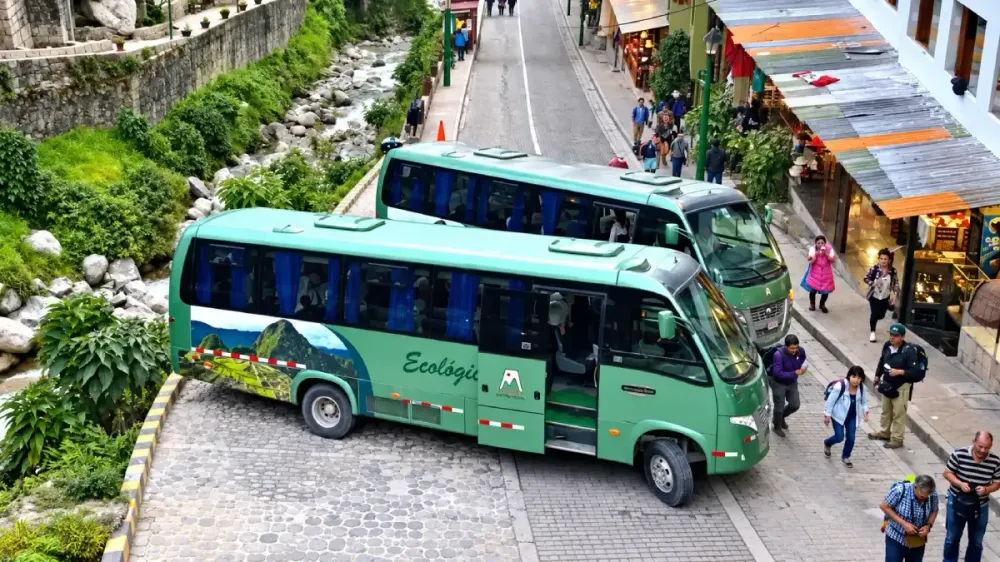
The train does not arrive directly at the archaeological site. Its destination is Machu Picchu Pueblo, also known as Aguas Calientes.
From there, most travellers continue by bus to the Machu Picchu entrance. This final section must be included when calculating how much time you need between the train arrival and the entrance time printed on your ticket.
It is also possible to walk up, although this adds considerable physical effort before beginning the archaeological circuit.
For this reason, when we organise a visit, we look at the entire sequence: train arrival, transport to the entrance, document control and entry to the reserved circuit.
Machu Picchu tickets before organising transportation
In 2026, official online tickets are sold through Tu Boleto, the Ministry of Culture platform. Each ticket is linked to a specific date, entrance time, circuit and route.
Since September 22, 2026, the Ministry of Culture has been implementing a direct-purchase model with confirmed payment. During the initial phase, buyers have a limited period to complete payment, after which unpaid spaces return to availability.
Official Machu Picchu capacity can reach up to 5,600 visitors per day on specific high-season dates, including the period from June 19 to November 2, 2026.
At Dreamy Tours, we recommend purchasing your Machu Picchu ticket first and arranging transportation afterwards. This helps avoid booking a train that does not work with the available circuit or entrance time.
Machu Picchu circuits and how they affect your route
The visit is currently organised through three main circuits containing ten official routes. Each ticket determines which areas you can access, and visitors cannot freely switch circuits after purchasing.
Circuit 1 focuses mainly on panoramic viewpoints. Circuit 2 offers the classic Machu Picchu experience, while Circuit 3 concentrates on the lower sectors and additional routes such as Waynapicchu, Huchuypicchu and Great Cavern, depending on season and availability.
This choice also affects transportation logistics. A very early entrance may make it more practical to stay overnight in Machu Picchu Pueblo or take one of the earliest available train services.
Before choosing your train, review our Machu Picchu circuits guide and decide which route best matches the experience you want.
Getting to Machu Picchu via the Inca Trail
The Inca Trail is the most historic trekking route to Machu Picchu. Unlike the railway journey, it allows travellers to cross archaeological sites, mountain passes and cloud forest before reaching the Machu Picchu area through Intipunku.
Our 4-Day Classic Inca Trail begins around Km 82 and reaches approximately 4,200 metres at its highest point before continuing toward Wiñay Wayna and Machu Picchu.
There is also the 2-Day Short Inca Trail, which begins around Km 104 and includes Chachabamba, Wiñay Wayna and Intipunku before reaching the Machu Picchu area.
The Inca Trail Network is not an unrestricted hiking route. Permits remain linked to each traveller's identity, and authorised agencies continue to participate in the official booking process.
Salkantay Trek as an alternative to the Inca Trail
Salkantay is a different trekking route and does not use the traditional Inca Trail permit. Its main attraction is the combination of high mountains, lagoons, elevated passes and cloud forest before approaching Machu Picchu.
Our Salkantay Trek to Machu Picchu 4 Days combines mountain scenery with the descent toward warmer valleys and finishes with the visit to Machu Picchu.
Although the trek does not use the same permit as the Classic Inca Trail, travellers still need an official Machu Picchu entrance ticket. This means final circuit availability remains essential before confirming the trip.
If you are comparing longer itineraries, our Salkantay Trek 4 or 5 Days guide explains the differences in pace, scenery and difficulty.
Tickets, fares and documents required along the route
Requirements vary depending on the places you visit. Machu Picchu uses its own entrance ticket, Ollantaytambo is covered by the Cusco Tourist Ticket, and the Inca Trail requires a separate regulated permit.
The standard reference fare for foreign visitors to Machu Picchu remains S/152 for adults, S/77 for students and S/70 for foreign visitors aged 3 to 17. Promotional 2026 fares also apply to Peruvians, foreign residents in Peru and citizens of the Andean Community depending on the selected route.
Visitors must carry the original official identity document used for the booking. This may be a passport, national identity document, foreign resident card or another accepted document depending on the traveller's status.
| Place or route | Ticket / reference fare | What you need to present |
|---|---|---|
| Machu Picchu, foreign adult | S/152 standard reference fare | Ticket + original passport or identity document |
| Machu Picchu, foreign student | S/77 standard reference fare | Ticket + document + valid student accreditation |
| Machu Picchu, foreign visitor aged 3 to 17 | S/70 standard reference fare | Ticket + identity document |
| Machu Picchu, eligible promotional categories 2026 | Fare depends on route and category | Proof of nationality, residence or CAN status |
| Inca Trail | Regulated named permit | Original document used for the reservation |
| Ollantaytambo with Integral BTC | S/130 foreign visitor / S/70 Peruvian visitor | Tourist Ticket + identity document |
| Ollantaytambo with Partial Circuit III BTC | S/70 foreign visitor / S/40 Peruvian visitor | Tourist Ticket + identity document |
The Cusco Tourist Ticket does not include Machu Picchu. Partial Circuit III covers Ollantaytambo, Pisac, Chinchero and Moray and is valid for two days.
Is it better to stay in Ollantaytambo or Aguas Calientes?
Staying in Ollantaytambo can be a smart strategy if you want to take an early train without leaving Cusco in the middle of the night. It also allows you to combine the journey with a Sacred Valley visit.
Staying in Aguas Calientes offers a different advantage: you are already at the base of Machu Picchu. This is especially useful for early entrance times and reduces the number of transfers concentrated into a single day.
For travellers who value comfort, dividing the journey over two days can feel more relaxed. For those with limited time, an organised itinerary can make it possible to travel from Cusco and return on the same day.
The better option depends on your entrance time, train availability and the pace you want for the trip.
How to organise the trip from Cusco without common mistakes
The safest way to organise the journey is to start with your Machu Picchu entrance. Choose the date, check availability through Tu Boleto and select the circuit before committing to a specific train. After that, you can coordinate Ollantaytambo, Machu Picchu Pueblo and the return trip with much more confidence.
If you want speed and comfort, the Cusco, Ollantaytambo, train, Aguas Calientes and bus combination is usually the most practical. If you want the journey itself to become a major part of the experience, the 4-Day Inca Trail, 2-Day Short Inca Trail and Salkantay Trek offer very different alternatives.
It is also worth checking the best time to visit Machu Picchu because weather, high season and ticket availability can affect the transportation strategy. During the busiest periods, securing entrances and trains in advance helps preserve better schedule options.
At Dreamy Tours, we recommend thinking of the entire journey as one connected chain rather than several independent reservations. If you prefer transportation, train, entrance and visit to work within one coordinated plan, explore our Machu Picchu Full Day Tour or our Peru travel packages that combine Machu Picchu with Cusco and the Sacred Valley.
Personal travel advice
Plan your trip with Dreamy Tours
Start a tailored journey with our exclusive tours and custom trips across Peru and other Latin American countries.