Search the blog
Tabla de contenidos
Travelling by train is the most common way to reach Machu Picchu when your itinerary does not include a trekking route. The journey crosses the Sacred Valley, follows the Urubamba River and finishes in Machu Picchu Pueblo, also known as Aguas Calientes.
However, buying a train ticket to Machu Picchu is not simply a matter of choosing a departure time. Your departure station, service type, Machu Picchu entrance, reserved circuit and where you stay the night before should all work as one connected plan.
At Dreamy Tours, we recommend confirming your Machu Picchu tickets first and choosing the train afterwards. If you are still organising the entire trip, our Machu Picchu travel guide covers tickets, circuits, weather and the main ways to travel from Cusco.
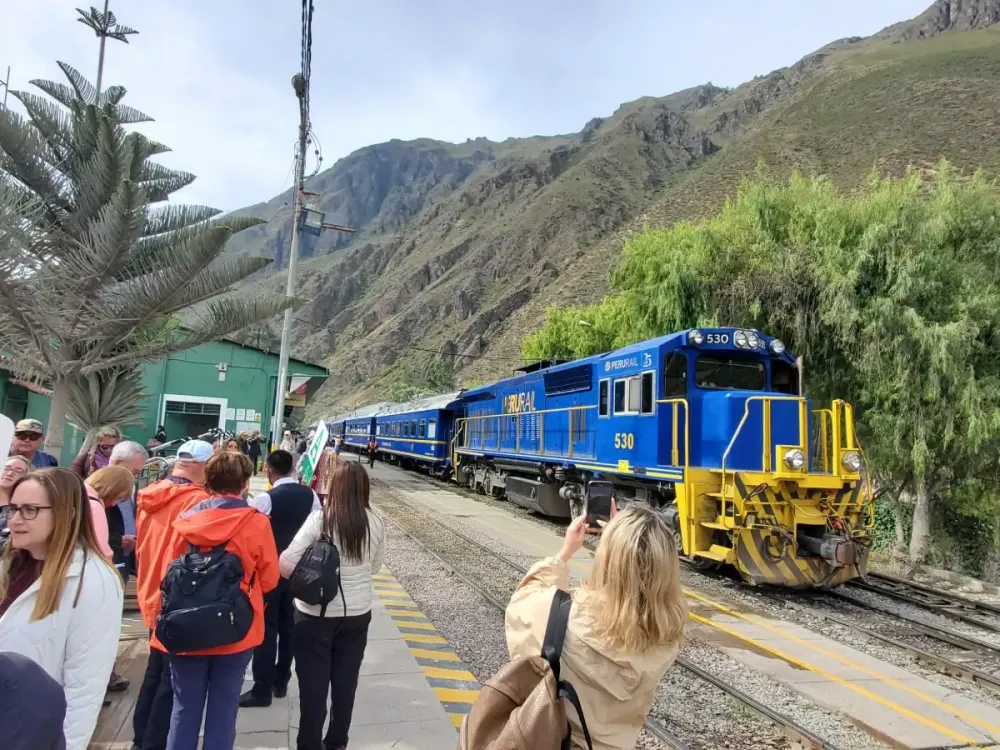
Where does the train to Machu Picchu depart from?
There is no single departure station for every traveller. In 2026, services continue to operate from Ollantaytambo, as well as selected departures beginning in Cusco and bimodal services combining bus and train travel.
Ollantaytambo remains one of the most practical railway departure points because it offers several frequencies to Machu Picchu Pueblo. It also allows travellers to combine the journey with the Sacred Valley and spend the previous night close to the station.
PeruRail continues to operate services from Wanchaq, San Pedro and Ollantaytambo depending on the schedule and service format. In 2026, additional rail connections between Cusco and Ollantaytambo also expanded the ways travellers can structure the Sacred Valley before continuing to Machu Picchu.
| Departure point | Type of service | Best for | What to check before booking |
|---|---|---|---|
| Ollantaytambo | Regular train | Travellers coming from the Sacred Valley or staying in Ollantaytambo | Departure time and connection with Machu Picchu entry |
| Wanchaq, Cusco | Mainly coordinated or bimodal services depending on frequency | Travellers who prefer to begin in Cusco | Where the bus-to-train transfer takes place |
| San Pedro, Cusco | Selected railway services | Travellers who want to depart from central Cusco | Season, frequency and final station |
| Pachar / Poroy | Stations used in selected operations | Specific or seasonal services | Confirm whether it is a stop or transfer point |
| Machu Picchu Pueblo | Arrival station | All passengers continuing to the archaeological site | Time needed for the bus and entrance |
Because operations can change during the year, always check the exact station printed on your ticket rather than assuming that every “Cusco to Machu Picchu” service follows the same route.
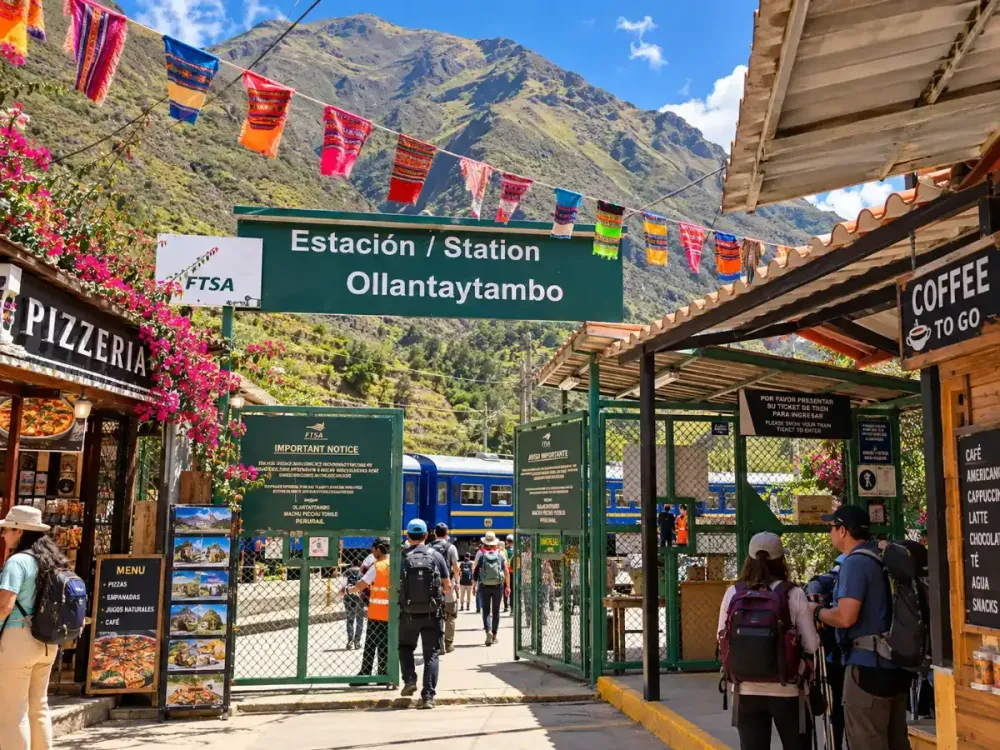
Train from Ollantaytambo to Machu Picchu
Ollantaytambo continues to be one of the most convenient places to begin the railway journey. From here, the train follows the Urubamba River valley until it reaches Machu Picchu Pueblo.
Some 2026 services take approximately one hour and a half, although the exact duration depends on the departure selected, operational conditions and the train category.
Staying overnight in Ollantaytambo can be especially useful if you have an early entrance to Machu Picchu or want to avoid leaving Cusco before dawn. It also gives you the opportunity to include the archaeological complex in your Sacred Valley itinerary.
If you plan to visit Ollantaytambo, remember that its archaeological site uses the Cusco Tourist Ticket rather than the Machu Picchu entrance. Our Cusco, Machu Picchu, Maras and Moray 5-Day Tour combines these destinations within one itinerary.
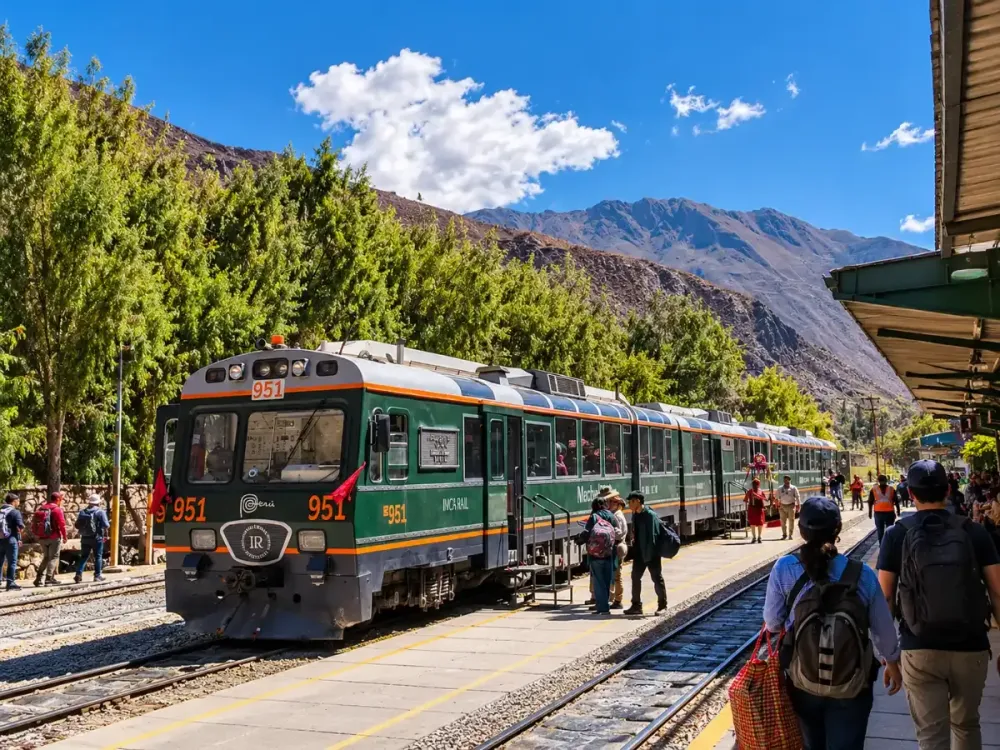
Can you take the train from Cusco?
Yes, and there are more options in 2026 than there were previously. Some services begin from points in Cusco, although it is essential to distinguish between a full railway journey and a bimodal service combining road transport and train travel.
Depending on the operator, season and frequency, the journey may start at Wanchaq or San Pedro before continuing by rail or connecting through another station.
That means a ticket sold as “Cusco to Machu Picchu” does not always mean the entire journey is made by train.
At Dreamy Tours, we recommend checking five details before paying: departure point, whether the service is direct or bimodal, check-in time, where the rail portion begins and the expected arrival time in Machu Picchu Pueblo.
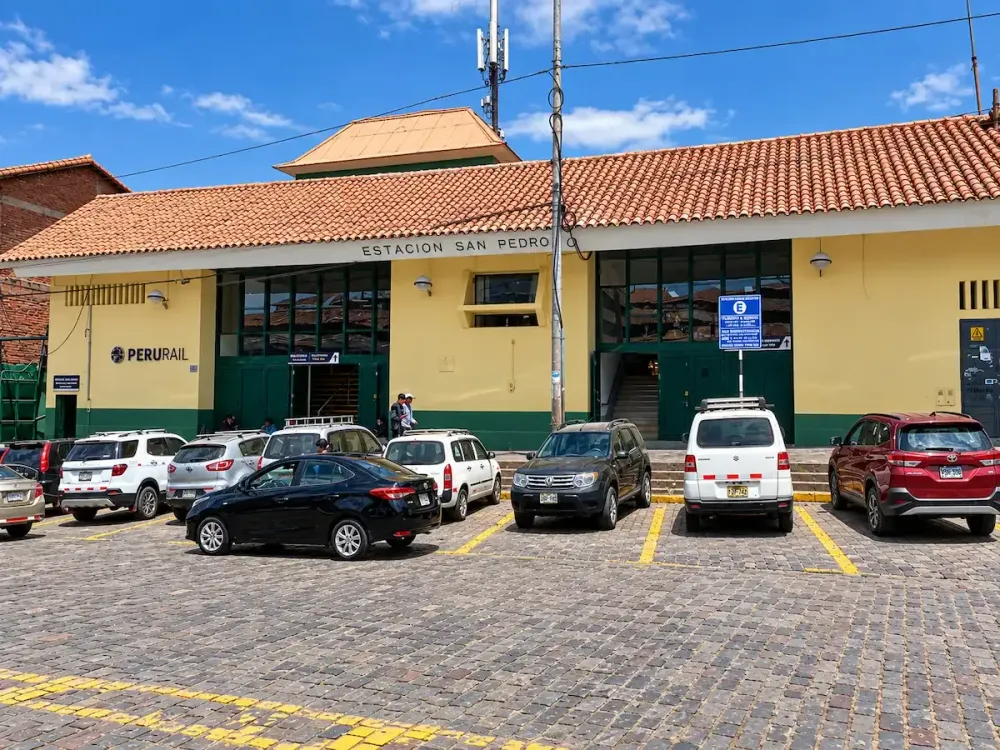
What does bimodal service mean?
A bimodal service combines a road section and a railway section within the same coordinated journey. In practical terms, you may begin in Cusco by bus and later board the train at an intermediate station.
This format remains important in 2026. Depending on the operation, transfer points may include stations such as Pachar or Poroy.
Temporary operational changes can also affect particular frequencies during the year. This is why a timetable saved months earlier may no longer match the exact service running on your travel date.
At Dreamy Tours, we recommend checking where the journey starts, where the vehicle change takes place and the final arrival time in Machu Picchu Pueblo. The most useful figure is the total door-to-door travel time.
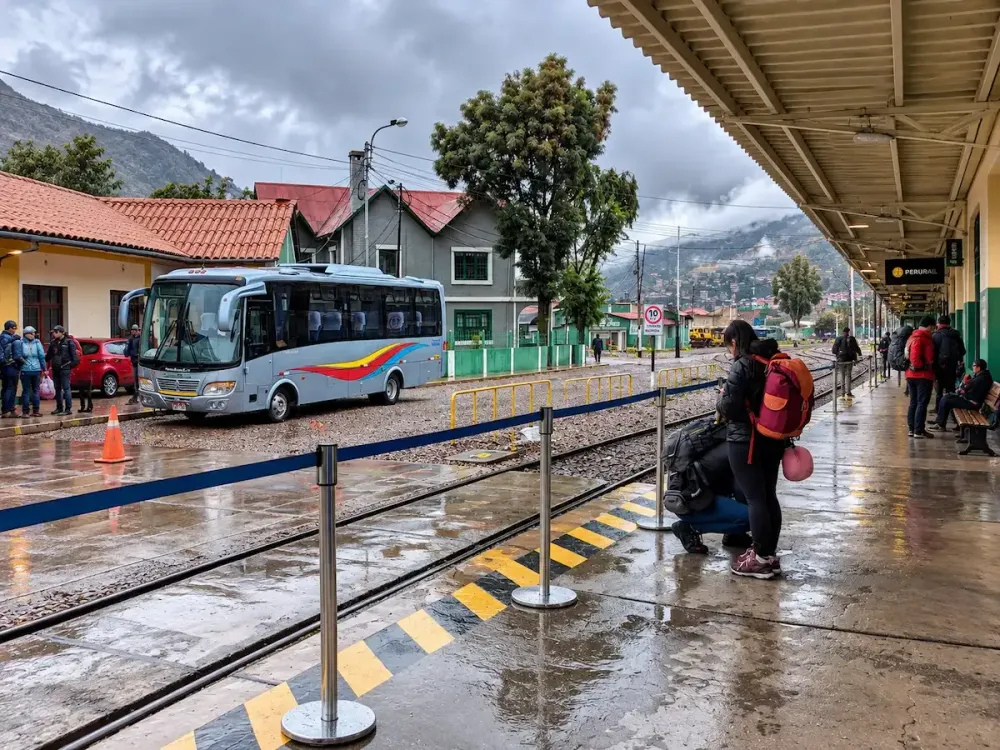
How long is the train from Ollantaytambo to Machu Picchu?
The railway journey from Ollantaytambo to Machu Picchu Pueblo usually takes around one hour and a half, although each service has its own exact travel time.
Official schedules show that some departures take approximately 1 hour and 30 minutes. The duration can vary slightly depending on the train, stops and operational conditions.
We do not recommend selecting a service simply because it is a few minutes faster. It is far more important to arrive with enough time to take the bus from Aguas Calientes and reach the Machu Picchu entrance comfortably.
You should also consider the transfer time to the station. An early Ollantaytambo train can work perfectly if you sleep in the Sacred Valley, but it may require leaving Cusco several hours earlier if your hotel is in the city.
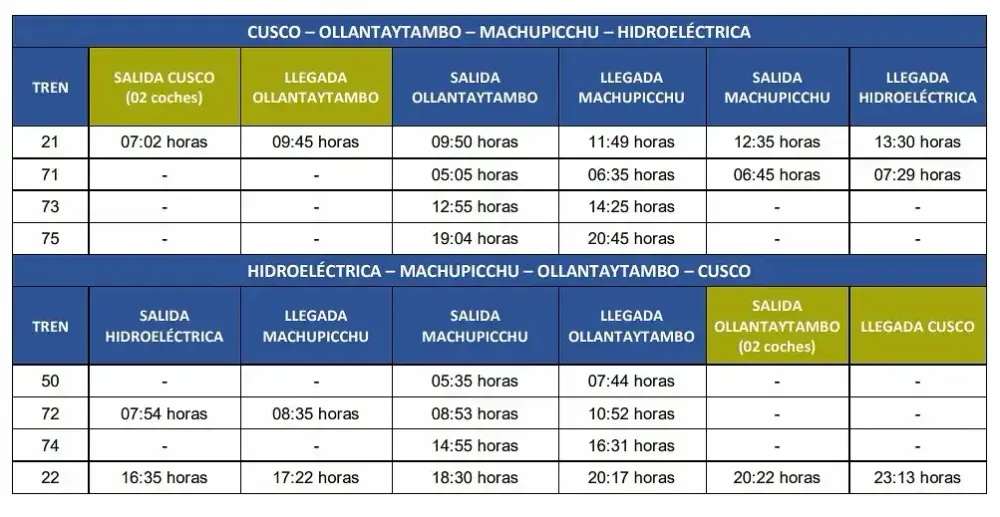
Which train schedule should you choose for Machu Picchu?
The correct train time depends first on your Machu Picchu entrance. In 2026, tickets continue to be linked to a specific date, circuit, route and entrance time, so the train should adapt to the ticket rather than the other way around.
Official online tickets are sold through Tu Boleto, the Ministry of Culture platform. Since September 2026, the system has been using a direct-purchase model with confirmed payment.
At Dreamy Tours, we recommend planning the visit in this order: date, entrance ticket, Machu Picchu circuit, entrance time and finally the train. Transfers and accommodation can then be arranged around those fixed points.
This helps avoid a common problem: finding a convenient train first and then discovering that the available Machu Picchu entrance requires you to arrive several hours earlier or even on a different day.
Is it better to take a very early train?
An early train can be a good choice if you want to enter Machu Picchu in the morning or complete the entire round trip from Cusco in one day.
The trade-off is that you must arrive at the station in advance. If the train departs from Ollantaytambo and you are staying in Cusco, this may mean starting the transfer while the city is still half-asleep under the streetlights.
For this reason, some travellers prefer to stay overnight in Ollantaytambo or elsewhere in the Sacred Valley. The best choice depends on your entrance time, station and preferred travel pace.
For travellers with limited time, our Machu Picchu Full Day Tour from Cusco coordinates hotel pickup, train connection, buses and the Machu Picchu visit within one organised day.
Which return train should you choose from Machu Picchu?
The return train deserves just as much attention as the outbound journey. It is not advisable to book it immediately after the estimated end of your Machu Picchu visit.
Once you finish your circuit, you still need to reach the bus boarding area, descend to Machu Picchu Pueblo and make your way to the railway station. Visitor numbers can affect those times.
That is why we recommend leaving a reasonable buffer. A later train may look less attractive on the booking screen, but it allows you to finish the visit without turning your final minutes into a sprint through town.
Another option is to stay overnight in Machu Picchu Pueblo. This spreads the journey across two days and avoids concentrating all transfers into a single day.
Types of trains to Machu Picchu
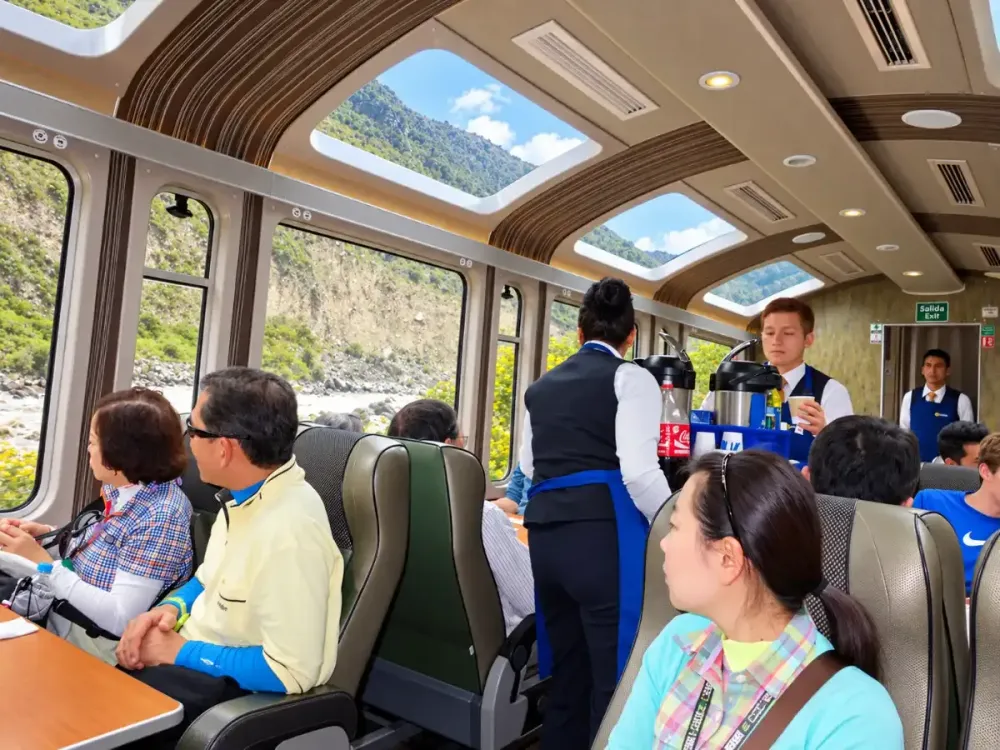
Rail services are divided into different categories. Some focus mainly on transportation, while others add panoramic windows, onboard entertainment, food services or a more premium travel experience.
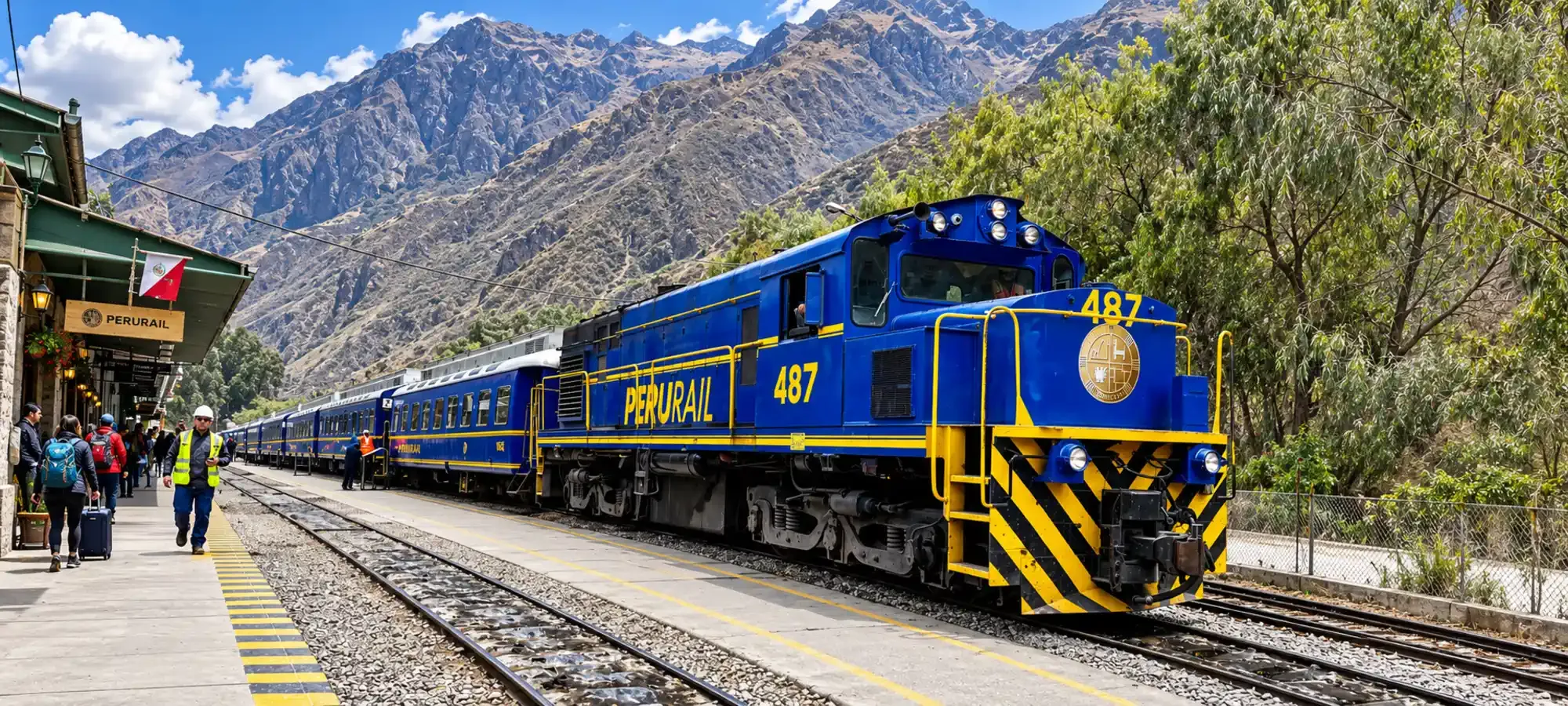
PeruRail operates products such as Expedition, Vistadome and Vistadome Observatory. The right choice should not depend only on the commercial name, but also on schedule, station, travel experience and budget.
A standard service can be perfectly suitable for a traveller who prioritises logistics and availability. Someone who values the scenery may prefer a panoramic option, while a traveller seeking a more premium experience may choose a higher-category service.
It is also worth checking what is actually included. Two services with very different names may have departure times that affect your Machu Picchu visit far more than the features of the carriage.
PeruRail or Inca Rail: what should you know?
PeruRail and Inca Rail operate services to Machu Picchu Pueblo and offer different categories, departure times and starting points. There is no single operator that is automatically better for every traveller.
PeruRail offers services such as Expedition, Vistadome and Vistadome Observatory, together with regular and bimodal operations. Schedules can vary throughout the year.
Inca Rail also operates the route to Machu Picchu and offers different service levels. When comparing both companies, the most useful question is which one provides the schedule and departure point that best match your entrance time.
At Dreamy Tours, we prioritise that compatibility. A more attractive train loses its advantage if it forces you into an inconvenient circuit time or creates a very tight connection.
Baggage on the train to Machu Picchu
Trains to Machu Picchu have specific baggage policies and should not be treated like conventional long-distance rail services where travellers simply board with all of their luggage.
The rules depend on the operator and service category. Before travelling, check the baggage allowance that applies to the exact train you have booked.
For a standard one- or two-day Machu Picchu visit, travelling with a small daypack is usually much more practical. Larger luggage can normally remain in Cusco, Ollantaytambo or your accommodation depending on your itinerary.
This becomes especially useful if you are taking a Machu Picchu Full Day Tour or spending only one night in Aguas Calientes. Carrying only what you need makes every transfer between vehicle, station, train and bus much easier.
The train and your Machu Picchu ticket must work together
Your train should be organised around your Machu Picchu entrance. The official Tu Boleto platform sells tickets according to date, circuit, route and entrance time, and visitors must present the ticket together with the corresponding official identity document.
The standard reference fares for foreign visitors remain S/152 for adults, S/77 for eligible students and S/70 for visitors aged 3 to 17. Promotional 2026 fares are also available for certain Peruvian, resident and Andean Community categories depending on the route.
| Ticket or related service | 2026 reference | Main requirement |
|---|---|---|
| Machu Picchu, foreign adult | S/152 standard fare | Ticket + original passport or identity document |
| Machu Picchu, foreign student | S/77 standard fare | Document + valid student accreditation |
| Machu Picchu, foreign visitor aged 3 to 17 | S/70 standard fare | Identity document |
| Machu Picchu, promotional categories | Depends on route and eligibility | Document proving nationality or residence |
| Integral Cusco Tourist Ticket | S/130 foreign / S/70 Peruvian | Tourist Ticket + identity document |
| Partial Circuit III Cusco Tourist Ticket | S/70 foreign / S/40 Peruvian | Includes Pisac, Ollantaytambo, Chinchero and Moray |
The Cusco Tourist Ticket does not include Machu Picchu or the train. However, it can be useful if you use the journey toward Ollantaytambo to visit archaeological sites in the Sacred Valley. Partial Circuit III includes Pisac, Ollantaytambo, Chinchero and Moray, while Machu Picchu uses a completely separate ticket.
At Dreamy Tours, we recommend thinking about the full route as one sequence: Cusco or Ollantaytambo → train → Machu Picchu Pueblo → bus → entrance → circuit → return. Before booking, review how to get to Machu Picchu from Cusco, check the Machu Picchu tickets and compare the Machu Picchu circuits. That coordination matters far more than simply chasing “the best train”.
Personal travel advice
Plan your trip with Dreamy Tours
Start a tailored journey with our exclusive tours and custom trips across Peru and other Latin American countries.