Search the blog
Tabla de contenidos
Choquequirao is one of the great archaeological and trekking destinations of the Peruvian Andes. Unlike other sites in Cusco that are reached mainly by transportation, here the journey itself remains an essential part of the experience.
Reaching the archaeological complex requires descending into the deep Apurímac Canyon and then climbing back up much of that elevation. This combination of scenery, elevation change and archaeology makes the Choquequirao Trek especially attractive for travelers who are comfortable with long-distance hiking.
At Dreamy Tours, we believe that preparing for Choquequirao means understanding the true difficulty of the route, weather conditions, official entrance tickets, access conditions and the number of days required for each option.
If you are still comparing routes, our guide to the best alternative treks in Cusco helps place Choquequirao alongside Salkantay, Ausangate, Lares and Inca Jungle.
What is Choquequirao?
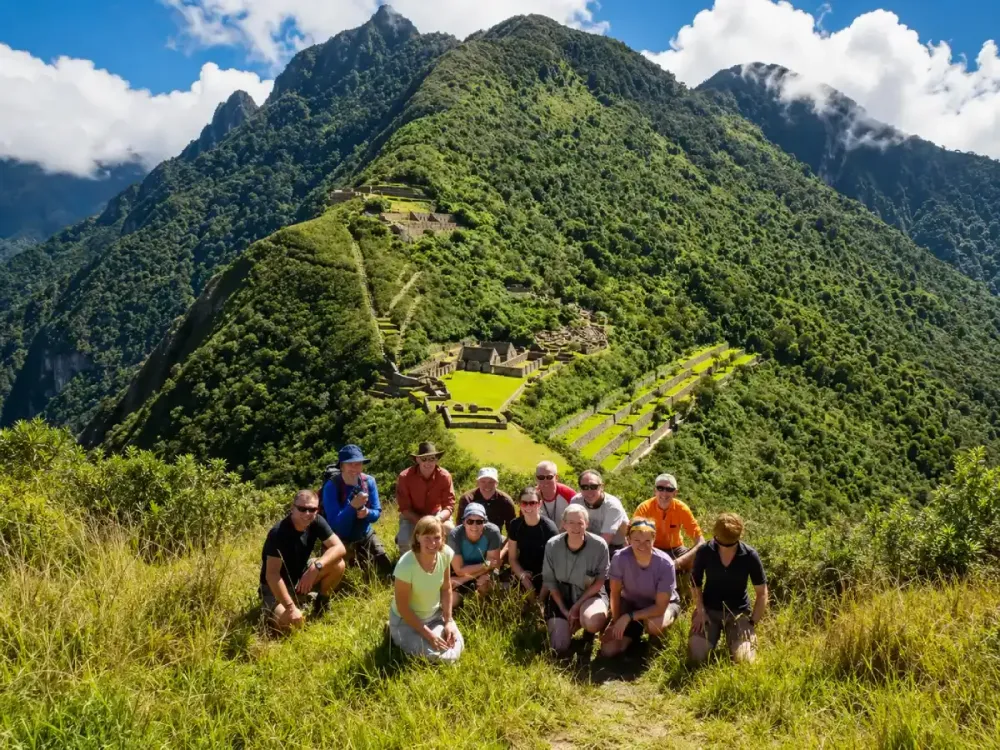
Choquequirao is an extensive Inca archaeological complex located in a mountainous area between the departments of Cusco and Apurímac. The archaeological park extends across steep slopes, ravines and vegetation zones that change considerably with altitude.
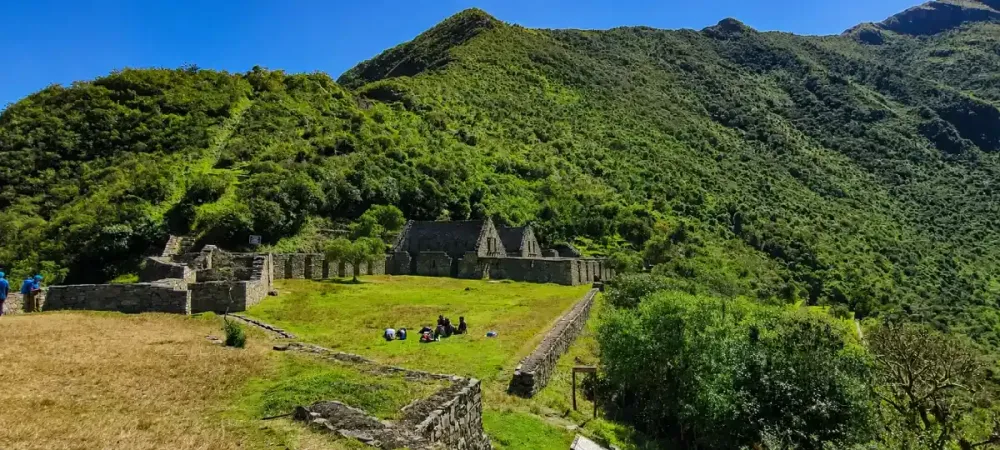
The complex includes plazas, buildings, water channels, ceremonial areas and extensive agricultural terraces. Among its most distinctive features are terraces decorated with llama figures created using stones of a different color.
Its location explains much of its unique character. This is not simply a place where you arrive, admire the structures and leave. For most travelers, hiking for several days through the Andes is an inseparable part of visiting Choquequirao.
The Cusco Directorate of Culture currently maintains official visiting hours from 7:00 a.m. to 4:00 p.m.
What is the Choquequirao Trek like?
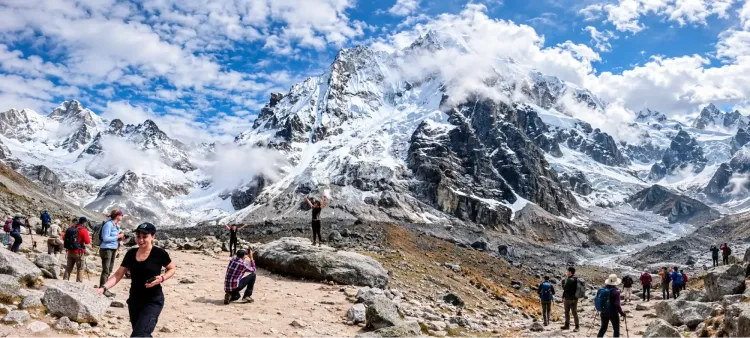
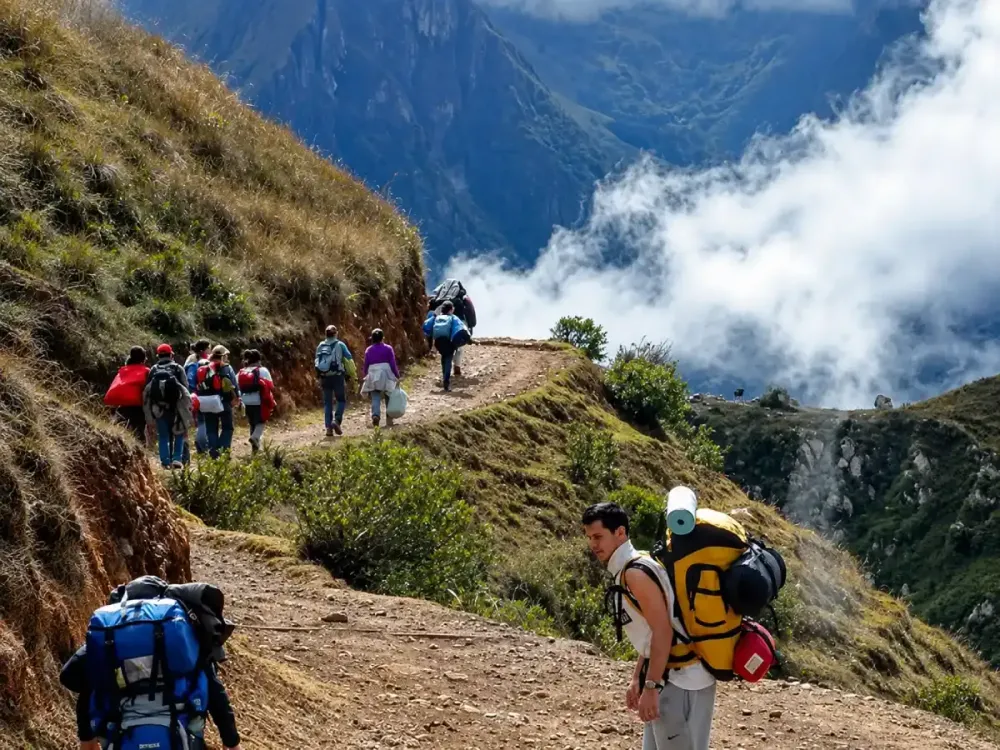
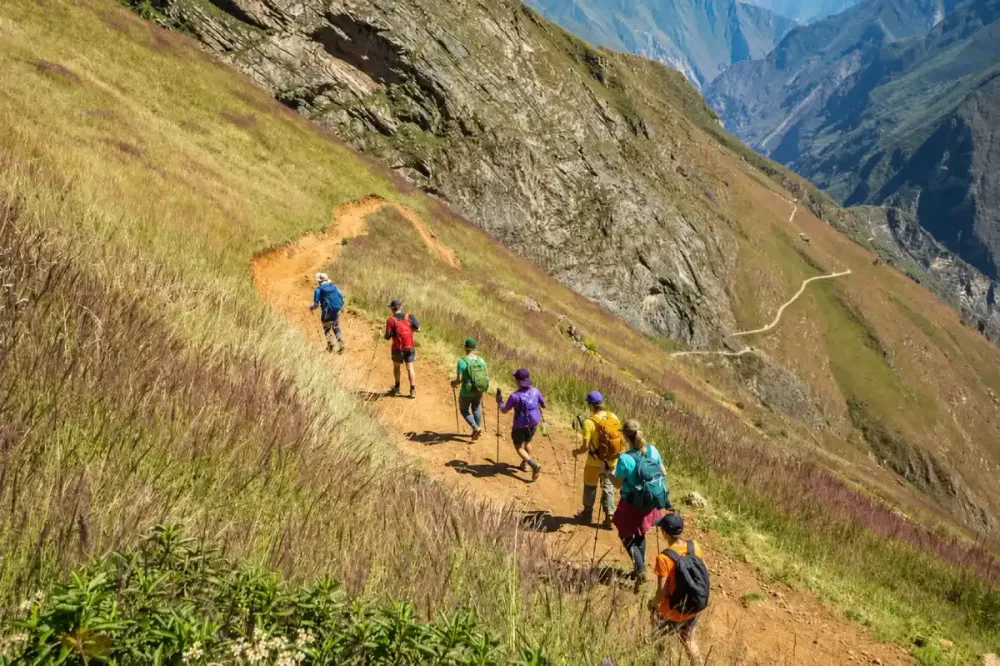
The Choquequirao Trek combines long descents and climbs through the Apurímac River Canyon. One of the most commonly used approaches passes through Cachora and Capuliyoc before descending progressively toward the bottom of the valley.
On our Choquequirao Trek 4 Days, the first stage continues toward Chiquisca. The route then descends to Playa Rosalina, at around 1,500 meters, crosses the Apurímac River and begins the demanding climb toward Marampata and Choquequirao.
The route does not follow a simple upward progression. You may begin a day descending for several hours and finish it with a prolonged climb. This repeated change in elevation is exactly what makes Choquequirao different from many other treks in Cusco.
| Route section | Approximate altitude | Main characteristic |
|---|---|---|
| Capuliyoc | ≈ 2,800 m | Viewpoint over the Apurímac Canyon |
| Chiquisca | ≈ 1,930 m | Campsite area in a warmer environment |
| Playa Rosalina | ≈ 1,500 m | Crossing of the Apurímac River |
| Marampata | ≈ 2,850 m | End of one of the most demanding climbs |
| Choquequirao | ≈ 3,033 m | Archaeological complex and main visiting area |
| Carmen Huerto | ≈ 2,000 m | Warmer vegetation and cloud-forest environment |
| Huanipaca | ≈ 3,150 m | Area used on the return section of our itinerary |
These values are references that help explain the elevation changes. The exact points used may vary depending on the route variation and operational logistics.
How difficult is the Choquequirao Trek?
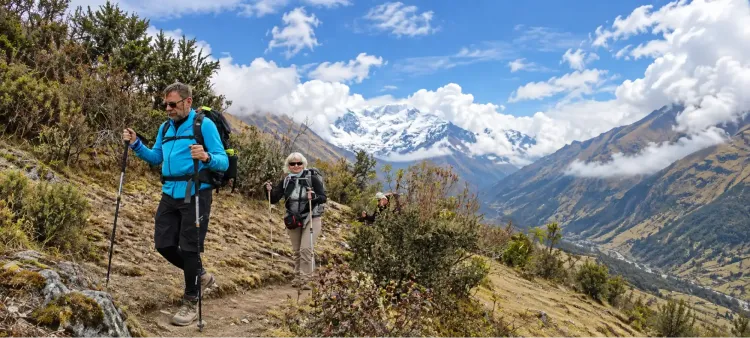
The difficulty of the Choquequirao Trek is mainly related to the accumulated elevation gain and loss. The route does not require climbing or technical mountaineering skills, but it does require endurance for long hiking days with sustained ascents and descents.
One of the most demanding stages combines the descent toward Playa Rosalina with the subsequent climb from approximately 1,500 meters to Marampata, near 2,850 meters. On our current itinerary, this day may require around seven to eight hours of hiking.
Heat is another factor. Lower sections of the canyon can feel considerably warmer than higher elevations, making hydration, sun protection and pacing especially important.
At Dreamy Tours, we currently classify our four-day route as a challenging experience. We therefore recommend previous physical preparation, particularly if this will be your first multi-day trek.
How many days do you need to visit Choquequirao?
Four days allow you to focus the experience on Choquequirao, while a longer itinerary can continue across the Andes and eventually connect with Machu Picchu.
Our Choquequirao Trek 4 Days is designed for travelers who want to complete the trek, visit the archaeological complex and return within a relatively compact itinerary.
For those who want Choquequirao to become part of a longer expedition, the Choquequirao Trek to Machu Picchu 6 Days combines two major Inca destinations within the same journey.
The decision should not be based only on “having two extra days.” The six-day itinerary changes the purpose of the trip because the adventure continues beyond Choquequirao toward the Machu Picchu region.
What is the best time to visit Choquequirao?
The drier months, particularly from May to September, generally provide more stable conditions for trekking in this region. There is a lower probability of persistent rainfall, and trails are usually in better condition.
April and October can work well as transitional months. Landscapes may remain green while rainfall is generally lower than during the peak wet-season months.
Between November and March, the likelihood of heavy rainfall, mud, landslides and damage to trails or bridges increases. In Choquequirao, this is particularly important because of the depth of the canyon and the complexity of the access routes.
In 2026, Peru's Ministry of Culture temporarily suspended entry to the archaeological park from February 1 for safety reasons related to the rainy season. The Capuliyoc-Cachora route was officially reopened from April 15, 2026 after maintenance work and safety assessments.
For this reason, even if your trip is already booked, we recommend checking the operational status of the route before starting the trek during or immediately after the rainiest months.
What can you see in Choquequirao?
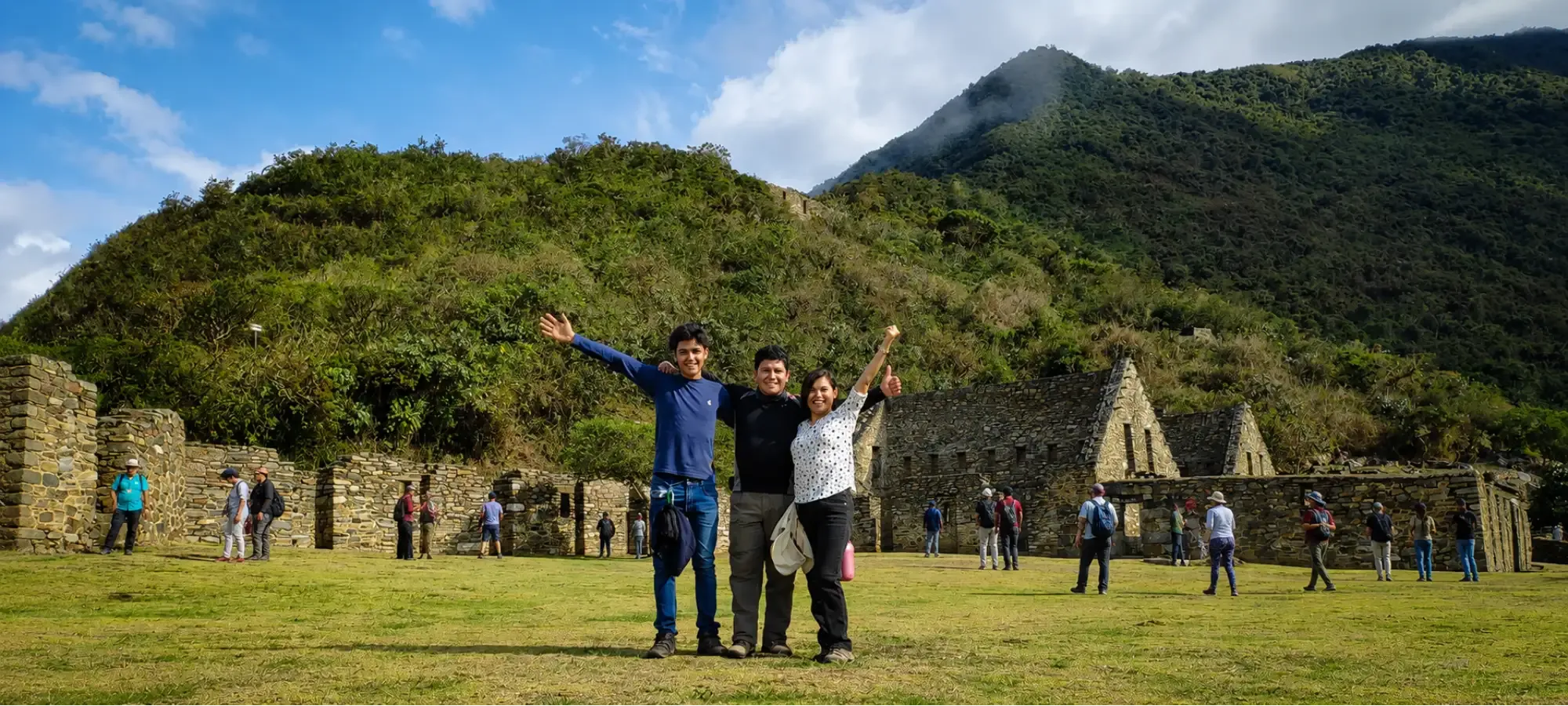
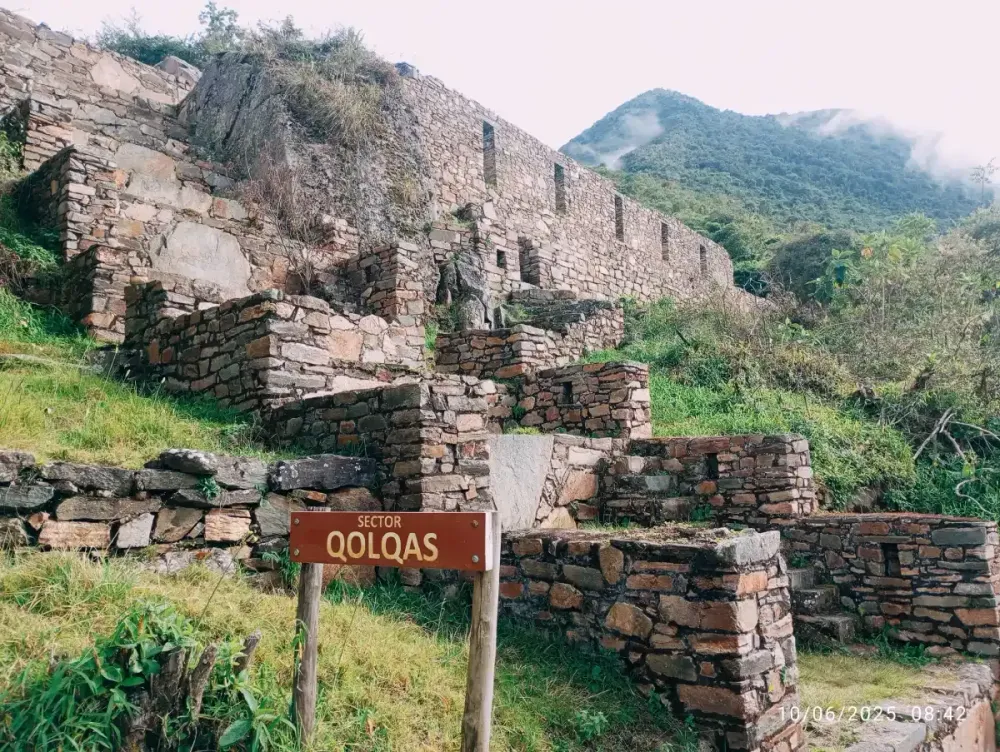
The archaeological complex is much larger than a single panoramic photograph might suggest. Buildings are distributed across different levels and mountain slopes, meaning that the visit still involves considerable walking even after reaching the park.
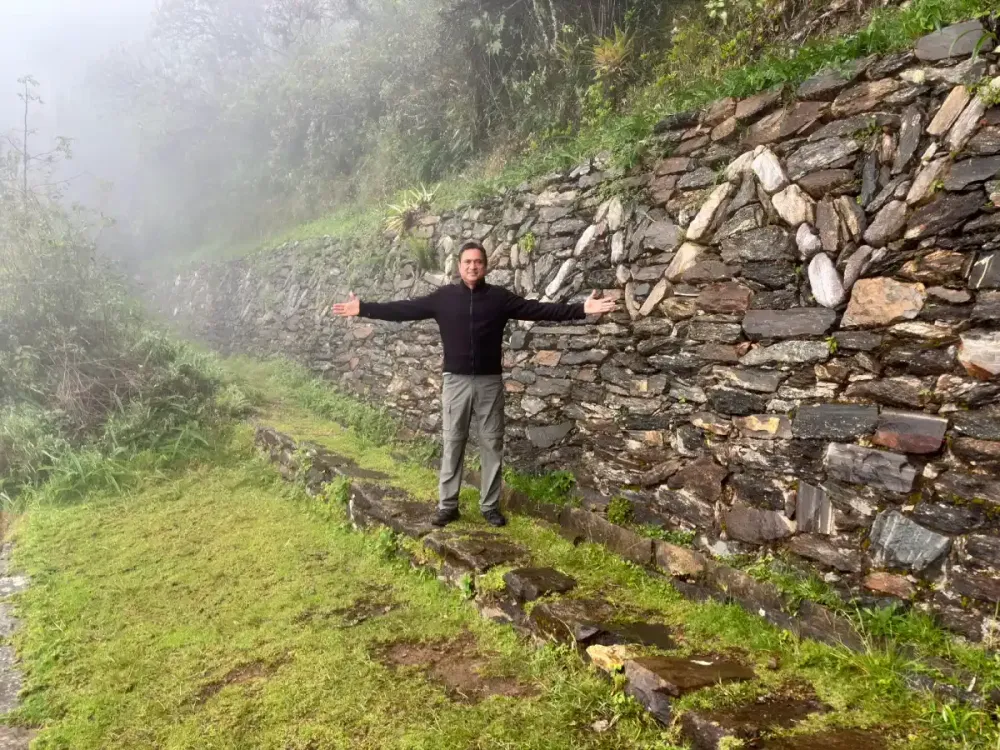
Among the main features are plazas, buildings, channels, agricultural terraces and ceremonial areas. The architecture constantly adapts to the terrain, something that becomes particularly clear when observing the terraces descending along the slopes.
One of the most distinctive areas is the group of terraces decorated with llama figures. These representations are integrated into the walls using lighter-colored stones that contrast with the surrounding construction.
The current official visiting hours for Choquequirao Archaeological Park are 7:00 a.m. to 4:00 p.m. Cultural authorities also state that climbing on walls, entering with animals, camping inside the archaeological site or using drones without authorization from the Cusco Directorate of Culture is prohibited.
Choquequirao vs Machu Picchu: are they similar experiences?
Choquequirao and Machu Picchu both belong to the Inca world, but the visitor experience is very different. Machu Picchu has trains, buses, regulated visitor routes and a timed ticketing system.
Choquequirao remains far more closely connected to trekking. The traditional route requires several days of hiking and major elevation changes before reaching the archaeological site.
For that reason, comparing both destinations only by size, architecture or photographs overlooks an essential difference: at Choquequirao, the physical effort required to reach the site is a central part of the journey.
You do not necessarily have to choose one or the other. Our Choquequirao Trek to Machu Picchu 6 Days combines both destinations within a longer trekking experience.
If you are evaluating other hiking routes before visiting Machu Picchu, you can also review our alternatives to the Inca Trail.
How should you prepare for the Choquequirao Trek?
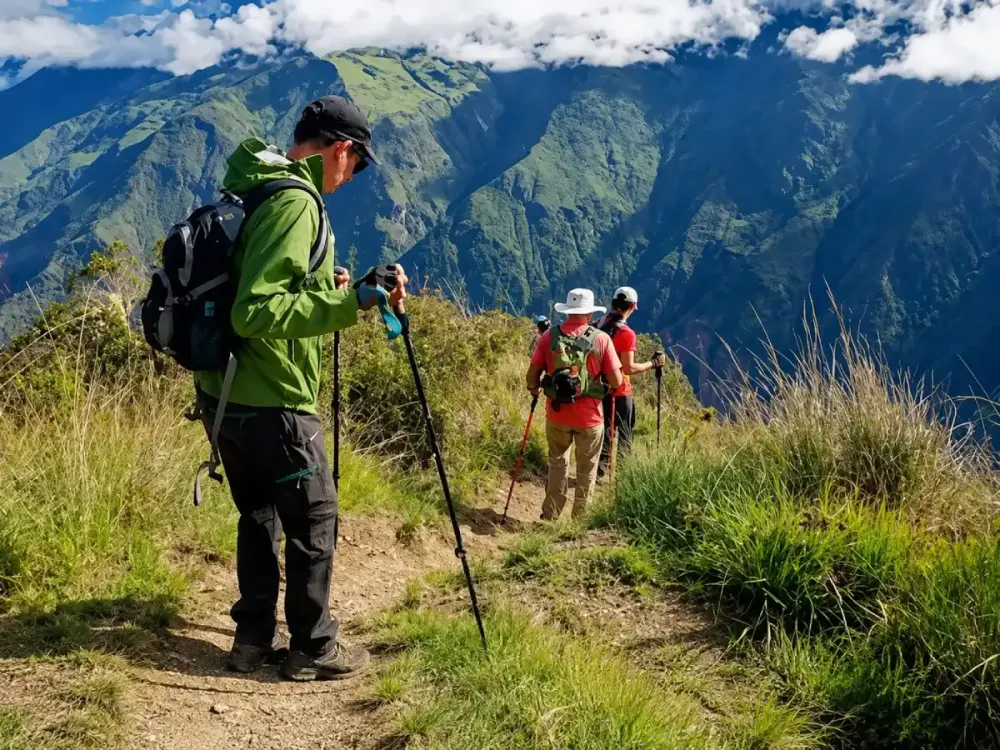
Preparation should focus particularly on strengthening your legs and improving endurance. Walking only on flat terrain helps cardiovascular fitness, but it does not reproduce the type of effort required on the Choquequirao route.
During the weeks before the trek, include hikes with elevation gain, stairs and sessions where you have to climb after a prolonged descent. On this route, your legs work hard in both directions.
Footwear should already be broken in before the trip. Lightweight clothing for the heat of the canyon, warmer layers for cooler areas, waterproof protection, sunscreen, insect repellent, a reusable bottle and a comfortable daypack are also important.
Maximum altitude is not the only measure of difficulty. Choquequirao can feel more demanding than higher-altitude routes precisely because of its repeated and pronounced descents and climbs.
Entrance tickets, rates and requirements for visiting Choquequirao
Choquequirao does not use the Inca Trail Network permit system. The archaeological park has its own entrance ticket administered within Peru's Ministry of Culture system.
According to the official tariff currently published by the Ministry of Culture, general admission to Choquequirao Archaeological Park is S/60, the higher-education student rate is S/30, and the rate for minors is S/25. The official document also establishes a S/50 rate for support personnel, specifically cooks and kitchen assistants.
| Entrance or category | Official reference rate | Main requirement |
|---|---|---|
| Choquequirao, general admission | S/60 | Entrance ticket and identification document |
| Higher-education student | S/30 | Ticket and document proving student eligibility |
| Minors | S/25 | Ticket and document proving age |
| Support personnel | S/50 | Applicable to cooks and kitchen assistants |
| Special rate | 50% according to applicable legal category | Document proving eligibility |
The official tariff also provides legal discounts for certain categories, including people over 60, voluntary military service members, teachers and people with disabilities, subject to the corresponding documentation.
On our Choquequirao Trek 4 Days, admission to the archaeological complex is currently listed as included in the service, so always check the Included section before purchasing an additional ticket.
Do you need TuBoleto or the Cusco Tourist Ticket?
To visit Choquequirao as a standalone destination, you do not need to purchase the Cusco Tourist Ticket or use TuBoleto to obtain your Choquequirao entrance ticket.
The Cusco Tourist Ticket covers other attractions. The full ticket currently costs S/130 for foreign visitors and is valid for ten days, while partial tickets cost S/70. Choquequirao is not included in these circuits.
The BTC can still be useful if, before or after the trek, you plan to visit sites such as Saqsayhuaman, Q'enqo, Pisac, Ollantaytambo, Chinchero or Moray, depending on the circuit purchased.
TuBoleto Cultura becomes relevant if your itinerary continues to Machu Picchu. In that case, you need a valid entrance ticket for a specific date, circuit, route and entry time.
This is especially important for travelers taking the Choquequirao Trek to Machu Picchu 6 Days. Having access to Choquequirao does not automatically guarantee availability for Machu Picchu because the two sites operate under different ticketing systems.
Is Choquequirao worth visiting?
For travelers who enjoy archaeology, demanding hikes and mountain scenery, Choquequirao offers an experience that is difficult to replicate on other routes in Cusco.
Part of its appeal lies precisely in the effort required. You first descend into the Apurímac Canyon, then regain altitude through a long climb and finally reach an archaeological complex spread across the mountains.
We would not recommend this route simply because someone wants to “see another Machu Picchu.” Choquequirao has its own identity and requires travelers to be willing to walk to discover it.
At Dreamy Tours, you can focus the experience on our Choquequirao Trek 4 Days or continue the journey on the Choquequirao Trek to Machu Picchu 6 Days.
If you are looking for a trekking route in Cusco where the journey matters as much as the destination, Choquequirao deserves to be high on your list.
Frequently asked questions about the Choquequirao Trek
Where is Choquequirao?
Choquequirao is located in the Andes near the Apurímac Canyon in southern Peru. The main trekking routes are generally accessed from the Cusco region before continuing toward the trailhead.
Can you drive to Choquequirao?
No. Vehicles can take travelers to the general trailhead area, but the archaeological complex itself is reached on foot. Hiking remains an essential part of visiting Choquequirao.
How hard is the Choquequirao hike?
The Choquequirao hike is challenging because of its steep descents, sustained climbs and long walking days. Good physical preparation is strongly recommended.
How long does the Choquequirao Trek take?
Four-day itineraries are a common option for visiting Choquequirao. Longer routes can continue through the Andes and combine Choquequirao with Machu Picchu.
Can you visit Choquequirao and Machu Picchu on the same trip?
Yes. The Choquequirao and Machu Picchu 6 Days route combines both archaeological sites in a longer trekking experience.
Is Choquequirao suitable for beginners?
It can be possible for well-prepared travelers, but Choquequirao should not be treated as an easy first trek. The repeated climbs and descents require endurance, so preparation and a realistic understanding of the route are important.
Personal travel advice
Plan your trip with Dreamy Tours
Start a tailored journey with our exclusive tours and custom trips across Peru and other Latin American countries.