Search the blog
Tabla de contenidos
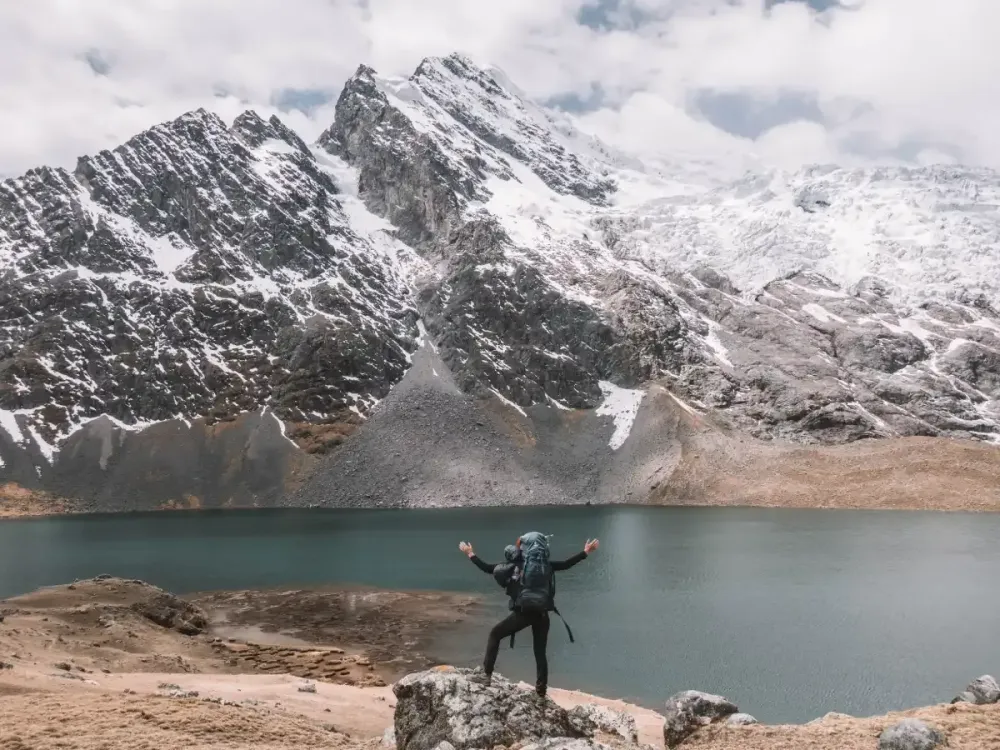
The Ausangate Trek is one of the most impressive high-altitude hiking routes in Cusco. Unlike other treks whose final objective is Machu Picchu, this journey focuses on snow-capped peaks, glaciers, lagoons, high mountain passes and Andean communities in the Vilcanota Mountain Range.
Ausangate Mountain rises to approximately 6,384 meters and dominates much of the landscape. Trekking routes do not climb to the summit, but instead explore the surrounding area through some of the highest sections commonly visited by hikers in Cusco.
At Dreamy Tours, we believe this trek requires a different kind of preparation from many other routes. Prolonged altitude, cold temperatures, wind and several days above 4,000 meters make acclimatization a fundamental part of the experience.
If you are still comparing routes, our guide to the best alternative treks in Cusco will help you understand how Ausangate differs from Salkantay, Choquequirao, Lares and Inca Jungle.
What is the Ausangate Trek?
The Ausangate Trek is a multi-day hike through the Vilcanota Mountain Range, southeast of the city of Cusco. The route develops around the Ausangate massif and crosses one of the highest trekking regions in southern Peru.
Much of the journey takes place above 4,000 meters. Depending on the itinerary, hikers cross mountain passes that can exceed 5,000 meters, making this experience especially suitable for well-acclimatized travelers.
Unlike the Salkantay Trek, the traditional Ausangate route does not continue toward Machu Picchu. Here, the main attraction is spending several days immersed in a high-altitude landscape surrounded by glaciers, lagoons and broad Andean grasslands.
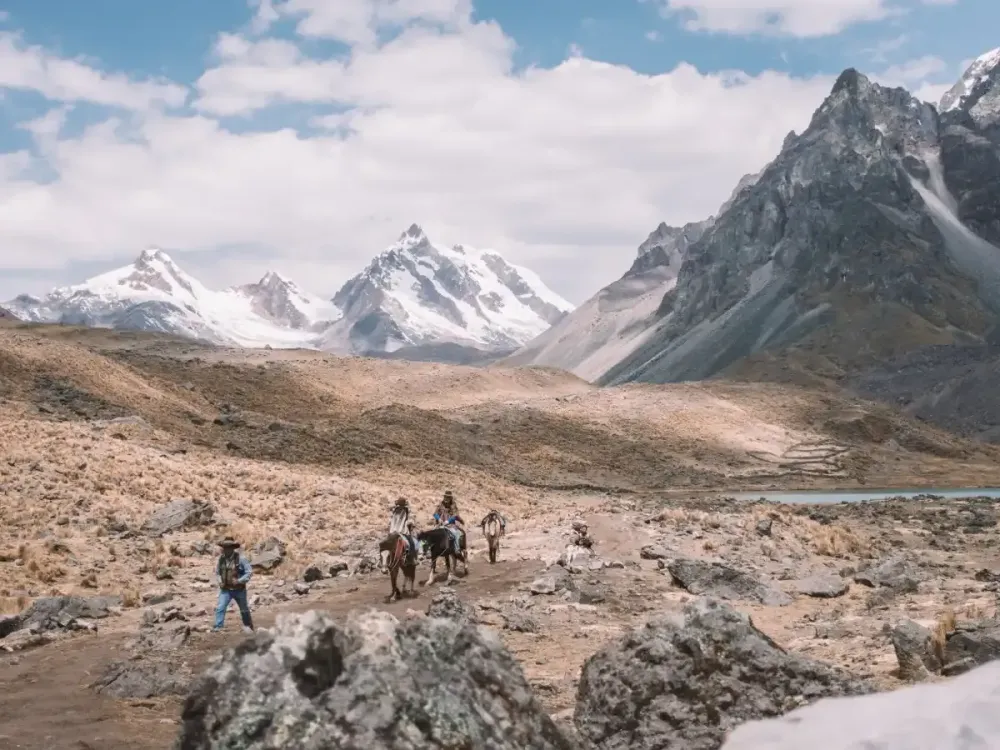
The route also passes through areas connected with communities traditionally dedicated to raising alpacas and llamas, so natural scenery and high-Andean life remain present throughout the journey.
What can you see during the Ausangate Trek?
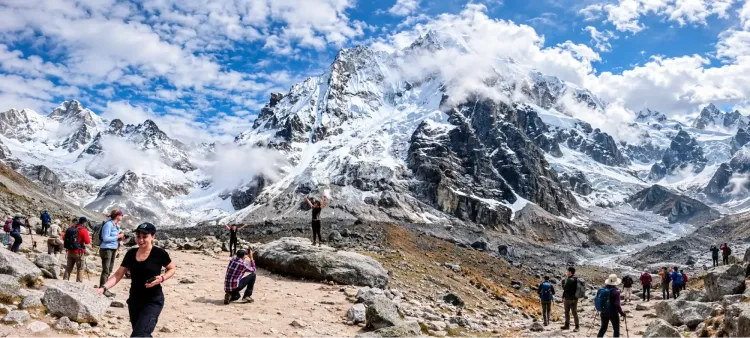
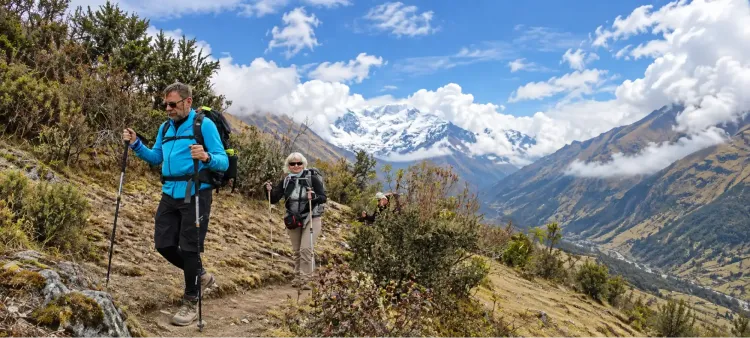
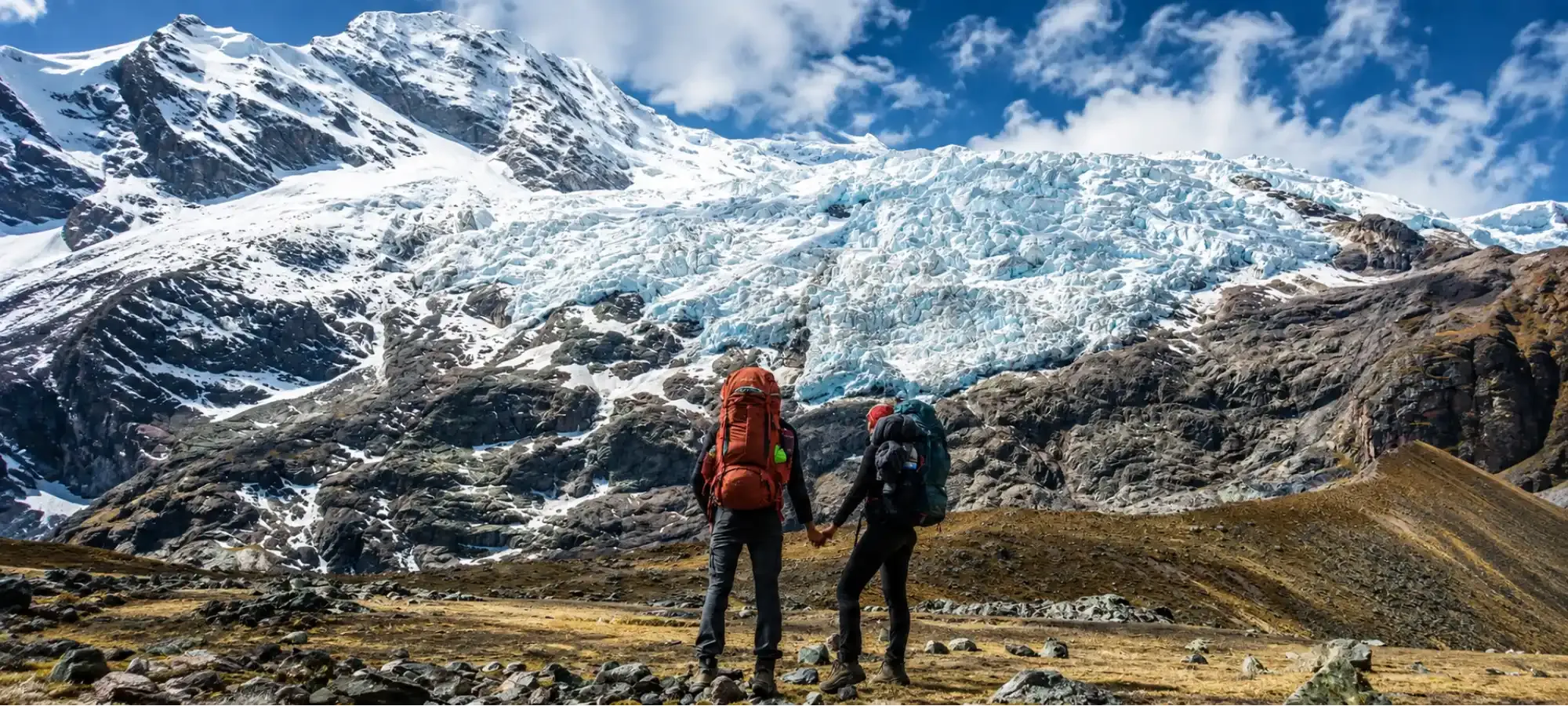
The landscape is the main attraction of the route. During the trek, you can see different perspectives of Ausangate Mountain, glaciers, wetlands, intensely colored lagoons and high passes between peaks.
On our longer itineraries, the route also passes through areas such as Upis, Yana Cocha, Ausangate Q'ocha, Jampa and Pacchanta. The latter allows some itineraries to finish near hot springs, a very welcome reward after several days at high altitude.
Wildlife also forms part of the scenery. Alpacas and llamas are common in grazing areas, while vicuñas and high-Andean birds may be seen in certain sectors.
Depending on the duration chosen, the experience can also be combined with the Seven Lagoons of Ausangate or with Vinicunca, internationally known as Rainbow Mountain.
| Place or section | Approximate altitude | Main characteristic |
|---|---|---|
| Tinqui | ≈ 3,900 m | One of the main access points to the Ausangate region |
| Upis | ≈ 4,400 m | Campsites, high-Andean scenery and mountain views |
| Arapa Pass | ≈ 4,800 m | First major mountain pass on longer routes |
| Ausangate Q'ocha | ≈ 4,650 m | Lagoon surrounded by glacial landscapes |
| Palomani Pass | ≈ 5,200 m | Highest point on Dreamy Tours' 5 and 6-day itineraries |
| Campa Pass | ≈ 5,100 m | High-altitude stage between lagoons |
| Pacchanta | ≈ 4,350 m | Community known for its hot springs |
| Vinicunca | ≈ 5,000 m depending on viewpoint and route | Multicolored mineral landscape |
Elevations may vary slightly depending on the exact route. On our Ausangate Trek 5 Days, for example, Palomani Pass reaches approximately 5,200 meters and is the highest point of the itinerary.
How difficult is the Ausangate Trek?
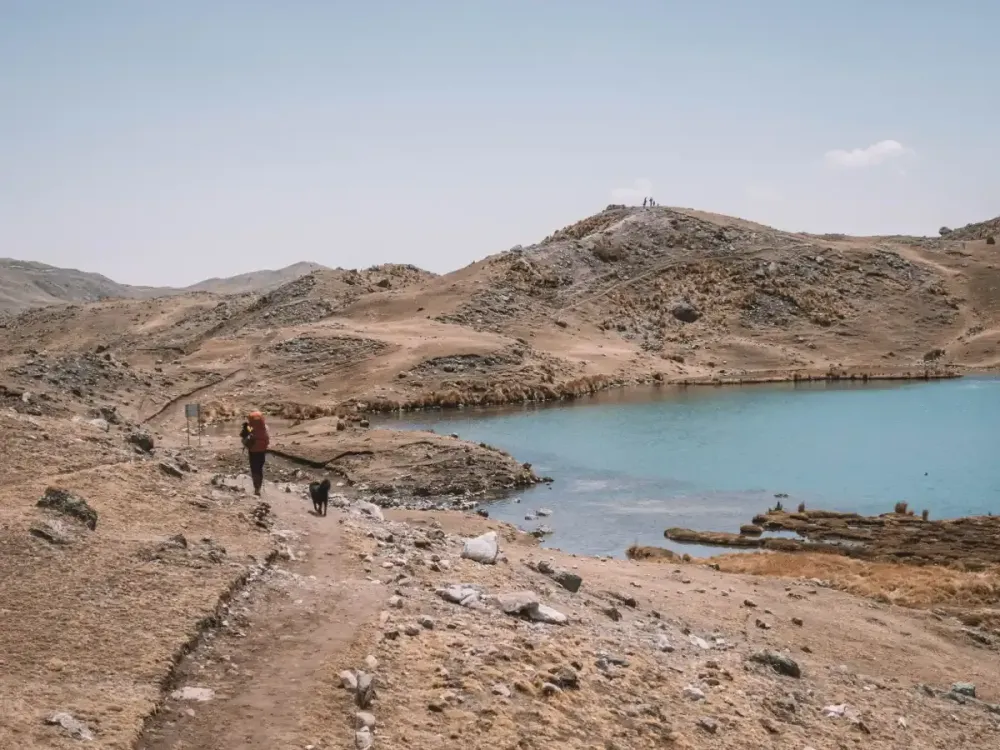
The Ausangate Trek is a challenging hike, mainly because of the combination of altitude, cold weather and several consecutive days above 4,000 meters.
You do not need climbing skills or technical mountaineering experience for the standard trekking itineraries, but you do need good physical fitness and the ability to walk for several hours each day.
On our five-day route, the third day crosses Palomani Pass at around 5,200 meters and may include approximately eight hours of hiking. The six-day itinerary also includes six to eight-hour days between high mountain passes.
Difficulty increases with cold, wind and reduced oxygen levels. A physically active traveler arriving directly from sea level may therefore find the route much harder than someone who is properly acclimatized.
What is the altitude of the Ausangate Trek and how should you acclimatize?
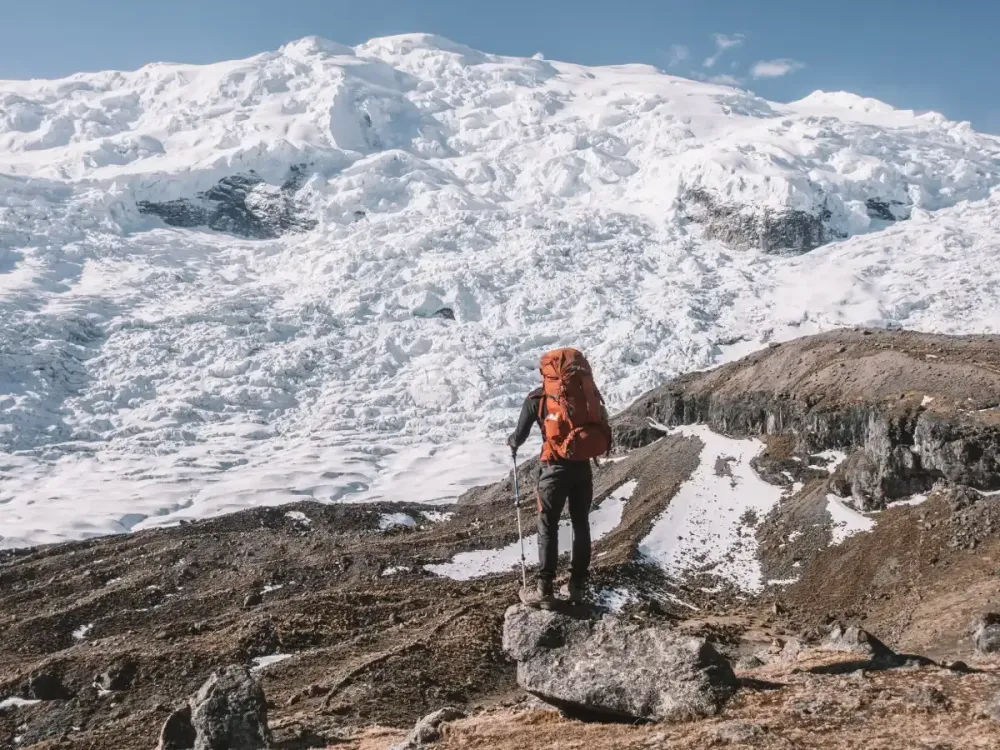
Altitude is probably the most important factor when preparing for the Ausangate Trek. Cusco is located at around 3,400 meters, but the trek spends long periods between approximately 4,000 and 5,200 meters.
On our five and six-day itineraries, passes such as Arapa, Ausangate, Palomani and Campa keep travelers at significant altitude for several days. This prolonged exposure is one of the main differences between Ausangate and routes that climb high but descend quickly afterward.
At Dreamy Tours, we recommend arriving in Cusco with enough time before beginning the trek. For many travelers, allowing two or three days for acclimatization is a sensible approach, with gradual activities before starting a high-altitude expedition.
Being physically fit helps with the hiking itself, but it does not automatically prevent altitude-related symptoms. If symptoms become severe or progressively worse, the priority should be informing the guide and evaluating descent rather than continuing higher.
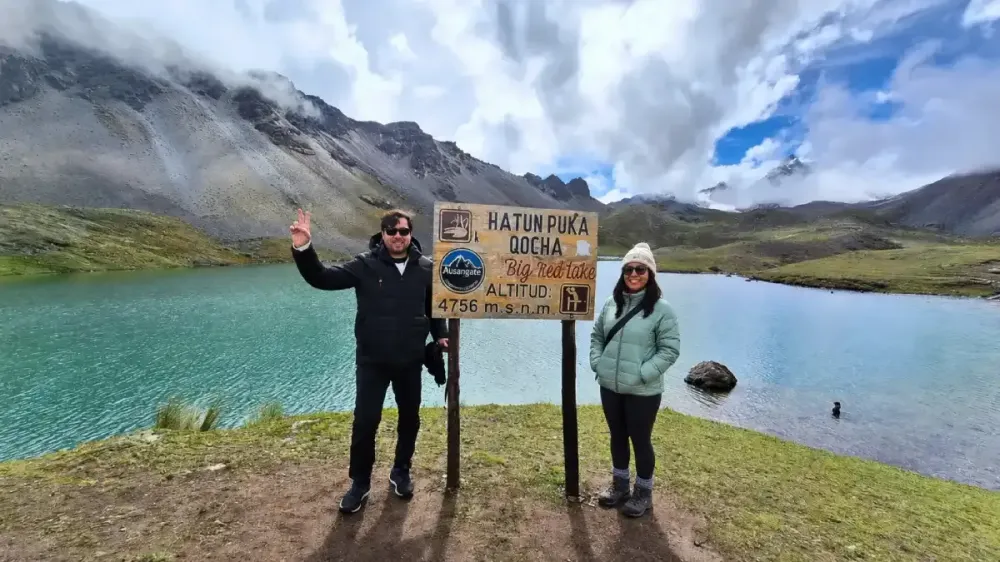
What is the best time to hike the Ausangate Trek?
The drier season, mainly from May to September, generally provides the most favorable conditions for hiking in the Vilcanota Mountain Range.
During these months, rainfall is less frequent and visibility of mountains and glaciers is usually better. However, nights can be extremely cold, and temperatures may fall below freezing at higher camps.
April and October work as transitional months. They can offer greener landscapes and fewer visitors, although the probability of rain or snow increases in the upper sections.
Between November and March, wetter conditions dominate. On a route as high as Ausangate, rainfall can quickly turn into snow or hail, while trails may become muddy and visibility can decrease.
Even during the dry season, you should be prepared for sudden weather changes. In the high mountains, the sky can change its mind considerably faster than most hikers.
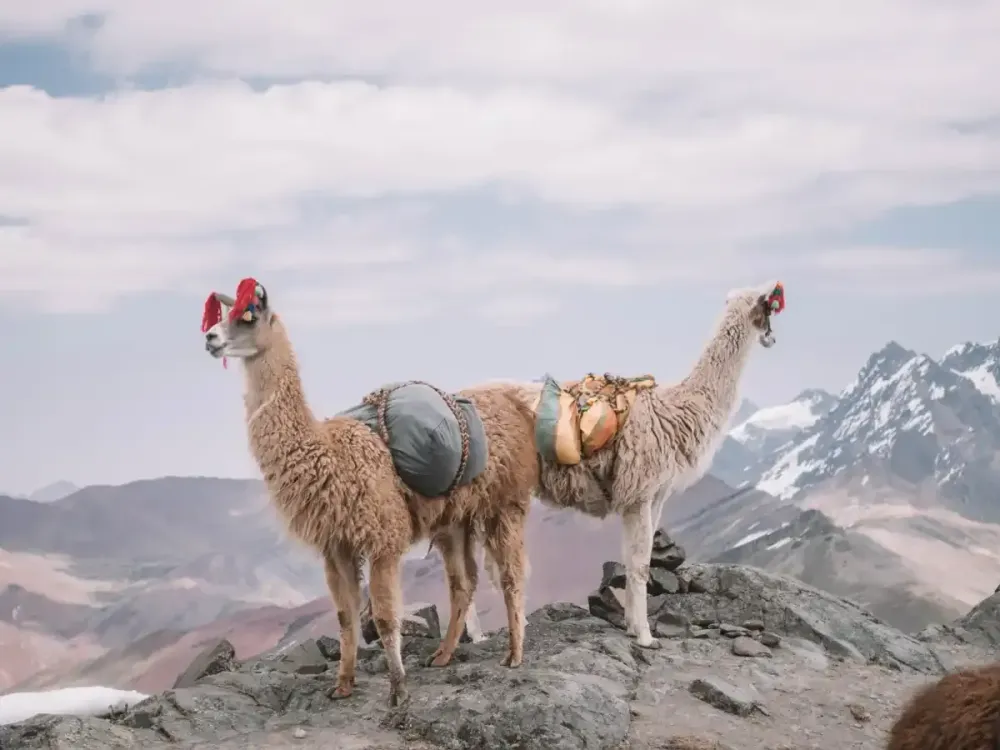
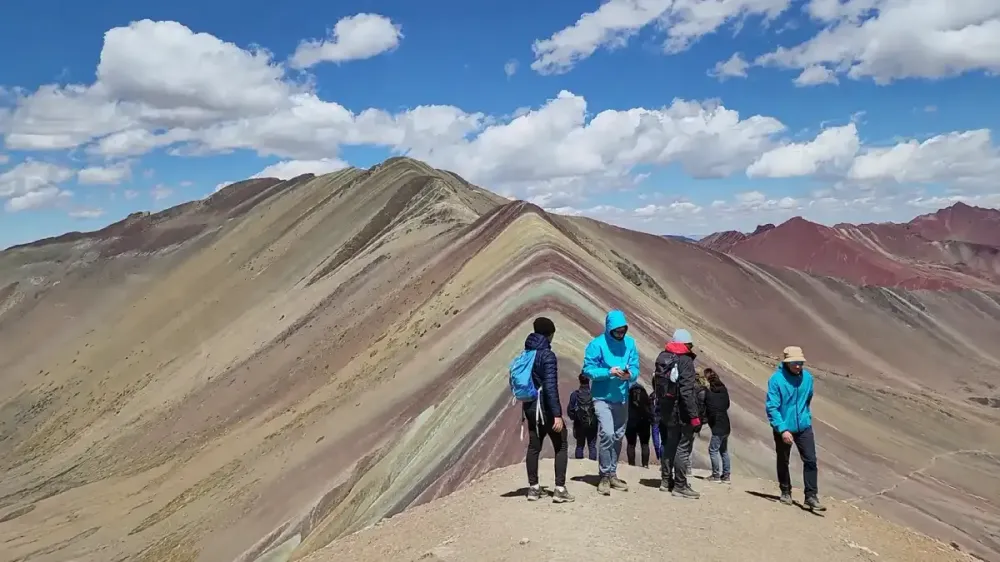
Ausangate Trek and Rainbow Mountain
One of the most attractive combinations connects Ausangate with Vinicunca, or Rainbow Mountain, within the same trekking journey.
Our Ausangate Trek and Rainbow Mountain 4 Days passes through areas such as Pacchanta, the Seven Lagoons, Upis, Puca Cocha and Warmisaya before reaching the Vinicunca area.
This way of visiting Rainbow Mountain is very different from the standard one-day tour from Cusco. Instead of arriving only at the viewpoint, travelers spend several days crossing the landscapes of the Vilcanota Mountain Range.
In 2026, tourist access to Vinicunca continued to be managed locally by the communities involved. A temporary management agreement between Chillihuani and the Llaqto sector was maintained while a new tourism management committee was being consolidated.
For this reason, access to Vinicunca is not managed through a Ministry of Culture ticket or the Cusco Tourist Ticket.
Ausangate Trek 4, 5 or 6 days: which one should you choose?
Dreamy Tours currently offers three main options for exploring this region: four, five and six days. They are not simply identical routes with an extra night added. Each one organizes the experience differently.
The Ausangate Trek and Rainbow Mountain 4 Days is more concentrated and includes Vinicunca as one of its main final highlights.
The Ausangate Trek 5 Days develops a more classic circuit around the massif, passing through places such as Upis, Ausangate Q'ocha, Palomani, Jampa and Pacchanta.
The Ausangate Trek 6 Days provides more time within the Vilcanota Mountain Range and still includes demanding high-altitude stages across passes such as Palomani and Campa.
The best choice depends on your available time and the purpose of your trip. Four days works better if you want to combine Ausangate with Rainbow Mountain, while five and six days go deeper into the high-mountain circuit.
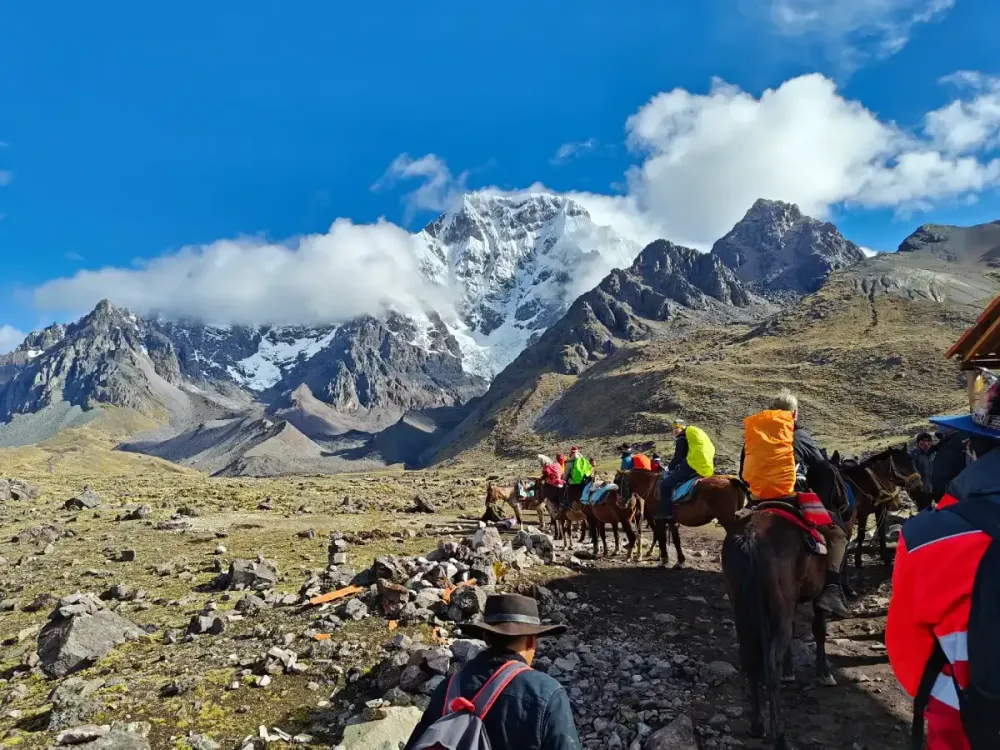
What should you pack for the Ausangate Trek?
Your gear should be prepared for intense cold, wind, strong solar radiation and possible precipitation. Even during the dry season, conditions can change quickly.
Thermal clothing and a layering system are highly recommended. A waterproof and windproof jacket is particularly important, along with a warm hat, gloves and adequate protection for very cold nights.
Your hiking boots should already be broken in. Trekking poles, sunglasses with strong UV protection, sunscreen, a reusable bottle, headlamp and small daypack are also useful.
Avoid packing everything “just in case” until your backpack starts developing its own postal code. At more than 5,000 meters, every extra kilogram tends to introduce itself personally.
Do you need permits, entrance tickets or the Cusco Tourist Ticket for Ausangate?
The traditional Ausangate Trek does not use the Inca Trail Network permit system, and there is no Ministry of Culture entrance ticket required simply to hike around the mountain.
Access in this region is managed mainly at local and community level. Peru's official tourism inventory, for example, lists a S/20 access fee for the Ausangate sector in the area associated with some lagoons, managed by the local community. This is not an individual Ministry of Culture ticket for every lagoon.
The Seven Lagoons of Ausangate are also managed locally by the community, which collects access fees and participates in conservation of the area.
| Access or ticket | Is it required for Ausangate? | Current information |
|---|---|---|
| Inca Trail permit | No | Ausangate is not part of the Inca Trail Network |
| Ministry of Culture Ausangate ticket | No | There is no national Culture ticket for the trek |
| Local Ausangate access fee | Depending on route | Fees may be collected by local communities |
| Seven Lagoons | Depending on itinerary | Locally managed access |
| Vinicunca | Yes, if included | Local/community management, not Mincul |
| BTC | No | Does not include Ausangate, Pacchanta, Seven Lagoons or Vinicunca |
| TuBoleto Cultura | Not for Ausangate | Only applies if your trip includes a site sold through the platform, such as Machu Picchu |
The Cusco Tourist Ticket also does not provide access to Ausangate. Its full foreign visitor ticket currently costs S/130 and partial tickets cost S/70, but its circuits cover attractions such as Saqsayhuaman, Pisac, Ollantaytambo, Chinchero and Moray, not Ausangate.
Similarly, TuBoleto Cultura is not a platform for purchasing an “Ausangate entrance ticket.” It only becomes relevant if you add Machu Picchu or another attraction managed through that system.
If you plan to visit Machu Picchu after the trek, you need a nominative ticket for a specific date, circuit, route and entry time. In 2026, the Ministry of Culture maintains a capacity of 4,500 visitors per day during low season and up to 5,600 on officially designated high-season dates.
Ausangate or Salkantay: which trek should you choose?
Ausangate and Salkantay are two of Cusco's major trekking routes, but the type of experience is very different.
Salkantay climbs to approximately 4,600 meters and then descends progressively toward cloud forest and warmer environments. Our Salkantay itineraries also finish with a visit to Machu Picchu.
Ausangate remains above 4,000 meters for much longer and may exceed 5,000 meters at several mountain passes. Glaciers, lagoons and the open landscapes of the Vilcanota Mountain Range are the central focus of the journey.
| Feature | Ausangate Trek | Salkantay Trek |
|---|---|---|
| Main experience | High mountains and Vilcanota Range | Mountains and transition toward Machu Picchu |
| Typical maximum altitude | Up to ≈ 5,200 m depending on itinerary | ≈ 4,600–4,650 m |
| Prolonged time above 4,000 m | Yes | Less |
| Glaciers and lagoons | Major highlights | Present |
| Cloud forest | Not a main feature | Yes |
| Machu Picchu | Not on the traditional route | Yes on standard itineraries |
| Difficulty | High | Moderate to challenging |
| Best for | High mountains and remote landscapes | Mountains + Machu Picchu |
If reaching Machu Picchu after several days of hiking is your priority, you can read our Salkantay Trek Guide.
If you want to remain in high mountain environments, cross passes above 5,000 meters and make the Vilcanota Mountain Range the destination itself, Ausangate is the more suitable choice.
Is the Ausangate Trek worth it?
For travelers with good physical condition, proper acclimatization and a real interest in high-altitude trekking, yes. Ausangate offers an experience very different from the classic circuits around Cusco.
For several days, the journey unfolds among snow-capped peaks, lagoons, herds of alpacas, Andean communities and mountain passes where the landscape seems to occupy the entire horizon.
We do not recommend choosing it simply because “there are fewer tourists.” The main reason should be that you genuinely want to experience a demanding high-altitude route and enjoy that environment.
At Dreamy Tours, you can choose between the Ausangate and Rainbow Mountain 4 Days, Ausangate Trek 5 Days and Ausangate Trek 6 Days according to your available time and the depth of experience you want.
Frequently asked questions about the Ausangate Trek
Where is the Ausangate Trek?
The Ausangate Trek is located in the Vilcanota mountain range southeast of Cusco, Peru. Different itineraries can begin around areas such as Tinqui, Upis or nearby Andean communities.
How difficult is the Ausangate Trek?
The Ausangate Trek is challenging because of the sustained high altitude, cold temperatures and several days of hiking. Technical climbing experience is not normally required, but good fitness and acclimatization are important.
What is the highest altitude on the Ausangate Trek?
The exact highest point depends on the route, but several Ausangate itineraries cross mountain passes above 5,000 meters.
What is the best time for the Ausangate Trek?
The dry season from approximately May to September is generally preferred because rainfall is lower and mountain conditions tend to be more stable.
Does the Ausangate Trek go to Machu Picchu?
No. The traditional Ausangate Trek focuses on the Vilcanota mountain range and does not finish at Machu Picchu.
Can you combine Ausangate Trek with Rainbow Mountain?
Yes. The Ausangate Trek and Rainbow Mountain 4 Days combines trekking through the Ausangate region with a visit to Rainbow Mountain as part of the same multi-day experience.
Personal travel advice
Plan your trip with Dreamy Tours
Start a tailored journey with our exclusive tours and custom trips across Peru and other Latin American countries.