Search the blog
Tabla de contenidos
Understanding Arequipa's altitude is one of the most important things to consider before planning a trip to the White City and Colca Canyon. Although Arequipa sits at a lower elevation than several other destinations in the Peruvian Andes, excursions into the Colca Valley cross high-altitude areas exceeding 4,000 meters (13,123 feet) above sea level.
The city of Arequipa is located at approximately 2,335 meters (7,661 feet), while Chivay, one of the main gateways to Colca Valley, stands at around 3,635 meters (11,926 feet). During the road journey, travelers may reach much higher elevations, particularly at Patapampa, which sits at approximately 4,910 meters (16,109 feet).
These altitude differences are important because some travelers may experience discomfort associated with reduced oxygen availability, especially when arriving directly from Lima or other cities near sea level.
However, exploring Arequipa and Colca Canyon does not necessarily involve demanding hikes. Many of the region's main attractions can be visited on cultural sightseeing tours and panoramic excursions, provided that individual health conditions and altitude changes are taken into account.
In this guide, we explain how high Arequipa is above sea level, the elevations of Chivay and the main attractions in Colca Valley, how altitude can affect travelers, and what precautions to consider before your excursion.
If you're preparing your itinerary, explore our Arequipa and Colca Canyon tours, featuring cultural experiences, natural landscapes, and different ways to discover the region.
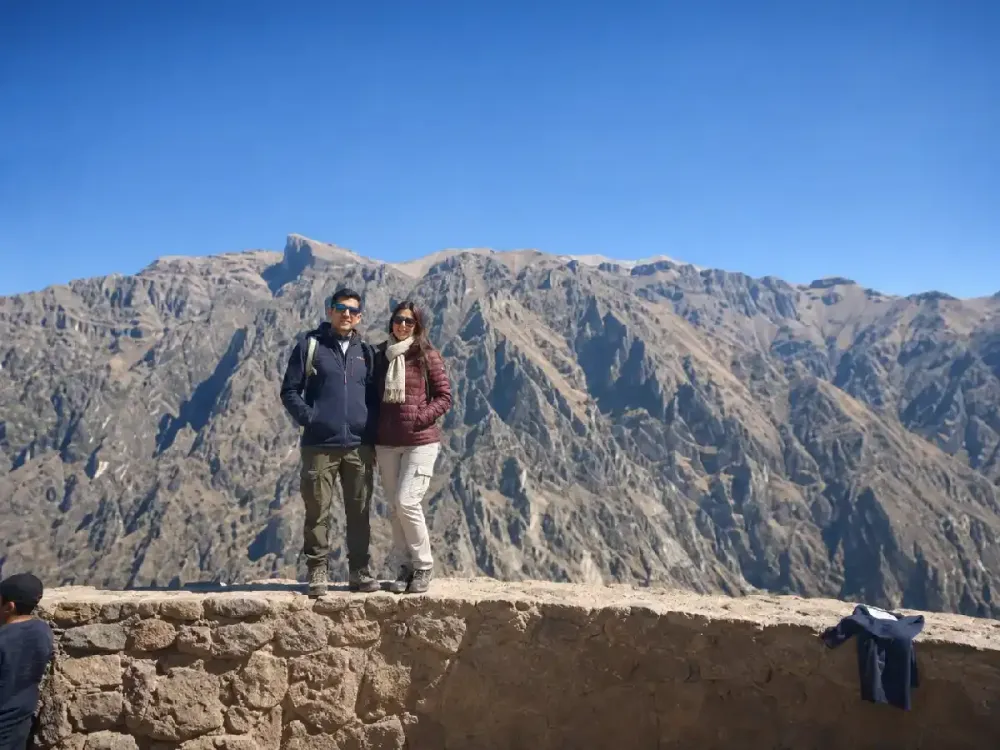
How High Is Arequipa Above Sea Level?
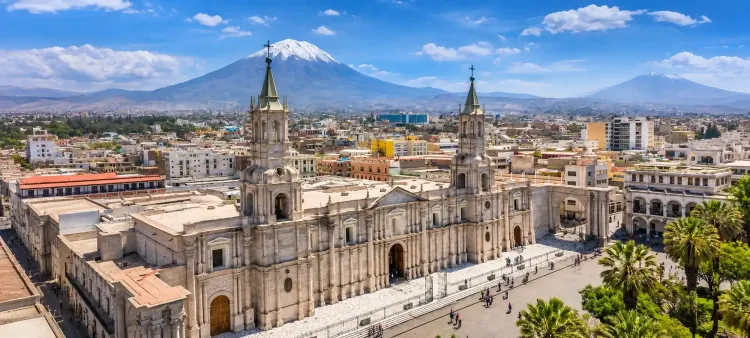
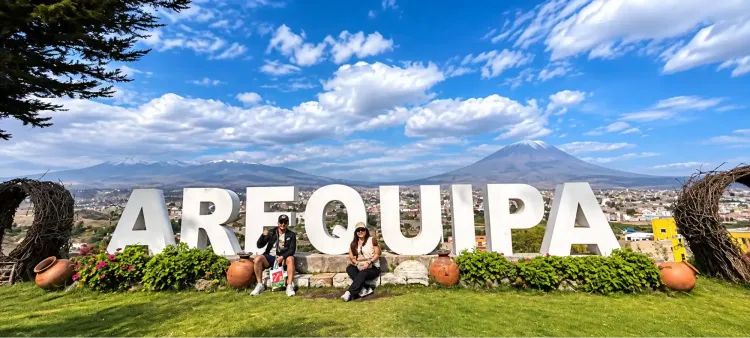
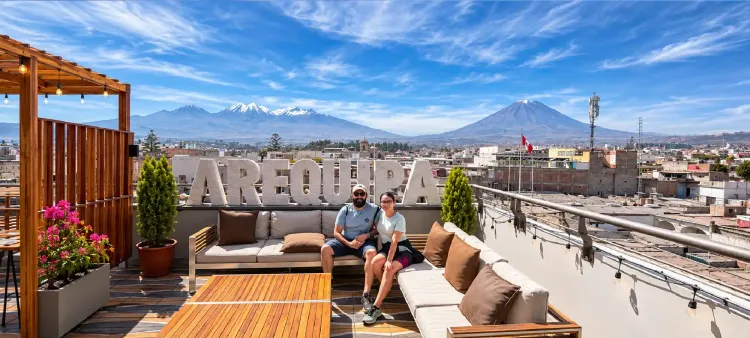
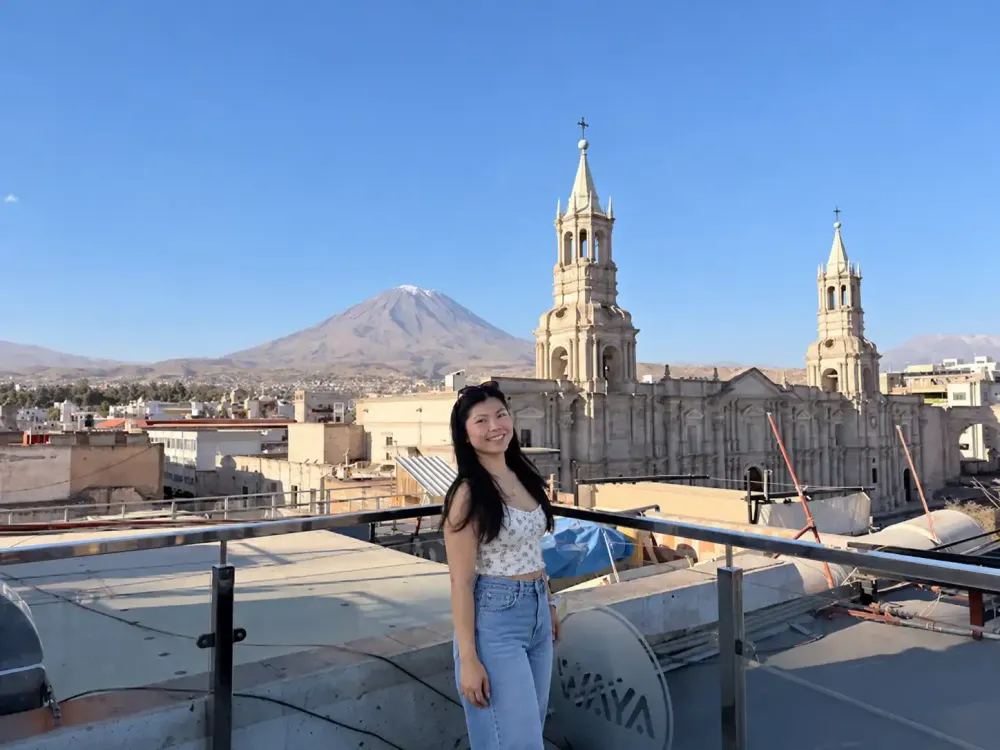
The city of Arequipa stands at approximately 2,335 meters (7,661 feet) above sea level. This is the commonly used elevation reference for the regional capital, although actual altitude may vary slightly between neighborhoods and different parts of the urban area.
Its location in the southern Peruvian Andes helps explain some of its environmental characteristics, including strong solar radiation and noticeable temperature differences between day and night.
For travelers arriving from coastal cities, Arequipa represents a significant increase in elevation. However, it is lower than Cusco, Puno, and many mountain destinations throughout Peru.
In the White City, you can explore squares, churches, museums, traditional neighborhoods, and viewpoints without having to climb to substantially higher altitudes. For this reason, city sightseeing is often a practical way to begin your visit to the region.
At Dreamy Tours, we recommend using your first few hours to rest, walk at a comfortable pace, and explore attractions close to your accommodation, particularly if you have just arrived by plane.
You can plan your first visit with our guide to Arequipa in One Day: What to See and How to Explore the City, featuring the White City's main monuments and viewpoints.
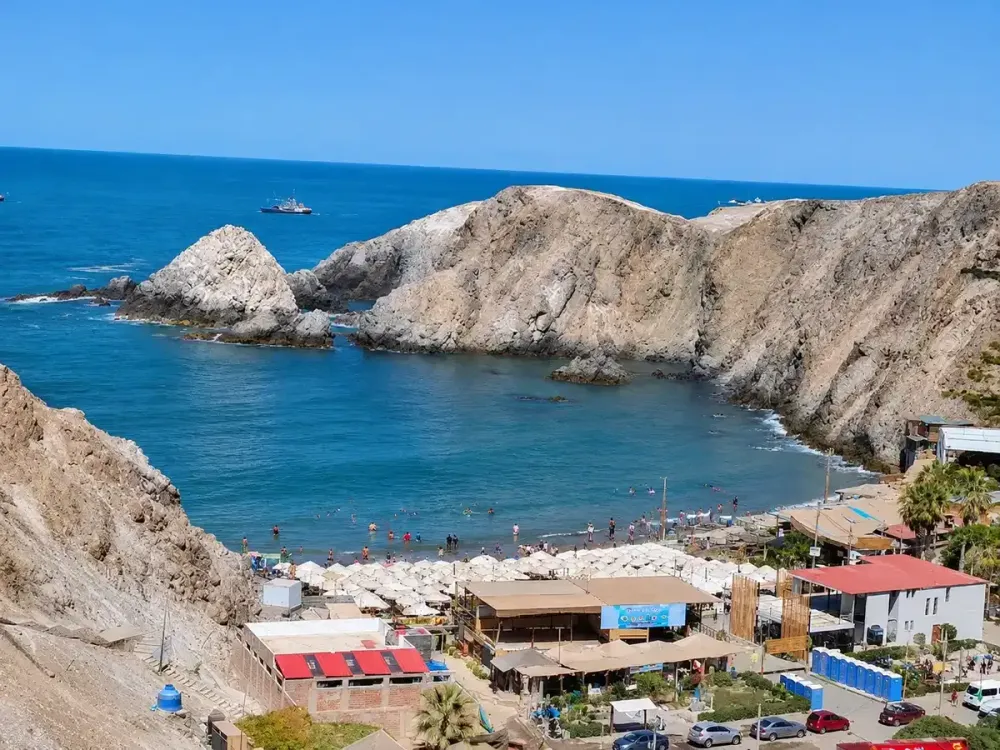
Altitude of Arequipa, Chivay, and the Main Places in Colca Valley
One of the most important things to understand when visiting Colca Canyon is that elevation changes considerably throughout the journey.
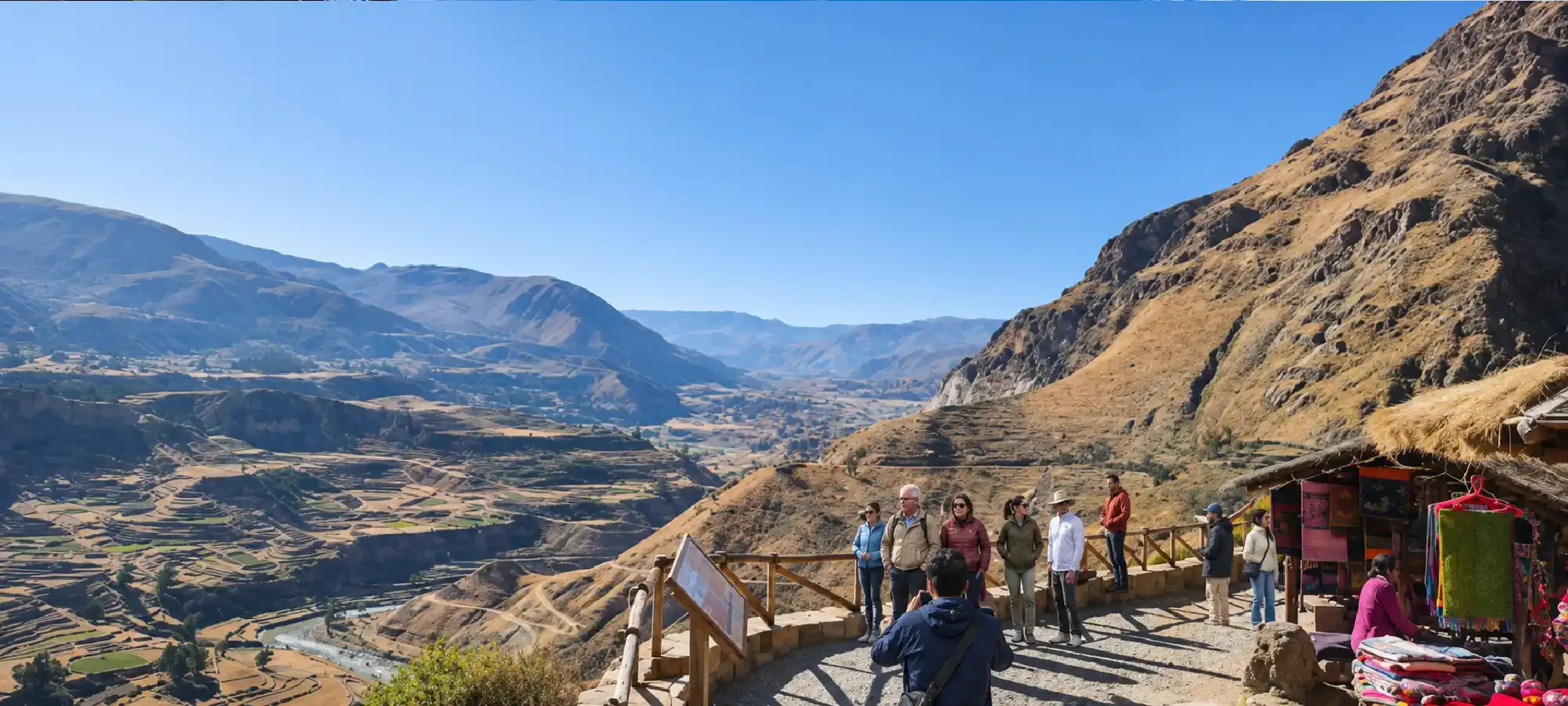
The road connecting Arequipa with Chivay crosses high-altitude Andean landscapes, sections of the Salinas y Aguada Blanca National Reserve, and panoramic viewpoints located above 4,000 meters (13,123 feet).
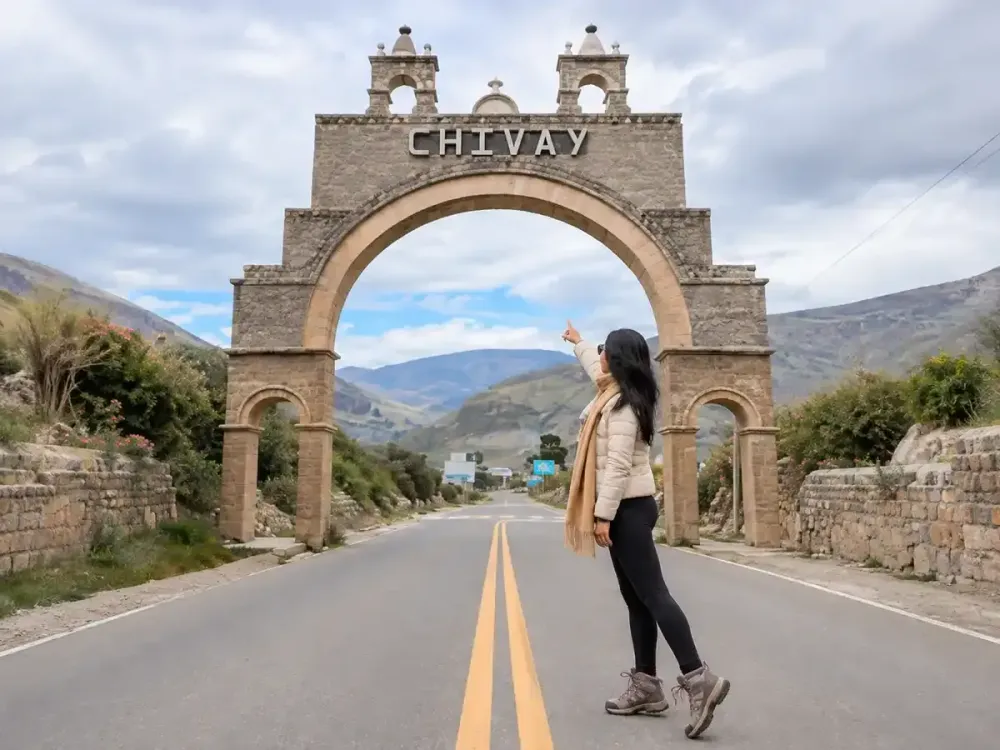
Chivay, at approximately 3,635 meters (11,926 feet) above sea level, is one of the valley's most important towns. From here, travelers can visit La Calera Hot Springs, traditional villages, and the canyon's viewpoints.
The highest point along the usual tourist route is the Patapampa area, home to the Andes Viewpoint, at approximately 4,910 meters (16,109 feet).
The following table compares several representative locations.
| Location | Approximate elevation | Main characteristic |
|---|---|---|
| Arequipa city | 2,335 m / 7,661 ft | Urban center and starting point |
| Chivay | 3,635 m / 11,926 ft | Main tourist gateway to Colca Valley |
| Yanque | 3,417 m / 11,211 ft | Traditional village in the valley |
| Cruz del Cóndor | 3,700 m / 12,139 ft | Viewpoint overlooking the canyon and condor habitat |
| Patapampa, Andes Viewpoint | 4,910 m / 16,109 ft | High-altitude section of the road to Colca |
These figures are approximate and may vary depending on the exact measurement location. The elevations for Patapampa and Chivay follow references used in official tourism information from PROMPERÚ and MINCETUR.
Remember that the highest elevation reached during an excursion is not necessarily the same altitude where you will spend the night.
For more information about the journey, read our guide to how to get to Colca Canyon from Arequipa, covering travel routes, transportation, and the main stops along the way.
Why Does Altitude Feel More Noticeable When Traveling from Arequipa to Colca?
The effects of altitude are mainly related to decreasing atmospheric pressure as elevation increases. Although the air continues to contain approximately the same proportion of oxygen, its partial pressure decreases, meaning less oxygen is available to the body with each breath.
This means the body needs time to adapt when someone travels from a city near sea level to considerably higher elevations.
The altitude difference between Arequipa and Chivay is approximately 1,300 meters (4,265 feet). However, the road journey also crosses locations close to 4,910 meters (16,109 feet), representing a much greater increase in elevation.
Some people may notice faster breathing, fatigue, or reduced tolerance for physical activity. Others may develop symptoms consistent with altitude sickness, although not every traveler reacts in the same way.
Physical fitness does not guarantee protection against altitude sickness. Even someone who exercises regularly may experience symptoms if they ascend rapidly without allowing enough time to adapt.
According to travel medicine guidance from the US Centers for Disease Control and Prevention (CDC), the rate of ascent and the altitude at which a traveler sleeps are important factors when evaluating altitude-related risks.
At Dreamy Tours, we recommend paying particular attention to these changes when a trip includes an excursion to Colca Canyon shortly after arriving in Arequipa.
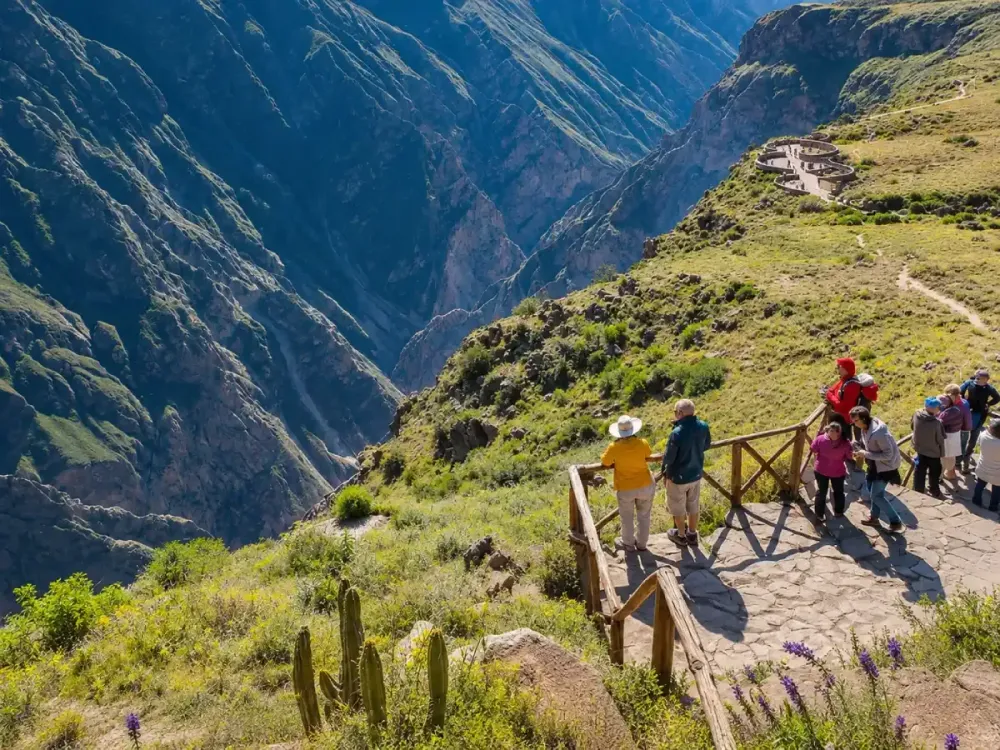
Can Arequipa's Altitude Cause Altitude Sickness?
Yes. Although Arequipa is located at a lower elevation than many high-Andean destinations, some travelers may experience altitude-related discomfort, especially when arriving quickly from locations close to sea level.
Acute mountain sickness, commonly called soroche in Peru, can occur when the body has not yet adapted to reduced oxygen availability.
Common symptoms include headache, nausea, dizziness, fatigue, and difficulty sleeping. Their intensity varies, and not every symptom experienced during a journey is necessarily caused by altitude.
In general, the risk increases when people ascend rapidly to higher elevations, especially above 2,500 meters (8,202 feet). Therefore, even travelers who feel comfortable in Arequipa may notice significant differences on the road to Colca.
It's also essential to distinguish mild symptoms from warning signs. Breathlessness at rest, confusion, loss of coordination, or progressively worsening symptoms require urgent medical attention and safe descent when appropriate.
If symptoms consistent with altitude sickness develop, you should not ascend further until they have resolved. If symptoms worsen, seek medical assistance and arrange a descent.
For more detailed medical information, consult the CDC's guidance on high-altitude travel and altitude illness.
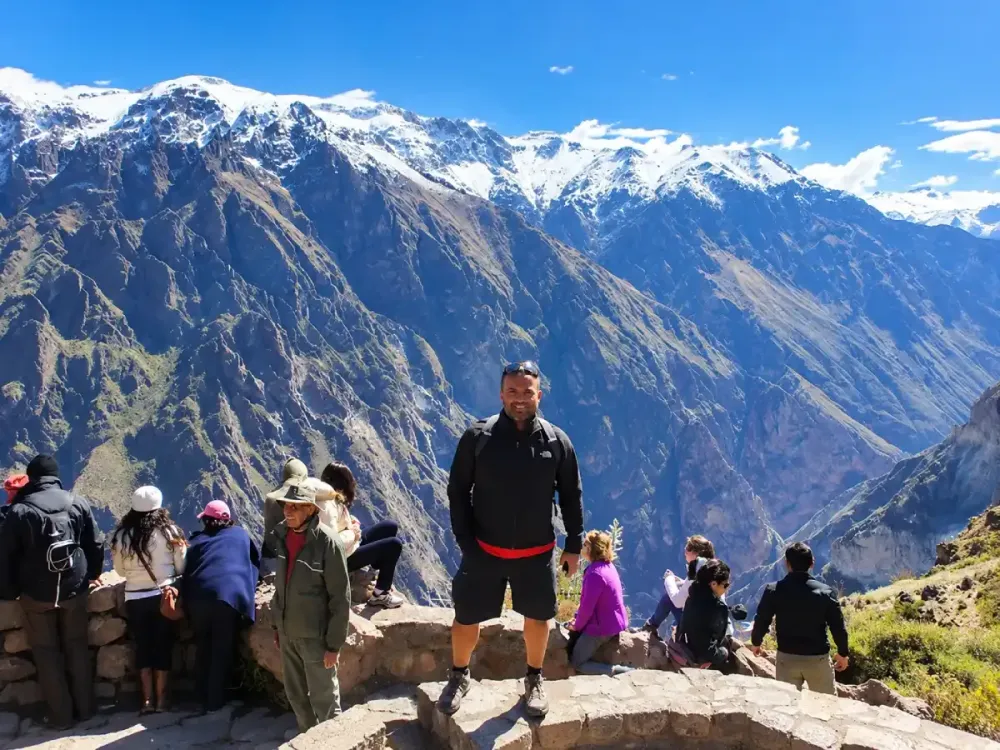
How to Acclimatize Before Visiting Colca Valley
Acclimatization is the process through which the body gradually adapts to lower oxygen availability at higher elevations. This process takes time and can progress differently from person to person.
If you're arriving directly from Lima or another coastal city, we recommend avoiding physically demanding activities immediately after reaching Arequipa.
Spending your first day on cultural visits, gentle walks, and rest can help you begin the trip at a more comfortable pace. However, spending only a few hours in Arequipa does not guarantee complete acclimatization for visiting locations close to 5,000 meters (16,404 feet).
For itineraries involving overnight stays at higher elevations, gradual adaptation is especially important. International medical guidelines recommend avoiding rapid increases in sleeping altitude and considering additional acclimatization nights whenever the itinerary allows.
During your first days, it is also advisable to avoid alcohol, maintain appropriate hydration, and refrain from strenuous exercise. Drinking water helps prevent dehydration, but it does not prevent altitude sickness on its own.
Travelers with a previous history of acute mountain sickness or existing heart or respiratory conditions should consult a healthcare professional before undertaking significant altitude gains.
For a less physically demanding introduction to the region, our Arequipa City Tour lets you explore Plaza de Armas, Yanahuara and Carmen Alto viewpoints, and other attractions around the city.
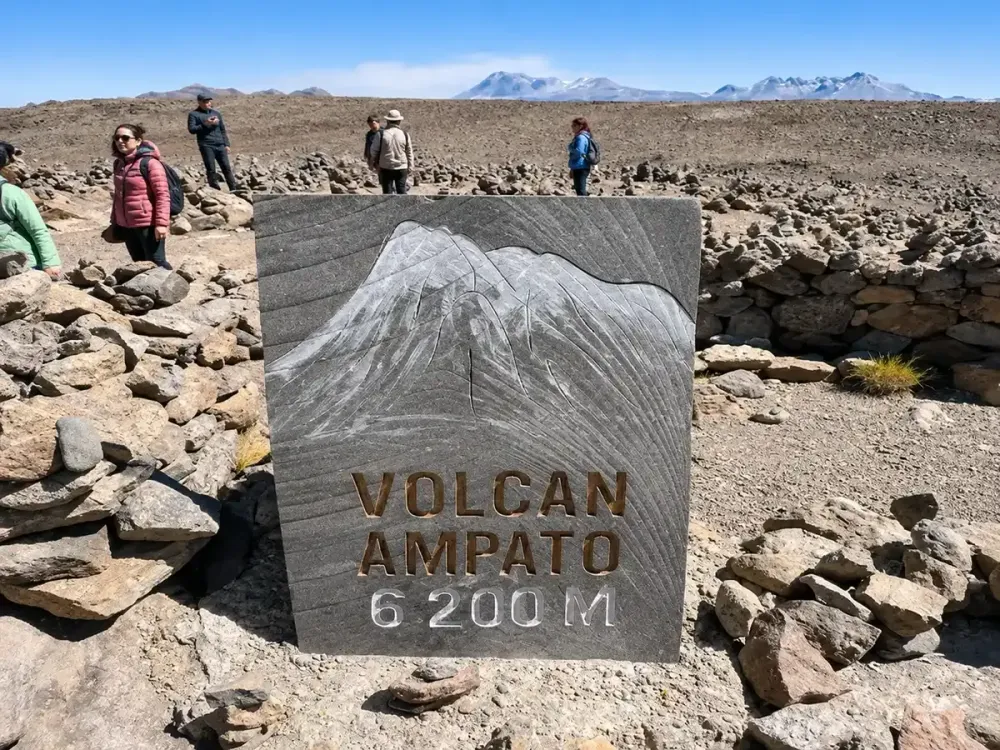
Patapampa Altitude: The Highest Point on the Road to Colca
Patapampa is one of the best-known stops on the road between Arequipa and Colca Valley. Its main tourist attraction is the Andes Viewpoint, located at approximately 4,910 meters (16,109 feet) above sea level.
When weather conditions are favorable, this location offers views of the mountains and volcanoes that form part of southern Peru's dramatic Andean landscape.
The area is characterized by its considerable altitude, low temperatures, and exposure to wind. Although many visitors stop only briefly to admire the scenery, their bodies are still affected by the reduced partial pressure of oxygen.
For this reason, we recommend moving slowly, avoiding running or walking rapidly uphill, and respecting the time allocated for the stop.
It's also important to bring warm clothing, a windproof jacket, sunscreen, and drinking water. The environment can feel cold even during dry, sunny months.
A short visit at high altitude does not have the same effect as sleeping there, but some travelers may still experience discomfort during brief stops.
If you develop significant symptoms, inform your guide or transportation coordinator immediately. It's not advisable to extend a scenic stop for photographs when a passenger needs assistance.
Learn more about the route in our Colca Canyon travel guide, which introduces the landscapes and main attractions of the region.
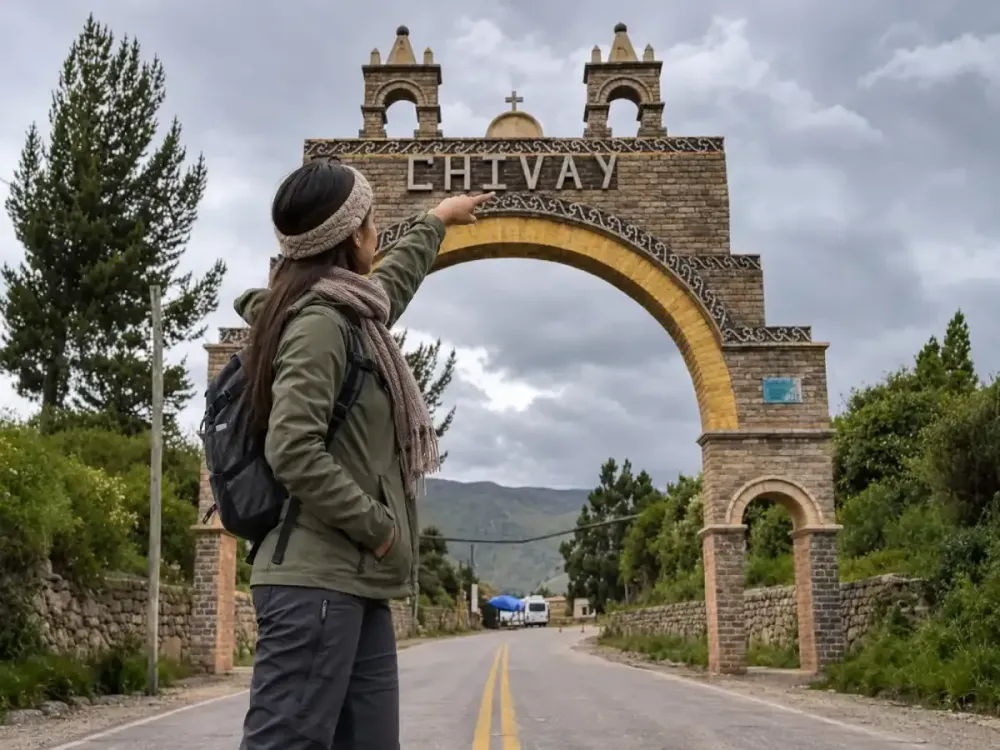
Chivay Altitude and How It Affects an Overnight Stay in Colca
Chivay is located at approximately 3,635 meters (11,926 feet) above sea level. It is one of the main tourism centers in Colca Valley and a popular overnight base for travelers taking multi-day excursions.
Its altitude matters because some people may experience altitude-related symptoms during their first few hours in town or while sleeping there.
Unlike a brief stop at Patapampa, staying overnight in Chivay means spending several hours at a considerably higher elevation than Arequipa city. For this reason, sleeping altitude should be considered when planning your itinerary.
Chivay has a main square, markets, restaurants, accommodation, and access to La Calera Hot Springs. These experiences can be combined with a leisurely walk through the town, while avoiding unnecessary exertion if you are still adjusting to the elevation.
Rest, adequate nutrition, and awareness of possible symptoms are particularly important during the first hours after arrival.
If you'd like to discover what the destination offers, read our guide to Chivay and La Calera Hot Springs.
At Dreamy Tours, we believe the available travel time, passengers' health, and the pace of the itinerary should all be considered when choosing where to spend the night.
Cruz del Cóndor Altitude and Tips for Visiting
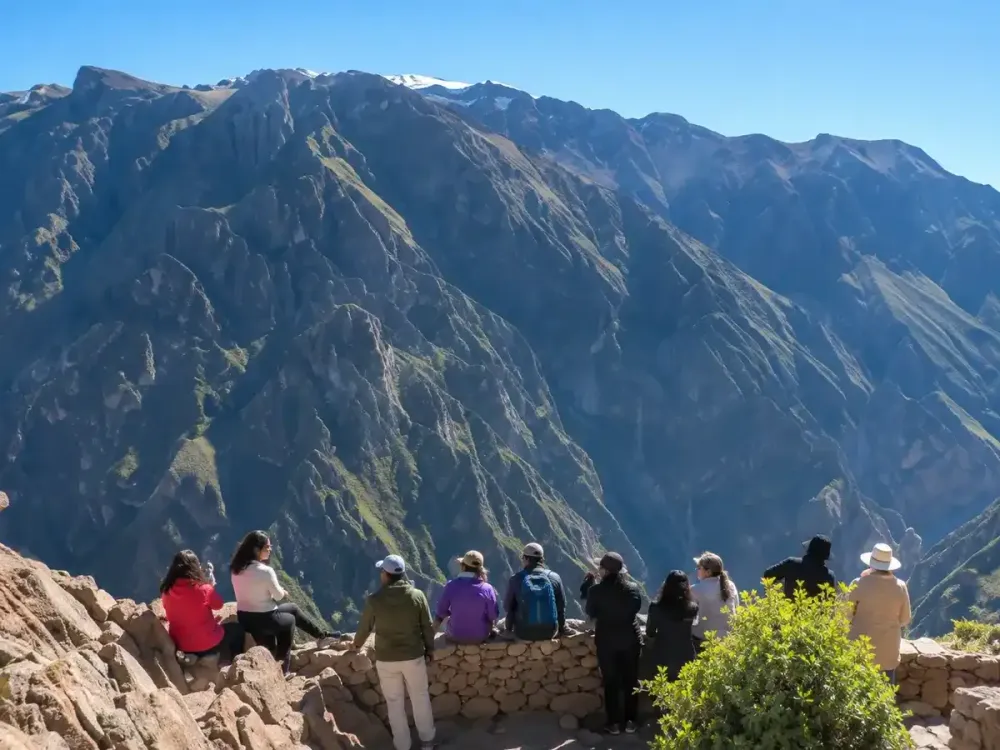
Cruz del Cóndor is one of the best-known viewpoints in Colca Canyon and stands at approximately 3,700 meters (12,139 feet) above sea level.
From here, visitors can admire the canyon walls and, when natural conditions allow, watch Andean condors soaring over the valley.
Visits generally take place early in the morning, when rising air currents may help the birds glide. However, condor sightings cannot be guaranteed because they depend on the behavior of wild animals.
Because of the altitude, we recommend walking at a comfortable pace and avoiding sudden movements or unnecessary physical exertion, especially if you have recently arrived in the region.
Warm clothing, sunscreen, comfortable footwear, and a windproof jacket are also advisable. Early morning temperatures can be low even when the sky is clear.
The viewpoint has designated areas for observing the scenery. It's important to remain within these spaces and avoid approaching dangerous edges to take photographs.
To plan your visit, explore our Cruz del Cóndor guide, including access information, travel recommendations, and the usual conditions for observing these remarkable birds.
Arequipa, Cusco, and Puno: Altitude Differences on a Peru Trip
Arequipa forms part of many itineraries through southern Peru. That's why it's important to understand how elevation changes when traveling onward to destinations such as Cusco and Puno.
The White City stands at approximately 2,335 meters (7,661 feet), while Cusco is situated at around 3,400 meters (11,155 feet) and Puno at approximately 3,827 meters (12,556 feet) above sea level.
These differences may influence the body's adaptation, particularly when travelers move quickly between cities at different elevations.
| Destination | Approximate elevation | Travel consideration |
|---|---|---|
| Lima | Near sea level | Common international arrival point |
| Arequipa | 2,335 m / 7,661 ft | Introduction to moderate altitude |
| Cusco | 3,400 m / 11,155 ft | Allow time for adaptation |
| Puno | 3,827 m / 12,556 ft | Higher elevation near Lake Titicaca |
| Chivay | 3,635 m / 11,926 ft | Relevant sleeping altitude in Colca |
| Patapampa | 4,910 m / 16,109 ft | High-altitude stop on the Colca road |
The elevations are general references and may vary depending on the exact location. It is also important to distinguish the maximum altitude reached during an excursion from the elevation where you spend the night.
On some itineraries, Arequipa may form part of a gradual transition before traveling onward to Cusco or Puno. However, the benefit depends on how long you stay, your rate of ascent, and your individual response to altitude.
If your journey includes several destinations, we recommend planning transfers to avoid unnecessarily rapid altitude gains and consulting a healthcare professional when relevant risk factors are present.
Should You Visit Colca Canyon in One or Two Days Because of the Altitude?
Choosing between a one-day and a two-day Colca Canyon excursion depends on several factors, including available time, travel distances, comfort, and the type of experience you prefer.
A one-day tour allows you to discover some of the valley's main landscapes and viewpoints, but usually requires leaving Arequipa very early and spending considerable time on the road.
A two-day program spreads out the sightseeing, allows more time to explore Chivay, and includes an overnight stay in the area. However, remember that sleeping in Chivay means spending the night at approximately 3,635 meters (11,926 feet).
For this reason, a two-day excursion should not automatically be considered safer in terms of altitude sickness. Its suitability depends on previous acclimatization, sleeping altitude, and each traveler's individual circumstances.
For those arriving directly from sea level, allowing additional time to adjust before heading into the valley may be advisable, regardless of the tour's duration.
At Dreamy Tours, we recommend considering both the pace of the excursion and the traveler's condition before making a decision.
You can compare the options in our guide to Colca Canyon in 1 or 2 Days: Which Tour Should You Choose?.
If you prefer to spread out the visits and spend a night in the valley, explore our 2-Day Colca Canyon Tour from Arequipa, which features high-Andean landscapes, Chivay, and Cruz del Cóndor.
What to Pack and What Precautions to Take at High Altitude
Packing appropriately can improve your comfort during a trip through Arequipa and Colca Valley, especially because temperatures and environmental conditions change with elevation.
For exploring the city, we recommend comfortable clothing, sunscreen, suitable footwear, and a lightweight jacket. During the day, solar radiation can be strong even when the air feels cool.
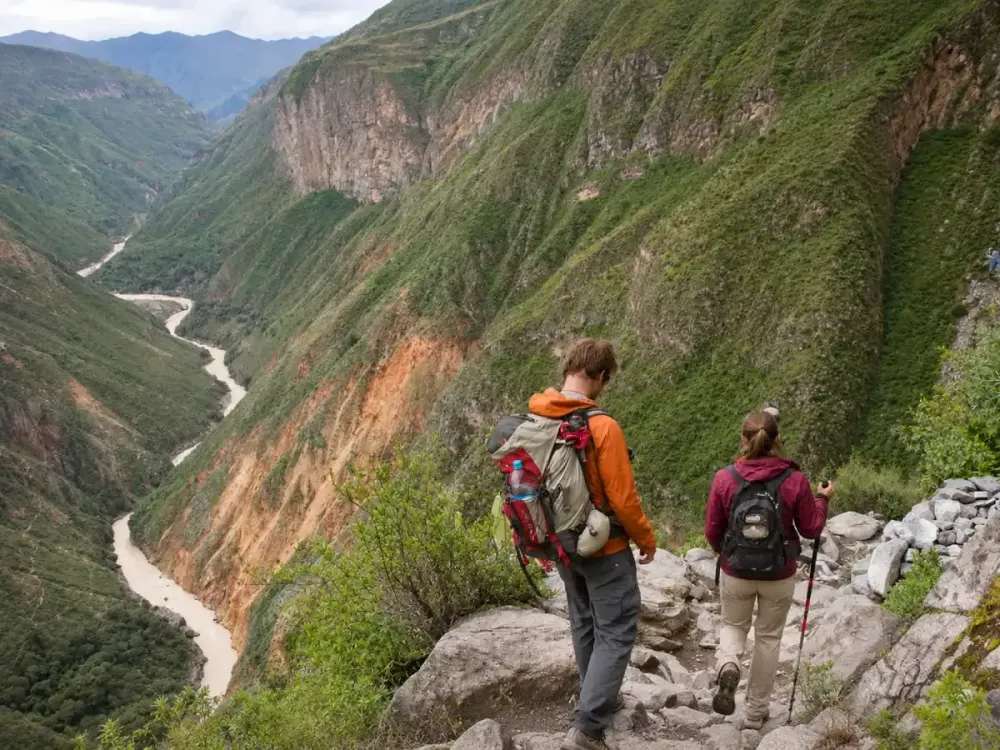
If your itinerary includes Colca, Patapampa, or other high-Andean areas, you'll need warmer layers. A windproof jacket, hat, and layered clothing can be particularly useful during early departures.
It's also advisable to carry drinking water, personal medications previously prescribed or recommended by a healthcare professional, and any documents needed for medical assistance during your trip.
We do not recommend self-medicating to prevent altitude sickness. In certain cases, a doctor may recommend specific preventive measures, but the decision depends on the traveler's medical history and the characteristics of the ascent.
It's essential to inform your guide of any significant symptoms rather than hiding discomfort to continue the itinerary.
To understand how temperatures vary throughout the year, read our guide to Arequipa weather: monthly temperatures and rainfall.
Proper preparation does not eliminate all altitude-related risks, but it helps travelers make informed decisions and organize their journeys more responsibly.
How to Plan a Trip to Arequipa and Colca Canyon with Altitude in Mind
The best way to organize a trip to Arequipa and Colca Valley is to consider the elevations you'll reach, the activities planned, and the time available to adapt.
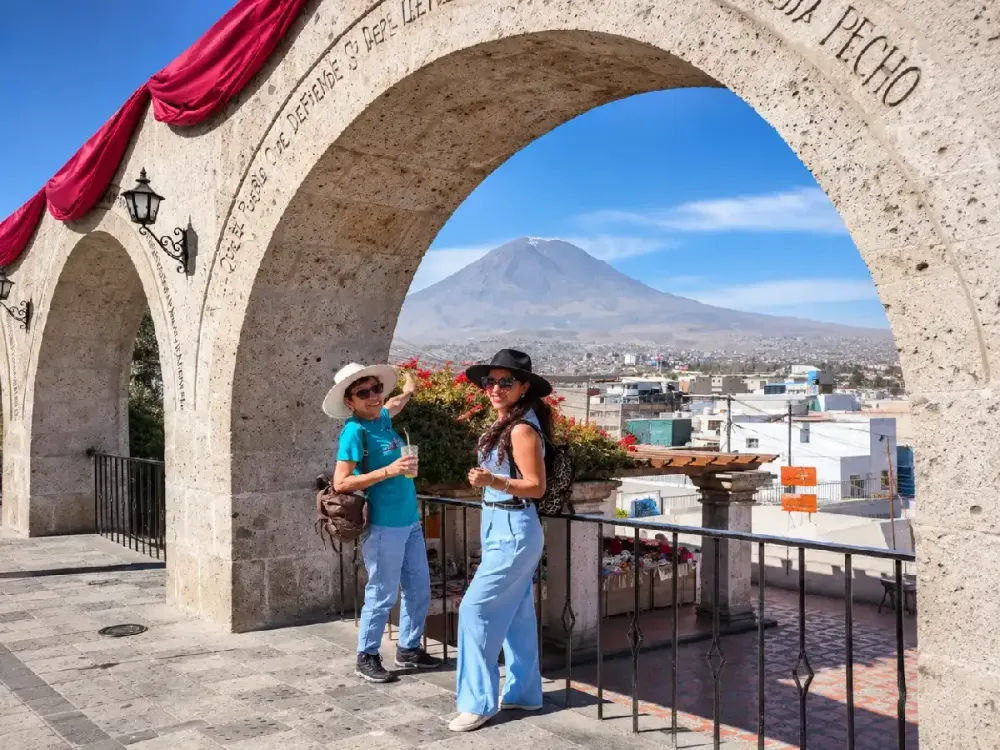
If you arrive directly from Lima, you can begin with cultural visits around the historic center, Plaza de Armas, Santa Catalina Monastery, and Yanahuara and Carmen Alto viewpoints. These attractions allow you to discover the White City without immediately traveling to the region's highest elevations.
Use our guide to what to see in Arequipa in 1, 2, and 3 days to organize your sightseeing according to the length of your stay.
Afterward, if your health and acclimatization allow, you can consider an excursion to Colca Canyon. Before choosing a tour, review Patapampa's altitude, road conditions, and where you will spend the night, if your itinerary includes an overnight stay.
The time of year also affects the experience. During drier months, scenic conditions are often favorable, although mornings and nights in the highlands can be particularly cold.
To choose your travel dates, read our guide to the best time to visit Arequipa, which explains the seasons and their main characteristics.
At Dreamy Tours, we believe that understanding the altitude of Arequipa and Colca Valley helps travelers prepare for every stage of their journey. The city, valley villages, and high-Andean viewpoints offer different experiences, and recognizing changes in elevation is an essential part of thoughtful travel planning.
If you're organizing a trip through southern Peru, explore our Arequipa and Colca Canyon tours and contact us to find the options that best match your schedule, interests, and travel needs.
Personal travel advice
Plan your trip with Dreamy Tours
Start a tailored journey with our exclusive tours and custom trips across Peru and other Latin American countries.