Search the blog
Tabla de contenidos
Colca Canyon is one of the most spectacular natural destinations in southern Peru and one of the most popular excursions for travelers visiting Arequipa. Its mountain landscapes, traditional villages, and scenic viewpoints offer an opportunity to discover a region where nature and Andean culture are closely connected.
If you're wondering how to get to Colca Canyon from Arequipa, there are several transportation options available. You can take a bus to Chivay, travel by private car, or join an organized tour that includes the valley's main attractions.
The best option depends on your available time, budget, and preferred level of comfort. In this guide, we'll explain the main routes, approximate travel times, differences between transportation options, and practical recommendations for planning your visit.
If you're still discovering this destination, you can also read our guide to Colca Canyon in Peru, which provides additional information about its landscapes and attractions.
Where Is Colca Canyon and How Do You Get There?
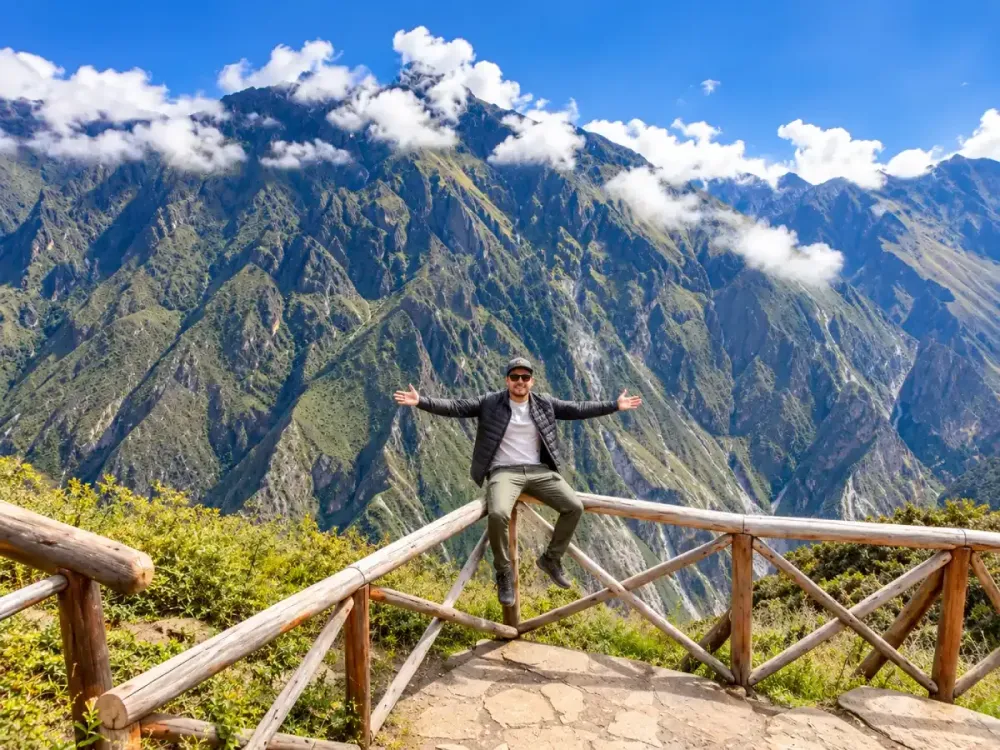
Colca Canyon is located in Caylloma Province, in the Arequipa region of southern Peru. It forms part of the Colca Valley, an Andean area known for its deep gorges, agricultural terraces, and traditional villages that preserve local customs.
Arequipa is the main starting point for visiting this destination. From the city, travelers usually head first to Chivay, a town with accommodation, restaurants, tourism services, and transportation connections to different villages and viewpoints throughout the valley.
It's important to understand that reaching Chivay doesn't mean you've reached Cruz del Cóndor Viewpoint. Although Chivay is one of the main gateways to Colca Canyon, you still need to continue by road to visit the canyon's most famous viewpoints.
You can organize your journey using public transportation, a private vehicle, or one of our Arequipa tours, with different options depending on the length of your visit.
Road Route from Arequipa to Colca Canyon
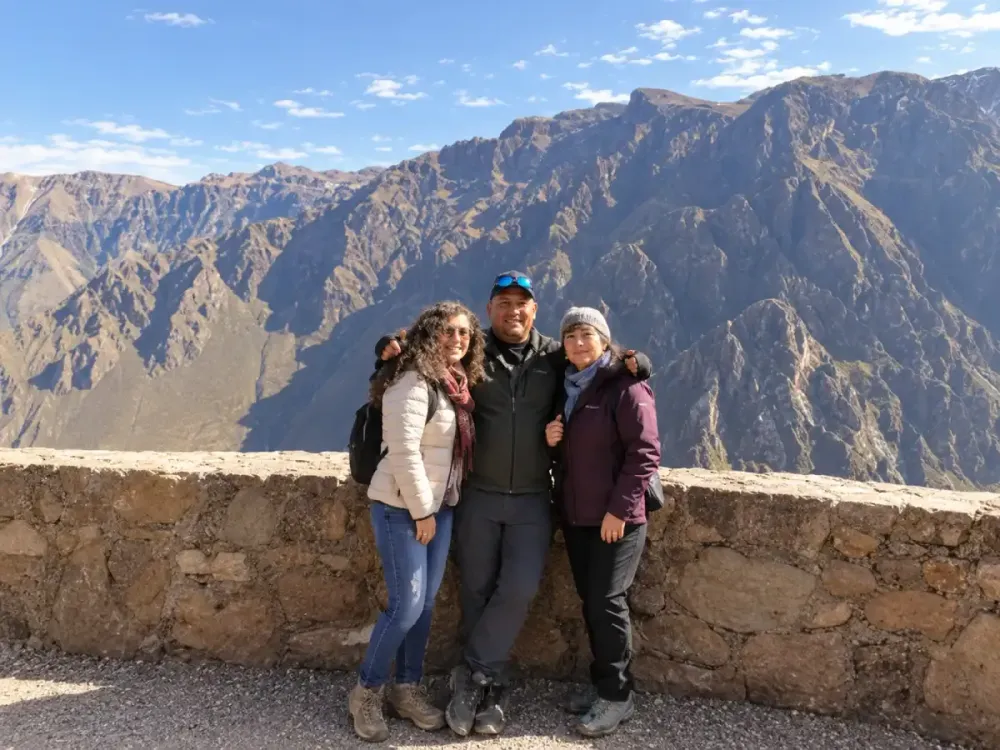
The most commonly used route from Arequipa to the Colca Valley passes through Yura and continues toward Patahuasi before following the road leading to Chivay.
Along the way, you'll travel through high-altitude Andean landscapes featuring vast plains, volcanic mountains, and areas where vicuñas may be spotted. Part of the route crosses the Salinas y Aguada Blanca National Reserve, one of the region's most important protected natural areas.
One of the best-known stops is Patapampa, also called the Andes Viewpoint, located approximately 4,800 meters (15,748 feet) above sea level. From here, you can admire the surrounding mountains and volcanoes when weather conditions are favorable.
After passing through the highlands, the road descends toward Chivay. From this town, you can continue to Yanque, Maca, Pinchollo, and other villages commonly included in sightseeing itineraries.
The main route can be summarized as follows:
Arequipa → Yura → Patahuasi → Patapampa → Chivay → Colca Valley → Cruz del Cóndor.
Organized excursions often include scenic stops along the way, while regular public transportation services primarily connect towns and villages.
How Long Does It Take to Get to Colca Canyon?
Travel time depends on where you want to go. Many travelers use the name Colca Canyon to refer to the entire valley, but reaching Chivay takes less time than traveling all the way to Cruz del Cóndor.
The journey from Arequipa to Chivay generally takes approximately three to four hours. If you plan to continue to Cruz del Cóndor, you'll need additional time to travel through the valley's villages and roads.
| Route | Approximate travel time |
|---|---|
| Arequipa to Chivay | 3 to 4 hours |
| Chivay to Cruz del Cóndor | 1.5 to 2 hours |
| Arequipa to Cruz del Cóndor | 4.5 to 6 hours, excluding extended sightseeing stops |
| Full-day excursion from Arequipa | Entire day, with a very early departure |
These times are estimates and may vary depending on road conditions, weather, traffic, and stops along the route.
If you only have one day available, remember that the journey involves several hours of transportation in both directions. For this reason, we recommend avoiding tightly scheduled commitments immediately after returning to Arequipa.
How to Reach Colca Canyon on a Full-Day Tour
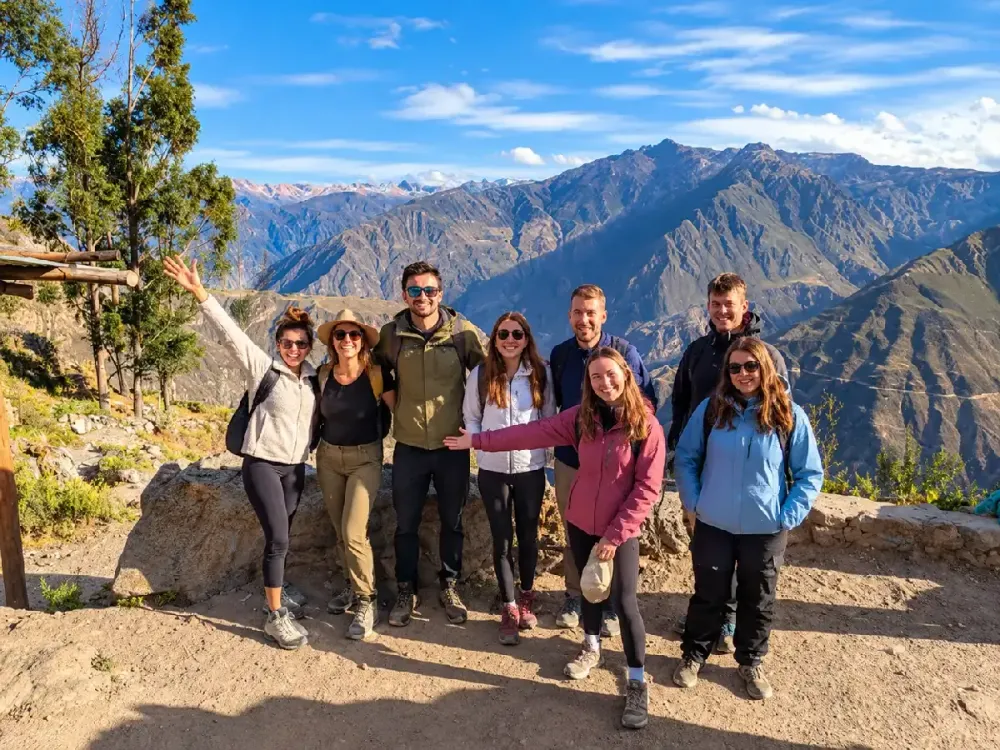
One of the most convenient ways to visit Colca Canyon from Arequipa is by joining a full-day excursion. This option is designed for travelers with limited time who want to explore the main attractions without organizing each transfer separately.
Our Colca Canyon Full Day Tour from Arequipa begins before sunrise, with hotel pickup scheduled around 3:30 a.m., depending on the published itinerary and operating conditions.
The journey continues toward Chivay and through the Colca Valley until reaching Cruz del Cóndor, one of the region's most famous viewpoints. From here, visitors can admire the canyon and, when natural conditions allow, watch Andean condors soaring overhead.
On the return journey, the itinerary also includes visits to traditional villages such as Maca and Yanque, as well as a stop in Chivay. The published itinerary allows for a possible visit to La Calera Hot Springs, with an estimated arrival back in Arequipa at approximately 6:00 p.m.
This option is convenient for travelers who want to discover Colca Canyon in a single day. However, it's important to remember that it involves a long journey, several hours on the road, and a very early start.
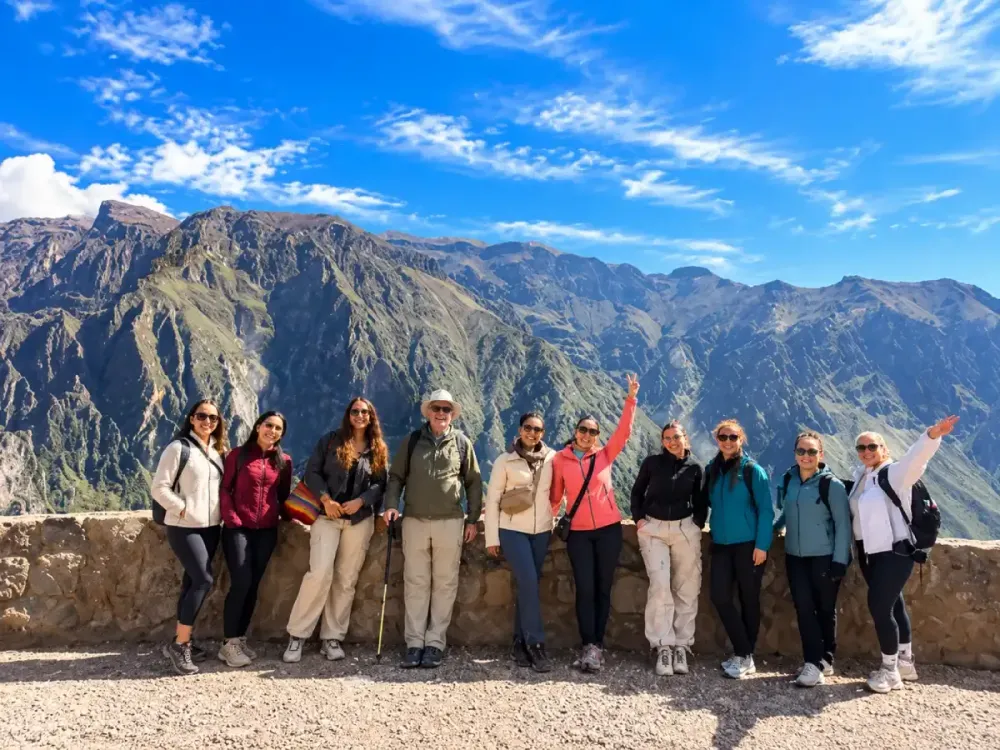
How to Get to Colca Canyon on a 2-Day Tour
If you prefer a more relaxed pace, a two-day excursion is an excellent alternative. Instead of fitting everything into one long day, you can spread out the visits and spend a night in the Colca Valley.
Our 2-Day Colca Canyon Tour from Arequipa begins with transportation from the city to Chivay, passing through high-altitude Andean landscapes and sections of the Salinas y Aguada Blanca National Reserve.
On the first day, the itinerary includes scenic stops, arrival in Chivay, and time to visit La Calera Hot Springs. You'll spend the night at accommodation in the area, giving you time to rest before continuing your excursion.
On the second day, you'll visit Cruz del Cóndor and explore different villages and viewpoints throughout the valley. According to the published itinerary, the stops include Maca, Yanque, Pinchollo, Antahuilque, and Choquetico.
For first-time visitors, we believe two days provide a good balance of time, comfort, and variety.
We also offer a 3-Day Colca Canyon Tour for travelers who would like to spend more time discovering the region.
How to Travel from Arequipa to Colca Canyon by Bus
Traveling by bus is an option for visitors who prefer to organize their trip independently. Road transportation services operate between Arequipa and Chivay, where you can arrange onward travel to other towns in the Colca Valley.
We recommend checking available departures at Arequipa's bus terminal and confirming schedules, fares, and arrival locations before purchasing a ticket. Service frequency may vary depending on the operator, season, and operating conditions.
Once you reach Chivay, you'll need to arrange separate transportation to the viewpoints, villages, or accommodation you want to visit. Not all services travel directly to Cruz del Cóndor, and local transportation options may operate on limited schedules.
If you choose to travel independently, we recommend spending at least one night in the valley. This gives you more time to explore its main attractions without depending on a same-day return to Arequipa.
To discover what you can explore from this town, read our guide to Chivay in Peru.
How to Drive to Colca Canyon from Arequipa
Traveling by private car gives you greater flexibility to organize stops and enjoy the landscapes along the way. From Arequipa, you can follow the road through Yura, continue toward Patahuasi, and take the route leading to Chivay.
Along the journey, you'll encounter high-altitude areas, changing temperatures, and stretches of road far from major towns. For this reason, we recommend checking road conditions, vehicle maintenance, and fuel availability before departure.
It's also useful to download offline maps, as mobile coverage may be limited in certain areas. If you're unfamiliar with the road, avoid driving at night and consider the fatigue associated with long journeys through high-altitude terrain.
Once in Chivay, you can continue toward the valley's viewpoints and villages. However, it's important to plan a realistic itinerary so you don't spend the entire day driving.
This option is particularly appealing to travelers who want the freedom to stop for landscape photography and explore independently.
How to Get from Chivay to Cruz del Cóndor
Chivay is one of the main gateways to the Colca Valley, but reaching Cruz del Cóndor requires continuing by road.
The route passes through traditional villages and agricultural areas where ancient terraces remain part of the landscape. Among the best-known villages are Yanque, Maca, and Pinchollo, which are frequently included in sightseeing itineraries.
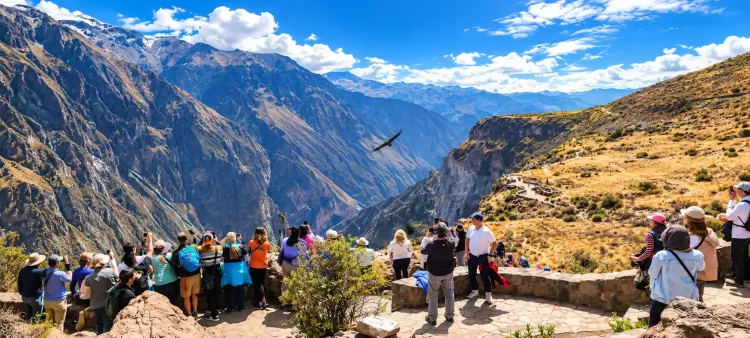
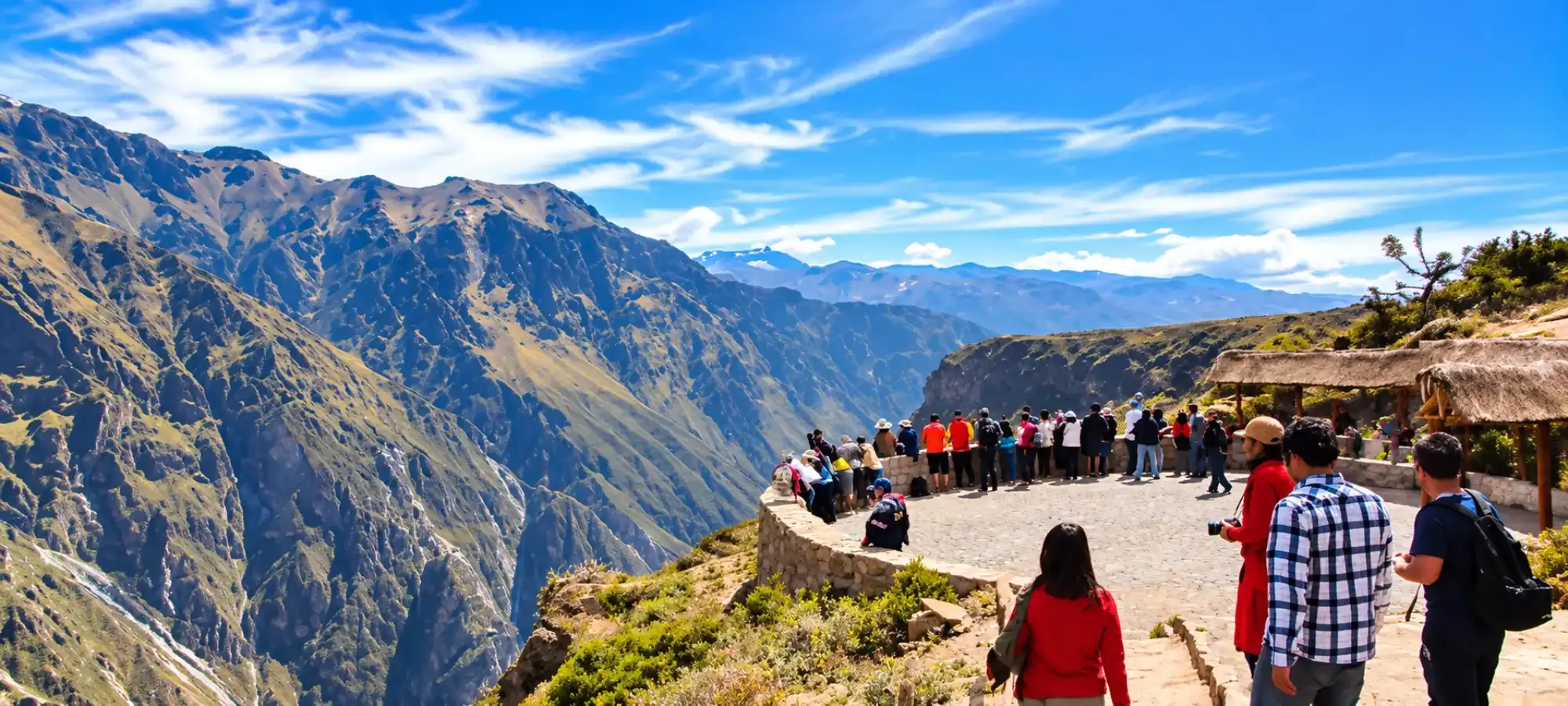
Cruz del Cóndor is one of the most visited viewpoints because it offers panoramic views of the canyon and the possibility of watching Andean condors in flight. Mornings are generally recommended for this experience, although sightings depend on the weather and the birds' behavior.
From Chivay, you can organize transportation using local services, a private vehicle, or an excursion. If you rely on public transportation, check your return options in advance, particularly if you plan to visit several viewpoints in one day.
For more information about the region's landscapes and experiences, explore our article on Colca Canyon in Peru.
Route Altitude and Acclimatization Recommendations
Altitude is one of the most important factors to consider before traveling from Arequipa to Colca Canyon. The White City sits approximately 2,335 meters (7,661 feet) above sea level, while Chivay is located at around 3,600 meters (11,811 feet).
Along the way, the road climbs to much higher elevations. At Patapampa, for example, the route reaches approximately 4,800 meters (15,748 feet) above sea level, a considerable altitude even for travelers who don't plan to hike.
We therefore recommend resting before your journey, drinking enough water, and avoiding strenuous physical activity when reaching higher elevations. If you're arriving directly from Lima or another low-altitude city, consider allowing time to adjust to the altitude before taking the excursion.
If you experience significant or persistent altitude-related symptoms, avoid continuing to higher elevations and seek medical attention.
Altitude also affects temperatures, particularly before sunrise and during the early morning. Bringing warm clothing is essential, even when the forecast predicts a sunny day.
How Much Does It Cost to Get to Colca Canyon?
The cost of visiting Colca Canyon depends on your chosen transportation, the length of your trip, and the services you need during the excursion.
Traveling by public transportation allows you to manage expenses separately, but you'll also need to account for tickets to Chivay, transfers within the valley, and accommodation when necessary.
For organized excursions, the cost depends on the itinerary, service type, and included features. Before booking, review the details carefully so you know which additional expenses to expect.
Some costs to check include the Colca tourist entrance ticket, hot springs admission, meals, and optional services. These aren't always included in the tour price.
To compare the available options, you can review our Colca Canyon Full Day Tour and 2-Day Colca Canyon Tour. Both offer different itineraries depending on your available time.
How to Combine Colca Canyon with Arequipa and Puno
Colca Canyon can be part of a longer itinerary through southern Peru. Many travelers begin their journey in Arequipa, continue to the valley, and then explore other Andean destinations.
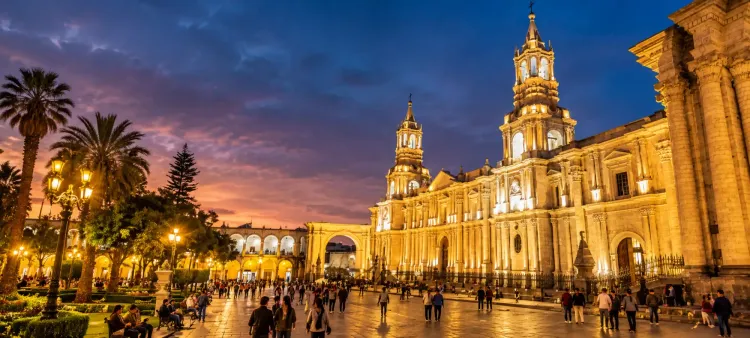
If you have an extra day before traveling to Colca Canyon, you can visit Arequipa's historic center, Plaza de Armas, and scenic viewpoints. Our guide to Arequipa in One Day offers a practical itinerary for discovering the city's essential attractions.
If you're staying longer, you can also read what to see in Arequipa in 1, 2, and 3 days and organize your activities according to your travel dates.
Another possibility is to continue toward Puno and Lake Titicaca. This connection requires checking transportation availability in advance, as not all Colca Canyon tours include direct transfers to Puno.
For travelers who want to visit several destinations without arranging every transfer separately, we also offer a 12-Day Peru Tour covering Arequipa, Puno, and Cusco, which includes the Colca Valley as part of a journey through southern Peru.
Final Tips for Getting to Colca Canyon
Before traveling to Colca Canyon, the most important thing is to decide how much time you have and which places you want to visit. If your goal is to reach Cruz del Cóndor and return to Arequipa on the same day, a full-day excursion can be a practical option.
However, if you'd prefer to discover the valley's traditional villages, spend a night in Chivay, and enjoy the landscapes at a more relaxed pace, we recommend considering a two-day tour.
It's also important to account for road travel times, altitude, and weather conditions. Bringing warm clothing, departing early, and confirming transportation schedules will help you organize your journey.
Colca Canyon offers much more than a single viewpoint. Its traditional communities, agricultural terraces, and high-altitude Andean landscapes make the journey from Arequipa an important part of the experience.
At Dreamy Tours, we help you discover this destination through itineraries designed for different travel styles. Explore our Arequipa and Colca Canyon tours, compare the available options, and choose the experience that best suits your next adventure in southern Peru.
Personal travel advice
Plan your trip with Dreamy Tours
Start a tailored journey with our exclusive tours and custom trips across Peru and other Latin American countries.