Cusco Cathedral
The first site we will visit is the Cusco Cathedral, located in the Plaza de Armas of Cusco city. It was built in 1560 using massive stone blocks on top of the Inca palace of Wiracocha in Sunturwasi.
Inside this magnificent religious building, you can still admire beautiful wood carvings, embossed silverwork, and around 300 paintings from the Cusco School. The cathedral features a Renaissance-style façade that contrasts with its rich Baroque and Plateresque interiors. It preserves some of the most significant religious artworks of the colonial period.
Qoricancha (Temple of the Sun)
Qoricancha was one of the most important religious centers of the Inca Empire and is one of the best examples of the fusion between Inca and Spanish cultures. It is located just two blocks from Cusco’s Main Square. It houses Cusco School paintings and impressive Inca stone structures that are true masterpieces.
It was considered the Royal House of the Sun of Urin Qosqo. In this temple, the highest devotion was given to the Sun god (Inti). It also included shrines dedicated to other deities such as Pachamama (Mother Earth), Illapa (Thunder), Kuychi (Rainbow), Chaska (Venus and the stars), Quilla (Moon), and the Solar Drum, where the god Punchao (Golden Child) was worshipped.
Today, it is one of the main locations where part of the Inti Raymi (Festival of the Sun) is celebrated.
Sacsayhuamán
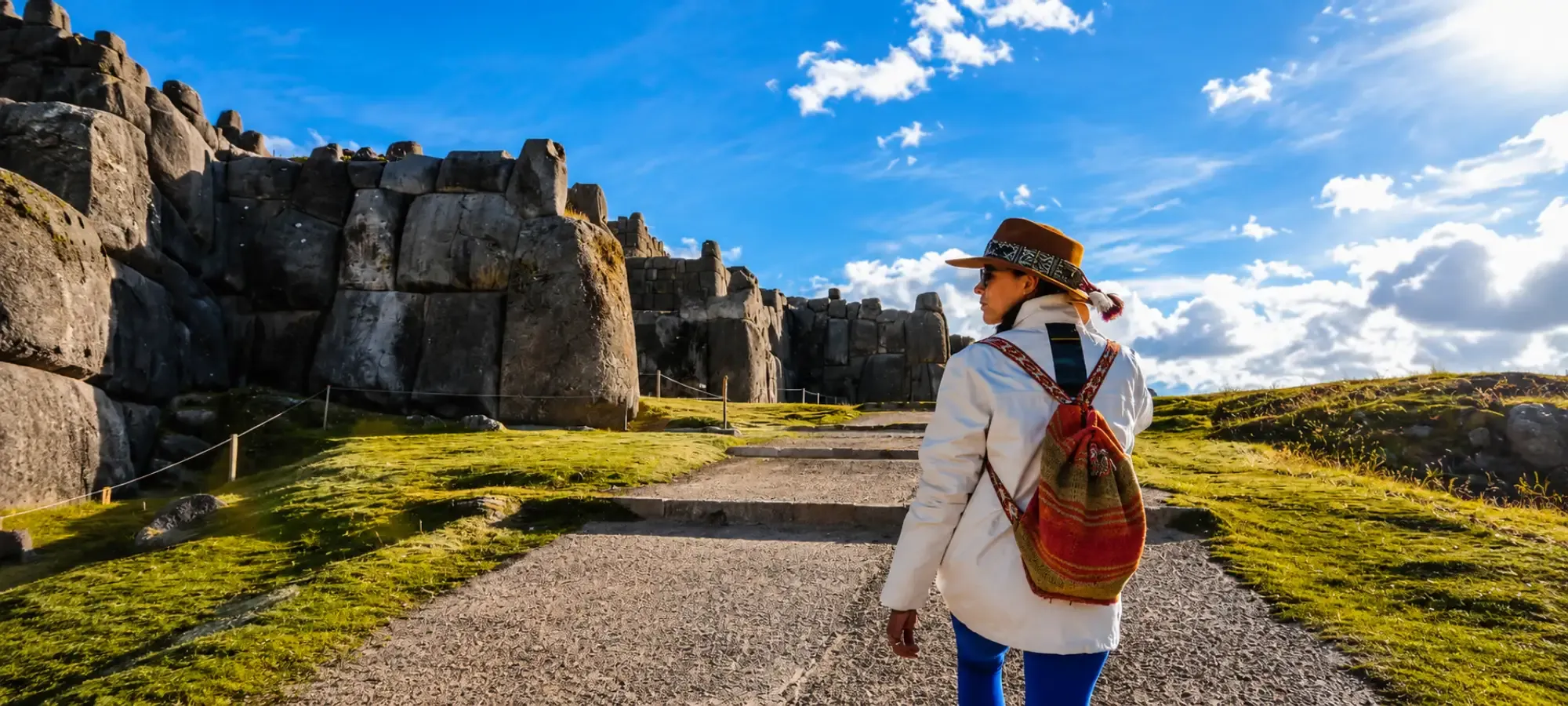
Located 2 km from Cusco city, Sacsayhuamán is one of the most enigmatic places in the world. Its three superimposed terraces stretch 390 meters long and were built with massive carved stones fitted together with incredible precision. Some stones reach up to nine meters in height and weigh more than 120 tons.
This site represents the head of the puma, part of the original design of Cusco city. In Inca times, it was considered the Royal House of the Sun of Hanan Qosqo and served as a religious, administrative, and political center. Today, the Inti Raymi festival is celebrated here every June 24th.
Qenqo
Located 1 km from Sacsayhuamán and 4 km from Cusco, Qenqo is a ceremonial and astronomical center dedicated to Mother Earth.
It features an underground cave where mummifications were performed, as well as an amphitheater with a large carved monolith decorated with figures of frogs and monkeys. Around it are trapezoidal niches where the Incas placed their dead. Today, only about half of the original structure remains.
Puca Pucara
Your next stop is Puca Pucara, located 10 minutes from Qenqo. It is known as the “Red Fortress” due to the high iron content in its stones.
It is believed to have been a military checkpoint and resting place, likely serving as a control point for entry into the city of Cusco.
Tambomachay
Tambomachay is the final stop of the Cusco City Tour. It is located just 100 meters from Puca Pucara and 8 km northeast of Cusco. It was a sacred site dedicated to water worship.
This complex consists of finely carved stone structures, waterfalls, canals, and aqueducts, all fed by nearby natural springs from the “Ojos de Agua” of the snow-capped mountains.
Recommendations
After the tour, you can enjoy a walk around the Plaza de Armas and its surroundings, where you will find local artisan shops. You may also try traditional Peruvian cuisine in nearby restaurants or simply relax on a bench in the square.
If you enjoy nightlife, there are many bars and clubs nearby where you can socialize and have fun with both tourists and locals.