Search the blog
Tabla de contenidos
Huaca Pucllana is one of Lima's most important archaeological sites and one of the best places to discover the Peruvian capital's pre-Hispanic past. Located in the heart of Miraflores, this ancient adobe complex preserves the remains of a ceremonial center that operated long before the rise of the Inca Empire and the Spanish founding of the city.
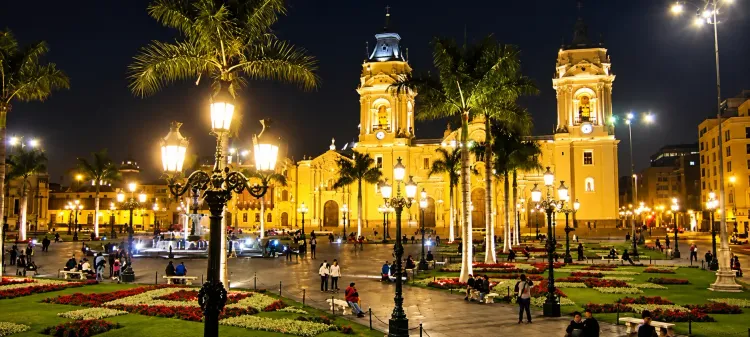
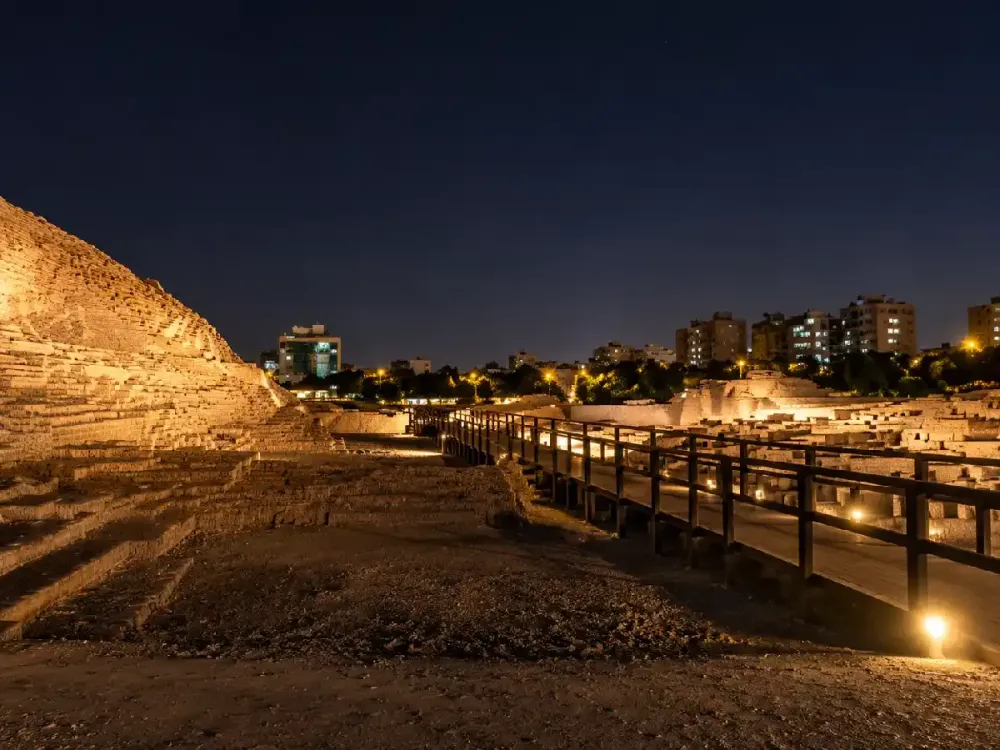
If you're looking for information about Huaca Pucllana in Lima, this guide covers its history, the cultures that occupied the site, admission prices, opening hours, and what you can see during your visit. We also explain how to get there from other parts of the capital and how to combine this archaeological landmark with Miraflores' main attractions.Vista nocturna iluminada de las pasarelas y ruinas en Huaca Pucllana.
What Is Huaca Pucllana and Why Is It Important?
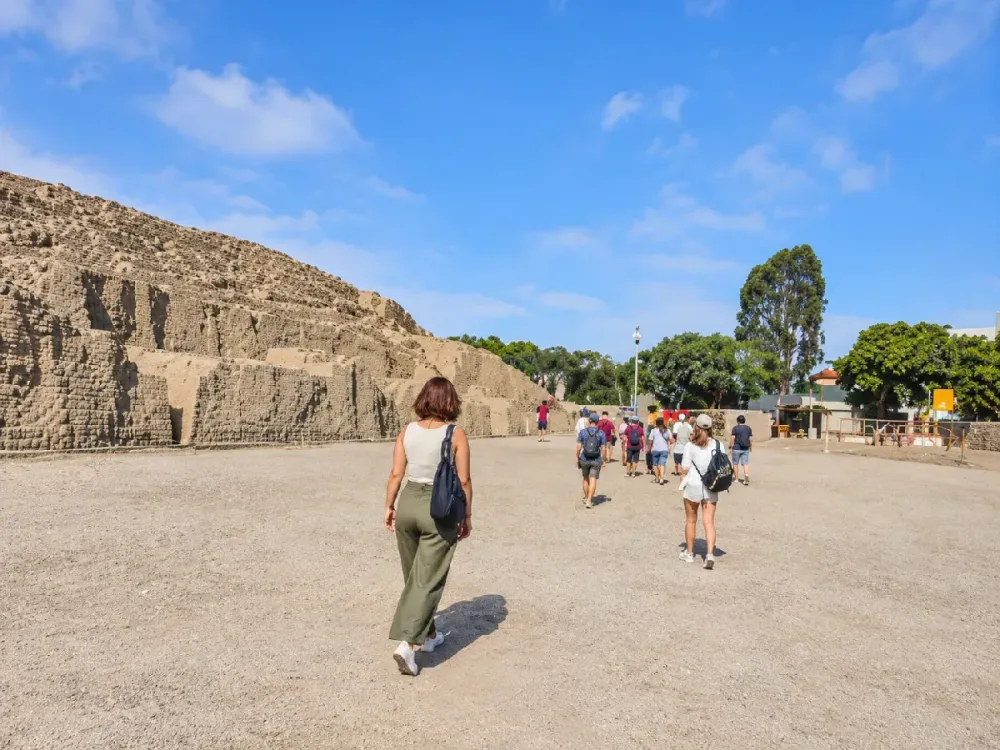
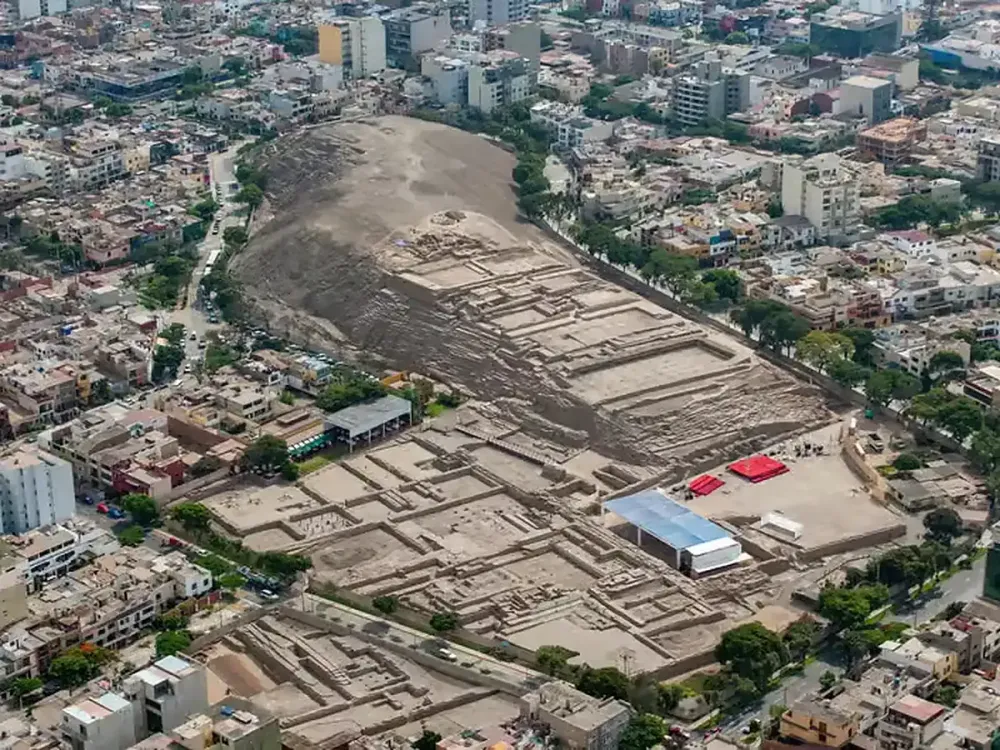
Huaca Pucllana is an ancient ceremonial and administrative center built by the Lima culture, a pre-Hispanic society that inhabited Peru's central coast several centuries before the development of the Inca Empire. Its main structure consists of a large adobe pyramid surrounded by plazas, courtyards, and enclosures that served different religious and social purposes.
The complex is one of the most important archaeological examples of ancient settlement in the Lima Valley. Through its buildings, burials, pottery, and other discoveries, researchers have been able to learn about the ceremonies, productive activities, and social organization of the communities that inhabited this region.
One of its most striking features is the contrast between the pre-Hispanic pyramid and the modern buildings of Miraflores. This landscape reveals that Lima's history began many centuries before its colonial period. To discover other historical attractions in the capital, explore our guide to what to do in Lima, Peru.
History of Huaca Pucllana: Lima, Wari and Ichma Cultures
The history of Huaca Pucllana is connected to different societies that inhabited Peru's central coast. Its construction and operation as a ceremonial center are mainly dated to approximately AD 450 to 650, during the development of the Lima culture.
At that time, the complex is believed to have been used for ceremonial activities and functions related to social organization. Archaeological research indicates that it was not simply a residential complex, but a place of considerable religious and political importance for the region's inhabitants.
Centuries later, during the Wari presence on the central coast, certain areas of the large pyramid were used for the burials of elite individuals. Subsequently, the Ichma society, also known as Ychsma, used particular spaces for funerary practices and offerings associated with ancestor worship.
This succession of occupations makes Huaca Pucllana especially valuable for understanding continuity and change in Lima's pre-Hispanic cultural traditions. Its history also complements visits to other archaeological sites in the capital, such as the Pachacamac Sanctuary, located south of the city.
The Great Pyramid and Huaca Pucllana's Adobe Architecture
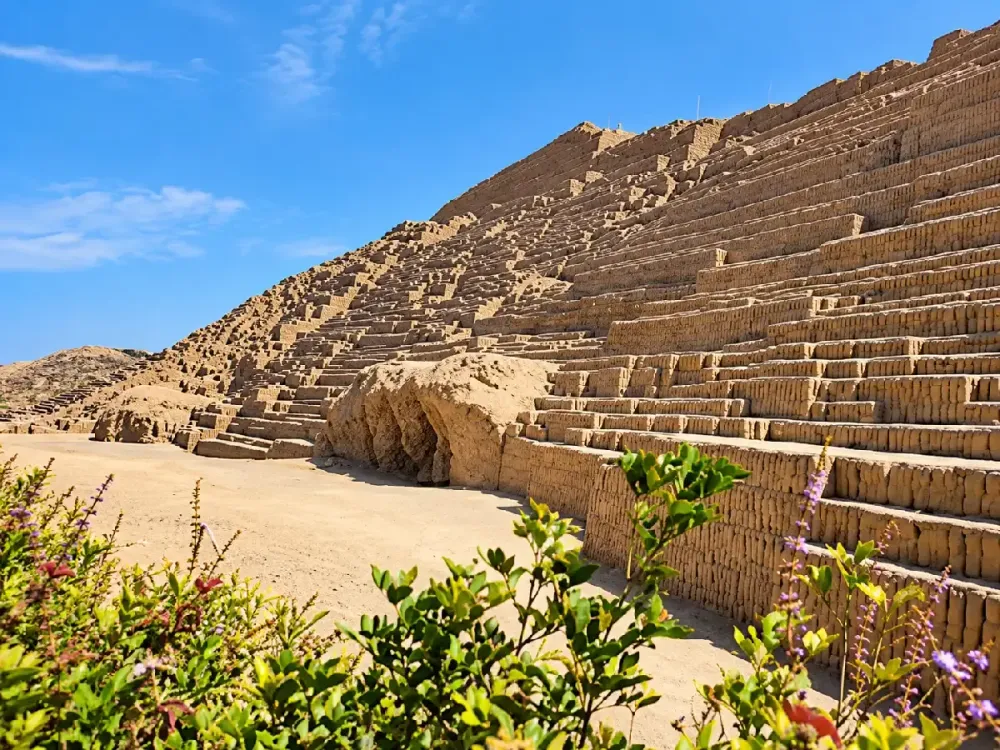
Huaca Pucllana's most representative structure is the Great Pyramid, a stepped construction approximately 25 meters high, consisting of several platforms. Its impressive size is particularly noticeable because it is surrounded by the streets, homes, and modern buildings of Miraflores.
The ancient builders used small handmade adobe bricks arranged vertically, forming walls that resemble books lined up on a shelf. This construction method, known as the bookshelf technique, is one of the site's most distinctive architectural characteristics.
The complex also includes plazas, courtyards, and enclosures that reveal different areas of ceremonial activity and internal organization. Over time, some structures were modified, filled in, or reused by later societies.
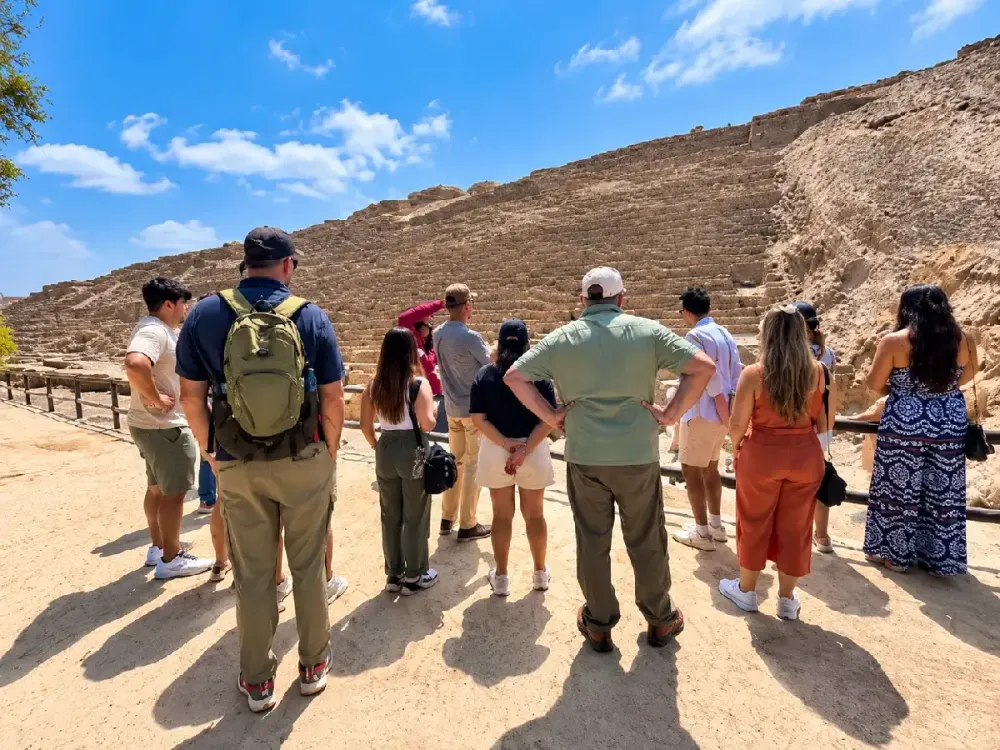
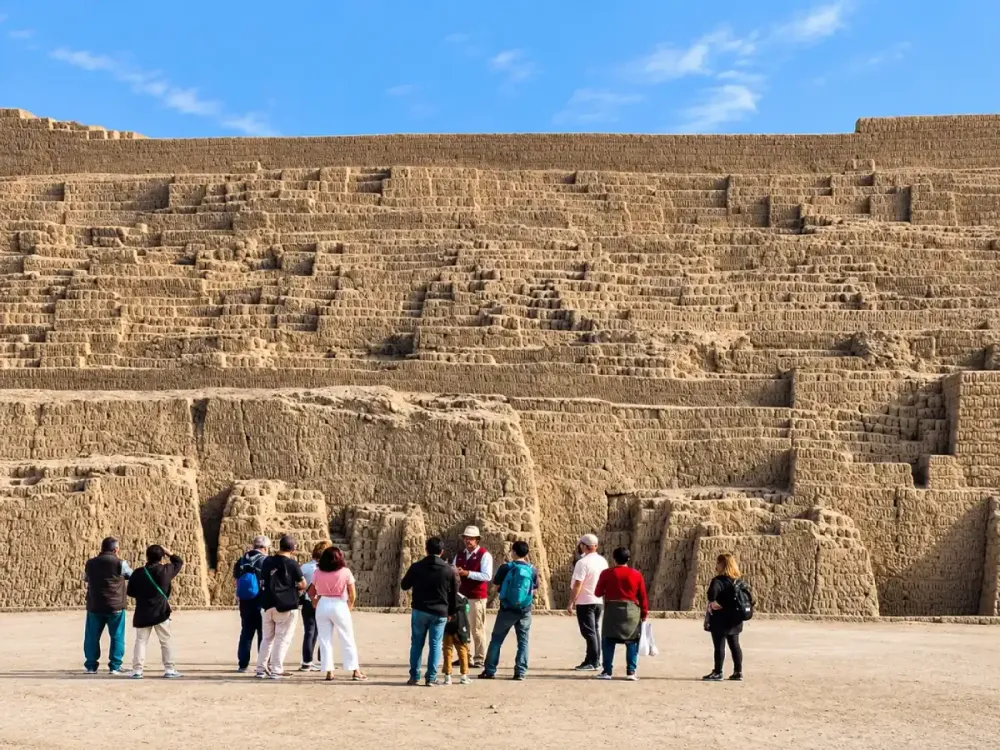
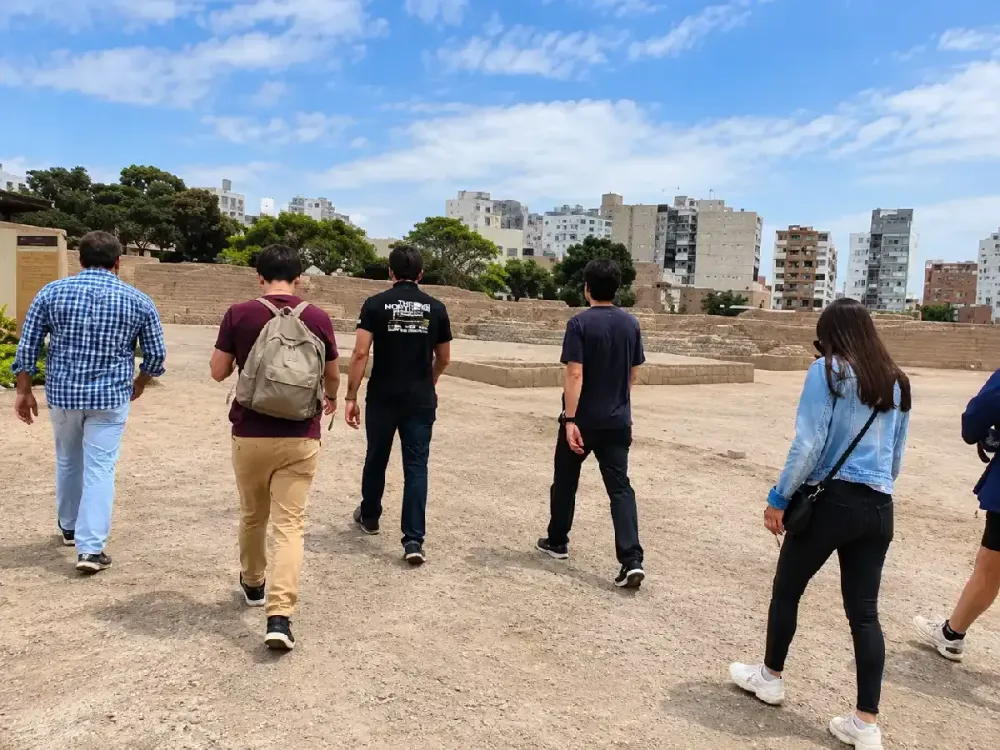
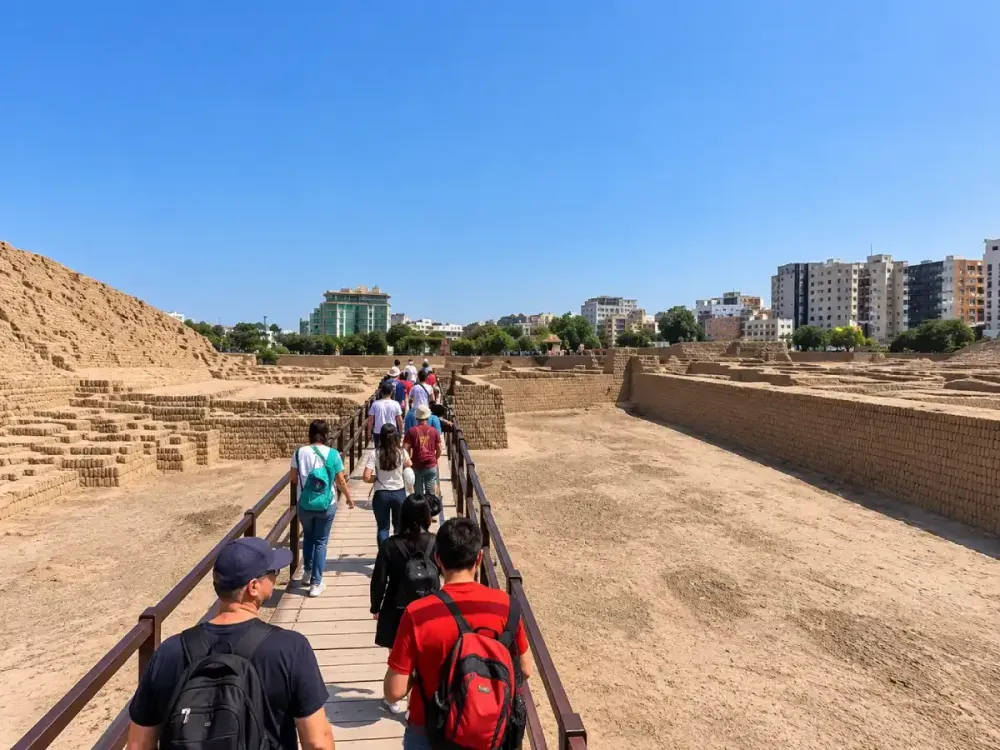
During authorized tours, visitors can observe these construction techniques and understand how a monumental complex was built using materials available along Peru's coast. Access to higher sections depends on the authorized circuit and the type of visit.
What Can You See at the Huaca Pucllana Site Museum?
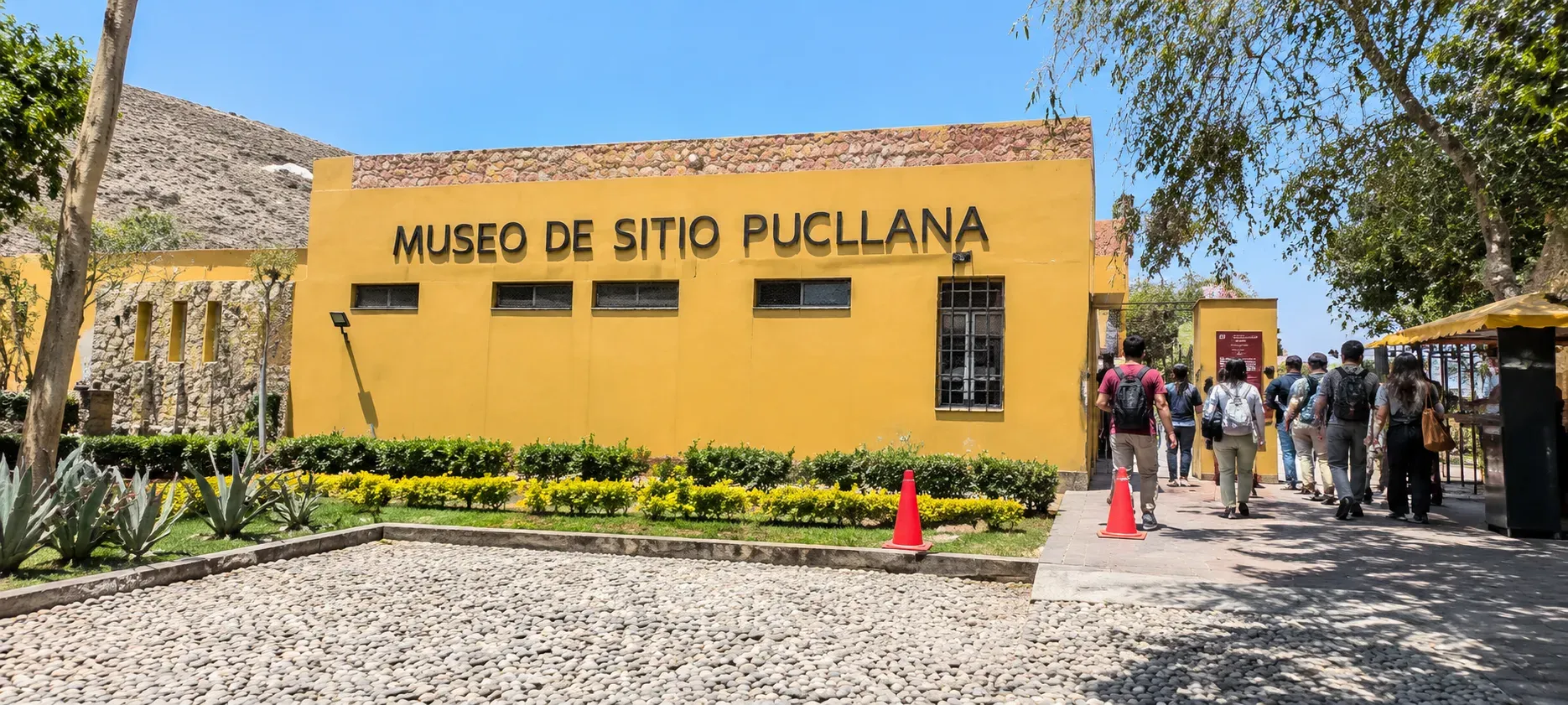
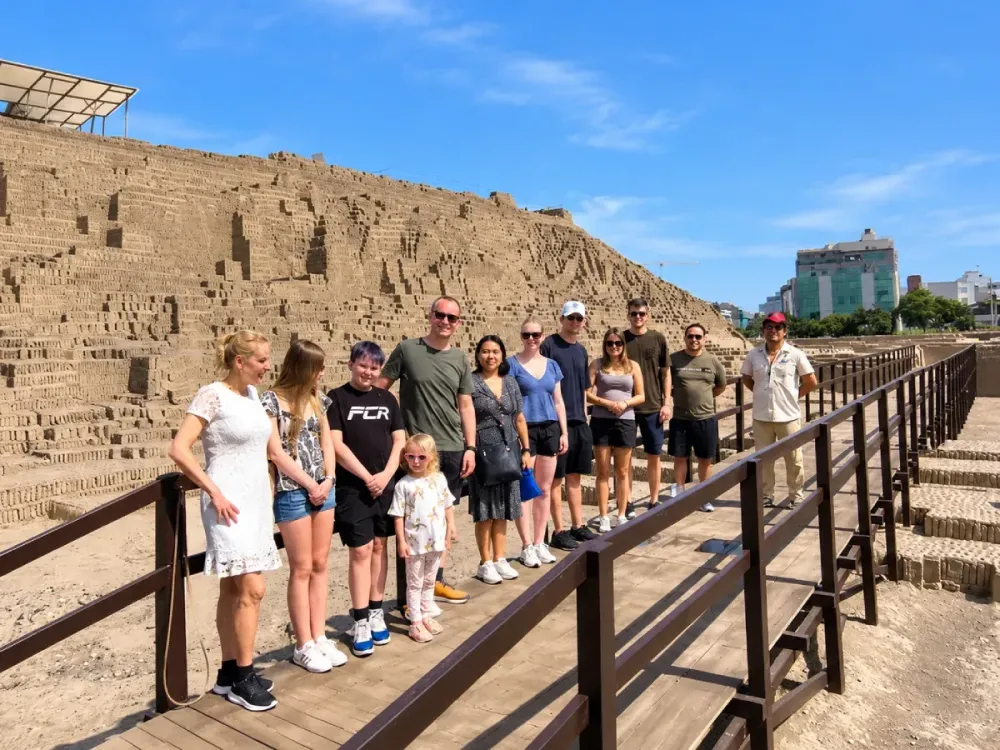
A visit to Huaca Pucllana offers the opportunity to explore archaeological structures and artifacts recovered during excavations. The Huaca Pucllana Site Museum, known locally as Museo de Sitio Pucllana, has exhibition spaces displaying original objects that help interpret the history of the societies that occupied the complex.
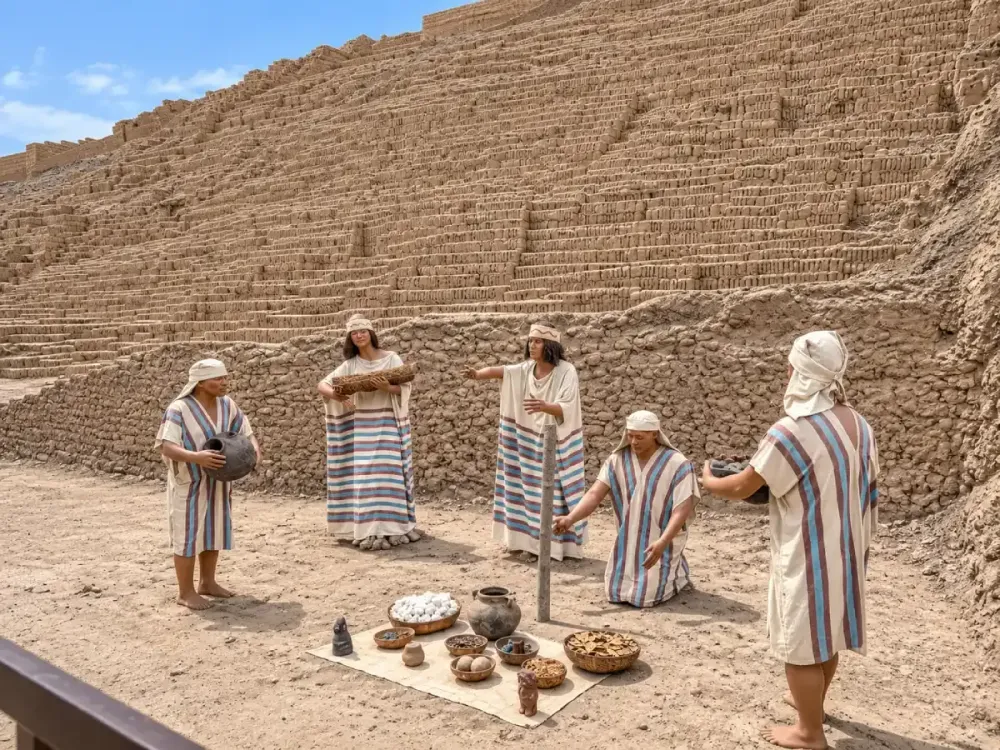
Among the highlights are ceramic pieces, materials associated with ceremonial activities, and discoveries connected to different periods of occupation. Reconstructions have also been developed to help visitors understand certain practices of ancient Lima communities.
Along the visitor circuit, you can observe plazas, enclosures, and sections of the monumental construction. Depending on which areas are open, visitors may also explore spaces dedicated to native flora and fauna, providing a better understanding of the natural environment of Peru's ancient central coast.
One of the museum's defining features is that visits are accompanied by guides. This allows visitors to understand the functions of the structures and the significance of archaeological discoveries rather than simply viewing the ruins without historical context.
Archaeological Finds and Discoveries at Huaca Pucllana
Research conducted at Huaca Pucllana has uncovered burials, offerings, and archaeological materials that provide information about Lima's pre-Hispanic societies. Some of these discoveries are associated with occupations that took place after the ceremonial center was originally constructed.
Among the most significant findings are burials connected to the Wari presence and the Ichma society. Studying these tombs, the objects buried with the deceased, and the positioning of human remains has expanded our understanding of funerary practices and religious beliefs.
In 2023, Peru's Ministry of Culture announced the discovery of a Ychsma burial at the top of the Great Pyramid. This discovery provided additional evidence that the site was used for funerary purposes many centuries after its original construction by the Lima culture.
Systematic archaeological research and recovery efforts at Huaca Pucllana began in 1981 through collaborative work involving the Ministry of Culture and the Municipality of Miraflores. Thanks to these efforts, the complex has become an important center for archaeological research, heritage conservation, and education.
Where Is Huaca Pucllana in Miraflores and How Do You Get There?
Huaca Pucllana is located on the 800 block of General Borgoño Street in Miraflores, Lima. Its location makes it relatively easy to visit from different tourist areas of the district, particularly if you're staying near Kennedy Park or the main avenues.
From central Miraflores, you may be able to reach the site on foot, depending on your hotel's location and walking conditions. Authorized taxis and ride-hailing services are also available. If you're coming from the Historic Center, Barranco, or other districts, you should allow additional travel time and consider Lima's traffic conditions.
If you're arriving in the capital through Jorge Chávez International Airport, we recommend traveling to your accommodation first and planning your archaeological visit afterward. Our guide to getting from Lima Airport to Miraflores explains the main transportation options for reaching the district.
To plan other nearby activities, you can also read our article about things to do in Miraflores, Lima, which includes parks, viewpoints, cultural attractions, and places overlooking the Pacific Ocean.
Huaca Pucllana Opening Hours in Lima
The Huaca Pucllana Site Museum offers daytime and nighttime visits, each with its own conditions. According to the museum's published information, daytime visits operate from Wednesday to Monday, between 9:00 a.m. and 5:00 p.m., while the museum is closed on Tuesdays.
Nighttime visits are scheduled from Wednesday to Sunday and require advance reservations. The museum publishes approximate evening hours of 6:30 p.m. to 9:15 p.m., although specific times and conditions may change.
The complex may also close on certain special dates, including some public holidays and election days. For this reason, we recommend checking availability before traveling to the site, especially if you have limited time in Lima.
You can check current schedules and visit options on the Huaca Pucllana Site Museum's visitor information page and the official Ministry of Culture museum listing.
Huaca Pucllana Ticket Prices and Discounts
Admission prices depend on the type of visit and the conditions applicable to each visitor. According to the fare schedule published by the Huaca Pucllana Site Museum, general daytime admission costs S/ 15 per person, while the reduced admission price is S/ 7.50.
For nighttime visits, the reference price is S/ 17 for general admission and S/ 8.50 for reduced admission. Discount categories depend on museum regulations and may include children, students, and certain visitor groups, depending on the visit type.
The museum also publishes free admission conditions for children under five and visitors with disabilities, as well as certain special admission days. Some benefits require supporting documentation or are subject to specific requirements.
Since prices, discounts, and requirements may change, we recommend checking the official fare schedule before traveling. If you're planning to visit with children, older adults, or students, confirm which documents are needed to qualify for the applicable rates.
Huaca Pucllana Night Tour: What Is Included and How to Book
A nighttime visit allows travelers to discover selected areas of Huaca Pucllana on an organized tour after sunset. The illuminated monument offers a different perspective of its adobe walls and structures, making this an interesting option for visitors who want to enjoy a cultural activity in the evening.
Unlike the daytime tour, the nighttime visit requires an advance reservation. In addition, according to the museum's published conditions, it does not include access to the Great Pyramid or the Native Flora and Fauna Park. This is an important distinction for travelers hoping to explore as many archaeological areas as possible.
If your main interest is observing the monumental structure from its accessible upper sections, a daytime visit may be more suitable. If you prefer to explore the site at night, the evening experience allows you to appreciate its architecture under different conditions.
We recommend making reservations only through the channels published by the Huaca Pucllana Site Museum and confirming your assigned visit time. To avoid inconvenience, arrive early and ask about any restrictions related to the route or entry conditions.
How Long Does a Huaca Pucllana Visit Take and What Should You Know?
To explore Huaca Pucllana at a comfortable pace, we recommend allowing approximately one to one and a half hours, although the actual duration may vary depending on the visitor circuit, group, and guided tour conditions.
Comfortable walking shoes are recommended, particularly if you're taking the daytime tour through the authorized archaeological areas. We also suggest using sunscreen, bringing water, and carrying a light jacket depending on the weather and your chosen visit time.
The visit may involve uneven surfaces, stairs, or changes in elevation, so travelers with reduced mobility should check accessibility conditions in advance. If you're visiting with children, it's important to supervise them throughout the tour and follow the museum staff's instructions.
To help preserve the archaeological heritage, avoid touching structures, entering restricted areas, or disturbing any part of the site. If you want to take photographs, check the current rules regarding cameras, professional equipment, and filming.
Can You Visit Huaca Pucllana on a Lima City Tour?
Yes, it is possible to see Huaca Pucllana from the outside during certain sightseeing tours of Lima, but it's important to distinguish a panoramic stop from a guided tour inside the archaeological complex.
At Dreamy Tours, we offer our Lima City Tour, an experience lasting approximately four hours that combines different areas of ancient, colonial, and modern Lima. During the tour, we enjoy a panoramic view of Huaca Pucllana before continuing toward the monuments of the Historic Center.
The itinerary also includes representative landmarks such as Plaza Mayor, Plaza San Martín, and the San Francisco Monumental Complex, according to the tour's operating conditions. It also covers modern and traditional districts, including Miraflores and San Isidro.
Our Lima City Tour should not be confused with a guided visit inside the Huaca Pucllana Site Museum, for which admission and the archaeological tour must be arranged separately. If you want to enter the complex, we recommend allowing additional time for that experience.
If you're planning a short stay in the capital, you can consult our guide to Lima in One Day or our Lima in 2 Days itinerary to combine Huaca Pucllana with other historical attractions.
Is Huaca Pucllana Worth Visiting and What Can You See Nearby?
Huaca Pucllana is worth visiting if you're interested in Peru's pre-Hispanic history and want to discover how societies lived in the Lima region long before the arrival of the Incas. Its monumental adobe pyramid, archaeological discoveries, and guided explanations help visitors understand an essential part of the capital's past.
Its location in Miraflores also makes it easy to combine the visit with other district attractions. After exploring the museum, you can walk toward Kennedy Park, enjoy nearby restaurants, or continue to Love Park and the Pacific Ocean promenade.
If you'd like to explore other aspects of Lima's heritage, our guide to the Historic Center of Lima introduces colonial landmarks representing a different period in the city's history. You can also discover other archaeological sites through our Pachacamac Tour from Lima, an excursion to the sanctuary south of the capital.
To complete your travel plans, we recommend exploring tourist attractions in Lima and our guide to where to stay in Lima. Both will help you organize your sightseeing and choose a convenient accommodation area.
At Dreamy Tours, we consider Huaca Pucllana one of the most interesting places to discover Lima's pre-Hispanic heritage without leaving Miraflores. If you'd like to combine history, architecture, and other cultural attractions, explore our tours in Lima and choose the experience that best suits the time available during your trip.
Personal travel advice
Plan your trip with Dreamy Tours
Start a tailored journey with our exclusive tours and custom trips across Peru and other Latin American countries.