Search the blog
Tabla de contenidos
Visiting Caral from Lima is one of the most interesting cultural excursions for travelers who want to discover the origins of civilization in Peru. The Sacred City of Caral-Supe, located north of the capital, preserves pyramids, circular plazas, and other monumental structures built approximately 5,000 years ago. Its age and complexity make it one of the most important archaeological sites in the Americas.
If you're looking for how to visit Caral from Lima, planning your transportation, opening hours, and travel time is essential. Unlike attractions located within metropolitan Lima, Caral requires a long journey along the Pan-American Highway North and a final approach to the archaeological complex. In this guide, we explain where it is, how to get there by public transportation or private vehicle, how long the excursion takes, and what you should know before planning your visit.
What Is Caral and Why Is It Important to Peru's History?
Caral is one of the main urban centers of an ancient civilization that developed in the Supe Valley on Peru's north-central coast. Its origins date back approximately to the third millennium BC, during the Late Archaic period, long before the rise of the Inca Empire.
The Sacred City of Caral stands out for its urban layout, monumental buildings, and structures designed for public and ceremonial activities. Archaeological research provides insight into how a society of such great antiquity developed complex forms of organization, construction, and resource management.
In 2009, UNESCO added the Sacred City of Caral-Supe to the World Heritage List. This recognition highlights its exceptional value as evidence of the early development of civilization in the Americas and the architectural traditions of the central Andes.
Visiting Caral offers an opportunity to discover a chapter of Peruvian history that predates the Incas by thousands of years. If you're planning a broader cultural trip to the capital, our guide to what to do in Lima, Peru introduces other attractions that help explain the country's different historical periods.
Where Is Caral and How Far Is It from Lima?
The Sacred City of Caral-Supe is located in the district of Supe, province of Barranca, within the Lima region. It occupies a desert terrace overlooking the Supe River Valley, where archaeological structures contrast with agricultural areas and the arid landscapes of Peru's coast.
Although Caral is administratively part of the Lima region, it is not located within the city or near Miraflores or the Historic Center. To reach it from metropolitan Lima, you need to travel north along the Pan-American Highway North toward Supe.
The main access route is connected to a turnoff at approximately kilometer 184 of the highway. From there, the journey continues along a road leading into the Supe Valley and toward the designated visitor access points.
The exact distance and travel time depend on your departure point, traffic conditions, and the state of the roads. For this reason, we recommend planning Caral as a full-day excursion rather than a short activity to fit between other sightseeing experiences in Lima.
How to Get to Caral from Lima by Public Transportation
One option for visiting Caral independently is to take an intercity bus from Lima toward Supe or Barranca, then continue using local transportation. This approach may appeal to travelers who are comfortable organizing journeys outside the capital.
You can look for buses traveling to Supe or Barranca from Lima's intercity terminals, including services departing from the Plaza Norte area. Before purchasing a ticket, confirm the exact destination, arrival point, departure schedule, and available connections to Caral's visitor entrance.
It's important to remember that an intercity bus will not necessarily take you directly to the archaeological site's entrance. From Supe or Barranca, you may need to arrange local transportation and coordinate the return journey. Availability can vary depending on the day and time.
We recommend avoiding a trip to the area without arranging your return transportation, particularly because the archaeological site has fixed closing hours. If you plan to travel by public transportation, leaving Lima early and confirming the final connection in advance is generally the most practical approach.
How to Drive from Lima to Caral or Arrange Private Transportation
Traveling by private car or prearranged vehicle offers more flexibility when planning departure times, stops, and the return journey to Lima. This option may be convenient for families, small groups, or visitors who want to avoid several transportation connections.
The route heads north along the Pan-American Highway toward Supe. According to information published by the Caral Archaeological Zone, one of the official access routes begins near kilometer 184, where travelers continue along the Caral-Las Minas-Ámbar road toward the valley.
Visitors should follow the signs toward the designated tourist parking area. From there, the official approach may include crossing a pedestrian bridge and walking approximately 20 to 25 minutes through the Huarango Forest before reaching the archaeological site's reception area.
Access conditions can change throughout the year, especially when the Supe River's water level rises. For this reason, we do not recommend following outdated directions that suggest driving across the river without first confirming that the crossing is open. Check the updated access instructions from the Caral Archaeological Zone.
How Long Does It Take to Travel from Lima to Caral and Back?
The journey from Lima to the Caral archaeological site can take approximately four hours each way, although actual travel time depends on traffic, your departure point, and road conditions. This estimate should be treated as a general reference rather than a guaranteed travel time.
In addition to the drive, you should account for the journey from the tourist parking area to the site's reception facilities. When following the pedestrian route indicated by the administration, the walk may take approximately 20 to 25 minutes each way.
The guided archaeological visit lasts approximately one and a half hours. You should also allow additional time for admission procedures, possible waiting periods, breaks, meals, and the return journey to Lima.
Overall, we recommend setting aside practically an entire day for this excursion. Leaving early makes it easier to reach the complex with enough time for your guided visit and return to the capital without relying on unnecessary late-night travel.
Opening Hours of the Sacred City of Caral
The Caral Archaeological Zone has published opening hours from Monday through Sunday, 9:00 a.m. to 5:00 p.m., including certain public holidays. According to official notices, the last group is admitted to the archaeological circuit at 4:00 p.m.
This means you should avoid arriving close to closing time. Even if the site remains open until 5:00 p.m., you need sufficient time to complete the visit with the required heritage interpretation service.
The administration may announce changes to opening hours because of operational requirements, conservation work, weather conditions, or exceptional circumstances. We therefore recommend checking the latest information before leaving Lima.
You can review announcements from the Caral Archaeological Zone and its institutional channels. Confirming the schedule is particularly important if you're traveling by public transportation or hope to visit other locations in the Supe Valley on the same day.
Caral Entrance Tickets: Prices and Admission Conditions
To visit the Sacred City of Caral, you must purchase the appropriate admission ticket and comply with the archaeological site's visitor regulations. Prices may vary depending on the visitor category and the rules in effect.
Unlike certain attractions in Lima, where visitors can explore public spaces without making a reservation, Caral is a protected heritage site with an organized visitor circuit. For this reason, we recommend checking official admission fees before traveling and carrying cash in case electronic payments are unavailable.
The Caral Archaeological Zone also states that entry to the archaeological circuit must take place with a guide or heritage interpretation service. Before starting the visit, ask the reception staff how this service is arranged and whether an additional fee applies.
We have not included an exact admission price because a current official fare schedule covering all visitor categories has not been confirmed for this guide. It is better to check directly with the administration than to publish potentially outdated figures. For institutional information, visit the official Caral Archaeological Zone website.
What Can You See at Caral During the Archaeological Tour?
One of Caral's main attractions is its monumental pyramidal buildings, distributed across an extensive urban area. These structures reveal the architectural development of a society that inhabited the Supe Valley approximately five thousand years ago.
The sunken circular plazas are another important feature. These spaces were associated with public and ceremonial activities. The arrangement of the plazas, buildings, and residential areas shows that the city was designed according to organizational principles that went beyond a collection of isolated structures.
During the visit, the guide's explanations help visitors understand the functions attributed to different buildings and the discoveries that have contributed to reconstructing the history of the Caral civilization. Access to each area depends on the designated visitor circuit and current conservation measures.
The Supe Valley landscape is another interesting aspect of the experience. From different viewpoints, you can observe agricultural land, desert areas, and surrounding hills that illustrate the relationship between the ancient settlement and its natural environment. We recommend taking time to appreciate these views without leaving authorized paths.
History of Caral: Pyramids, Plazas and a 5,000-Year-Old Civilization
The Caral civilization developed in the central Andes during the Late Archaic period, approximately between 3000 and 1800 BC. The Sacred City of Caral-Supe represents one of its most important and best-preserved urban centers.
Archaeological research has documented a complex social organization that included public buildings, ceremonial spaces, and residential areas. The monumental scale of these constructions indicates that the society possessed technical knowledge and organizational systems capable of coordinating collective work.
Among its most significant features are platform pyramids, sunken circular plazas, and evidence of ceremonial activities. Archaeologists have also recovered materials that provide information about exchange networks, resource use, and the cultural practices of its inhabitants.
Caral's importance is not based solely on its age. Its value also lies in what it reveals about the emergence of complex societies in the Americas. UNESCO recognizes the Sacred City of Caral-Supe as a World Heritage Site because of its exceptional architecture and contribution to understanding the continent's earliest urban development.
What Is the Best Time to Visit Caral from Lima?
Caral can be visited during different months of the year, but it's important to consider the climate of Peru's north-central coast and, in particular, access conditions in the Supe Valley. The environment is arid, and visitors may experience considerable sun exposure during parts of the tour.
Between December and March, temperatures are generally warmer. However, the Supe River's water level can also rise during summer, affecting the available access routes. The site's administration has published specific recommendations about using official entrances and pedestrian bridges under these conditions.
Walking may feel more comfortable during cooler months, although cloud cover and road conditions must also be considered. Regardless of the season, we recommend bringing sunscreen, a hat, water, and appropriate footwear.
If you're planning a broader trip to the capital, our guide to the best time to visit Lima explains how temperatures and weather conditions change throughout the year. Remember that metropolitan Lima's climate does not always reflect the exact conditions in the Supe Valley.
Caral, Áspero and Vichama: Other Archaeological Sites Near Supe
The Sacred City of Caral is part of a group of settlements associated with the development of the ancient civilization of the Supe Valley and its surrounding areas. Travelers interested in archaeology may therefore consider additional visits in the region.
One of these sites is Áspero, located in the district of Supe Puerto, province of Barranca. It is an ancient settlement associated with fishing activities and connections between coastal and inland valley communities. Its importance helps explain how Caral's development was connected to different territories and resources.
Another option is Vichama, located in the district of Végueta, province of Huaura. This archaeological center provides additional information about settlements and traditions among the societies that developed along Peru's north-central coast.
The Caral Archaeological Zone also manages other sites, including Peñico. However, visiting several archaeological centers on a single day from Lima requires careful planning. If your main objective is exploring the Sacred City of Caral, we recommend prioritizing that visit and considering additional sites only if you have sufficient time and appropriate transportation.
Is Caral Worth Visiting from Lima and What Other Excursions Can You Choose?
Visiting Caral from Lima is worthwhile if you have a particular interest in archaeology, ancient history, and the emergence of the earliest civilizations in the Americas. Its main attraction is not a recreational show, but the opportunity to explore exceptional heritage through the interpretation of its buildings and archaeological discoveries.
However, it's important to consider the length of the journey. For travelers spending only one or two days in Lima, prioritizing attractions within the city or its immediate surroundings may be more practical. Our guides to Lima in One Day and Lima in 2 Days can help you organize an itinerary based on the time available.
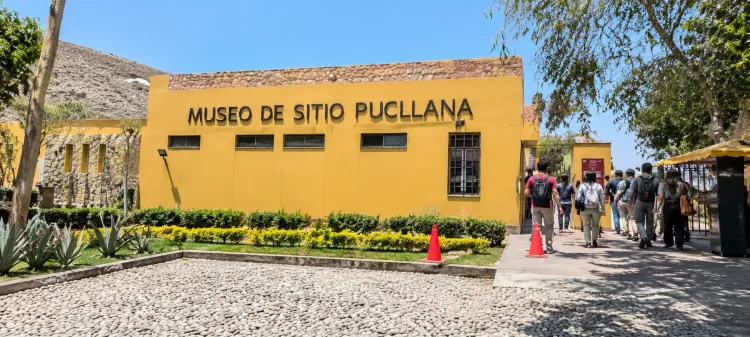
If you're interested in archaeology but would prefer an excursion closer to the capital, you can visit Huaca Pucllana in Lima or explore the Pachacamac Sanctuary. At Dreamy Tours, we offer the Pachacamac Tour from Lima, an archaeological excursion south of the city that includes a visit to Barranco.
You can also explore our Lima City Tour, which combines a panoramic view of Huaca Pucllana with historical monuments and modern areas of the capital. These experiences do not replace a visit to Caral, but they provide opportunities to discover other periods of Peruvian history with different travel requirements.
To discover the available options, explore our tours in Lima section. We do not currently present a specific Caral excursion as a confirmed Dreamy Tours product, so we recommend organizing the trip independently or checking directly with specialized transportation providers about their availability.
At Dreamy Tours, we consider Caral one of the most significant cultural visits for understanding the origins of civilization in Peru. We recommend dedicating a full day to the excursion, following official access routes, and checking visitor conditions before traveling. To complement your stay, discover more tourist attractions in Lima and plan an itinerary combining archaeology, history, and cultural heritage.
Personal travel advice
Plan your trip with Dreamy Tours
Start a tailored journey with our exclusive tours and custom trips across Peru and other Latin American countries.