Search the blog
Tabla de contenidos
Arequipa is one of Peru's most renowned gastronomic destinations. Its cuisine combines Andean ingredients, products from coastal valleys, traditional cooking techniques, and recipes passed down through generations. From the iconic rocoto relleno to the traditional chupe de camarones, Arequipa's typical food offers a wide variety of flavors worth discovering during any trip to the White City.
One of the best ways to experience this culinary tradition is by visiting traditional picanterías, restaurants where regional dishes, distinctive cooking methods, and local customs have been preserved. Arequipa is also known for its soups, stews, appetizers, desserts, and traditional beverages, making every meal a cultural experience.
If you are planning a visit to this city in southern Peru, knowing what to eat in Arequipa will help you choose the dishes you should not miss, understand their main ingredients, and discover where to find traditional preparations. You can also combine your culinary experiences with visits to the city's main historical and architectural attractions.
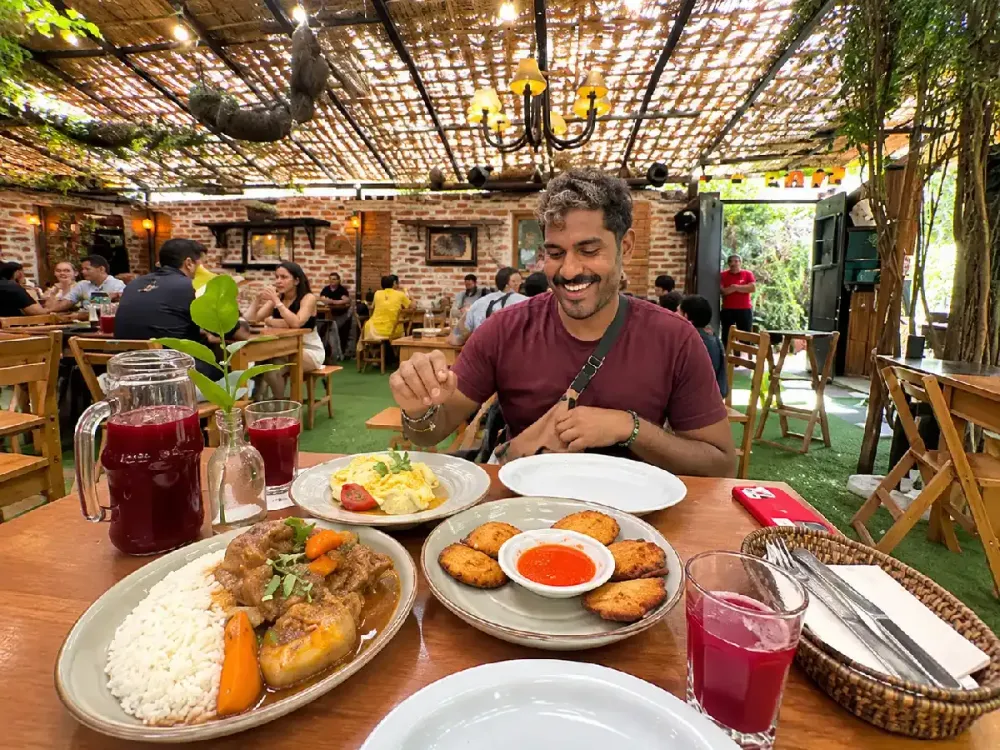
Arequipa's Gastronomy and Its Cultural Importance
Arequipa's cuisine is the result of a long culinary tradition influenced by agricultural products from the Andes, ingredients from nearby valleys, and the region's proximity to the Pacific coast. Potatoes, corn, broad beans, chili peppers, rocoto peppers, cheese, meat, and freshwater shrimp are essential ingredients that have given rise to some of the region's most famous dishes.
One of the most important elements of this gastronomy is the traditional use of the batán, a stone grinding tool used to crush ingredients and prepare sauces and seasonings. Although modern equipment is also used today, traditional grinding techniques remain an important reference in local cooking. Red chili, yellow chili, huacatay, and other herbs contribute distinctive aromas and flavors to many regional dishes.
Traditional picanterías are another fundamental part of Arequipa's culinary identity. They are not simply restaurants serving regional food; they are gathering places where family recipes, traditional serving methods, and customs associated with chicha and communal meals are preserved. Their cultural importance has been officially recognized through their designation as National Cultural Heritage of Peru.
This tradition explains why gastronomy is such an important part of the Arequipa travel experience. Trying its traditional dishes is not only about discovering new flavors but also about learning more about the region's history and customs.
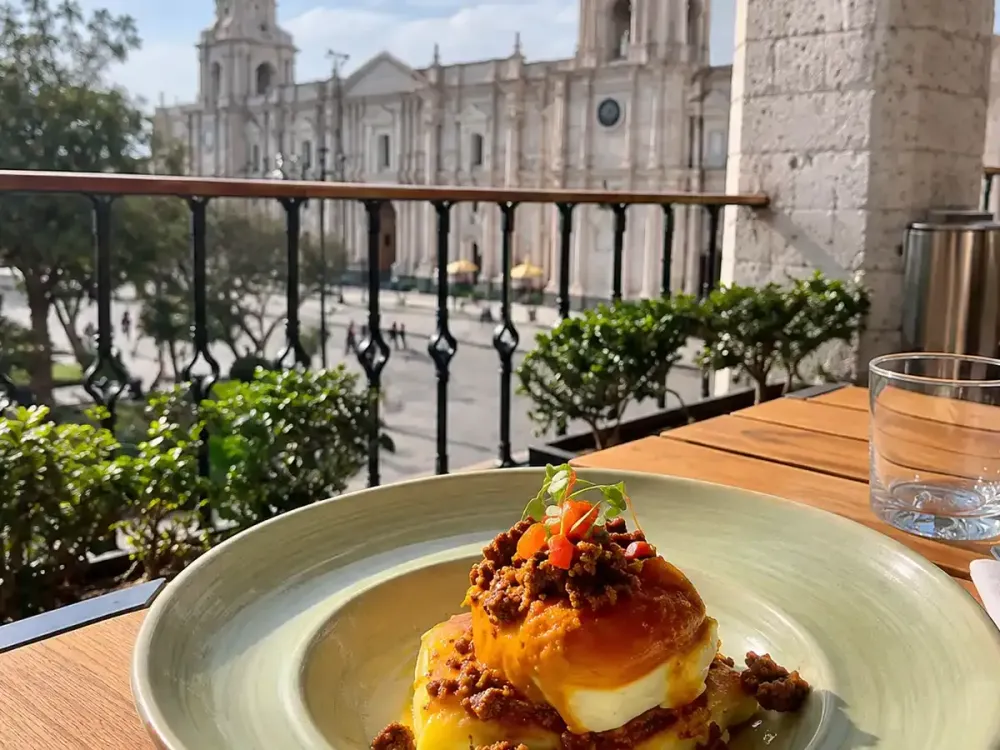
Traditional Arequipa Dishes You Should Try
Arequipa's traditional food is known for its hearty preparations, the use of chili peppers, and the combination of locally sourced ingredients. Some dishes are famous throughout Peru, while others remain particularly associated with traditional picanterías and family kitchens.
Some of the most representative specialties include:
| Traditional Dish | Main Ingredients | Characteristics |
|---|---|---|
| Rocoto relleno | Rocoto pepper, ground meat, onion, cheese, and spices | Baked and traditionally served with potato casserole. |
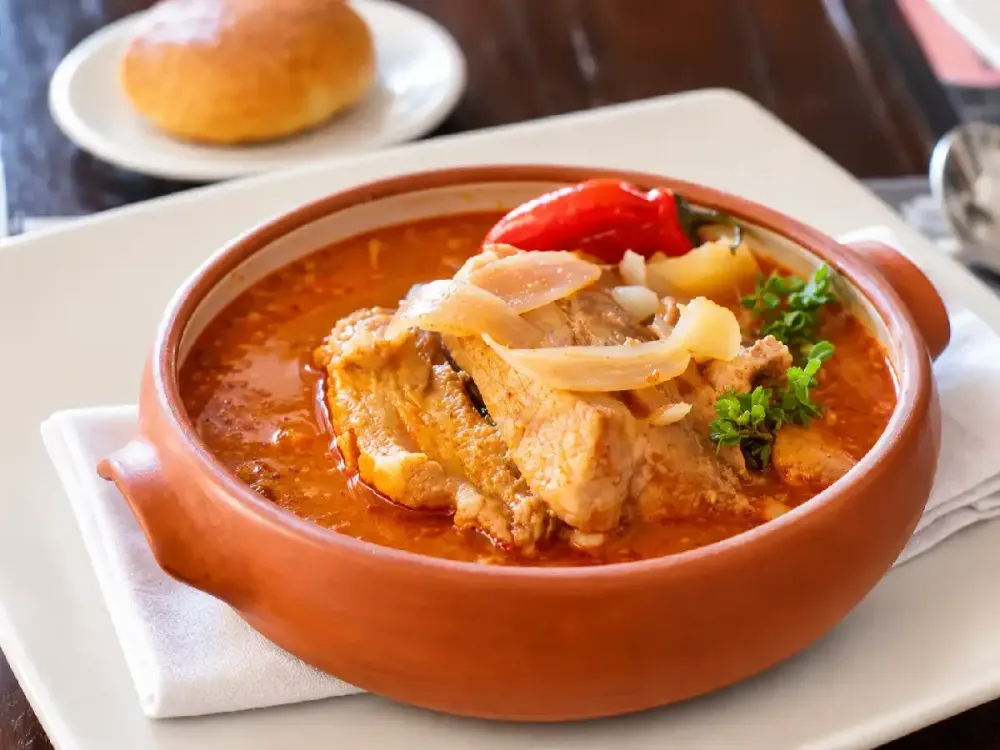
| Arequipeño adobo | Pork, chicha de jora, onion, and chili | A flavorful traditional stew, especially popular on Sundays. |
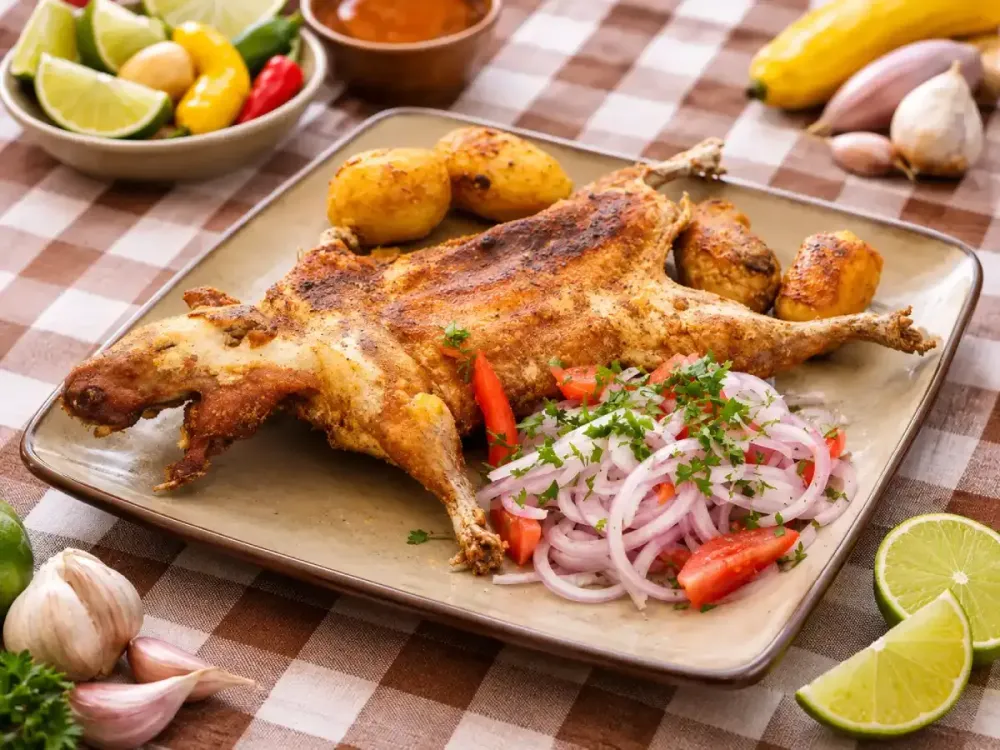
| Cuy chactado | Guinea pig, garlic, chili, and seasonings | Crispy fried preparation, generally served with potatoes. |
| Locro de pecho | Beef, potatoes, and red chili | A hearty regional stew with a thick consistency. |
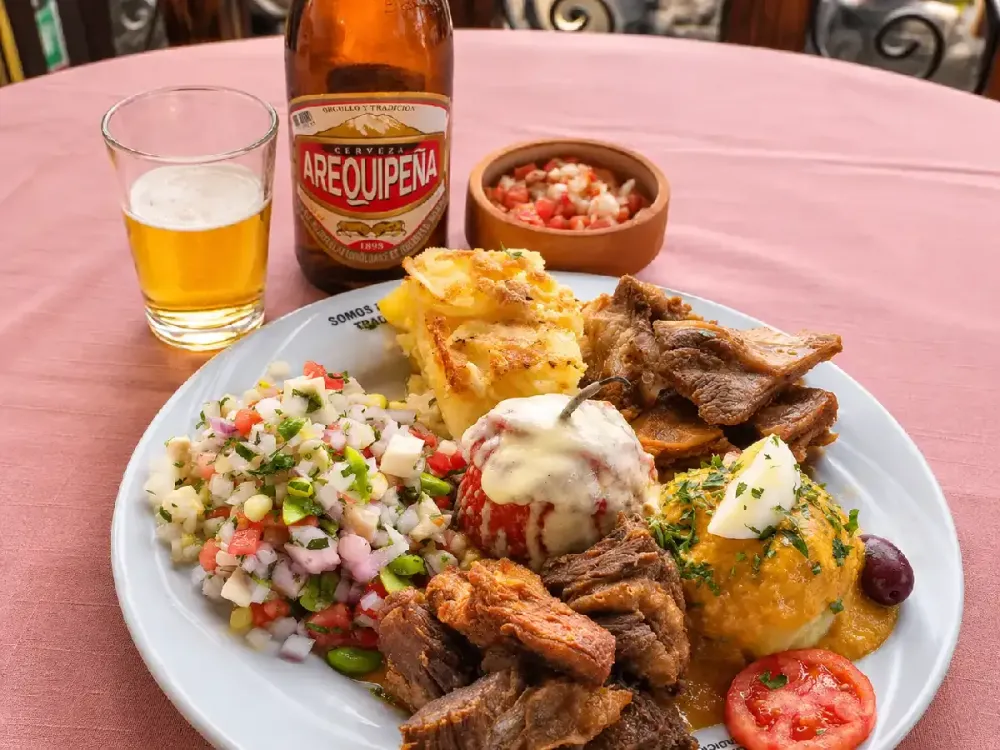
| Solterito de queso | Broad beans, corn, fresh cheese, onion, and tomato | A fresh and colorful regional salad. |
| Chupe de camarones | Freshwater shrimp, milk, cheese, potatoes, corn, and broad beans | A rich and hearty regional soup. |
| Malaya frita | Beef, cassava, and onion sauce | Meat that is first cooked and then fried until browned. |
Rocoto relleno is probably the most recognized dish in Arequipa's gastronomy. It consists of a rocoto pepper that is cleaned and prepared to reduce some of its heat before being filled with a mixture of meat, onion, spices, and other ingredients. It is then topped with cheese and baked. Traditionally, it is served with pastel de papa, a potato casserole that balances the flavors.
Arequipeño adobo is another must-try specialty. It is prepared with pork marinated in chicha de jora, red chili, onion, garlic, and spices. Slow cooking produces a juicy and aromatic stew that is commonly served with traditional three-pointed bread. It is particularly associated with Sunday mornings.
Cuy chactado is an Andean preparation that is also part of Arequipa's regional cuisine. The guinea pig is seasoned and fried until it develops a crispy texture. It is generally served with potatoes and other side dishes.
Locro de pecho is a traditional stew made with beef and potatoes, combined with a regional seasoning sauce. Its rich consistency and distinctive flavor make it an excellent choice for travelers who enjoy hearty meals.
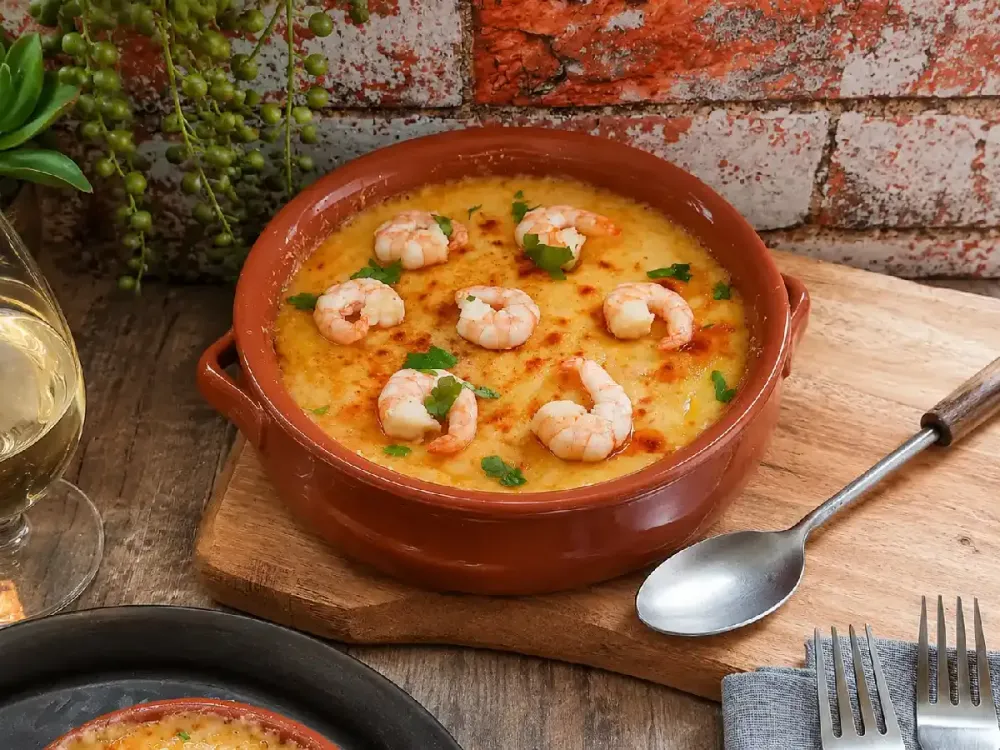
Chupe de Camarones and Other Traditional Soups
Soups play an important role in Arequipa's gastronomy. Many combine meat, tubers, vegetables, grains, and local products to create substantial dishes traditionally served during regional lunches.
Chupe de camarones is one of the best-known specialties. It is prepared with freshwater shrimp and a broth that includes potatoes, corn, broad beans, squash, rice, milk, cheese, and eggs, although recipes may vary between restaurants and families. Its rich flavor and thick consistency make it one of the most popular dishes among visitors.
The importance of this preparation is also reflected in the tourism resource inventory of Peru's Ministry of Foreign Trade and Tourism (MINCETUR), where it is recognized as a representative gastronomic expression of Arequipa.
Other traditional soups and broths you may find include:
- Chaque: A thick soup prepared with crushed potatoes, chuño (freeze-dried Andean potatoes), vegetables, and, depending on the recipe, different types of meat or offal.
- Chairo: A hearty broth combining meat, vegetables, potatoes, chuño, and other regional ingredients.
- Caldo blanco: A traditional preparation made with lamb, potatoes, chickpeas, corn, and chuño.
- Timpusca: A regional soup that may include meat, dried meat, potatoes, vegetables, and seasonal ingredients.
- Chupe de viernes: A traditional soup whose ingredients may vary depending on the picantería and family recipe.
Recipes and availability are not the same in every establishment. Therefore, asking about the daily menu is a great way to discover traditional preparations that may not regularly appear on menus designed for visitors.
Appetizers and Side Dishes in Arequipa's Cuisine
In addition to its main courses, Arequipa offers appetizers that stand out for their fresh ingredients, sauces, and combinations of flavors. Some are served as side dishes, while others make excellent light starters before a main course.
Ocopa arequipeña is one of the best-known appetizers. It consists of a creamy sauce traditionally prepared with chili peppers, huacatay, peanuts, cheese, milk, and other ingredients. It is served over boiled potatoes and usually garnished with egg and olives.
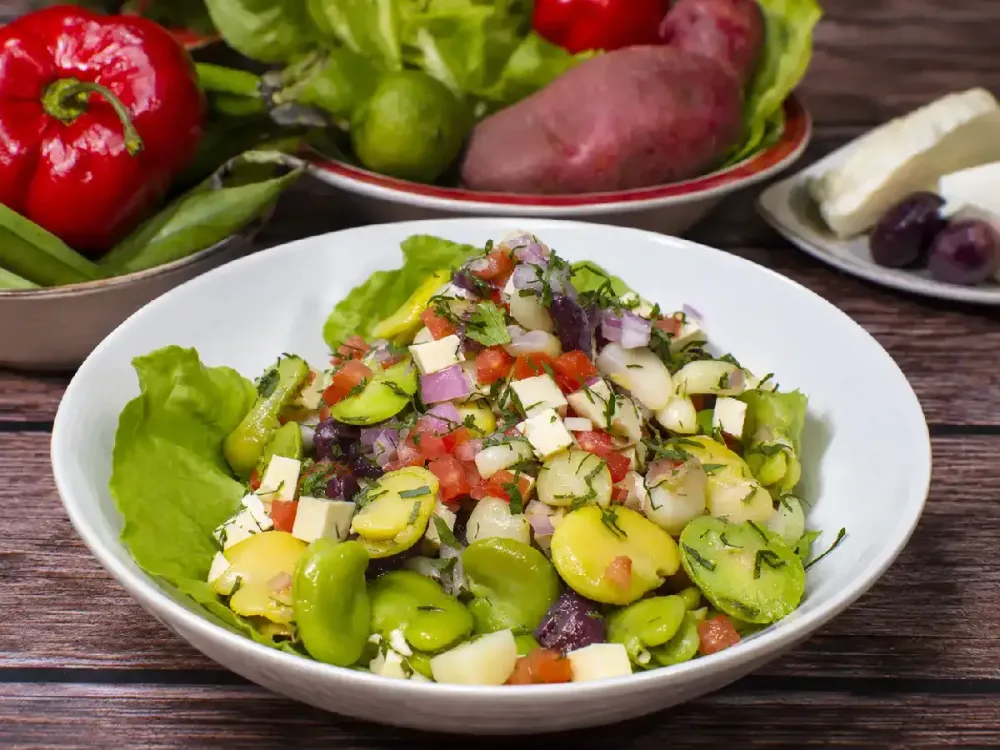
Solterito de queso is a refreshing option combining broad beans, corn, fresh cheese, tomatoes, onions, and olives. The dressing usually includes lime juice and herbs, creating a pleasant contrast with the stronger flavors of other regional dishes.
Another traditional specialty is escribano, a preparation combining boiled potatoes with tomatoes, rocoto peppers, oil, and other seasonings. It demonstrates how simple ingredients can become an important part of local cuisine.
Cauche de queso is another specialty made with fresh cheese, milk, onion, and chili, among other ingredients. Its creamy texture and distinctive flavor make it an interesting choice for travelers who want to explore dishes beyond the most famous regional specialties.
If you prefer to start with something light, you can choose solterito or ocopa before enjoying a main course. This combination allows you to experience different preparations without concentrating your entire culinary experience on a single dish.
Arequipa's Picanterías: Where to Discover Traditional Cuisine
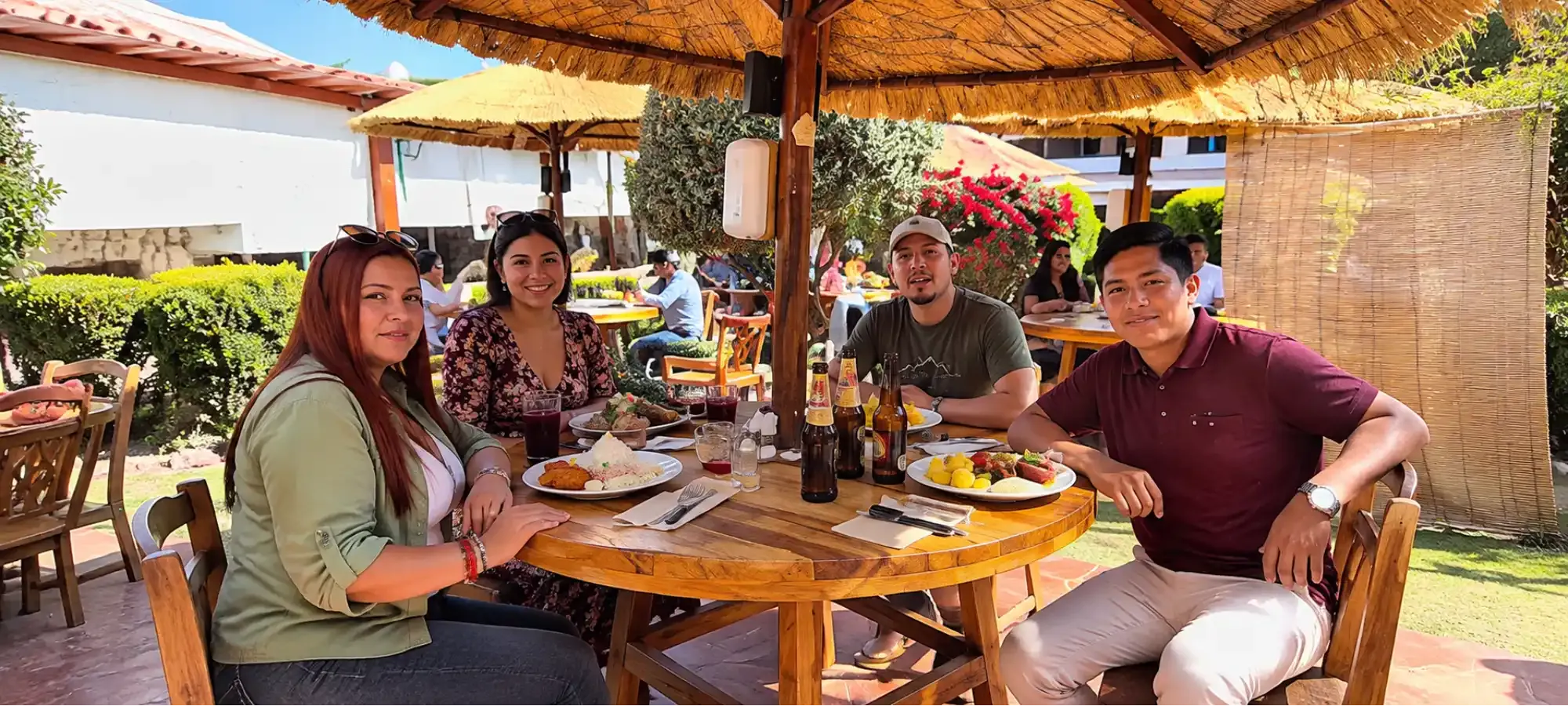
Visiting a traditional picantería is one of the best experiences for travelers who want to discover authentic Arequipa cuisine. These establishments preserve a culinary tradition connected to regional dishes, locally sourced ingredients, and the social experience of sharing a meal.
Historically, picanterías were closely associated with chicherías, establishments where chicha was prepared and served. Over time, they developed a broader gastronomic offering in which soups, spicy dishes, and stews became increasingly important.
One interesting characteristic is that some picanterías maintain the tradition of serving particular soups on specific days of the week. Although this practice varies between establishments, it remains an important part of their culinary identity.
To enjoy a more traditional experience, keep the following recommendations in mind:
- Ask about the daily menu, especially if you want to try regional soups.
- Check portion sizes, as some dishes are quite generous.
- Ask about the level of spiciness in each preparation.
- Find out whether the establishment works with seasonal ingredients.
- Allow enough time to enjoy your meal without rushing.
Traditional picanterías also offer an opportunity to observe customs that form part of Arequipa's identity. Food presentation, traditional serving dishes, and the preparation of sauces are all elements that enrich the experience.
If you would like to discover more about the city before organizing your culinary itinerary, you can combine this experience with a visit to the historic center through our Arequipa City Tour: Santa Catalina, Yanahuara and Plaza de Armas.
Traditional Arequipa Desserts You Should Try
Arequipa's gastronomy does not end with savory dishes. The region also has traditional desserts known for their use of milk, cinnamon, coconut, flour, and other ingredients commonly found in local baking.
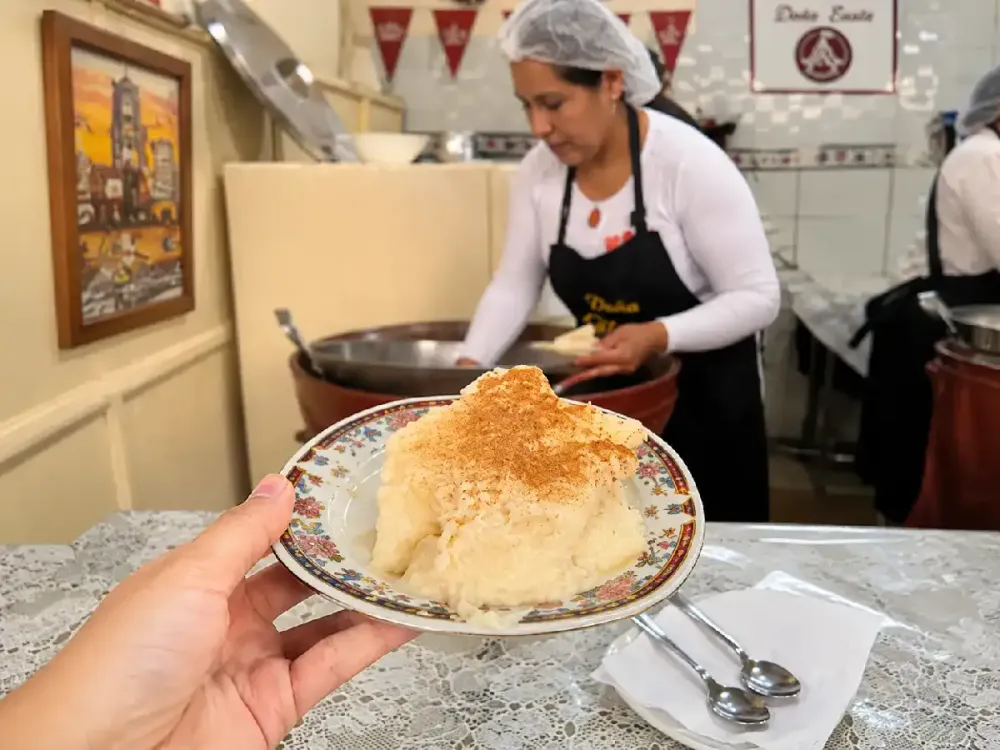
Queso helado is one of Arequipa's most representative sweets. Despite its name, it is not necessarily made with cheese as its main ingredient. Its traditional preparation uses milk, coconut, cinnamon, cloves, and sugar. The mixture is chilled using an artisanal process that produces a creamy texture with a slightly grainy consistency.
Buñuelos are also part of the region's sweet culinary tradition. They are prepared with a dough made from flour, eggs, and milk, which is then fried and served with chancaca syrup. Their sweet flavor and crispy texture make them a popular option to enjoy with a hot beverage.
Other products you may find include Arequipa's chocolates and toffees, available in different varieties and suitable for travelers looking for a gastronomic souvenir.
| Dessert | Ingredients or Preparation | Characteristics |
|---|---|---|
| Queso helado | Milk, coconut, cinnamon, and spices | A cold dessert with a creamy texture. |
| Buñuelos | Flour, eggs, milk, and chancaca syrup | Fried dough served with sweet syrup. |
| Toffees | Caramel and milk preparations | Soft or chewy traditional sweets. |
| Chocolates | Cocoa and different fillings | Local products available in various presentations. |
To try queso helado, look for traditional street vendors and specialized establishments in the historic center. It is an excellent choice for a break after exploring the Plaza de Armas or the city's traditional neighborhoods.
Traditional Drinks in Arequipa
Beverages are also an important part of the region's gastronomic identity. One of the most representative is chicha de jora, a traditional fermented beverage made from corn.
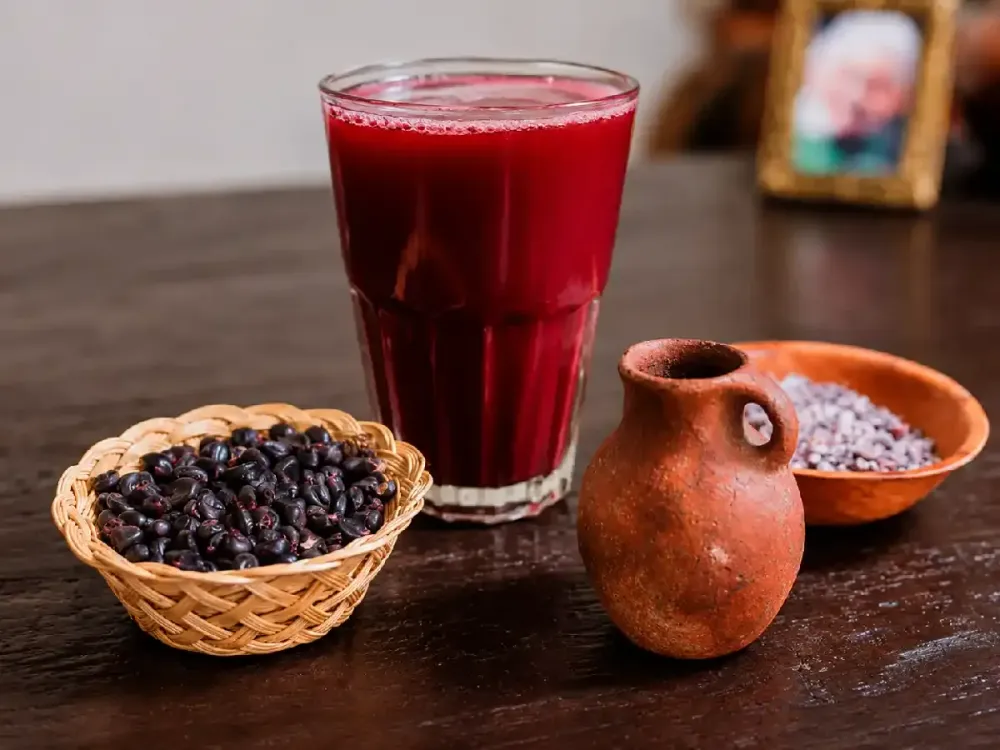
Another well-known local drink is chicha de guiñapo, prepared using a variety of dark corn that is germinated and fermented. It is particularly associated with the traditional picanterías, where it is served alongside regional dishes.
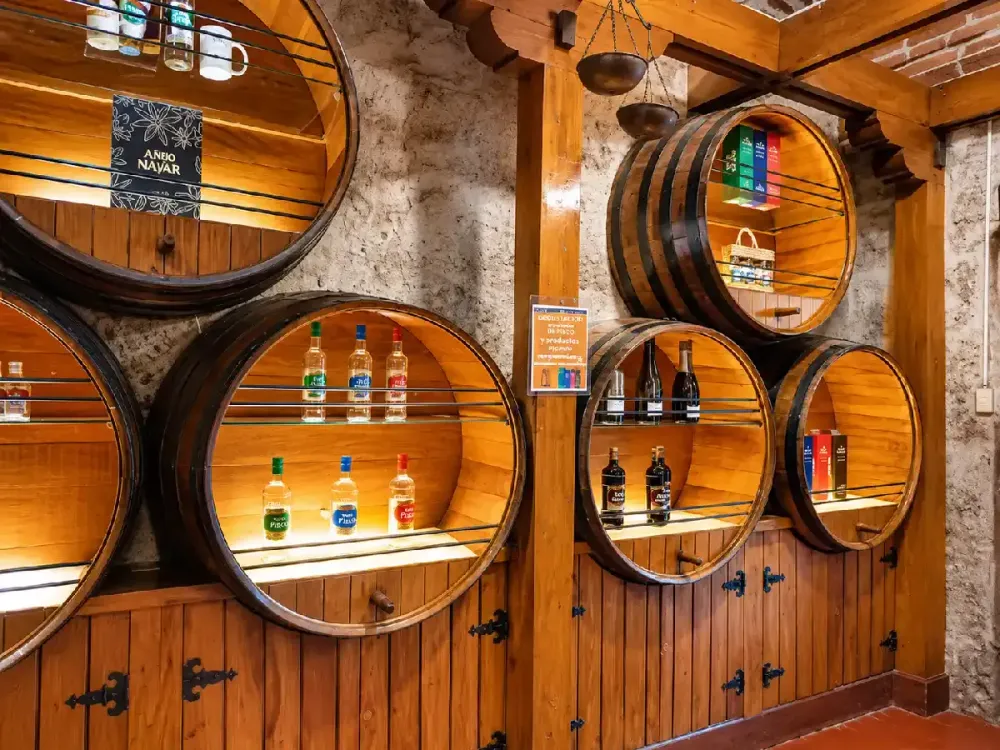
Another traditional beverage is Anís Nájar, a local anise-flavored alcoholic drink that forms part of the city's gastronomic customs. It is consumed on certain occasions and is often associated with after-meal gatherings.
Some establishments also offer refreshing fruit drinks, herbal infusions, and homemade beverages. Availability depends on the restaurant and the season.
If you want to experience local gastronomy more completely, you can pair your dishes with a traditional beverage while remembering to ask about its ingredients and alcohol content when relevant.
When and What Time to Try Traditional Arequipa Food
The gastronomic experience in Arequipa can vary depending on the day and time. Certain dishes are closely connected to local customs, such as Sunday adobo and the traditional menus served at picanterías.
Lunchtime is usually one of the most interesting moments to visit these establishments, as you are more likely to find a wider variety of soups, appetizers, and main courses.
The following table provides some useful recommendations for planning your culinary experience:
| Time | Recommended Dish | Considerations |
|---|---|---|
| Sunday breakfast | Arequipeño adobo | A traditional dish particularly associated with Sunday mornings. |
| Lunch | Rocoto relleno and pastel de papa | A representative combination of local cuisine. |
| Lunch | Chupe de camarones | Check availability and the daily preparation. |
| Mid-morning or appetizer | Solterito de queso or ocopa | Excellent options to begin a traditional meal. |
| Afternoon | Queso helado | Ideal for a break during a city walk. |
| After a meal | Traditional chicha | A beverage associated with picantería culture. |
Not all preparations are available every day, and opening hours may vary depending on the establishment. If you have a particular dish in mind, it is advisable to check its availability in advance.
How to Choose Arequipa Dishes According to Your Preferences
Arequipa's gastronomy offers alternatives for different tastes. However, some dishes have intense flavors, specific ingredients, or levels of spiciness that you should consider before ordering.
If you enjoy strong flavors and spicy food, rocoto relleno and regional stews may be excellent choices. If you prefer fresh preparations, solterito de queso and ocopa offer a different combination of ingredients and textures.
For travelers who enjoy hearty soups, chupe de camarones and caldo blanco are two interesting alternatives. Meanwhile, those who want to try a traditional Andean preparation can choose cuy chactado.
These recommendations can help you decide what to order:
- If this is your first visit: Start with rocoto relleno, pastel de papa, and queso helado.
- If you enjoy soups: Look for chupe de camarones, chaque, or chairo.
- If you prefer fresh dishes: Try solterito de queso and ocopa.
- If you want to experience local traditions: Visit a picantería serving Sunday adobo.
- If you want to try Andean ingredients: Consider cuy chactado and other regional preparations.
It is also important to inform restaurant staff about any food allergies or dietary restrictions. Some recipes contain dairy products, peanuts, eggs, seafood, and other ingredients that may be relevant to certain travelers.
Tips for Enjoying Arequipa's Gastronomy During Your Trip
To make the most of your culinary experience, it is best to organize your meals around your sightseeing plans and available time. Arequipa's historic center allows you to combine cultural visits, walks, and stops at traditional restaurants without traveling long distances.
An important recommendation is to avoid ordering too many dishes at once. Many regional preparations are generous in size and can be shared between two people, depending on the restaurant's serving portions.
You should also ask about ingredients and spiciness. Although rocoto is one of the symbols of Arequipa's gastronomy, not all recipes have the same level of heat, and some preparations can be quite heavily seasoned.
If you want to try freshwater shrimp, ask about its origin and availability. Fishing and commercialization of these resources may be subject to seasonal conditions and applicable regulations, so it is preferable to choose formal establishments that can provide information about their products.
Other useful tips include:
- Carry some cash as an alternative payment method, especially when visiting traditional establishments.
- Check opening hours before traveling to a restaurant.
- Choose establishments that maintain good hygiene practices.
- Share dishes if you want to try a greater variety of regional preparations.
- Save some room for traditional desserts and beverages.
- Avoid scheduling a very heavy meal immediately before a demanding excursion.
If you have limited time, you can organize your meals around your main sightseeing activities. Our guide Arequipa in One Day: Best Places and Itinerary offers a suggested route combining monuments, viewpoints, and time to enjoy local gastronomy.
How to Combine Gastronomy with a Sightseeing Tour in Arequipa
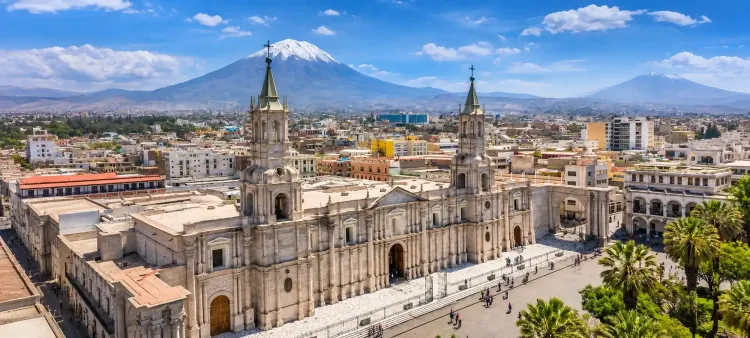
A visit to Arequipa can easily combine regional cuisine with the city's historical attractions. The historic center offers opportunities to explore monuments, discover the architecture built with volcanic sillar stone, and visit traditional restaurants without traveling long distances.
You can start your morning with a traditional breakfast, especially if you visit on a Sunday and want to try adobo. Afterward, spend part of the day exploring the Plaza de Armas, the Cathedral, and the surrounding historic streets.
For lunch, choose a traditional picantería or a restaurant specializing in regional cuisine to enjoy rocoto relleno, ocopa, solterito, or chupe de camarones. In the afternoon, take a break and try some queso helado to complete your culinary experience.
If you want to explore the main monuments and viewpoints with a professional guide, our Arequipa City Tour: Santa Catalina, Yanahuara and Plaza de Armas takes you to some of the White City's most representative attractions in approximately four hours. This experience can complement your gastronomic itinerary, although it is not a specialized food tour.
You can also read our guide What to See in Arequipa in 1, 2, and 3 Days: Suggested Itineraries to organize your sightseeing according to the time available.
If you want to explore more of the region, visit our Tours in Arequipa page and combine your city experience with excursions to other landscapes in southern Peru.
Frequently Asked Questions About Traditional Food in Arequipa
| Question | Answer |
|---|---|
| What is the most traditional dish in Arequipa? | Rocoto relleno is one of the most representative and widely recognized dishes in Arequipa's gastronomy. |
| What do people traditionally eat for breakfast in Arequipa? | Arequipeño adobo is a traditional Sunday morning dish, usually served with three-pointed bread. |
| What is a traditional Arequipa picantería? | It is a traditional restaurant where regional dishes, soups, stews, and beverages such as chicha are prepared and served. |
| What dessert should I try in Arequipa? | Queso helado is one of the White City's most characteristic traditional desserts. |
| Is rocoto relleno very spicy? | Its level of spiciness varies depending on the preparation. It is advisable to ask before ordering. |
| Where can I try traditional Arequipa food? | Traditional picanterías and restaurants specializing in regional cuisine are excellent options. |
| What traditional beverage accompanies Arequipa's food? | Chicha de jora and chicha de guiñapo are traditional beverages associated with local picanterías. |
| Which Arequipa dishes do not contain meat? | Solterito de queso and some versions of ocopa may be suitable options, but you should check the ingredients. |
| What traditional food should I try on my first visit to Arequipa? | Rocoto relleno with pastel de papa, ocopa, and queso helado are excellent introductions to the region's flavors. |
| Can I combine a city tour with a gastronomic experience? | Yes. You can explore the city's main attractions and organize lunch or a food experience before or after your tour. |
Arequipa is a destination that can also be discovered through its flavors. Its traditional picanterías, regional dishes, soups, desserts, and beverages reflect a culinary identity shaped over generations. Trying rocoto relleno, enjoying a bowl of chupe de camarones, or ending the afternoon with queso helado allows you to discover an essential part of the White City's culture.
If you are planning your next trip, make room in your itinerary to discover traditional Arequipa food and complement your experience with its monuments, historic neighborhoods, and beautiful landscapes. At Dreamy Tours, you will find different ways to explore Arequipa and organize a journey combining culture, gastronomy, and tourism in southern Peru.
Personal travel advice
Plan your trip with Dreamy Tours
Start a tailored journey with our exclusive tours and custom trips across Peru and other Latin American countries.