Search the blog
Tabla de contenidos
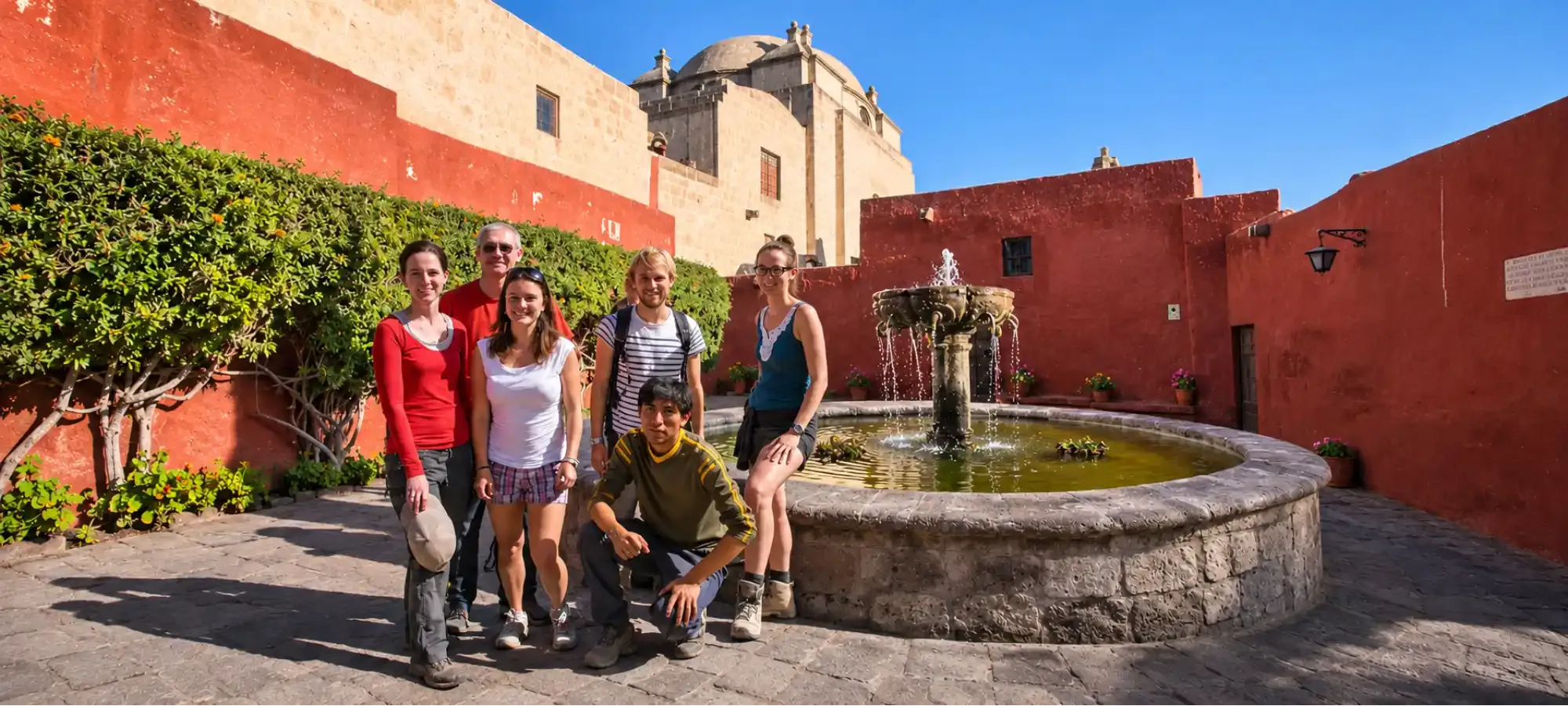
Santa Catalina Monastery is one of Arequipa's most iconic landmarks and one of the most remarkable historic sites in southern Peru. Behind its high walls lies a network of narrow streets, courtyards, cloisters, and former living quarters that reveal more than four centuries of history.
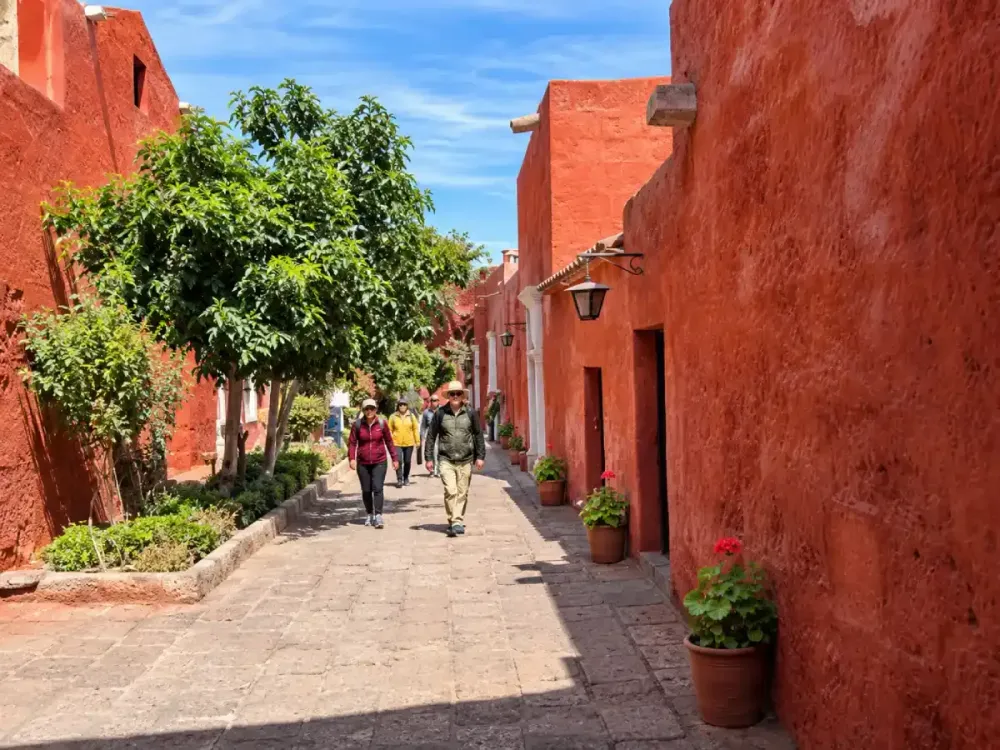
Its vibrant blue, red, and white walls contrast with the volcanic stone that defines the White City. Walking through its passageways feels different from visiting a traditional church or museum because the monastery was designed as a small town within Arequipa.
Founded in 1579, the complex preserves an important architectural, artistic, and religious heritage. Today, part of the monastery is open to cultural tourism, while another section remains home to a community of Dominican nuns.
If you're planning to visit Santa Catalina Monastery in Arequipa, this guide covers its history, the main places to explore, its location, how to organize your visit, and practical recommendations.
You can also discover more attractions in our guide to 20 must-see places and things to do in Arequipa.
History of Santa Catalina Monastery: Founded in 1579
The history of Santa Catalina Monastery began during the Spanish colonial period, when Arequipa was still developing as an urban center. The monastery was officially founded on September 10, 1579, with authorization from Viceroy Francisco de Toledo.
María de Guzmán played a decisive role in its establishment. She contributed a significant portion of her wealth to creating a religious community dedicated to Saint Catherine of Siena and associated with the Dominican Order.
Over the following centuries, the monastery expanded through the construction of cloisters, living quarters, courtyards, chapels, and internal streets. Its development was also shaped by earthquakes that affected Arequipa, particularly those recorded during the 16th, 17th, 18th, and 19th centuries.
Successive reconstruction efforts created an architectural complex containing elements from different historical periods. Today, visitors can observe how its buildings were adapted to the region's geographical and cultural conditions.
At Dreamy Tours, we believe understanding this history before entering helps explain why Santa Catalina is much more than a religious building. It is a place that preserves an important part of Arequipa's historical memory.
When Did Santa Catalina Monastery Open to the Public?
For nearly four centuries, life inside the monastery followed the rules of religious enclosure. The community carried out its daily activities in spaces separated from the public life of the city.
This arrangement meant that much of the complex remained inaccessible to visitors for generations. Its streets, courtyards, and residential areas formed an environment reserved for the monastic community.
On August 15, 1970, a significant part of the complex opened to the public, allowing travelers to discover its architecture, collections, and history.
The opening transformed the monastery into one of Arequipa's main cultural attractions without completely ending its religious purpose. A community of Dominican nuns continues to live in a private section of the complex.
This coexistence of publicly accessible heritage and an active religious community is one of the features that makes Santa Catalina Monastery so distinctive.
Where Is Santa Catalina Monastery and How Do You Get There?
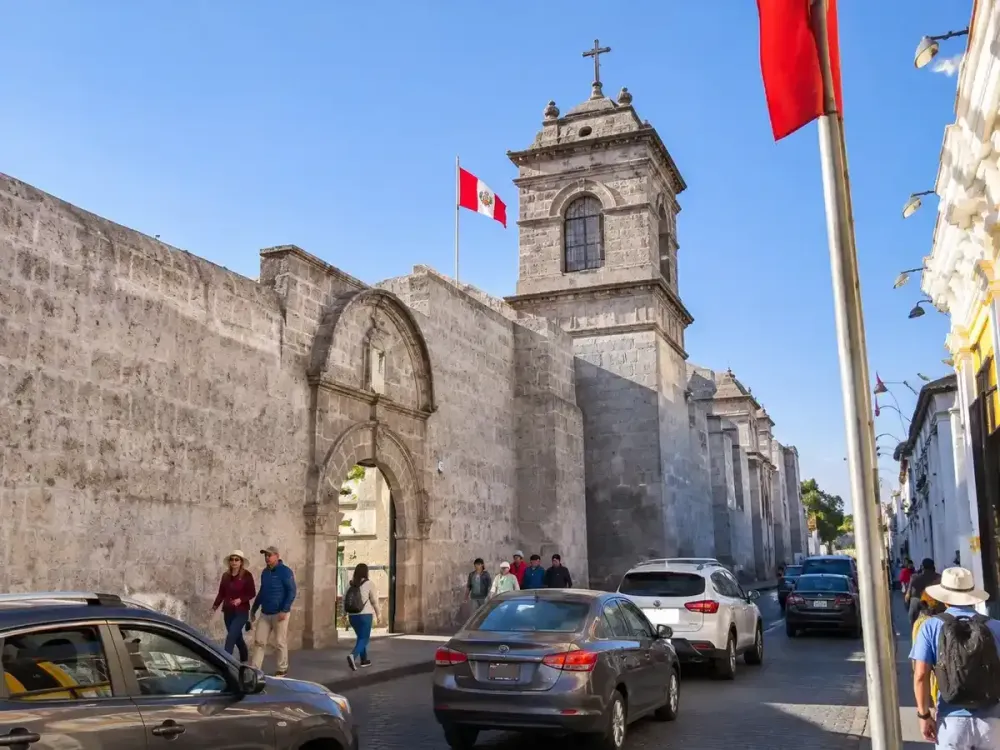
Santa Catalina Monastery is located in Arequipa's historic center, at 301 Santa Catalina Street, approximately two blocks from Plaza de Armas.
Its central location makes it easy to visit while exploring the city's historic district on foot. If you're staying in the city center, you generally won't need transportation to reach it.
From Plaza de Armas, you can walk along the surrounding streets, admiring the sillar stone façades and historic buildings that form part of Arequipa's architectural heritage.
If you're staying farther away, you can use an authorized transportation service and continue walking to the monastery entrance.
Because of its proximity to other landmarks, we recommend including Santa Catalina in a day dedicated to the historic center. Our guide to Arequipa in One Day will help you organize visits to nearby attractions.
Why Does Santa Catalina Feel Like a City Within Arequipa?
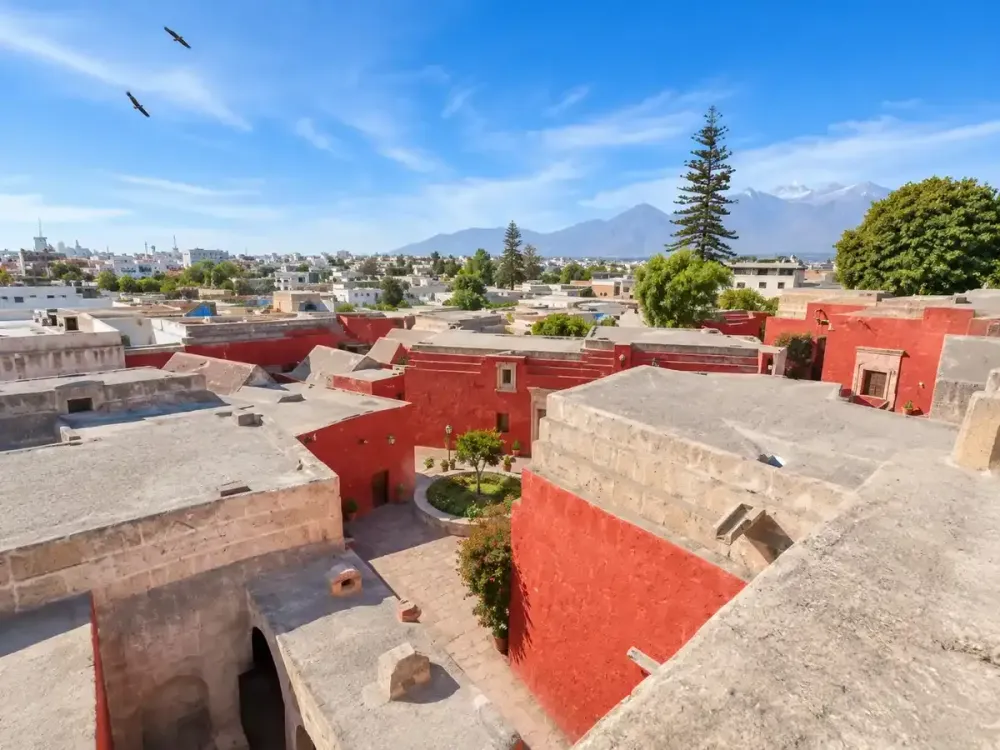
One of the monastery's most striking features is its architectural layout. Covering more than 20,000 square meters (approximately 215,000 square feet), the complex contains streets, small squares, cloisters, and former residences arranged much like a small town.
Its internal streets have names associated with Spanish cities, including Toledo, Seville, Córdoba, and Granada. This layout reflects some of the urban and cultural influences of the colonial period.
As you explore, you'll find arches, vaulted ceilings, stairways, courtyards, and residential areas built primarily from sillar, the volcanic stone characteristic of Arequipa.
The combination of white stone surfaces, brightly colored walls, and traditional architectural details creates spaces with very different atmospheres.
The monastery forms part of the Historic Centre of the City of Arequipa, which was inscribed on the UNESCO World Heritage List in 2000. This recognition applies to the city's historic center as a whole, of which Santa Catalina is one of the most representative monuments.
To better understand the relationship between sillar stone and Arequipa's architecture, explore our Ruta del Sillar in Arequipa guide.
The Cloisters of Santa Catalina Monastery
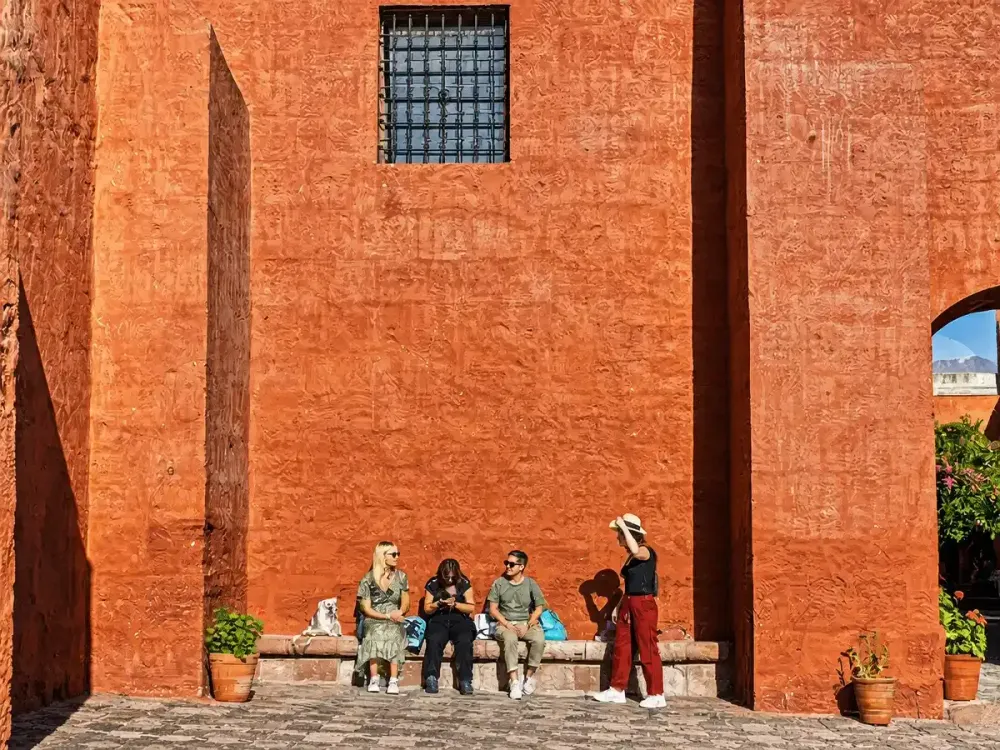
The cloisters are among the monastery's most important spaces. These courtyards surrounded by corridors and arches were central to the organization of religious life and now allow visitors to appreciate different architectural features of the complex.
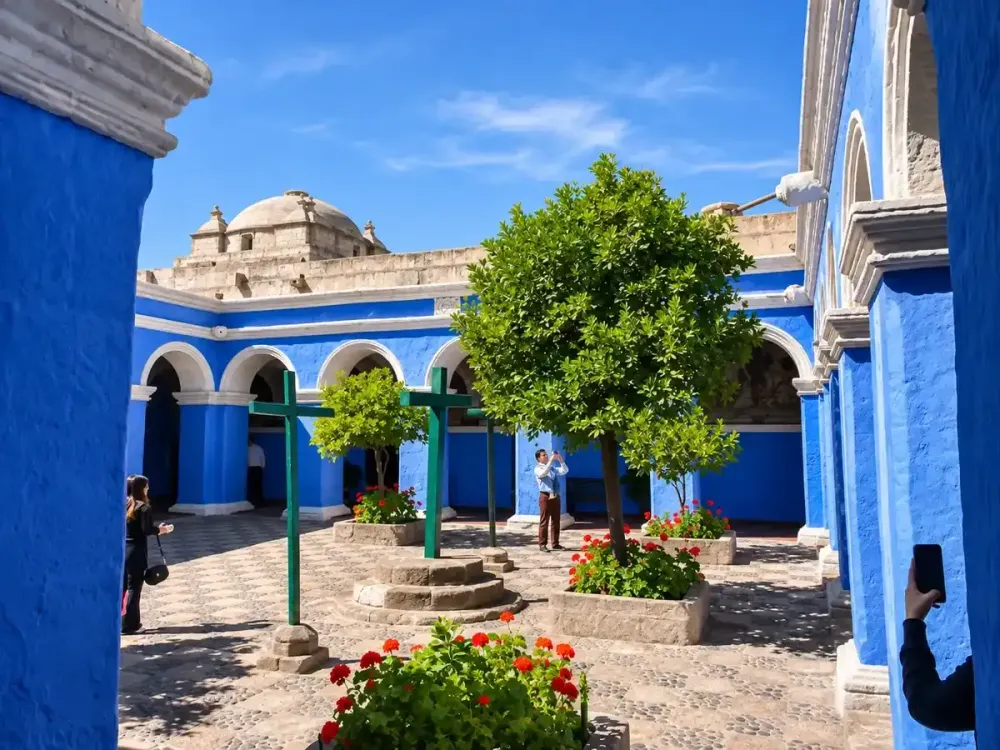
One of the best known is the Cloister of the Orange Trees, or Claustro de los Naranjos, which stands out for its deep blue walls, trees, and gardens. It is one of the monastery's most photographed areas because of the contrast between the vegetation and the richly colored surfaces.
The Main Cloister, or Claustro Mayor, features a more spacious architectural composition, with arcades and corridors illustrating the use of sillar in colonial religious buildings.
During your visit, you'll also encounter areas associated with former community activities, passageways, and rooms that help explain the monastery's overall layout.
We recommend exploring the cloisters at a relaxed pace and paying attention to their details. Beyond their photographic appeal, these spaces provide insight into how daily life was organized within the monastery.
Streets, Courtyards, and the Most Photographed Corners
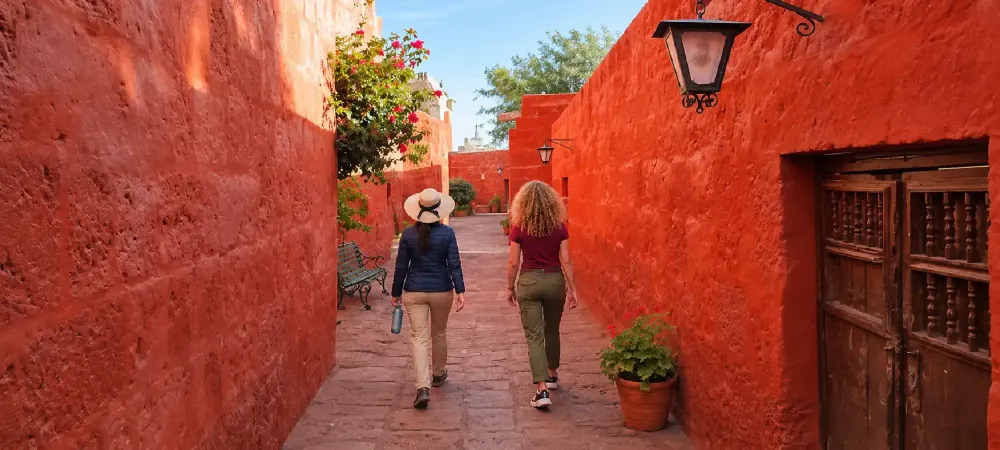
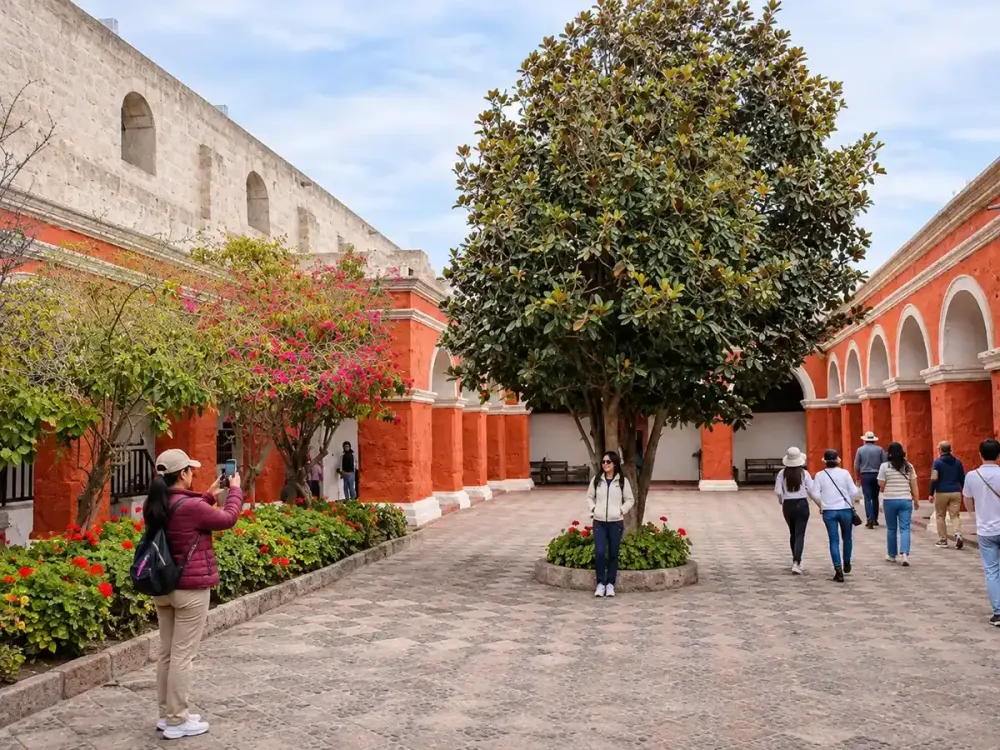
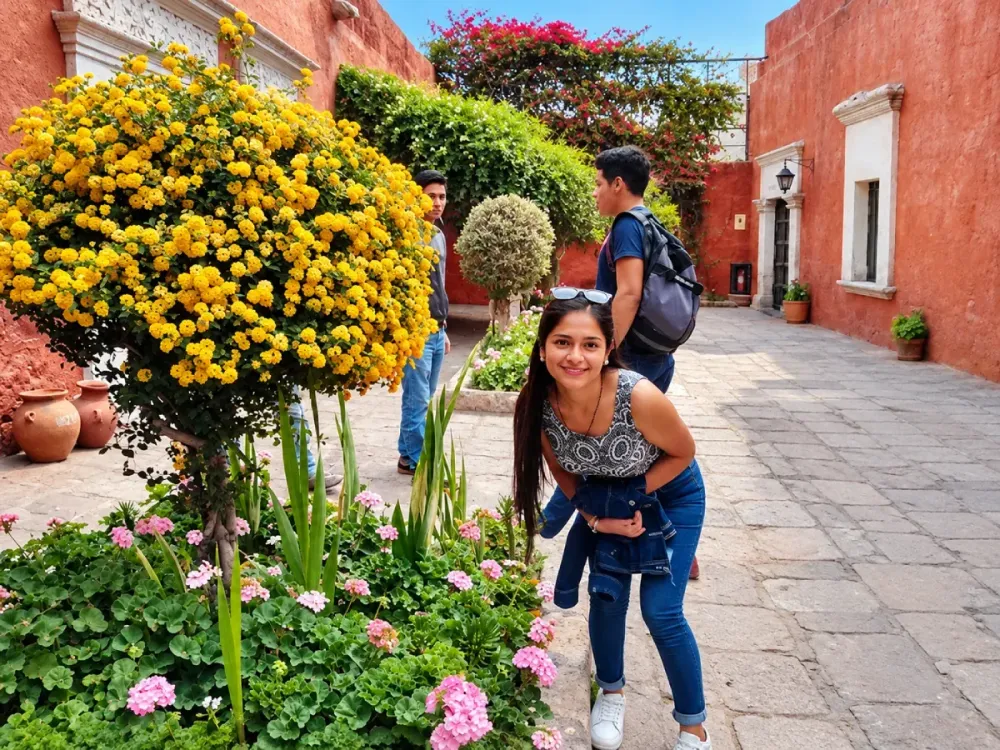
Beyond its cloisters, Santa Catalina is famous for its narrow internal streets and colorful courtyards. These spaces create a distinctive visual experience, especially when natural light illuminates the walls and arches.
Toledo Street is one of the monastery's most recognizable areas. Its walls, stairways, and passageways reveal the urban layout of the complex and make it one of Santa Catalina's most memorable settings.
In other sections, you'll find small squares, former residences, interior courtyards, and corridors connecting different parts of the monastery.
The contrast between white sillar stone, reddish walls, and deep blue surfaces gives each corner its own character. Vegetation and shifting shadows also change the appearance of these spaces throughout the day.
If you enjoy photography, we recommend taking your time in these areas. It's also important to follow the monastery's rules and avoid entering restricted sections to take pictures.
What Was Daily Life Like for the Nuns?
Life within the monastery was organized around prayer, community activities, and the responsibilities of the Dominican religious community.
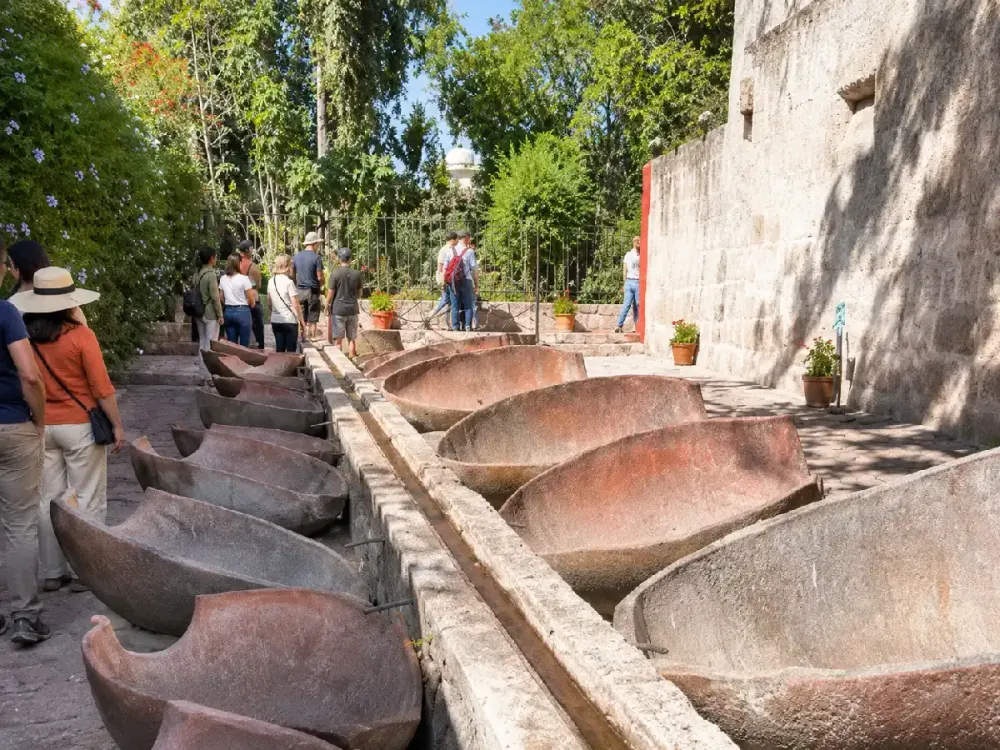
The surviving residences and rooms provide insight into everyday life during different historical periods. Some contain spaces once used for resting, preparing food, or carrying out domestic tasks.
The layout of these living quarters also reflects the social and economic differences that existed during the colonial period. Accommodation conditions were not necessarily the same for every resident, nor did they remain unchanged over the centuries.
The presence of internal streets, courtyards, and service areas helps explain how such a large religious complex functioned.
Today, the visitor route allows travelers to explore these historic spaces, while the sections used by the religious community that still lives at the monastery remain private.
This human dimension is essential to understanding Santa Catalina. It is not simply a collection of old buildings, but a place where generations of women lived their spiritual and everyday lives.
The Art Gallery and Artistic Heritage of Santa Catalina
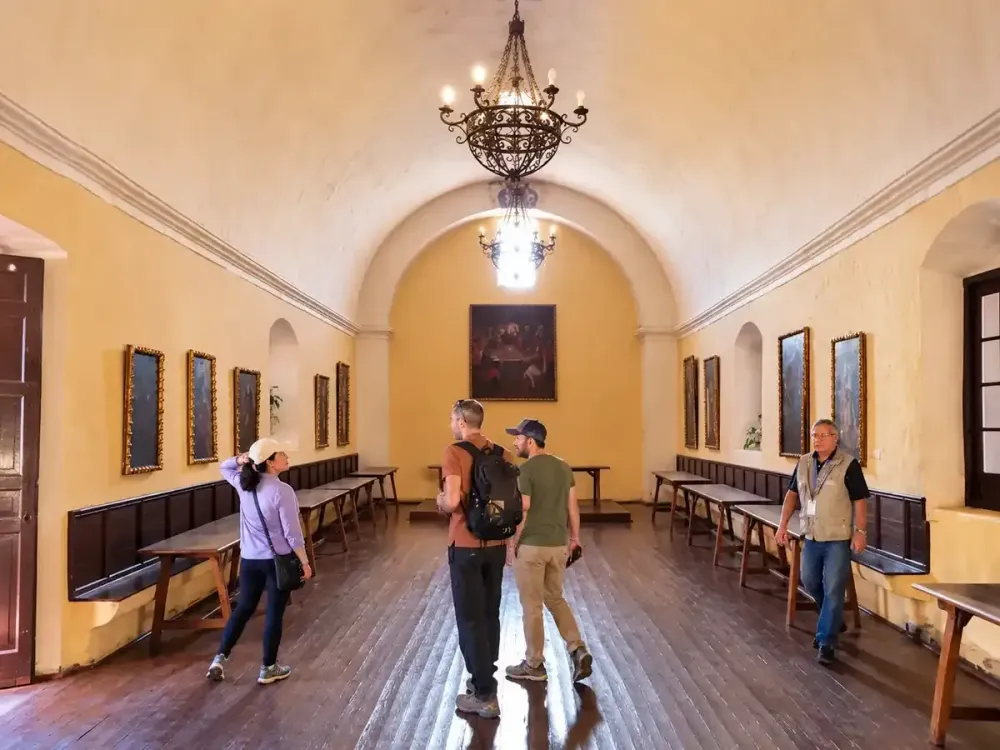
Santa Catalina Monastery preserves an important collection of religious art, including paintings, sculptures, furniture, and other objects connected to the community's history.
One of its most significant spaces is the art gallery, or pinacoteca, which displays colonial paintings. Part of this heritage is associated with the artistic tradition of the Cusco School, which played an important role in religious art during the colonial period.
The artworks feature spiritual scenes, religious representations, and painting techniques used during different historical periods.
Liturgical objects and everyday items have also been preserved, helping visitors interpret the monastery's religious and cultural life.
We recommend spending time looking at the artworks and reading their descriptions. The experience becomes more meaningful when you understand that these pieces are part of an artistic heritage closely connected to Peru's history.
If you'd like to continue exploring monuments and cultural spaces, read our guide to tourist attractions in Arequipa.
Guided Tour or Self-Guided Visit: Which Is Better?
Santa Catalina Monastery can be explored independently or with a guide, depending on the services available and current visiting conditions.
A self-guided visit is a good option for travelers who enjoy photography, prefer stopping in different areas, and want to explore the streets and cloisters at their own pace.
A guided tour offers the advantage of understanding the historical context of each space. A guide can explain the foundation of the monastery, its religious organization, reconstruction efforts, and the original purpose of its main rooms.
The following comparison can help you decide.
| Visit option | Main features | Recommended for |
|---|---|---|
| Self-guided visit | Independent exploration and flexible pace | Travelers who enjoy exploring and photography |
| Guided visit | Historical and cultural explanations | First-time visitors and history enthusiasts |
| City Tour including Santa Catalina | Combines the monastery with other landmarks | Travelers who want to explore several Arequipa attractions |
At Dreamy Tours, we recommend a visit with historical explanations for first-time travelers because it provides a deeper understanding of the different spaces.
Our Arequipa City Tour includes a visit to Santa Catalina Monastery alongside other representative attractions in the city.
Opening Hours, Entrance Tickets, and How Long to Spend There
Before visiting the monastery, we recommend checking opening hours and admission conditions through its official channels, as these may change due to special activities, maintenance, or administrative decisions.
The complex welcomes visitors throughout the week and offers extended opening hours on certain days. These arrangements make it possible to plan visits at different times, including some late-afternoon options.
Admission requires an entrance ticket, and conditions may vary depending on the visitor category. Guide services may be booked separately according to the monastery's official information.
You can use the following estimates to plan your visit.
| Type of visit | Approximate time |
|---|---|
| Guided tour | Around 1 hour |
| Self-guided visit | 1.5 to 2 hours |
| Visit with photography stops | 2 hours or longer, depending on your pace |
These durations are approximate and may vary depending on which areas are accessible and each visitor's interests.
You can check current opening hours, admission fees, and visiting conditions on the official Santa Catalina Monastery website.
If you're planning a broader city tour, allow enough time to explore the monastery without rushing.
Tips for Photography and Exploring the Monastery
Santa Catalina offers excellent photography opportunities thanks to its narrow streets, courtyards, and colorful walls. However, remember that it is both a historic monument and a religious space.
Tourist photography is permitted under the conditions established by the monastery's administration. Indoors, avoid using flash and respect any signs indicating specific restrictions.
For a more comfortable visit, wear suitable walking shoes, as you'll be exploring passageways, courtyards, and stone surfaces. Bringing water and sun protection is also advisable for outdoor areas.
If you visit during busy hours, keep corridors clear and avoid blocking other visitors while taking photographs.
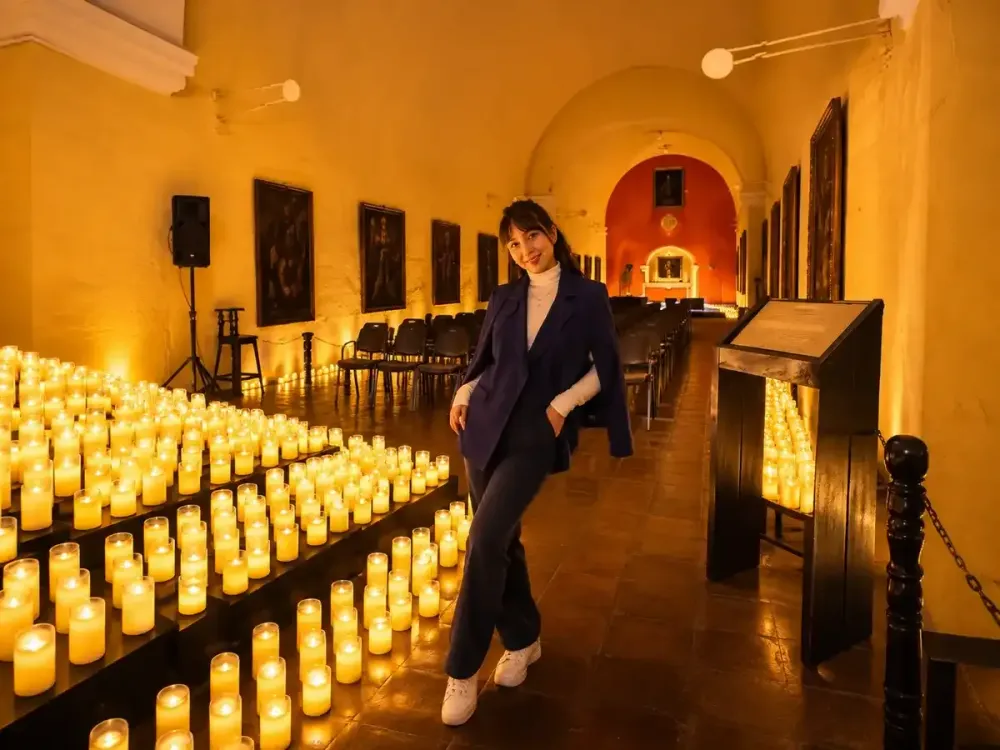
The monastery can be enjoyed at different times of day. Natural light creates interesting contrasts on the walls, while extended-hour visits, when available, offer a different atmosphere.
If you're interested in exploring the city after sunset, read our guide to things to do in Arequipa at night.
How to Combine Santa Catalina with an Arequipa City Tour
Santa Catalina Monastery is located close to other attractions in Arequipa's historic center, making it easy to include in a cultural sightseeing itinerary.
You can begin at Plaza de Armas, admire the façade of Arequipa Cathedral, and continue toward the Church and Cloisters of La Compañía de Jesús. Afterward, set aside time to explore the monastery and its internal streets.
If you have a full day available, you can also visit the Yanahuara and Carmen Alto viewpoints, where you'll enjoy views of the city and the surrounding volcanoes.
Our Arequipa City Tour combines some of these places in an organized sightseeing experience with a professional guide. It's a convenient alternative for travelers who want to understand the history of the White City without arranging every transfer independently.
If you have more time, you can complement your visit with the Ruta del Sillar in Arequipa, where you'll discover the origins of the volcanic stone used in many of the city's traditional buildings.
You can also read our guide to what to see in Arequipa in 1, 2, and 3 days to plan an itinerary combining architecture, gastronomy, and landscapes.
At Dreamy Tours, we consider Santa Catalina Monastery an essential visit for understanding Arequipa's historical and cultural identity. Its streets, cloisters, and collections reveal a part of the city that has remained protected behind its walls for more than four centuries.
If you're planning your trip, explore all our Arequipa tours and choose the experiences that best match your schedule and travel style.
Personal travel advice
Plan your trip with Dreamy Tours
Start a tailored journey with our exclusive tours and custom trips across Peru and other Latin American countries.