Search the blog
Tabla de contenidos
The Plaza de Armas in Arequipa is the historic heart of the White City and one of the most representative urban spaces in southern Peru. Surrounded by the imposing Cathedral, traditional stone arcades, and buildings that preserve the city's architectural identity, it is an essential stop for travelers interested in Arequipa's history and culture.
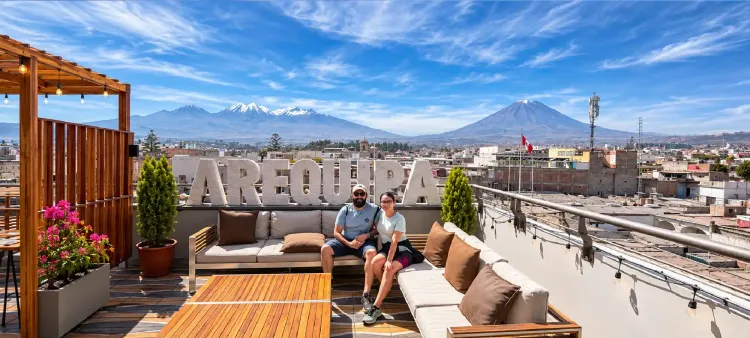
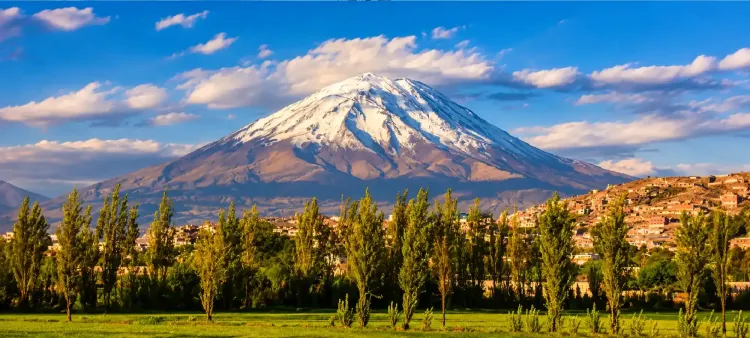
From its gardens, you can admire sillar stone architecture, observe everyday life, and, when the skies are clear, catch glimpses of the volcanic landscape surrounding Arequipa. The atmosphere changes throughout the day: mornings are ideal for exploring historic monuments, while evening illumination transforms the façades into one of the most attractive settings in the historic center.
If you're looking for information about Plaza de Armas in Arequipa, this guide explains its history, the buildings surrounding it, the story behind the famous Tuturutu, places you can visit on foot, and how to plan your sightseeing.
You can also complement your visit with our guide to 20 must-see places and things to do in Arequipa, featuring the region's main cultural and natural attractions.
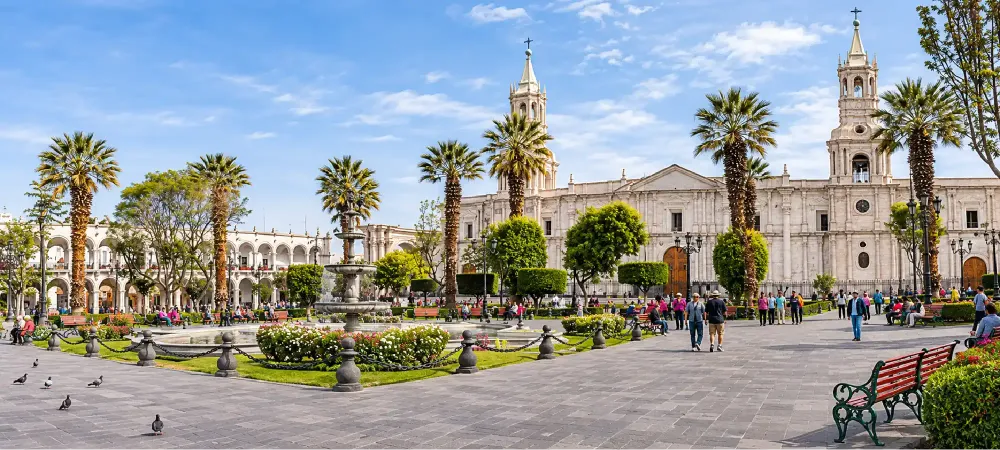
Where Is Arequipa's Plaza de Armas and Why Is It Famous?
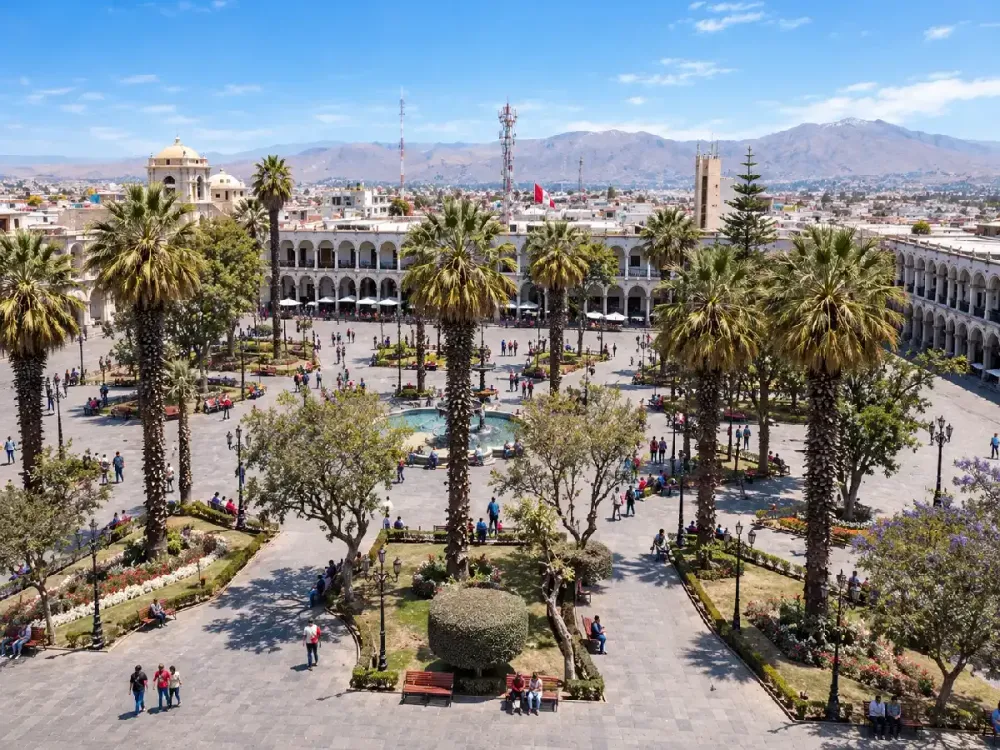
Plaza de Armas is located in Arequipa's historic center, approximately 2,335 meters (7,661 feet) above sea level. It is the city's main reference point and a convenient starting place for exploring its monuments, churches, traditional streets, and cultural attractions.
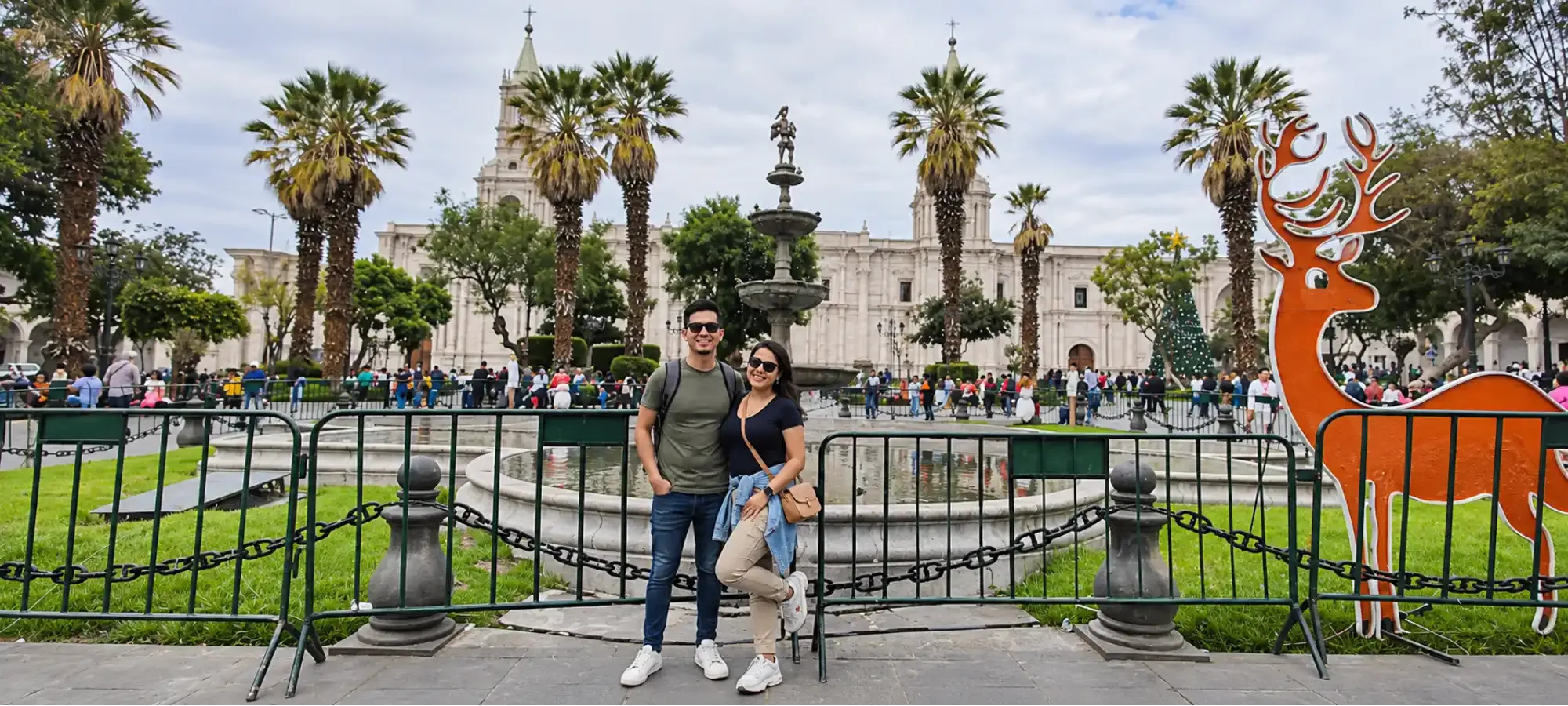
Its fame comes mainly from the architectural ensemble surrounding it. The Cathedral occupies one side of the square, while elegant arcaded buildings line the other three sides, forming one of the most recognizable images of the White City.
At the center of the square stands a bronze fountain crowned by a figure known as the Tuturutu, one of Arequipa's popular symbols. Surrounding it are gardens, walkways, and seating areas enjoyed by residents and visitors alike.
The square is also part of the Historic Centre of the City of Arequipa, which was inscribed on the UNESCO World Heritage List in 2000. This recognition applies to the historic urban ensemble, known for its architecture and the integration of European and Andean cultural influences.
At Dreamy Tours, we recommend beginning any city sightseeing itinerary here, as it provides an introduction to the relationship between Arequipa's architecture, history, and surrounding volcanoes.
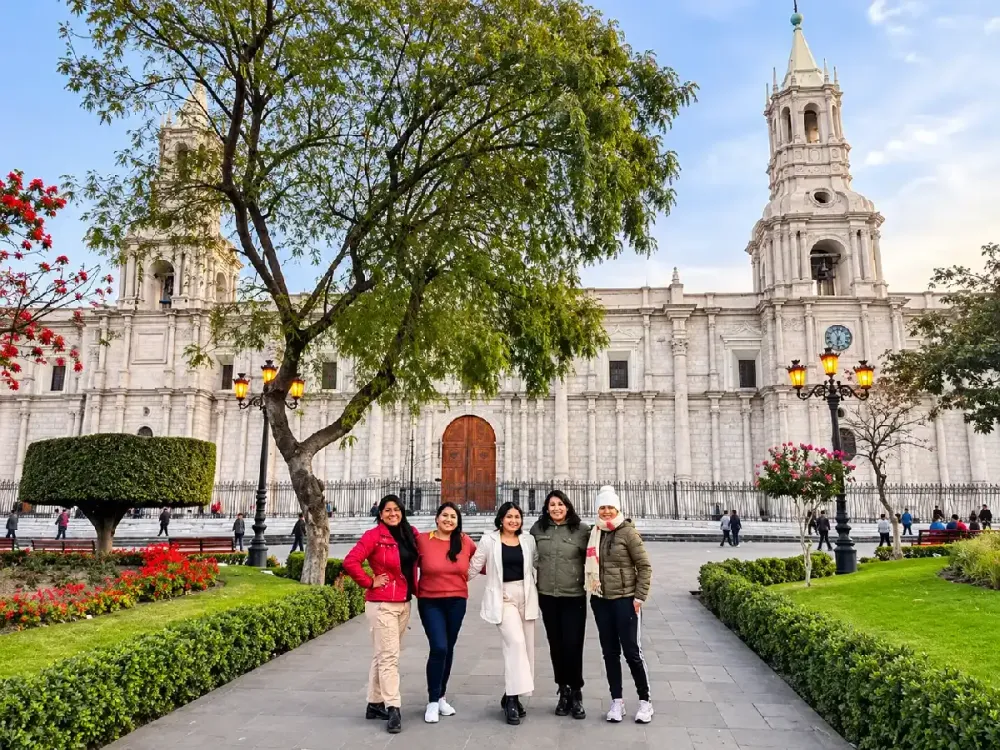
History of Arequipa's Plaza de Armas Since 1540
The history of Plaza de Armas is closely connected to the Spanish foundation of Arequipa on August 15, 1540. From that time onward, the square was established as the principal center of the new city, following the urban planning model used during the colonial period.
Over the following centuries, the square became a focal point for religious, administrative, military, commercial, and social activities. Buildings associated with local government, the Church, and other important institutions were established around it.
It was also an important commercial space. For much of its history, the square functioned as a marketplace and meeting place for Arequipa's residents, until these activities gradually moved to other parts of the city.
Earthquakes caused damage and prompted reconstruction at different periods. As a result, the buildings and arcades seen today contain architectural elements developed across several centuries.
The square also underwent changes to its gardens, pathways, and circulation areas, gradually adapting to its role as a civic and tourist center.
Today, it continues to host celebrations, cultural activities, and important events for the local population, preserving its role as one of Arequipa's main gathering places.
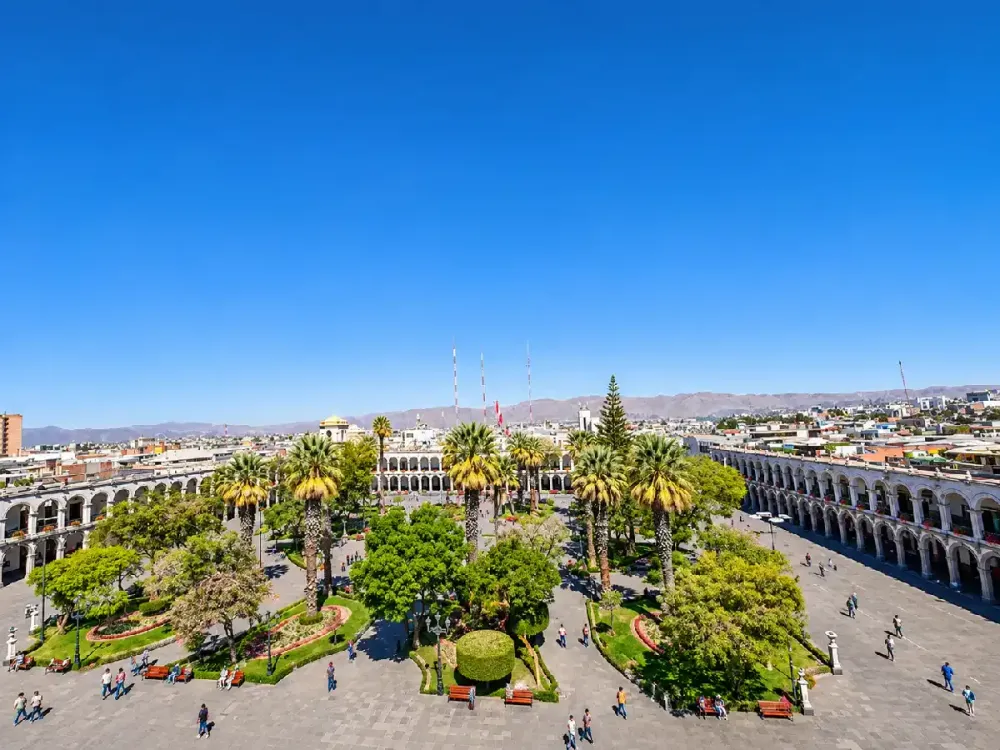
Arequipa Cathedral: The Square's Main Landmark
The Basilica Cathedral of Arequipa is the most imposing building surrounding Plaza de Armas. Its extensive sillar stone façade, columns, and two towers dominate one side of the square and form one of the White City's most representative images.
The cathedral's history has been shaped by reconstruction and architectural changes. The building developed during the 17th century was later affected by several events, including a fire in 1844, which led to an important reconstruction in the Neoclassical style.
Its architecture prominently features sillar, a volcanic stone widely used in Arequipa's churches, mansions, and other monuments.
Inside, the cathedral preserves important artistic and religious elements, including a carved wooden pulpit, sculptures, and an organ of Belgian origin. Access to these spaces depends on the opening hours and visiting conditions established by the religious administration.
From the square, you can admire the entire façade and appreciate how the Cathedral integrates with the surrounding arcades and buildings.
If you'd like to explore the city with historical explanations, our Arequipa City Tour includes Plaza de Armas and an exterior visit to the Cathedral.
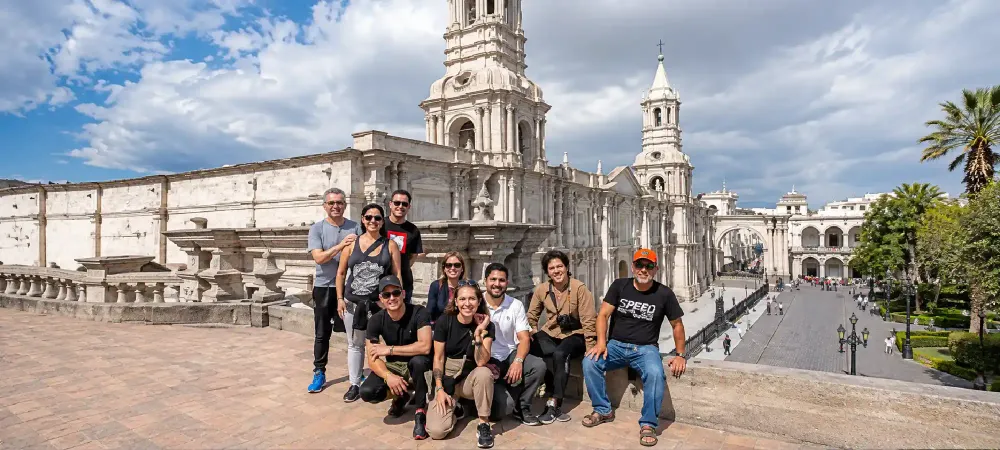
The Arcades of Plaza de Armas and Their Sillar Stone Architecture
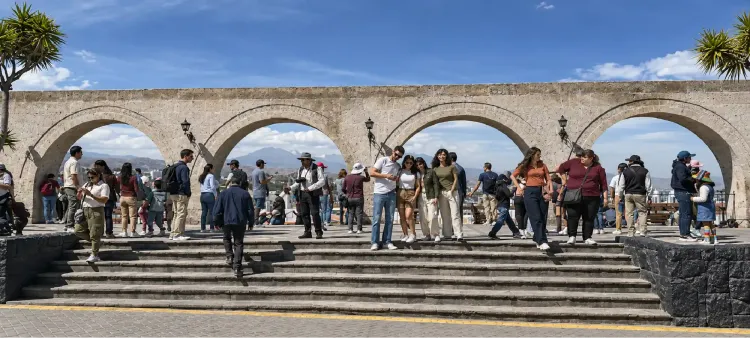
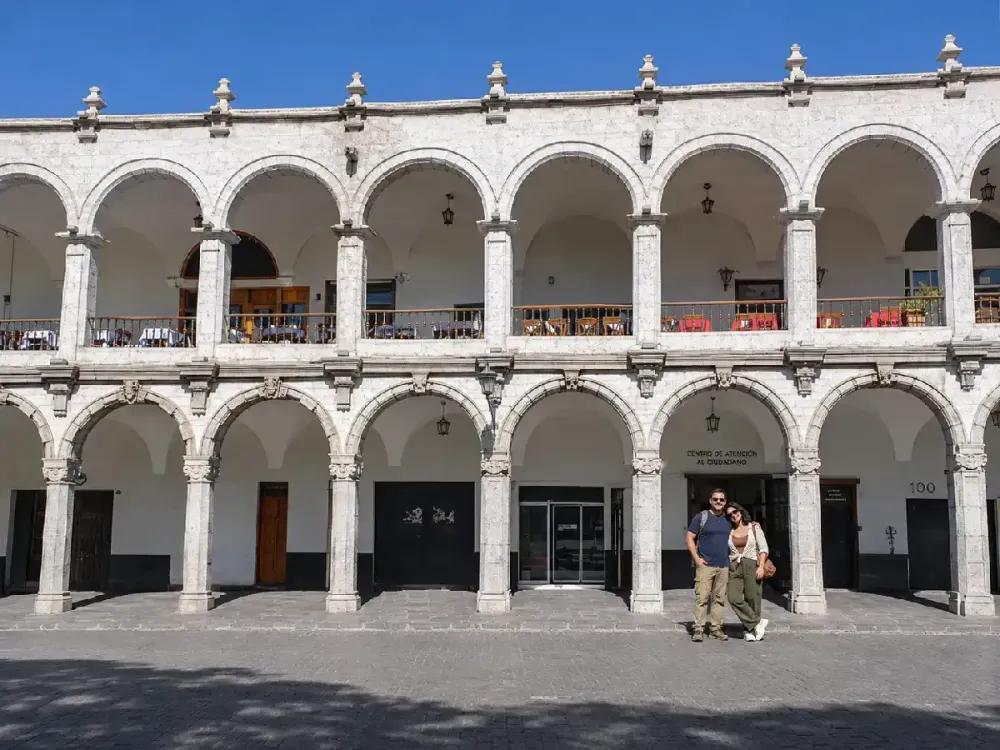
The arcades are among the most distinctive features of Plaza de Armas. Their long rows of arches form corridors along three sides of the square and reveal an important part of Arequipa's architectural evolution.
The ensemble consists of Portal de Flores, Portal de San Agustín, and Portal de la Municipalidad. Each is associated with different stages of the city's urban and commercial history.
Together, the three arcades contain approximately 87 arches arranged symmetrically. Their architecture combines different influences and reconstruction efforts carried out after earthquakes damaged the historic center.
Today, these covered corridors accommodate shops, restaurants, cafés, and pedestrian walkways. Their purpose has evolved over time, but they remain part of everyday life in Arequipa.
The stone used in local architecture has a special significance for the city. If you'd like to learn where it comes from and how it is extracted, read our Ruta del Sillar in Arequipa guide, where we explain the origins and traditional craftsmanship of this volcanic material.
The Tuturutu: History of the Plaza de Armas Fountain
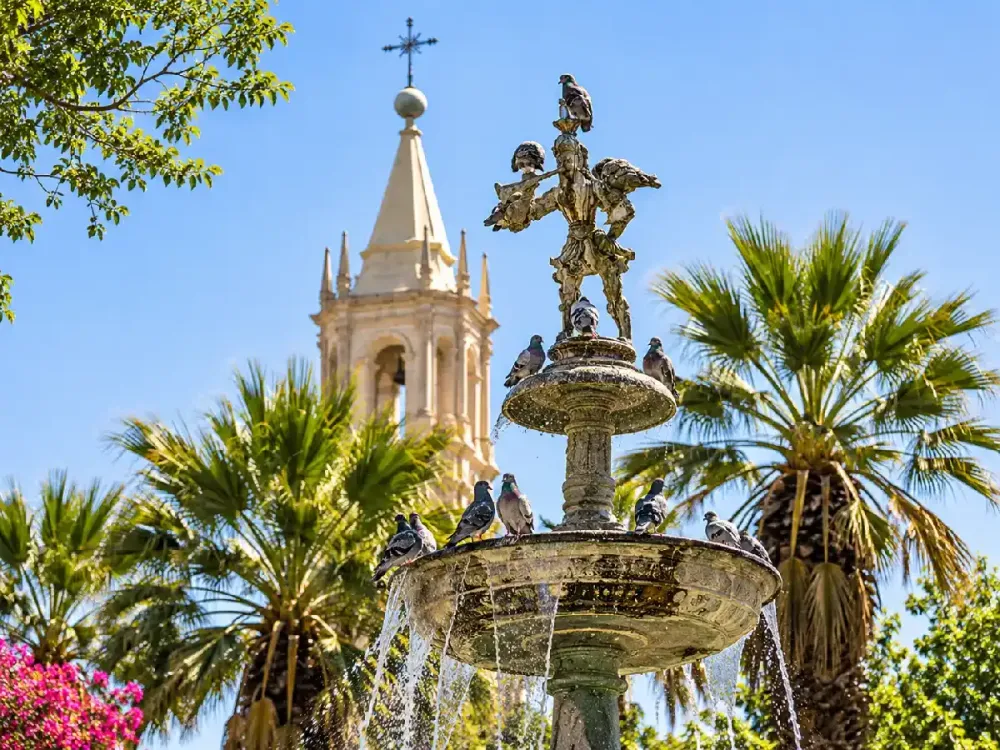
At the center of Plaza de Armas stands one of its best-known landmarks: a bronze fountain crowned by a small figure called the Tuturutu.
This character is part of Arequipa's popular traditions and one of the city's most recognizable symbols. Its name is commonly associated with the sound of a trumpet, linked to the traditional role of announcing events and communicating messages in earlier times.
According to historical interpretations surrounding the monument, the figure may represent a person responsible for signaling or delivering announcements. However, some explanations of its origins belong to local tradition and should not be confused with fully documented historical facts.
The fountain has witnessed the square's transformations and remains one of the most popular photography spots for visitors.
Despite its small size, the Tuturutu represents an important part of Arequipa's cultural identity. Learning about its story helps visitors appreciate details that are often overlooked during a quick stop.
We recommend spending a few minutes beside the fountain, taking in the architectural composition formed by the Cathedral, arcades, and gardens.
Church and Cloisters of La Compañía de Jesús
Just a short walk from Plaza de Armas stands the Church of La Compañía de Jesús, one of the most important religious monuments in Arequipa's historic center.
Its façade is known for intricate carvings in volcanic stone, representing a local interpretation of religious art developed during the colonial period. The decorative elements combine European influences with motifs associated with the Andean cultural environment.
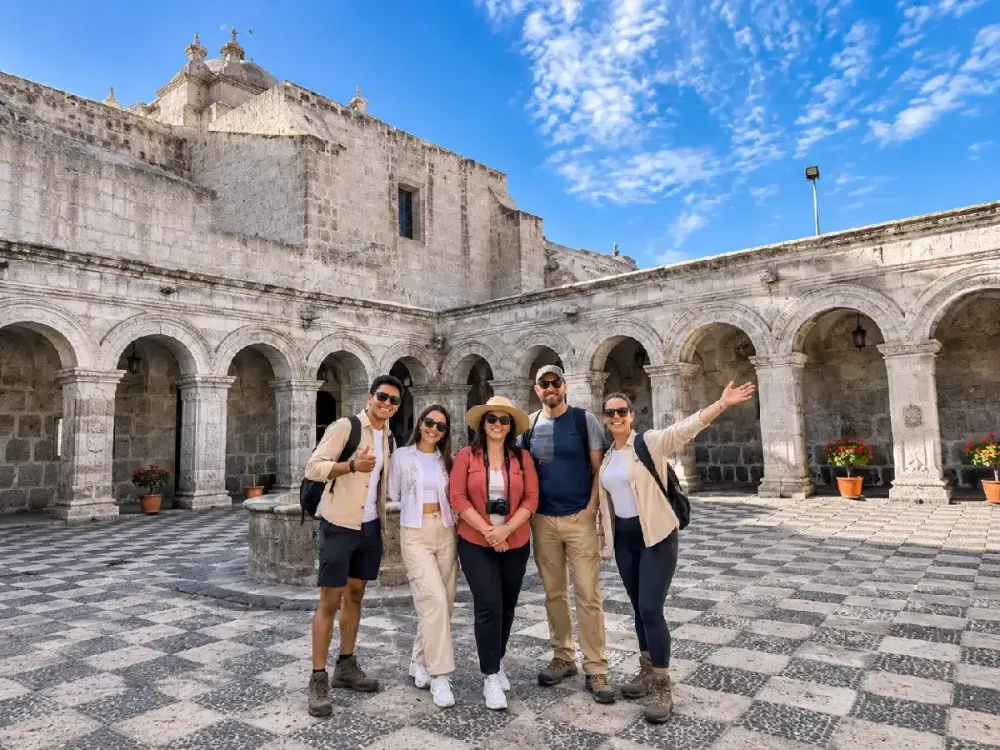
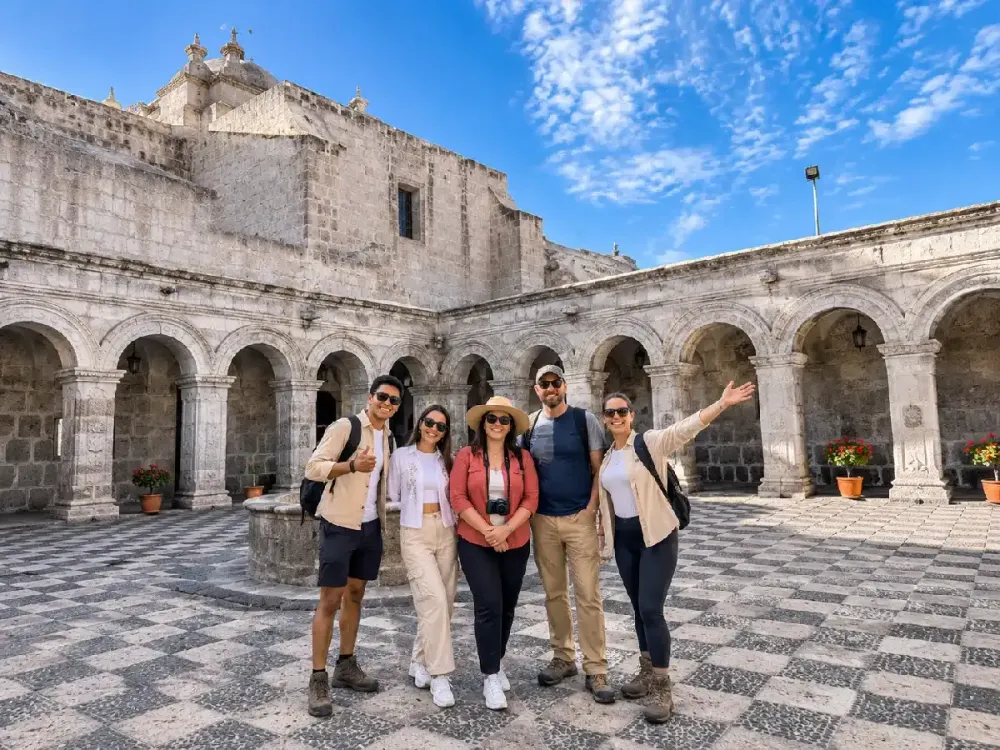
Close to the church are the Cloisters of La Compañía, a series of courtyards surrounded by arches and corridors that showcase the craftsmanship involved in working sillar stone.
These spaces are particularly interesting for travelers who enjoy architecture, history, and photography. Their doorways, columns, and reliefs demonstrate the expertise of artisans who contributed to Arequipa's traditional buildings.
Their proximity to Plaza de Armas makes it easy to visit both attractions on foot without additional transportation.
Our Arequipa City Tour includes the Church and Cloisters of La Compañía de Jesús as part of the White City's cultural sightseeing experience.
Places to Visit Near Plaza de Armas in Arequipa
One of the greatest advantages of Plaza de Armas is its location. From here, you can walk to several of the best-known monuments and cultural attractions in Arequipa's historic center.
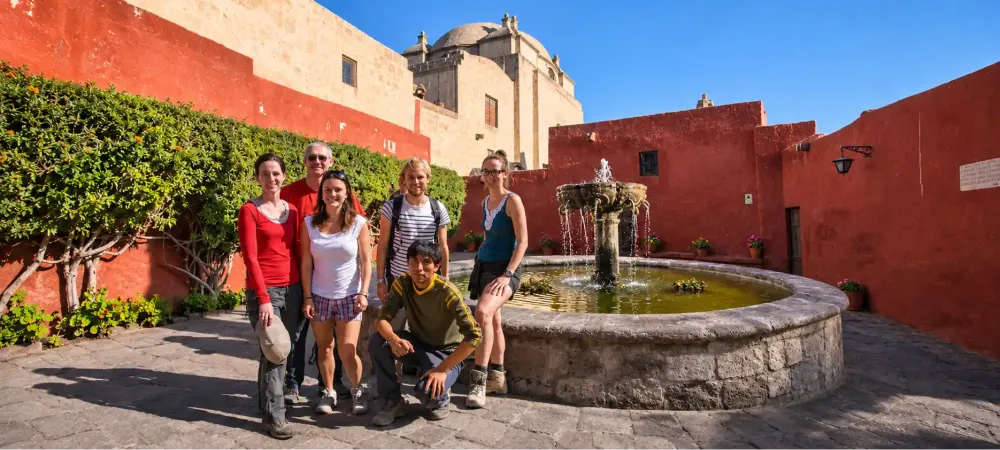
Santa Catalina Monastery is one of the most recommended visits. Founded in 1579, it preserves internal streets, colorful courtyards, cloisters, and former religious quarters that reveal an important part of Arequipa's history.
To plan your visit, explore our Santa Catalina Monastery in Arequipa guide, where we explain its history, main spaces, and practical recommendations.
Another interesting place is the San Lázaro neighborhood, known for its traditional streets and stone buildings. You can also visit the Andean Sanctuaries Museum, which presents archaeological research and artifacts connected to the region's pre-Hispanic cultures.
The following table will help you organize nearby attractions.
| Place | What you can discover | Approximate walking time |
|---|---|---|
| Arequipa Cathedral | Religious architecture and sillar stone façade | Facing the square |
| Church of La Compañía de Jesús | Religious art and architectural details | 2 to 5 minutes |
| Cloisters of La Compañía | Traditional courtyards and arcades | 2 to 5 minutes |
| Santa Catalina Monastery | Cloisters, internal streets, and convent history | 5 to 10 minutes |
| Andean Sanctuaries Museum | Archaeological heritage and Andean cultures | 5 to 10 minutes |
| San Lázaro neighborhood | Traditional streets and historic architecture | 10 to 15 minutes |
These times are approximate and may vary depending on your chosen route, walking pace, and access conditions.
For more alternatives, explore our guide to tourist attractions in Arequipa, featuring additional monuments, landscapes, and recommended experiences.
How to Get to Plaza de Armas from the Airport and Other Locations
Plaza de Armas is located in the historic center, making it one of the most accessible places for visitors staying in Arequipa's central district.
If you're arriving at Alfredo Rodríguez Ballón International Airport, you'll need to travel toward the city center by taxi, private transportation, or a prearranged transfer service. Travel time depends on traffic and road conditions.
If you're arriving at the city's bus terminal, you can also use authorized transportation to reach the area surrounding the square.
Travelers staying in the historic center can generally walk from their hotels. Visitors staying in Yanahuara or nearby districts can take a taxi or walk a longer distance, depending on their location.
Keep in mind that some streets in the historic center have vehicle restrictions or temporary access changes. As a result, your drop-off point may be a short walk from the square.
If you're looking for an organized experience that covers several attractions in one outing, our Arequipa City Tour provides tourist transportation and guided assistance during the scheduled visits.
What Is the Best Time to Visit Plaza de Armas?
Plaza de Armas can be enjoyed at different times of day, but its atmosphere changes considerably with the light, visitor activity, and weather conditions.
In the morning, natural light makes it easier to appreciate the architectural details of the Cathedral and arcades. It's a good option for travelers who want to begin their cultural sightseeing and continue toward nearby monuments.
Around midday, the square is often busier, with residents and travelers exploring its gardens, cafés, and commercial establishments.
In the afternoon, changing light creates interesting opportunities to photograph the buildings and arches. As evening approaches, illumination of the monuments gives the square a different atmosphere.
| Time of day | Recommended experience |
|---|---|
| Morning | Photograph the Cathedral and begin a historic walking tour |
| Midday | Enjoy the city atmosphere and take a break |
| Afternoon | Observe architectural details of the arcades and nearby streets |
| Evening | Admire the illuminated square and explore the city center |
Volcano visibility and sky conditions can change throughout the day, so there isn't a single perfect time for every photograph.
If you'd like more ideas for exploring the city after sunset, read our guide to things to do in Arequipa at night.
What to Eat Near Plaza de Armas in Arequipa
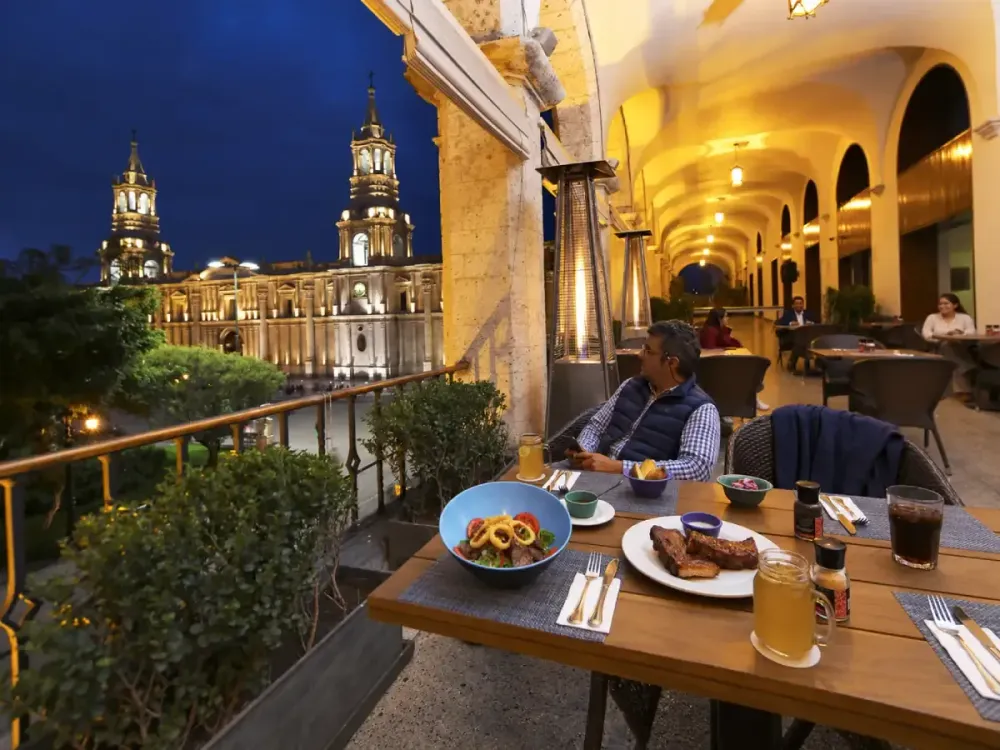
The streets surrounding Plaza de Armas offer restaurants, cafés, and other establishments where you can discover the flavors of Arequipa's traditional cuisine.
Among the most representative dishes are rocoto relleno (stuffed spicy pepper), ocopa arequipeña (potatoes with a traditional herb and chili sauce), adobo (a regional marinated meat stew), and chupe de camarones (a traditional shrimp soup). These dishes belong to a culinary heritage that combines regional ingredients and techniques passed down through generations.
Another interesting experience is tasting queso helado arequipeño, a traditional frozen dessert made mainly with milk, coconut, cinnamon, and sugar. Despite its name referring to cheese, the traditional recipe doesn't require it.
You'll also find places to have breakfast, enjoy coffee, or sit down for a meal while observing the activity of the historic center.
If you want to discover the local cuisine in greater depth, we recommend visiting a traditional picantería during your stay. These restaurants are an important part of Arequipa's culinary identity and serve regional dishes that aren't always found in tourist-oriented establishments.
You can explore these flavors further through our Arequipa food guide, covering traditional dishes, ingredients, and places associated with local cuisine.
Tips for Visiting Plaza de Armas and the Historic Center
Plaza de Armas is a public square with free access, so you don't need to purchase a ticket to walk through its gardens, admire the Cathedral from outside, or explore the arcades.
However, nearby monuments, museums, and religious sites may charge admission or have specific opening hours. We recommend checking their visiting conditions before planning your sightseeing.
For exploring the historic center, comfortable shoes, sunscreen, and an extra light layer are advisable. Arequipa can experience strong solar radiation, even when the weather feels cool.
If you're photographing architectural heritage, avoid obstructing pedestrian traffic and follow the rules of individual establishments and monuments.
It's also important to look after your belongings, use authorized transportation services, and watch for street closures during celebrations or public events.
The square frequently hosts cultural activities and local festivities, so its atmosphere may vary depending on your travel dates.
At Dreamy Tours, we recommend setting aside at least part of a morning or afternoon to explore this area at a relaxed pace rather than making only a quick photography stop.
How to Combine Plaza de Armas with an Arequipa City Tour
Plaza de Armas is an excellent starting point for discovering the White City's main attractions. Its location allows you to begin with a walking tour of historic monuments before continuing to other neighborhoods and viewpoints.
You can start by admiring the Cathedral and arcades, visit the Church and Cloisters of La Compañía de Jesús, and spend time exploring Santa Catalina Monastery. If you have additional hours, you can continue toward the Yanahuara and Carmen Alto viewpoints.
Yanahuara is especially known for its sillar stone arches and views of Misti Volcano. To plan that visit, read our Yanahuara Viewpoint guide.
Our Arequipa City Tour: Santa Catalina, Yanahuara, and Plaza de Armas combines several of these attractions in an organized excursion lasting approximately four hours. It's an option for travelers who want to visit the city's most representative monuments and viewpoints with transportation and professional guidance.
If you'd rather explore independently, you can use our guide to Arequipa in One Day or review our itineraries for what to see in Arequipa in 1, 2, and 3 days to plan your time.
At Dreamy Tours, we believe Plaza de Armas deserves more than a photograph in front of the Cathedral. Its arcades, history, the Tuturutu figure, and proximity to other landmarks allow visitors to discover the essence of Arequipa from the heart of its historic center.
If you're planning your trip, explore our Arequipa tours and choose the experiences that best match your interests, available time, and preferred travel style.
Personal travel advice
Plan your trip with Dreamy Tours
Start a tailored journey with our exclusive tours and custom trips across Peru and other Latin American countries.