Search the blog
Tabla de contenidos
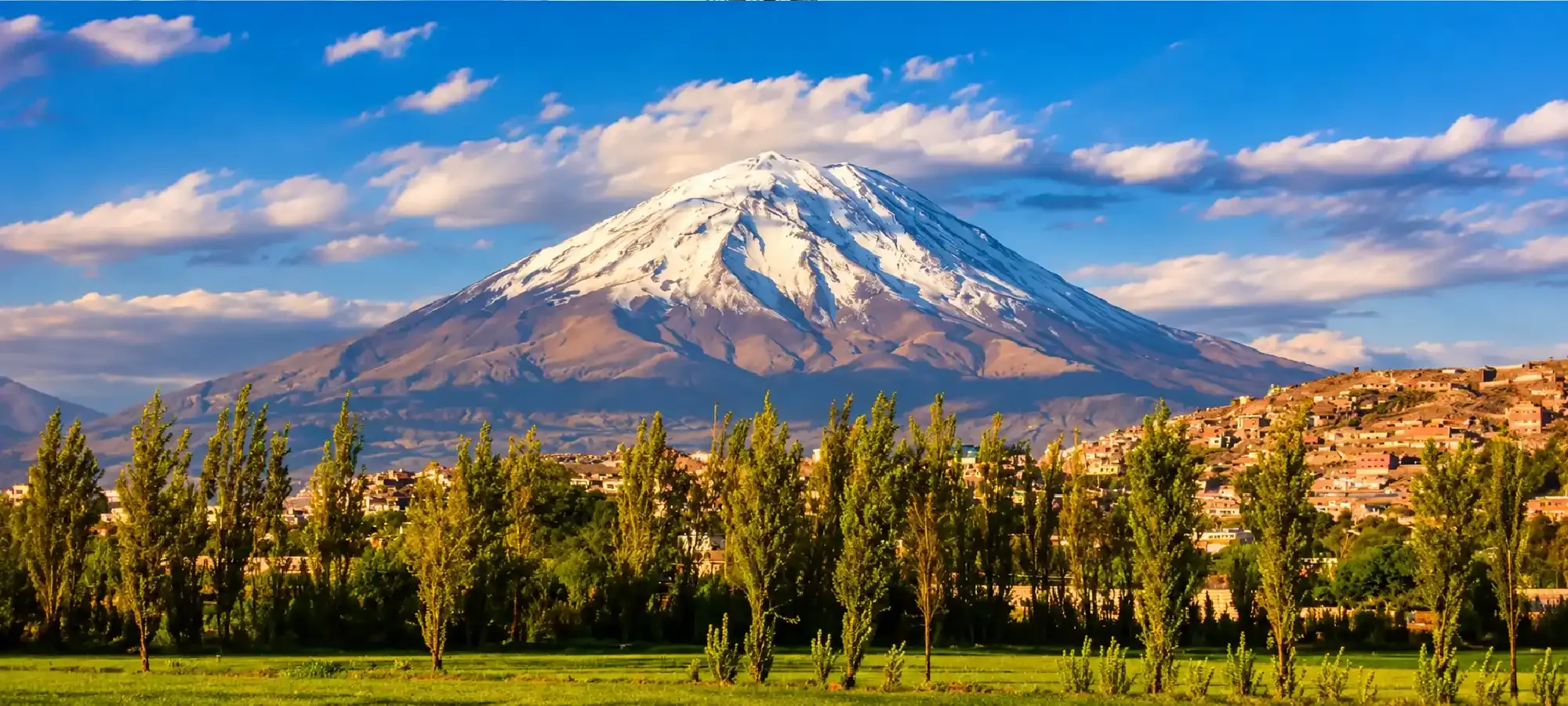
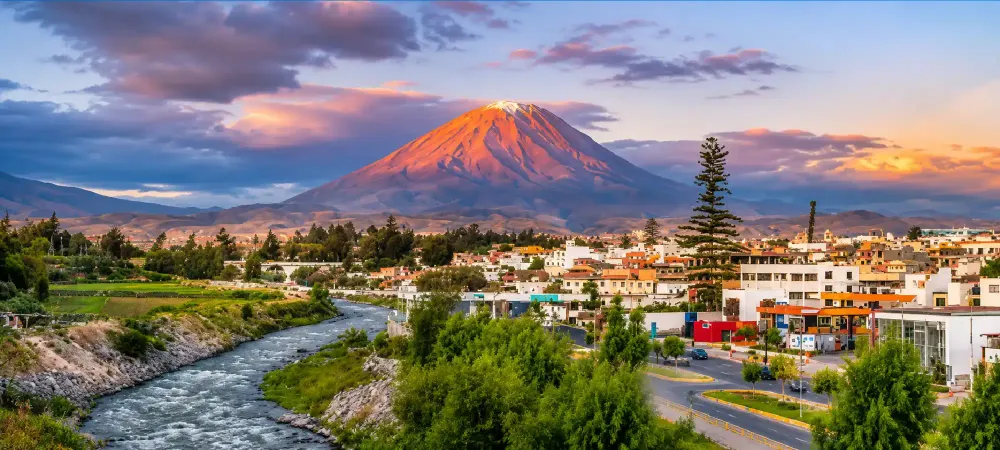
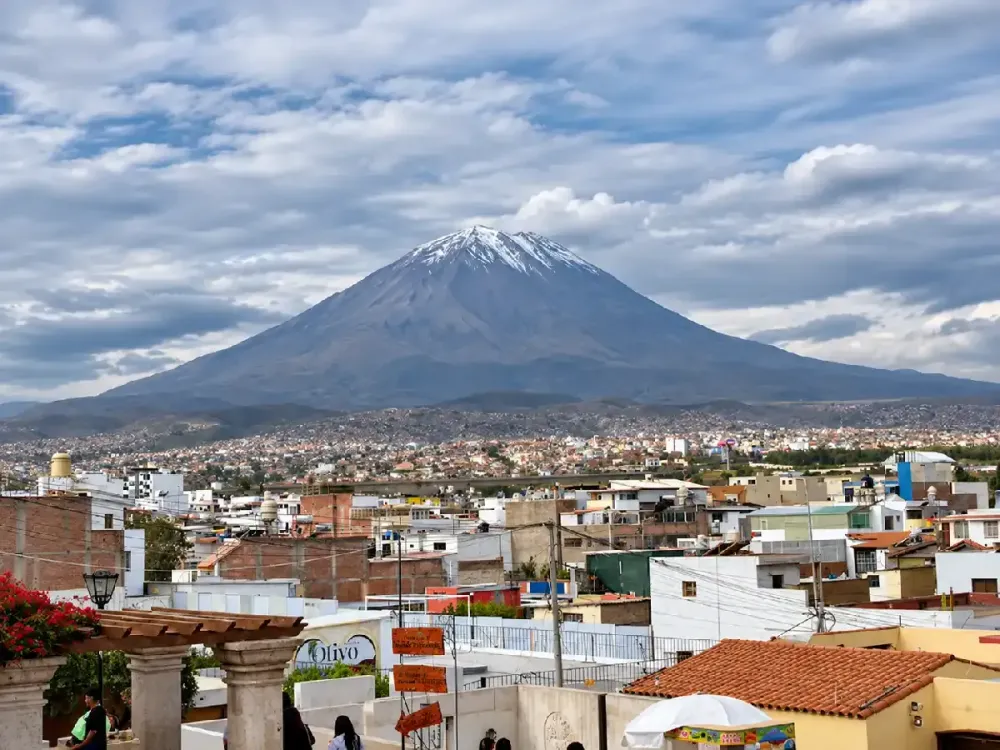
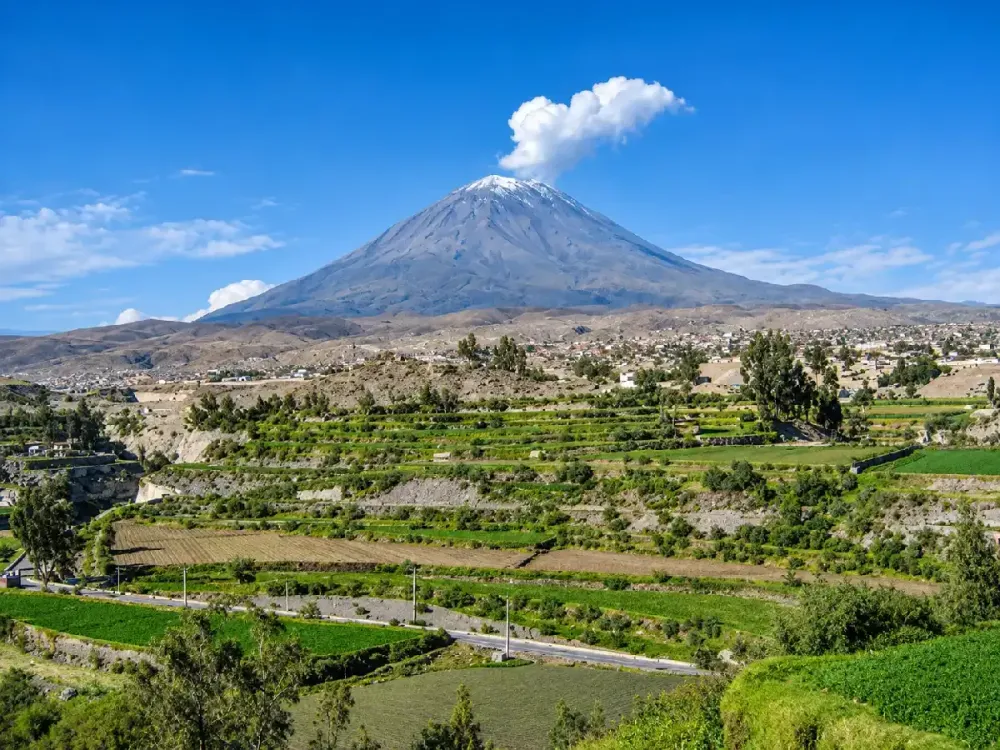
Misti Volcano is one of Arequipa's most recognizable natural landmarks and a constant presence in the landscape of the White City. Its imposing cone-shaped silhouette rises above the horizon, providing a spectacular backdrop to the squares, traditional neighborhoods, and viewpoints that define Arequipa's identity.
Standing 5,822 meters (19,101 feet) above sea level, Misti is more than a beautiful mountain. It is also an active volcano whose geological history is closely connected to the development of the surrounding landscape, ancient eruptions, and the communities that settled nearby.
For many travelers, the best way to experience Misti is by admiring it from Yanahuara Viewpoint, Carmen Alto Viewpoint, and other panoramic locations around Arequipa. These experiences offer impressive views without requiring a demanding high-altitude mountaineering expedition.
If you're looking for information about Misti Volcano, this guide explains where it is located, how high it is, whether it is still active, the best places to photograph it, and what to consider before your visit.
You can also discover other regional attractions in our guide to 20 must-see places and things to do in Arequipa, featuring cultural experiences, landscapes, and recommended excursions.
Where Is Misti Volcano Located?
Misti Volcano is located in southern Peru, in the Arequipa region, approximately 17 kilometers (10.6 miles) northeast of the city center. It forms part of the Andean volcanic chain and is one of the most important geographical landmarks surrounding Arequipa.
Its location explains why it can be seen from so many parts of the city. Unlike other major natural attractions that require long journeys, Misti is part of Arequipa's everyday skyline.
The volcano is geographically associated with districts such as Cayma, Miraflores, Alto Selva Alegre, Chiguata, and San Juan de Tarucani. Its presence also influences the geological features of ravines and terrain near the city.
From the historic center, its silhouette can be seen from certain locations, although buildings and weather conditions may limit visibility. Viewpoints outside the busiest streets offer wider panoramas.
At Dreamy Tours, we recommend starting with a scenic visit before considering any mountain activities. This allows you to better understand the connection between the city and its volcanic landscape.
How Tall Is Misti Volcano?
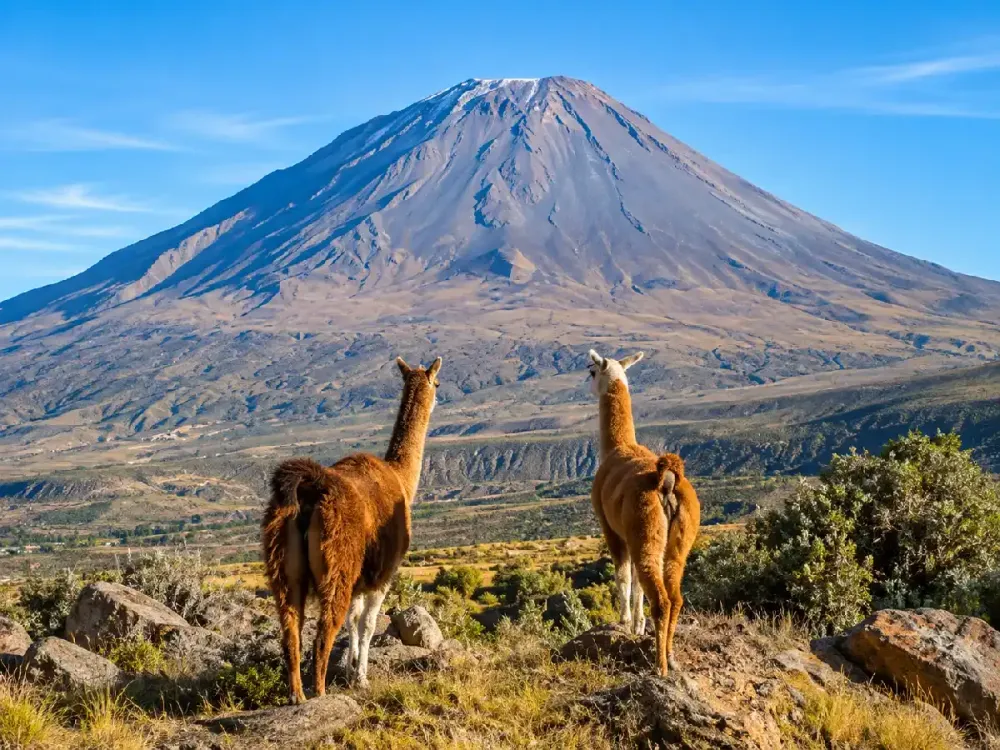
Misti Volcano reaches an elevation of 5,822 meters (19,101 feet) above sea level, according to the Geophysical Institute of Peru (IGP). This figure refers to the summit's elevation and helps explain the considerable altitude difference between the mountain and the city of Arequipa.
Central Arequipa is located at approximately 2,335 meters (7,661 feet) above sea level. Consequently, there is a substantial elevation difference between the city and the volcano's summit.
Misti is characterized by its conical shape, formed through the accumulation of volcanic materials during different stages of its development. Its profile is particularly recognizable because it stands out clearly from several panoramic viewpoints.
Although some tourism publications provide slightly different elevation figures, this guide uses the IGP reference of 5,822 meters.
| Feature | Information |
|---|---|
| Name | Misti Volcano |
| Location | Arequipa region, southern Peru |
| Summit elevation | 5,822 meters (19,101 feet) above sea level |
| Approximate distance from central Arequipa | 17 km (10.6 miles) |
| Volcano type | Stratovolcano |
| Geological status | Active volcano |
It's important to remember that admiring Misti from Arequipa does not mean ascending to its maximum elevation. Regular tourist viewpoints are located at much lower altitudes and do not require the same physical preparation as a summit expedition.
Is Misti Volcano Active or Inactive?
Misti is classified as an active volcano. This means it has a history of eruptions and geological processes that justify ongoing monitoring, even though it may appear peaceful when viewed from Arequipa.
The Geophysical Institute of Peru, through the National Volcanological Center, monitors its behavior. These observations include seismic records and other measurements related to volcanic activity.
The existence of a monitoring system does not mean an eruption is imminent. Interpreting changes in volcanic activity requires up-to-date scientific information and should be based on official announcements from the responsible institutions.
Misti has exhibited fumarolic activity and seismic movements associated with internal geological processes. However, the intensity and characteristics of these manifestations can change over time.
For travelers visiting Arequipa, it's important to distinguish between sightseeing from the city and activities undertaken close to the volcano itself. Urban viewpoints are part of regular tourist routes, while approaching mountainous areas requires additional consideration of current conditions.
For the latest scientific information, consult the volcanoes monitored by the Geophysical Institute of Peru.
History of Misti Volcano and Its Major Eruptions
Misti's geological history extends back thousands of years. Its formation is linked to the tectonic processes responsible for volcanic activity in the Andes and the gradual accumulation of materials expelled during successive eruptions.
According to research published by the Geophysical Institute of Peru, Misti has experienced eruptions of varying intensity. One of its major explosive eruptions occurred approximately 2,050 years ago, leaving ash and pumice deposits across parts of the Arequipa region.
There is also evidence of eruptive episodes during the pre-Hispanic period. Scientific studies and historical records indicate that the volcano was already an important feature of the landscape inhabited by Andean communities long before Arequipa's Spanish foundation.
Research into Misti has helped identify volcanic deposits, reconstruct its past behavior, and understand potential hazards associated with future eruptions.
The importance of this knowledge extends beyond academic research. Arequipa is a city located close to an active volcano, making scientific investigation and land-use planning essential components of disaster risk prevention.
The landscape admired by visitors today is therefore the result of a long natural history that continues to be studied.
Why Is Misti Volcano a Symbol of Arequipa?
Misti Volcano holds a special place in Arequipa's cultural identity. Its silhouette appears in photographs, artistic representations, and many elements associated with the image of the White City.
Its presence is closely connected to how residents recognize their surroundings. From many neighborhoods, the volcano serves as a visual landmark, helping define the landscape and reminding people of the nearby Andes.
It also forms part of the region's historical memory. Pre-Hispanic societies maintained cultural and religious connections with mountains, which held an important place in the Andean worldview.
In Misti's case, archaeological investigations have identified evidence associated with ritual activities carried out in high-mountain areas in ancient times.
Today, its image is frequently used to represent Arequipa as a travel destination and complements the appeal of the city's architecture built with volcanic stone.
To better understand this relationship between nature and the city, we recommend exploring the historic center and its main monuments. Our guide to tourist attractions in Arequipa features representative cultural sites and landscapes throughout the region.
Yanahuara Viewpoint: Where to Photograph Misti Volcano
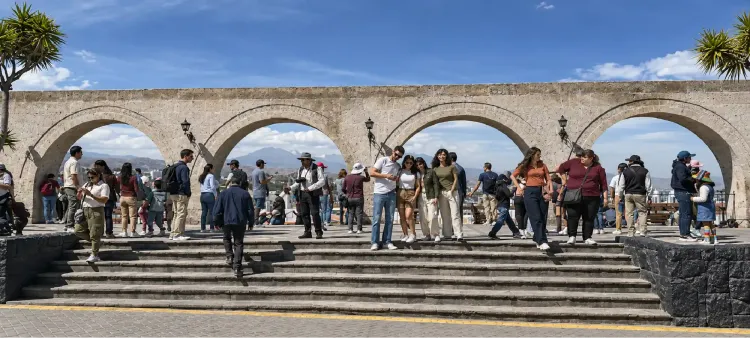
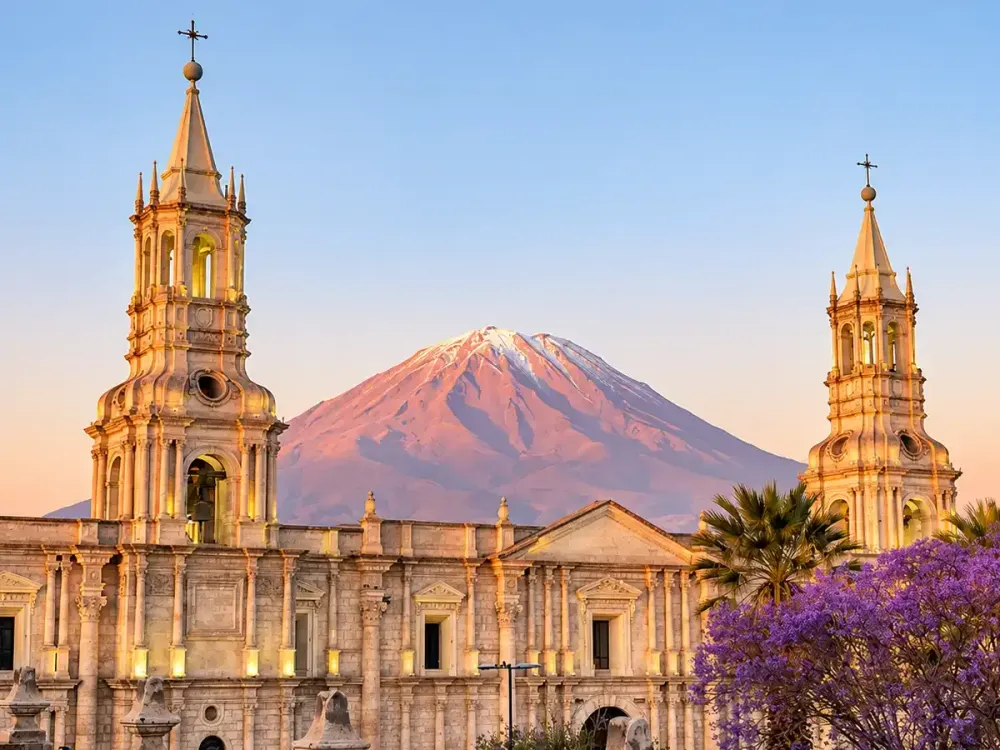
Yanahuara Viewpoint is one of the best-known places to admire Misti Volcano from Arequipa. Its traditional sillar stone arches frame the mountain, creating one of the city's most recognizable photographic scenes.
This viewpoint is located in the Yanahuara district, approximately two kilometers (1.2 miles) from the historic center. Its proximity makes it an excellent option for travelers with limited time.
In addition to the panoramic views, the area features a traditional square and the Church of San Juan Bautista, adding a cultural dimension to the experience.
On clear days, visitors can also admire Chachani and Pichu Pichu, two volcanoes that form part of Arequipa's mountainous landscape.
We recommend visiting in the morning if your main goal is to photograph Misti with good visibility. However, sky conditions may change, and there is no guarantee that the summit will be completely clear.
To plan your visit, read our Yanahuara Viewpoint guide: how to get there and what to see.
You can also explore Yanahuara and other attractions with our Arequipa City Tour, which includes panoramic stops during the sightseeing route through the White City.
Carmen Alto Viewpoint and Other Views of Misti in Arequipa
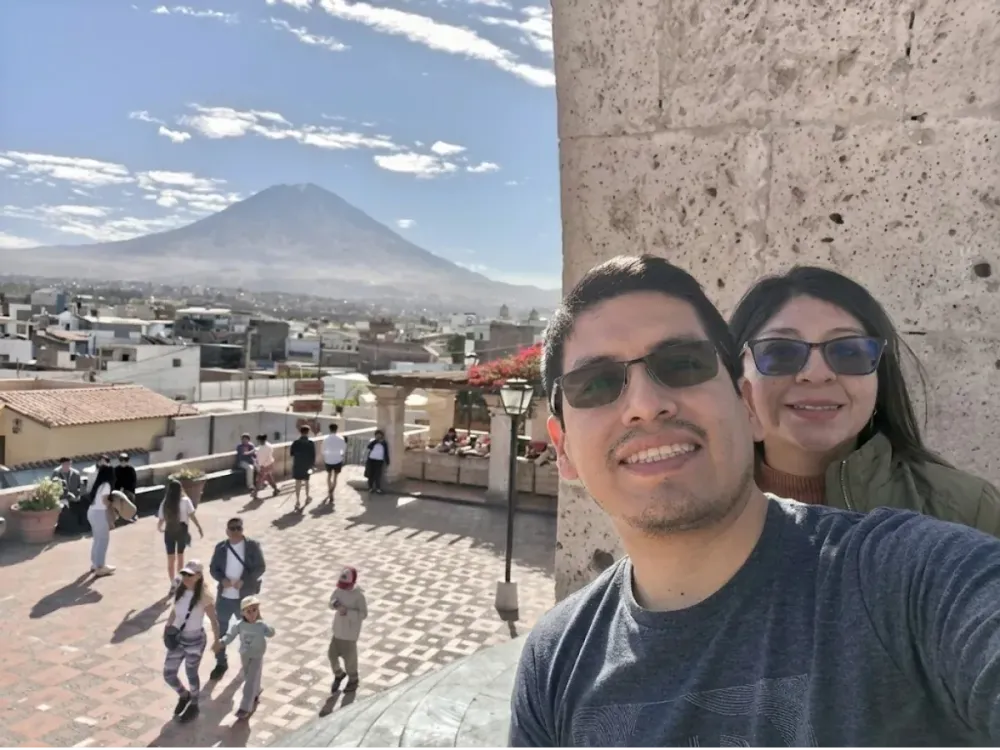
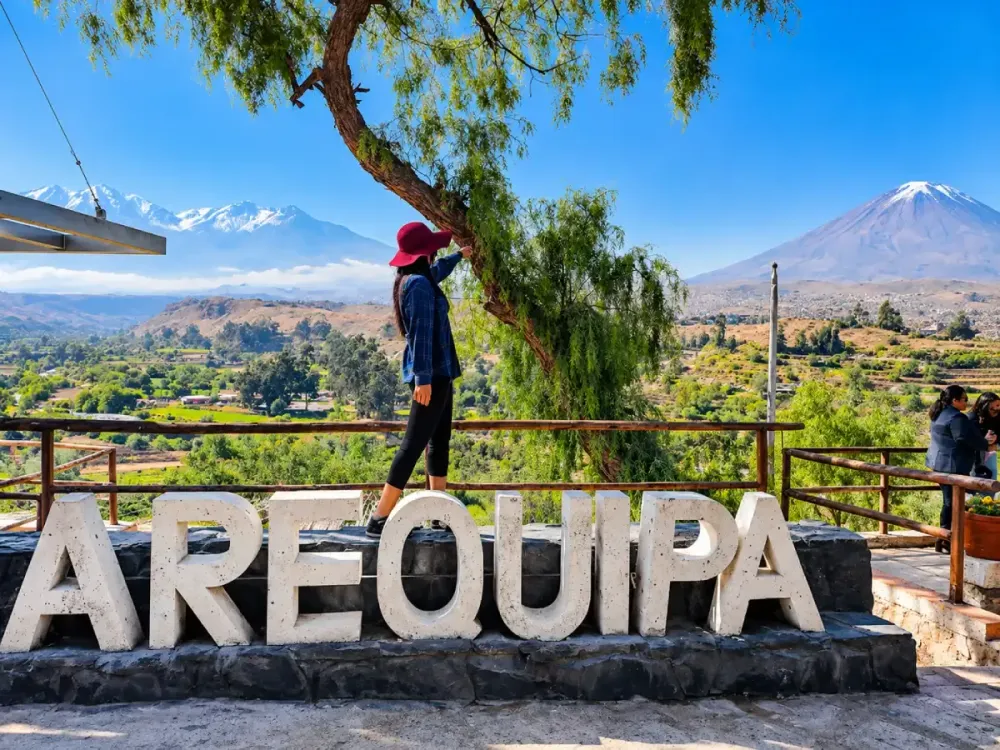
Carmen Alto Viewpoint is another recommended place to admire Arequipa's volcanic landscape. Unlike Yanahuara, this viewpoint offers views of the agricultural surroundings of the Chilina Valley and the mountains rising behind the city.
From its panoramic areas, Misti forms part of a landscape combining farmland, green spaces, and urban districts. This perspective is particularly interesting for travelers who want to photograph the contrast between nature and Arequipa's urban development.
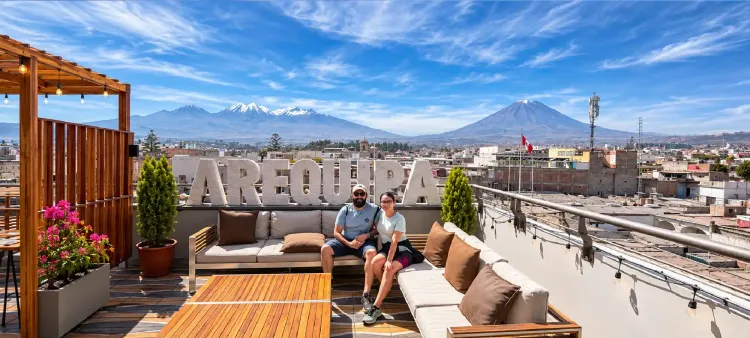
Another option is to look for elevated spots in traditional neighborhoods or establishments with terraces overlooking the volcanic skyline. In these cases, the view depends on the location and whether nearby buildings obstruct the landscape.
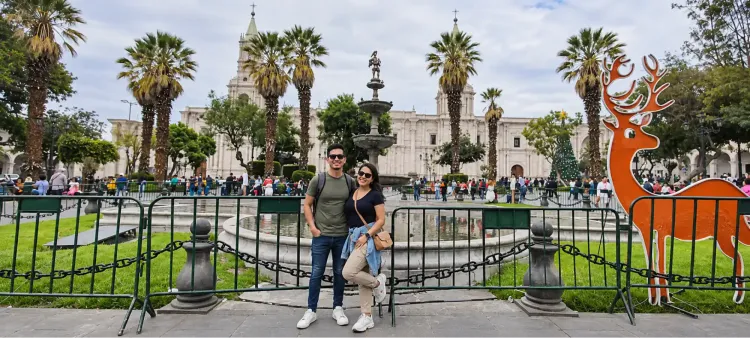
Plaza de Armas is also an essential place for appreciating the city's architecture, although it does not necessarily offer the same unobstructed view of Misti as the dedicated viewpoints.
You can plan a walk around the historic center using our Plaza de Armas in Arequipa guide, which explains the main monuments and places to visit nearby.
Our Arequipa City Tour includes stops at Carmen Alto and Yanahuara viewpoints, allowing visitors to enjoy different perspectives of the landscape during a single excursion.
What Is the Best Season and Time to See Misti Volcano?
Misti Volcano can be seen throughout the year, but visibility depends on weather conditions. Clouds, mist, and precipitation can partially or completely hide the summit.
Generally, Arequipa experiences drier conditions between April and November, while the likelihood of rain and cloud cover increases from December to March.
Mornings are often a good choice for photographing the volcano, especially on clear days. In the afternoon, changing light can create interesting contrasts, although cloud cover may also increase.
If you're planning your sightseeing, the following comparison can help you decide.
| Time or season | What to expect | Recommendation |
|---|---|---|
| Clear mornings | Potentially better visibility of the volcanic cone | Prioritize panoramic photography |
| Afternoons | Changing light and contrasting landscapes | Explore different photographic compositions |
| April to November | Generally drier conditions | Good period for viewpoint visits |
| December to March | Higher probability of rain and clouds | Keep your itinerary flexible |
A perfect view cannot be guaranteed on a particular date. For this reason, we recommend combining Misti sightseeing with cultural activities so you can enjoy the day even if the sky is cloudy.
If you have limited time, explore our Arequipa in One Day guide, featuring a route through historic monuments and viewpoints.
Misti, Chachani, and Pichu Pichu: Differences Between Arequipa's Volcanoes
Arequipa is known for its views of three major volcanoes: Misti, Chachani, and Pichu Pichu. Although they often appear together in panoramic photographs, each has distinct visual characteristics.
Misti is particularly recognizable for its cone-shaped profile and dominant position above the cityscape. Its silhouette is one of the most frequently used images to represent Arequipa.
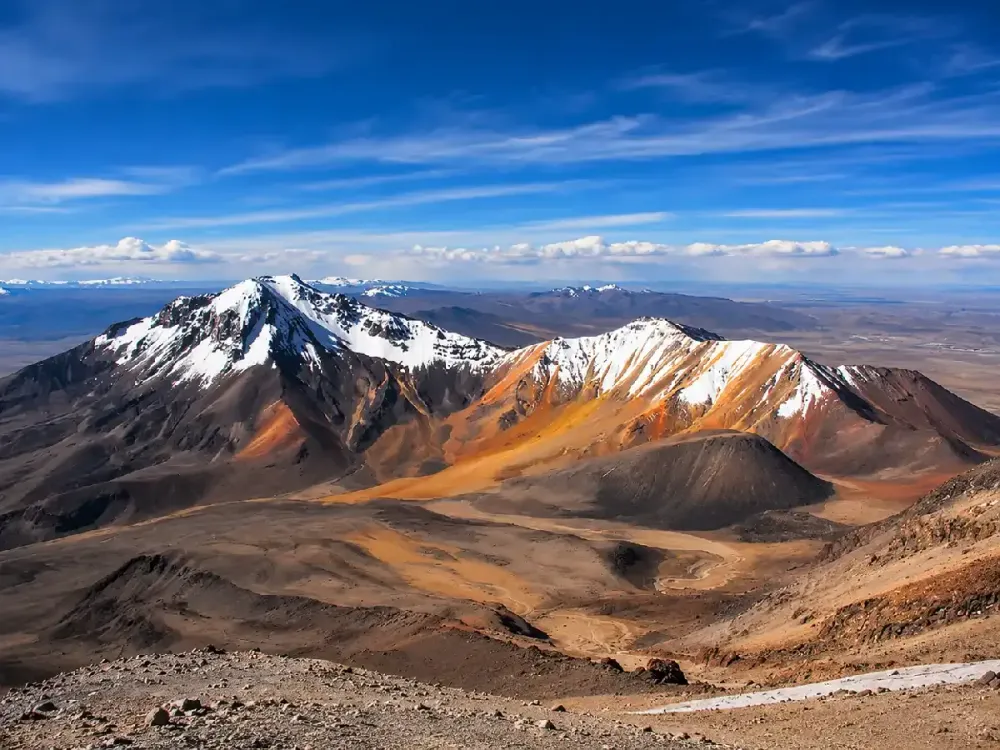
Chachani lies northwest of the city and consists of a more complex mountain massif. Its profile is broader and less symmetrical than Misti's.
Pichu Pichu, meanwhile, is distinguished by its ridges and aligned peaks, which create an irregular outline on the horizon.
These differences make it possible to identify each volcano when visibility is favorable. A local guide can also help you recognize them from Arequipa's main viewpoints.
At Dreamy Tours, we recommend observing them from Yanahuara or Carmen Alto and taking time to recognize their shapes. It's a simple way to understand the relationship between the city and its mountainous surroundings.
Salinas y Aguada Blanca National Reserve and the Volcanic Landscape
Salinas y Aguada Blanca National Reserve is one of the most important protected natural areas surrounding Arequipa. Its territory includes high-Andean landscapes, extensive plains, wetlands, lakes, and areas associated with the region's volcanic mountains.
The reserve plays an important role in conserving ecosystems and species adapted to high-altitude conditions. Animals that may be observed in certain areas include vicuñas and various bird species.
The reserve also helps visitors understand that Arequipa's volcanic environment belongs to a much larger natural system than the familiar image of Misti seen from the city center.
Some overland routes connecting Arequipa with other destinations in southern Peru pass through parts of the reserve or areas close to its characteristic landscapes.
It's important to distinguish these excursions from climbing the volcano. Visiting designated areas within the protected reserve does not necessarily mean approaching Misti's crater or hiking its slopes.
If you'd like to discover more natural landscapes in southern Peru, complement your trip with our complete Colca Canyon guide, another of the region's major attractions.
For information on conservation and responsible travel, you can also consult Peru's National Service of Natural Areas Protected by the State (SERNANP).
Can You Climb Misti Volcano and How Difficult Is It?
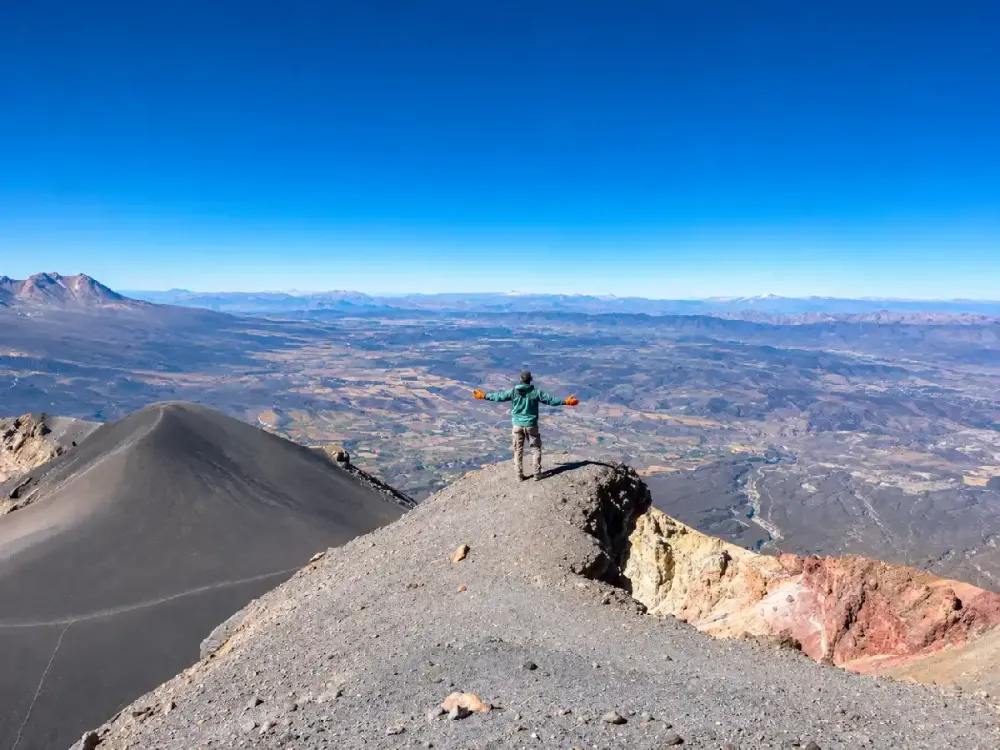
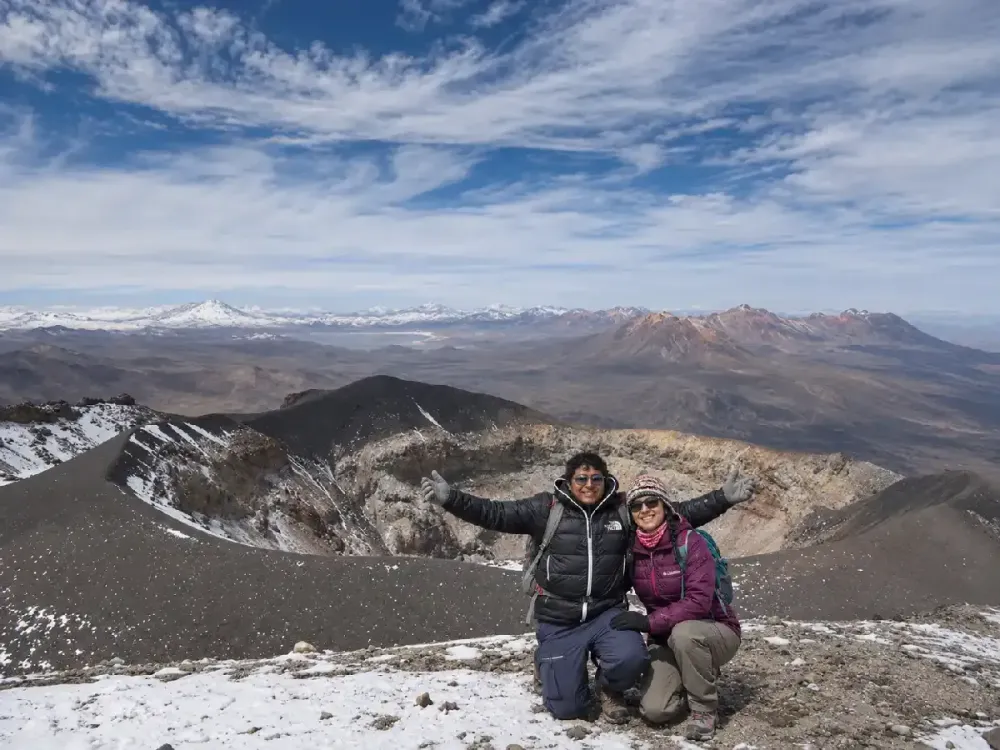
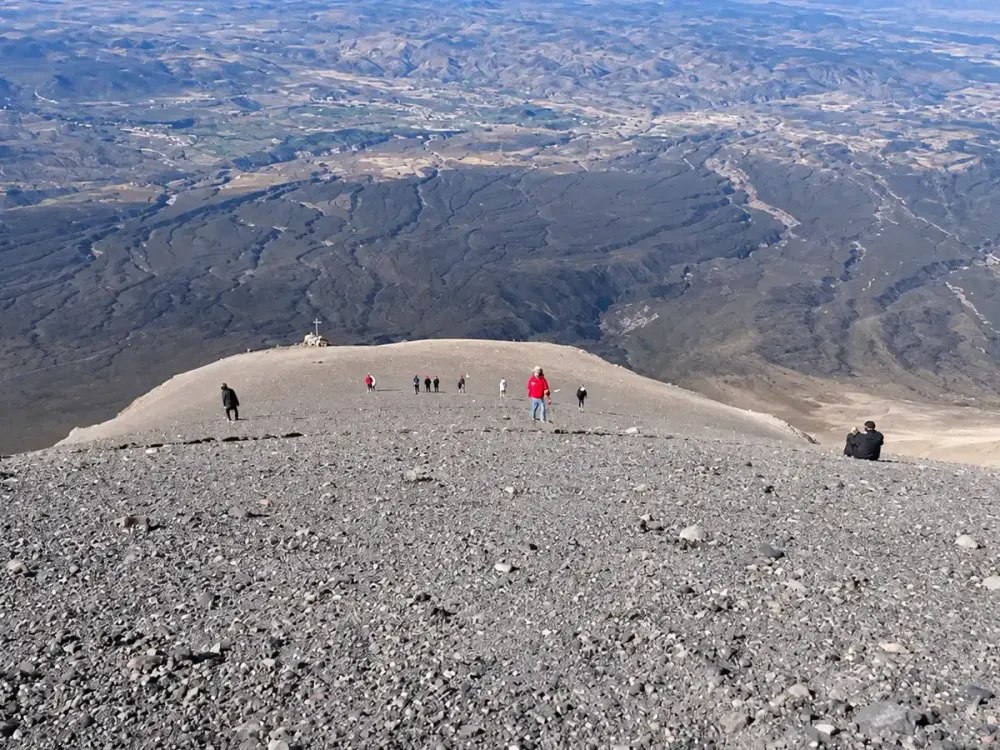
Yes, mountaineering routes allow experienced climbers to ascend Misti Volcano. However, reaching its summit is a completely different activity from admiring it from Arequipa's tourist viewpoints.
The elevation of 5,822 meters (19,101 feet) involves exposure to high-altitude conditions, low temperatures, volcanic terrain, considerable physical exertion, and altitude-related risks.
Expeditions generally require appropriate physical preparation, acclimatization, specialized equipment, and the assistance of experienced mountain professionals.
It's also necessary to check access conditions, route status, official recommendations, and updated volcanic monitoring information before considering an ascent.
For these reasons, we do not recommend attempting an improvised summit hike or treating Misti as an easy urban excursion.
For most visitors interested in discovering the White City, observing the volcano from the viewpoints is an accessible and rewarding way to appreciate its scenic importance.
If you prefer a cultural and panoramic experience, our Arequipa City Tour allows you to visit the main viewpoints without undertaking high-altitude mountain activities.
How to Experience Misti Volcano During a Trip to Arequipa
The easiest way to include Misti Volcano in your itinerary is to combine panoramic viewpoints with a cultural sightseeing tour of Arequipa. This allows you to appreciate the mountain from different perspectives without committing several days to a physically demanding activity.
A good option is to begin at Carmen Alto Viewpoint, where the scenery of the Chilina Valley reveals Arequipa's natural surroundings. You can then continue to Yanahuara Viewpoint, famous for its sillar stone arches and views of the volcano.
The experience can be completed with a visit to Plaza de Armas, the exterior of the Cathedral, the Church of La Compañía de Jesús, and Santa Catalina Monastery. This combination allows you to discover both the volcanic landscape and the architectural heritage of the White City.
If you'd like to explore the connection between volcanoes and traditional architecture in greater depth, you can also visit the quarries with our Ruta del Sillar Tour in Arequipa, whose itinerary includes a Volcano Viewpoint and sites where volcanic stone is traditionally worked.
Our Arequipa City Tour: Santa Catalina, Yanahuara, and Plaza de Armas is another alternative for travelers who want to enjoy the city's main landmarks and landscapes with transportation and a guide.
If you're planning a longer stay, explore our itineraries on what to see in Arequipa in 1, 2, and 3 days to organize your sightseeing according to the time available.
At Dreamy Tours, we believe admiring Misti is one of the experiences that best helps travelers understand Arequipa. Its presence connects the geography, history, and cultural identity of a city that has developed alongside one of Peru's most iconic volcanoes.
If you're preparing your trip, explore all our Arequipa tours and choose the experience that best matches your interests and preferred travel style.
Personal travel advice
Plan your trip with Dreamy Tours
Start a tailored journey with our exclusive tours and custom trips across Peru and other Latin American countries.