Search the blog
Tabla de contenidos
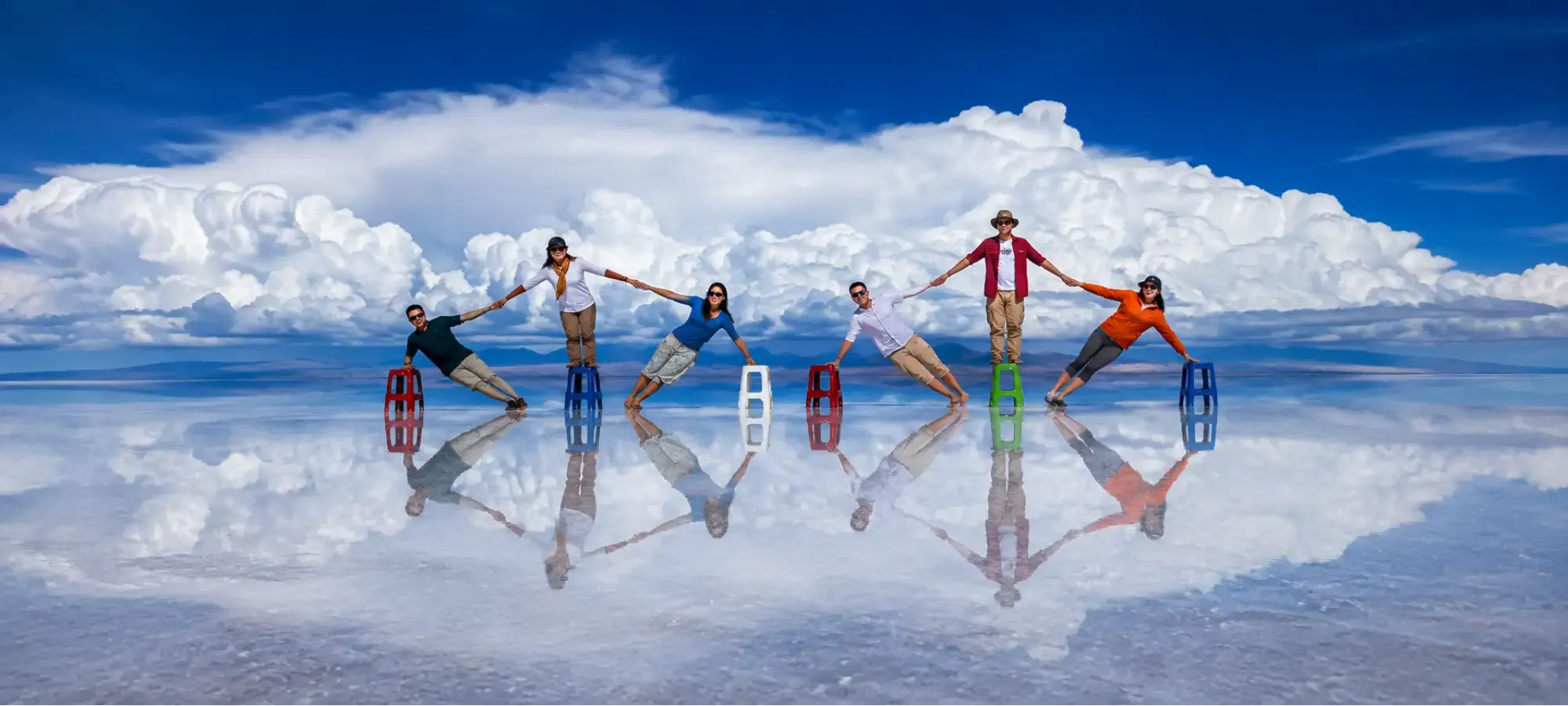
The Uyuni Salt Flats mirror effect is one of the most spectacular natural experiences in Bolivia. When a thin layer of water covers the salt surface, the sky reflects across the ground and the horizon seems to disappear.
But this famous reflection does not happen throughout the year.
If seeing the mirror effect is one of the main reasons for your trip, it is important to understand the Uyuni rainy season, the best months to visit and the weather conditions that create the reflection.
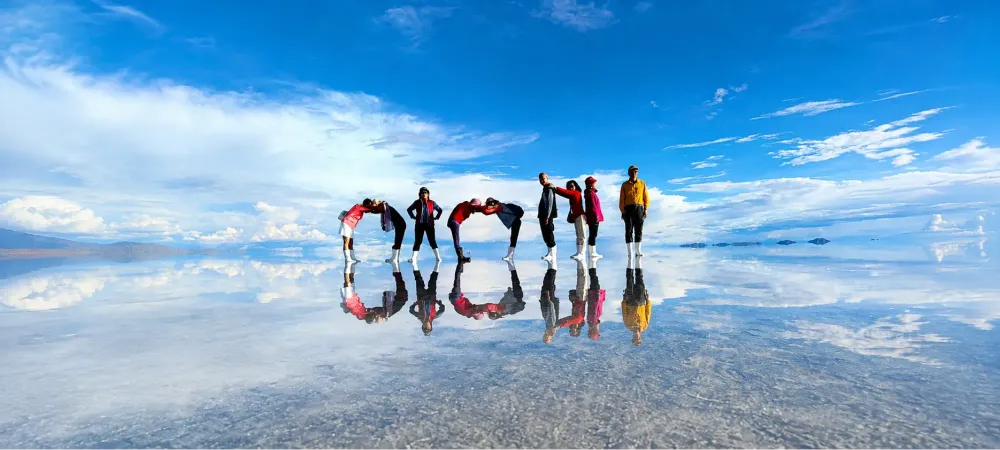
What months can you see the Uyuni mirror effect?
The best chances of seeing the mirror effect usually occur during the rainy season, especially between January and March.
As a general guide:
- December: rainfall begins and some reflective areas may appear.
- January: excellent chances of finding water on the salt flats.
- February: one of the best months for the mirror effect.
- March: reflections are still possible in many areas.
- April: transition month with more variable conditions.
If the mirror effect is your main priority, **January and February** are usually among the best months to visit.
However, weather conditions change every year, so the reflection cannot be guaranteed on a specific day.
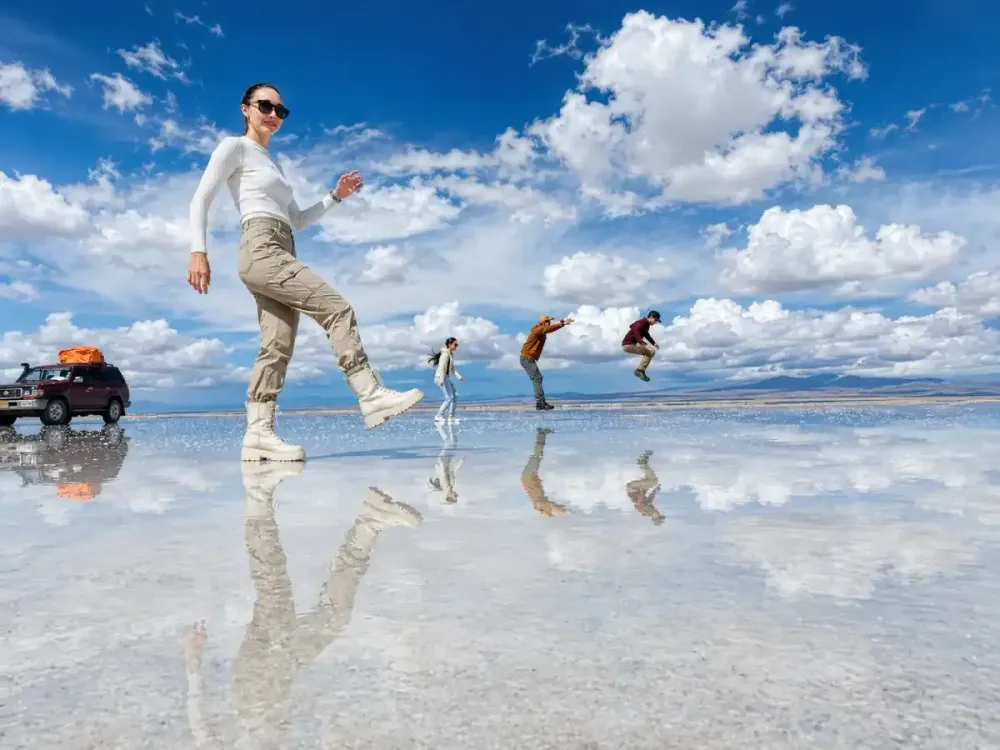
How does the Uyuni Salt Flats mirror effect happen?
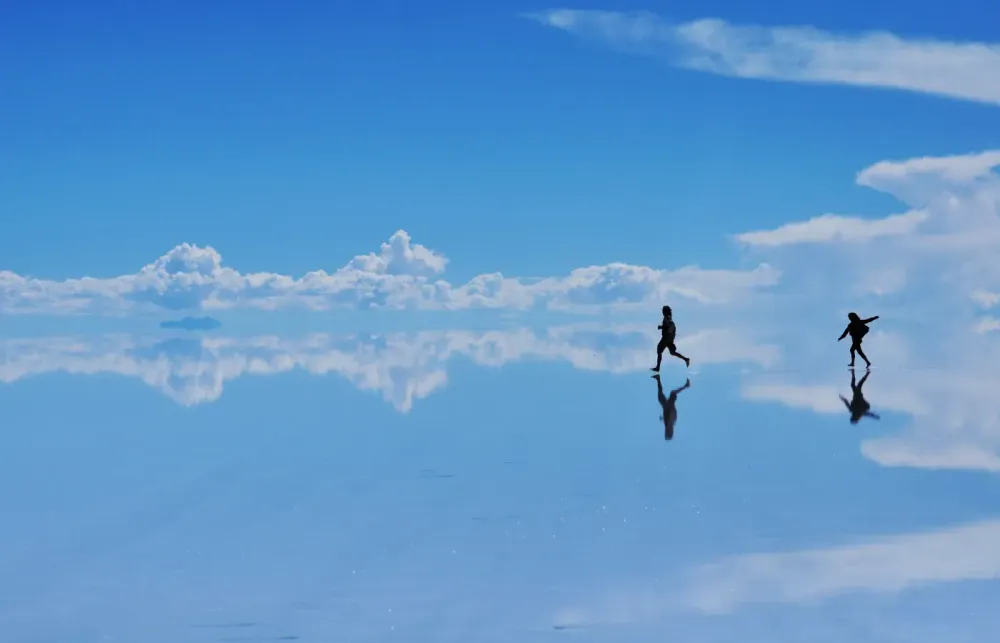
The mirror effect appears when rainfall leaves a shallow layer of water across the extremely flat salt surface.
When the water is calm, it reflects the sky, clouds and surrounding landscape almost perfectly.
This creates the famous illusion where it becomes difficult to see where the ground ends and the sky begins.
Rain alone is not enough. Water levels and wind conditions also influence how clear the reflection appears.
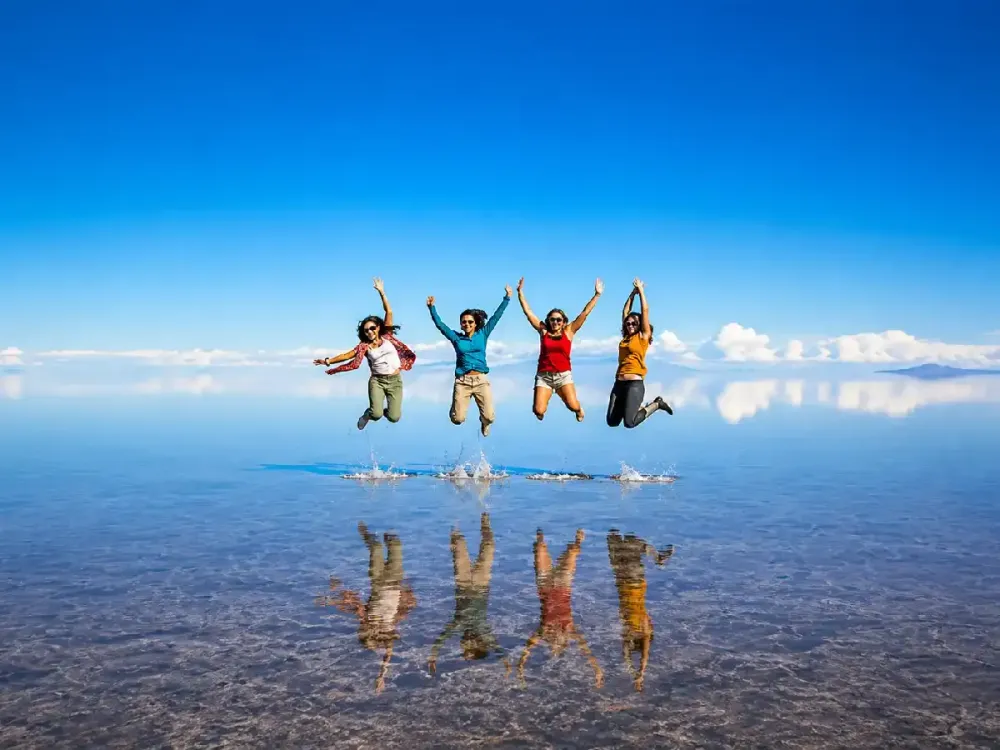
Is January or February better for the Uyuni mirror effect?
Both months are excellent choices.
January is already well into the Uyuni rainy season, while February often continues to provide good conditions for water to remain across parts of the salt flats.
The exact experience depends on rainfall each year.
If you want to understand how the landscape changes throughout the seasons, read Best Time to Visit Uyuni Salt Flats.
That guide compares the mirror season with the classic white salt landscape of the dry season.
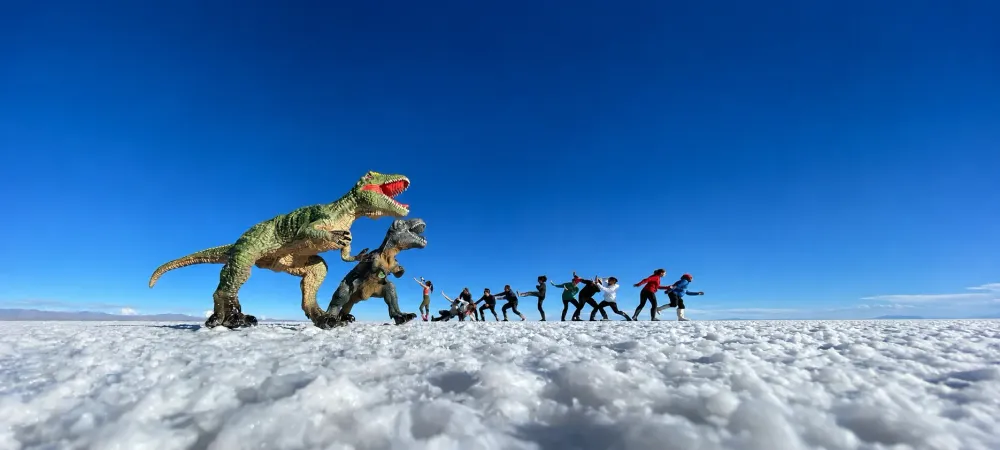
Can you see the mirror effect in December or March?
Yes, it is possible.
December marks the beginning of the rainy season, so water may start accumulating across parts of the salar.
March can also provide excellent reflections because water from previous months may still remain on the surface.
However, conditions in both months can be less predictable than during January and February.
If your travel dates are flexible and the mirror effect is your priority, January through March is generally the strongest window.
What is the best time of day to see the mirror effect?
The time of day can completely change the experience.
During daylight hours, blue skies and clouds can create clear reflections across the water.
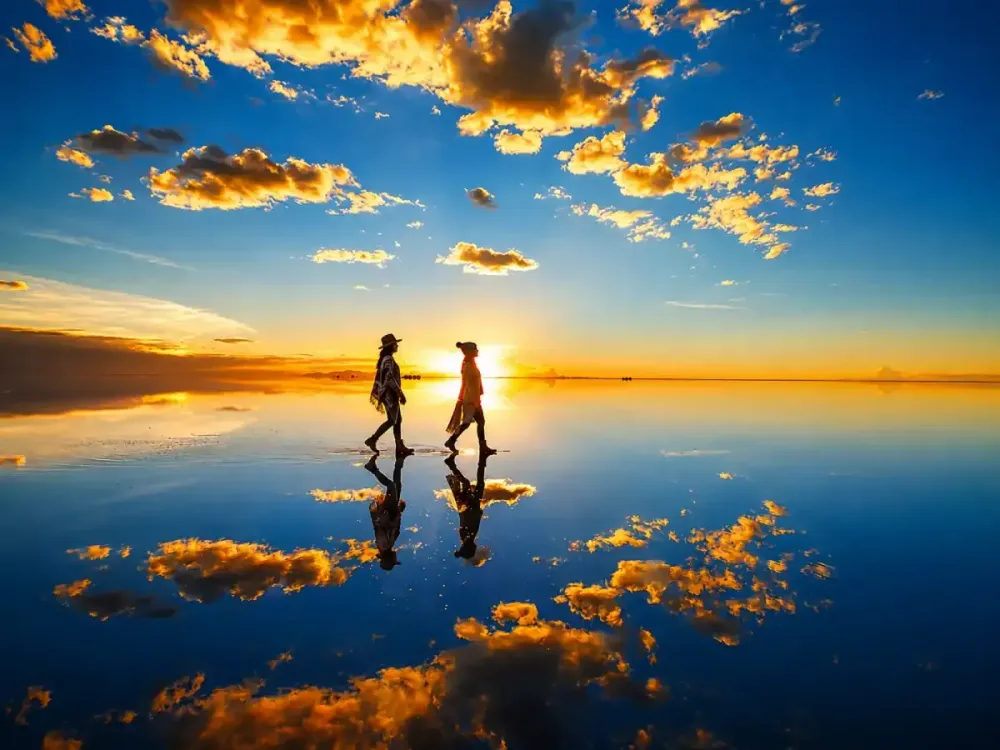
Sunset offers another kind of scenery, with golden, pink and purple tones reflected across the surface.
For travelers interested in photography, it is worth thinking about both when to visit Uyuni Salt Flats and what time of day you want to experience the landscape.
Can rain change your Uyuni itinerary?
Yes.
The same water that creates the mirror effect can also limit access to certain parts of the salt flats.
When water levels are higher, routes may need to change for safety reasons. Access to places such as Incahuasi Island can also be affected by seasonal conditions.
For this reason, itineraries during the rainy season may be adjusted depending on the weather and water levels.
To learn more about the main attractions and how to plan your visit, read our Uyuni Salt Flats Travel Guide.
Mirror effect or white salt flats: which should you choose?
They are two completely different versions of Uyuni.
During the rainy season, the main attraction is the reflection:
sky + water + endless horizon
During the dry season, the landscape becomes:
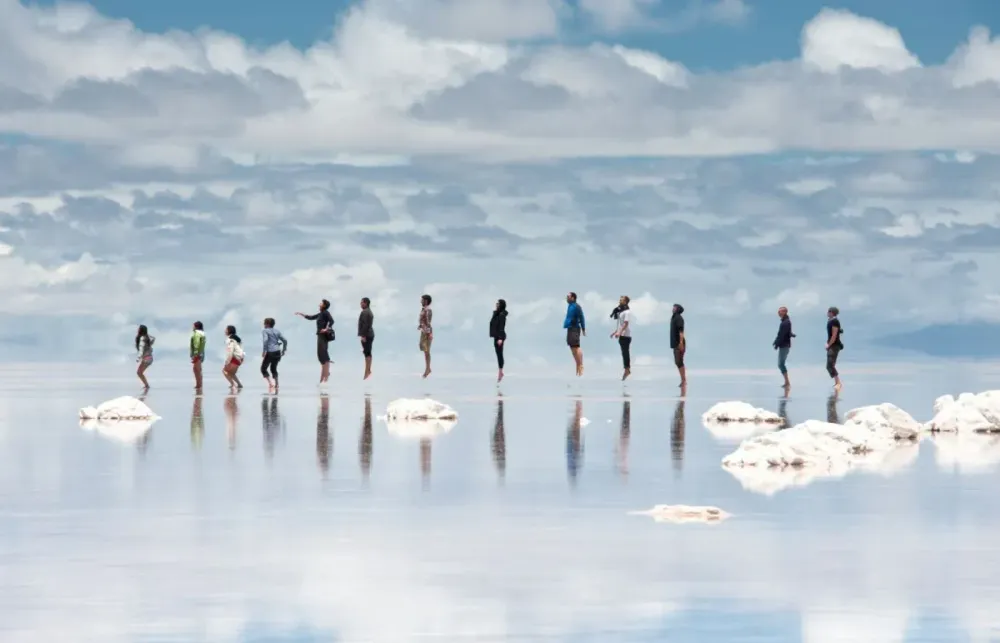
white salt + geometric patterns + wide-open views
Choose the rainy season if your priority is photographing reflections and experiencing the famous mirror effect.
Choose the dry season if you prefer the classic white salt landscape and want easier access to more areas of the salar.
Neither experience is better. The right choice depends on what you want to see.
How many days should you spend in Uyuni during the rainy season?
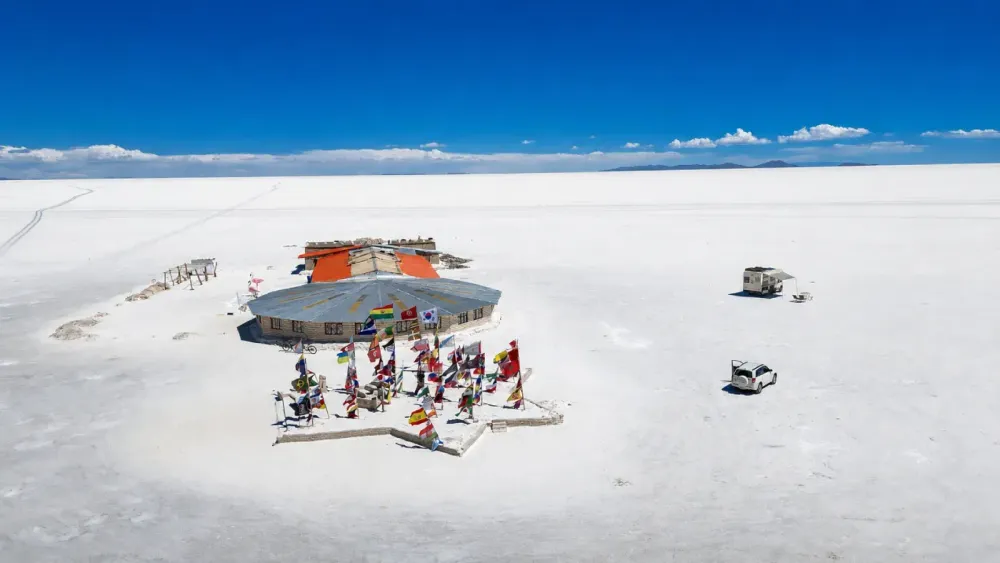
One full day can be enough if your main goal is to visit the salt flats and experience the mirror effect.
If you want to explore farther into the Altiplano, consider staying longer.
Before choosing your itinerary, read How Many Days Do You Need for the Uyuni Salt Flats? to compare one, two and three-day options.
What should you bring for the Uyuni mirror effect?
During the rainy season, prepare for water, changing temperatures and strong sunlight.
Useful items include:
- Sunglasses
- Sunscreen
- Layered clothing
- Waterproof jacket
- Suitable footwear
- Protection for your phone or camera
- Portable charger
Even on cloudy or cold days, sun protection remains important because of the altitude and reflection from the salt flats.
For a complete packing guide, read What to Pack for Bolivia.
So, when is the best time to see the Uyuni mirror effect?
If you want the best chance of seeing the Uyuni Salt Flats mirror effect, plan your trip between January and March, with January and February generally offering particularly good conditions.
December and March can also produce beautiful reflections, although conditions may be more variable.
Most importantly, remember that the mirror effect is a natural phenomenon. Rainfall, wind and water levels change constantly, so no date can guarantee perfect reflections.
That unpredictability is part of what makes Uyuni so special. The landscape never looks exactly the same twice.
If you have limited time and want to experience the main highlights of the region in one day, explore our Uyuni Salt Flats Full Day.
Personal travel advice
Plan your trip with Dreamy Tours
Start a tailored journey with our exclusive tours and custom trips across Peru and other Latin American countries.