Search the blog
Tabla de contenidos
The Uyuni Salt Flats are one of Bolivia’s most extraordinary natural landscapes. Endless white horizons, dramatic skies and the famous mirror effect make Uyuni a highlight for travelers exploring South America.
If you are planning to visit the Uyuni Salt Flats in 2026, this guide covers the essentials: when to go, what to see, how many days you need and what to pack.
Where are the Uyuni Salt Flats?
The Uyuni Salt Flats, also known as Salar de Uyuni, are located in southwestern Bolivia, near the city of Uyuni.
Uyuni is the main starting point for trips across the salt flats and the surrounding Altiplano. Travelers usually reach the city from La Paz, Sucre, Potosí or as part of a longer journey through Bolivia.
Best time to visit the Uyuni Salt Flats
The best time to visit the Uyuni Salt Flats depends on the experience you want.
Dry season
From around May to November, the salt flats usually reveal their classic white landscape and geometric salt patterns.
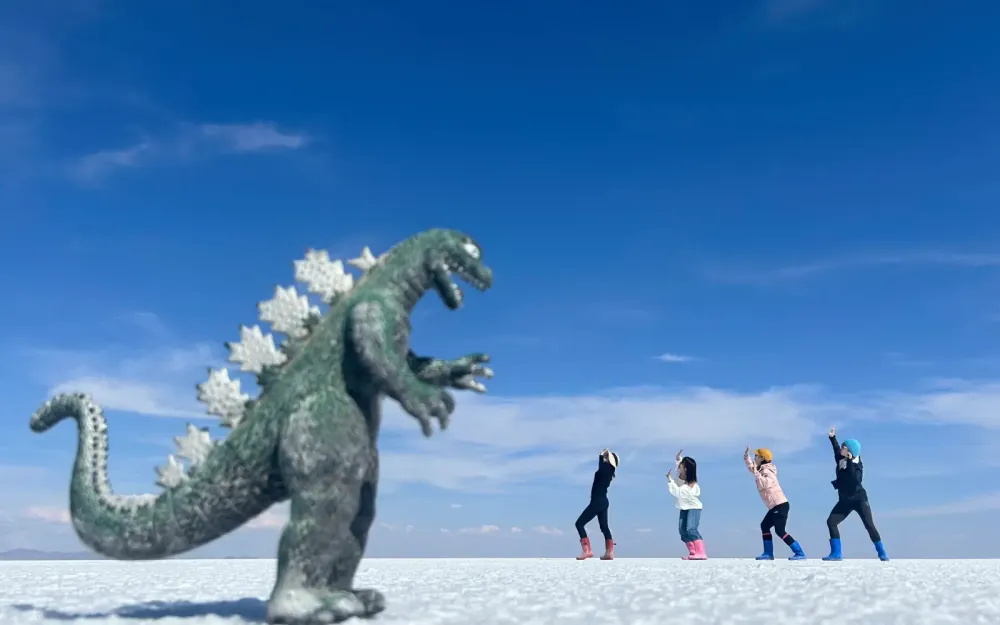
This period is ideal for wide-open views, perspective photography and exploring more areas around the salt flats.
Rainy season
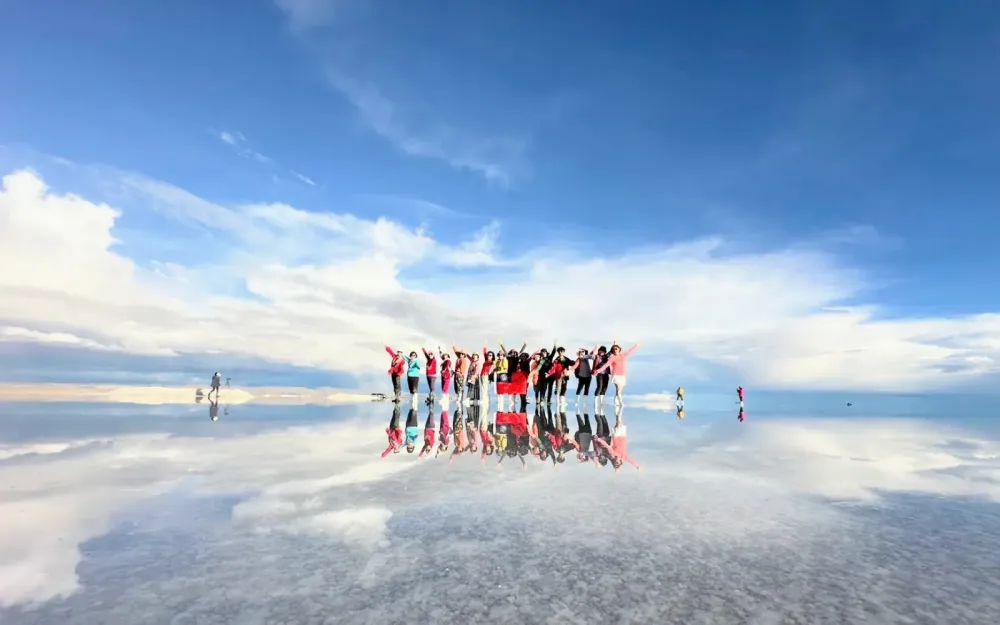
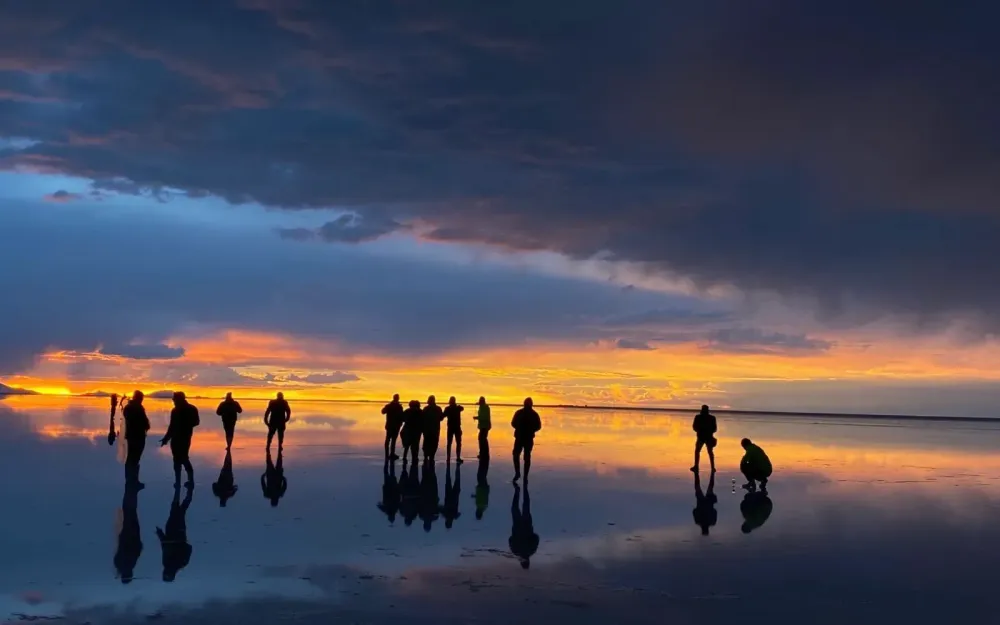
From December to around March or April, rain can cover parts of the salt flats with a thin layer of water.
Under the right conditions, this creates the famous Uyuni Salt Flats mirror effect, where the sky reflects across the surface and the horizon almost disappears.
The mirror effect depends on weather conditions, so it cannot be guaranteed on a specific day.
Things to do in Uyuni
There is more to the region than simply driving across the salt flats.
Some of the most popular things to do in Uyuni include:
- Train Cemetery: old locomotives and railway cars outside Uyuni.
- Colchani: a small community known for salt production.
- Uyuni Salt Flats: the main highlight of the journey.
- Salt monuments: structures built from blocks of salt.
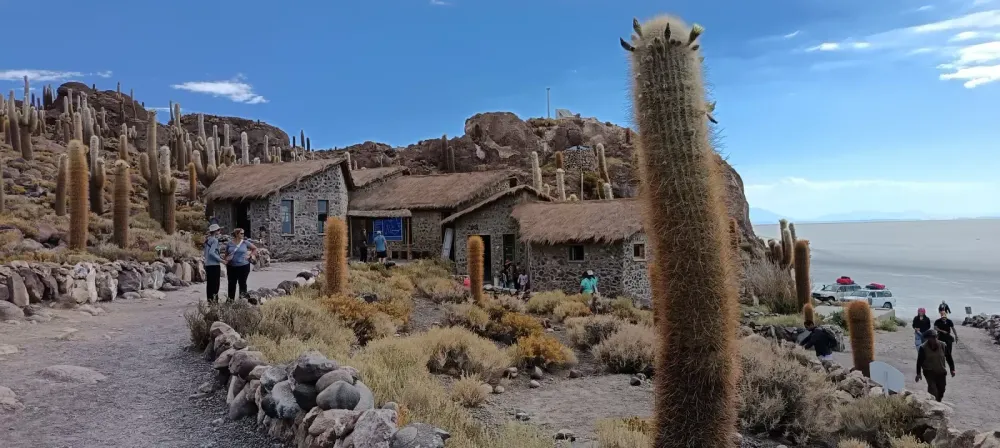
- Incahuasi Island: famous for giant cacti and panoramic views when access conditions allow.
Longer journeys can continue into the Bolivian Altiplano, where you will find colorful lagoons, deserts, volcanoes and remote landscapes.
Uyuni Salt Flats in 1, 2 or 3 days?
Choosing how long to stay is an important part of planning your trip.
One day in Uyuni
A Uyuni Salt Flats day trip is a good choice if you have limited time and want to experience the main highlights.
The route usually focuses on Uyuni, the Train Cemetery, Colchani and different areas of the salt flats.
Two days in Uyuni
With two days, you can explore beyond the classic route and discover more remote landscapes.
Depending on the itinerary, the journey may include areas around Tunupa Volcano and nearby communities.
Three days in Uyuni
A three-day journey is ideal for travelers who want to experience the wider Altiplano.
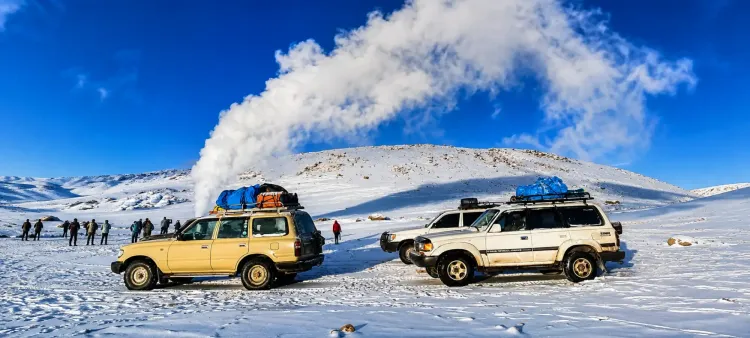
Routes often continue toward colorful lagoons, deserts, rock formations, geothermal areas and spectacular high-altitude scenery.
The right option depends on whether you simply want to see the salt flats or explore the region in greater depth.

How to get to Uyuni
Many international travelers reach Uyuni after visiting La Paz.
Another option is to include Uyuni in a route through Sucre and Potosí.
If you are combining Peru and Bolivia, a convenient journey can follow:
Puno → Copacabana → La Paz → Uyuni
This route connects Lake Titicaca with the Uyuni Salt Flats and works particularly well for a longer journey through the Andes.
What to pack for the Uyuni Salt Flats
Weather in the Bolivian Altiplano can change quickly, and sunlight can feel especially strong across the white salt surface.
Your Uyuni packing list should include:
- Sunglasses
- Sunscreen
- Hat or cap
- Warm layers
- Comfortable shoes
- Windproof or warm jacket
- Reusable water bottle
- Lip balm
- Camera or phone
- Portable charger
For two or three-day trips, pack additional warm clothing for cold mornings and evenings.
Tips for visiting the Uyuni Salt Flats
A few simple decisions can make your visit much more enjoyable.
Avoid scheduling very tight travel connections immediately after your Uyuni experience, especially if you are continuing to another city.
Weather can also affect the route. During the rainy season, some parts of the salt flats may become inaccessible and itineraries can change.
Sun protection is important even when temperatures feel cold, and keeping a small daypack with your essentials makes the journey more comfortable.
And leave plenty of space on your phone. Uyuni has a way of turning even reluctant photographers into enthusiastic ones.
Are the Uyuni Salt Flats worth visiting?
Absolutely. The Uyuni Salt Flats in Bolivia offer a landscape unlike almost anywhere else in South America.
During the dry season, you can experience an immense white salt desert stretching toward the horizon. During the rainy season, you may have the chance to see the famous mirror effect.
Uyuni also fits naturally into a longer Bolivia itinerary with La Paz, Lake Titicaca, Potosí and Sucre.
If you have limited time, our Uyuni Salt Flats Full Day experience covers the main highlights of the region. Travelers who want to explore further can also choose two or three-day journeys through Uyuni and the Altiplano.
Plan your visit to the Uyuni Salt Flats
A trip to the Uyuni Salt Flats is much better when you choose the right season, decide how many days you want to explore and prepare for the conditions of the Altiplano.
Whether you want to photograph the endless white salt landscape or hope to experience the mirror effect, visiting Uyuni can easily become one of the highlights of your trip to Bolivia.
Personal travel advice
Plan your trip with Dreamy Tours
Start a tailored journey with our exclusive tours and custom trips across Peru and other Latin American countries.